


 中文简体
中文简体 Français
 русский
 Español
 عربى
عربى Deutsch



Electric Forklift Buying Guide: Benefits, Battery Types, and Selection Tips
Admin 2026-08-27Ask any warehouse manager who has switched from internal combustion to battery power, and the pattern repeats: energy costs drop, maintenance schedules get simpler, and the work environment feels noticeably cleaner. The electric forklift is no longer a niche option for light indoor duties. It has become the default choice for logistics hubs, food and beverage plants, pharmaceutical facilities, and a growing share of general manufacturing. The reasons go beyond zero exhaust emissions; they extend to predictable operating costs, better operator comfort, and battery technology that has eliminated most of the old complaints about charging time and daily range.
Why Electric Forklifts Are Replacing Internal Combustion Models
The shift is structural, not seasonal. Warehouse operators who once reserved electric trucks for light duty now specify them for their entire fleet, and the economics explain why.
Zero exhaust emissions. An electric forklift produces no carbon monoxide, no nitrogen oxides, and no particulates at the point of use. That matters in enclosed warehouses, food processing plants, and pharmaceutical clean areas where exhaust fumes are simply unacceptable.
Quieter operation. Electric models typically run at 65 to 75 decibels, compared with 85 to 95 decibels for a diesel machine. Operators can hear warning signals, communicate with colleagues, and work longer shifts with less fatigue. In noise-sensitive environments such as retail stores and cold storage facilities, the difference is immediate.
Lower energy cost per hour. Electricity is cheaper than diesel or LPG on a per-hour basis, and regenerative braking returns energy to the battery every time the operator slows down. The savings accumulate quickly in multi-shift operations.
Simpler maintenance. There is no engine oil to change, no fuel filter to replace, and no exhaust system to inspect. The electric drive train has far fewer moving parts, so planned maintenance takes less time and unplanned breakdowns become rarer. For a fleet manager, that means more uptime and fewer spare parts in stock.
What to Evaluate Before Buying an Electric Forklift
An electric forklift is a better fit for some operations than others. Work through these factors before you compare models:
- Load capacity and lifting height. Most warehouse electric models cover 1.5 to 3.5 tonnes, with some reaching 10 tonnes in heavy-duty lithium-ion configuration. Match the rated capacity to your heaviest pallet, not your average one.
- Duty cycle. Count the number of lifts per hour, shift length, and travel distance. A single-shift operation with 60 percent utilization has different needs than a 24-hour cold chain hub.
- Aisle width and maneuvering space. Three-wheel models offer a tight turning radius for narrow aisles; four-wheel models provide stability and traction for heavier loads and dock ramps.
- Battery type. Lead-acid batteries are cheaper upfront but need dedicated charging rooms and watering routines. Lithium-ion batteries cost more initially but charge faster, last longer, and support opportunity charging during breaks.
- Charging infrastructure. Confirm that your facility has sufficient power capacity and space for charging stations before you commit to a battery strategy.
- Operating environment. Temperature, floor condition, and indoor or outdoor duty all affect tire selection, battery performance, and mast configuration.
Lead-Acid vs. Lithium-Ion: The Decision That Drives Cost
Battery choice is the single biggest variable in the long-term cost of an electric forklift. The two mainstream technologies behave very differently in daily operation.
| Factor | Lead-Acid | Lithium-Ion |
|---|---|---|
| Charge time | 8 to 10 hours | 1 to 2 hours |
| Opportunity charging | Not recommended | Yes, during breaks |
| Typical cycle life | 1,200 to 1,500 cycles | 2,000 to 4,000 cycles |
| Maintenance | Watering, equalizing, cleaning | None required |
| Energy efficiency | 70 to 80 percent | Up to 95 percent |
| Upfront cost | Lower | Higher |
| Counterweight effect | Heavier battery adds stability | Lighter, so counterweight is engineered into the chassis |
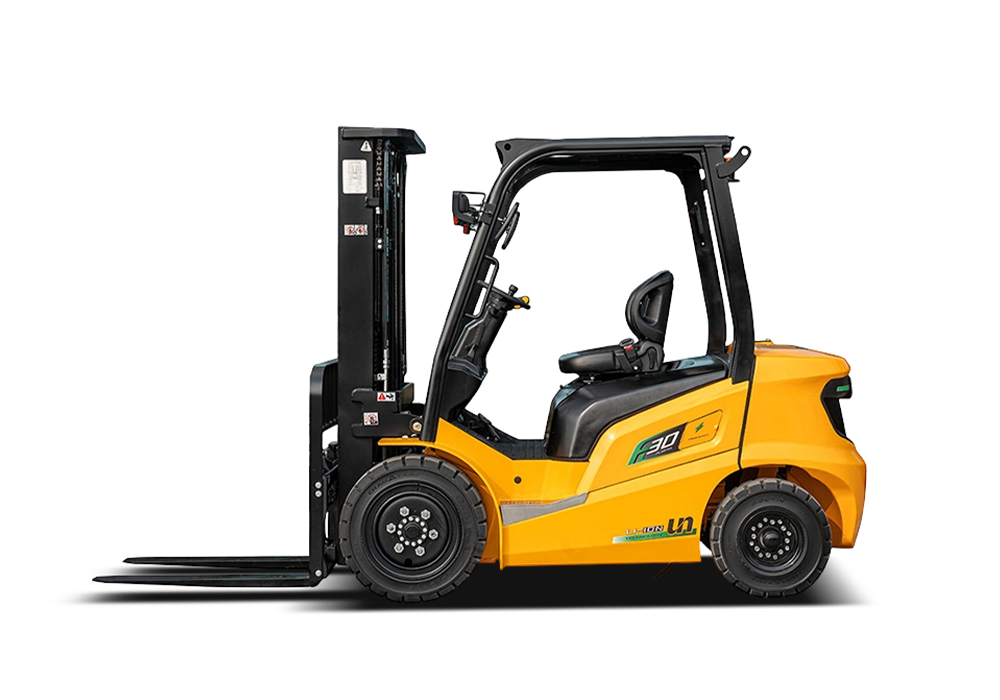
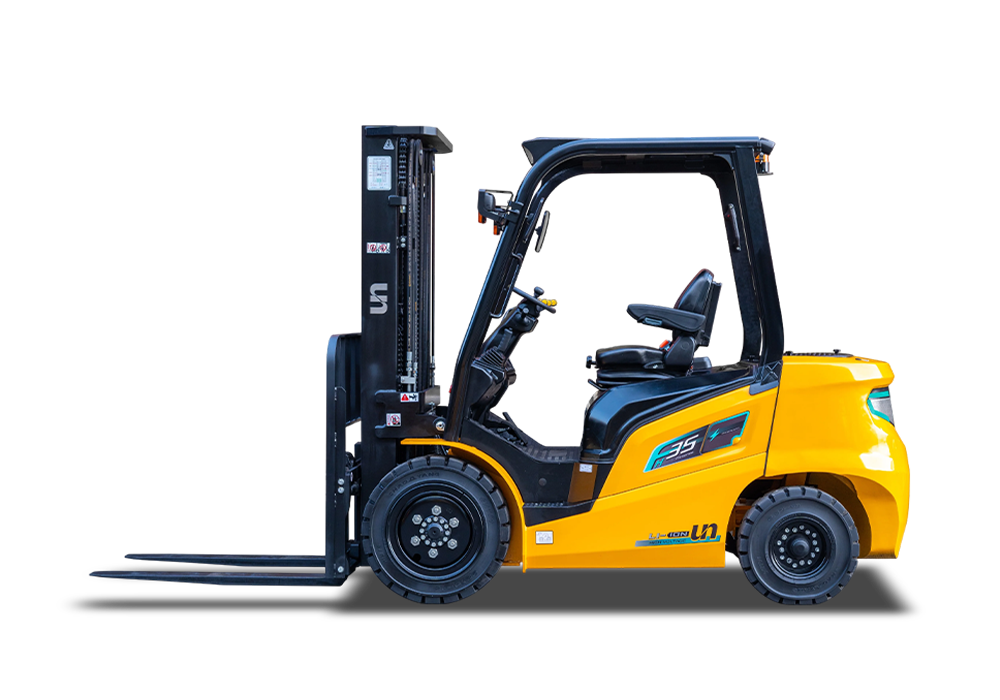
For a single-shift warehouse with overnight charging, lead-acid remains the low-initial-investment option. For multi-shift operations, cold storage, or facilities where space for a charging room is limited, lithium-ion removes the two biggest objections to electric power: charging time and range anxiety. Many buyers now choose F series lithium-ion electric forklift models in the 2.0 to 3.5 tonne class precisely because they can be topped up during coffee and lunch breaks.
Matching the Electric Forklift to Your Application
Once the battery strategy is set, the chassis choice should follow the application.
Three-Wheel Electric Forklifts for Narrow Aisles
Retail backrooms, spare parts storage, and assembly lines share one requirement: constant turning in confined space. A three-wheel electric forklift delivers a smaller turning radius and better visibility over the forks, which cuts cycle time in tight corners and reduces the risk of rack damage.
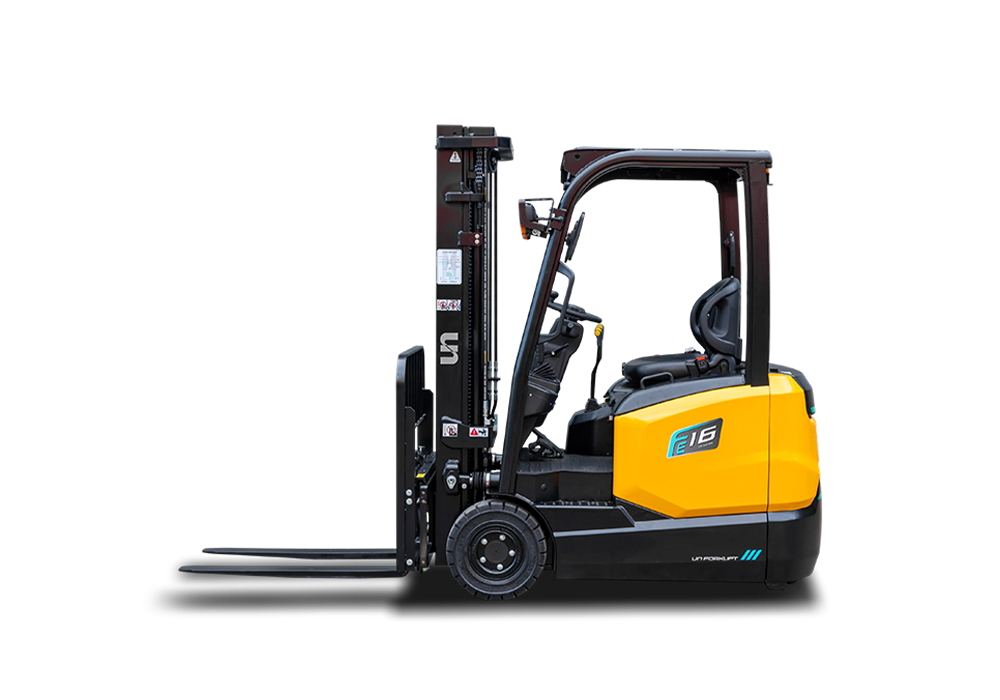 Custom Three Wheel Electric 1.6T-2.0T Suppliers, ManufacturersAs China Three Wheel Electric 1.6T-2.0T manufacturers and Three Wheel Electric 1.6T-2.0T Company, Zhejiang UN Forklift Co., Ltd. offers O...View Product →
Four-Wheel Electric Forklifts for Heavier Duty
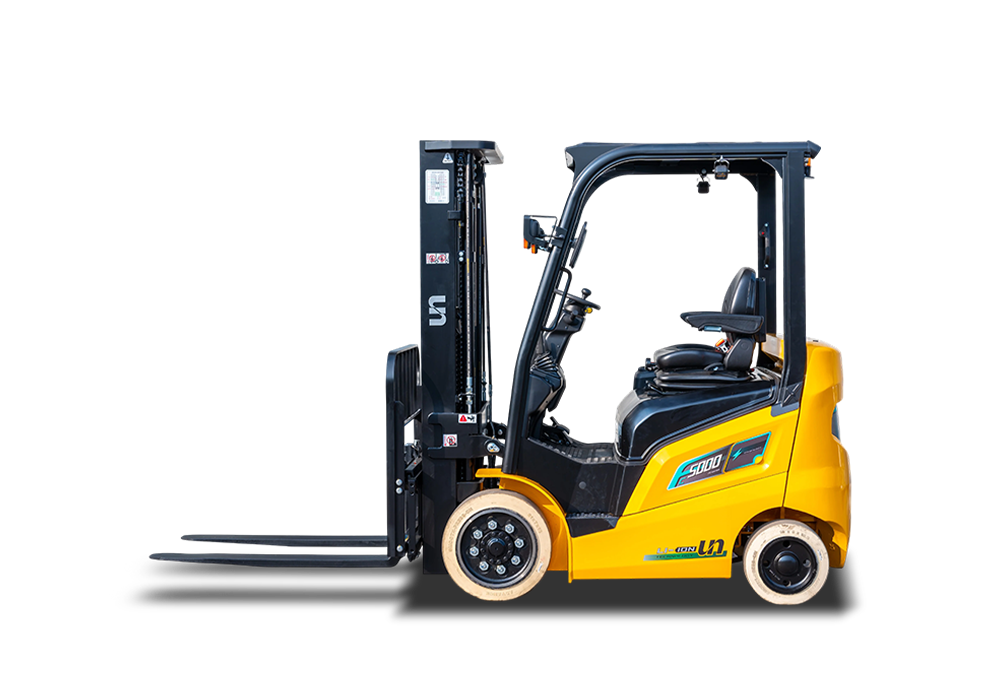
Docks, factories, and bulk storage areas put a premium on stability and traction. The FE series four-wheel electric forklift in the 1.5 to 3.5 tonne range carries heavier loads more predictably, handles ramps better, and gives operators more confidence when the floor is wet or uneven.
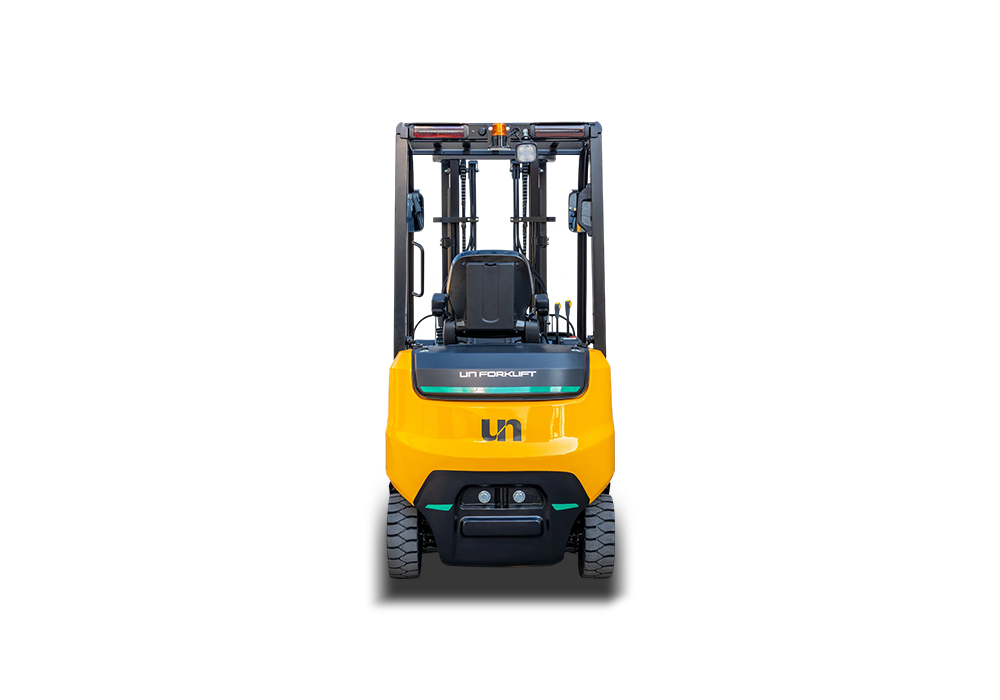 Wholesale FE Series 1.5T-Mini2.0T 4-Wheel Electric Forklift Factory, Suppliers -Zhejiang UN Forklift Co., Ltd. is China wholesale FE Series 1.5T-Mini2.0T 4-Wheel Electric Forklift suppliers and factory,FE Series 4-Whe...View Product →
Lithium-Ion Models for Multi-Shift and Cold Storage
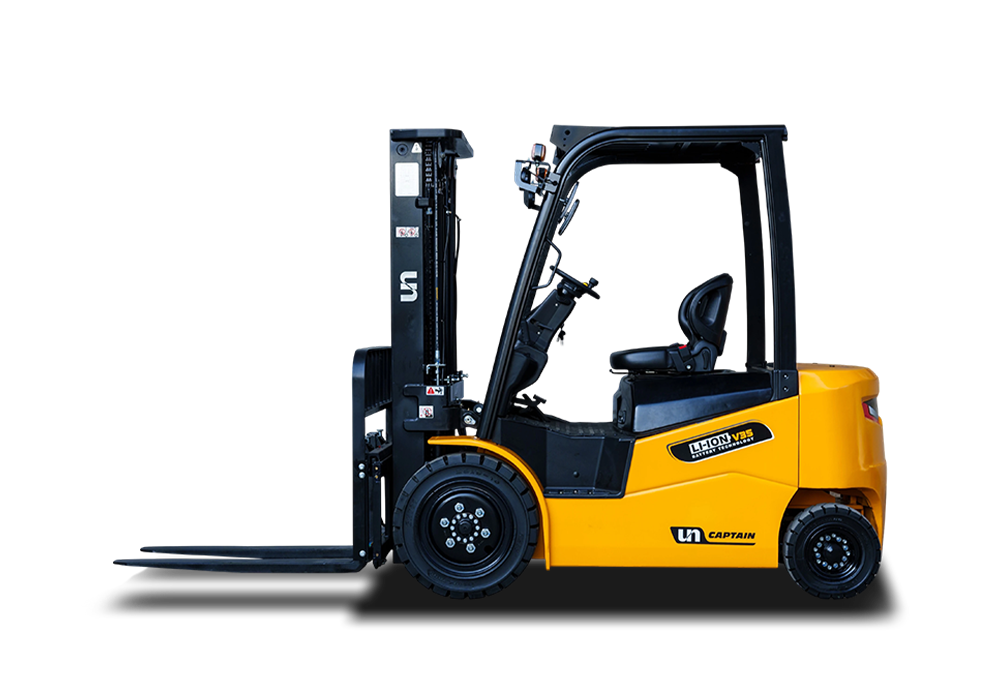
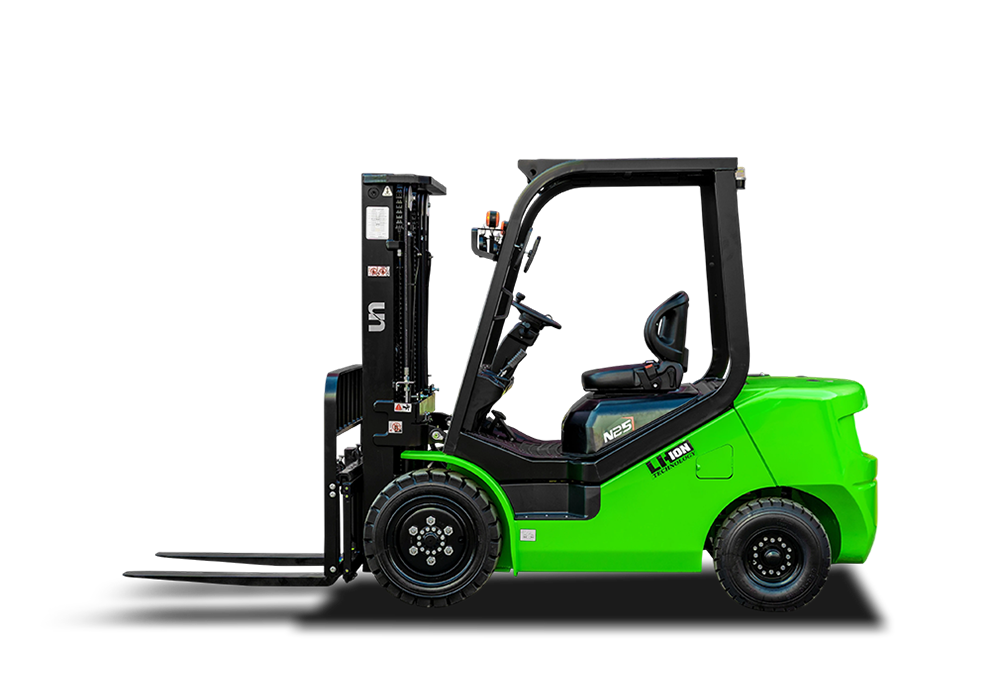
Food and beverage distribution, pharmaceutical warehousing, and e-commerce fulfillment centers share a punishing rhythm: little downtime, strict temperature conditions, and no tolerance for emissions. Lithium-ion models, including the high-voltage FH series, hold their performance in cold rooms where lead-acid batteries lose capacity, and they accept partial charges without damaging the cells.
If your operation fits any of these profiles, our logistics and warehousing solutions page shows how the full range of electric equipment fits together in a typical distribution center.
Total Cost of Ownership and Return on Investment
The purchase price of an electric forklift is still higher than an equivalent diesel model, but it is only part of the story. When you calculate total cost of ownership over three to five years, the electric truck usually wins on every item except the initial invoice.
- Energy. Electricity costs significantly less per operating hour than diesel or LPG, and regenerative braking reduces consumption further in stop-and-go work.
- Maintenance. No engine oil, no fuel filters, no exhaust components. The main recurring cost is brake wear, which actually decreases thanks to regenerative braking.
- Battery replacement. Lead-acid batteries typically need replacing every four to six years; lithium-ion packs can outlast the truck's first ownership cycle.
- Resale value. Electric trucks retain value well as more fleets convert, while diesel models face tightening regulatory pressure in many markets.
For a concrete estimate, list your current energy price per unit of fuel, your average annual operating hours per truck, and the maintenance labor you spend on each internal combustion unit per year. Those three numbers alone will usually justify the switch within the first ownership period.
Safety, Operator Comfort, and Regulatory Compliance
Electrification is not only an economic decision; it is also a safety upgrade.
Cleaner air in enclosed spaces. With no exhaust emissions, electric forklifts reduce the need for high-volume ventilation in warehouses and truck bodies, and they eliminate the risk of carbon monoxide buildup during loading dock work.
Lower noise and vibration. Operators who spend eight hours on a forklift feel the difference immediately. Reduced vibration cuts physical fatigue, and lower noise improves communication with ground staff, two factors that directly influence accident rates.
Stability and control features. Modern electric models include anti-rollover protection, overload sensors, and stability control systems. Regenerative braking also gives smoother, more predictable stops on wet concrete or uneven dock plates.
Regulatory readiness. Emission zones, green building requirements, and corporate sustainability targets increasingly favor or mandate zero-emission equipment. Choosing an electric forklift today avoids the risk of having to replace a diesel fleet before the end of its service life.
Planning a Smooth Transition to an Electric Fleet
Converting a fleet does not have to happen overnight. The most successful transitions follow a simple sequence.
- Audit your duty cycles. Identify which trucks run the most hours and which applications tolerate an initial pilot. Usually, indoor two- and three-shift operations are the best starting points.
- Upgrade the power infrastructure. Install charging stations with enough capacity for your planned fleet, and check that the electrical panel can handle simultaneous charging during breaks.
- Run a pilot with three to five units. Track energy cost, maintenance hours, and operator feedback side by side with a comparable internal combustion truck for one full quarter.
- Scale and retrain. Once the data supports the switch, roll out the remaining units and train operators on charging procedures, battery handling, and daily range planning.
Manufacturer support matters more in this process than in a simple engine swap. UN Forklift has built electric lift trucks since 1978, produced China's first reach truck and VNA truck, participated in the drafting of national electric forklift standards, and maintains service partners in Europe, South America, North America, Africa, and Asia. That kind of track record matters when you need spare parts, technical support, and application advice after the sale. As we explained in our article on why electric forklifts are becoming the default choice in warehouses, the market has passed the tipping point.
The electric forklift is not a compromise. It is a different operating model with lower daily costs, a cleaner environment, and far simpler maintenance. The remaining challenge is not whether to switch, but how quickly your operation can adapt its charging habits and shift patterns. Match the battery to the duty cycle, match the chassis to the application, and the electric forklift will earn back its premium while making the workplace safer and calmer for the people who use it every day.
For exclusive deals and latest offers, sign up by entering your email address below.
Stay In Touch
ADDRESS : NO.1 ROAD ONE, XINDENG NEW DISTRICT, FUYANG, HANGZHOU, ZHEJIANG, CHINA 311404.
PHONE : +86-571-8688 8355 (AMERICA)
PHONE : +86-571-8886 9363 (EUROPE)
PHONE : +86-571-8688 8377 (ASIA, AFRICA, OCEANIA)
EMAIL : [email protected]
EMAIL : [email protected](PARTS INQUIRY)

