


 中文简体
中文简体 Français
 русский
 Español
 عربى
عربى Deutsch



Cushion Forklift Tires Explained: Benefits, Drawbacks, and How to Choose
Admin 2026-10-08You are standing between two forklifts with the same load capacity, the same mast height, and nearly the same price. The dealer points to the wheels and says one has cushion tires while the other runs on pneumatics. Then comes the question that determines how much you will spend on maintenance, how stable the truck feels with a load at full height, and how it behaves on the floor: which one fits your operation?
This article covers what cushion forklift tires are, how they compare with pneumatic alternatives, where they perform best, and what to check before you buy, so the decision becomes a set of facts instead of guesswork.
What Are Cushion Forklift Tires?
A cushion tire is a smooth, solid rubber ring bonded or pressed onto a metal rim. Unlike a pneumatic tire, it holds no air and has no inner tube. The rubber compound is dense and wear-resistant, which is why cushion tires are the default choice on many counterbalance forklifts built for indoor service.
Two design details have the biggest influence on performance. First, the profile is flat, which keeps more tread area in contact with the floor and gives consistent traction on clean concrete. Second, because the tire wraps directly around the rim without a tall sidewall, the forklift rides closer to the ground. A lower ride height lowers the center of gravity, and that improves lateral stability during lifting, stacking, and cornering.
Cushion tires are available in different compounds. Standard compounds emphasize durability, while non-marking versions leave no dark streaks on polished floors, which is why food and pharmaceutical plants often specify them.
Cushion vs. Pneumatic: How They Differ
Cushion and pneumatic tires solve different problems. Pneumatic tires use compressed air to absorb shock from rough terrain, while cushion tires rely on the elasticity of solid rubber to carry the load on flat ground. The table below summarizes the differences that matter during a purchase decision.
| Criterion | Cushion Tire | Pneumatic Tire |
|---|---|---|
| Construction | Solid rubber bonded to a metal rim | Air-filled rubber with a tread pattern |
| Surface suitability | Flat, smooth indoor floors | Rough, uneven outdoor ground |
| Ride height | Low, keeps the center of gravity down | High, provides more clearance |
| Turning behavior | Smaller turning radius for same capacity | Larger turning radius |
| Flat tire risk | None, solid construction | Possible punctures and leaks |
| Maintenance | No pressure checks required | Periodic inflation and leak checks |
| Typical applications | Warehouses, factories, retail backrooms | Construction sites, yards, outdoor docks |
The practical result is that cushion-tire forklifts generally have a smaller turning radius for the same capacity, which matters in narrow aisles. Pneumatic trucks sit higher and handle uneven outdoor surfaces better, but that higher ride height raises the center of gravity and can make a loaded truck feel less settled when cornering indoors.
Where Cushion Tires Deliver the Most Value
Cushion tires shine on sealed concrete and other hard, flat surfaces. That describes most indoor operations:
- Warehouses and distribution centers with smooth aisle floors
- Manufacturing lines where materials move between workstations
- Food and beverage plants, where non-marking compounds protect hygiene areas
- Chemical and pharmaceutical facilities with polished, sealed floors
- Retail backrooms and wholesale stores with confined aisles
In these environments, the flat profile gives a large footprint and consistent traction, while the solid rubber eliminates puncture-related downtime. If your logistics and warehousing operation runs primarily indoors, cushion tires are often the more economical choice from day one.
Cushion tires also matter when headroom is limited. A forklift on pneumatic tires may not pass under a loading dock canopy or a mezzanine with reduced clearance. The lower stance of a cushion truck can make the difference between fitting and not fitting, without giving up load capacity.
Load Ratings, Compounds, and Installation
Load rating matters as much as tire type. Every cushion tire carries a specified maximum load, and the tire compound is engineered to carry that weight. Exceeding the rating accelerates wear and generates heat that can cause the rubber to separate from the rim. Match the tire to the heaviest load the truck will handle, not just the truck's nameplate capacity.
Shore durometer hardness is the number suppliers use to describe how hard the rubber is. A lower value, around 70 to 80 Shore A, gives a slightly softer ride and more grip but wears faster. Higher values, above 90 Shore A, last longer but transmit more vibration. For multi-shift operations, a medium compound around 85 Shore A often delivers the best balance.
Installation usually requires a tire press. Follow the axle manufacturer's torque sequence, and keep both tires on the same axle matched in compound and diameter.
Maintenance and Replacement Considerations
Cushion tires contain more rubber than pneumatic equivalents, so they usually deliver a longer service life. They also remove two recurring tasks: checking air pressure and repairing punctures. That does not mean they are maintenance-free.
- Inspect monthly for flat spots, cuts, and uneven wear.
- Replace tires when wear indicators or molded tread marks disappear.
- Keep the floor clean; loose debris can embed into solid rubber and accelerate wear.
- Confirm that the tire load rating matches the truck capacity and the heaviest loads you lift.
Knowing when to change forklift tires is as important as choosing the right type. A worn cushion tire increases the risk of load shift and can damage the floor surface underneath. Keep a simple inspection log with monthly photos, and you will catch the gradual flattening and cracking that signal end of life.
Cushion-Tire Forklifts for Different Job Profiles
Once you have confirmed that cushion tires fit your floor conditions, the next step is matching the power source and capacity to the workload.
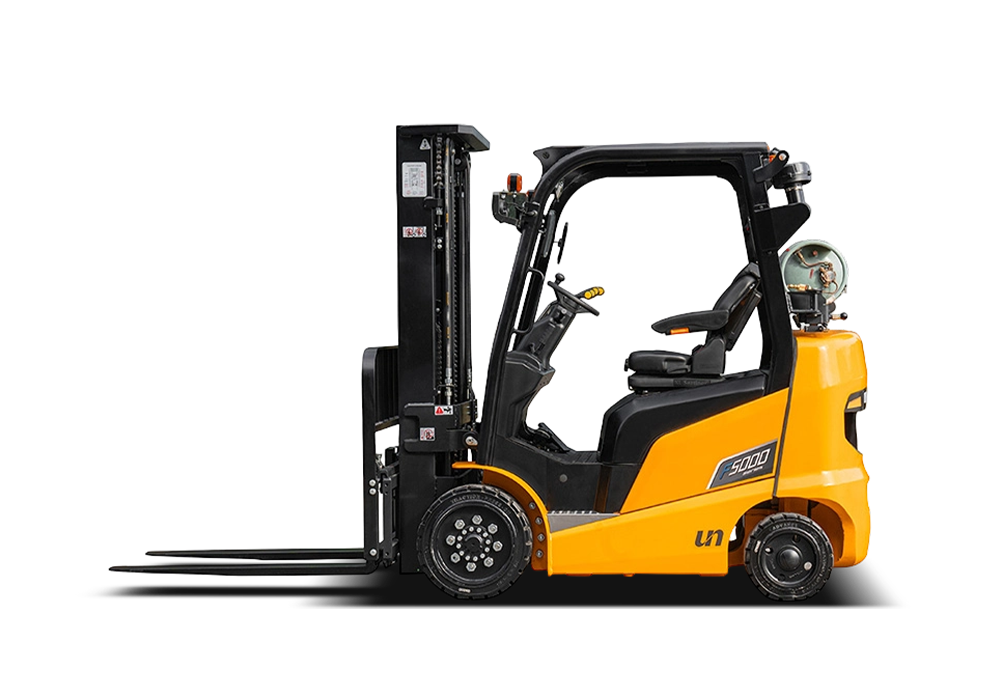
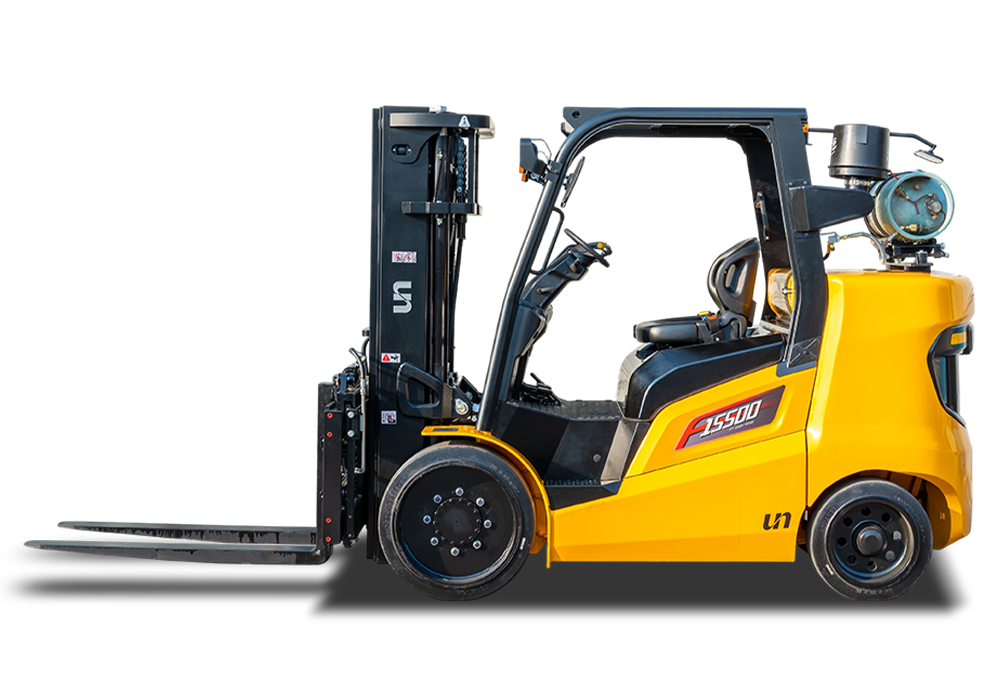
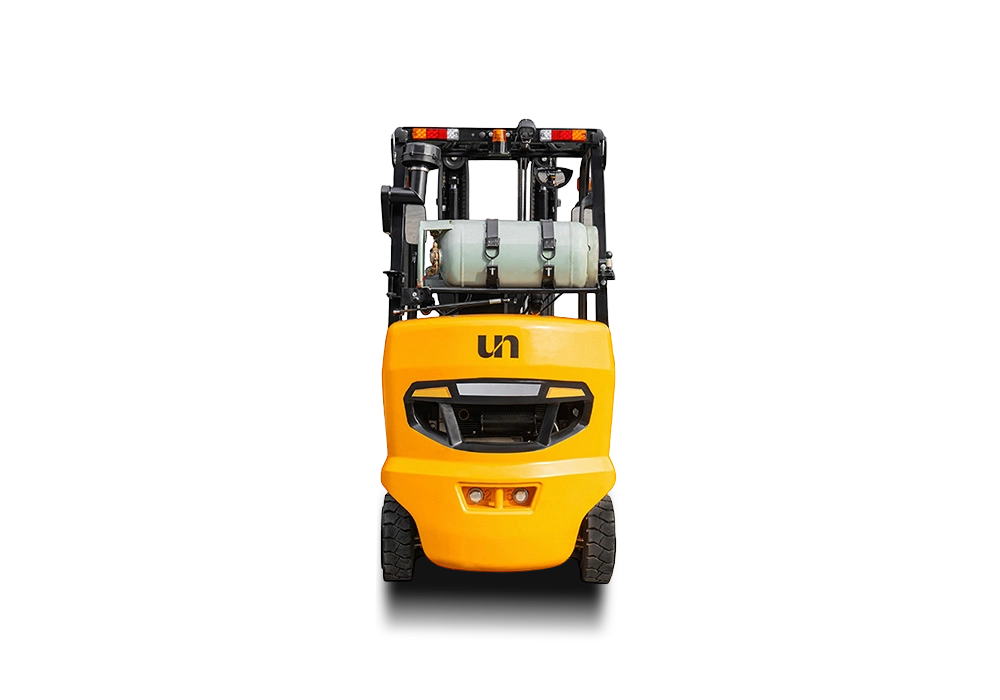 F Series 2.5T-3.2T LPG Gasoline Cushion Tire ForkliftThis compact cushion-tire forklift suits narrow warehouse aisles and multi-shift indoor work. Its LPG/gasoline power allows quick refueling and dependable performance in typical 2.0 to 3.2 tonne loading dock and production line applications.View Product →
For typical loading docks, production lines, and warehouse aisles in the 2.0 to 3.2 tonne range, an LPG cushion forklift delivers dependable power and a compact footprint. The F-series LPG/gasoline cushion model supports quick refueling and sustained multi-shift work without the exhaust restrictions that affect diesel in enclosed spaces.
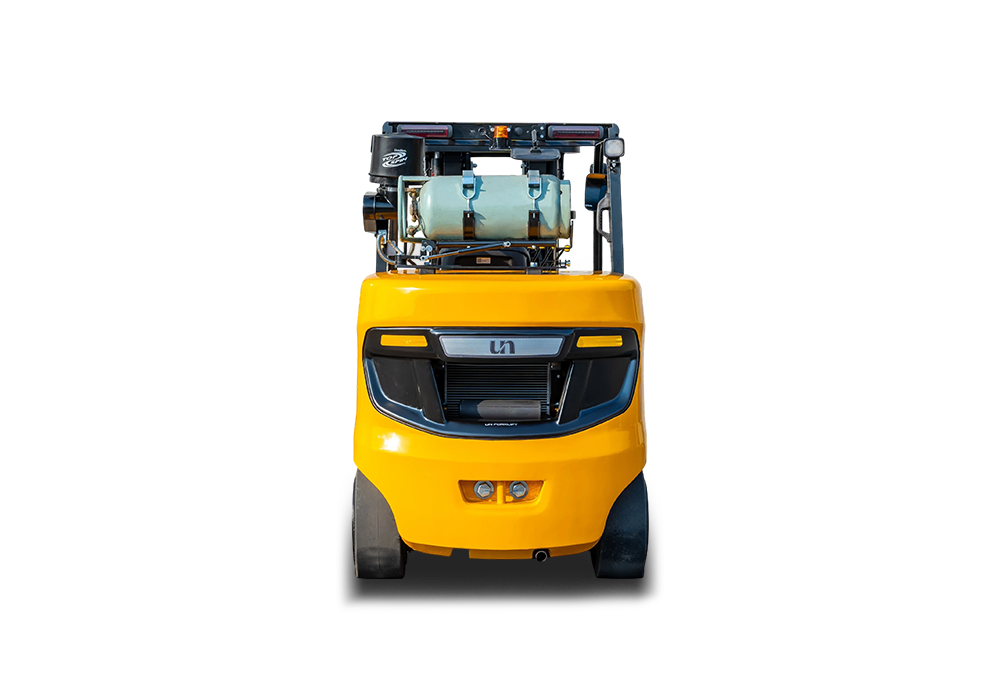 F Series 6.0T-7.0T LPG Cushion Tire Forklift for Heavy LoadsBuilt for North American industrial environments, this higher-capacity LPG cushion forklift combines strong lifting ability with a compact design. It suits heavy manufacturing halls handling large dies, coils, or fully loaded pallets while retaining low ride height stability.View Product →
When the job involves large dies, heavy coils, or fully loaded pallets in a heavy manufacturing hall, a 6.0 to 7.0 tonne LPG cushion forklift keeps the stability benefits of a low ride height while carrying substantially bigger loads.
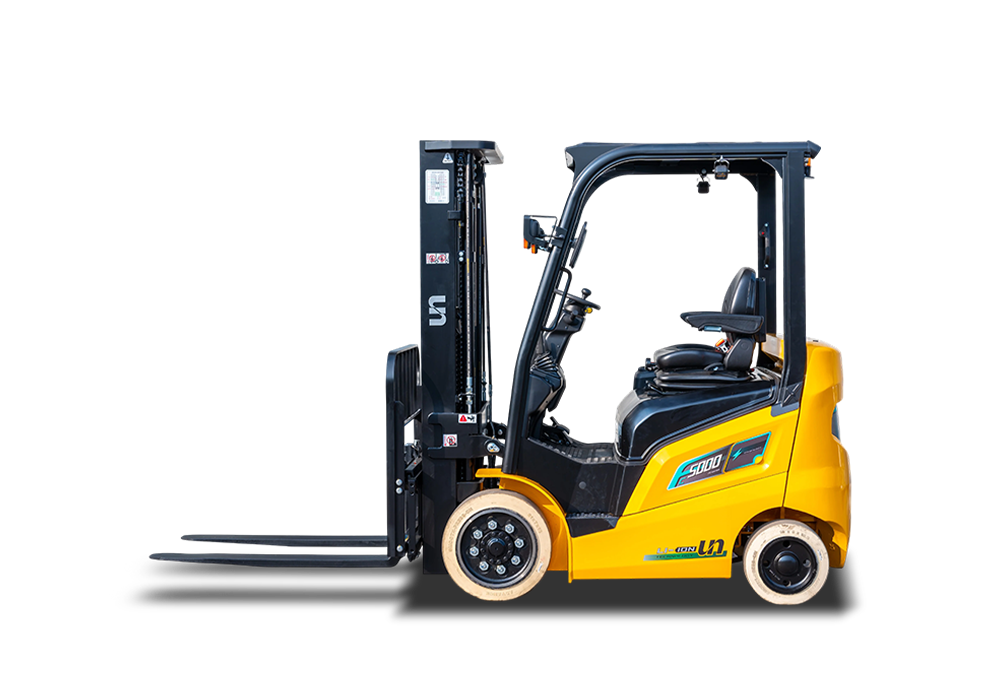
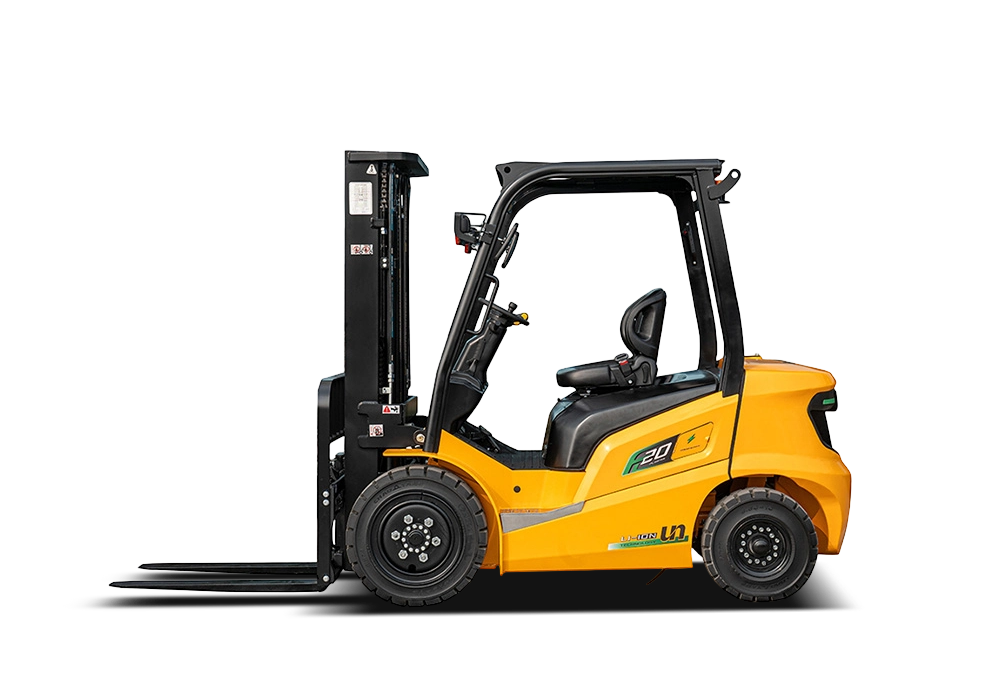
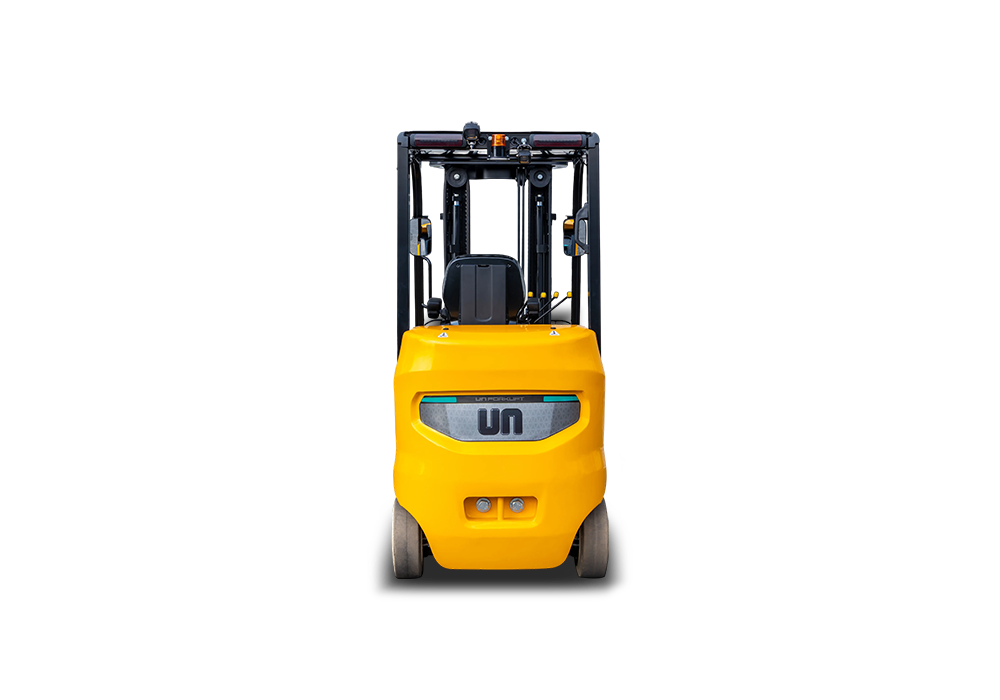 FC Series 2.0T-3.2T Li-ion Cushion Tire ForkliftThis electric cushion-tire forklift offers zero exhaust and lower noise, with opportunity charging during breaks. It matches the indoor footprint of engine-powered cushion trucks, making it a clean, quiet alternative for warehousing and light-to-medium industrial tasks.View Product →
If your site restricts emissions or noise, the FC-series lithium-ion cushion forklift in the 2.0 to 3.2 tonne range offers zero exhaust, lower operating sound, and opportunity charging during breaks. It can replace an engine-powered cushion truck without changing the truck's indoor footprint.
Building Your Shortlist
Before you settle on a tire type, walk the facility and rate the floor conditions honestly. The decision usually comes down to a few objective checks:
- Measure aisle widths and doorway heights to confirm clearance for a cushion truck.
- List the heaviest loads, lift heights, and daily shift hours.
- Identify any sections of cracked concrete, expansion joints, or outdoor travel routes.
- Compare energy or fuel costs for LPG, gasoline, and lithium options.
- Confirm local emission rules if the truck will spend time inside a warehouse.
If more than 80 percent of the duty cycle happens on smooth indoor surfaces, cushion tires belong on your shortlist. If the truck regularly crosses rough yards or unpaved lots, consider pneumatic or solid-pneumatic alternatives. There is no universal best tire, only the right match for a specific site and a specific load profile.
Final Recommendation
Cushion forklift tires earn their reputation in exactly the places most forklifts spend their working hours: flat, hard, indoor floors. The solid rubber construction cuts maintenance, the low profile improves stability, and the generous contact patch supports confident travel and lifting. Start with a floor audit, then choose a forklift whose tire type, power source, and capacity match the rest of your operation.
For exclusive deals and latest offers, sign up by entering your email address below.
Stay In Touch
ADDRESS : NO.1 ROAD ONE, XINDENG NEW DISTRICT, FUYANG, HANGZHOU, ZHEJIANG, CHINA 311404.
PHONE : +86-571-8688 8355 (AMERICA)
PHONE : +86-571-8886 9363 (EUROPE)
PHONE : +86-571-8688 8377 (ASIA, AFRICA, OCEANIA)
EMAIL : [email protected]
EMAIL : [email protected](PARTS INQUIRY)

