


 中文简体
中文简体 Français
 русский
 Español
 عربى
عربى Deutsch



Diesel Forklift Buying Guide: Specs, Emissions, Safety, and Cost Considerations
Admin 2026-08-20A logistics supervisor stands at the edge of a gravel yard in steady rain. A diesel forklift has just lifted three tonnes of cement off a flatbed and is carrying it across muddy ground to a covered bay. There are no charging points, the shifts run back to back, and the nearest power outlet is a hundred meters away. That scene explains why diesel forklifts remain the workhorse of outdoor material handling. The buying decision, however, should follow from measurable factors: load capacity, duty cycle, emissions rules, fuel and maintenance costs, and operator safety. Here is how to evaluate them before you sign the order.
Why diesel forklifts remain the benchmark for outdoor duty
For outdoor continuous duty, diesel remains the practical baseline because it delivers the highest usable energy density. A forklift can work a full shift on one tank in most outdoor cycles, then refuel in minutes. No battery bay, no charge schedule, no mid-shift swap. Diesel engines also produce high torque at low engine speed, which is exactly what a forklift needs when inching into a rack, climbing a ramp, or pulling a load off a truck bed.
Ruggedness follows from the design. A diesel forklift carries a heavy chassis, a reinforced mast, and pneumatic tires that absorb the punishment of gravel and potholed yards. Where repair support is thin, the mechanical simplicity of a diesel drivetrain is an advantage: field mechanics understand it, and parts are available across most continents.
None of this makes diesel the right answer for every site. Indoor warehouses with air-handling limits, food plants, and facilities under strict carbon budgets often point to a lithium solution. But where the load is heavy, the ground is hard, and the schedule is continuous, a diesel truck is the pragmatic baseline. If your operation matches those conditions, review our construction material handling applications to confirm the pattern.
Specifications that actually change the buying decision
Forklift brochures list many numbers, but three groups matter most when matching a diesel forklift to a job.
Rated capacity and load center
Capacity is quoted at a load center, usually 500 mm for counterbalance trucks from 1.5 to 10 tonnes. Move the load's center of gravity farther from the mast and the safe capacity drops; a 3.0 t truck rated at 500 mm may only handle 2.4 t at 700 mm. Attachments such as side shifters reduce usable capacity further because they add weight ahead of the pivot point. Ask for the capacity chart at your real load center, not just the sales sticker.
Mast and lifting height
Lifting height, free lift, and mast tilt control how the truck works with racking, trailers, and containers. Check the raised mast height and the closed height for container entry. For multi-level racking, confirm the lift height with the fork carriage in the position you actually use. A mast right for a 4.8 m rack will not be right for a 6 m one.
Transmission and tires
Most diesel forklifts in this class use a torque converter automatic, which suits stop-and-go work by transferring power smoothly under load. Hydrostatic transmissions offer precise inching but are less common in diesel models. Tires follow the terrain: pneumatic for gravel and dirt, solid pneumatic for yards where nails and debris are a constant threat.
Diesel versus electric: where the line sits
Rather than asking which technology is better, ask which one fits the duty cycle, the site infrastructure, and the regulatory environment. The table below summarizes the differences that matter most to buyers.
| Criterion | Diesel forklift | Electric or lithium forklift |
|---|---|---|
| Primary environment | Outdoor yards, docks, ramps, rough ground | Indoor warehouses, food plants, clean facilities |
| Refueling or recharging | A few minutes at the diesel tank | Battery change or a 1-2 hour charge for lithium |
| Tailpipe emissions | CO, NOx, and particulate matter from the engine | Zero emissions at the point of use |
| Noise at the operator ear | Higher, with continuous engine sound | Quieter, reducing fatigue in enclosed work |
| Upfront cost at equal capacity | Generally lower | Generally higher, offset by lower energy cost |
| Very cold outdoor work | Starts reliably with winter-grade fuel | Battery performance drops in extreme cold |
The pattern is consistent: diesel forklifts handle the edges of the operation while electrics handle the interior. The two types still coexist in the same fleet.
Emissions standards have become a purchasing constraint
Diesel forklifts sold into regulated markets must meet strict exhaust limits. The relevant standards are generally the US EPA Tier 4 Final rules and the EU Stage V regulation, which control nitrogen oxides and particulate matter from non-road engines in the power range forklifts use.
Compliance is not a minor detail. Manufacturers use electronic fuel injection, diesel oxidation catalysts, diesel particulate filters, and often selective catalytic reduction with diesel exhaust fluid. This equipment adds cost and maintenance, and it changes the buying decision: a machine configured for one market may not be legal in another, and grey imports with older engines can fail inspection, create liability, and hurt resale.
Three things follow. First, confirm the model is certified for the region where it will work. Second, ask about regeneration and filter-service intervals, because an unmaintained diesel particulate filter will limit engine output. Third, compare the environmental picture honestly. Buyers who want diesel toughness with lower emissions can evaluate a diesel-to-lithium conversion or a standard lithium truck in the same chassis. Our checklist for choosing a diesel forklift covers these compliance issues in more detail.
Operating costs and the maintenance reality
Fuel is the first cost item. A 3.0 t-class diesel forklift in mixed cycles typically consumes about 3 to 5 liters per hour, depending on load weight, distance, and operator technique. At those rates, fuel can exceed the monthly payment on the truck itself.
Maintenance follows a predictable rhythm. Diesel engines need oil and filter changes at intervals that usually fall between 250 and 500 operating hours, air filter servicing more often, and coolant attention yearly. Water in diesel fuel is the classic cause of injector failure, so draining the water separator on schedule is not optional.
Other costs hide in daily use:
- Pneumatic tires wear faster on hard concrete; switch to solid pneumatic if the truck stays on paved surfaces.
- Hydraulic oil cleanliness affects the mast and steering; a minor leak shows up as slow lift speed before it becomes a puddle.
- Idling burns fuel and hours; a truck left running through breaks can burn more off-duty fuel than a full shift under load.
Match the service interval to the operating hours counter, not the calendar. Intermittent duty needs different scheduling than twelve-hour shifts, and the parts supplier should stock filters for the exact engine variant in your truck.
Safety essentials for diesel forklift operation
The most important safety fact: a diesel forklift produces carbon monoxide while running. These trucks are built for outdoor use, and operating them in enclosed spaces without extraction or ventilation is a serious risk. If the work area includes a covered dock, confirm the ventilation plan first.
Next is the pre-shift inspection. A five-minute walk-around covering brakes, steering, horn, lights, tires, forks, mast chains, and fluid leaks catches most problems before they become downtime or accidents. Operators should also follow the load chart and never lift more than the rating on the data plate.
Training is non-negotiable. Diesel forklift operation demands skill in load handling, ramp driving, and reversing with a mast that blocks forward vision. A certified operator who understands load center, tipping loads, and parking brake discipline produces fewer accidents and less machine wear. Record the training and refresh it when the machine or job pattern changes.
How to choose the right diesel forklift for your site
Start with the heaviest regular load, not the average. Fleet managers often size the truck so rated capacity sits at least 15 to 20 percent above the heaviest load, because the margin absorbs load center changes and attachments.
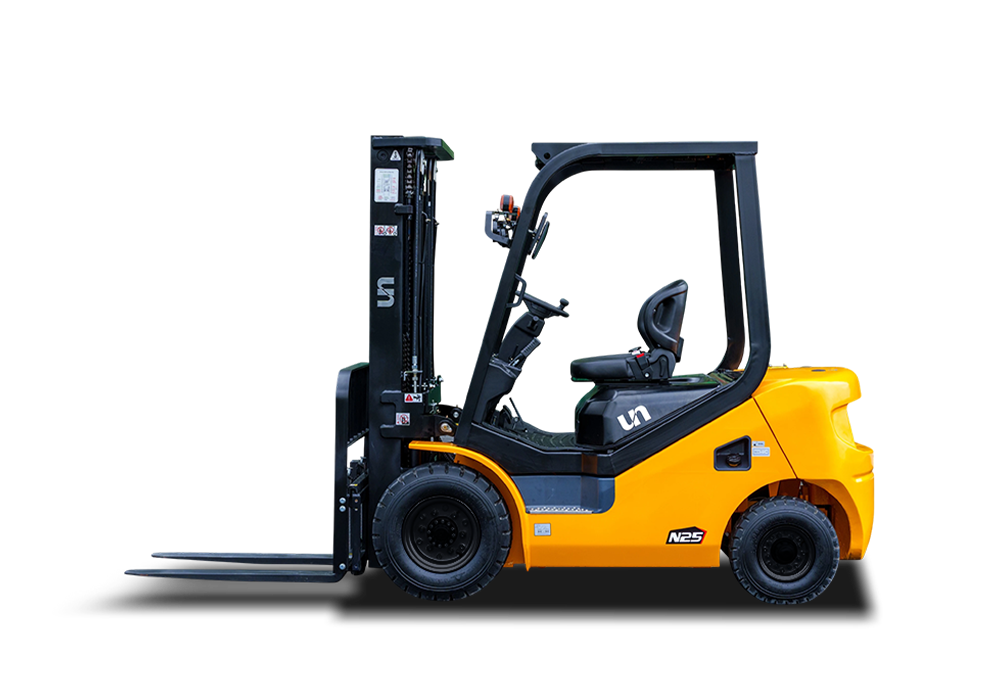
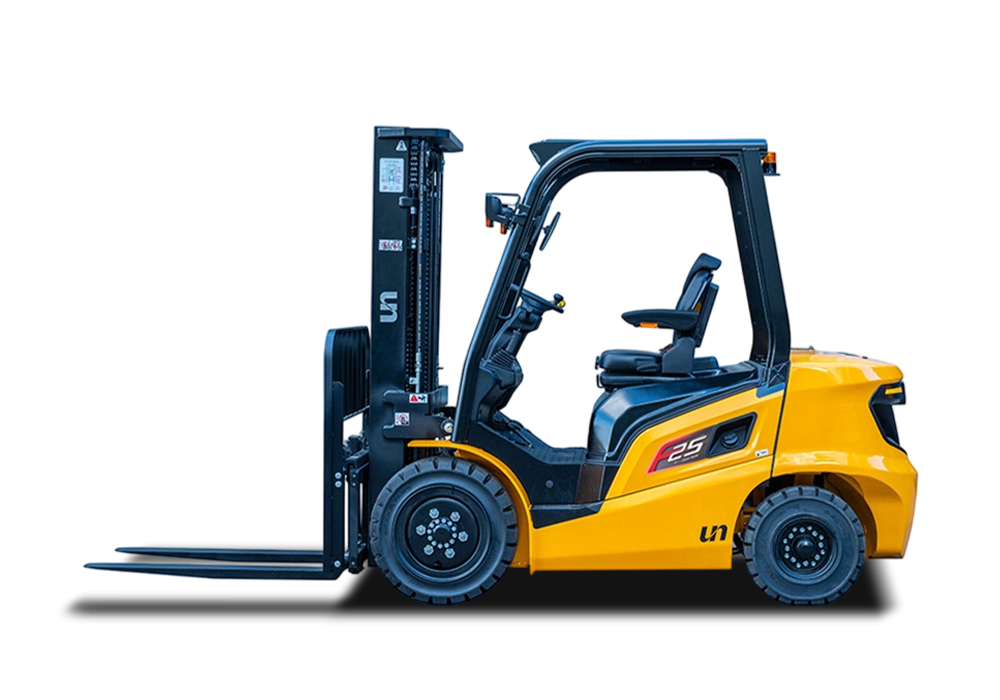
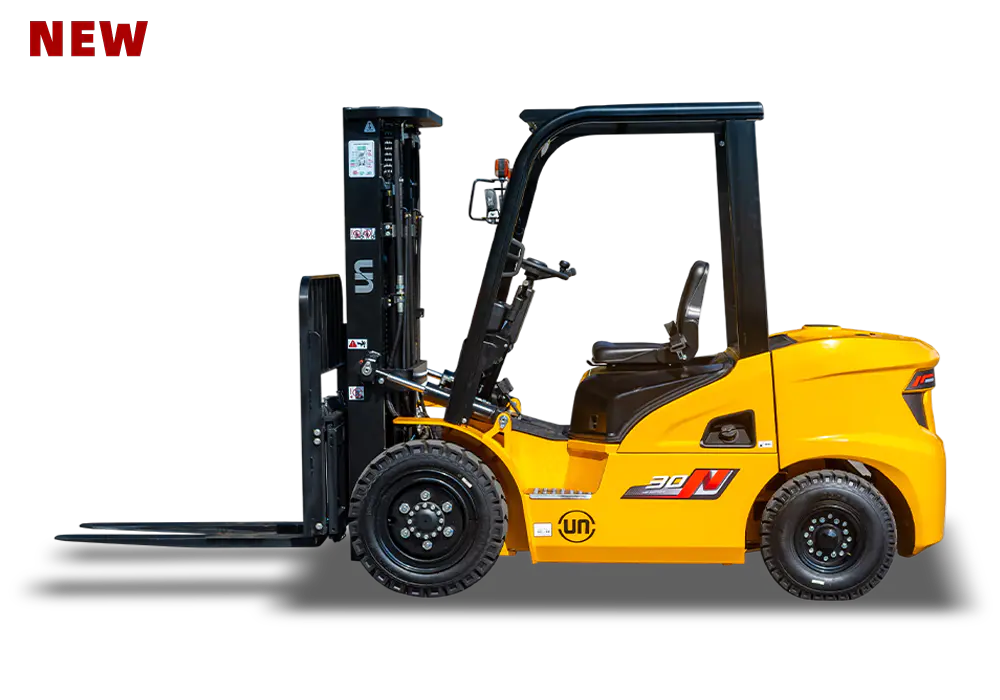
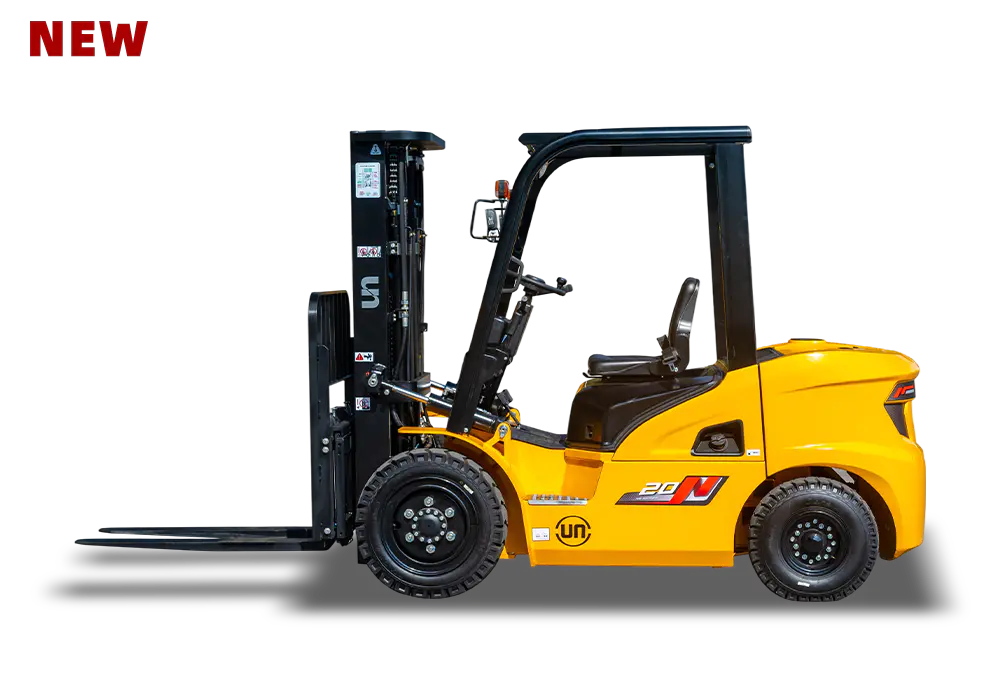
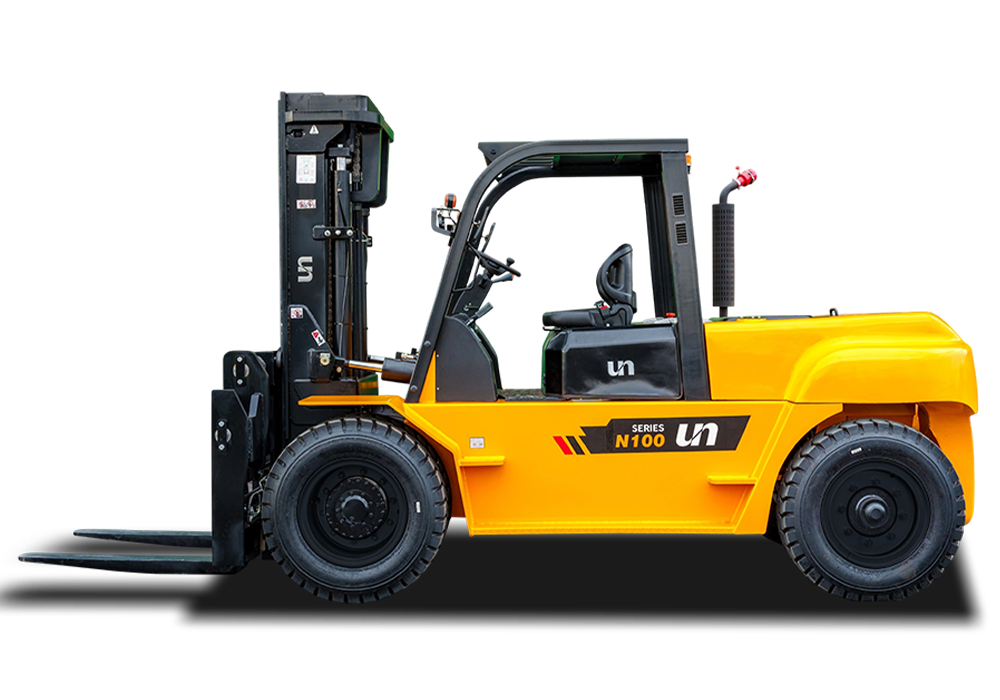
For palletized loads in the 1.5 to 2.5 tonne range, a compact counterbalance model such as the N-series 2-2.5 t diesel forklift suits narrow yards and loading docks. In the 4.5 to 5.5 tonne range, the F-series 4.5-5.5 t diesel forklift handles heavy unit loads like concrete blocks, castings, and machinery. For continuous heavy work in fabrication or bulk construction supply, a truck in the 8 to 10 tonne class such as the N-series 8-10 t heavy-duty diesel forklift provides the axle weight and braking margin the job demands.
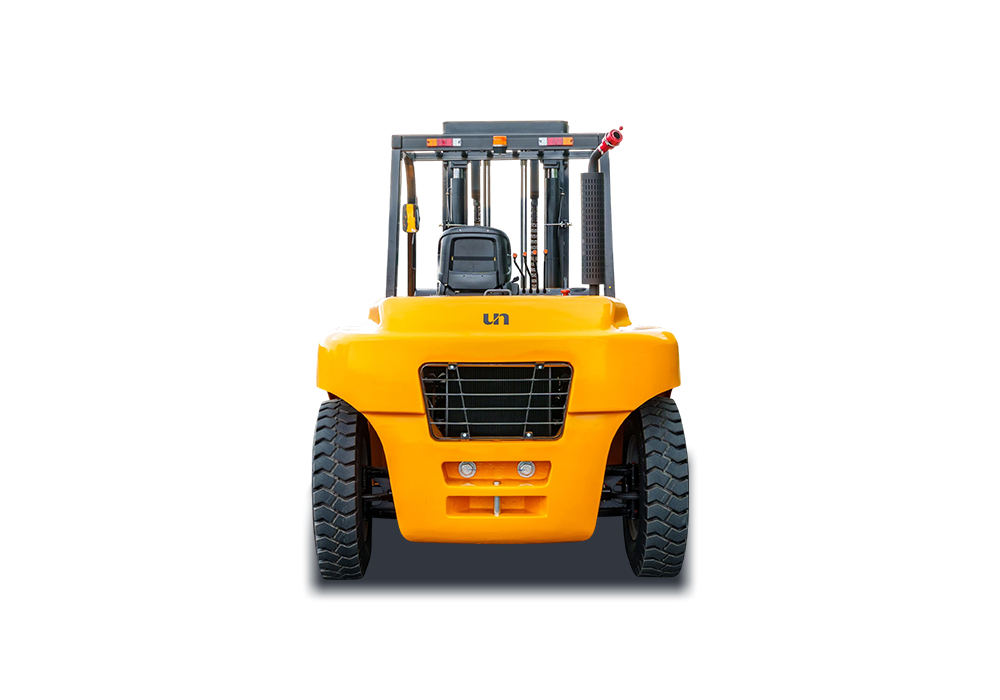 Wholesale N Series 8.0T-10.0T Heavy Duty Diesel Forklift Factory, Suppliers - ZhZhejiang UN Forklift Co., Ltd. is China wholesale N Series 8.0T-10.0T Heavy Duty Diesel Forklift suppliers and factory,N Series 8.0–10.0T...View Product →
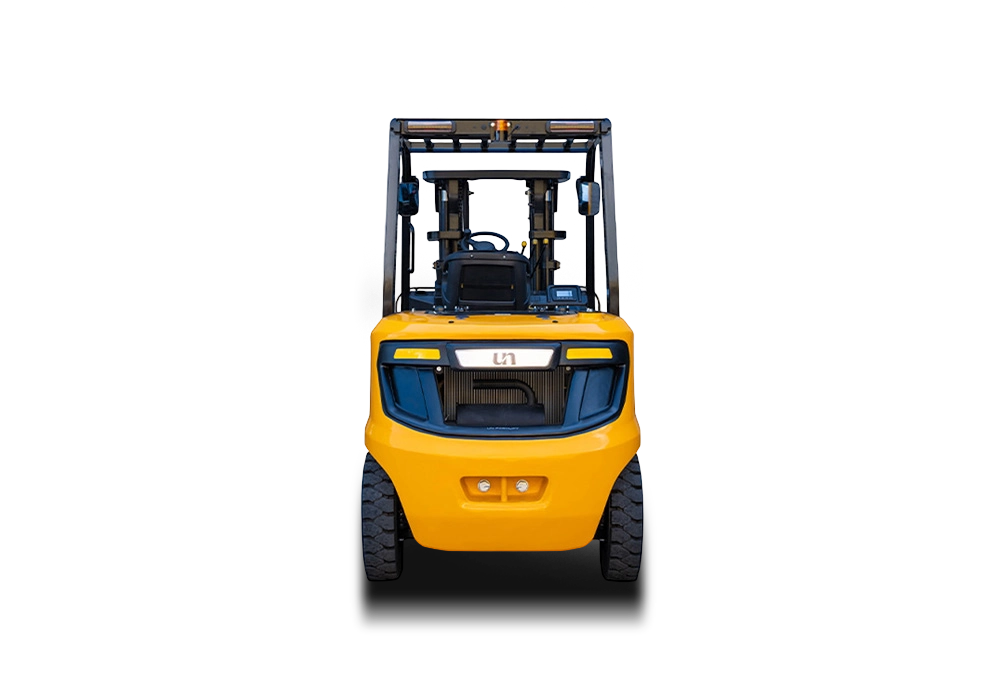 Wholesale F Series 4.0T-5.0T Diesel Forklift Factory, Suppliers - Zhejiang UN FoZhejiang UN Forklift Co., Ltd. is China wholesale F Series 4.0T-5.0T Diesel Forklift suppliers and factory,F Series 4.0–5.0 ton internal ...View Product →
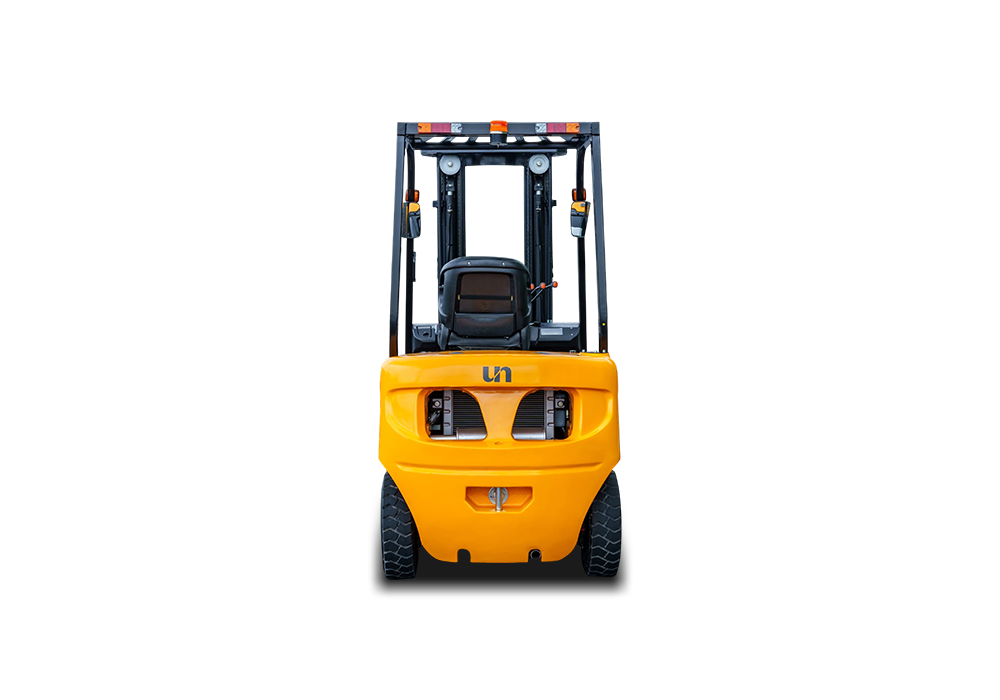 Wholesale N Series 2.0T-2.5T Diesel Forklift Factory, Suppliers - Zhejiang UN FoZhejiang UN Forklift Co., Ltd. is China wholesale N Series 2.0T-2.5T Diesel Forklift suppliers and factory,N Series 2.0T–2.5T Diesel Fork...View Product →
Beyond capacity, verify the dealer's parts stock, lead time for a cylinder head or injector, and the engine warranty. A diesel forklift is a long-life asset; a ten-year-old truck with a full service history can still be productive, but only if spare parts and skilled mechanics are within reach.
Diesel forklifts will keep anchoring outdoor material handling because they convert fuel into endurance where charging infrastructure cannot follow. Size the capacity from the real load, verify the emission certification for your market, and maintain the engine on a schedule tied to operating hours. Follow those rules, and a diesel forklift remains one of the most predictable equipment investments a plant can make.
For exclusive deals and latest offers, sign up by entering your email address below.
Stay In Touch
ADDRESS : NO.1 ROAD ONE, XINDENG NEW DISTRICT, FUYANG, HANGZHOU, ZHEJIANG, CHINA 311404.
PHONE : +86-571-8688 8355 (AMERICA)
PHONE : +86-571-8886 9363 (EUROPE)
PHONE : +86-571-8688 8377 (ASIA, AFRICA, OCEANIA)
EMAIL : [email protected]
EMAIL : [email protected](PARTS INQUIRY)

