


 中文简体
 Français
 русский
 Español
 عربى
 Deutsch




Forklift Hydraulic Oil Type: ISO VG 32, 46 or 68 and How to Choose Right
Admin 2026-11-12A 3.0 t diesel forklift with 2,400 hours on the meter starts its shift with a chattering mast. Lift speed drops for the first ten minutes, the pump whines, and someone tops up the reservoir from whatever drum is nearest — occasionally engine oil, occasionally automatic transmission fluid. A fortnight later the lift cylinder seals weep and the argument starts about "what oil does this thing actually take?"
Short answer: an ISO VG 46 anti-wear hydraulic oil (HM) is the default fill for the large majority of forklifts unless the OEM manual says otherwise. ISO VG 32 is the usual alternative for cold stores and unheated winter yards, while ISO VG 68 turns up on heavy trucks and hot sites. Why those three grades dominate, where the exceptions sit, and what to verify before a drum reaches your shelf is set out below.
The Short Answer: VG 46 First, Two Exceptions Second
Most forklift hydraulic circuits are gear or piston pump systems running at roughly 16-20 MPa, with reservoir temperatures settling between 40 °C and 70 °C once the truck is warm. In that window a 46 cSt oil at 40 °C gives the pump enough film to protect bushings and gears, while staying fluid enough that suction losses at the inlet remain low. That balance is why VG 46 is the single most common factory fill across diesel, LPG, gasoline and electric trucks in the 1.5-5 t class.
| Viscosity grade | Typical ambient window | Where it is used | Trade-off to watch |
|---|---|---|---|
| ISO VG 32 (HM) | Below roughly 10 °C | Cold stores, unheated docks, small-displacement pumps, some reach trucks | More internal leakage and slower lift once the oil runs hot |
| ISO VG 46 (HM) | About 10-35 °C | The standard fill on most 1.5-5 t IC and electric trucks | None if kept clean; the safe default for mixed fleets |
| ISO VG 68 (HM) | Above roughly 35 °C, or continuous heavy load | 8-10 t heavy-duty trucks, foundries, rough terrain, hot climates | Sluggish cold starts and higher power draw before warm-up |
| HV 46 or HV 68 | Wide swings, e.g. -20 °C to 40 °C | Outdoor yards with cold nights and hot days, cold storage served by outdoor fleets | Higher cost per litre; confirm OEM approval before switching |
The same truck sold into Vietnam and into Norway may leave the factory with different fills, so treat any table — including this one — as a starting point. The grade stamped on the reservoir cap or listed in the service manual wins, and it is worth photographing that plate during commissioning so nobody has to guess three years later.
What the Grade Number Actually Tells You
ISO viscosity grades are defined by ISO 3448 as kinematic viscosity at 40 °C in centistokes (cSt, equivalent to mm²/s). VG 46 covers 41.4-50.6 cSt, a tolerance band of about ±10%. The number describes viscosity only — it says nothing about additive chemistry, so two oils both labelled VG 46 can behave very differently inside a pump.
What the machine cares about is the pair of extremes. At operating temperature the oil must stay thick enough to hold a lubricating film in pump and valve clearances; too thin and internal leakage rises, lift speed drops and heat builds. At cold start it must stay fluid enough that the pump draws it without cavitating. The gap between those two states is where multi-grade HV oils justify their price.
How far viscosity moves with temperature
A single-grade VG 46 oil thickens by roughly eight times between 40 °C and 0 °C. In an unheated warehouse on a frosty morning that is the difference between a clean start and ten minutes of pump whine, filter bypass and aerated oil.
Approximate kinematic viscosity (cSt) at 0 °C and 40 °C
Fluid Families: HM, HV and When Biodegradable Makes Sense
The grade tells you the thickness; the family tells you what is in the oil. For forklift work four families cover almost every situation.
| Family (ISO / DIN code) | Base and additives | Fits best with | Notes |
|---|---|---|---|
| HM | Mineral base with anti-wear (often zinc) additives | Nearly all standard forklift hydraulics | Best value; the usual factory fill |
| HV | Mineral base plus viscosity-index improvers | Wide temperature swings, cold stores served from outdoor yards | Stays fluid when cold, holds film when hot; higher price |
| HEES / HETG | Synthetic ester or rapeseed base, readily biodegradable | Food and beverage plants, ports, forestry, leak-sensitive sites | Check seal and paint compatibility; shorter service life |
| HFA / HFC | Water-based, fire-resistant | Special high-fire-risk processes only | Never interchangeable with mineral oil; requires OEM approval |
Most buyers only need the first row. The biodegradable row deserves a second look where a burst hose becomes an environmental incident rather than a cleanup job, but plan the switch deliberately: esters can lift old deposits and attack certain paints and elastomers, and intervals usually shorten.
Matching the Oil to the Machine
Diesel, LPG and gasoline trucks
On an internal combustion truck the hydraulic reservoir takes HM 46 while the engine and transmission run entirely separate fluids. Rushed servicing is where mistakes happen: engine oil in the hydraulic tank causes foaming and varnish, and hydraulic oil in the transmission causes clutch slip. A 3.0 t IC truck doing 2,000 hours a year will use roughly 60-80 litres of hydraulic oil at the first fill and small top-ups thereafter.
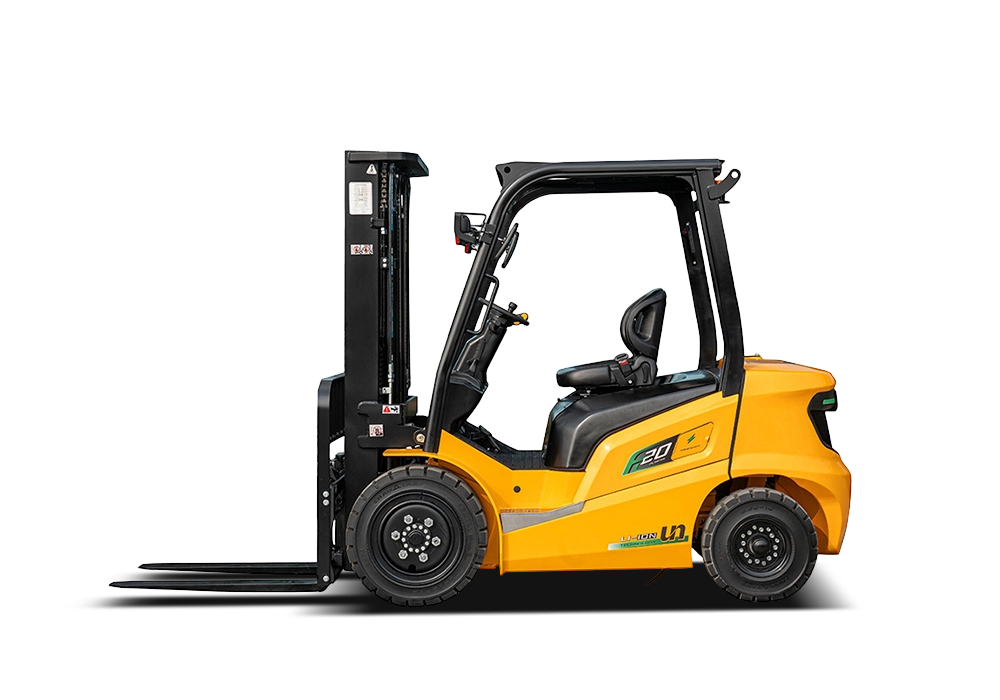
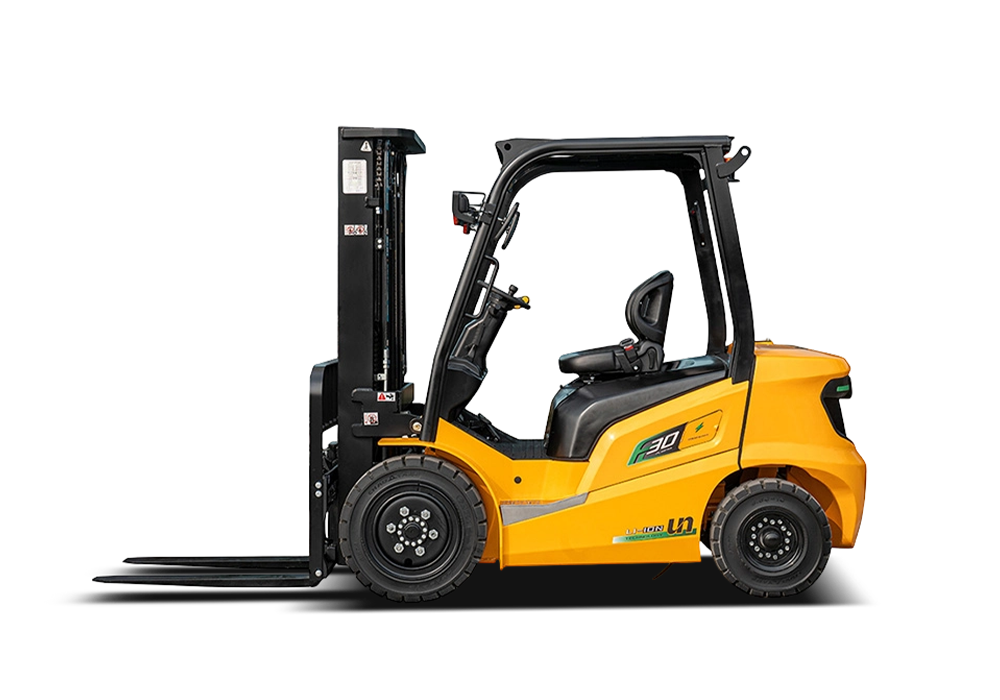
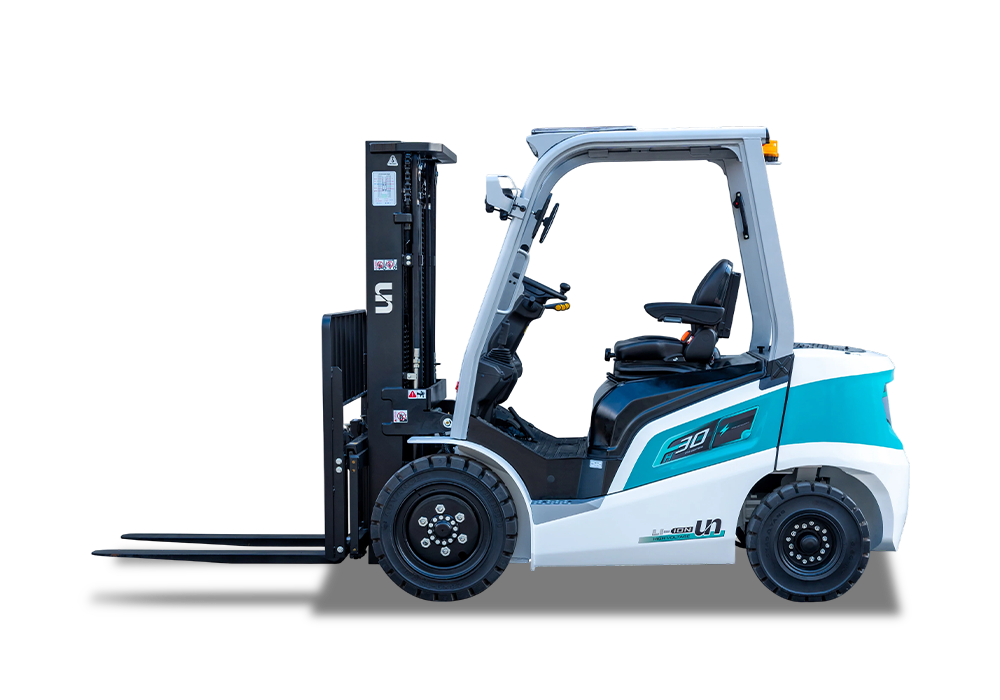
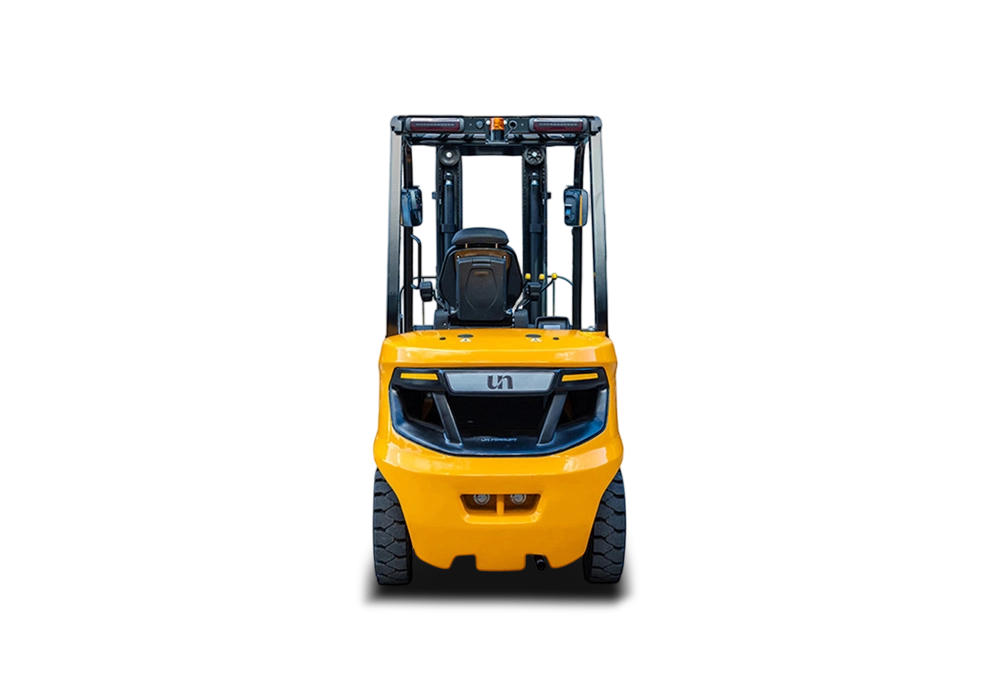 F Series 2.0T–2.5T Diesel ForkliftA diesel internal combustion forklift in 2.0–2.5 t capacities with multiple engine options, suited to material handling where engine and hydraulic fluids are serviced separately.View Product →
Electric trucks and cold stores
Battery electric trucks still have a hydraulic circuit for lift, tilt and side shift, and the same HM 46 usually applies. Cold-store fleets are the regular exception: many operators specify VG 32 to keep lift speed predictable at -25 °C, accepting slightly more leakage when the truck works in a warm dock. High-voltage lithium trucks have the same requirement — the battery changes, the pump does not.
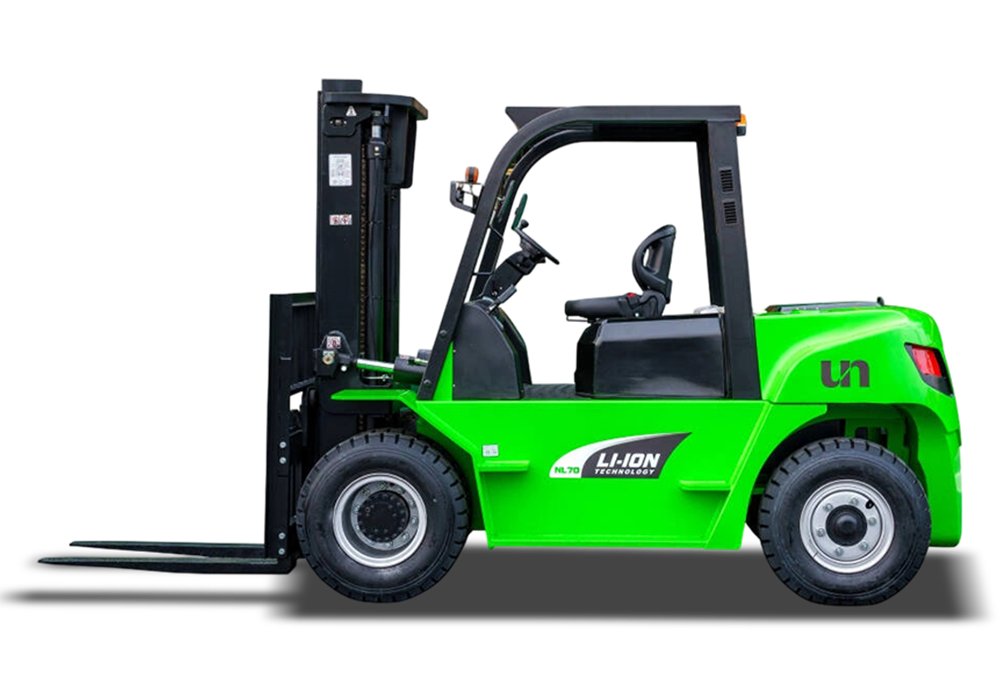
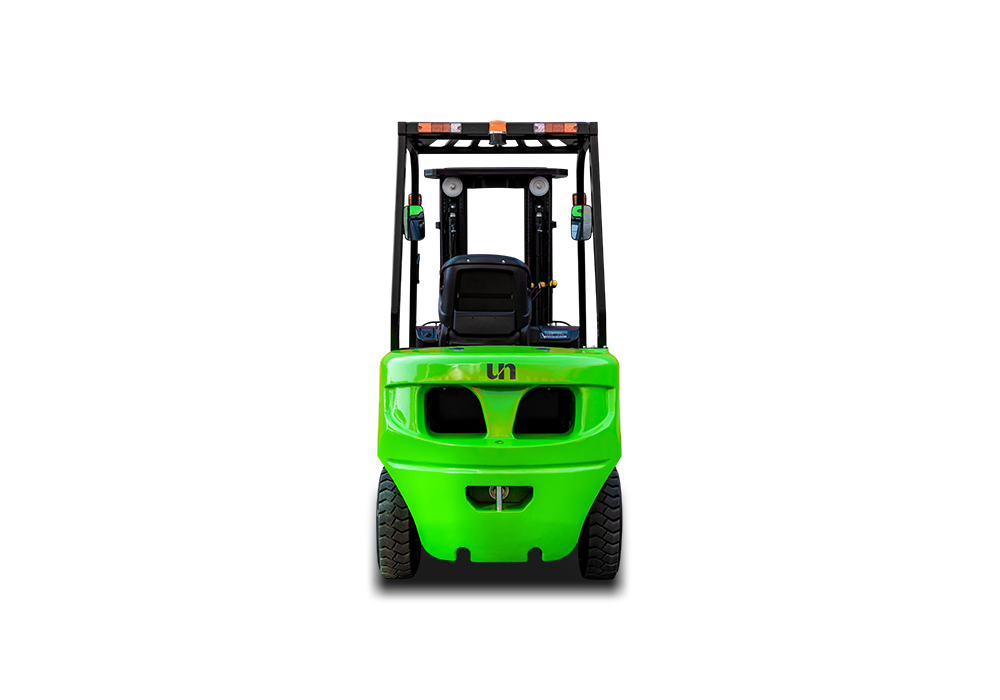 NL Series 2.0T–2.5T Li-ion Battery ForkliftA light-duty electric forklift with 2,000–2,500 kg capacities, fast lithium charging and zero emissions, relevant when considering hydraulic needs for battery-electric trucks.View Product →
Reach trucks, VNA and rough terrain
Narrow-aisle and very-narrow-aisle trucks run tight-tolerance mast hydraulics where cleanliness outranks grade choice; a VG 32 or 46 meeting the OEM specification and delivered at ISO 18/16/13 is usually correct. Rough terrain trucks work the other end of the scale: dust, vibration and sustained load push many operators toward VG 68 and more frequent breather and filter attention.
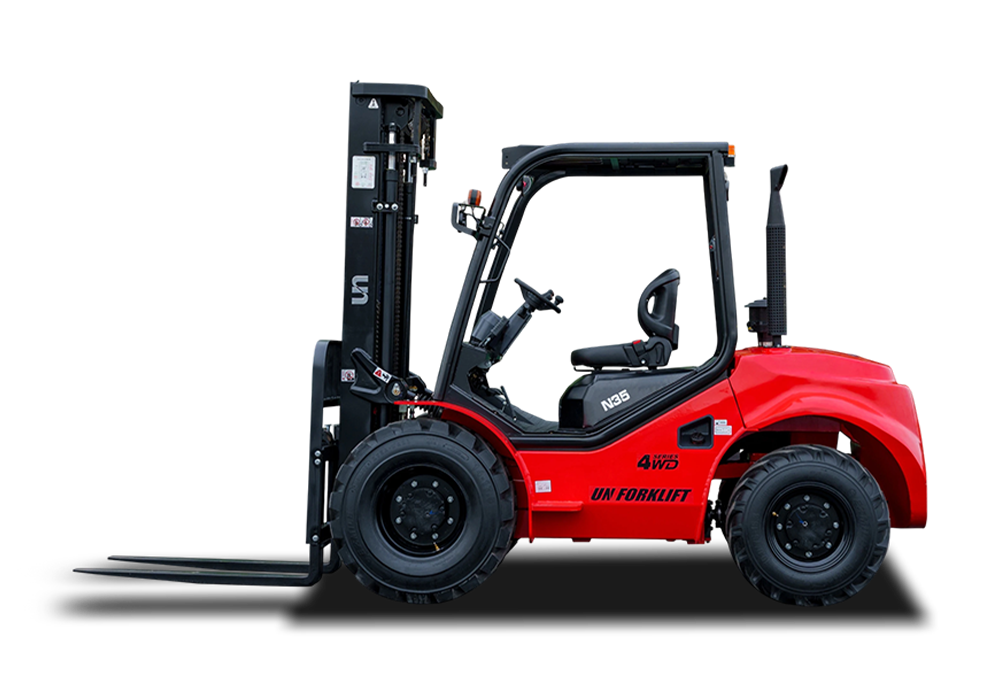
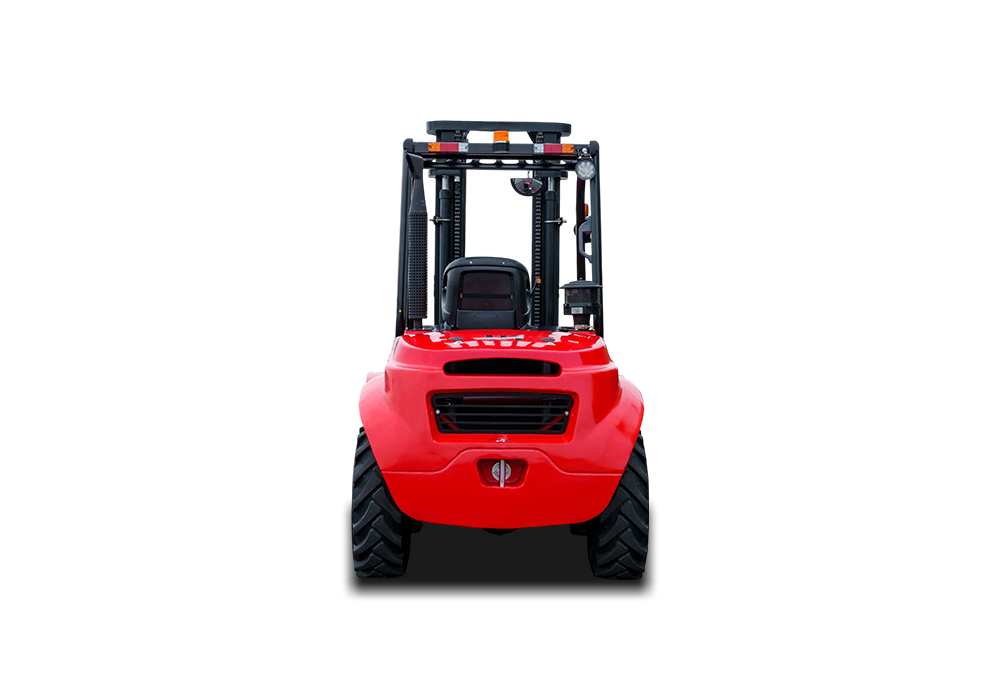 N Series 2.5T–3.5T 4WD Rough Terrain ForkliftA four-wheel-drive rough-terrain forklift for 2,500–3,500 kg loads, with differential locks and high ground clearance for dusty, uneven construction, forestry, mining and agricultural work.View Product →
Cleanliness and Water Matter More Than the Label
A premium VG 46 poured through a dirty funnel becomes an average VG 46 within a week. For most forklift hydraulics, target the following:
- Fluid cleanliness of ISO 4406 18/16/13 or better; VNA and high-cycle fleets often specify 17/15/12.
- Return filtration rated 10 micron absolute, with filters changed on hours rather than on appearance.
- Water content below 0.05% by volume — free water emulsifies, rusts valve spools and accelerates additive depletion.
- Oil analysis every 500-1,000 hours covering viscosity at 40 °C, particle count, water and additive markers such as zinc.
Reservoir breathers are the usual entry point for contamination in dusty yards, and a missing or split breather cap explains a surprising number of repeat failures.
Change Intervals and the Mixing Trap
Most manufacturers publish a hydraulic oil change around 1,000-2,000 hours, and that figure assumes normal duty and a clean system. Practical rules that hold up in service:
- Baseline the interval from the manual, then let oil analysis extend or shorten it — a stable viscosity and low particle count at 1,500 hours is evidence you can act on.
- Top up with the same product where possible; blending two HM oils from different makers is usually tolerable, but it dilutes the additive package you paid for.
- Never substitute engine oil, ATF or gear oil for hydraulic oil, even temporarily. Detergent engine oils emulsify water and foam under pressure.
- When switching families — mineral to biodegradable, for example — drain, flush and replace the filter rather than diluting the old charge.
- Log every top-up with product name and volume; unexplained consumption of more than a few litres a month points to a leak or a failing cylinder seal.
These habits sit naturally alongside wider routine maintenance routines such as mast lubrication, brake checks and tyre inspection.
Procurement Checklist Before the Drum Arrives
Hydraulic oil is a low-value line item that can idle a truck for a shift, so buy it with the same discipline as a spare part.
- Request the data sheet and confirm viscosity at 40 °C and 100 °C, viscosity index, pour point, zinc content and the cleanliness of the delivered oil.
- Buy in sealed containers where volumes allow; bulk deliveries need dedicated lines and clean couplings to avoid cross-contamination.
- Store indoors, keep caps tight and decant through a filter cart. A drum left open for a season absorbs moisture and dust.
- Match container size to consumption — four small pails often beat one drum that sits half-full for a year.
- Keep the OEM approval reference on file; if a pump fails inside warranty, documentation of the fluid used is the first thing an assessor asks for.
Fleets that treat hydraulic oil as a specification rather than a consumable usually see the payoff in lift speed consistency, longer pump life and fewer unscheduled stops — particularly in warehouse and logistics operations where a single down truck disrupts a whole shift. Confirm the grade once, write it on the reservoir, and the next top-up stops being a guess.
For exclusive deals and latest offers, sign up by entering your email address below.
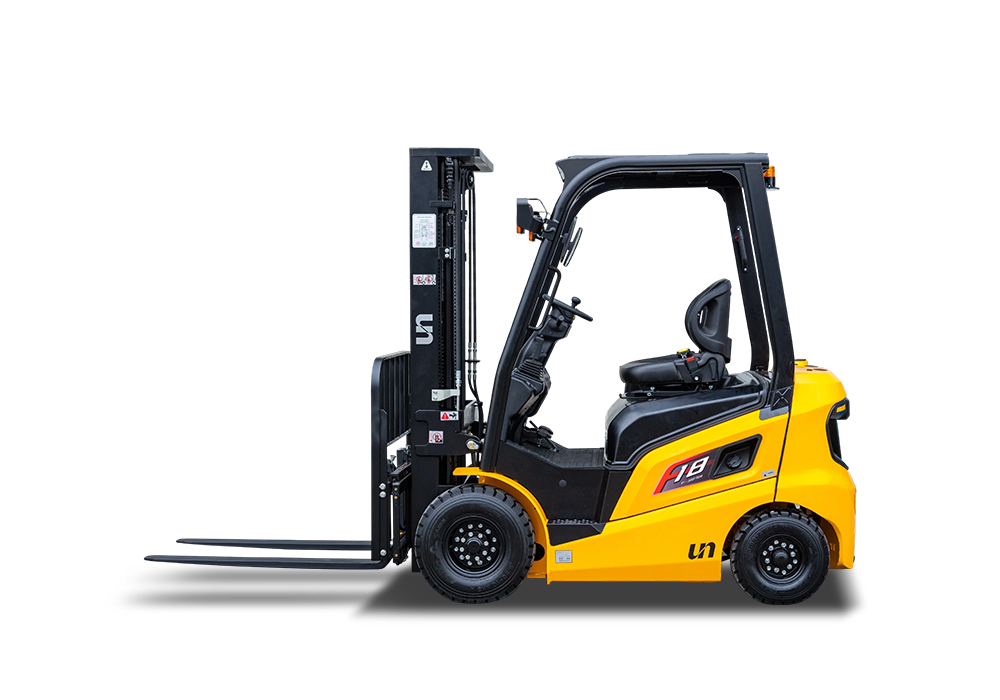
Stay In Touch
ADDRESS : NO.1 ROAD ONE, XINDENG NEW DISTRICT, FUYANG, HANGZHOU, ZHEJIANG, CHINA 311404.
PHONE : +86-571-8688 8355 (AMERICA)
PHONE : +86-571-8886 9363 (EUROPE)
PHONE : +86-571-8688 8377 (ASIA, AFRICA, OCEANIA)
EMAIL : [email protected]
EMAIL : [email protected](PARTS INQUIRY)

