


 中文简体
 Français
 русский
 Español
 عربى
 Deutsch




Choosing a Forklift for Construction: Terrain, Load, Power, and Cost per Hour
Admin 2026-10-29A project manager walks a freshly graded site with 120 pallets of concrete blocks on the access road and a trench cutting across the staging area. The warehouse forklift that works fine on smooth concrete will not cross that mud, and a loaded machine on a wet slope is an accident waiting to happen. The conclusion up front: the right forklift for construction is chosen by terrain, load, power, and cost per hour, in that order. This guide explains how a construction site changes the machine specification, which forklift classes earn their keep, and how to compare options without overpaying.
Why Construction Sites Need a Different Forklift
Construction material handling is not warehouse material handling. Loads are heavier, surfaces are unfinished, and weather rewrites the schedule. A construction forklift must cope with:
- Unfinished grades: gravel, mud, ruts and slopes change traction and stability.
- Mixed loads: blocks, lumber, rebar, roof tiles, and sometimes suspended loads on a hook.
- Outdoor operation: rain, dust, heat and cold stress tires, hydraulics, batteries and operators.
- Rough travel: debris and potholes wear steering, masts and drivetrains faster than concrete floors.
The machine families used on construction sites differ from typical warehouse fleets. The main families are shown below.
- Construction forklift families
- Rough terrain forklifts – pneumatic tires, 2WD or 4WD, 2.5 t and 3.5 t classes
- Heavy-duty internal combustion forklifts – 5 to 10 t, diesel or LPG
- LPG and gasoline forklifts – 1.5 to 3.5 t, mixed indoor and outdoor work
- Lithium-ion electric forklifts – 2 to 10 t, growing share on sites
The Main Forklift Types Used in Construction
Rough Terrain Forklifts
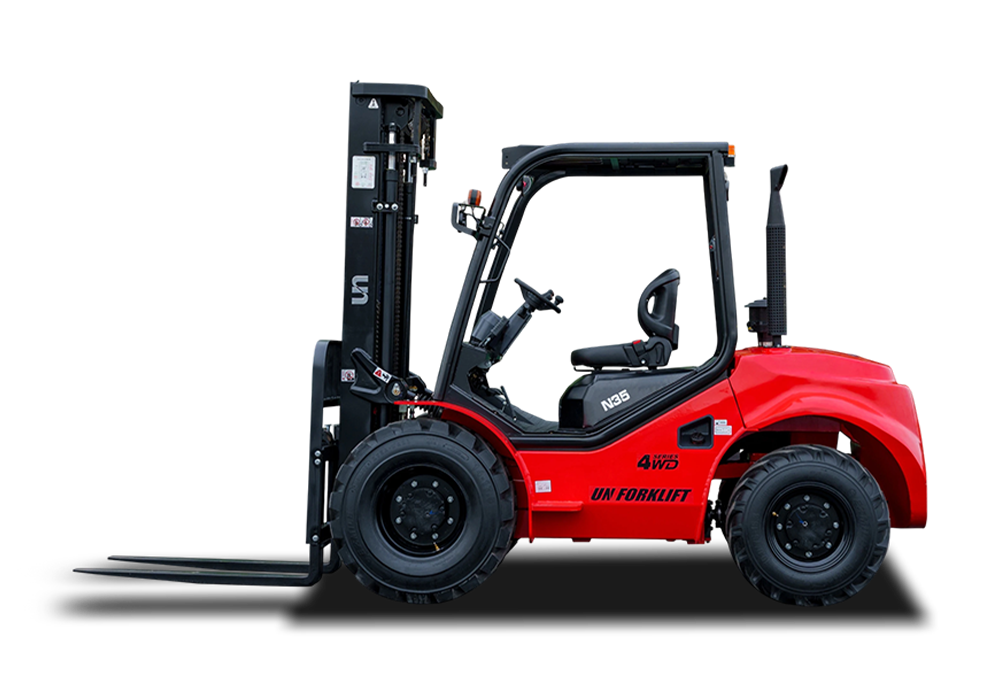
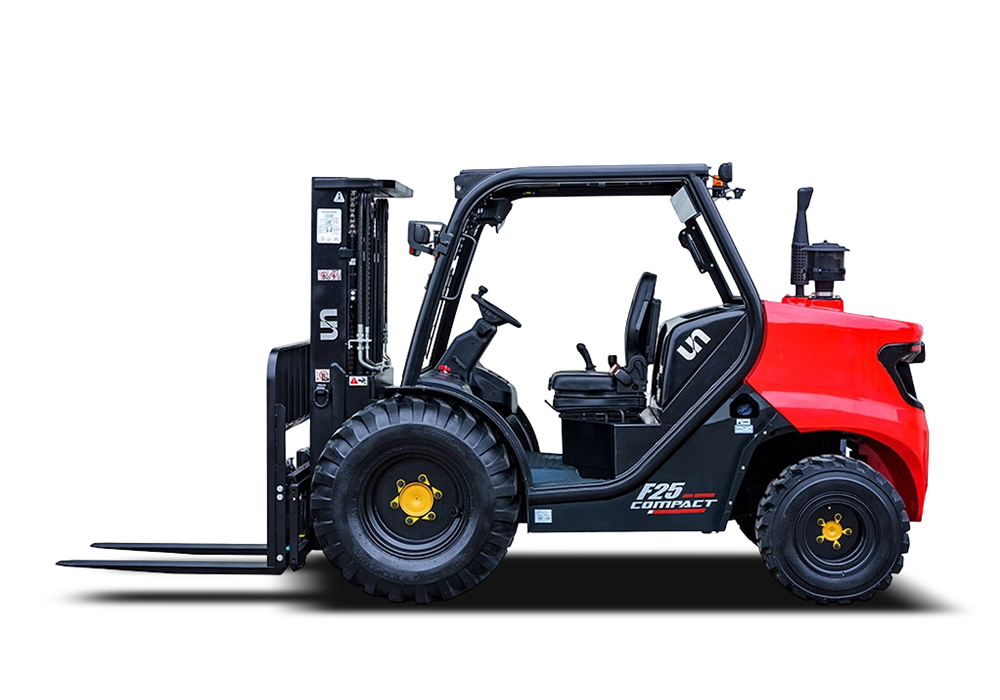
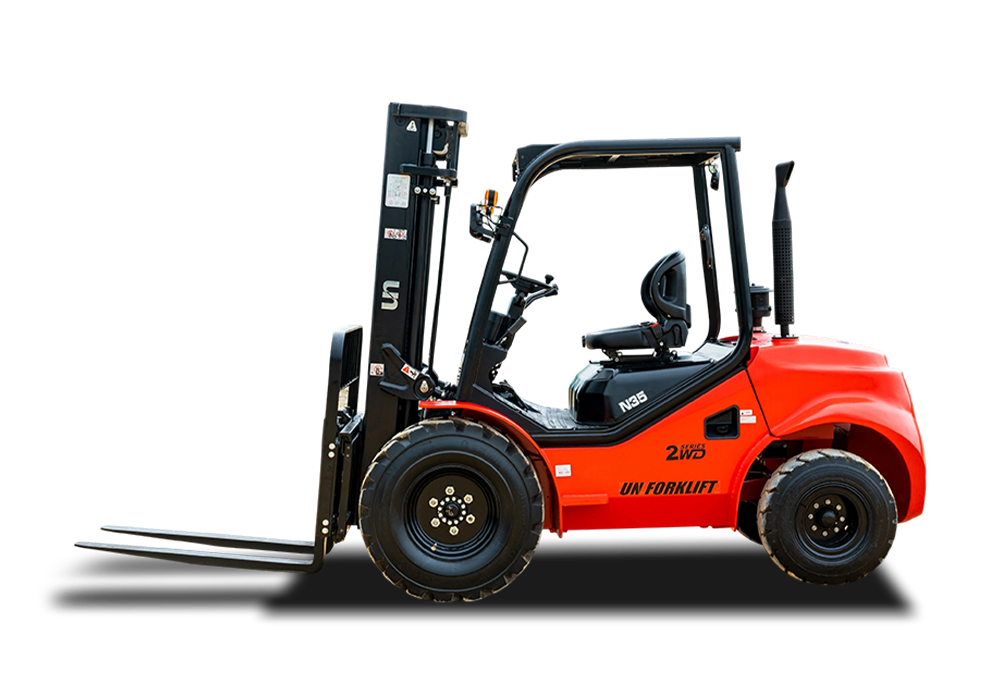
Rough terrain forklifts are the default workhorses on a construction site. They use large pneumatic tires with deep treads, higher ground clearance, and a reinforced frame to absorb shock loads. Typical capacities run from 2.5 t to 3.5 t, which covers most palletized building material. On firm gravel or compacted earth, two-wheel drive is enough; as soon as mud, wet clay or a ramp appears, four-wheel drive is the difference between moving material and calling for a tow. The N-series rough terrain models are designed for exactly this range of conditions.
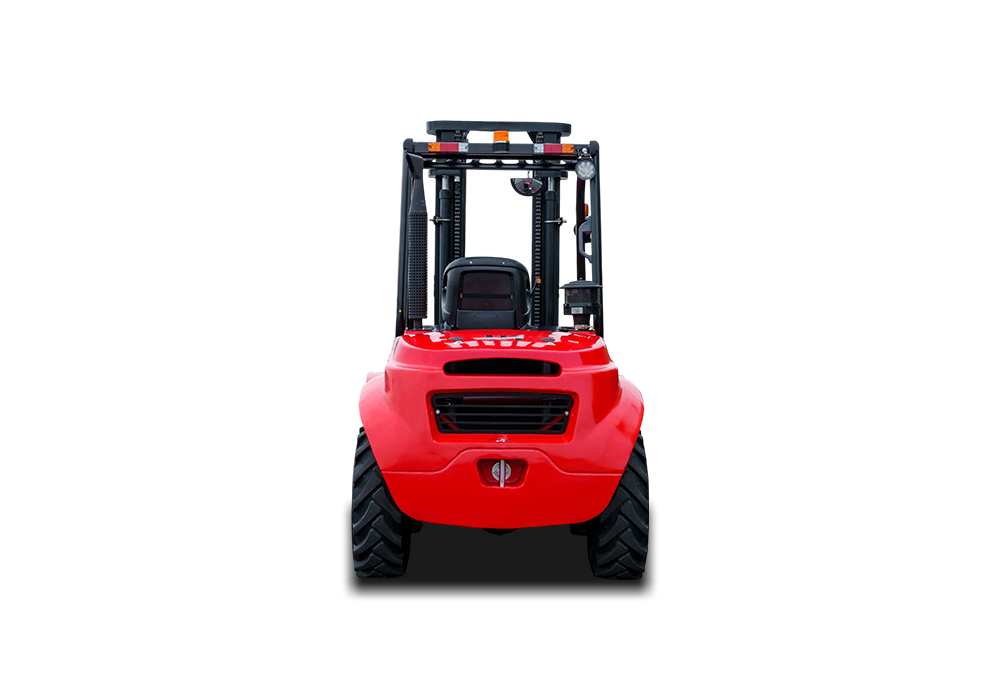 N Series 2.5T-3.5T 4WD Rough Terrain Forklift for Tough SitesThis compact 4WD machine handles mud, wet clay and ramps with differential lock and high ground clearance, ideal for palletized materials on construction grounds.View Product →
Heavy-Duty Internal Combustion Forklifts
When the job involves precast panels, steel bundles, concrete pipes or equipment crates, the 5 to 10 t class takes over. These machines are usually diesel powered, with solid or large pneumatic tires depending on the surface. They provide the drawbar pull and braking needed on ramps, where a lighter machine lacks the mass to be stable. On a site that handles heavy prefabricated elements regularly, one heavy-duty forklift replaces a mobile crane for horizontal movement and low-level stacking.
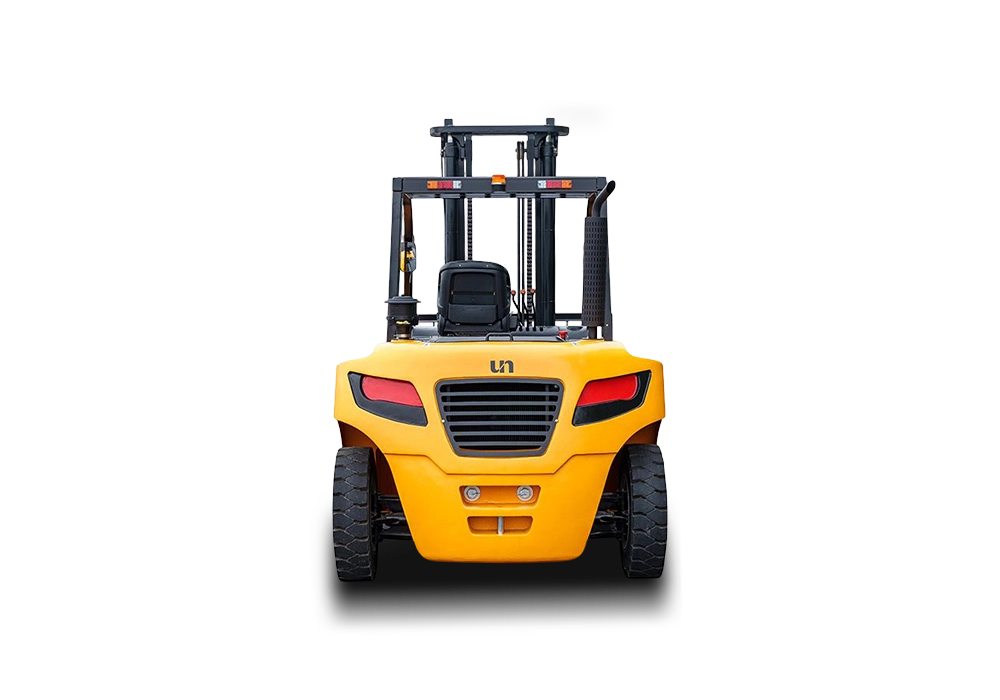 N Series 5.0T-7.0T Heavy Duty Diesel Forklift for Precast and SteelWith 5 to 7 ton capacity and powerful diesel options, this forklift replaces a mobile crane for moving heavy prefabricated elements on ramps and uneven surfaces.View Product →
Lithium-Ion and Electric Forklifts
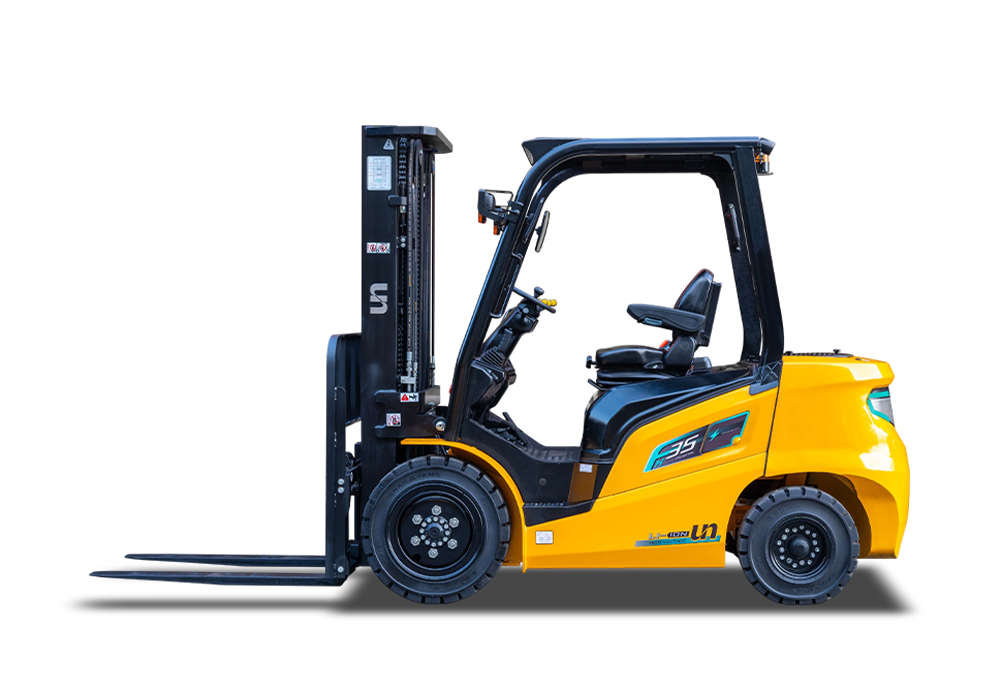
Electric no longer means small or weak. Lithium-ion forklifts now cover 2 to 10 t, which changes the construction power debate. A lithium machine produces no local exhaust, is quiet enough for noise-restricted sites, and can be opportunity-charged during breaks to run a full workday. The same machine can move pallets at the loading dock and then work indoors on a finished floor without ventilation concerns. The NL-series lithium models bring electric power into heavy-duty territory.
 NL Series 5.0T-7.0T Lithium-Ion Forklift for Emission-Free Heavy WorkBringing electric power to heavy lifting, this lithium model charges quickly, runs quietly and suits noise-restricted or indoor sites without sacrificing capacity.View Product →
LPG and Gasoline Forklifts
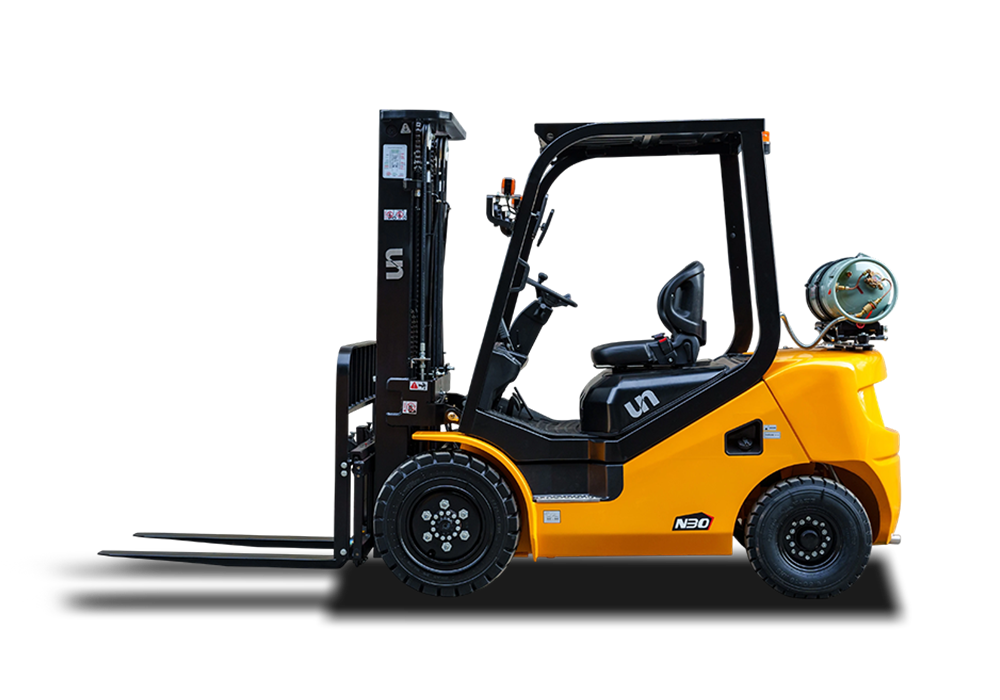
LPG models remain a flexible middle option. They start well in cold weather, refuel in minutes, and produce fewer particulates than diesel, which helps on sites with covered areas. The trade-off is fuel handling: cylinders need secure storage, and the machine must be switched off during cylinder changes. If a fleet already runs LPG for other equipment, standardizing on it simplifies site logistics.
Load Capacity, Lift Height, and Mast Configuration
Forklift capacity is rated at a specified load center, usually 500 mm or 600 mm on construction machines, and the rating assumes the load is centered on the forks. A concrete block or pipe extending beyond that center reduces real capacity, sometimes by 20% or more. The same applies to height: a triplex mast reaches 4.5 m or 5 m for staging, but the safe load drops as the mast extends. Always read the capacity curve, not just the nameplate, and match the attachment to the load you actually handle. Table 1 summarizes the typical classes.
| Machine class | Capacity range | Typical lift height | Best use on site |
|---|---|---|---|
| Rough terrain, 2WD | 2.5–3.5 t | 3–4 m | Gravel or compacted earth, general material |
| Rough terrain, 4WD | 2.5–3.5 t | 3–4 m | Mud, wet clay, slopes and soft ground |
| Heavy-duty diesel | 5–10 t | 3–6 m | Precast, pipe, steel bundles and crates |
| LPG / gasoline | 1.5–3.5 t | 3–5.5 m | Mixed outdoor and covered work |
| Lithium-ion electric | 2–10 t | 3–6 m | Noise- and emission-sensitive sites |
Diesel, LPG, or Lithium: Choosing a Power Source
Diesel still dominates open sites because it delivers high torque, refuels in minutes, and runs all day without a charging stop. Modern diesel machines built for Europe and North America meet strict emission standards, so the old clean-versus-dirty comparison is outdated. LPG is a strong choice when part of the work is under cover. Lithium-ion is the fastest-moving option: no local exhaust, lower energy cost, minimal daily maintenance, and opportunity charging. Operating cost per hour often decides the argument in practice. The chart below shows typical energy plus routine maintenance costs; actual numbers vary with local fuel prices, electricity tariffs, operator behavior and site conditions.
Illustrative figures for a 3.5 t class machine, combining energy and routine service.
| Power source | Advantages | Things to check | Best site type |
|---|---|---|---|
| Diesel | High torque, long runtime, fast refueling | Emission compliance, aftertreatment, noise | Open sites, heavy loads, long shifts |
| LPG | Cleaner than diesel, cold-weather starts, quick refuel | Cylinder storage, ventilation, fuel supply logistics | Mixed covered and outdoor work |
| Lithium-ion | Zero local exhaust, low energy cost, low maintenance | Charging infrastructure, battery sizing, higher purchase price | Urban, noise-limited or emission-sensitive sites |
Tires, Safety, and Site Discipline
On a construction site, the forklift meets the ground through its tires, and the ground is rarely cooperative. Pneumatic tires with deep treads absorb ruts and debris; if the site is full of rebar ends and metal offcuts, consider foam-filled or solid pneumatic versions to avoid flat tires stopping the work. Four-wheel drive adds traction on ramps, but it is not a substitute for reading the slope. A loaded forklift should travel with the load uphill, and no machine should work beyond the slope rating in its manual. Safety systems matter more than on a clean warehouse floor because the environment changes daily. The minimum package includes a ROPS/FOPS cab or canopy, seat belt, load backrest, working lights and a reversing alarm. Add a pre-shift inspection covering brakes, tire pressure, hydraulics, forks, mast chains and the overhead guard, and enforce a simple rule: nobody walks under a raised load, and no load moves without a secured pallet or proper rigging.
- Confirm ROPS/FOPS certification before the machine enters the site.
- Keep the load chart visible and respect the rated load center.
- Travel with the load low and tilted back.
- Inspect tires between shifts on rocky or debris-strewn sites.
Budgeting and Total Cost of Ownership
Purchase price is the first number a manager sees, but it is only part of the cost. A cheaper machine with higher fuel consumption, expensive tire wear or frequent downtime costs more by year two. Compare machines on cost per hour rather than invoice price: depreciation, fuel or electricity, routine service, tires, and residual value. For a contractor running the forklift five days a week, the power choice is often the largest lever on total cost. Work through the decision with a structured approach. The how-to-choose-a-forklift guide covers the general selection logic; the checklist below applies it to construction.
- Survey the site terrain and slopes; choose 2WD only where the ground is firm.
- Define the heaviest load at its real load center, not the marketing rating.
- Define the maximum lift height and the mast configuration needed.
- Select the power source on emissions, fuel availability, noise limits and charging access.
- Specify tires for the actual ground conditions, including puncture risk.
- Verify service response time and parts availability through the local dealer.
Making the Final Call
For most construction work, the core fleet should start with a rough terrain forklift in the 2.5 to 3.5 t class, with four-wheel drive if the site will see mud or slopes. Add a heavy-duty machine in the 5 to 10 t range when precast, pipe or steel is a regular part of the schedule, and use a lithium-ion model for urban sites, indoor finishing stages or noise-restricted projects. The construction industry solutions page explains how UN Forklift configures machines for building and civil work. Whichever route you choose, verify the capacity at your operating height, budget the full running cost per hour, and train operators before the machine reaches the site.
For exclusive deals and latest offers, sign up by entering your email address below.
Stay In Touch
ADDRESS : NO.1 ROAD ONE, XINDENG NEW DISTRICT, FUYANG, HANGZHOU, ZHEJIANG, CHINA 311404.
PHONE : +86-571-8688 8355 (AMERICA)
PHONE : +86-571-8886 9363 (EUROPE)
PHONE : +86-571-8688 8377 (ASIA, AFRICA, OCEANIA)
EMAIL : [email protected]
EMAIL : [email protected](PARTS INQUIRY)

