


 中文简体
 Français
 русский
 Español
 عربى
 Deutsch




Forklift Fork Positioner: Types, Sizing Rules, Load Capacity and Buying Tips
Admin 2026-11-05At a building-materials distributor, two operators moved pallets whose widths changed every four or five loads: 1,000 mm blocks, 1,200 mm crates, 800 mm bagged goods. Every change meant climbing down, pulling two fork locking pins, walking the forks in or out, and climbing back up — roughly forty times in an eight-hour shift.
A hydraulic forklift fork positioner deletes that loop. The operator opens or closes the fork spread from the seat in a few seconds, with the load already on the forks.
Here is the conclusion worth acting on before you read further: the attachment's price is the smallest number in the decision. A fork positioner adds weight ahead of the carriage and pushes the load centre forward, so a truck rated at 3,000 kg may legally lift closer to 2,400 kg once it is fitted. Pick the attachment that matches your real load widths and still leaves enough certified capacity — in that order. Everything below explains how.
What a Fork Positioner Does, and What It Does Not
Two hydraulic cylinders move two fork carriers along a steel frame, and the forks slide with them. Standard units open to roughly 1,300–1,800 mm on a Class III carriage; wide-opening versions reach much further for bales, insulation panels and double-width crates. Most positioners can move both forks together or one at a time, which is what makes them genuinely useful on mixed pallets.
A sideshifting fork positioner adds lateral traverse to the same frame. That combination matters on trucks with only one spare auxiliary valve section, because it delivers the two functions operators actually use — spread and side shift — from a single attachment.
What it does not do: it does not add lift height, it does not tilt, and it does not turn a 2.5-tonne truck into a 5-tonne truck. It also does not remove the need to know your load widths; it simply moves the adjustment into the cab.
The Load Centre Math Nobody Prints on the Flyer
Every attachment shifts the load's centre of gravity further from the mast. A hook-on positioner typically adds 120–220 kg of its own mass and 90–140 mm of forward offset on a 2–3.5 tonne truck. Two things happen at once: capacity is consumed by the attachment's weight, and more is consumed because the load now sits further out on the load chart.
Take a 2,500 kg truck rated at a 500 mm load centre. A 180 kg positioner pushes that centre 100 mm forward. Reading the load curve, capacity falls to roughly 2,080 kg before the attachment's own weight is deducted, and to about 1,900 kg after — a 24% reduction on a machine that "hasn't changed".
Two practical consequences follow. First, ask the attachment supplier for the derating calculation in writing rather than a verbal reassurance. Second, re-plate the truck: in the EU the truck and attachment form a machine assembly, so the combined capacity plate and a declaration of conformity should be updated after fitment.
Typical net capacity retained after fitting a positioner on a 2.5 t truck
Illustrative figures only — always use the supplier's calculation for your truck and load centre.
Mounting Styles: Hook-On Versus Integral
Hook-on positioners hang on standard ISO 2328 carriage hooks, Class II or III depending on the truck. You can fit one in under an hour, move it between machines and take it off when a plain carriage is needed. The trade-off is stack-up: carriage, frame, cylinders and forks all sit further forward, costing capacity and visibility.
Integral, or shaft-mounted, positioners replace the carriage entirely and ride on the truck's own carriage bars. The load stays closer to the mast, visibility through the frame improves and hydraulics usually respond faster. The cost is truck-specific fitment and more installation work, since lines must be routed through the mast and the valve block needs a dedicated section.
Use this quick decision path before requesting quotes:
- Will the attachment be shared across several trucks?
- Yes — hook-on frame with quick couplers; accept the extra offset
- No — continue
- Does the truck run more than about 1,500 handling cycles per shift on one load family?
- Yes — integral positioner; the offset and cycle-time savings pay back
- No — hook-on positioner with side shift is usually the better value
- Does any load exceed roughly 1,600 mm in width?
- Yes — wide-opening frame, and re-check capacity before ordering
- No — standard spread range is sufficient
| Item | Hook-on positioner | Integral shaft-mounted | Wide-opening positioner |
|---|---|---|---|
| Mounting | ISO 2328 hooks, Class II/III | Replaces carriage, rides on carriage bars | Hook-on or integral frame |
| Typical added weight | 120–220 kg | 90–160 kg | 250–450 kg |
| Forward offset | 90–140 mm | 50–90 mm | 150–250 mm |
| Spread range | 300–1,500 mm | 350–1,600 mm | 600–2,500 mm |
| Swap time | Under 1 hour | Half a day or more | 1–2 hours |
| Best fit | Mixed fleets, seasonal work | Single-purpose, high-cycle trucks | Bales, panels, double-width loads |
Sizing Rules That Prevent Callbacks
- Measure load widths across a full week, not one shift, then add 50–100 mm clearance per side. The closed width matters as much as the open width.
- Confirm the spread range covers both your narrowest and widest load with the forks you intend to use — the positioner moves carriers, not the forks themselves.
- Match fork length to load depth: forks should support at least two-thirds of the load depth, ideally the full pallet depth for stacked goods.
- Check the carriage class and hook type against the truck's existing carriage; a Class III attachment will not mount on Class II hooks.
- Verify the hydraulic circuit: a dedicated auxiliary spool, adequate flow, and relief pressure set for the attachment's cylinders.
- Ask about visibility — an operator who cannot see the fork tips through the frame will slow down, cancelling the productivity gain.
- Order the re-rated capacity plate with the attachment, not after it.
Fitment and the Parts That Fail First
Most problems start at the hose run. Lines routed across the mast rollers chafe within months; a spiral guard and a proper hose anchor cost little and prevent most downtime. Quick couplers collect grit, so caps or a blanking plate are worth specifying. On the attachment itself, watch the fork locking pins, the carrier wear strips and the cylinder rod seals — a weeping seal on one cylinder makes the forks drift out of parallel and produces uneven pallet pick-up.
For a diesel or LPG truck doing mixed-width work outdoors and in the yard, a 2.0–3.5 tonne platform has the carriage strength and hydraulic capacity for a hook-on positioner without straining the pump.
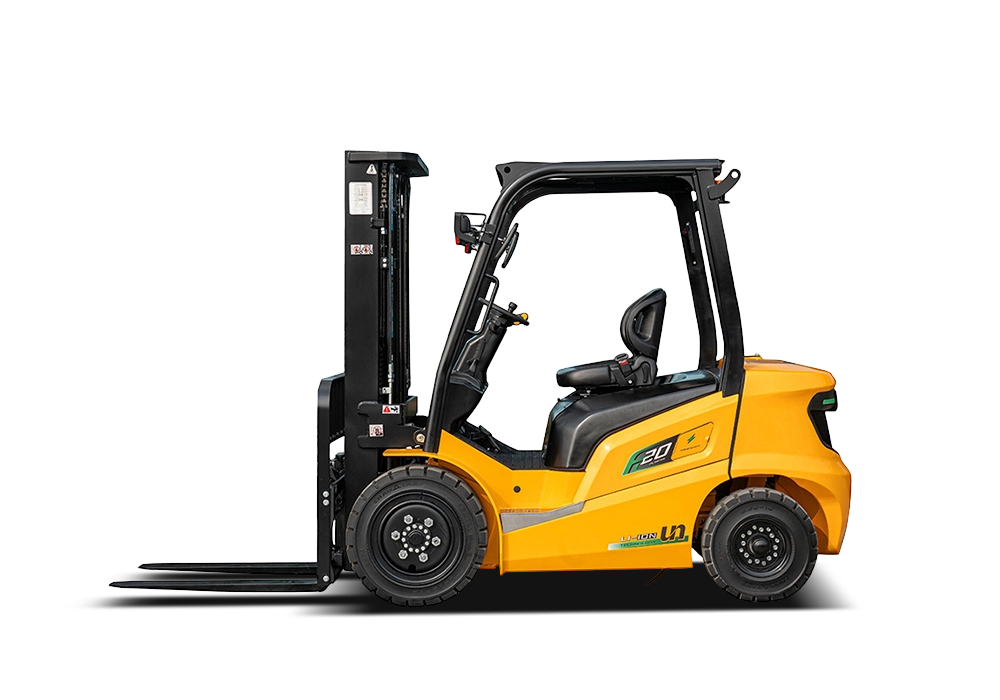
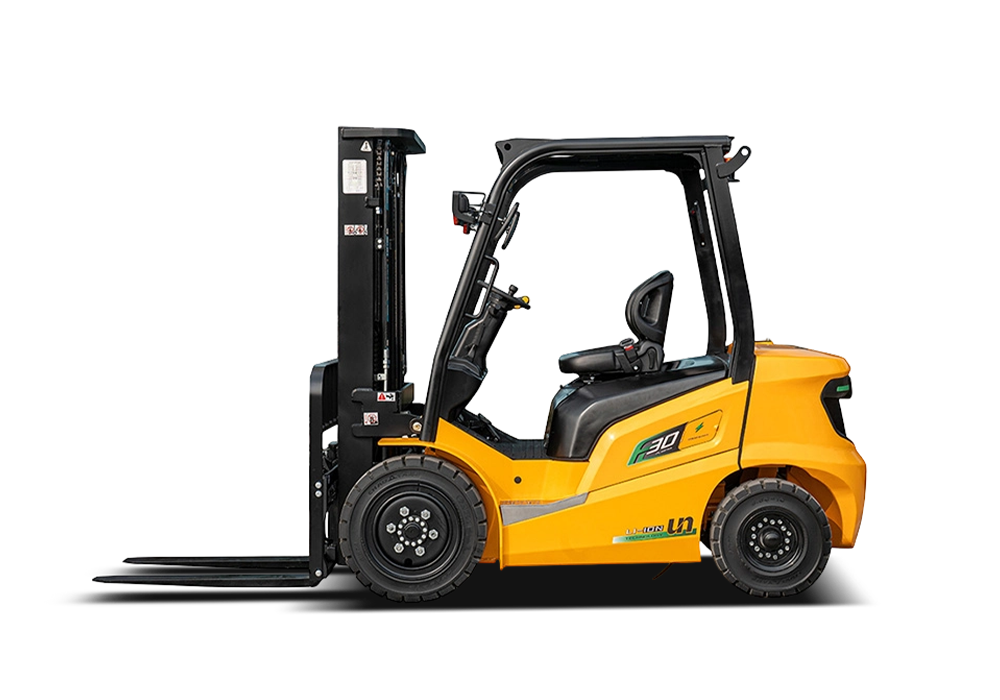
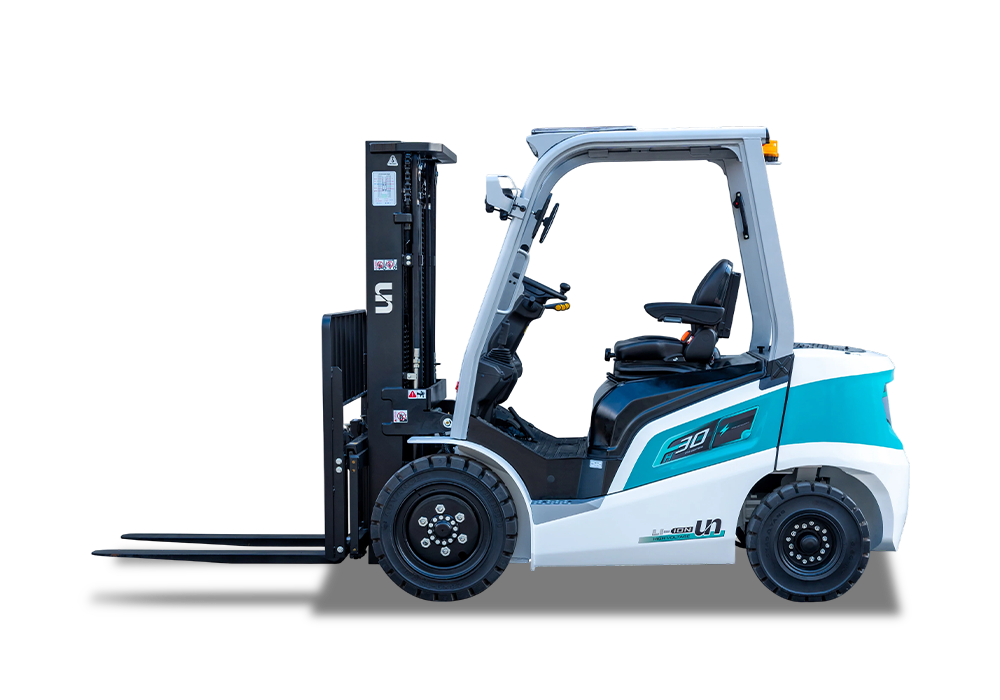
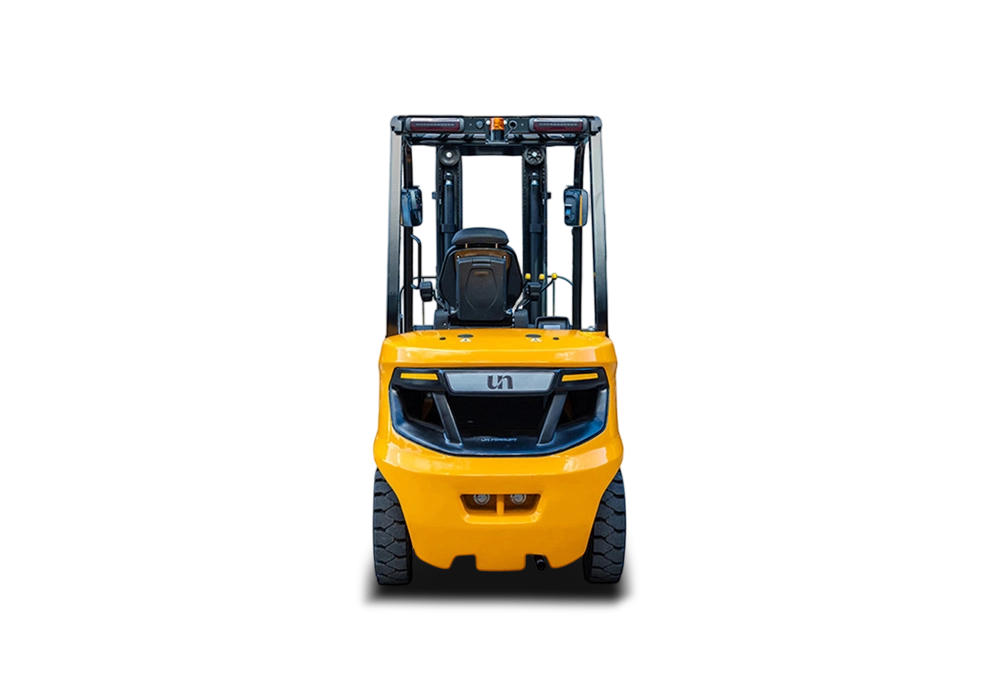 F Series 2.0T–2.5T Diesel ForkliftA 2,000–2,500 kg diesel forklift with multiple engine options and a robust platform suited to outdoor mixed-width handling with a hook-on positioner.View Product →
Where Positioners Earn Their Keep
The economics are clearest in three settings: distribution centres receiving pallets in several footprint standards, manufacturers moving crates and stillages of varying width between lines, and yards handling bagged or baled material that bulges past the pallet edge. In each case the saving is not only the operator's time on the forks — it is the damaged goods and near-misses that disappear when nobody is standing between the forks and the load.
Indoor fleets running two or three shifts benefit most from a lithium-ion truck paired with an integral positioner: no engine idling in the aisle, no hydraulic lag from a cold start, and the load centre stays close to the mast. For narrow-aisle work, confirm that the added 100 mm of stack-up does not breach your aisle or racking clearances before committing.
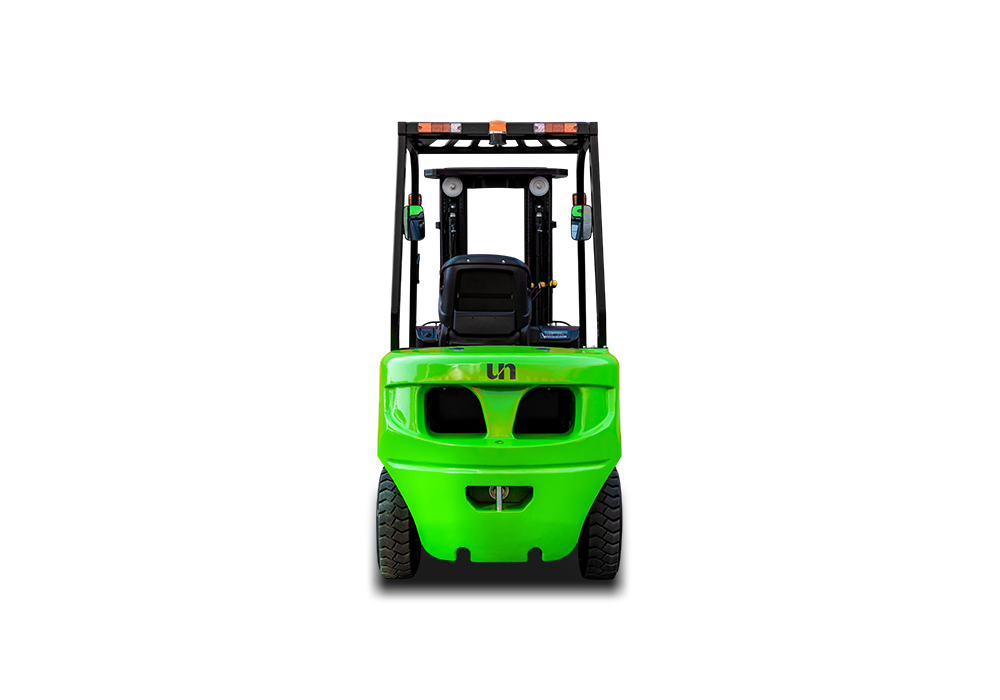 NL Series 2.0T–2.5T Li-ion ForkliftA 2,000–2,500 kg lithium-ion forklift for multi-shift indoor fleets, offering zero emissions, fast charging and a compact turning radius for narrow aisles.View Product →
Where loads are genuinely wide — precast panels, insulation packs, double-width crates — the capacity question becomes the deciding one. A heavier truck with a wide-opening frame often retains more usable capacity than a light truck fitted with the same attachment.
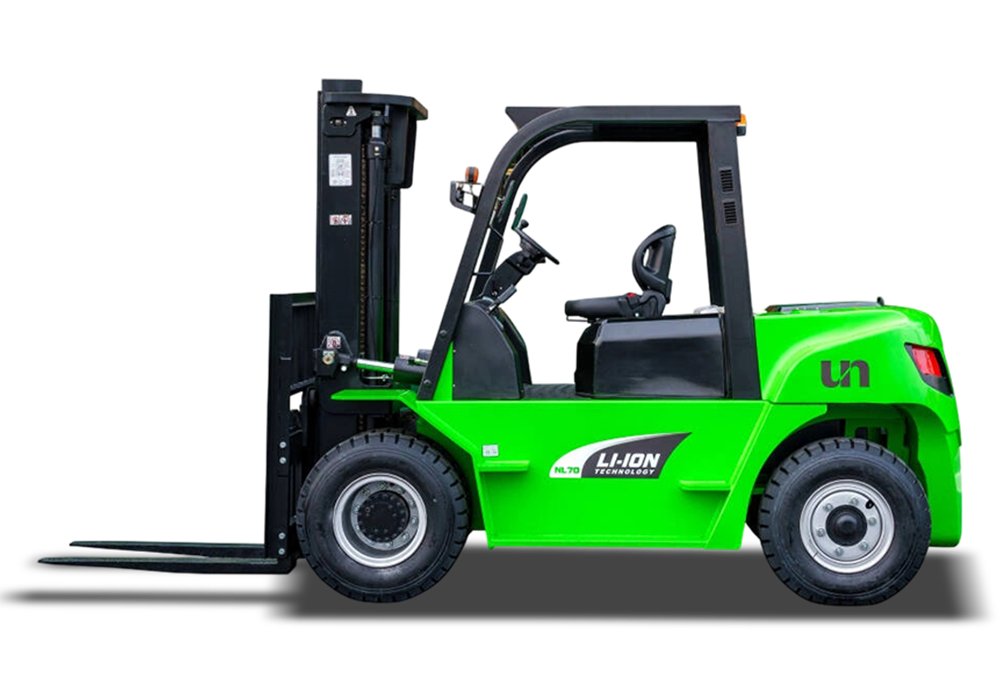
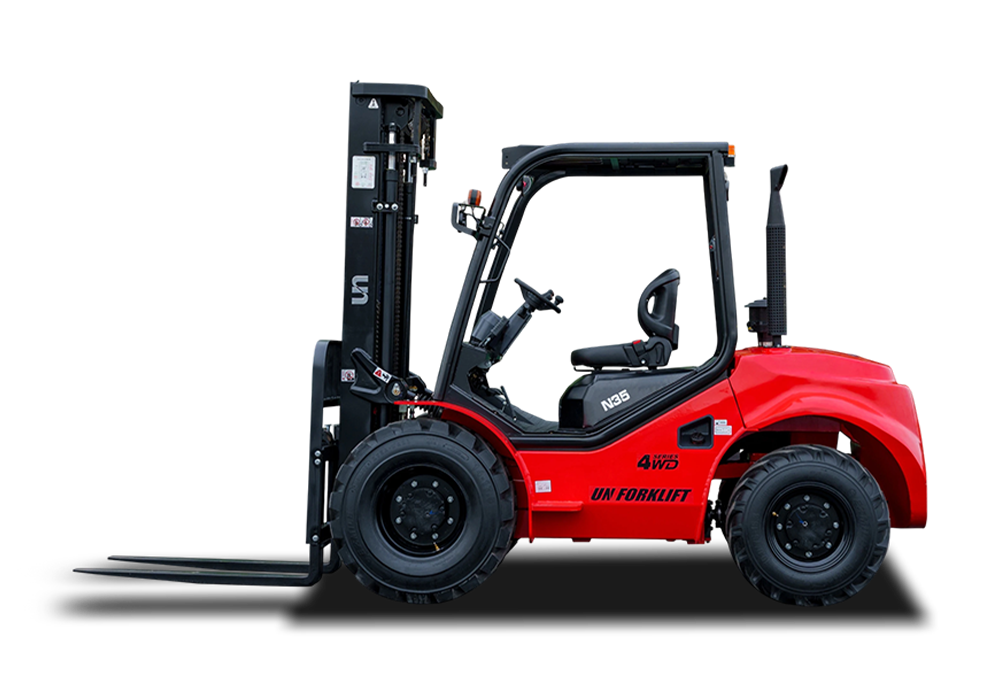
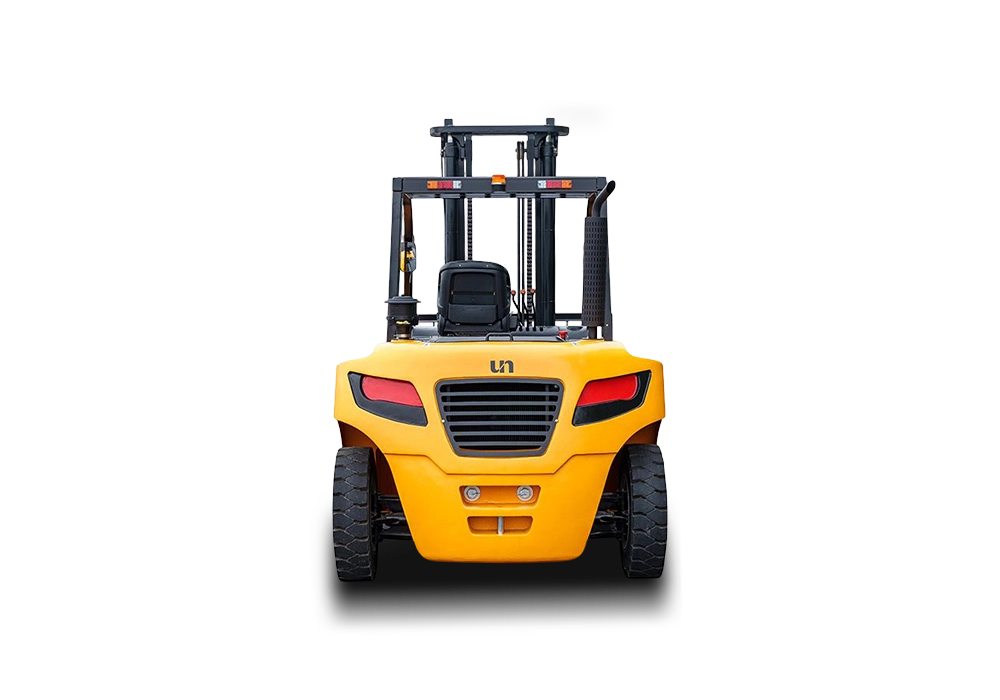 N Series 5.0T–7.0T Heavy Duty Diesel ForkliftA 5,000–7,000 kg diesel forklift with high-strength chassis and heavy-duty mast, suited to wide or heavy loads where capacity decides the attachment choice.View Product →
For readers mapping this onto specific operations, the material handling notes for the logistics and warehousing sector and for manufacturing plants set out the handling patterns these attachments are usually specified for.
Total Cost and a Short Buying Checklist
Budget for the attachment, the hydraulic kit, installation labour, the re-rated capacity plate and operator familiarisation. Then compare that total against the manual alternative: on a mixed-width operation, forty fork adjustments per shift at roughly 45 seconds each is about half an hour of lost handling time per operator, per shift — before counting the injury risk of standing between the forks.
- Written derating calculation for your truck, load centre and fork length
- Confirmed mounting class, hook type and spread range against real load widths
- Hydraulic circuit assessed: valve section, flow, relief pressure, hose routing
- Fork locking pins, wear strips and seal quality checked on a demonstration unit
- Re-rated capacity plate and documentation supplied with the attachment
- Operator briefing on parallel drift, load checking and daily inspection
Get those six items nailed down and the attachment stops being a convenience purchase. It becomes a capacity decision you can defend to a safety inspector, an insurer and your own maintenance team.
For exclusive deals and latest offers, sign up by entering your email address below.
Stay In Touch
ADDRESS : NO.1 ROAD ONE, XINDENG NEW DISTRICT, FUYANG, HANGZHOU, ZHEJIANG, CHINA 311404.
PHONE : +86-571-8688 8355 (AMERICA)
PHONE : +86-571-8886 9363 (EUROPE)
PHONE : +86-571-8688 8377 (ASIA, AFRICA, OCEANIA)
EMAIL : [email protected]
EMAIL : [email protected](PARTS INQUIRY)

