


 中文简体
中文简体 Français
 русский
 Español
 عربى
عربى Deutsch



3.0–3.5T Li-ion Battery Forklift for Efficient, Low-Emission Material Handling
Admin 2026-07-09Modern logistics, warehousing, manufacturing, distribution, and outdoor yard operations are being reshaped by a clear demand: equipment must be cleaner, more efficient, easier to maintain, and capable of performing reliably in both indoor and outdoor environments. The 3.0–3.5T Li-ion Battery Forklift described in this article answers that demand with a practical engineering approach. It combines the proven strength of an internal combustion forklift-style chassis with a high-efficiency lithium power system, giving users a balanced solution that delivers operational flexibility, low total ownership cost, zero-emission performance, and dependable lifting capability.
This forklift is designed for users who need the load-handling confidence of a traditional counterbalance forklift but want the environmental and economic advantages of electric power. In many operations, conventional internal combustion forklifts are still valued for their durability, outdoor usability, and familiar service structure. At the same time, companies increasingly face pressure to reduce emissions, noise, fuel consumption, and maintenance downtime. The 3.0–3.5T Li-ion Battery Forklift bridges these requirements by adopting a mature forklift structure while replacing the fuel engine with a lithium battery system engineered for fast charging, extended service life, and multi-shift productivity.
With rated load capacities of 3,000 kg and 3,500 kg, this model is suitable for common pallet handling, loading and unloading, production line supply, warehouse transfer, construction material handling, and general industrial logistics. Its compact body, small turning radius, low noise, minimal vibration, and clean operation make it suitable for confined spaces and indoor environments, while its internal combustion-inspired structure gives it the robustness needed for more demanding outdoor conditions. For companies seeking an alternative to diesel or gasoline forklifts without giving up operational toughness, this forklift offers a strong and cost-effective answer.
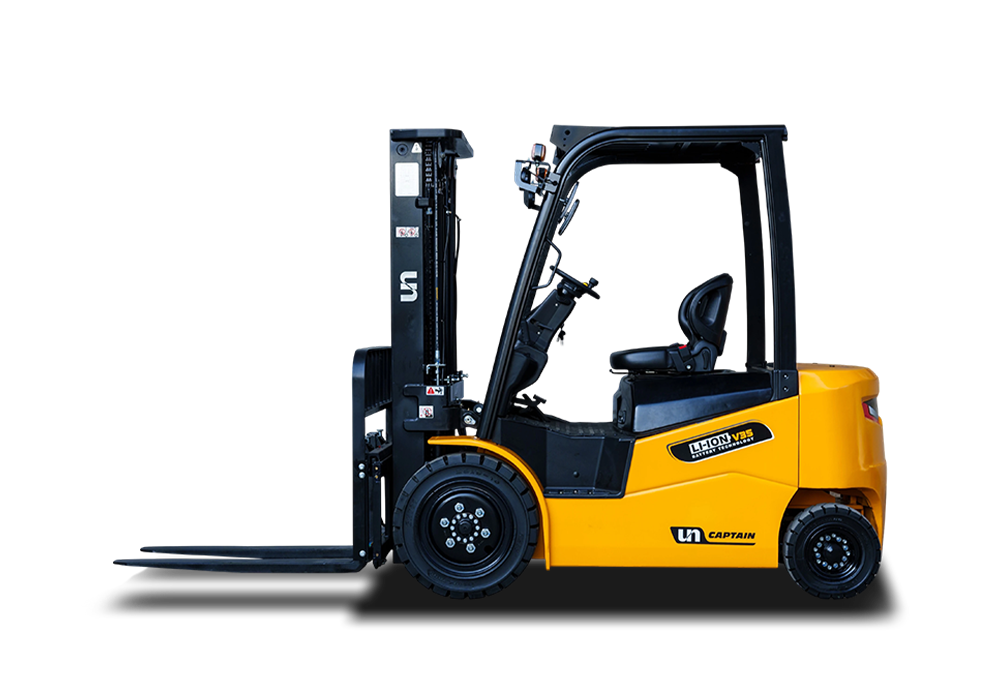
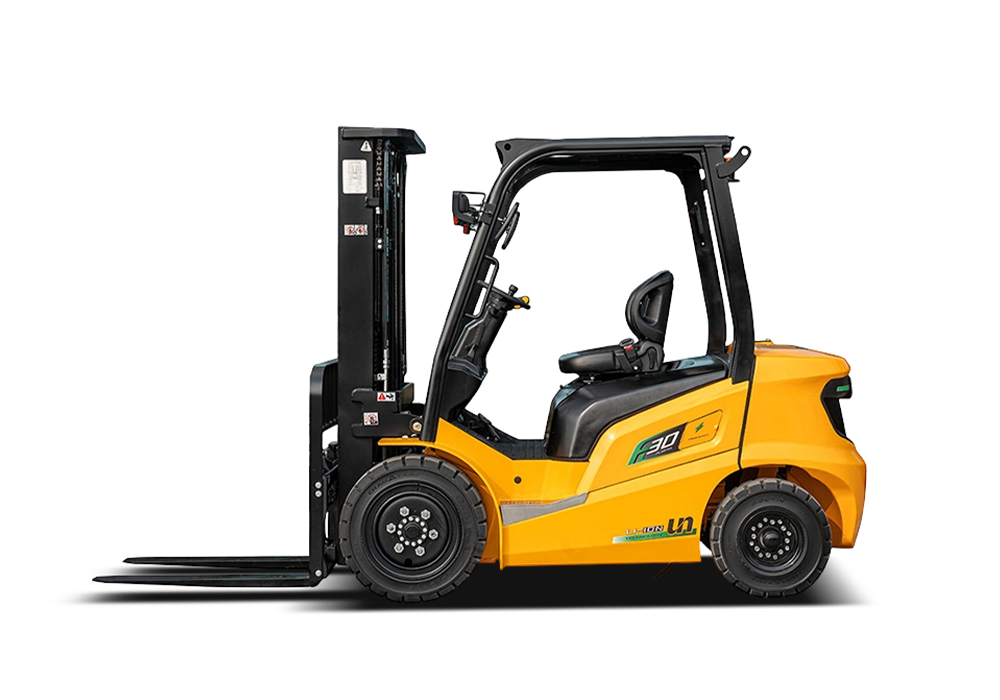
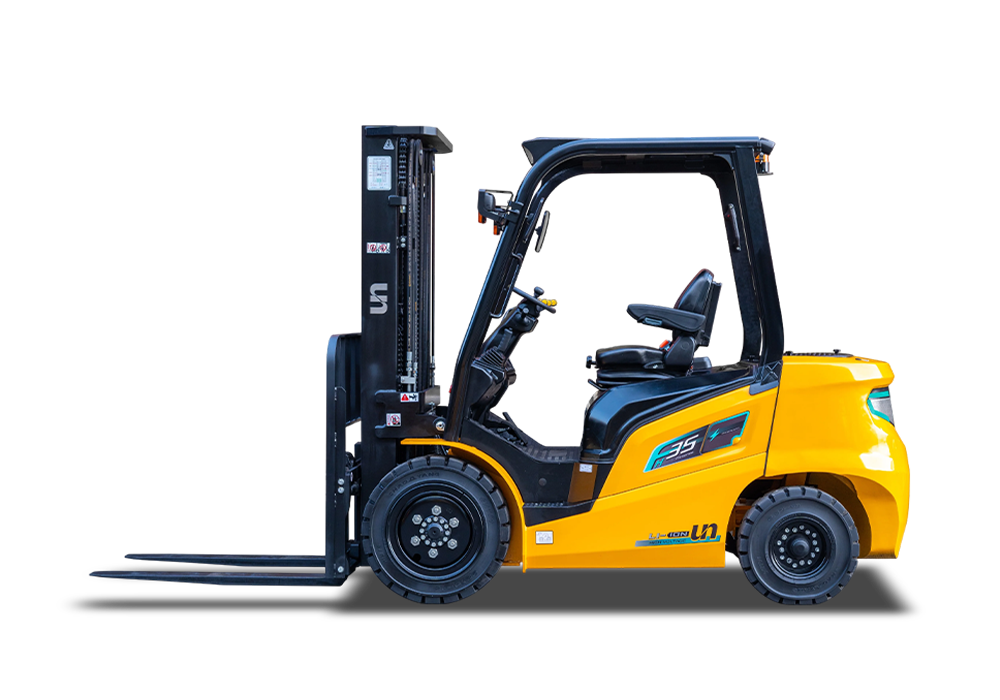
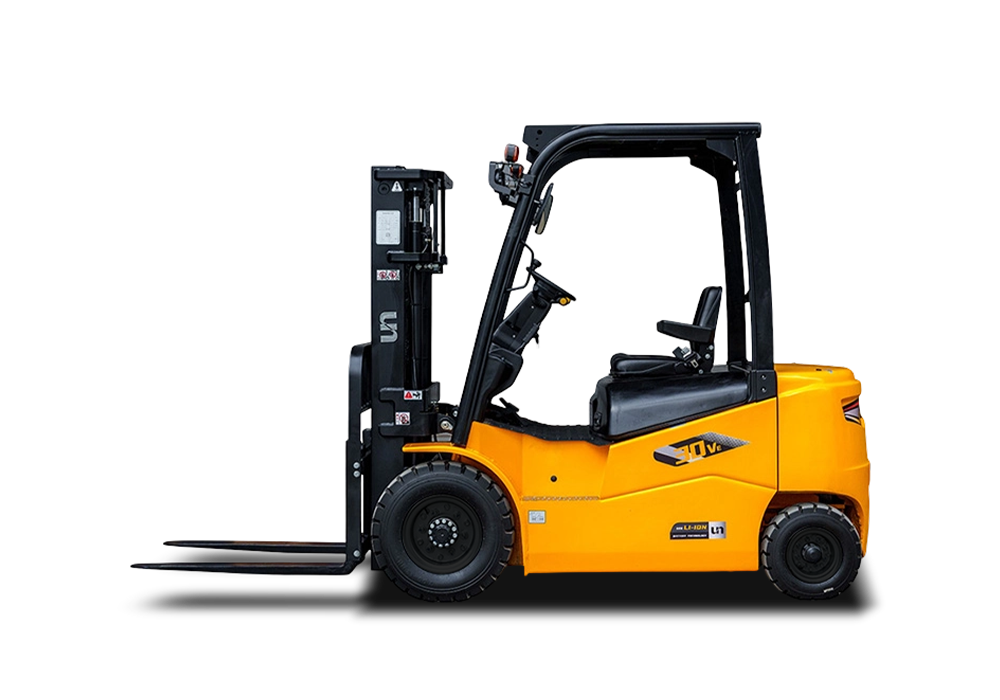
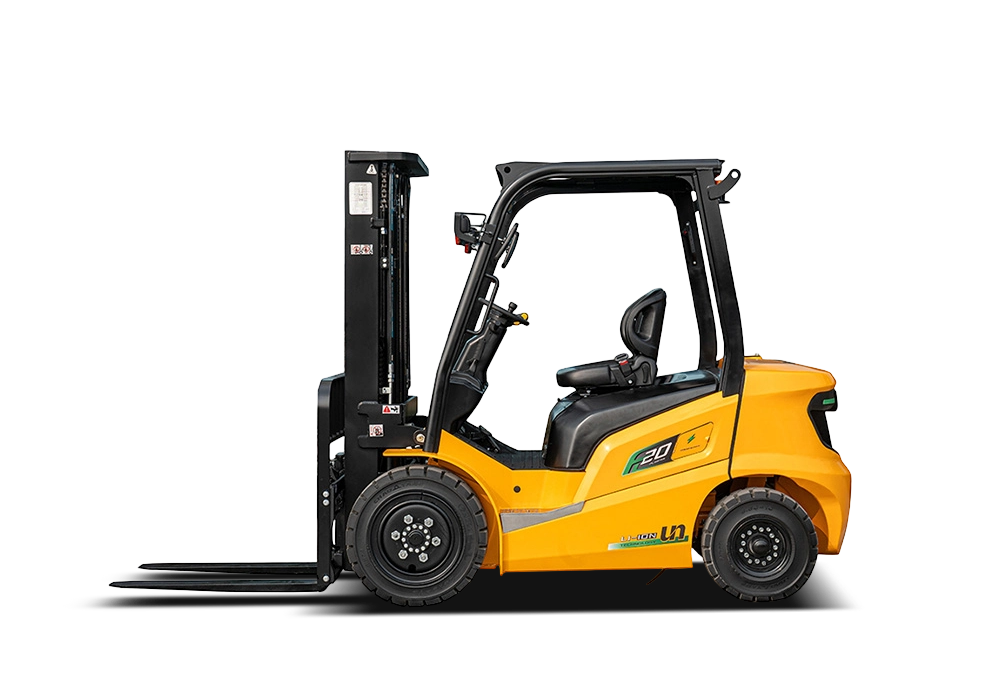
NL Series 3.0T-3.5T Li-ion Battery Forklift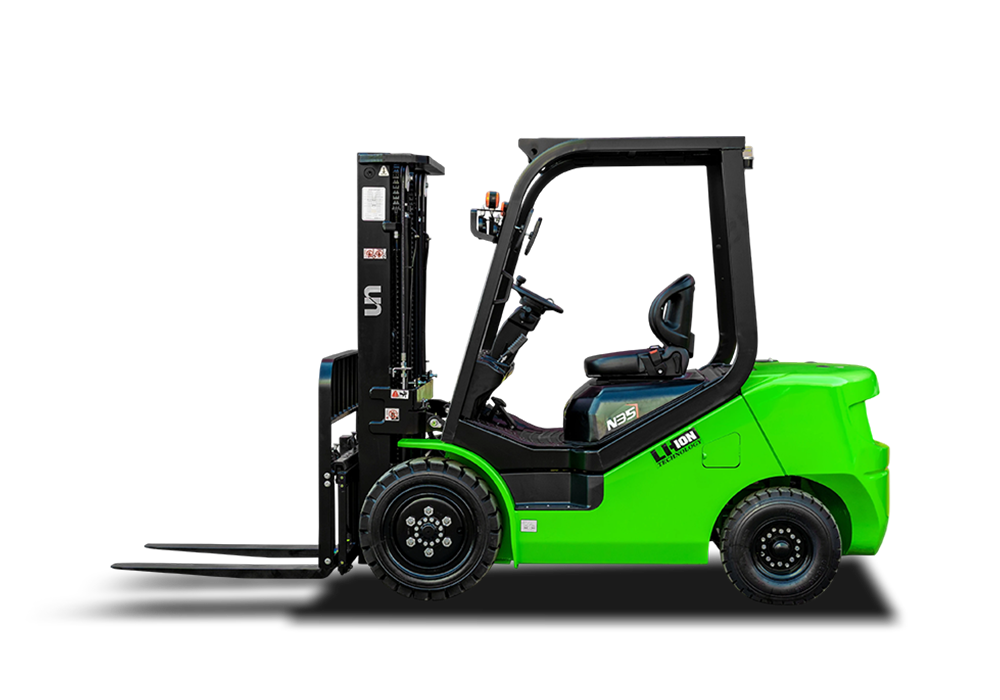
Product Positioning: A Practical Lithium Alternative to Internal Combustion Forklifts
The strongest value of this forklift lies in its practical positioning. Rather than being an electric forklift designed only for smooth indoor floors, it is engineered as a lithium-powered alternative to traditional internal combustion forklifts. This matters because many businesses do not operate in perfectly controlled warehouse environments. They move pallets across loading docks, semi-outdoor yards, production areas, storage zones, and mixed surfaces. They need a forklift that can tolerate dust, water exposure, regular impact, and demanding daily work.
Traditional internal combustion forklifts have long been selected because they offer strong chassis construction, familiar mast systems, proven axles, and robust mechanical layouts. However, they also bring fuel costs, exhaust emissions, engine maintenance, oil changes, filter replacement, and noise. By using a mature internal combustion forklift-style structure and pairing it with a lithium battery system, this forklift preserves many of the practical advantages operators expect from a durable counterbalance truck while removing many of the weaknesses associated with fuel-powered models.
Compared with conventional electric forklifts, especially models built primarily for indoor use, this forklift provides a more rugged working personality. Its structure is based on a time-tested internal combustion forklift architecture validated through long-term application experience. That gives users confidence in strength, serviceability, and stability. Compared with internal combustion forklifts, it offers zero emissions at the point of use, lower noise, reduced vibration, fewer routine maintenance items, and lower energy expense. This dual advantage makes it especially attractive for companies transitioning toward electrification but not yet willing to compromise on heavy-duty usability.
Core Engineering Advantages
The forklift’s design reflects a clear engineering philosophy: combine proven mechanical strength with modern lithium power. The chassis is not treated as a light-duty shell around a battery system; instead, it is built around a robust forklift structure capable of handling industrial workloads. This is especially important in the 3.0–3.5T capacity range, where stability, frame strength, braking confidence, mast rigidity, and axle durability directly affect productivity and safety.
The lithium power system is another central advantage. Lithium battery technology enables fast charging, opportunity charging, long cycle life, and lower maintenance requirements compared with traditional lead-acid batteries. In demanding operations, the ability to recharge quickly during breaks or shift changes can be more valuable than simply having a large battery. The forklift’s rapid charging capability supports full charging in approximately two hours, while anytime top-up charging helps companies manage multiple shifts without the battery change procedures often required by lead-acid fleets.
The battery is supported by intelligent monitoring systems, including CAN bus communication and battery management protection. These systems continuously monitor key operating conditions and help protect the forklift and battery from abnormal use. This enhances reliability and gives fleet managers more confidence when deploying the forklift in daily operations. The hydraulic steering support is also designed for smooth and reliable steering, including during braking, which improves operator confidence during frequent maneuvering.
Key Specifications for 3.0T and 3.5T Models
The following table summarizes the main specification highlights for the 3.0T and 3.5T versions. Specifications may vary according to configuration, mast selection, optional battery capacity, tire selection, and local market requirements.
Item |
3.0T Model |
3.5T Model |
Rated Load Capacity |
3,000 kg |
3,500 kg |
Load Center |
500 mm |
500 mm |
Rated Lift Height |
3,000 mm |
3,000 mm |
Fork Size |
1070 × 125 × 45 mm |
1070 × 125 × 50 mm |
Overall Width |
1,225 mm |
1,225 mm |
Length to Face of Fork Without Fork |
2,700 mm |
2,775 mm |
Overhead Guard Height |
2,235 mm |
2,235 mm |
Turning Radius |
Approximately 2,425 mm to 2,625 mm depending on configuration |
Approximately 2,500 mm |
Travel Speed |
11/12 km/h full load/no load |
11/12 km/h full load/no load |
Maximum Gradeability Full Load |
12% |
12% |
Battery |
80V/220Ah standard with optional capacities available |
80V/270Ah standard with optional capacities available |
Drive Motor |
10 kW |
10 kW |
Lift Motor |
12 kW |
12 kW |
Operating Pressure for Attachments |
17.5 MPa |
17.5 MPa |
Advantages Over Conventional Internal Combustion Forklifts
For many users, the most direct comparison is with diesel, gasoline, or LPG forklifts. Internal combustion forklifts have traditionally been valued for power and endurance, but they carry ongoing operating costs and environmental disadvantages. The 3.0–3.5T Li-ion Battery Forklift provides a cleaner path without forcing users to abandon the familiar handling characteristics of a counterbalance forklift.
The first advantage is zero exhaust emission at the point of use. In warehouses, food distribution centers, manufacturing workshops, enclosed loading bays, and semi-enclosed logistics areas, exhaust emissions can affect worker comfort, air quality, and regulatory compliance. A lithium-powered forklift eliminates tailpipe emissions, helping companies improve their working environment and align with sustainability goals.
The second advantage is lower noise. Internal combustion engines produce continuous sound and vibration, especially during acceleration, idling, and lifting operations. A lithium forklift runs more quietly, helping reduce noise fatigue for operators and nearby employees. This is especially valuable in indoor logistics, night-shift operations, and facilities where multiple machines operate simultaneously.
The third advantage is reduced routine maintenance. Internal combustion forklifts require engine oil changes, air filter replacement, fuel filter replacement, coolant system maintenance, belt inspections, exhaust system care, and more frequent engine-related service. A lithium forklift eliminates many of these maintenance items. The result is less scheduled downtime, fewer consumables, simplified maintenance planning, and reduced long-term service cost.
The fourth advantage is energy cost control. Fuel prices fluctuate and can become a major fleet expense. Electricity costs are generally easier to manage and can be significantly lower per operating hour depending on local rates. For high-utilization operations, the savings can become substantial over the life of the forklift.
The fifth advantage is operator comfort. Less vibration, smoother power delivery, reduced heat, and lower noise contribute to a more comfortable workplace. Operators who spend long shifts driving, lifting, and maneuvering benefit from a calmer environment and more predictable response. Comfortable operators often work more safely and consistently.
Advantages Over Traditional Lead-Acid Electric Forklifts
Lead-acid electric forklifts have served warehouses for decades, but lithium technology has changed expectations. A lead-acid battery often requires long charging time, battery cooling periods, watering, equalization charging, and dedicated battery rooms in larger operations. In contrast, the lithium battery system in this forklift is designed for faster, more flexible use.
Fast charging is a major operational advantage. The ability to complete a full charge in approximately two hours reduces the need for battery swapping. Opportunity charging allows operators to top up the battery during breaks, lunch periods, or shift transitions. This supports longer daily uptime and helps the same forklift cover multiple work periods.
Lithium batteries are also maintenance-free in daily operation. Operators do not need to add water, check electrolyte levels, or manage acid spills. This reduces labor, improves workplace cleanliness, and decreases the risk of battery-related handling issues. For companies moving toward leaner operations, eliminating battery maintenance tasks can make a meaningful difference.
Cycle life is another important factor. With up to 4,000 charge cycles and a 5-year warranty mentioned for the lithium battery system, users gain confidence in long-term value. A battery that maintains service over many cycles supports better lifecycle economics and reduces replacement frequency.
Lithium power also maintains more consistent performance throughout discharge compared with many lead-acid systems. This means the forklift can deliver stable operation without the noticeable power drop often associated with low lead-acid battery charge. In busy material handling environments, consistent lifting and travel performance improves planning and reduces operator frustration.
Compact Dimensions and Maneuverability
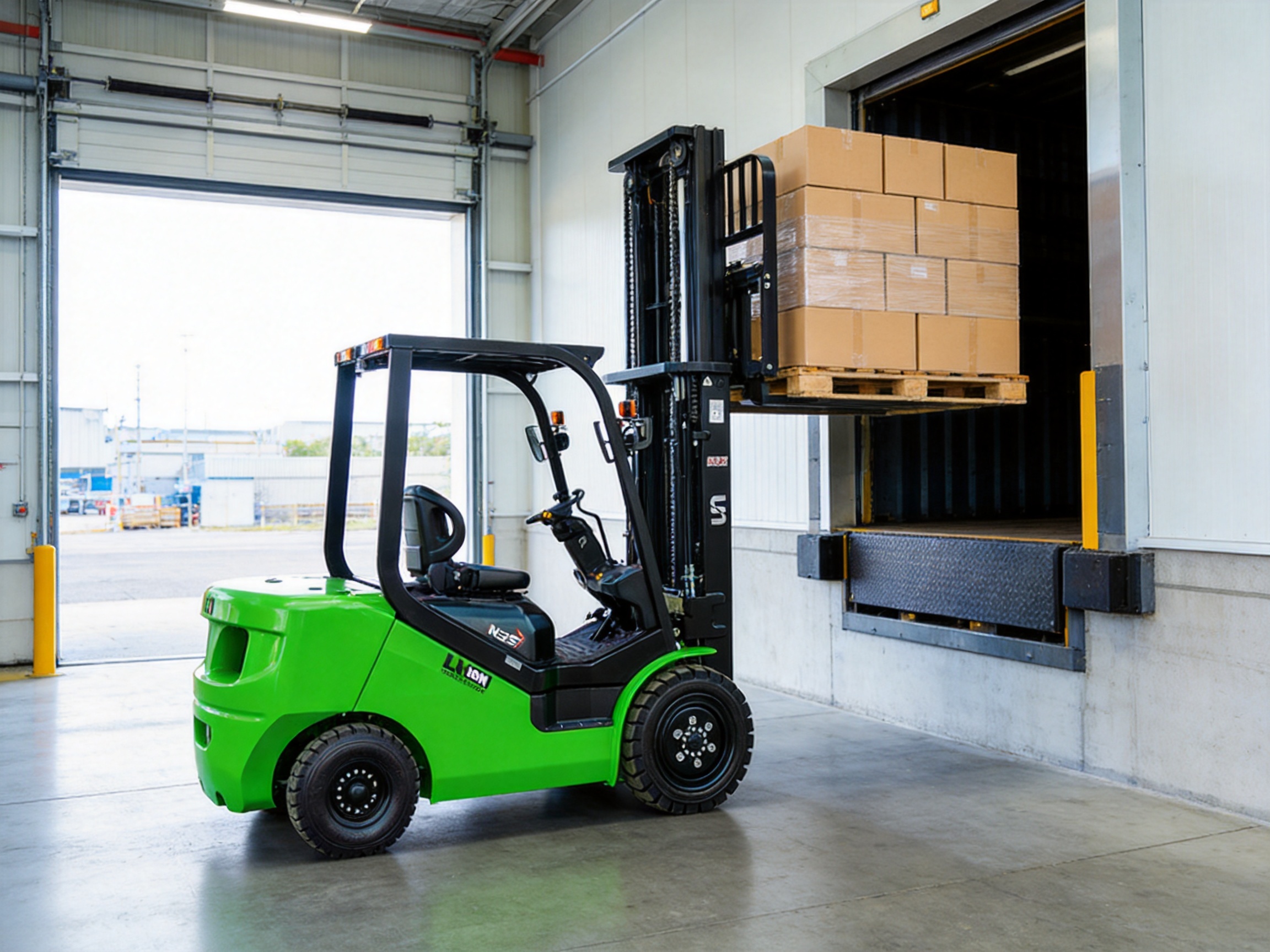
Material handling productivity is not only about lifting capacity. It is also about how easily the forklift moves through aisles, turns around pallets, approaches trucks, and works between racks or production equipment. The forklift’s compact structure and controlled turning radius make it suitable for confined spaces where larger or less responsive machines may slow down operations.
The 3.0T model offers a compact length to the face of fork of approximately 2,700 mm, while the 3.5T model measures approximately 2,775 mm. Both share an overall width of approximately 1,225 mm. These dimensions allow the forklift to operate in common warehouse lanes, loading docks, and production areas while maintaining the strength required for 3.0–3.5T lifting tasks.
The turning radius is also practical for daily operations. Depending on configuration, the 3.0T model is listed around 2,425 mm to 2,625 mm, while the 3.5T model is approximately 2,500 mm. This supports efficient maneuvering around pallets and reduces the number of corrective steering movements needed during stacking, loading, and unloading.
Small differences in maneuverability can have large effects over thousands of movements per month. A forklift that turns more predictably, approaches loads smoothly, and fits into operational spaces with less adjustment can reduce handling time and operator fatigue. For warehouses with limited room, compact turning capability is a direct productivity advantage.
Performance for Real Industrial Work
The forklift’s performance specifications are designed for practical material handling rather than theoretical laboratory use. Travel speeds of 11/12 km/h under full load and no load provide enough mobility for warehouse and yard movement. Lifting speeds vary by model and load, with the 3.0T model listed at approximately 250/360 mm per second and the 3.5T model at approximately 220/340 mm per second for full load and no load. These values support steady work cycles in loading, unloading, and stacking applications.
Maximum gradeability at full load is approximately 12% for the 3.0T and 3.5T versions. This is useful in facilities with ramps, dock approaches, uneven transitions, or mild outdoor slopes. Combined with the robust chassis layout, this supports flexible deployment across mixed operating zones.
The forklift uses a 10 kW drive motor and a 12 kW lift motor. This motor arrangement provides the foundation for efficient travel and lifting performance while supporting the energy-saving characteristics of electric power. The operating pressure for attachments is listed at 17.5 MPa, allowing compatibility with common attachment requirements depending on configuration.
In practice, performance must be measured by the full working cycle: approach, brake, lift, turn, travel, lower, reverse, and repeat. The forklift is engineered to support this rhythm with smooth steering, stable handling, and responsive electric power. This makes it suitable for operators who need both precision and productivity.
Battery System: Fast Charging, Long Life, and Practical Fleet Use
The lithium battery system is one of the most important reasons to select this forklift. In the 3.0T model, the standard battery configuration is listed as 80V/220Ah, with optional 270Ah and 350Ah capacities available. In the 3.5T model, the standard battery configuration is listed as 80V/270Ah, with an optional 350Ah capacity. These options allow customers to select a battery package that matches their duty cycle, shift pattern, and charging strategy.
Fast charging reduces idle time. A full charge in approximately two hours allows users to recharge during planned downtime rather than removing the forklift from service for extended periods. Opportunity charging further improves uptime because the battery can be topped up whenever convenient. This is especially helpful in two-shift or multi-shift environments where traditional charging schedules can restrict equipment availability.
The battery’s stated cycle life of up to 4,000 charge cycles supports long-term value. In fleet management, battery replacement is one of the largest potential lifecycle costs for electric equipment. A long-cycle lithium system reduces replacement pressure and supports a more predictable ownership plan.
Battery management is also essential. The forklift uses BMS and CAN bus systems to monitor and protect the battery and vehicle. Battery management helps regulate charging, discharging, temperature, and electrical safety. CAN bus communication supports integrated monitoring across key systems. Together, these technologies contribute to operational reliability and help protect the investment over time.
Safety and Control Features
Safety in material handling depends on design, stability, visibility, braking, steering, operator training, and maintenance. This forklift supports safe operation through several engineering choices. Its low center of gravity and stable structure help operators feel confident during turns and load handling. Stability is especially important in the 3.0–3.5T range, where loads are heavy enough to create significant dynamic forces during braking, turning, and lifting.
The specially designed hydraulic station supports smooth and reliable steering, including during braking. This is important because operators often steer and brake simultaneously when positioning the forklift near racks, trucks, or pallets. Smooth steering response reduces abrupt movement and helps maintain control in tight spaces.
The CAN bus and BMS systems provide continuous monitoring and protection. These intelligent systems help detect abnormal conditions and support safer operation of the electric powertrain. While technology does not replace operator training, it adds a layer of protection that supports reliable daily use.
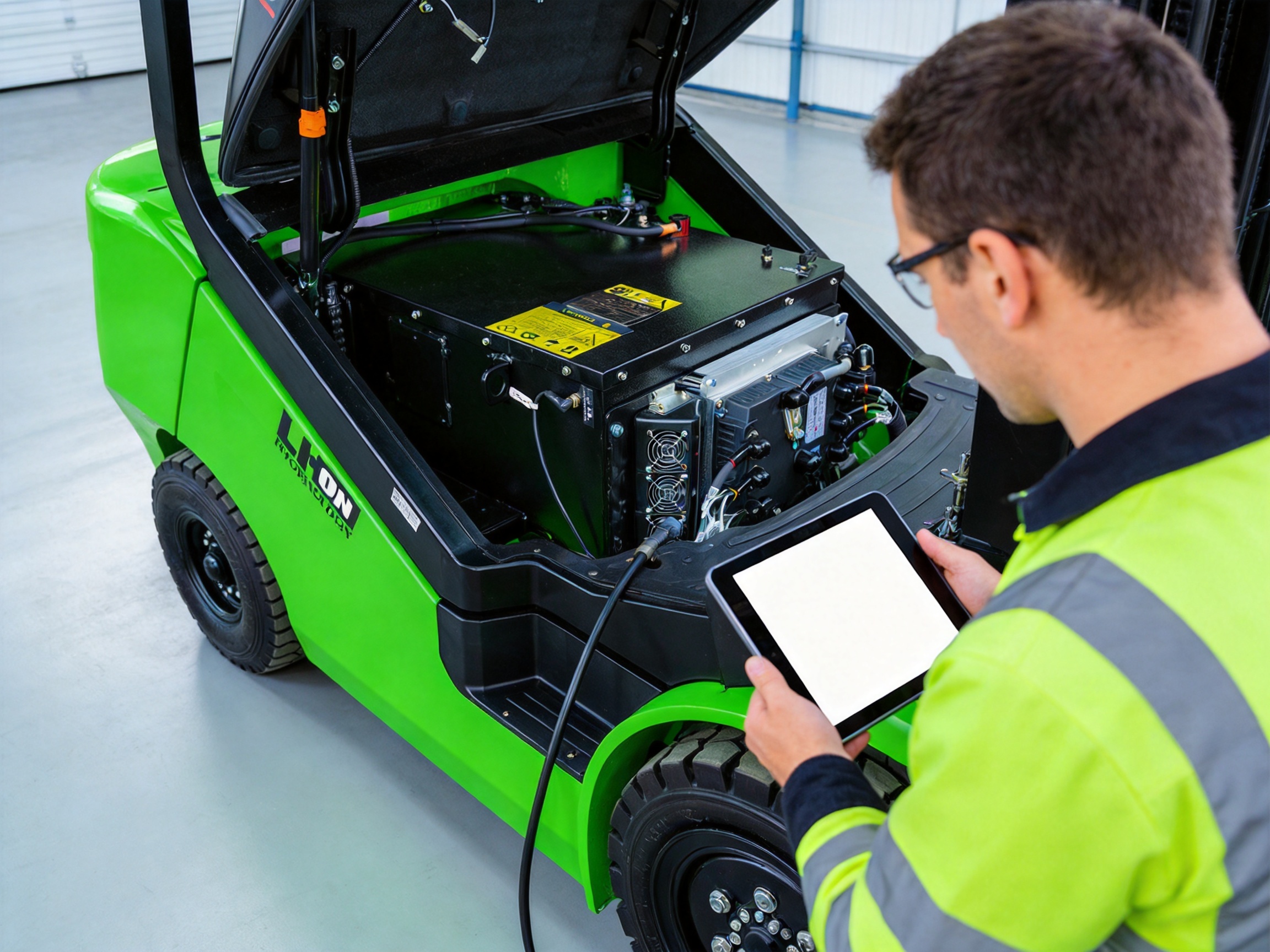
Maintenance access also contributes to safety. The engine hood opens at a wider angle, giving technicians easier access to internal components. Better access encourages proper inspection and service, which helps prevent small issues from becoming larger safety risks. A forklift that is easier to inspect is more likely to be maintained correctly.
Operator Comfort and Ergonomics
Operator comfort directly affects productivity. A forklift driver may spend hours each day entering the cab area, steering, lifting, reversing, turning, and checking surroundings. If the machine is cramped, noisy, unstable, or tiring to control, productivity and safety can decline. This forklift addresses comfort through low vibration, quiet lithium power, stable handling, and improved operating space.
Compared with standard lithium forklifts, this model offers more spacious legroom. That detail matters in real work because operators frequently use pedals, adjust posture, and enter or exit the truck throughout the day. More legroom helps reduce fatigue and improves ease of operation for drivers of different body sizes.
The low center of gravity contributes to smoother turning and a more stable driving feel. Operators can handle loads with greater confidence, especially when moving between indoor and outdoor zones or working around pallets in confined spaces. Reduced vibration from electric power further improves comfort compared with internal combustion machines.
Low noise is another ergonomic benefit. A quieter forklift reduces operator stress and improves communication in busy workplaces. When workers can hear instructions, horns, backup alarms, and surrounding activity more clearly, the work environment becomes more manageable.
Durability Through a Proven Chassis Concept
A major strength of this forklift is its use of a time-tested internal combustion forklift structure. The provided material notes that the structure has been validated over two decades, supporting reliable strength and long service life. This approach gives the lithium forklift a practical advantage over electric models that may be optimized for light indoor use but not for rougher daily conditions.
The chassis design is built around durability. Key components such as axles and masts are compatible with internal combustion forklift components, allowing faster and more cost-effective repairs. Component compatibility is valuable for customers because it can reduce spare parts complexity, shorten service time, and make maintenance more familiar to technicians.
Durability also comes from the forklift’s ability to resist water and dust in more varied operating scenarios. While every forklift must be used according to its operating manual and environmental limitations, a design inspired by internal combustion forklifts gives this model an advantage in mixed indoor and outdoor applications. It is not merely a clean warehouse truck; it is designed to serve in the realities of industrial logistics.
Lower Total Ownership Cost
Purchase price is only one part of forklift economics. A truly cost-effective forklift must be evaluated through total ownership cost, including energy, maintenance, downtime, productivity, service life, battery replacement, operator efficiency, and resale or lifecycle value. This lithium forklift is designed to lower ownership cost through several combined advantages.
First, it eliminates fuel expenses. Electricity typically costs less per operating hour than diesel, gasoline, or LPG, especially in high-use operations. Even when electricity prices vary, the ability to charge during planned intervals and manage energy consumption can provide better cost control.
Second, it reduces routine maintenance. No engine oil, no engine filters, no fuel system maintenance, and fewer vibration-related issues mean fewer service interruptions. Maintenance-free lithium batteries also eliminate watering and acid-related battery care.
Third, it supports multi-shift use through fast charging and opportunity charging. If one forklift can cover more work without battery swapping or long charging downtime, fleet utilization improves. In some cases, a lithium forklift can reduce the need for extra standby equipment.
Fourth, component compatibility with internal combustion forklifts can reduce repair cost. Common axles and mast-related components support quicker parts access and familiar servicing processes. This can be especially important for companies operating mixed fleets or working in regions where service infrastructure is built around traditional forklift platforms.
Finally, the long cycle life and warranty support confidence in the battery investment. Since the lithium battery is a major value component, long service life improves the financial case for electrification.
Manufacturing Strength Behind the Product
The quality of a forklift depends not only on design but also on the manufacturing capability behind it. Zhejiang UN Forklift Co., Ltd. is a professional material handling equipment manufacturer integrating research and development, production, sales, and service. Founded in 1978, the company has decades of experience in forklift engineering and industrial manufacturing. This background is important because forklift production requires long-term knowledge of structural durability, hydraulic systems, mast design, powertrains, safety standards, and service requirements.
The company occupies approximately 53,400 square meters and has an annual production capacity of 15,000 units. This scale supports consistent production, organized quality management, and the ability to serve both domestic and international markets. A manufacturer with established production capacity can better support customers with stable supply, spare parts availability, and product continuity.
The company’s product range includes many forklift varieties, series, and specifications, giving it broad experience across different material handling needs. This wide portfolio helps the engineering team understand how forklifts perform in many operating conditions, from light warehouse applications to more demanding industrial environments. The lithium forklift benefits from this accumulated knowledge.
The company has participated in the development of China’s electric forklift industry standards and holds national patents related to electric forklift technologies. This indicates that the manufacturer is not only assembling equipment but also contributing to the technical evolution of the industry. Product innovation is especially important in lithium forklifts, where battery integration, electronic controls, safety monitoring, and energy efficiency must work together.
Advanced Production and Quality-Oriented Processes
Advanced forklift manufacturing requires coordination between design, welding, machining, painting, assembly, electrical integration, hydraulic testing, mast production, and final inspection. For a lithium forklift, additional attention must be given to battery system installation, controller calibration, wiring layout, safety protection, and software communication between systems. A manufacturer with integrated research, production, sales, and service capabilities is better positioned to manage these requirements.
The manufacturing process begins with engineering design and product validation. The forklift’s internal combustion-style chassis concept is based on proven structural layouts, but lithium conversion requires careful balance of weight distribution, battery positioning, controller placement, cooling considerations, and service accessibility. Engineers must ensure that the electric system does not simply replace the engine, but improves the full operating experience.
Structural production must emphasize frame strength and dimensional accuracy. A counterbalance forklift handles heavy loads while experiencing repeated shock, vibration, turning force, and mast stress. Frame welding quality, mast alignment, axle mounting precision, and counterweight integration all affect long-term performance. Consistent manufacturing processes help maintain stability and safety from one unit to the next.
Electrical integration is especially important in lithium-powered forklifts. Battery systems, drive motors, lift motors, controllers, CAN bus communication, and BMS protection must be assembled and tested as a complete system. Proper cable routing, connector quality, insulation protection, and control calibration all help prevent faults and improve reliability.
Hydraulic system assembly also requires precision. Smooth lifting, lowering, steering, and attachment operation depend on pumps, valves, hoses, cylinders, and pressure settings. The forklift’s specially designed hydraulic station is part of this complete system, supporting stable steering even under braking conditions. Quality inspection ensures that hydraulic performance meets expected standards before shipment.
Final testing verifies travel, lift, braking, steering, electrical operation, safety functions, and general performance. For customers, this quality-oriented manufacturing approach means fewer early-life problems and better confidence in long-term operation.
Global Service Capability and Customer Support
A forklift is a working asset, not a one-time purchase. Customers need support before selection, during commissioning, throughout daily use, and when replacement parts or maintenance guidance are required. The manufacturer has a worldwide sales and service network with partners in Europe, South America, North America, Africa, and Asia. This global presence supports international customers who need product consultation, parts access, service coordination, and technical communication.
The company’s experience as an OEM supplier for well-known domestic and overseas companies also reflects manufacturing reliability and process discipline. OEM relationships usually require stable quality, production consistency, documentation, and delivery capability. These capabilities benefit customers choosing the 3.0–3.5T lithium forklift because they indicate mature industrial execution.
The company’s development direction also aligns with global market trends. As carbon emissions and workplace environmental requirements become more important, the manufacturer has actively developed new energy forklifts, including diesel-to-lithium-ion forklifts and standard lithium-ion battery forklifts. This shows commitment to cleaner material handling solutions and continued investment in energy-saving, smart, and cost-effective equipment.
Application Scenarios
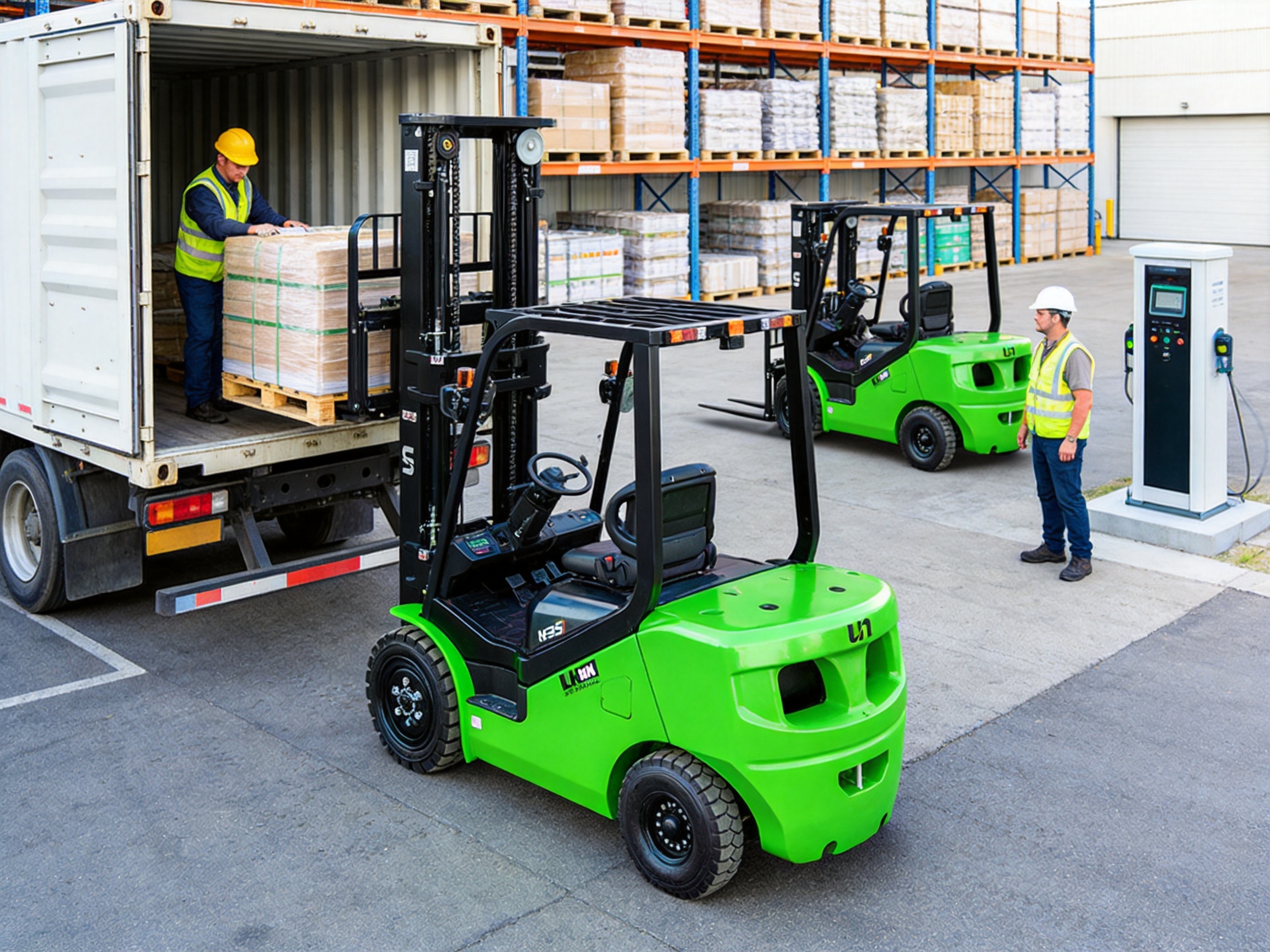
The 3.0–3.5T Li-ion Battery Forklift is suitable for a wide range of applications. In warehouses, it can handle palletized goods, move inventory, load and unload trucks, and support rack storage operations. Its zero-emission operation makes it suitable for indoor spaces where air quality matters.
In manufacturing plants, it can move raw materials, components, finished goods, molds, packaging materials, and production supplies. Quiet operation and reduced vibration make it easier to use near production lines and workers.
In logistics and distribution centers, fast charging and opportunity charging support high utilization. The forklift can work during peak periods and recharge during natural breaks, helping maintain throughput.
In outdoor or semi-outdoor yards, the internal combustion-inspired chassis gives it an advantage over electric forklifts designed only for polished floors. Its water and dust resistance, robust tires, and strong structure help it handle mixed conditions more confidently.
In companies transitioning from diesel fleets, it provides a practical bridge. Operators familiar with traditional forklifts can adapt to the lithium model while the business gains reduced emissions, lower noise, and lower maintenance cost.
Mast Options and Load Capacity Planning
Mast selection has a major effect on forklift capability. The product information includes a wide range of mast specifications, including wide view masts, two-stage full free wide view masts, and three-stage full free wide view masts. Maximum fork heights range from standard 3,000 mm configurations to higher lift options. As lift height increases, load capacity may reduce, which is normal for counterbalance forklifts.
For the 3.0T and 3.5T models, common 3,000 mm mast configurations allow rated capacity operation under standard conditions. Higher masts such as 4,500 mm, 5,000 mm, 5,500 mm, and 6,000 mm require careful review of residual capacity. Users should select mast type based on maximum rack height, doorway clearance, container loading needs, free lift requirements, and load weight.
Side shifter selection also affects capacity. The provided note indicates that a separated side shifter can reduce load capacity by 200 kg, while an integrated side shifter can reduce load capacity by 50 kg. This is an important planning detail. Attachments improve handling flexibility but add weight and change the load center, so residual capacity must always be confirmed.
Customers should consult the manufacturer or authorized sales team to match mast, attachment, tire, and battery options to their application. Proper specification prevents underperformance and improves safety.
Why This Forklift Stands Out Against Competitors
In a competitive market, many forklifts claim to be electric, efficient, or durable. This model stands out because it combines several advantages in one platform. First, it is not limited to a narrow indoor role. Its internal combustion-inspired construction makes it suitable for broader working conditions, giving it an advantage over lighter electric forklifts.
Second, it offers a stronger economic argument than many internal combustion forklifts. Comparable purchasing cost, elimination of fuel expense, reduced routine maintenance, and long battery life all support lower total ownership cost. For customers comparing diesel and lithium alternatives, this balance is persuasive.
Third, it offers practical energy management. Fast full charging and opportunity charging are more useful in real operations than long charging cycles or complicated battery swapping. Fleet managers can build charging into daily workflows rather than redesigning operations around the battery.
Fourth, it supports service efficiency. Compatibility of key components such as axles and masts with internal combustion forklift designs helps reduce repair complexity. Competitors with highly specialized parts may create longer downtime when repairs are needed.
Fifth, it is supported by a manufacturer with decades of forklift experience, broad production capacity, patented electric forklift technologies, participation in industry standards, and global service partners. Product quality is strengthened when engineering and manufacturing experience are deep.
Environmental and Sustainability Value
Companies are increasingly evaluated not only by productivity but also by sustainability. Material handling fleets are visible contributors to emissions, energy consumption, and workplace noise. Replacing internal combustion forklifts with lithium-powered equipment can support environmental goals while maintaining productivity.
This forklift uses low-carbon, clean, environmentally friendly lithium battery power. It produces zero emissions at the point of operation, helping improve indoor air quality. It also generates lower noise and minimal vibration, improving the working environment. For companies with environmental, social, and governance targets, these benefits can become part of broader sustainability reporting.
Energy efficiency also contributes to sustainability. Electric powertrains convert energy more efficiently than combustion engines, reducing waste. Maintenance-free battery operation reduces consumables and eliminates oil-related service materials. Over time, these small advantages accumulate across fleets and operating hours.
The forklift also supports sustainable equipment strategy because it is designed for long service life. Durable products reduce replacement frequency and make better use of manufacturing resources. A robust lithium forklift that can serve multiple applications helps customers reduce environmental impact without sacrificing operational capability.
Buying Considerations
Before purchasing, customers should evaluate several factors. The first is load profile. Determine the heaviest loads, typical pallet weight, load center, and frequency of maximum-capacity lifts. The 3.0T and 3.5T models are designed for 3,000 kg and 3,500 kg rated loads at a 500 mm load center, but attachments and higher masts may reduce residual capacity.
The second factor is lift height. Select the mast based on maximum storage height, ceiling clearance, container access, doorways, and free lift requirements. Full free mast options may be important in low-ceiling areas or container operations.
The third factor is duty cycle. Consider operating hours per shift, number of shifts, travel distance, ramp use, lifting frequency, and charging opportunities. Battery capacity options should be selected according to actual workload.
The fourth factor is environment. Indoor warehouses, outdoor yards, wet areas, dusty sites, cold storage, and food applications may require different tires, accessories, or protection packages. Confirm configuration with the supplier.
The fifth factor is service planning. Review spare parts access, technician training, warranty terms, charger requirements, and preventive maintenance schedules. Even low-maintenance lithium forklifts need regular inspections to remain safe and productive.
Q&A Section
What is the rated capacity of this lithium forklift?
The main models discussed here are rated for 3,000 kg and 3,500 kg at a 500 mm load center. Proper residual capacity should be confirmed when using high masts or attachments.
How does it compare with a diesel forklift?
It offers zero exhaust emissions, lower noise, reduced vibration, lower routine maintenance, and lower energy cost. At the same time, it uses a robust internal combustion-style structure to preserve durability and outdoor usability.
How fast can the lithium battery be charged?
The lithium battery system supports rapid charging, with full charging in approximately two hours under suitable charging conditions. It also supports opportunity charging during breaks or shift changes.
Is it suitable for multi-shift operation?
Yes. Fast charging and anytime top-up charging make it suitable for multi-shift work when the battery capacity and charger are properly matched to the duty cycle.
What battery options are available?
The 3.0T version is commonly listed with an 80V/220Ah battery and optional larger capacities. The 3.5T version is commonly listed with an 80V/270Ah battery and an optional 350Ah configuration. Exact options should be confirmed with the supplier.
Does the lithium battery require daily maintenance?
Lithium batteries are maintenance-free in normal daily use. They do not require watering or electrolyte checks like lead-acid batteries.
Can it be used outdoors?
Yes. The forklift is inspired by internal combustion forklift designs and is suitable for both indoor operations and many outdoor conditions. Users should still follow the operating manual and confirm suitability for specific environments.
What makes the chassis durable?
The chassis uses a time-tested internal combustion forklift structure that has been validated through long-term application experience. Key components such as axles and masts are compatible with internal combustion forklift designs, supporting strength and service efficiency.
Is it comfortable for operators?
Yes. It offers low noise, minimal vibration, stable handling, a low center of gravity, and more spacious legroom compared with many standard lithium forklifts.
Why is total ownership cost lower?
Total ownership cost is reduced through lower energy expense, no fuel consumption, fewer routine maintenance items, maintenance-free battery operation, fast charging, long battery life, and efficient serviceability.
Conclusion
The 3.0–3.5T Li-ion Battery Forklift is a practical solution for companies that want to electrify their material handling operations without losing the durability and versatility associated with traditional internal combustion forklifts. It combines a proven chassis structure, lithium battery efficiency, fast charging, intelligent monitoring, low maintenance requirements, and operator-friendly handling. The result is a forklift that can serve warehouses, factories, logistics centers, loading docks, and mixed indoor-outdoor applications with strong economic and environmental benefits.
Its advantages over competitors are clear. Compared with internal combustion forklifts, it reduces emissions, noise, fuel cost, and maintenance. Compared with lead-acid electric forklifts, it charges faster, requires less battery care, and supports flexible multi-shift operation. Compared with lighter electric models, it offers a more robust structure and broader scenario capability. Supported by an experienced manufacturer with decades of production history, strong R&D capability, global service reach, and a commitment to new energy forklift development, this product represents a forward-looking yet practical choice for modern material handling.
For businesses evaluating their next forklift investment, this lithium-powered 3.0–3.5T platform deserves serious consideration. It is not simply an electric replacement; it is a complete productivity tool designed to reduce cost, improve workplace conditions, support sustainability goals, and deliver reliable daily performance.
References
Industrial Truck Association. General Guidance on Powered Industrial Truck Selection and Safe Operation.
International Organization for Standardization. Industrial Trucks: Safety Requirements and Verification Standards.
Battery University. Lithium-ion Battery Charging, Cycle Life, and Maintenance Principles.
Materials Handling Industry. Best Practices for Warehouse Equipment Productivity and Fleet Management.
Occupational Safety and Health Administration. Powered Industrial Trucks Safety and Operator Training Guidance.
Manufacturer Product Specifications and Technical Materials for 3.0–3.5T Li-ion Battery Forklift Models.
Product: NL Series 3.0T-3.5T Li-ion Battery Forklift
For exclusive deals and latest offers, sign up by entering your email address below.
Stay In Touch
ADDRESS : NO.1 ROAD ONE, XINDENG NEW DISTRICT, FUYANG, HANGZHOU, ZHEJIANG, CHINA 311404.
PHONE : +86-571-8688 8355 (AMERICA)
PHONE : +86-571-8886 9363 (EUROPE)
PHONE : +86-571-8688 8377 (ASIA, AFRICA, OCEANIA)
EMAIL : [email protected]
EMAIL : [email protected](PARTS INQUIRY)

