


 中文简体
中文简体 Français
 русский
 Español
 عربى
عربى Deutsch



Second-Generation Lithium-Iion Forklifts for Heavy-Duty Indoor and Outdoor Material Handling
Admin 2026-07-07The V Series 2.0T-2.5T Li-ion Battery Forklift represents a new stage in electric material handling: a forklift designed not merely to operate indoors, but to challenge traditional internal combustion forklifts in productivity, endurance, operator comfort, and total cost efficiency.
For many years, warehouse operators and logistics managers faced a familiar trade-off. Internal combustion forklifts delivered strong power and outdoor adaptability, but produced emissions, noise, maintenance demands, and fuel costs. Traditional electric forklifts offered cleaner operation, but often lacked the rugged structure, working time, high-speed performance, and outdoor resilience required for heavy-duty applications. This second-generation lithium-ion forklift platform is engineered to close that gap.
Built around advanced lithium battery technology, full AC motors, an imported ZAPI controller, a strengthened chassis concept, IC forklift-type axle and mast design, and practical side-swapping battery functionality, the V Series 2.0T-2.5T forklift is positioned as a serious replacement for diesel and gasoline forklifts in many mixed indoor and outdoor operations.
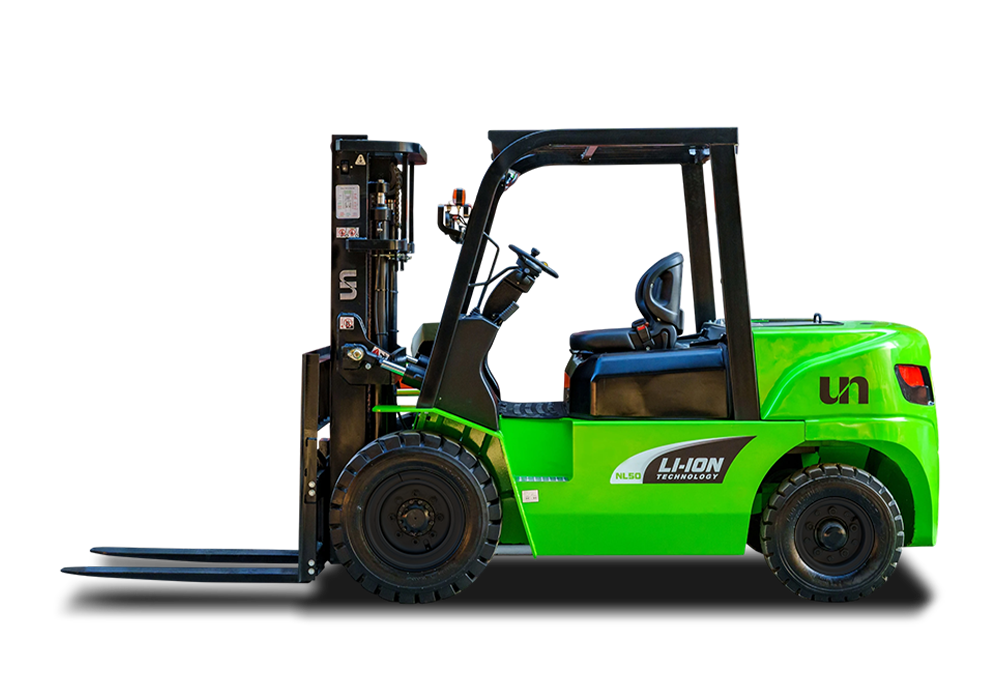
V Series 2.0T-2.5T Li-ion Battery Forklift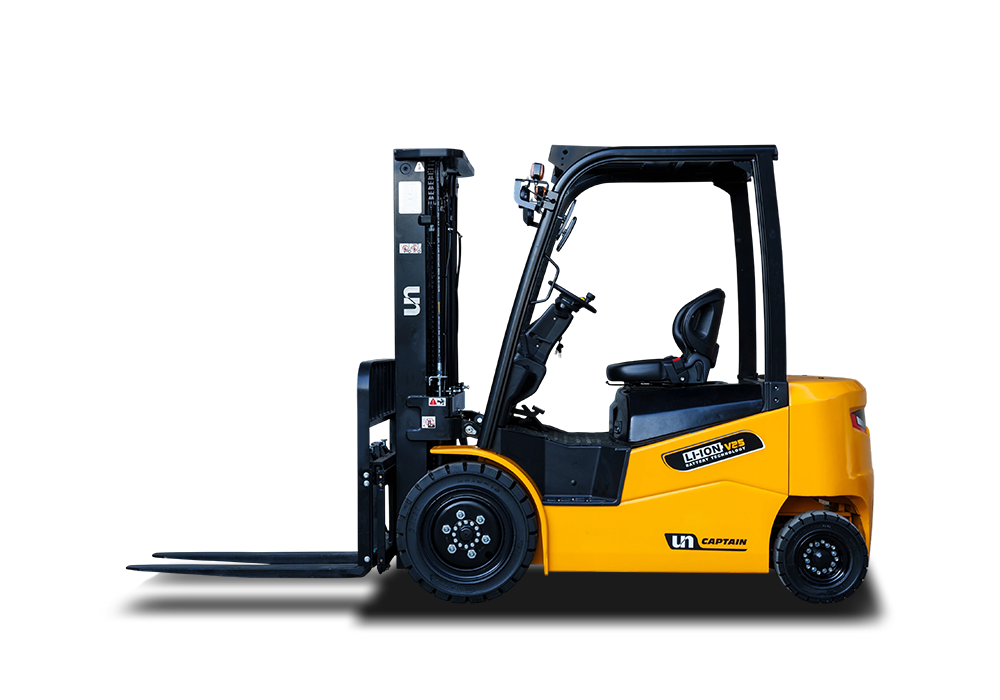
A Product Designed for the New Era of Material Handling
Modern material handling is changing quickly. Warehouses are becoming denser, logistics schedules are becoming tighter, carbon reduction targets are becoming more important, and customers increasingly expect equipment that can work harder with fewer operating interruptions. At the same time, labor costs, maintenance costs, and energy costs continue to influence fleet purchasing decisions.
The V Series 2.0T-2.5T Li-ion Battery Forklift answers these conditions by combining the clean operation of an electric forklift with design elements normally associated with internal combustion machines. It is not only a warehouse truck for smooth indoor floors. It is also intended for loading docks, production yards, logistics centers, cold storage, and rougher working zones where conventional electric forklifts may struggle.
Its core identity is clear: high performance, long working hours, zero emissions at the point of use, low maintenance, and a structure robust enough for demanding material handling cycles. These strengths make it highly relevant for companies seeking to modernize fleets without sacrificing productivity.
The product is especially suitable for operations that need a 2.0-ton or 2.5-ton rated load capacity with a 500 mm load center. This range is widely used across manufacturing, food and beverage, building materials, paper, packaging, e-commerce distribution, appliance production, and general warehousing. Because many companies operate multiple shifts, the forklift’s lithium-ion architecture and side-swapping battery design can help reduce downtime and support continuous usage.
From Traditional Electric Forklift to High-Performance Lithium Platform
Traditional lead-acid electric forklifts have long been appreciated for indoor cleanliness, but they require long charging periods, battery watering, equalization, ventilation considerations, and careful battery room management. In many facilities, a lead-acid fleet also needs spare batteries and specialized battery changing systems. These requirements create hidden costs that are not always visible when only the purchase price is compared.
The V Series lithium-ion platform improves this operating model. Lithium-ion batteries are maintenance-free in normal use, have higher charging efficiency, and are easier to manage. Opportunity charging can support flexible charging during breaks, shift changes, or idle periods. For heavy shift applications, the side-swapping battery pack can be replaced in only a few minutes, helping the forklift return to work rapidly.
Compared with conventional electric forklifts, the V Series also emphasizes stronger structural design. The use of IC forklift-type axle and mast concepts provides greater confidence in heavy-duty tasks. A forklift is not only a battery and motor; it is a load-bearing industrial machine that must survive shock, turning loads, mast stress, ground impact, and repetitive lifting. A strong chassis and mast are critical to long service life.
Compared with internal combustion forklifts, the electric lithium-ion platform eliminates exhaust emissions during operation, reduces noise, decreases routine engine maintenance, and avoids many fuel-related service tasks. There is no engine oil replacement, no exhaust after-treatment maintenance, no fuel filter management, and no combustion-related troubleshooting. The result is a cleaner, quieter, and potentially lower-cost fleet over time.
Key Technical Features at a Glance
The V Series 2.0T-2.5T Li-ion Battery Forklift integrates several major technical features that define its performance profile. These include lithium battery EVE cell technology, an Italy imported ZAPI controller, full AC motors, an enhanced structure, strong cooling design, IP54 protection, higher ground clearance, and a larger operator space than many traditional electric forklifts.
Each feature serves a practical operational purpose. Battery quality supports working time and safety. Controller quality affects driving smoothness and diagnostics. AC motors improve response and reduce service demands. Cooling systems protect power components during long operating periods. Structural reinforcement improves reliability under heavy use. Ergonomic design helps operators remain comfortable and productive.
The product is also designed for all-weather and rough-area operation. Its IP54 waterproof and dustproof characteristics, combined with high ground clearance and a rugged layout, allow it to operate in conditions where a standard warehouse electric forklift may be less suitable. This is one reason the product can be considered a meaningful alternative to internal combustion machines.
| Item | FB20 Series | FB25 Series |
| Rated load capacity | 2000 kg | 2500 kg |
| Load center | 500 mm | 500 mm |
| Drive type | Electric lithium-ion | Electric lithium-ion |
| Operator type | Seated | Seated |
| Wheelbase | 1620 mm | 1620 mm |
| Rated lift height | 3000 mm | 3000 mm |
| Overall width | 1180 mm | 1180 mm |
| Turning radius | 2165 mm | 2165 mm |
| Travel speed with full load | 14 km/h or 18 km/h depending on configuration | 14 km/h or 18 km/h depending on configuration |
| Maximum gradeability with full load | 15 percent or 19 percent depending on configuration | 15 percent or 19 percent depending on configuration |
| Battery options | 76.8V 230Ah or 76.8V 304Ah | 76.8V 230Ah or 76.8V 304Ah |
| Drive control | MOS/AC with ZAPI controller | MOS/AC with ZAPI controller |
Performance Advantages Over Conventional Competitors
The strongest selling point of this lithium-ion forklift is not only that it is electric. Its value lies in the way electric power is applied to high-demand working conditions. Many electric forklifts are clean but not strong enough for mixed-site use. Many internal combustion forklifts are strong but do not meet modern environmental and cost expectations. The V Series bridges these requirements.
Higher Productivity Through Faster Movement and Lifting
Travel speed, lifting speed, lowering performance, and gradeability directly influence material handling output. A forklift that travels slowly or lifts slowly may appear economical at purchase, but it can reduce pallet movement per hour and increase labor cost per handled unit. The V Series is designed for faster traveling, lifting, and lowering, helping operators move more goods in the same time frame.
For the 2.0T and 2.5T configurations, full-load travel speed can reach 14 km/h or 18 km/h depending on model configuration, while no-load travel speed can reach 15 km/h or 19 km/h. Lifting speed can also vary by configuration, with higher-performance versions providing faster lift cycles. In real logistics operations, these numbers matter because short time savings repeated hundreds of times per shift create significant productivity improvement.
Strong Gradeability for Ramps and Outdoor Movement
Gradeability is important for ramps, container loading areas, loading docks, uneven surfaces, and outdoor yards. A forklift that cannot maintain confidence on slopes may create delays and safety concerns. The V Series supports strong gradeability, with full-load performance reaching 15 percent or 19 percent depending on configuration and no-load gradeability reaching 15 percent or 20 percent.
This makes the forklift more suitable for applications where loads must be transported between indoor and outdoor zones. It is particularly valuable in distribution centers, manufacturing plants, and industrial parks where forklifts move between production lines, warehouses, trucks, and yard storage.
IC Forklift-Type Structure for Heavy-Duty Reliability
Many competitors in the electric forklift market still use designs optimized mainly for indoor, moderate-duty warehouse applications. The V Series takes another approach by applying IC forklift-type axle and mast strength. This gives the machine a more solid working foundation and helps it tolerate demanding applications.
A reinforced structure contributes to operational safety. When lifting heavy loads repeatedly, the mast, axle, frame, and counterweight arrangement must work together. A strong mechanical platform reduces instability, supports load handling confidence, and helps maintain consistent performance over long service periods.
Lower Emissions Without Sacrificing Strength
Internal combustion forklifts remain popular because they are powerful and familiar. However, they also create exhaust gases, heat, and noise. In enclosed or semi-enclosed environments, emissions may require ventilation planning and may affect worker comfort. In industries such as food, pharmaceuticals, electronics, cold chain, and clean manufacturing, cleaner equipment can be a major advantage.
The V Series provides zero emissions at the point of use while still offering the performance expected from a strong workhorse forklift. This makes it easier for companies to meet environmental policies while maintaining high productivity. It also supports a cleaner working atmosphere for employees, which can improve overall workplace conditions.
Lithium-Ion Battery Technology and Energy Efficiency
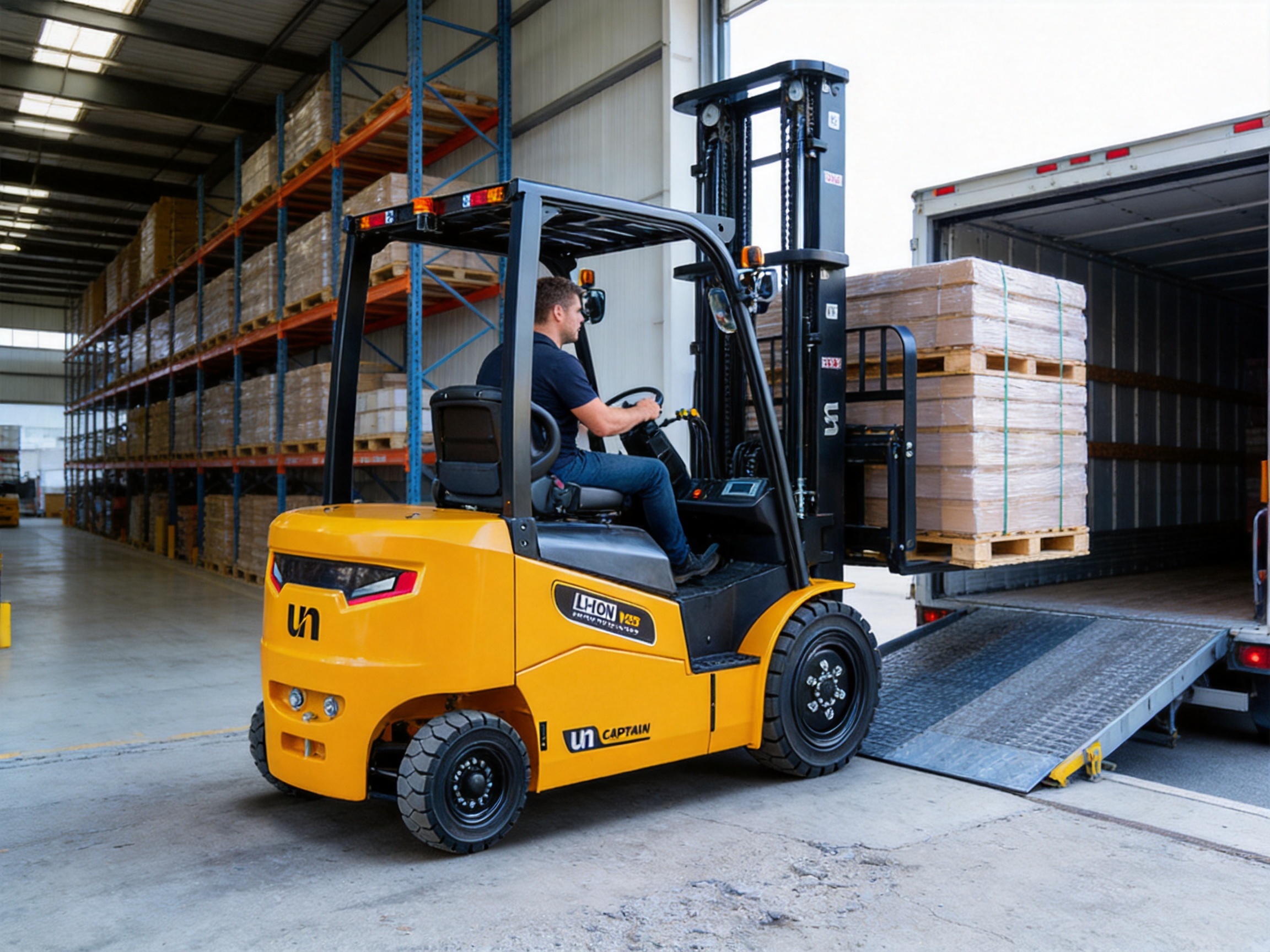
The battery is the heart of a lithium-ion forklift. The V Series adopts advanced lithium battery cell technology and is designed for long working hours, fast energy management, and low maintenance. Unlike lead-acid batteries, lithium-ion battery systems do not require watering, acid maintenance, or regular equalization in the same way. This reduces the daily burden on operators and maintenance teams.
Lithium-ion batteries also offer high energy efficiency. More of the energy drawn from the charger is available for actual work, which can reduce electricity waste. In facilities operating many forklifts, energy efficiency can become a meaningful cost factor over the life of the fleet.
The forklift’s battery options include configurations such as 76.8V 230Ah and 76.8V 304Ah for the 2.0T and 2.5T models. These options allow users to select capacity according to working intensity, shift length, charging availability, and productivity targets. For operations with heavier usage, a larger battery capacity may support longer working periods and fewer interruptions.
Side-Swapping Battery Design for Multi-Shift Operation
One of the most practical features of the V Series is its side-swapping battery design. Multi-shift operations often struggle with charging schedules. If a forklift must remain idle for long charging periods, fleet managers may need extra trucks to cover the gap. Side-swapping battery capability helps solve this issue by enabling quick battery replacement.
In many high-throughput warehouses, every minute of downtime is expensive. A battery system that can be replaced in a few minutes helps maintain continuous material flow. This is especially beneficial in 24-hour operations, high-volume logistics centers, manufacturing lines with no tolerance for delay, and seasonal peak periods.
Maintenance-Free Battery Operation
Lead-acid battery maintenance requires discipline. Operators must monitor water levels, avoid incorrect charging practices, manage acid risks, and keep charging areas safe. When maintenance is neglected, battery life and forklift performance decline. Lithium-ion technology reduces these routine requirements, creating a simpler and more predictable ownership experience.
For fleet managers, maintenance-free battery operation also reduces training complexity. New operators do not need to learn detailed lead-acid care procedures. Maintenance teams can spend less time on battery service and more time on preventive inspection of the complete fleet.
ZAPI Controller and Full AC Motor System
The V Series uses an imported ZAPI controller and full AC motors. This combination is important because modern electric forklift performance depends heavily on electronic control. The controller manages acceleration, speed, torque delivery, braking response, energy flow, diagnostics, and protection logic. A high-quality controller helps the forklift feel stable, responsive, and efficient.
Full AC motors bring additional benefits. Compared with older DC motor systems, AC motors generally require less maintenance because they do not use brushes in the same way. They can provide strong torque, smooth speed control, and efficient power delivery. For applications involving frequent starts, stops, lifting, and directional changes, AC technology is a strong advantage.
The ZAPI controller also supports a clear LED screen and CAN-bus monitoring. This helps operators and service teams observe forklift status more easily. Good visibility of machine data improves operational awareness and can support faster troubleshooting. When equipment health information is accessible, downtime can be reduced and maintenance can become more proactive.
Cooling, Ventilation, and Long Working Hours
High-performance electric forklifts must manage heat. Batteries, motors, controllers, and hydraulic systems all generate heat under demanding conditions. If heat is not properly managed, performance may be reduced or component life may be affected. The V Series includes well-allocated ventilation and cooling for the motor and battery management system.
This cooling layout is especially important for persistent long working hours. Forklifts in logistics and manufacturing often operate with repeated travel and lift cycles, sometimes in hot environments or under heavy load. A cooling system designed for endurance helps maintain performance stability during long shifts.
Competitors that focus only on basic indoor applications may not provide the same level of thermal resilience. As a result, their performance may decline during extended work or heavy usage. The V Series positions itself differently: it is intended for operators who need electric power without weak endurance.
Indoor Performance and Cold Storage Capability
Although the V Series is strong enough for outdoor and rough-area work, it remains highly suitable for indoor warehouse operation. Its seated operator design, wide-view mast, electric drive, low emissions, and smooth control make it practical for aisle work, pallet movement, and loading operations inside modern facilities.
The product also supports operation in cold storage environments down to minus 20 degrees Celsius. This is a meaningful advantage for frozen food, cold chain logistics, pharmaceuticals, and temperature-controlled distribution. Cold storage is demanding because low temperatures affect batteries, hydraulics, electronics, operator comfort, and material handling efficiency. A forklift capable of alternate operation in cold storage provides flexibility to customers with mixed temperature zones.
For indoor work, the V Series can replace traditional electric forklifts while improving comfort and performance. Operators benefit from a larger space, improved visibility, and a modern dashboard layout. Companies benefit from clean operation, reduced battery maintenance, and strong productivity.
Outdoor Performance in All Weather and Rough Areas
One of the product’s defining claims is its suitability as a replacement for internal combustion forklifts. This is possible because the forklift is not limited to ideal indoor surfaces. Its strengthened structure, high ground clearance, IP54 waterproof and dustproof protection, and rugged layout allow it to work in more challenging environments.
Outdoor material handling can include wet surfaces, dust, uneven pavement, yard debris, ramps, and frequent transitions between smooth and rough ground. A forklift must be able to handle these conditions without becoming unreliable or unsafe. The V Series is designed with this reality in mind.
High ground clearance helps reduce interference with uneven surfaces. IP54 protection supports resistance to dust and water splashes. Strong tires and chassis configurations help the forklift remain useful in different operating conditions. These characteristics give the product an advantage over electric competitors designed mainly for polished warehouse floors.
Operator Comfort and Ergonomic Design
Operator comfort is not a luxury in material handling. A forklift operator may spend many hours per day driving, reversing, lifting, lowering, turning, and monitoring surroundings. Poor ergonomics can lead to fatigue, slower work, reduced attention, and higher risk of operational error. The V Series places strong emphasis on comfort and visibility.
The forklift provides a wider operating space, described as approximately 50 percent larger than many traditional electric forklifts and comparable to the space of an internal combustion forklift. This is important for operators who are used to IC trucks and may otherwise feel restricted in compact electric models.
The wide-view mast improves visibility. Better visibility helps operators position forks accurately, reduce pallet damage, avoid collisions, and work more confidently in busy areas. When visibility is combined with smooth electric control, operators can handle loads with greater precision.
Dashboard and Display Layout
The dashboard is designed with an advanced and scientific layout. The LED screen faces the operator at a comfortable angle, improving readability during operation. Clear information reduces distraction because the operator does not need to search for critical data.
The ZAPI controller’s true-color LED screen provides excellent visibility and clear reading. Combined with CAN-bus communication, the system helps operators monitor forklift status continuously. This contributes to safer, more informed operation and allows service teams to interpret machine behavior more efficiently.
Convenient Details for Daily Work
Small details can make daily operations smoother. The V Series includes a USB power supply design, making mobile device charging more convenient. In modern warehouses, operators and supervisors often use mobile devices, scanners, communication tools, and digital work systems. Convenient power access reflects attention to real working habits.
Comfort also extends to the overall operating environment. Electric drive reduces vibration and engine noise compared with internal combustion forklifts. A quieter machine can improve communication and reduce operator fatigue, especially in indoor settings.
Easy Maintenance and Service Accessibility
Maintenance is a major factor in total cost of ownership. A forklift that is difficult to service may generate higher labor costs and longer downtime. The V Series is designed to reduce routine maintenance requirements and improve access to key components.
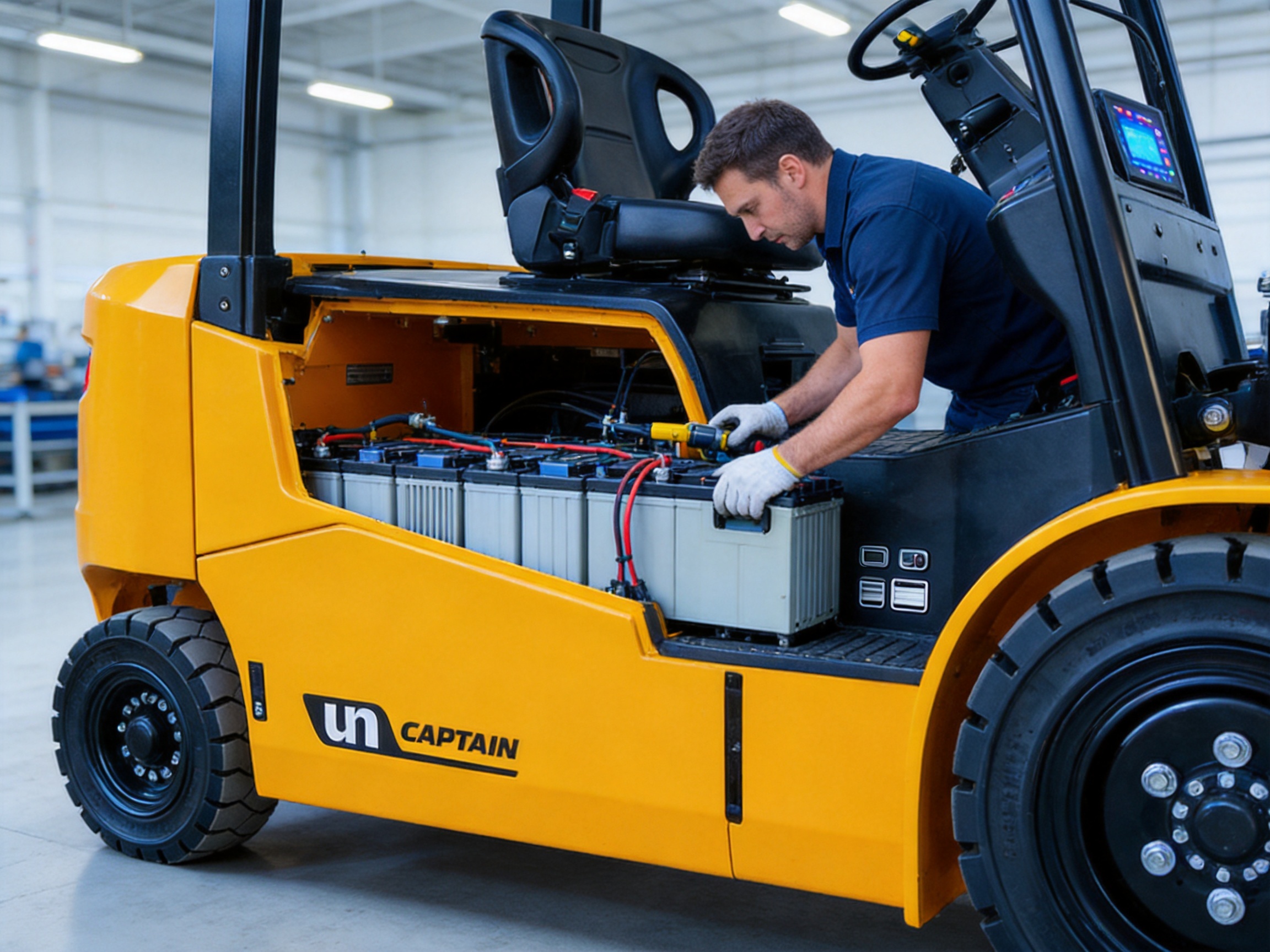
The lithium-ion battery is maintenance-free in normal operation, removing many tasks associated with lead-acid systems. The side-swapping battery design also improves replacement convenience. In addition, the hood has a large opening angle, supporting better access to main parts.
For service technicians, accessible components can shorten inspection and repair time. For fleet managers, shorter service time means higher availability. For operators, a well-maintained forklift means more confidence and fewer interruptions.
Manufacturing Strength Behind the Product
A forklift’s performance depends not only on design specifications but also on manufacturing capability. Zhejiang UN Forklift Co., Ltd. has decades of experience in material handling equipment, integrating research and development, production, sales, and service. Founded in 1978, the company has built a long industrial history in forklift manufacturing and has expanded its capabilities across electric and internal combustion platforms.
The company occupies 53,400 square meters and has an annual production capacity of 15,000 units. This scale provides the foundation for stable production, quality control, and export supply. A manufacturer with mature production systems can better control consistency, manage component integration, and respond to customer requirements.
UN Forklift has developed a broad product portfolio, including numerous varieties, series, and specifications. This broad development background is valuable because lithium-ion forklifts are not isolated products. They benefit from experience in chassis design, mast manufacturing, hydraulic systems, electric control, safety engineering, and field service.
Research and Development Capability
The company’s history includes important contributions to China’s material handling industry, including early development achievements in reach forklifts and very narrow aisle trucks. It also holds national patents for electric forklift technologies and has participated in the formulation of electric forklift industry standards in China.
This background is important because the V Series is a second-generation lithium-ion forklift, not a simple battery conversion. Effective lithium forklift design requires integration of battery structure, power electronics, thermal management, counterweight balance, frame strength, software control, and operator ergonomics. R&D capability determines how well these elements work together.
Advanced Production and Process Control
Modern forklift production involves multiple manufacturing processes: steel structure fabrication, welding, machining, surface treatment, assembly, hydraulic installation, electrical wiring, controller calibration, mast testing, load testing, and final inspection. Advanced manufacturing is not only about machines; it is about process discipline.
A professional manufacturer must ensure weld quality, dimensional accuracy, mast alignment, hydraulic sealing, electrical reliability, and consistent assembly. In lithium-ion forklifts, additional attention must be given to battery installation, BMS integration, insulation, wiring harness routing, controller programming, and thermal protection.
The V Series benefits from a manufacturing environment capable of producing both internal combustion and electric forklifts. This combined experience helps the company design electric products with the ruggedness of IC machines and the efficiency of modern electric systems. That is a competitive advantage over manufacturers that specialize only in light-duty warehouse equipment.
Global Service Awareness
UN Forklift has a worldwide sales and service network with partners across Europe, South America, North America, Africa, and Asia. For international customers, service support is as important as machine specification. Forklifts are working assets, and downtime affects logistics output. A global network improves parts availability, technical support, and after-sales confidence.
The company is also an OEM supplier for well-known domestic and overseas companies, including major industrial equipment groups. This indicates a level of manufacturing credibility and process maturity demanded by professional partners.
Why This Forklift Stands Out in Competitive Purchasing
When buyers compare forklifts, they often look at rated capacity, price, brand reputation, and energy type. However, the most important comparison should be based on total value in real working conditions. The V Series provides several competitive advantages that go beyond basic specifications.
Advantage One: Replacement Potential for Internal Combustion Forklifts
Many electric forklifts can replace IC forklifts only in clean indoor areas. The V Series is designed to replace IC forklifts in broader applications because of its strong structure, performance, high ground clearance, cooling design, and weather resistance. This allows businesses to reduce emissions without compromising too much on outdoor usability.
Advantage Two: Lower Routine Maintenance
Compared with diesel or gasoline forklifts, the V Series eliminates many engine-related maintenance tasks. Compared with lead-acid electric forklifts, it removes battery watering and much battery room complexity. These reductions can lower service workload and improve fleet uptime.
Advantage Three: Better Multi-Shift Flexibility
The side-swapping battery concept and lithium-ion charging advantages make the forklift suitable for demanding schedules. Competitors without convenient battery replacement or fast energy management may require more idle time or additional equipment.
Advantage Four: Operator-Centered Design
With larger operating space, wide-view mast, clear dashboard, LED display, CAN-bus monitoring, and USB power supply, the forklift is designed around real operators. This can improve comfort, reduce fatigue, and support safer work.
Advantage Five: Manufacturing Depth
A forklift made by a manufacturer with decades of industry experience, strong production capacity, patent background, and global service channels provides buyers with confidence. Product value is strengthened when the manufacturer can support quality, parts, technical advice, and long-term improvement.
Application Scenarios
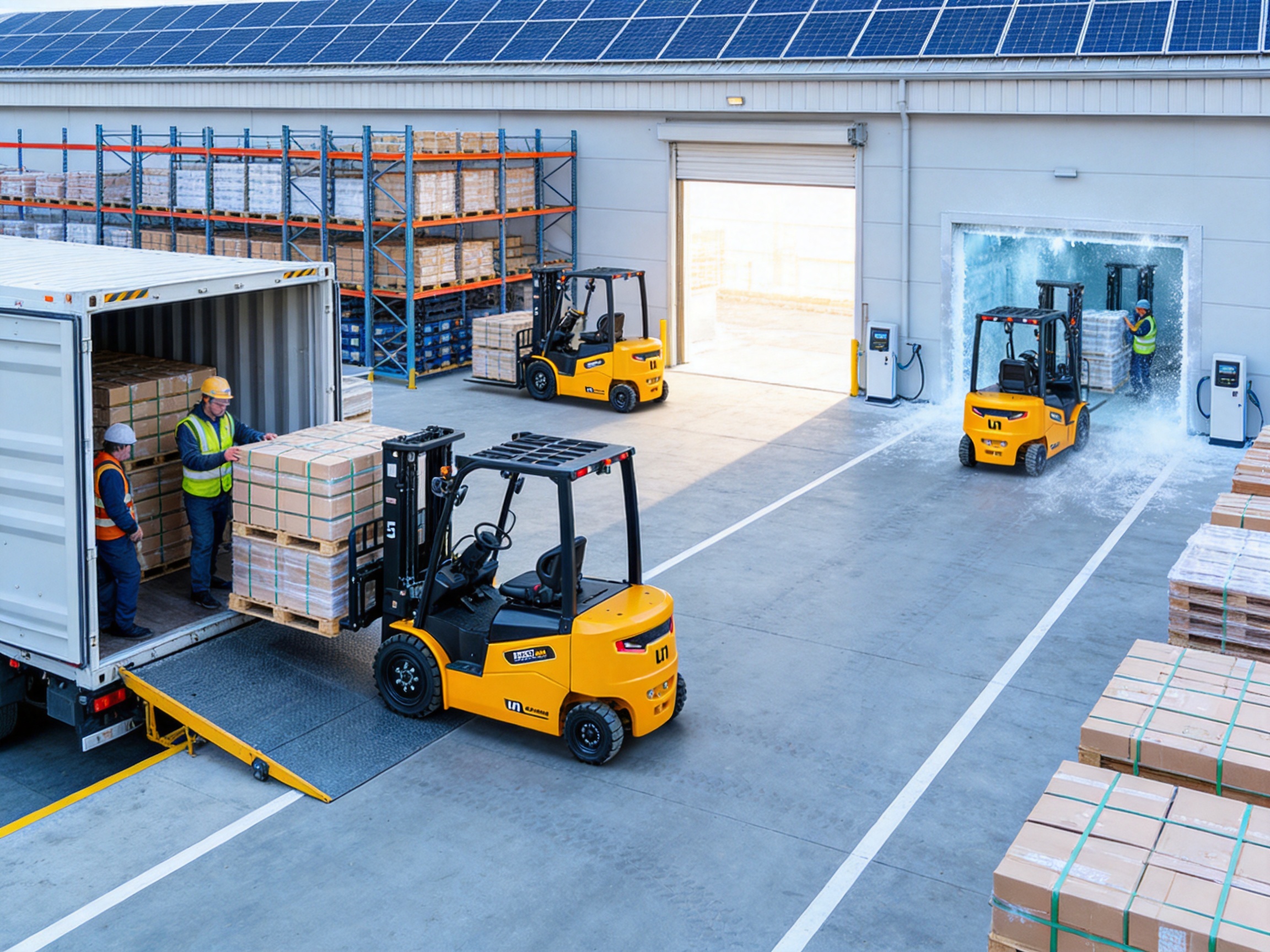
The V Series 2.0T-2.5T Li-ion Battery Forklift is suitable for a wide range of industries. In warehousing, it can move pallets, load trucks, and operate in aisles while maintaining clean indoor air. In manufacturing, it can support production lines, raw material delivery, finished goods transfer, and shift-based operations.
In food and beverage facilities, zero emission operation helps maintain a cleaner environment. In cold chain logistics, the ability to work in minus 20 degrees Celsius cold storage adds practical value. In outdoor yards, high ground clearance and IP54 protection provide confidence in rougher or wetter areas. In e-commerce and distribution, fast travel and lift performance help meet high-volume handling requirements.
The forklift is also suitable for companies transitioning from internal combustion fleets to electric fleets. Instead of replacing IC forklifts with low-duty electric trucks, customers can adopt a lithium-ion platform designed for stronger working conditions.
Total Cost of Ownership Considerations
The initial purchase price of a forklift is only one part of its cost. Over the life of the equipment, energy cost, maintenance labor, downtime, battery service, parts replacement, operator productivity, and fleet size requirements may become more important. The V Series is designed to reduce cost in several of these areas.
Energy efficiency reduces waste. Lithium-ion battery maintenance reduces service labor. Electric drive reduces engine-related parts. Fast charging and side-swapping battery options reduce downtime. Higher performance can improve pallet movement per hour. Better ergonomics can support operator productivity. These factors all contribute to total cost of ownership.
For fleet managers, the decision should not be based only on whether lithium-ion equipment costs more than a basic forklift. The better question is how much value the forklift creates over several years of operation. If a machine reduces downtime, improves throughput, lowers maintenance, and supports environmental goals, its long-term value can be substantial.
Safety and Reliability
Safety is fundamental in forklift design. The V Series supports safety through structural strength, operator visibility, stable control, reliable braking, and clear monitoring. Hydraulic service brakes and mechanical parking brakes provide familiar braking systems. The wide-view mast helps operators see loads and surroundings more clearly. CAN-bus monitoring helps track equipment status.
Structural strength contributes to safe load handling. The IC forklift-type axle and mast design helps create a stable mechanical platform for repeated heavy-duty operation. Proper cooling supports component reliability, which is also a safety consideration because overheated components can affect performance.
Zero emissions at the point of use can also improve workplace safety in indoor or semi-enclosed areas by reducing exhaust exposure. Lower noise can improve communication between workers and operators.
Environmental Value
Many companies now include environmental performance in purchasing decisions. Electric forklifts can help reduce direct site emissions, especially when replacing diesel or LPG forklifts. The V Series supports this transition while maintaining strong productivity.
By using lithium-ion battery technology, the forklift improves energy management and reduces maintenance materials associated with combustion engines or lead-acid battery systems. Companies seeking cleaner factories, greener warehouses, or lower carbon operations can benefit from this type of equipment.
Environmental value also has customer-facing benefits. Many supply chains now evaluate sustainability practices. Using low-emission material handling equipment can support corporate environmental reporting and help align operations with modern market expectations.
Q&A Section
Q1: What is the main purpose of the V Series 2.0T-2.5T Li-ion Battery Forklift?
It is designed to provide a high-performance electric alternative to traditional internal combustion forklifts and conventional electric forklifts. It combines lithium-ion battery power, strong structure, high efficiency, and indoor-outdoor adaptability for demanding material handling operations.
Q2: What load capacities are available in the product focus range?
The main focus range includes 2.0-ton and 2.5-ton rated load capacities, both with a 500 mm load center. These capacities are widely used in warehousing, manufacturing, logistics, and general industrial handling.
Q3: How does it compare with a traditional lead-acid electric forklift?
Compared with lead-acid electric forklifts, this lithium-ion forklift reduces battery maintenance, supports more flexible charging, improves energy efficiency, and provides stronger performance. Its side-swapping battery design also supports multi-shift applications more effectively.
Q4: Can it replace an internal combustion forklift?
In many applications, yes. Its strengthened structure, IC forklift-type axle and mast design, high ground clearance, IP54 protection, strong gradeability, and high performance make it suitable for replacing internal combustion forklifts in mixed indoor and outdoor work.
Q5: What makes the battery system practical for long working hours?
The forklift uses lithium-ion battery technology with maintenance-free operation and available battery capacities suitable for demanding work. The side-swapping battery pack can be replaced quickly, helping reduce downtime in multi-shift operations.
Q6: Why is the ZAPI controller important?
The ZAPI controller manages key electric drive functions, including power delivery, control response, diagnostics, and monitoring. It contributes to smooth operation, efficient performance, and clear status visibility through the LED display and CAN-bus system.
Q7: Is the forklift suitable for cold storage?
Yes. The product is designed to operate alternately in cold storage environments down to minus 20 degrees Celsius, making it useful for frozen food, cold chain logistics, pharmaceuticals, and temperature-controlled warehousing.
Q8: What operator comfort features are included?
The forklift provides a wider operating space, a wide-view mast, an ergonomic dashboard layout, a true-color LED screen, clear monitoring, and USB power supply. These features help reduce fatigue and improve daily operating convenience.
Q9: What maintenance advantages does it offer?
It reduces routine maintenance by using a maintenance-free lithium-ion battery and full AC motors. The large hood opening angle improves access to main components, while the electric powertrain eliminates many engine maintenance tasks found on internal combustion forklifts.
Q10: Why is the manufacturer’s background important?
A strong manufacturer provides more than a product. Zhejiang UN Forklift Co., Ltd. brings decades of experience, production scale, R&D capability, patent background, industry standard participation, and global service channels, all of which support product reliability and long-term customer confidence.
Conclusion
The V Series 2.0T-2.5T Li-ion Battery Forklift is a strong example of how electric forklifts are evolving. It is not limited to light-duty warehouse work. It is designed as a durable, high-efficiency, low-emission, and operator-friendly machine capable of challenging traditional internal combustion forklifts in demanding conditions.
Its advantages include lithium-ion battery efficiency, maintenance-free battery operation, side-swapping battery convenience, imported ZAPI control technology, full AC motors, strong gradeability, rugged structure, high ground clearance, IP54 protection, cold storage capability, and improved ergonomic design.
Behind the product is a manufacturer with long experience in material handling equipment, broad production capacity, strong R&D background, and an international service network. This combination of product engineering and manufacturing strength gives customers a practical path toward cleaner, more efficient, and more future-oriented forklift fleets.
For companies seeking to reduce emissions, improve productivity, simplify maintenance, and modernize material handling operations, this second-generation lithium-ion forklift provides a compelling solution. It delivers the practical power that heavy-duty work requires while supporting the energy-saving and environmental expectations of modern industry.
References
Industrial Truck Association. General Principles of Forklift Operation and Safety.
International Organization for Standardization. Industrial Trucks: Safety Requirements and Verification.
Battery University. Technical Overview of Lithium-Ion Battery Systems and Charging Behavior.
Material Handling Industry. Best Practices for Warehouse Productivity and Fleet Management.
Occupational Safety and Health Administration. Powered Industrial Trucks: Operation and Workplace Safety Guidance.
Modern Materials Handling. Trends in Electric Forklift Adoption and Warehouse Electrification.
Internal company product specifications and technical documentation for the V Series lithium-ion forklift platform.
Product: V Series 2.0T-2.5T Li-ion Battery Forklift
For exclusive deals and latest offers, sign up by entering your email address below.
Stay In Touch
ADDRESS : NO.1 ROAD ONE, XINDENG NEW DISTRICT, FUYANG, HANGZHOU, ZHEJIANG, CHINA 311404.
PHONE : +86-571-8688 8355 (AMERICA)
PHONE : +86-571-8886 9363 (EUROPE)
PHONE : +86-571-8688 8377 (ASIA, AFRICA, OCEANIA)
EMAIL : [email protected]
EMAIL : [email protected](PARTS INQUIRY)

