


 中文简体
中文简体 Français
 русский
 Español
 عربى
عربى Deutsch



Filling Forklift Propane Tanks: The 80% Rule, Safe Steps, and Compliance
Admin 2026-09-17On a warm afternoon, a forklift that ran perfectly all morning starts losing power, and frost creeps down the side of its fuel cylinder. The truck is not broken. An attendant had filled the propane tank to the brim at 7 a.m.; by mid-morning, expanding liquid propane was venting through the relief valve. Problems like this trace back to one number: 80 percent. Filling forklift propane tanks correctly means stopping at 80 percent of capacity, verifying the cylinder's condition and test dates, and leak-checking every connection before the tank goes back on the truck. Here is how to do it right, and where fleets most often go wrong.
Why 80 Percent Is a Physical Limit, Not a Suggestion
Every forklift cylinder fill stops at 80 percent because of simple physics: liquid propane expands roughly 1.5 percent in volume for every 10 degrees F of temperature rise. A cylinder filled to 100 percent has no vapor space left, so even a modest warm-up drives pressure high enough to open the relief valve. Worse, an overfilled tank vents liquid propane, which flash-boils into a large vapor cloud far more hazardous than the vapor releases relief valves are designed for. That is why NFPA 58, the U.S. code governing LP-Gas, caps cylinder filling density at 42 percent of the tank's water capacity by weight, which works out to roughly 80 percent of the cylinder's volume.
Attendants reach the limit in one of two ways: filling by weight on a scale, or watching the fixed liquid level gauge, the small bleeder valve that vents a telltale white mist the instant liquid reaches the 80 percent mark. Weight is more accurate and produces a written record.
| Cylinder type | Typical WC stamp | Max net propane fill |
|---|---|---|
| 20 lb vapor cylinder (grill type, for contrast) | 47.6 lb | 20 lb |
| 33.5 lb steel forklift cylinder | 79.8 lb | 33.5 lb |
| 43.5 lb aluminum forklift cylinder | 103.6 lb | 43.5 lb |
To use the table, add the tare weight (TW stamp) to the net fill: a 33.5 lb steel cylinder with a TW of 25 lb comes off the scale at about 58.5 lb total. Always follow the actual collar stamps, and treat the overfill prevention device as a backup; the bleeder and scale remain the authoritative stop signals.
What Makes a Forklift Cylinder Different from a Grill Tank
The difference that matters most is withdrawal type. A grill tank releases propane vapor; a forklift cylinder is a liquid withdrawal tank that feeds liquid propane to the truck's converter and regulator, which vaporize it on demand. Fill fittings, valves, and procedures differ accordingly, so refill habits from backyard grilling translate badly to a loading dock.
Orientation adds another wrinkle: many forklifts mount the cylinder horizontally on the counterweight, and the relief valve must always sit in the vapor space, pointing up, so it vents vapor rather than liquid. Fill the tank in its designed orientation on level ground, or the bleeder will misreport the liquid level.
This liquid-withdrawal setup is standard across LPG trucks, from dock workhorses to the cushion-tire machines that run indoors on smooth warehouse floors.
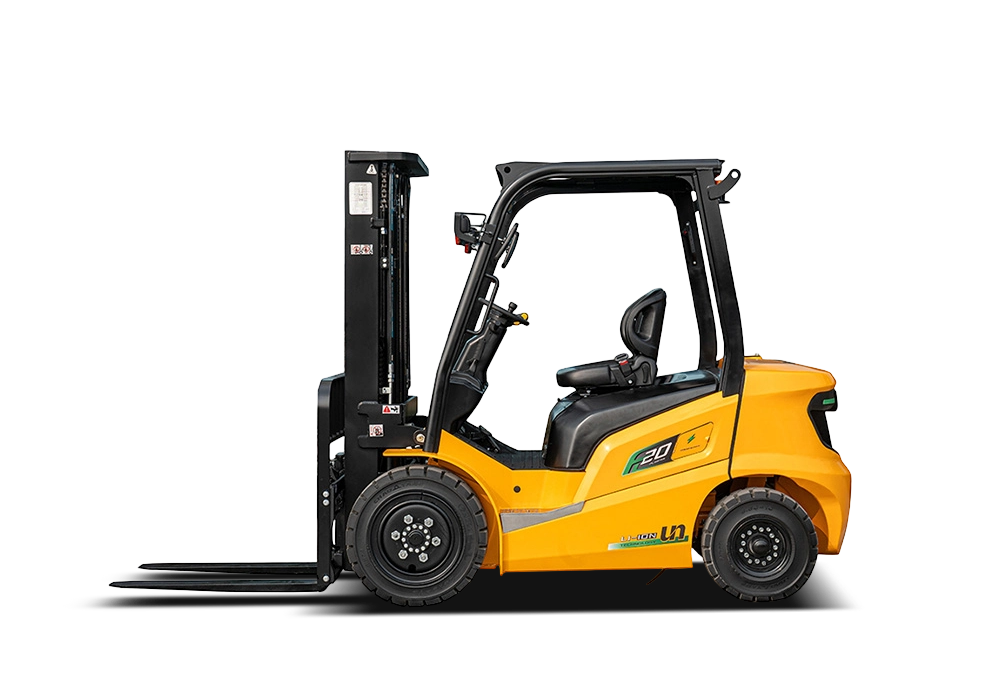
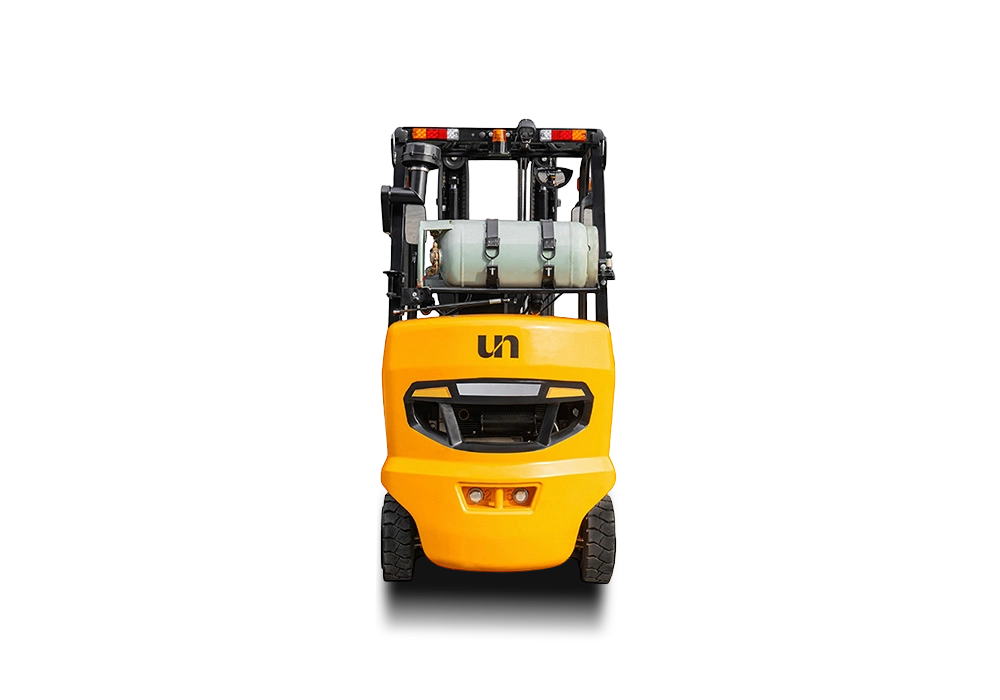 F Series 2.0T-3.2T LPG&Gasoline Forklift (Cushion Tire)The F series LPG/Gasoline forklift is UN Forklift's second generation cushion tire forklift with latest innovation, featuring a short wheelbase design. It is compact i...View Product →
Pre-Fill Checks That Prevent Most Incidents
Most cylinder-related failures are preventable in the five minutes before the hose goes on:
- Requalification date: most DOT forklift cylinders carry a 12-year initial test interval and then need requalification every five years; expired cylinders cannot legally be filled.
- Physical condition: reject cylinders with deep dents, cuts, corrosion pitting, or a fire exposure history.
- Valves and seals: damaged relief valves, missing caps, cracked O-rings, or debris in the fill valve.
- Mounting and orientation: brackets intact, relief valve pointing up.
- Fill environment: outdoors or in a dedicated ventilated area away from pits, drains, and ignition sources, engine off, parking brake set.
One staffing point deserves emphasis: in the United States, filling is expected to be performed by trained, certified personnel, such as attendants with CETP (Certified Employee Training Program) credentials. Fleets that cannot maintain that training usually switch to cylinder exchange and let the supplier carry the fill responsibility.
Step-by-Step: Filling a Forklift Propane Tank Correctly
With the cylinder approved and the area clear, the fill takes five to eight minutes:
- Park the truck on level ground outdoors, engine off, key removed, parking brake set.
- Verify the collar stamps (WC, TW, requalification date).
- Match the fill adapter to the valve type (POL, ACME, or quick-connect) and hand-tighten the connection fully.
- Open the fixed liquid level gauge, the small bleeder valve on the cylinder.
- Start the pump and fill steadily; stop the instant white mist escapes the bleeder, or when the scale reads the tare weight plus the net fill.
- Close the bleeder, close the fill valve, disconnect the hose, and reinstall the valve cap or plug.
- Brush soapy water over every connection; bubbles mean a leak that must be fixed before remounting.
- Log the fill (date, cylinder ID, final weight).
Why the Bleeder and Scale Beat the Gauge
Many operators trust the cylinder gauge, but it is the weakest signal: readings drift with temperature, and on many designs they show pressure rather than liquid level. The bleeder and scale respond directly to liquid level and mass, which is why certified attendants treat them as the primary control and the gauge as a planning convenience.
Two cases belong to the supplier rather than the dock: purging new cylinders of air before their first fill, and retiring any cylinder that has been exposed to fire.
Refill vs. Cylinder Exchange: Where the Trade-Offs Sit
Both routes deliver compliant fuel but distribute cost, downtime, and risk differently:
| Factor | On-site refill | Cylinder exchange |
|---|---|---|
| Fill-level control | Verified by scale or bleeder at 80 percent | Set by the supplier's process |
| Upfront cost | Pump, hose, scale, and fill station | None; pay per swap |
| Labor and downtime | Five to eight minutes per tank with trained staff | Fast swap, but delivery waits are possible |
| Compliance workload | Certified attendants, records, and equipment upkeep | Shifted largely to the supplier |
| Best fit | High daily LPG consumption | Low to moderate use or thin staffing |
The Mistakes Behind Most Propane Incidents
Nearly every filling-related incident traces back to a handful of repeat errors:
- Overfilling for a little extra runtime. The relief valve discards the excess anyway, often venting liquid and frosting the cylinder.
- Filling an expired or damaged cylinder. Rejected cylinders belong out of service, not back on the truck.
- Filling indoors or near pits and drains. Propane vapor is heavier than air and pools at floor level.
- Reusing cracked O-rings or cross-threading brass fittings. These create slow leaks that surface hours later.
- Skipping the post-fill leak check. The cheapest step in the process, and the one that catches problems before they become incidents.
- Storing spare cylinders lying down or beside dock doors. Store them upright in a ventilated cage with valves closed and caps on.
For the facility-side view, including where cylinders may be stored and how far they must sit from doors and openings, see our guide to fuel supply and storage requirements for gas forklifts.
Fuel Quality and Care Between Fills
Run HD-5 propane, the engine-fuel grade defined under ASTM D1835, which limits propylene to five percent. Clean fuel vaporizes consistently and leaves fewer deposits in the converter and regulator, extending component life and keeping emissions steady.
Fuel quality matters even more on dual-fuel trucks that run gasoline and LPG through the same engine family.
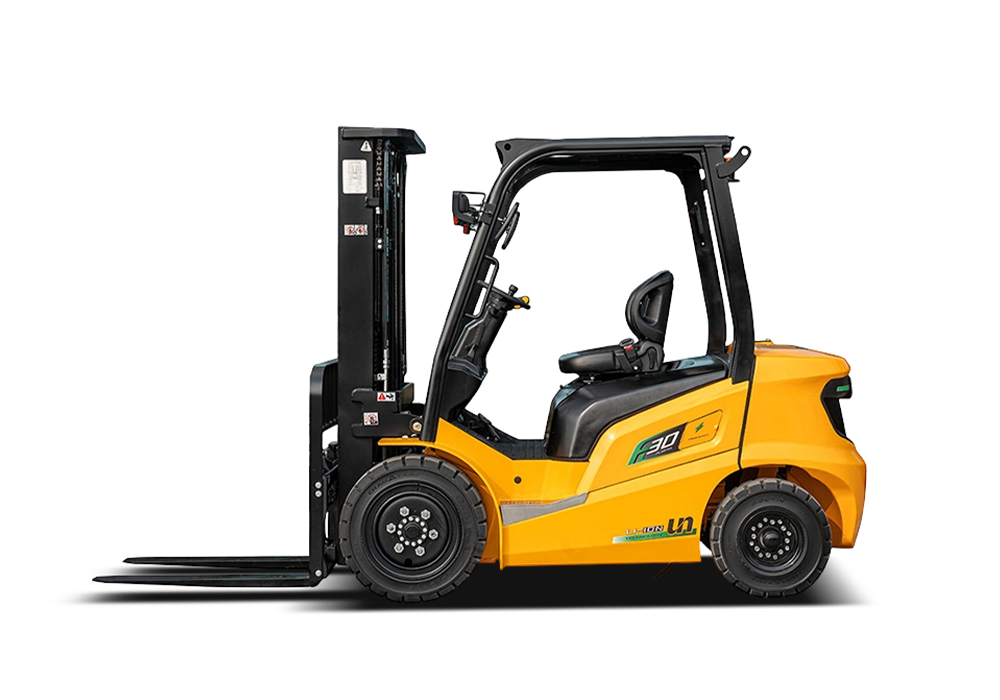
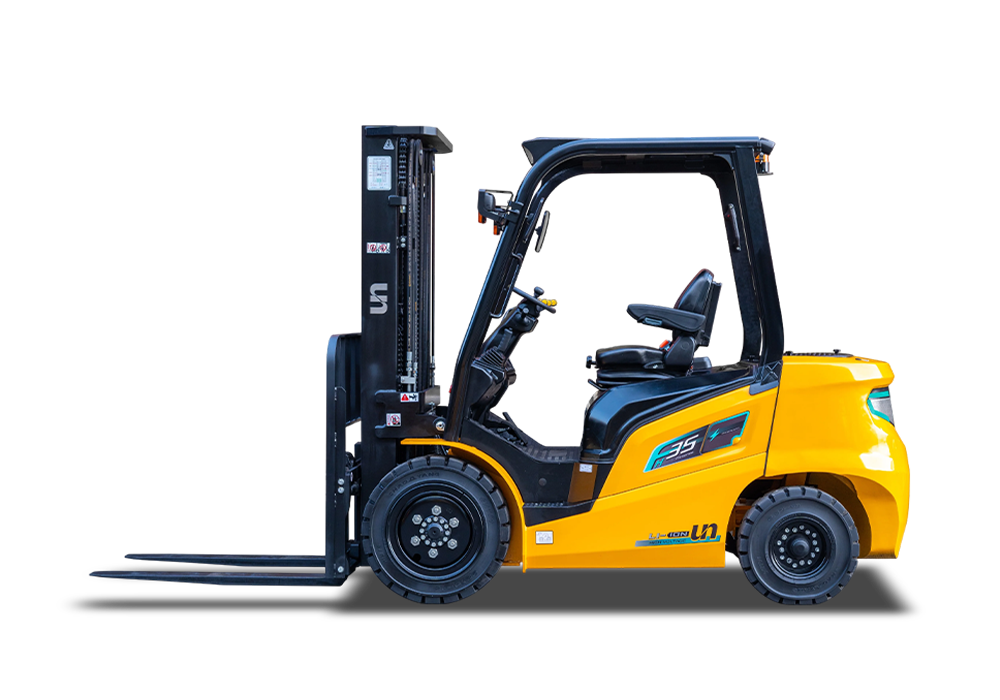
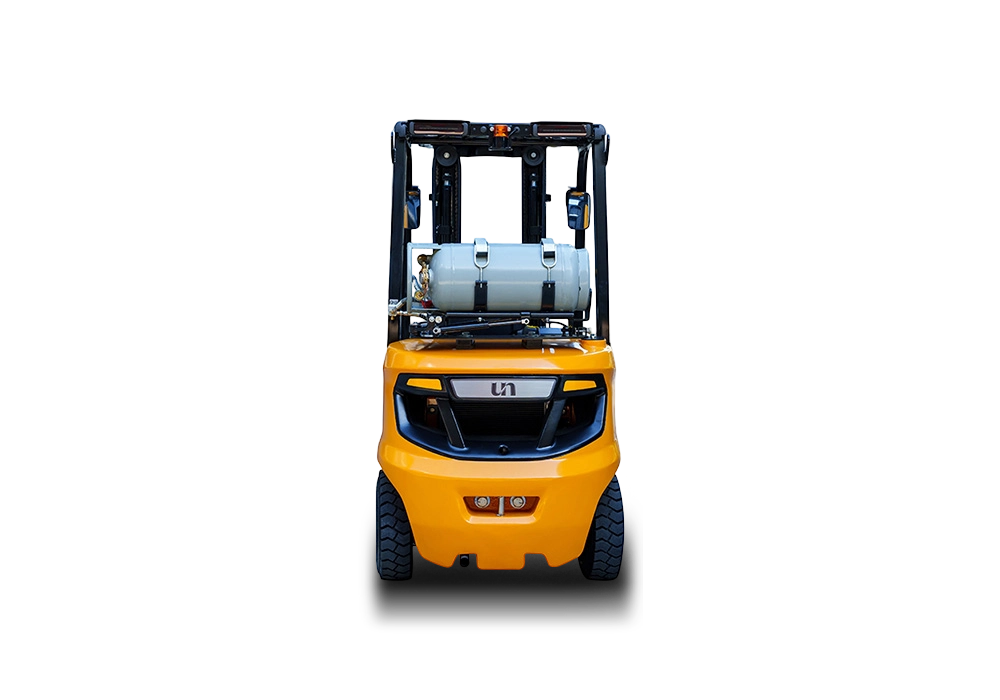 F Series 3.0T-3.5T LPG&Gasoline ForkliftLength to Face of ForkView Product →
Between fills, keep service valves closed on cylinders that are off the truck, use dust caps, and fit a fresh O-ring at each remount. A regulator that repeatedly ices up is a symptom, not a quirk: usually an overfilled cylinder, a leaking seal, or a tank filled in the wrong orientation.
Where Propane Fits in a Fleet
LPG earns its place where a fleet needs indoor-capable power without battery-charging downtime: a cylinder swap takes about ninety seconds, power stays consistent in cold storage and outdoor yards, and exhaust emissions run well below diesel indoors, provided ventilation and emission controls are in order.
For mixed dock and yard duty in the 3.0-3.5 ton range, that balance is exactly what the N-series LPG line was built around.
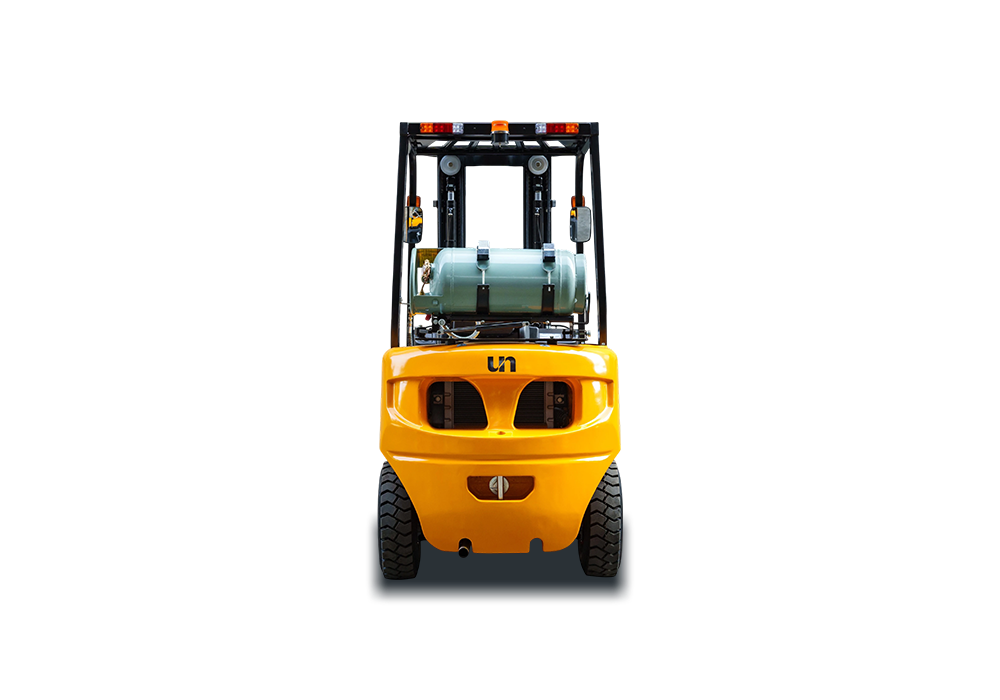 N Series 3.0T-3.5T LPG&Gasoline ForkliftN Series 3.0–3.5T LPG Gasoline Forklift is equipped with a high-powered engine, making it ideal for frequent handling operations and medium-duty loading scenarios.View Product →
If you are still weighing propane against electric or diesel power, our overview of the advantages of propane-powered forklifts walks through the cost, emissions, and duty-cycle trade-offs in more detail.
Safe filling comes down to a short checklist applied every time: fill to 80 percent by weight or bleeder, respect the cylinder's dates and condition, leak-check every connection, and keep untrained hands off the fill valve. Fleets that hold that line see fewer vented tanks, fewer dead trucks mid-shift, and cleaner compliance records.
For exclusive deals and latest offers, sign up by entering your email address below.
Stay In Touch
ADDRESS : NO.1 ROAD ONE, XINDENG NEW DISTRICT, FUYANG, HANGZHOU, ZHEJIANG, CHINA 311404.
PHONE : +86-571-8688 8355 (AMERICA)
PHONE : +86-571-8886 9363 (EUROPE)
PHONE : +86-571-8688 8377 (ASIA, AFRICA, OCEANIA)
EMAIL : [email protected]
EMAIL : [email protected](PARTS INQUIRY)

