


 中文简体
中文简体 Français
 русский
 Español
 عربى
عربى Deutsch



Diesel vs Gas Forklifts: Pros, Cons & How to Choose | UN Forklift
Admin 2026-08-06If you are building an internal combustion forklift fleet, the choice usually narrows to two familiar options: a diesel forklift and a gas forklift. Neither is universally better. The right call depends on how many tons you lift, where you operate, how well your facility is ventilated, and which fuel is easiest to source. That decision affects more than the purchase order. It influences daily operating costs, maintenance intervals, operator comfort, and compliance. This guide compares the two across the dimensions that matter most, then gives you a practical way to decide.
UN Forklift has built diesel and gas models for decades, so the perspective here is from a manufacturer rather than a dealer or rental company. That means the focus is on matching the right powertrain to the right working conditions, without pushing you toward an option that does not fit your operation.
What Are Diesel and Gas Forklifts?
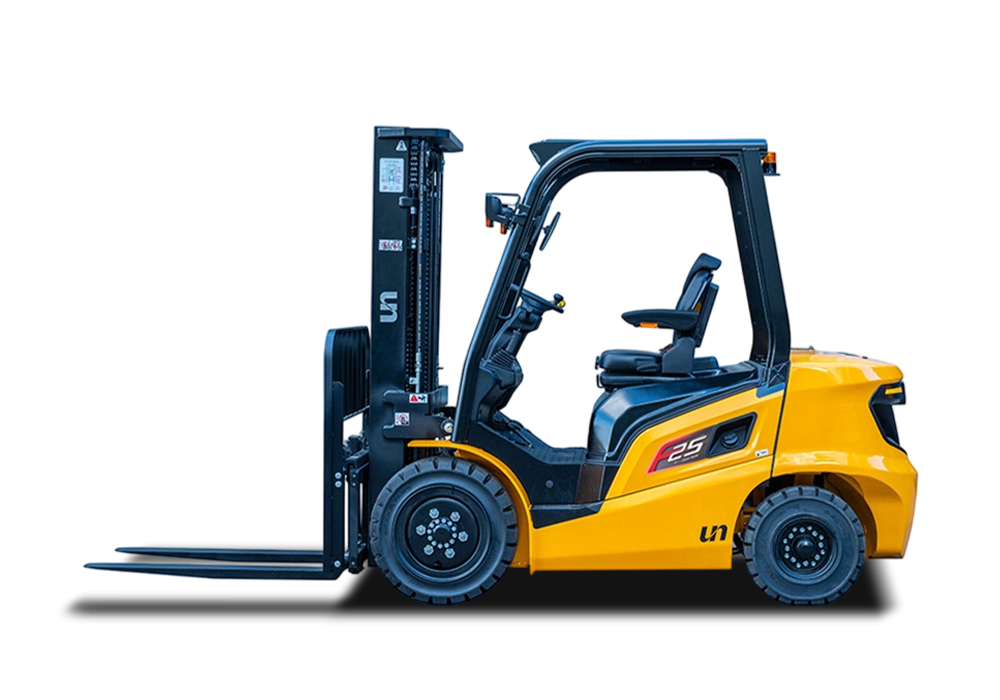
A diesel forklift uses a compression-ignition engine that burns diesel fuel. This design produces strong torque at low engine speed, which is why diesel models dominate heavy-duty and rough-terrain work. Diesel forklifts are common from 2.0 tons up to 10.0 tons and are especially useful in outdoor yards, construction sites, ports, and lumber yards.
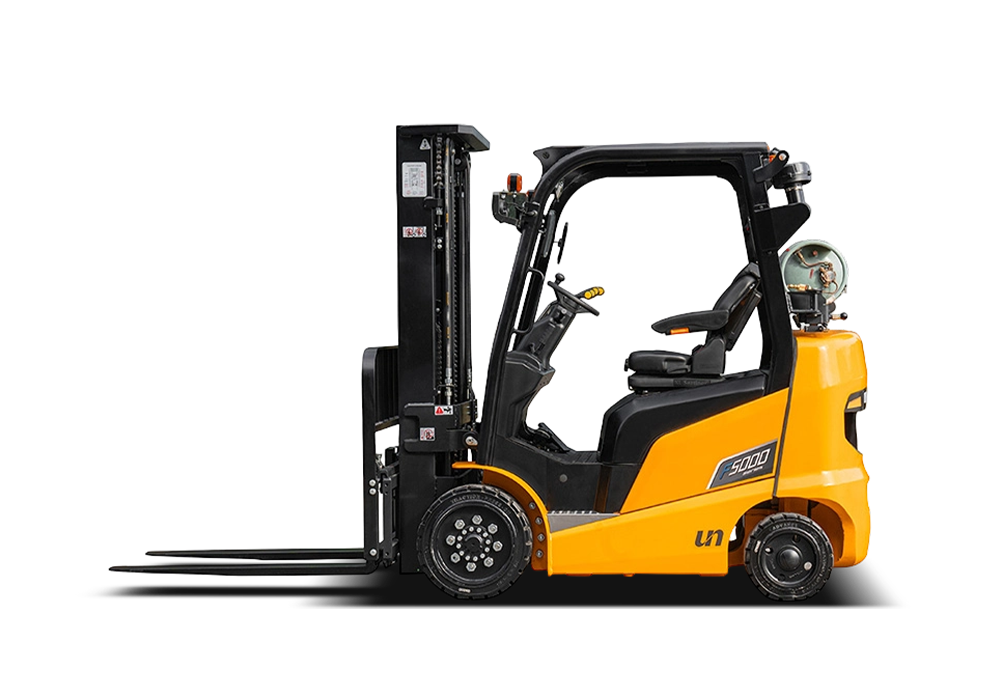
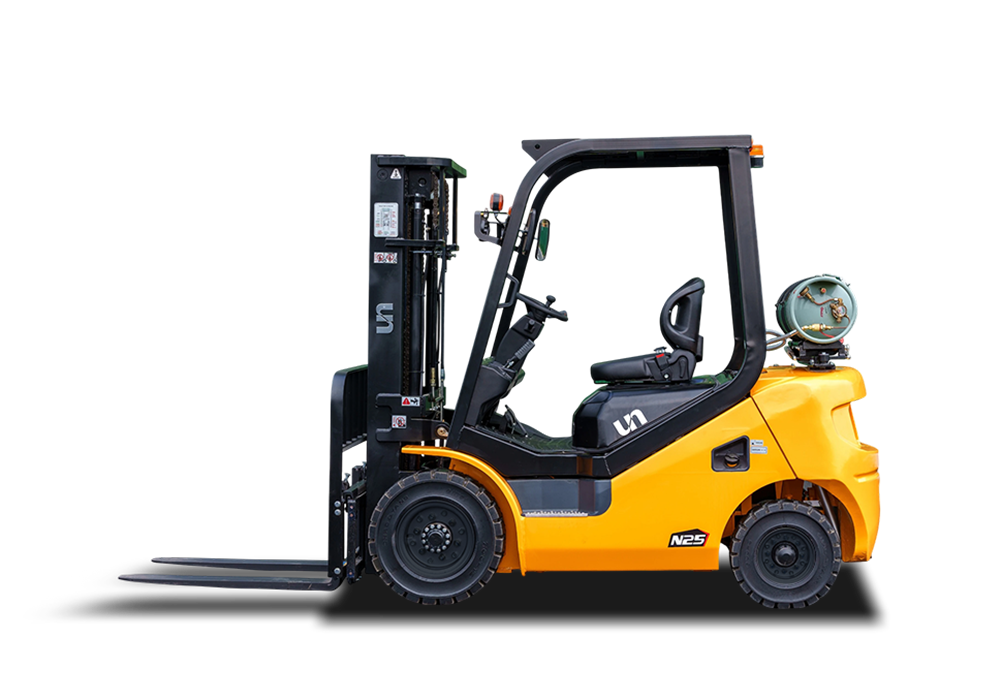
A gas forklift, in this context, usually means an LPG (liquefied petroleum gas) or gasoline-powered forklift with a spark-ignition engine. These models are common in the 1.5 to 5.0 ton range and offer smoother, quieter operation than diesel units. Their flexibility makes them popular in warehouses, distribution centers, and facilities that handle mixed indoor and outdoor tasks.
The refueling difference is one of the first things operators notice. Diesel forklifts are topped up with liquid fuel from a pump or drum. Gas forklifts, especially LPG models, use a refillable or exchangeable cylinder that can be swapped in minutes. That distinction matters for shifts that run continuously and for sites without a dedicated fuel station.
Diesel vs. Gas Forklifts: Key Differences at a Glance
The table below summarizes the main differences between a diesel forklift and a gas forklift. It is a quick reference, but the sections that follow explain why these differences exist and how they affect day-to-day operations.
| Comparison Area | Diesel Forklift | Gas Forklift |
|---|---|---|
| Power delivery | High torque at low rpm, strong pulling power | Steady and responsive, but less low-speed torque |
| Purchase cost | Usually higher for the same capacity class | Usually slightly lower |
| Fuel cost | Diesel has high energy density; cost depends on local prices | LPG and gasoline costs vary, often by cylinder or gallon |
| Maintenance | More complex engine parts and more scheduled service items | Simpler ignition service, but cylinders and vaporizers need checks |
| Noise and vibration | Louder and more vibration | Quieter and smoother |
| Emissions | Higher NOx and particulate emissions | Lower particulate levels, but still produces CO2 and some CO risk |
| Best environment | Outdoor, heavy, continuous, or rough-surface work | Mixed indoor-outdoor work where ventilation is adequate |
| Refueling | Liquid fuel from pump, drum, or on-site tank | LPG cylinder swap or fill, or gasoline pump |
Power and Performance Comparison
When loads get heavy, torque is the number that matters. A diesel engine’s compression-ignition design delivers higher torque at lower engine speeds than a comparable gas engine. That makes a diesel forklift easier to control when starting a heavy load, moving up a ramp, or working on uneven ground. For sustained, high-demand operations, diesel remains the mainstream choice.
Gas engines are not weak, but their power band behaves differently. They rev more freely and respond quickly, which can make light and medium loads feel agile. In capacities below 3.5 tons, a gas forklift can match a diesel in most daily tasks. Above 5.0 tons, however, diesel becomes the dominant and often more practical option. This is why heavy forklift series are almost always diesel.
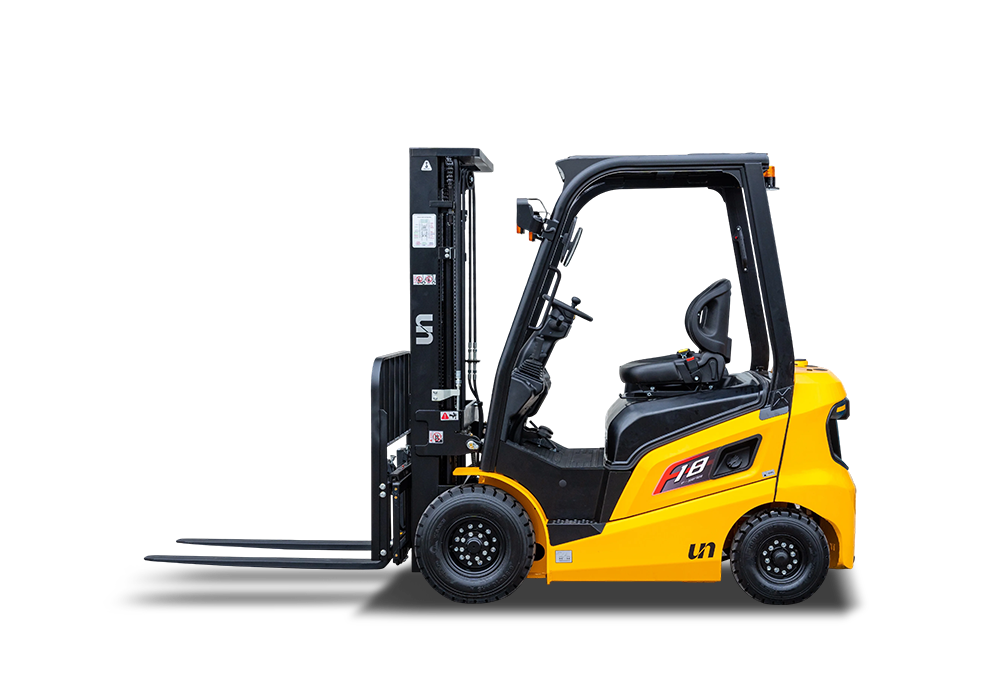
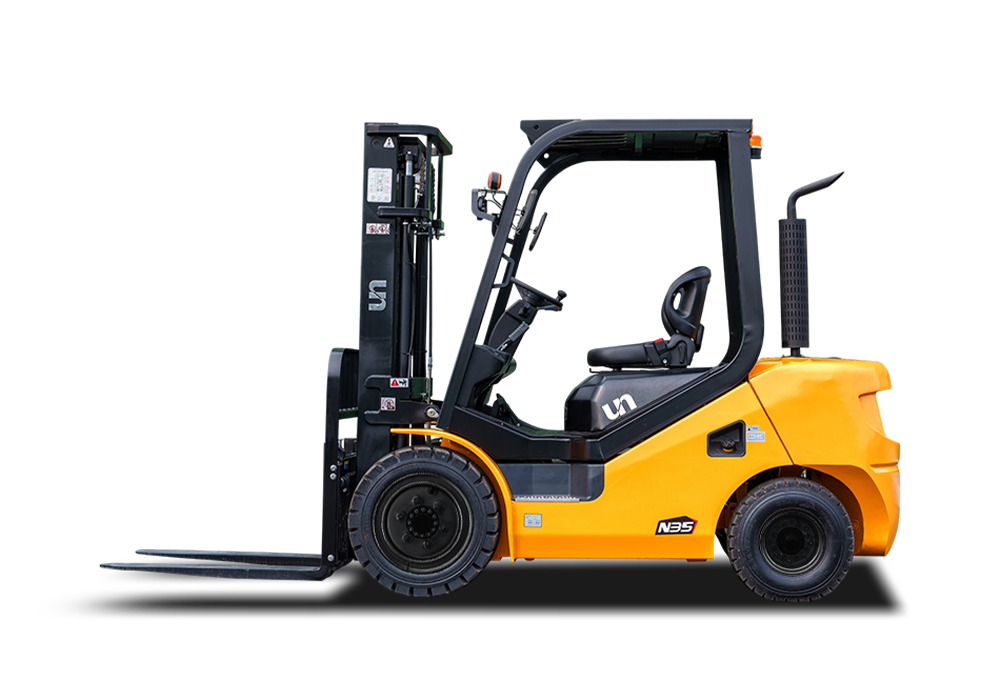
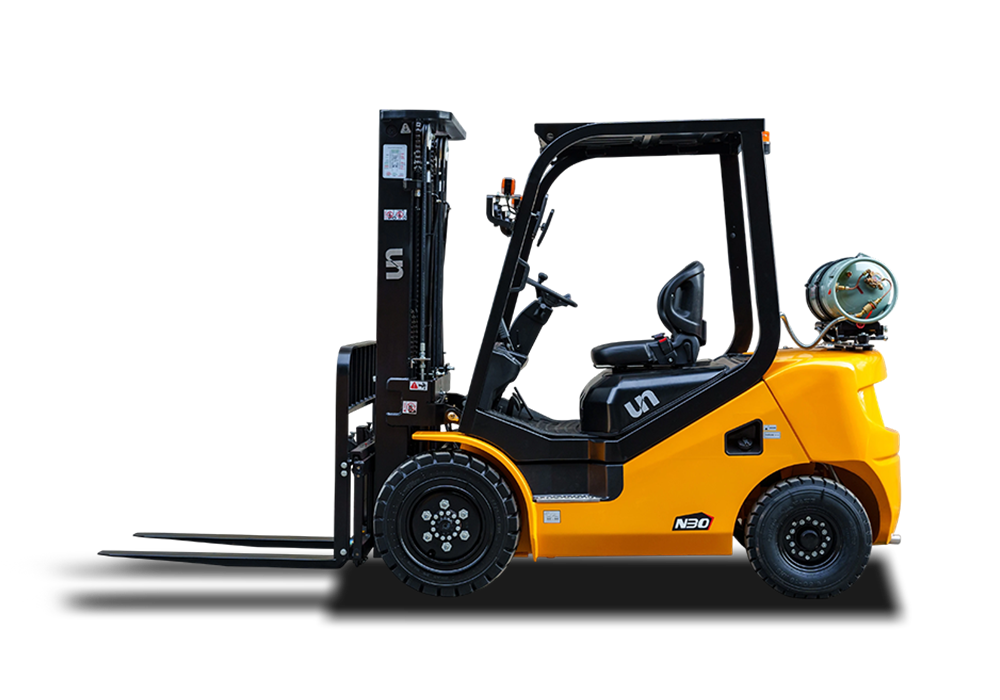
That distinction is visible in the UN Forklift product line. For medium loads, the F-series 2.0–3.5 t forklifts with diesel, gasoline, or LPG options let you keep the same truck platform and choose the fuel that best matches your site. For demanding heavy loads, the N-series 5.0–7.0 t heavy-duty diesel forklift is designed for applications that require sustained power and durability.
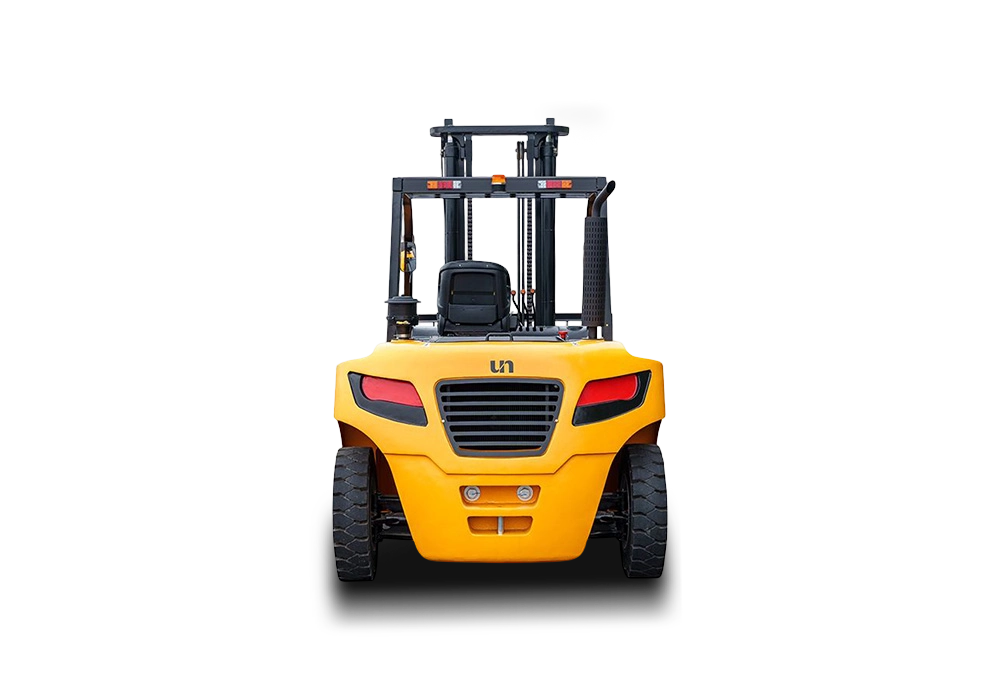 Wholesale N Series 5.0T-7.0T Heavy Duty Diesel Forklift Factory, Suppliers - ZheZhejiang UN Forklift Co., Ltd. is China wholesale N Series 5.0T-7.0T Heavy Duty Diesel Forklift suppliers and factory,N Series 5.0–7.0T H...View Product →
Fuel Costs and Overall Operating Expenses
There is no universal answer to which forklift is cheaper to run, because fuel prices vary by region and by your local supply setup. Instead, use a simple calculation to estimate total fuel cost:
Hourly fuel consumption × fuel unit price × annual operating hours
Diesel has a higher energy density than LPG or gasoline, meaning a diesel engine typically burns fewer liters or gallons to produce the same amount of work. In continuous duty with heavy loads, that efficiency advantage helps offset the higher purchase price of many diesel forklifts. In lighter or stop-and-go operations, the consumption difference is less noticeable, and gas may win on total cost.
Purchase price is also a factor. For the same capacity class and similar features, a gas forklift usually carries a lower initial price tag than a diesel forklift. But the resale market tends to favor diesel units because of their longer service life and stronger demand in industrial and outdoor sectors. When comparing total cost of ownership, include the purchase price, maintenance expense, fuel cost, and expected residual value after several years of use.
Indoor vs. Outdoor Applications: Where Each Excels
Diesel forklifts belong outside. They are built for construction sites, container yards, timber yards, recycling centers, and other environments where surfaces are rough, slopes are common, and loads are heavy. The construction industry is a strong example because projects often require moving materials over uneven ground and changing terrain.
Gas forklifts, especially LPG models, are more adaptable to mixed indoor and outdoor work. In a warehouse with good ventilation, an LPG forklift can handle receiving, putaway, load building, and truck loading without the battery management hassle of an electric unit. The F-series 2.0–2.5 t LPG/gasoline forklifts are a good example of this balance: compact enough for warehouse aisles, yet capable of driving outside to load trailers or move materials between buildings.
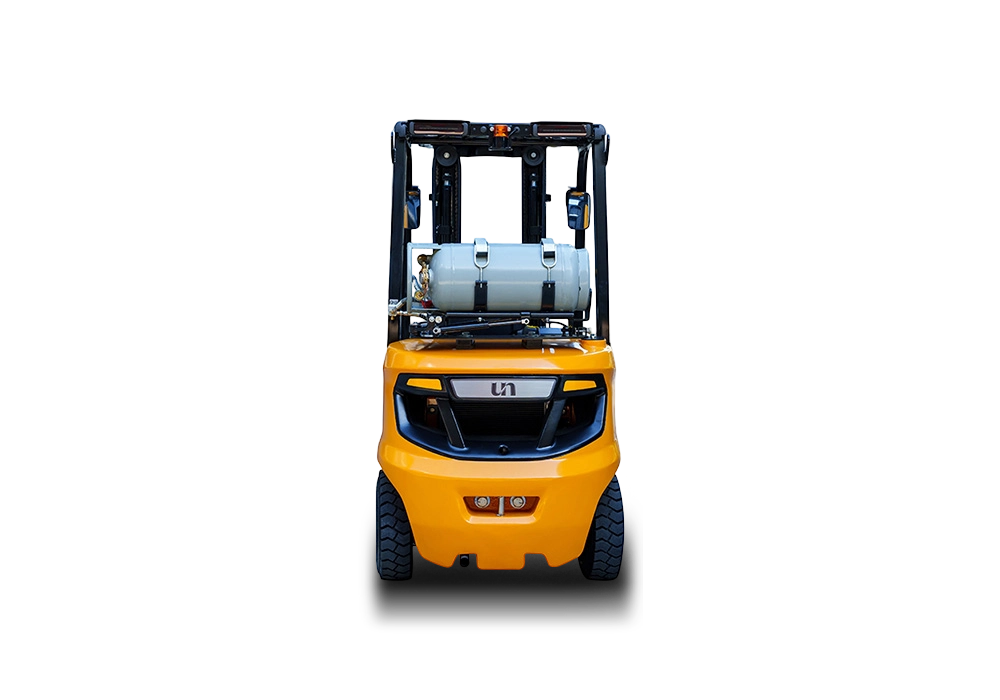 Wholesale F Series 2.0T-2.5T LPG&Gasoline Forklift Factory, Suppliers - ZhejiangZhejiang UN Forklift Co., Ltd. is China wholesale F Series 2.0T-2.5T LPG&Gasoline Forklift suppliers and factory, After years of continuo...View Product →
There are limits. A gas forklift still produces exhaust, so it should not be treated as a clean indoor machine. OSHA and other safety authorities emphasize that internal combustion forklifts used indoors need adequate ventilation and regular checks for fuel or oil leaks. If most of your work is inside a closed warehouse with limited airflow, evaluate electric or lithium-ion models instead. In that environment, zero emissions become more valuable than rapid refueling.
For more detail on why gas models fit mixed operations, you can read more on the benefits of gas forklifts in our industry news section.
Emissions, Noise, and Environmental Regulations
From an emissions standpoint, diesel engines produce higher levels of nitrogen oxides and particulate matter than gas engines. Gas and LPG engines burn cleaner in terms of visible smoke and particulates, but they still emit carbon dioxide and carry a risk of carbon monoxide buildup in confined spaces. Neither is a zero-emission solution.
Noise is another practical difference. Diesel engines are louder and generate more vibration, which can raise operator fatigue over a long shift. Gas engines run quieter and more smoothly, which is one reason they remain common in warehouse and distribution settings.
Regulations add an important layer to the decision. In markets with strict rules, emissions limits such as EU Stage V and US EPA/CARB standards shape which internal combustion models can be sold and used. UN Forklift builds internal combustion forklifts that meet high emission requirements for international markets, including Europe and North America. Still, always confirm the specific compliance level required in your country and county before making a purchase.
Industry observers have noted that electric forklifts now account for roughly 60% of the global market. That trend is real, but it does not make internal combustion forklifts obsolete. In heavy outdoor operations, long shifts without charging opportunities, and sites without reliable electrical capacity, a modern diesel or gas forklift remains a legitimate and cost-effective choice.
Maintenance Requirements and Lifespan
Diesel forklifts require more attention, but they are built for longevity. Scheduled maintenance typically includes engine oil, fuel filters, air filters, cooling system checks, and inspection of high-pressure fuel components. If the model has a turbocharger, that also needs regular review. For practical guidance, see our detailed diesel forklift maintenance tips.
Gas forklifts have a smaller service list, but differences in fuel handling introduce their own checks. Spark plugs, ignition coils, the LPG vaporizer, fuel lines, and cylinder seals all need periodic inspection. Because LPG cylinders are pressurized, the condition of the cylinder and its connection is not optional; it is a safety critical point.
Lifespan depends on more than the engine. The frame, mast, hydraulic system, and cooling system determine how long a forklift stays productive. UN Forklift manufactures its equipment across a 53,400-square-meter facility with an annual capacity of 15,000 units, covering more than 200 specifications across 96 series. The company’s product range includes both diesel and LPG/gasoline lines in capacities from 1.5 to 10.0 tons, which gives buyers a wider view of how long a machine will last under real working conditions.
Safety Considerations for Diesel and Gas Forklifts
In any internal combustion forklift, fuel is a hazard that must be managed daily. Diesel units carry risks related to spills, slipping, hot exhaust surfaces, and carbon monoxide in confined spaces. Gas and LPG units add the risk of pressurized fuel leaks, which means proper cylinder handling, storage in a ventilated area, and routine leak checks are essential.
OSHA’s guidance on internal combustion forklifts is a useful baseline. It highlights the need to inspect for fuel or oil leaks regularly and to ensure adequate ventilation when these trucks are used indoors. For LPG forklifts, follow the manufacturer’s procedure when changing cylinders and never force a connection that does not seal properly.
A complete safety program also includes operator training, documented daily inspections, and a clear policy for fuel storage. If you are building a safety routine from scratch, our article on forklift use safety basics can be a good starting point. And when choosing between a diesel forklift and a gas forklift, factor in the people who will actually run them. Quieter, lower-vibration equipment can reduce fatigue, which is itself a safety benefit in long operating shifts.
How to Choose Between a Diesel and Gas Forklift
Start with the physical environment and the load, not the brand or the price tag. The right internal combustion forklift fits the work cycle, the fuel supply, and the compliance requirements of the region where it operates.
Decision checklist
- Primary work is outside on rough ground, slopes, or construction sites → choose diesel.
- Work is a mix of indoor and outdoor, and the warehouse is well ventilated → choose gas/LPG.
- Loads consistently exceed 5.0 tons → diesel is usually the only sensible option.
- Loads are under 3.5 tons and the work is mostly inside → compare gas against electric/lithium models instead.
- Do you have easy LPG cylinder exchange nearby? If not, a diesel forklift may create fewer fuel logistics problems.
- Does your site face strict emissions limits? If yes, verify the forklift meets the required emissions stage before purchase.
Three typical scenarios
Heavy industry outdoors. A steel fabricator moves 6-ton coils across a yard and into production. The natural choice is a diesel forklift in the 5.0 to 7.0 ton class, such as the heavy-duty N-series, because it delivers the torque and durability needed for continuous outdoor work.
Distribution center with mixed tasks. A beverage distributor unloads trucks, moves pallets in a ventilated warehouse, and loads delivery vehicles outside. An LPG forklift in the 2.0 to 2.5 ton range gives fast refueling, lower noise inside, and enough power for daily loading duties.
Food and beverage indoor storage. A food processor stores ingredients and finished products in a closed, high-traffic warehouse. Even with ventilation, the cleaner option is an electric or lithium-ion forklift. In this case, comparing gas vs. diesel is less useful than looking at forklift solutions for logistics and warehousing operations, where multi-shift indoor work often points to electric power.
When you have narrowed the fuel type, look at how the full truck is built. A manufacturer with a complete internal combustion line, from compact 1.5-ton gas models to 10.0-ton diesel units, can offer a better match for your load range and duty cycle. UN Forklift supplies both the F-series and N-series in diesel and gas versions, with capacities from 1.5 to 10.0 tons, and the company can support international buyers who need high-emission-compliant internal combustion equipment.
The practical takeaway is simple. Diesel forklifts excel at heavy loads, outdoor terrain, and continuous high-demand shifts. Gas forklifts shine when you need quiet, flexible performance in mixed indoor and outdoor work. Your final decision should rest on the load you move, the place where you move it, and the fuel and emissions rules you must follow.
UN Forklift has built both diesel and gas forklifts for decades, and the current range covers the full 1.5 to 10.0 ton spectrum. Whether you need a heavy-duty diesel unit for a construction yard or an LPG model for a distribution center, the next step is to review the product lineup and match a series to your operating conditions.
For exclusive deals and latest offers, sign up by entering your email address below.
Stay In Touch
ADDRESS : NO.1 ROAD ONE, XINDENG NEW DISTRICT, FUYANG, HANGZHOU, ZHEJIANG, CHINA 311404.
PHONE : +86-571-8688 8355 (AMERICA)
PHONE : +86-571-8886 9363 (EUROPE)
PHONE : +86-571-8688 8377 (ASIA, AFRICA, OCEANIA)
EMAIL : [email protected]
EMAIL : [email protected](PARTS INQUIRY)

