


 中文简体
中文简体 Français
 русский
 Español
 عربى
عربى Deutsch



Gas Forklift Buying Guide | LPG & Gasoline Forklift Manufacturer
Admin 2026-08-13Choosing the right gas forklift is rarely about finding the cheapest quote. It is about matching the machine to your loads, your facility, and the fuel infrastructure you can actually rely on. That means comparing LPG and gasoline models, weighing them against electric and diesel alternatives, and then asking whether the manufacturer behind the forklift can support your operations after delivery.
This guide is written from a manufacturer perspective. It covers the benefits of gas forklifts, how to compare them with other power types, what to check when evaluating a gas forklift manufacturer, and which specifications matter most before you request a quote.
Why Choose a Gas Forklift? Key Benefits You Should Know
Gas forklift models that run on LPG or gasoline remain a practical choice across warehouses, factories, distribution centers, and construction yards. They combine the strength of internal combustion power with a lower upfront cost than most electric trucks and quieter operation than diesel units.
The main benefits come down to four areas:
- Performance without charging breaks. A gas forklift can run a full shift and refuel in minutes. There is no need to wait for a battery charge or keep spare batteries in rotation.
- Capacity range. Gas-powered forklifts are available from light-duty 1.5-tonne machines to heavy-duty models above 5 tonnes, covering most material handling needs in manufacturing and distribution.
- Lower initial investment. For similar load capacity, a gas forklift usually costs less to purchase than an electric forklift, which matters when you are scaling a fleet.
- Flexible fuel supply. LPG cylinders can be swapped quickly, and gasoline can be sourced from standard refueling stations in areas where LPG infrastructure is less developed.
Gas forklifts also handle mixed environments well. LPG models are commonly used indoors with proper ventilation, while gasoline models are better suited to outdoor operations. For heavier lifting, the 4.5–5.5t gas forklift for heavy-duty applications shows how far the power type can go when loads become consistently large.
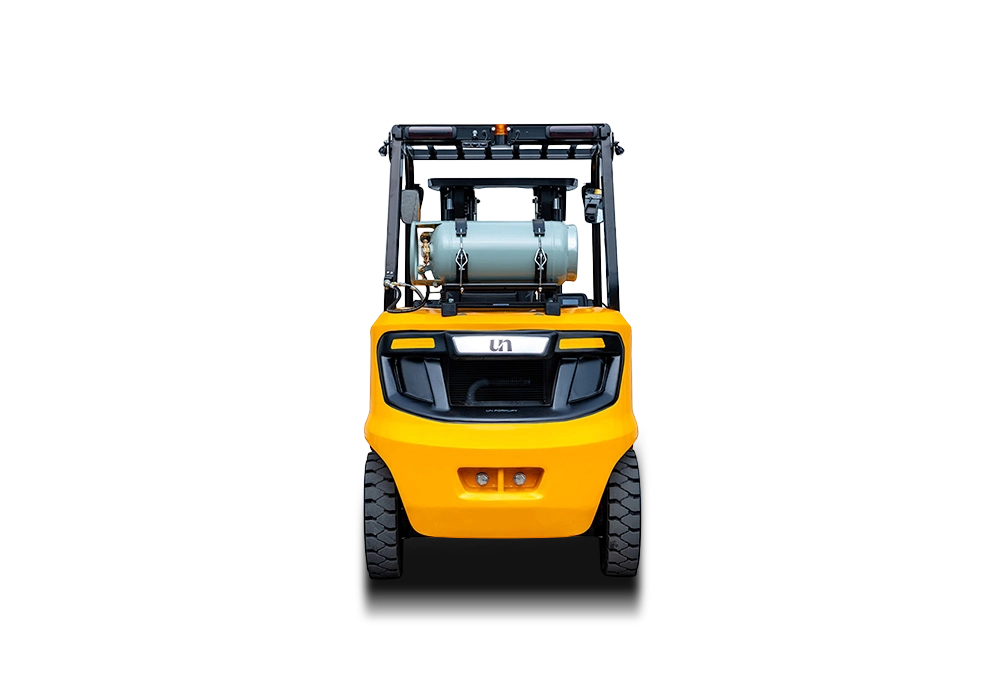 Wholesale F Series 4.0T-5.0T LPG&Gasoline Forklift Factory, Suppliers - ZhejiangZhejiang UN Forklift Co., Ltd. is China wholesale F Series 4.0T-5.0T LPG&Gasoline Forklift suppliers and factory,The F Series 4.0–5.0 ton...View Product →
Gas Forklift vs. Electric Forklift vs. Diesel: How to Decide
There is no single best forklift type. The right choice depends on your facility, duty cycle, fuel availability, and cost priorities. Many operations use a mix of power types across different shifts and locations.
| Factor | Gas (LPG/gasoline) | Electric | Diesel |
|---|---|---|---|
| Initial purchase cost | Lower than electric for similar capacity | Higher upfront, though battery prices are falling | Comparable to gas |
| Fuel or energy cost | Moderate; varies with local LPG or gasoline prices | Low, especially with regular charging schedules | Higher fuel cost in many regions |
| Indoor use | LPG is suitable; gasoline needs good ventilation | Excellent, with zero tailpipe emissions | Not recommended without strong ventilation |
| Outdoor use | Good on dry, improved surfaces | Suitable on smooth, level surfaces | Excellent on rough terrain and gradients |
| Maintenance | Regular engine and fuel-system checks required | Simpler drivetrain, but battery management is important | More frequent engine and filter maintenance |
| Emissions | Cleaner than diesel and improving with catalytic treatment | Zero tailpipe emissions | Higher NOx and particulate emissions without treatment |
| Best suited for | Mixed indoor and outdoor work, long shifts, quick refueling | Indoor warehousing and clean operations | Heavy outdoor loads and construction sites |
When the priority is continuous shifts with minimal downtime, a gas forklift often makes more sense than electric. When the facility is indoors, sealed, or emissions-sensitive, electric is the stronger candidate. Diesel still wins on remote sites with rough terrain.
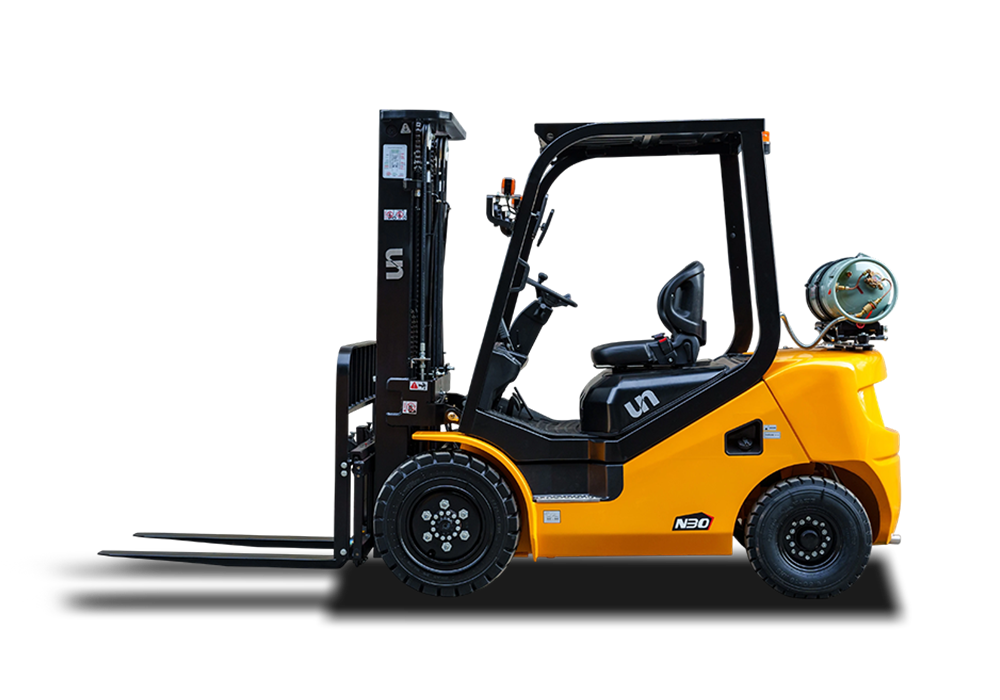
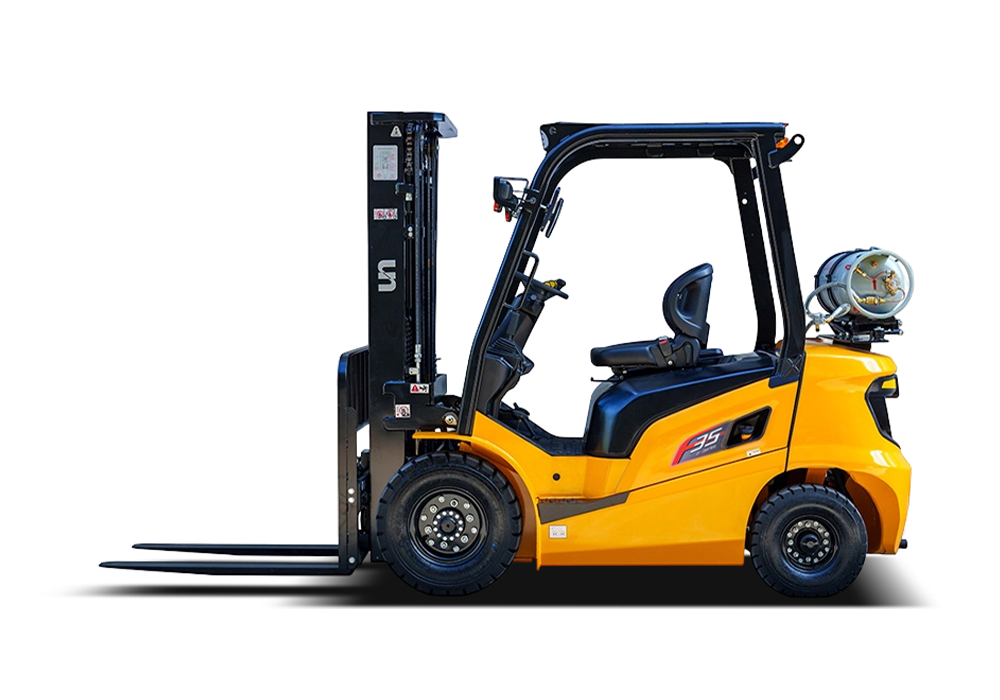
For heavier manufacturing environments, the 3.0–3.5t gas forklift options for heavier loads provide power and fuel flexibility without moving into the larger diesel class.
LPG vs. Gasoline: Understanding Your Fuel Options
In North America, the term “gas forklift” usually refers to LPG. In Europe and Asia, buyers often consider LPG and gasoline as separate choices, and many manufacturers offer dual-fuel models that run on both.
- LPG burns more cleanly than gasoline and is the preferred option for indoor and outdoor use. It also tends to have lower running costs than gasoline in markets with an established cylinder supply network.
- Gasoline is convenient in regions where LPG cylinders or refill stations are scarce. It works well for continuous outdoor operations and is easier to refuel from standard fuel stations.
- Dual-fuel models give you the flexibility to switch between LPG and gasoline with a selector, so you can respond to fuel price changes or supply disruptions.
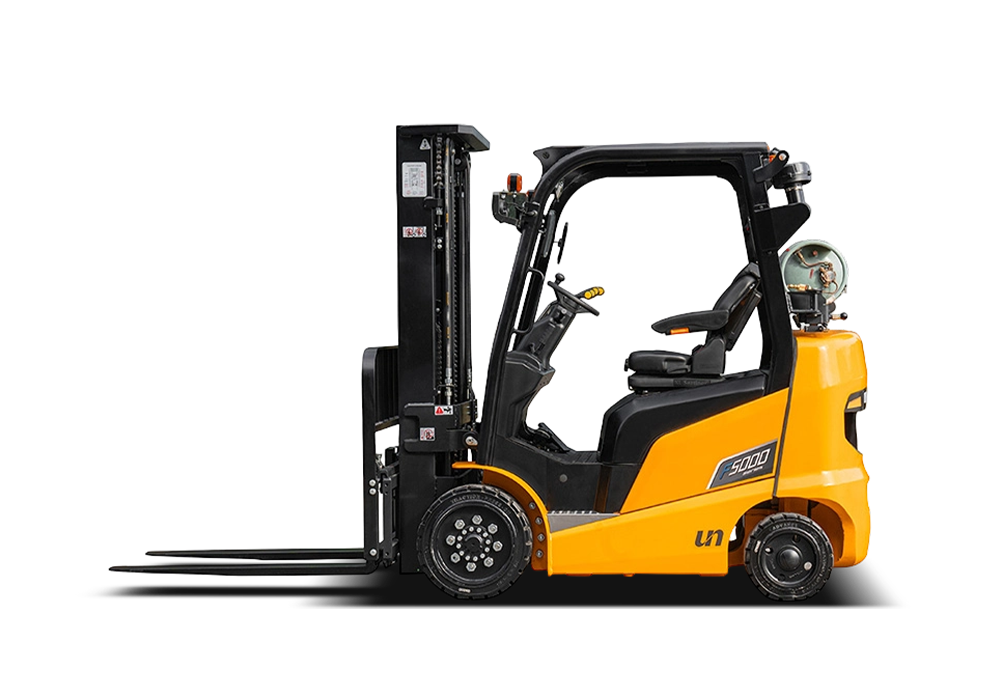
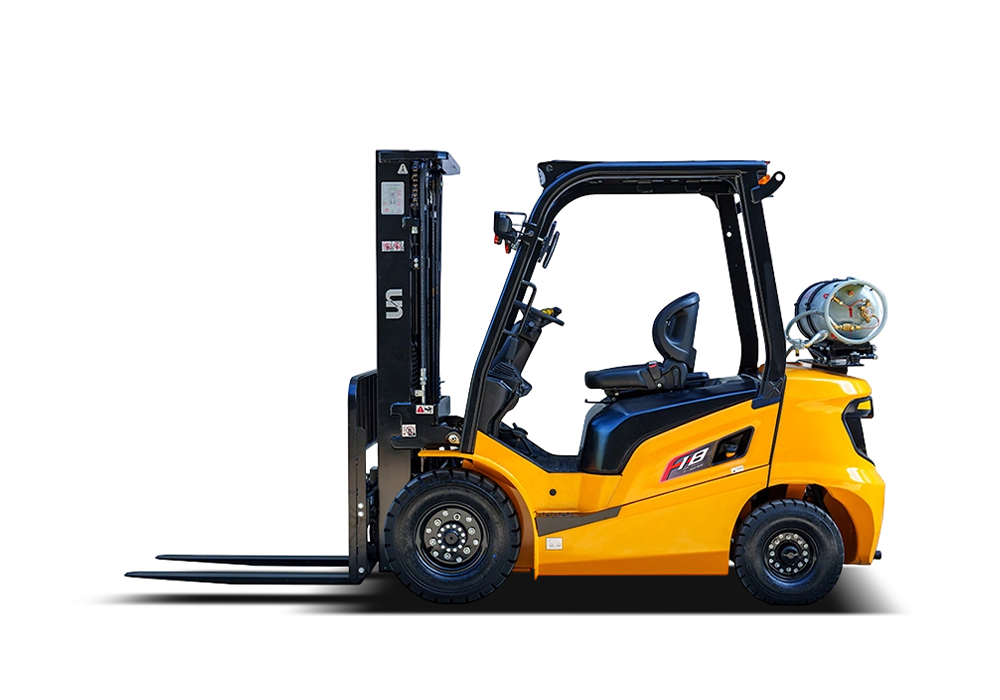
If you need a compact machine for retail, e-commerce warehousing, or food and beverage handling, the F-Series 1.5–1.8t LPG & gasoline forklift lets you run both fuels on a light-duty platform. At the other end of the scale, a diesel-gasoline-LPG multi-fuel forklift adds diesel as a third option when the same machine moves between indoor and outdoor duties.
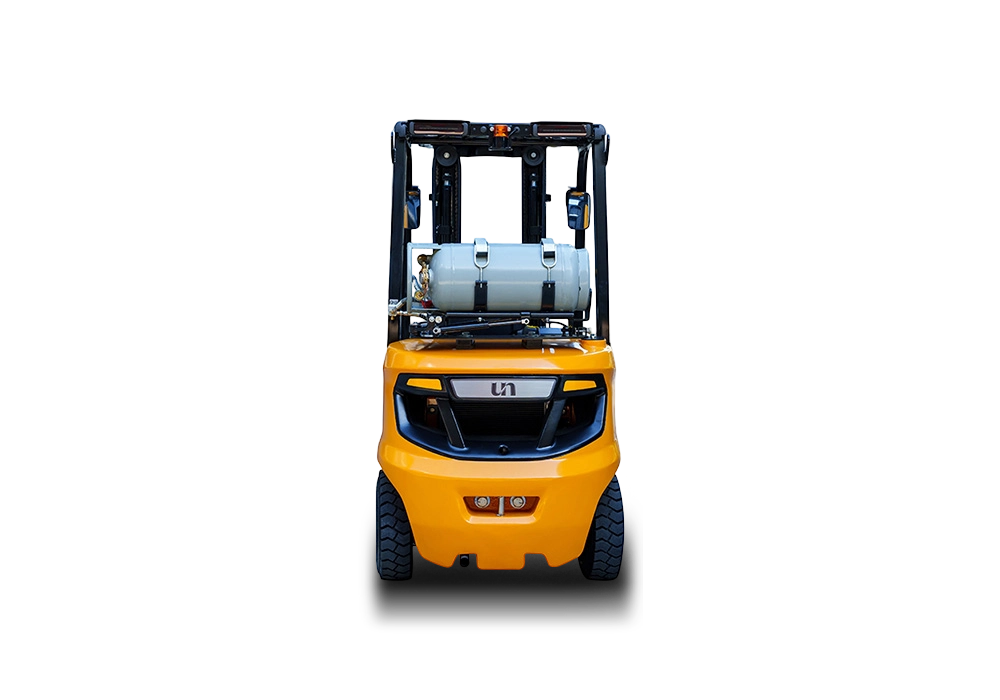 Wholesale F Series 1.5T-1.8T LPG&Gasoline Forklift Factory, Suppliers - ZhejiangZhejiang UN Forklift Co., Ltd. is China wholesale F Series 1.5T-1.8T LPG&Gasoline Forklift suppliers and factory, After years of contin...View Product →
What to Look for in a Gas Forklift Manufacturer
Not every supplier has the engineering control, production capacity, or after-sales network needed to support a fleet for years. A dependable gas forklift manufacturer should be able to demonstrate four things: manufacturing depth, product breadth, emission compliance, and after-sales support.
Production History and Capacity
UN Forklift was established in 1978 and operates from a 53,400-square-meter facility with an annual production capacity of 15,000 units. Long production history matters because every forklift eventually needs parts, technical documentation, and a manufacturer that will still be there to supply them.
Product Range and Customization
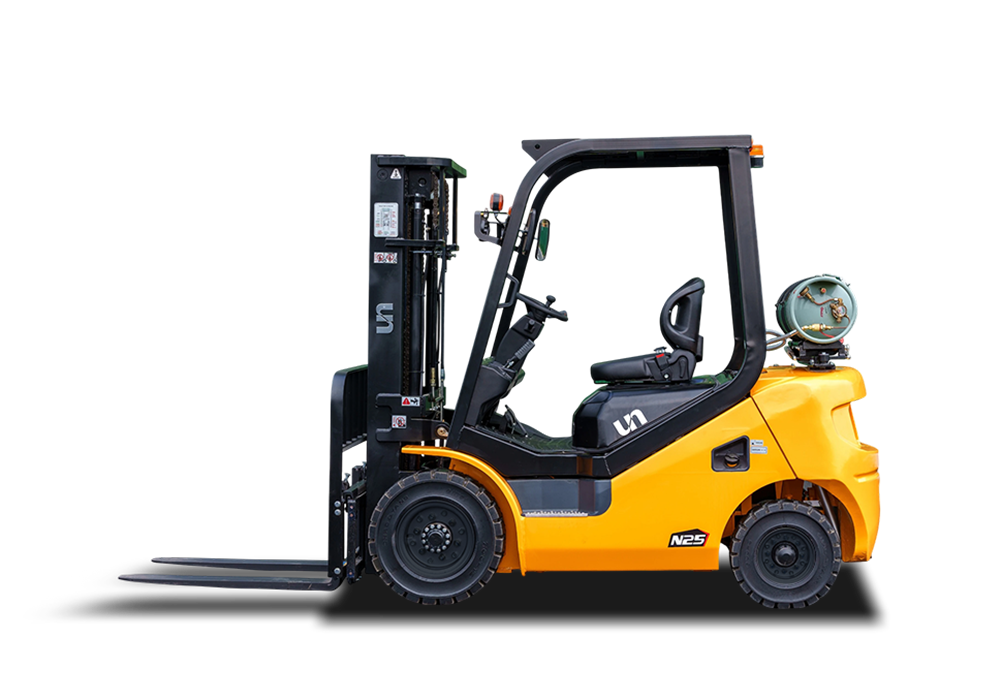
A manufacturer that covers multiple tonnage ranges can match a machine to your actual load and duty cycle. In UN Forklift’s case, the product line includes LPG and gasoline models in the F-Series and N-Series, roughly spanning 1.5-tonne light-duty trucks to 5.5-tonne heavy-duty units. That range allows you to source consistent specification across different parts of your fleet.
Emission Compliance
Emission regulations vary by market. North American buyers commonly evaluate equipment against EPA/CARB levels, while European operators work with Stage V requirements. A professional gas forklift manufacturer should clearly state which emission level each model is built to and provide supporting documentation during the inquiry process.
After-Sales Support and Global Reach
Distributors and end users both benefit from working with a supplier that can support international sales. UN Forklift exports across Europe, South America, North America, Africa, and Asia, and has OEM experience with established international equipment brands. That background is a useful quality signal because OEM projects usually require strict engineering and production controls.
Key Specifications to Compare Before Placing an Order
Before you contact a gas forklift manufacturer, write down the conditions the machine will face. Then compare the technical details below to narrow your choices.
- Rated capacity. Use 1.5-tonne models for light duties, 2.0–3.5-tonne models for most manufacturing and warehouse work, and 4.5–5.5-tonne models for heavier loads.
- Lift height and mast configuration. Confirm the required fork height, free lift, and the aisle height in your building before selecting a mast option.
- Tire type. Pneumatic tires handle outdoor surfaces and rough yards better. Cushion tires are more stable on smooth indoor floors. For a machine built around indoor use, a cushion tire gas forklift for indoor operations is worth reviewing.
- Transmission. Automatic transmission reduces driver fatigue in stop-and-go work; manual transmission can offer more control in heavier handling situations.
- Emission level. Select the model version that matches the emission rules in your country, not just the one with the lowest price.
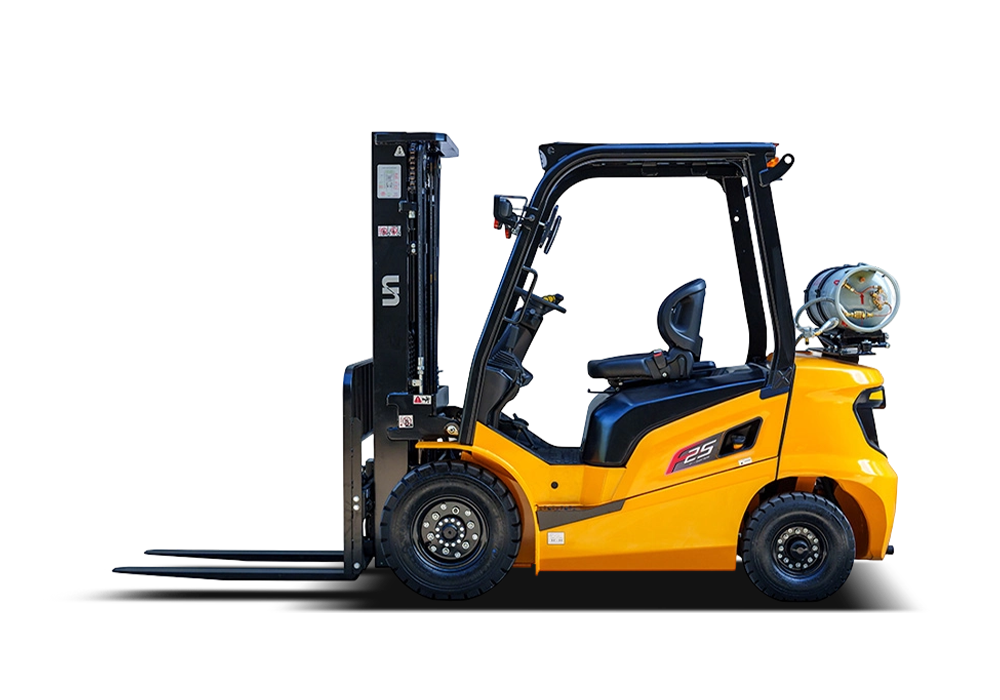
For most manufacturing and distribution operations, a 2.0–2.5t LPG/gasoline forklift is the mainstream choice because it fits standard pallet loads, tight warehouse aisles, and daily production schedules without excess capacity cost.
Wholesale F Series 2.0T-2.5T LPG&Gasoline Forklift Factory, Suppliers - ZhejiangZhejiang UN Forklift Co., Ltd. is China wholesale F Series 2.0T-2.5T LPG&Gasoline Forklift suppliers and factory, After years of continuo...View Product →Safety, Maintenance, and Total Cost of Ownership
The purchase price is only part of the full picture. Total cost of ownership includes fuel, maintenance, downtime, operator training, and compliance. A gas forklift can be very economical over its service life, but only if the fuel system and engine are properly cared for.
Daily Safety Checks
- Inspect hoses, connectors, and the LPG tank for signs of gas leaks.
- Check engine oil, coolant, and hydraulic fluid levels before the first shift.
- Make sure the LPG tank is securely mounted and kept away from heat sources.
Recommended Maintenance Rhythm
- Daily: visual inspection, leak check, and brake check.
- Weekly: clean the air filter, radiator fins, and engine compartment.
- Monthly: inspect spark plugs, throttle linkage, and fuel filter condition.
Fuel cost estimation should also be tied to your own local prices. Compare the running cost of LPG, gasoline, electricity, and diesel per hour in your region. For LPG, remember to include cylinder rental, delivery fees, or cylinder exchange logistics. If the model includes an emission treatment system such as a three-way catalytic converter, include that service interval in your total cost calculation as well.
Why UN Forklift Is a Trusted Gas Forklift Manufacturing Partner
UN Forklift is an experienced gas forklift manufacturer rather than a trading company or a single-model producer. Since 1978, the company has focused on material handling equipment, and its LPG and gasoline line-up now covers both the F-Series and N-Series across the tonnage range most buyers need.
Several factors make UN a practical partner for international buyers:
- Production experience since 1978 at a 53,400-square-meter plant with annual capacity of 15,000 units.
- Complete LPG and gasoline forklift range from light-duty 1.5-tonne models to heavy-duty 5.5-tonne units.
- OEM manufacturing experience for established international equipment brands.
- Exports across Europe, South America, North America, Africa, and Asia.
- Sales engineers who can respond quickly with specification sheets and quotation information.
You can review the full line-up in the LPG forklift product range and use the technical details on each page to prepare your request.
Conclusion: Making Your Gas Forklift Decision
A gas forklift is the right fit when you need strong lifting performance, quick refueling, and a lower initial investment than electric alternatives. It is especially useful for mixed indoor and outdoor operations, multi-shift schedules, and segments where charging breaks would slow down production.
Start by writing down your typical load weight, lift height, working surface, shift pattern, and fuel availability. Then compare those numbers against the specifications in the product documentation. If you need help narrowing the options, contact UN Forklift with those details and ask for a recommendation and quote based on your actual operating conditions.
For exclusive deals and latest offers, sign up by entering your email address below.
Stay In Touch
ADDRESS : NO.1 ROAD ONE, XINDENG NEW DISTRICT, FUYANG, HANGZHOU, ZHEJIANG, CHINA 311404.
PHONE : +86-571-8688 8355 (AMERICA)
PHONE : +86-571-8886 9363 (EUROPE)
PHONE : +86-571-8688 8377 (ASIA, AFRICA, OCEANIA)
EMAIL : [email protected]
EMAIL : [email protected](PARTS INQUIRY)

