


 中文简体
中文简体 Français
 русский
 Español
 عربى
عربى Deutsch



Why the N Series Mini 4.0T Diesel Forklift Is Built for Heavy-Duty Productivity
Admin 2026-09-03In demanding material-handling environments, forklift buyers are often asked to choose between compact dimensions, high lifting capacity, operating comfort, fuel economy, and long-term reliability. Many machines perform well in one or two of these areas, but fewer are designed to balance all of them in a single package. The N Series Mini 4.0T Diesel Forklift addresses this challenge by combining a 3.5-ton-class chassis with a rated load capacity of 4,000 kilograms.
This design approach gives the forklift a compact and maneuverable structure while retaining the strength required for intensive industrial work. It is intended for factories, warehouses, logistics yards, construction-material sites, manufacturing plants, ports, agricultural operations, and other locations where loads are substantial but working space may be limited.
The forklift belongs to the diesel forklift category covering capacities from 1.5 tons to approximately 5.0 tons. Its position within this range makes it especially useful for operators who need more capacity than a conventional 3-ton forklift can provide, without moving immediately to a larger and less maneuverable 5-ton machine.
Manufactured by Zhejiang UN Forklift Co., Ltd., the N Series Mini 4.0T Diesel Forklift reflects the company’s experience in internal-combustion forklift engineering, chassis development, hydraulic integration, and global equipment support. The company’s manufacturing background, product breadth, and international service network provide an important foundation for customers seeking dependable equipment rather than a short-term, low-cost purchase.
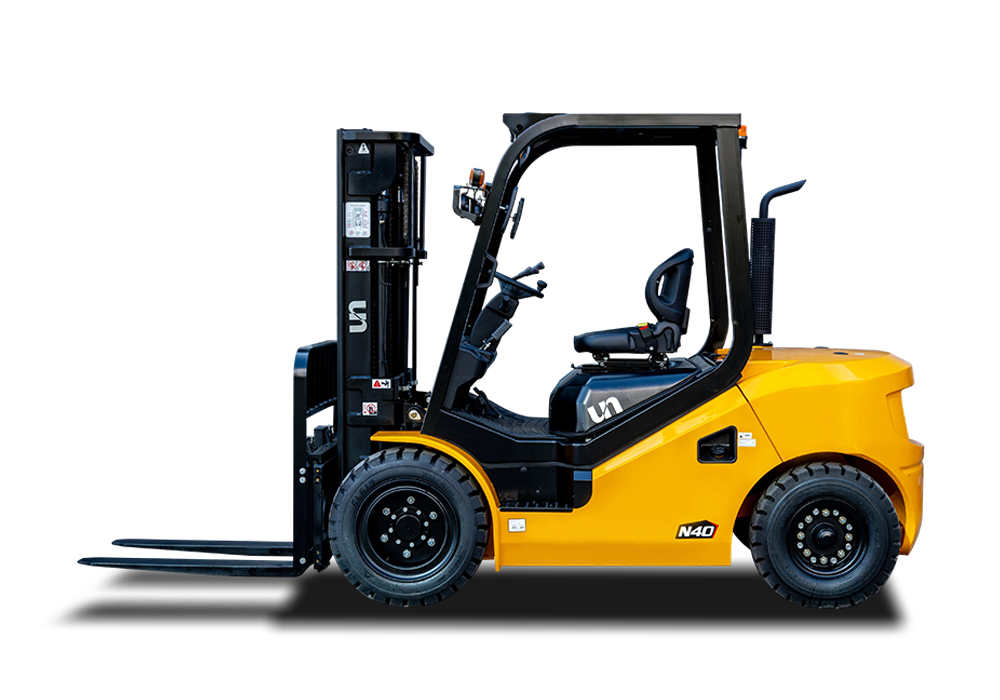
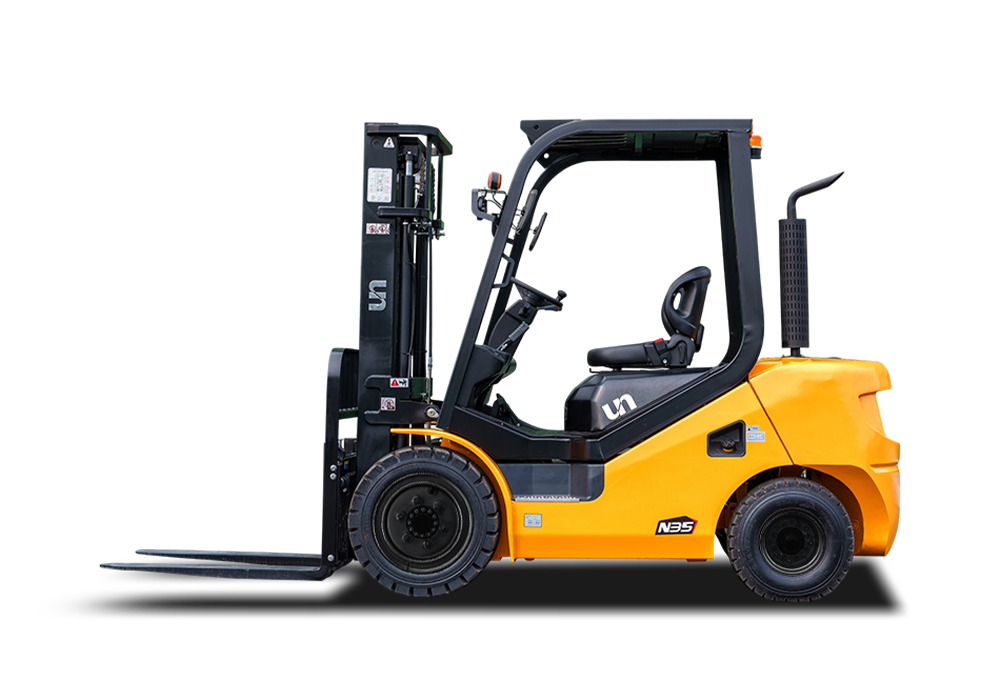
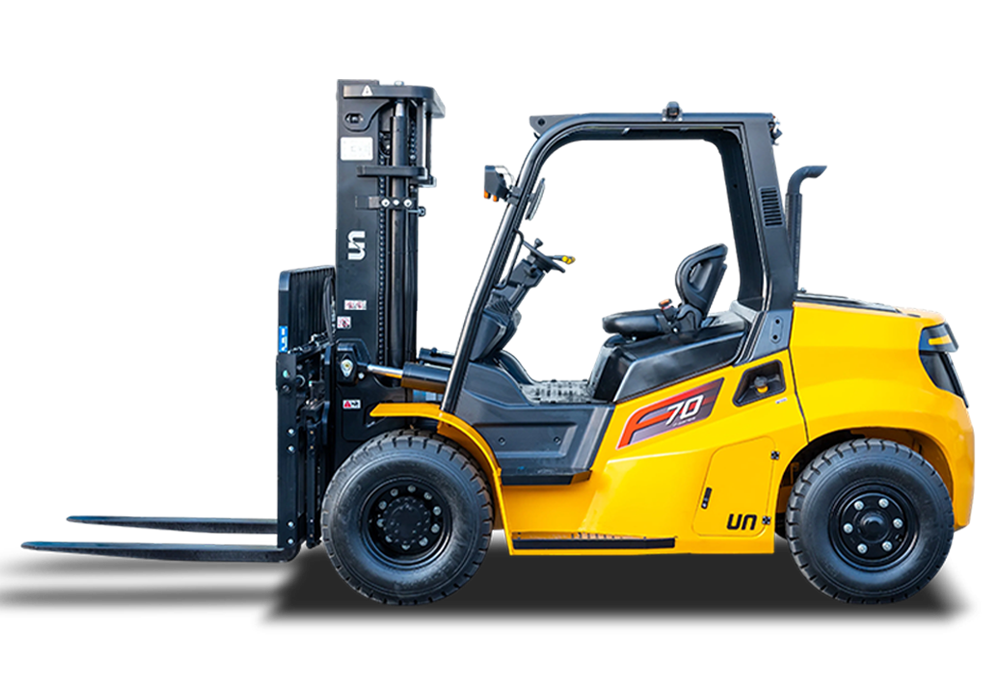
N Series Mini 4.0T Diesel Forklift
Compact Architecture with a Genuine 4-Ton Capacity
The central engineering idea behind the N Series Mini 4.0T is simple but significant: the machine uses a 3.5-ton chassis while delivering a 4-ton rated load capacity. This arrangement helps reduce unnecessary bulk while preserving the structural performance required for heavy loads.
A larger forklift may provide similar capacity, but its longer body, wider operating envelope, and greater turning radius can create problems in confined yards and production areas. Excessive machine size can also reduce pallet access, increase aisle requirements, and make maneuvering around racking, trucks, production lines, and loading bays more difficult.
By contrast, the N Series Mini model is designed for a practical balance between capacity and footprint. Its overall width is approximately 1,410 millimeters, its wheelbase is 1,900 millimeters, and its outside turning radius is approximately 2,675 to 2,740 millimeters depending on the configuration. These dimensions support efficient movement in working areas where space is valuable.
The rated load capacity is 4,000 kilograms at a 500-millimeter load center. This specification is important because forklift capacity is not determined solely by the nominal number printed in a model name. Load center, mast configuration, attachments, and lifting height all affect safe working capacity. The N Series specification provides a clear reference point for standard operation and allows fleet managers to compare the machine with other forklifts using the same rating conditions.
The compact chassis also helps operators position the forklift more precisely. When handling steel products, packaged materials, paper rolls, industrial components, or palletized goods, accurate positioning can reduce contact damage and shorten each loading cycle. A machine that responds predictably in tight areas contributes to both productivity and workplace safety.
A Practical Alternative to Oversized Forklifts
Traditional 4-ton forklifts sometimes use chassis structures designed around a larger capacity class. Such machines may have greater mass and physical dimensions than necessary for applications that require 4 tons but do not require the full envelope of a 5-ton forklift. The N Series Mini approach offers a more targeted solution.
Compared with an oversized forklift, the N Series Mini can provide several operational benefits:
First, its smaller chassis can improve access in restricted work zones. Operators may be able to work closer to storage racks, trailers, production equipment, and building columns.
Second, a reduced physical footprint can help organizations use existing traffic routes without extensive site modification. This is particularly useful for facilities that were originally designed around smaller forklifts.
Third, compact dimensions can support more efficient transport and parking arrangements. Fleet managers may find it easier to stage, service, and relocate the forklift within a busy industrial site.
Finally, the machine’s 4-ton capacity provides a useful margin above the common 2.5-ton or 3-ton forklift class. This can reduce the need to dispatch a larger machine for occasional heavy loads.
Powertrain Options for Different Operating Requirements
The N Series Mini 4.0T Diesel Forklift is available with several engine configurations. The supplied specifications identify Xinchai and Isuzu power units, including the Xinchai A498BPG-521, Xinchai 4D32G31-066, and Isuzu 4JG2. Depending on the selected version, rated output is listed from approximately 36.8 kW to 46 kW.
This range gives buyers flexibility when balancing initial purchase cost, regional service availability, emissions requirements, operating conditions, and expected duty cycle. Some customers may prioritize a proven and economical power unit for general industrial work, while others may prefer an internationally recognized engine brand for demanding use or specific local support arrangements.
The four-cylinder diesel engines are designed to provide sustained torque and dependable power delivery. A diesel powertrain is particularly suitable for applications involving outdoor travel, ramps, uneven surfaces, long operating shifts, frequent towing, and heavy loads. Unlike equipment intended only for light warehouse work, the N Series is configured for high-intensity material handling where consistent performance is essential.
Depending on engine selection, the specifications identify rated torque values of approximately 184.7 to 193 newton-meters. The combination of torque, a heavy-duty chassis, and a rated gradeability of up to 20 percent under full load allows the forklift to work effectively in challenging terrain and on sloped access routes.
Fuel Efficiency and Emissions Awareness
The product description emphasizes an eco-friendly engine system designed to improve fuel efficiency while reducing emissions. Fuel economy is increasingly important because fuel is one of the largest recurring operating expenses for a diesel forklift. Lower consumption can improve the total cost of ownership over years of service, especially in fleets operating multiple shifts.
Fuel efficiency is influenced by more than engine design alone. Chassis weight, transmission matching, hydraulic efficiency, cooling performance, tire selection, operator behavior, and maintenance intervals all play a role. The N Series integrates these systems as a complete working unit rather than treating the engine as an isolated component.
The standard fuel tank capacity is listed as 80 liters. This capacity supports extended work periods and reduces the frequency of refueling interruptions. For fleet operators, fewer refueling stops can simplify shift planning and improve machine availability. Actual fuel consumption will depend on load, travel distance, idle time, terrain, attachment use, weather, and maintenance condition.
Customers operating in regions with strict emissions regulations should select the engine and exhaust configuration appropriate for their market. The manufacturer has experience supplying internal-combustion forklifts to international markets with higher emissions requirements, allowing specifications to be adapted to local compliance needs.
Transmission and Hydraulic Performance
A forklift’s productivity depends on how smoothly its engine power is converted into travel, traction, lifting, and steering performance. The N Series Mini 4.0T uses a transmission system matched to the diesel powertrain. Listed configurations include the YQXD40 transmission and hydraulic transmission versions, with one forward and one reverse stage in the supplied specifications.
A simple forward-and-reverse arrangement is well suited to repeated industrial cycles. Operators can move from loading to reversing, positioning, and unloading without unnecessary complexity. Proper transmission calibration also helps reduce shock loads transmitted to the drivetrain and chassis.
The maximum drawbar pull is listed at approximately 17 to 22 kilonewtons depending on the configuration. This characteristic supports heavy-load travel, ramp operation, and towing-related tasks. The machine’s maximum gradeability is specified at 20 percent with a full load, although actual performance depends on surface conditions, tire grip, slope length, load distribution, and operating technique.
The hydraulic system is another key performance area. The forklift uses hydraulic components from established suppliers, including Shimadzu pumps and other premium-brand options. A well-matched hydraulic system helps provide responsive lifting, lowering, steering, and attachment operation.
Attachment operating pressure is listed at approximately 18.5 to 20.5 MPa depending on configuration. This provides a useful foundation for applications involving side shifters, clamps, rotators, and other hydraulic attachments. Attachment selection must always be evaluated against the actual residual capacity and the manufacturer’s approved configuration.
Controlled Lifting and Lowering
The standard rated lift height is 3,000 millimeters, with a free lift height of approximately 150 millimeters. Lifting speed under full load is specified at approximately 450 millimeters per second. Lowering speed is listed at approximately 420 millimeters per second in one specification, while another configuration identifies separate no-load and full-load values.
Controlled hydraulic movement is important because rapid but unstable lifting does not necessarily improve productivity. The objective is to move the load quickly while preserving smooth control. Predictable lowering helps reduce pallet impact, protect stored goods, and improve operator confidence during placement.
The N Series mast is designed with wide visibility in mind. Visibility is especially important when working with large loads because the load itself can obstruct forward vision. A clear mast design, correct fork positioning, mirrors, lighting, and proper operating procedures together help the driver monitor the load and surrounding traffic.
Wide-View Mast Choices and Capacity Planning
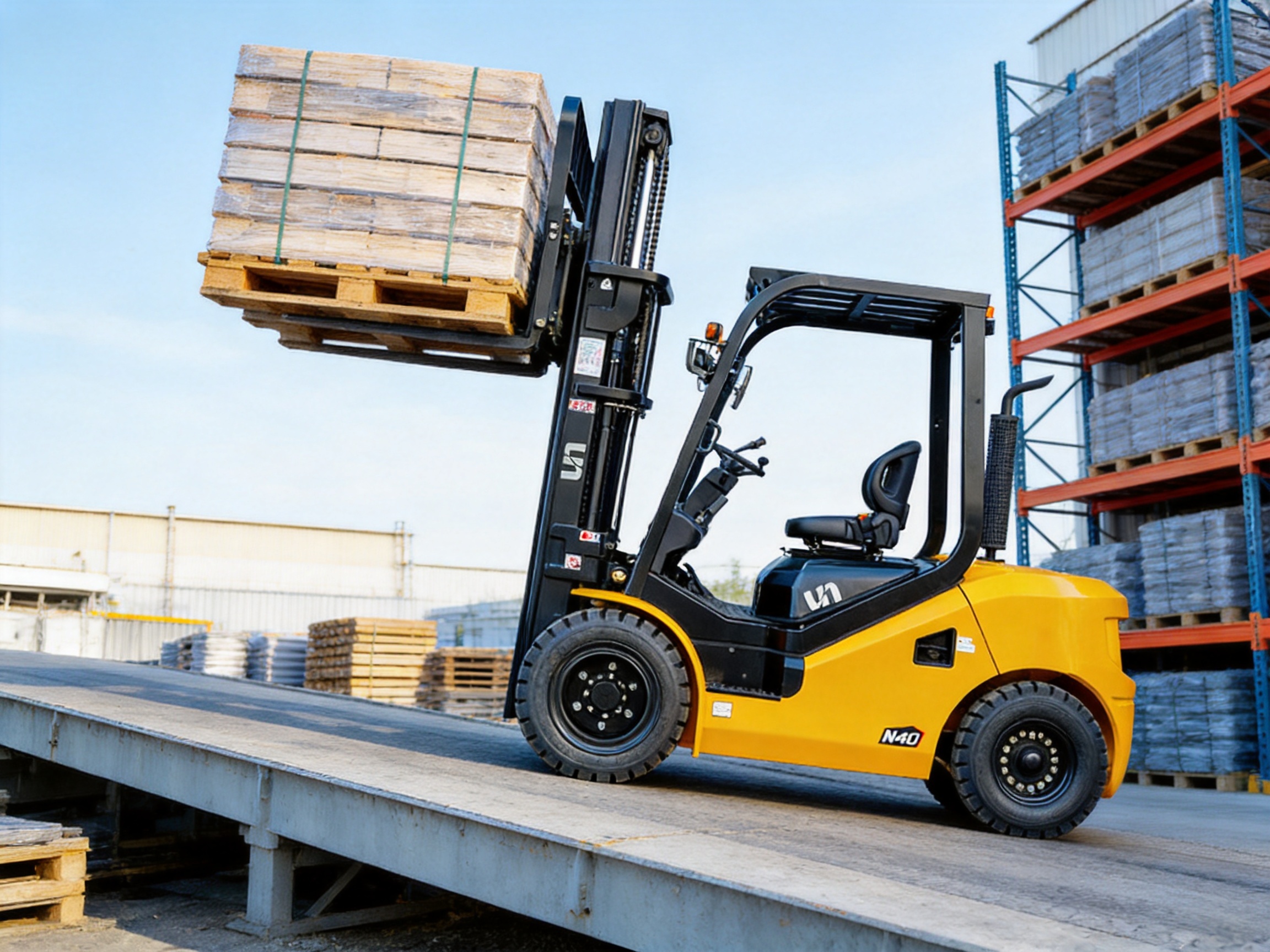
The available mast range allows the N Series Mini 4.0T to be configured for different storage heights and building restrictions. The mast data includes wide-view two-stage options from approximately 3,000 millimeters to 5,500 millimeters and three-stage full-free wide-view mast configurations from approximately 4,000 millimeters to 6,000 millimeters.
Two-stage masts are often selected for general yard work, loading docks, production areas, and standard warehouse racking. Three-stage full-free masts can be more suitable where higher stacking is required or where the mast must remain within a limited overhead clearance during the initial lift.
The listed mast specifications demonstrate an important principle: rated capacity changes as lift height increases. For example, a forklift rated at 4,000 kilograms under a standard condition may have a lower allowable capacity at a greater fork height. Customers should therefore choose the mast by considering both maximum lifting height and the weight of loads at that height.
Side shifters and other attachments also affect residual capacity. The supplied information indicates that a separated side shifter may reduce load capacity by 200 kilograms, while an integrated side shifter may reduce it by 100 kilograms. These reductions should be included in application planning rather than treated as an afterthought.
| Characteristic | Typical Listed Specification | Operational Significance |
|---|---|---|
| Power type | Diesel | Suitable for outdoor work, long shifts, ramps, and demanding industrial cycles |
| Rated load capacity | 4,000 kg | Provides a useful step above common 3-ton forklift classes |
| Load center | 500 mm | Defines the reference point for the rated capacity |
| Standard lift height | 3,000 mm | Appropriate for common loading and stacking operations |
| Free lift height | 150 mm | Allows initial lifting before major mast extension |
| Overall width | Approximately 1,410 mm | Supports maneuverability in restricted workspaces |
| Wheelbase | Approximately 1,900 mm | Balances stability and compact turning behavior |
| Outside turning radius | Approximately 2,675–2,740 mm | Helps reduce space required for turning and positioning |
| No-load travel speed | Approximately 20 km/h | Supports efficient movement between operating zones |
| Full-load gradeability | Up to 20% | Useful for ramps and demanding yard conditions |
| Fuel tank capacity | Approximately 80 L | Supports extended operation between refueling periods |
| Attachment operating pressure | Approximately 18.5–20.5 MPa | Provides hydraulic capability for approved attachments |
The table summarizes representative values from the available configurations. Final dimensions, capacities, engine data, and operating characteristics should be confirmed against the exact model code and mast or attachment specification selected for the order.
Stability, Chassis Strength, and Industrial Durability
Heavy-duty forklift performance begins with the chassis. The chassis must support the counterweight, engine, transmission, mast, hydraulic system, axles, and load while absorbing repeated shocks from uneven surfaces and frequent changes in direction. The N Series Mini design uses a scientifically optimized chassis intended to deliver strength without making the complete machine unnecessarily large.
The chassis layout contributes to stability by coordinating wheelbase, counterweight, axle placement, mast position, and load center. A stable forklift is not simply a heavy forklift. It is a machine in which the structural and dynamic systems are matched to the intended rated load.
The listed total operating weight is approximately 5,470 to 5,490 kilograms depending on model configuration. Front and rear axle load distributions are provided for both loaded and unloaded conditions. These values are important for site planning, floor loading assessment, transportation arrangements, and tire selection.
Front tires are listed as 250-15-16PR, while rear tires are listed as 6.50-10. The tire arrangement is intended to support the load-bearing demands placed on the front axle while preserving steering response at the rear. Correct tire pressure, tread condition, and tire compound selection are essential for maintaining traction and stability.
For customers working on rough ground, the machine can be specified with configurations suited to outdoor conditions. However, no forklift should be operated beyond the limits of its tires, ground clearance, stability envelope, or approved operating environment. Site conditions should be reviewed before purchase.
Cooling for Hot and Intensive Environments
Heat is a major challenge for internal-combustion forklifts. Long operating cycles, high ambient temperatures, dusty yards, and heavy hydraulic work can place considerable stress on the engine and transmission. The N Series uses high-capacity radiators and an effective cooling arrangement to help maintain stable operation in hot environments.
Reliable cooling contributes to more than engine protection. Stable temperatures help preserve oil viscosity, hydraulic response, transmission performance, and electrical-system reliability. A machine that maintains consistent operating conditions is less likely to experience performance deterioration during extended shifts.
Cooling performance also depends on maintenance. Radiator fins, air channels, belts, hoses, coolant levels, and protective screens should be inspected according to the service schedule. The machine’s design helps facilitate maintenance, but disciplined inspection remains essential to long-term performance.
Operator Safety and Ergonomic Design
Productivity cannot be separated from operator safety. The N Series Mini 4.0T incorporates safety and ergonomic features intended to reduce operational stress and help the driver maintain awareness during demanding work.
An operator presence system with a seat switch is included. This type of system helps prevent certain machine functions from being activated when the operator is not correctly seated. It is one part of a broader safety strategy that should also include training, seat-belt use, traffic control, load assessment, and daily inspection.
The wide-visibility mast supports better awareness of the forks, load, racking, and nearby personnel. The heavy-duty overhead guard helps protect the operator from falling objects and other hazards associated with industrial handling. The guard is designed to provide protection while maintaining practical visibility around the operating area.
The suspended frame design creates additional legroom and helps improve the driver’s working position. Adjustable steering and a comfortable seat allow the forklift to be adapted to different operators and shift requirements. Improved ergonomics can reduce fatigue, which is particularly important when the machine is used for long hours or in repetitive loading cycles.
The optional suspended powertrain system provides further customization for specific tasks. By reducing the transmission of vibration to the operator compartment, a suspended powertrain may contribute to improved comfort on rough surfaces. The appropriate configuration depends on application conditions, local requirements, and customer preference.
Visibility as a Productivity Feature
Visibility is sometimes described only as a safety feature, but it also affects productivity. When operators can see the fork tips, pallet openings, and load edges more clearly, they can complete positioning tasks with fewer corrections. Fewer corrections mean shorter cycle times and reduced risk of product or rack damage.
Visibility must be considered in relation to the selected mast, carriage, backrest, attachment, load shape, lighting, and operating direction. The N Series provides a wide-view mast concept, but operators should still travel in reverse when the load blocks forward visibility and should use a spotter when conditions require one.
Maintenance Access Designed for Real-World Service
Forklift reliability is closely connected to service accessibility. Even high-quality components cannot provide dependable performance if technicians cannot inspect, clean, adjust, and replace them efficiently. The N Series Mini 4.0T includes design features intended to simplify routine maintenance.
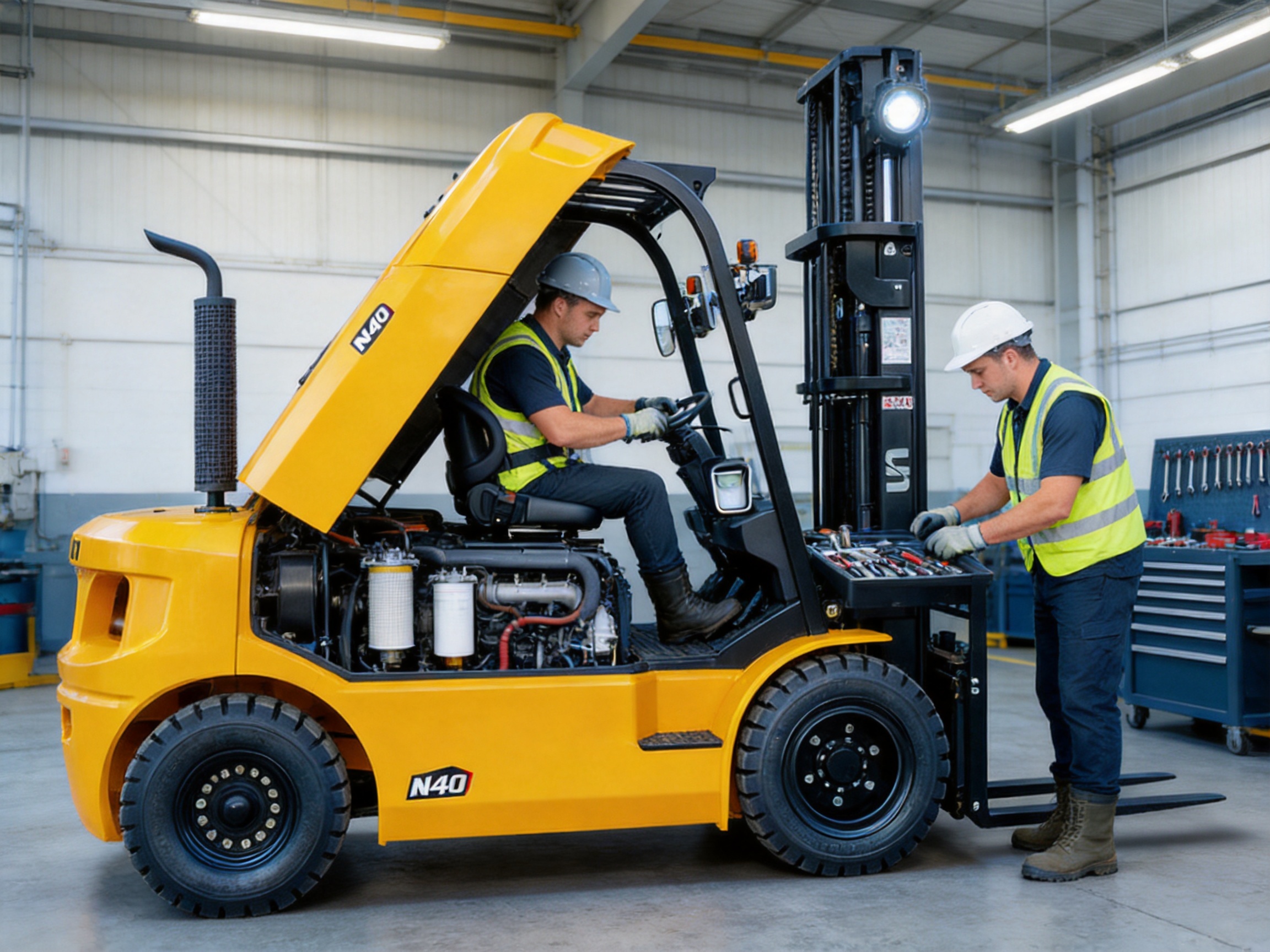
The engine hood can open to nearly 90 degrees, creating broad access to the engine compartment. This makes it easier to inspect filters, belts, hoses, fluid levels, wiring, and other service points. Convenient access can reduce the time required for daily checks and scheduled maintenance.
The transmission oil filter is designed for straightforward replacement. Simplifying filter service encourages timely maintenance and can help protect the transmission from contamination. Regular fluid and filter replacement is particularly important in dusty environments or applications involving high operating hours.
Maintenance-friendly design can deliver financial benefits throughout the forklift’s working life. Shorter service intervals reduce downtime, improve technician productivity, and help organizations return equipment to operation more quickly. Preventive maintenance also identifies small problems before they develop into major component failures.
The manufacturer’s global service network further supports ownership. Zhejiang UN Forklift Co., Ltd. has partners and service coverage in Europe, South America, North America, Africa, and Asia. International customers can benefit from access to technical support, replacement parts, service coordination, and application assistance, subject to regional availability.
Recommended Maintenance Practices
Operators should conduct a daily inspection before starting work. This inspection should include tires, forks, mast chains, hydraulic hoses, fluid levels, lights, warning devices, seat belt, overhead guard, steering, brakes, and visible leaks.
Forks should be checked for cracks, bending, excessive wear, and correct locking. Mast chains should be inspected for lubrication, damage, and abnormal elongation. Hydraulic cylinders and hoses should be examined for leakage or abrasion.
The cooling system deserves additional attention in hot, dusty, or high-load applications. Radiators and protective screens should be cleaned as necessary, while coolant levels and hose condition should be monitored. Diesel engines should be serviced using the correct filters, lubricants, and fuel-system procedures.
Maintenance intervals may vary according to the exact engine, transmission, operating environment, and regional service schedule. Customers should follow the official maintenance documentation supplied with the selected forklift.
Manufacturing Strength and Engineering Experience
The N Series Mini 4.0T is supported by the manufacturing resources of Zhejiang UN Forklift Co., Ltd., a material-handling equipment producer founded in 1978. The company integrates research and development, production, sales, and service rather than focusing only on assembly or distribution.
The company’s stated facility covers approximately 53,400 square meters and has an annual production capacity of about 15,000 units. This scale supports organized manufacturing, component coordination, quality-control systems, engineering validation, and the production of multiple forklift categories.
UN Forklift offers a broad equipment portfolio that includes internal-combustion forklifts, electric forklifts, warehouse equipment, and other material-handling solutions. Its product range includes numerous varieties, series, and specifications. This breadth is valuable because it exposes the manufacturer to a wide range of operating conditions and customer requirements.
Experience across product categories can also improve component standardization and engineering learning. Lessons from electric forklifts may contribute to control-system development, while experience with internal-combustion machines supports chassis, transmission, cooling, and counterweight design. A broad portfolio creates opportunities for cross-platform improvement.
Research and Development Capability
The company has been associated with the development of specialized material-handling equipment, including early reach forklift and very-narrow-aisle truck products in China. It also holds national patents related to electric forklift technologies and has participated in the development of Chinese electric forklift industry standards.
Although the N Series Mini 4.0T is a diesel forklift, this wider engineering background is relevant. Modern forklift development requires a combination of mechanical engineering, hydraulic control, electronic monitoring, ergonomics, emissions awareness, and energy management. Experience in different technologies supports a more complete approach to machine design.
The company also supplies equipment as an original-equipment manufacturer for recognized industrial companies. Such relationships generally require consistent production standards, controlled specifications, documentation, and dependable delivery performance. This background strengthens confidence in the manufacturer’s ability to support professional fleet customers.
Manufacturing capability should always be evaluated together with the actual configuration being purchased. Buyers should confirm the engine brand, transmission type, mast, tire specification, attachment compatibility, safety equipment, emissions level, and regional certification before placing an order.
Where the N Series Mini 4.0T Performs Best
The forklift is suitable for applications that combine heavy loads with the need for maneuverability. In manufacturing plants, it can move dies, molds, steel components, machinery parts, and raw materials between production lines and storage areas.
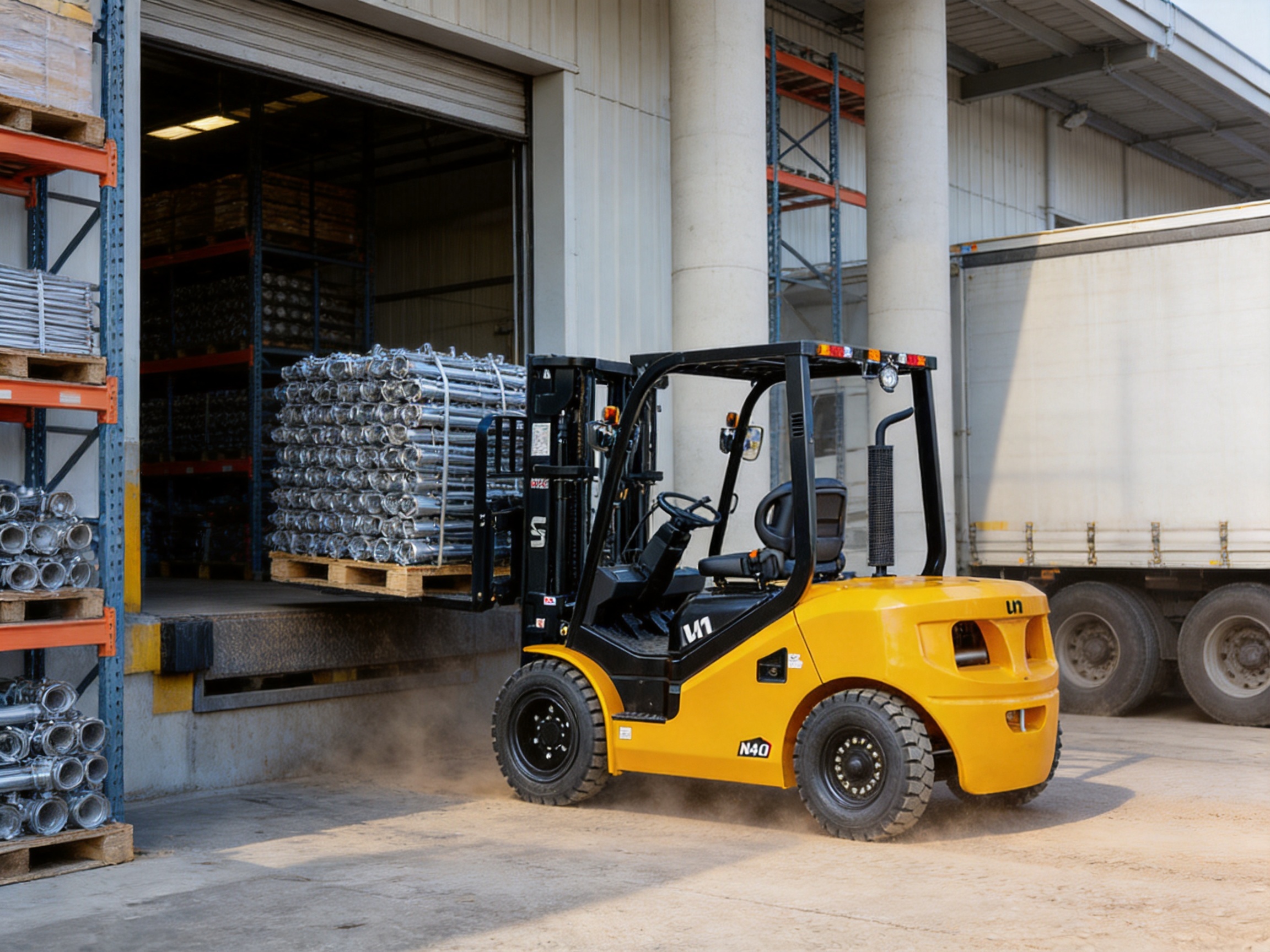
In logistics yards, the diesel powertrain supports frequent loading and unloading of trucks and containers. The 4-ton rating allows operators to handle heavier palletized goods without automatically deploying a much larger forklift.
In construction-material handling, the machine can be used for bricks, concrete products, tiles, pipes, timber, metal sections, and bagged materials. Outdoor tires and diesel power make it better suited to many yard conditions than a light indoor warehouse truck.
In agricultural operations, it may support the movement of feed, fertilizer, packaged crops, equipment, and palletized supplies. Operators should consider dust, ground conditions, seasonal weather, and corrosion exposure when selecting the configuration and maintenance plan.
In recycling, paper, packaging, and industrial processing facilities, the machine can provide the traction and load capacity needed for repetitive material flow. Approved attachments can extend its usefulness, although attachment weight and load center must be included in capacity calculations.
Comparison with Other Forklift Classes
Compared with a 2-ton or 2.5-ton forklift, the N Series Mini 4.0T provides significantly greater nominal capacity for heavier loads. This can reduce the risk of overloading smaller equipment and improve scheduling flexibility.
Compared with a conventional 3-ton forklift, the 4-ton rating provides additional capacity for dense materials, heavier pallets, and occasional high-load tasks. The compact chassis helps preserve maneuverability that might otherwise be lost when moving into a larger class.
Compared with a full-size 5-ton forklift, the N Series Mini may offer a more efficient choice when the required capacity is close to 4 tons rather than 5 tons. Its smaller dimensions can reduce turning-space requirements and improve access to constrained areas.
Compared with an electric forklift, the diesel model is generally more appropriate for extended outdoor operation, rough surfaces, high drawbar demand, and rapid refueling requirements. Electric forklifts may be preferable where indoor emissions, noise, or zero-tailpipe-emission operation is the priority. The correct choice depends on the site, duty cycle, charging infrastructure, and environmental requirements.
Understanding Configuration Codes and Specifications
The supplied product information includes several related configuration codes, such as FD40T-XNGA7, FD40T-XNJB2, FD40T-XN1GA8, FD40T-XN1GA7, FD40T-XN1JB2, FD40T-XN2GA7, and FD40T-XN2JB2. These codes may correspond to different engine, transmission, mast, or regional configurations.
Because the specifications include more than one data table and several engine options, customers should not assume that every listed value applies simultaneously to every unit. The final technical sheet for the selected model should be used for procurement, site planning, certification, and safety calculations.
Key points to confirm include the precise engine model, rated output, torque, transmission type, mast height, lowered mast height, overall guard height, turning radius, axle loads, tire type, attachment pressure, and residual capacity.
Customers should also confirm whether the forklift is equipped with an integrated or separated side shifter. As indicated in the product information, these options may produce different capacity deductions. The selected mast and attachment should be evaluated together, not separately.
Total Cost of Ownership Considerations
The purchase price is only one part of the cost of owning a forklift. Fuel consumption, maintenance, tires, downtime, operator productivity, spare parts, resale value, and service support can have a greater effect over the equipment’s useful life.
The N Series Mini 4.0T is designed to support favorable ownership economics through fuel-conscious diesel power, accessible maintenance points, robust chassis construction, and widely recognized engine options. A machine that can complete demanding work reliably may reduce the need for rental equipment, emergency repairs, or additional backup units.
Fuel costs can be managed through correct engine selection, preventive maintenance, reduced idle time, proper tire inflation, and operator training. Operators should avoid unnecessary high-speed travel, aggressive acceleration, excessive engine idling, and lifting loads beyond the rated capacity.
Downtime can be reduced by keeping common filters, belts, hoses, and wear parts available. Fleet managers should establish a service plan based on operating hours and conditions rather than waiting for a visible failure. Regional parts support and technical assistance should be discussed with the supplier before purchase.
Residual value is influenced by machine condition, service records, engine performance, structural integrity, mast wear, tire condition, and market demand. A documented maintenance history can make the forklift easier to evaluate and resell later.
Purchasing Guidance for Fleet Managers
Before ordering the N Series Mini 4.0T, fleet managers should define the heaviest regular load, the load dimensions, the load center, the required lift height, the narrowest aisle, the surface conditions, the operating hours per day, and the percentage of indoor versus outdoor work.
They should identify whether the forklift will operate on ramps, rough yards, wet surfaces, dusty ground, or smooth concrete. These factors affect tire selection, traction expectations, cooling requirements, and maintenance frequency.
The required attachment should be selected at the same time as the forklift. Side shifters, clamps, rotators, fork positioners, and other attachments change the load center and reduce residual capacity. Attachment hoses, operating pressure, carriage compatibility, and visibility should be confirmed before delivery.
Operators should be involved in the evaluation process. Their feedback on visibility, seat comfort, steering adjustment, pedal layout, control response, access, and vibration can identify practical considerations that may not appear in a specification sheet.
Finally, buyers should request the official technical configuration, warranty terms, delivery scope, service schedule, spare-parts plan, training options, and regional compliance documentation. These details are particularly important for international purchases.
Questions and Answers
What is the rated capacity of the N Series Mini forklift?
The rated load capacity is 4,000 kilograms at a 500-millimeter load center under the stated standard configuration. Actual allowable capacity may vary with lift height, mast type, attachment, load dimensions, and operating conditions.
Why is the forklift described as a mini model?
It is described as a mini model because it uses a more compact chassis architecture associated with a lower capacity class while delivering a 4-ton rated capacity. The objective is to combine heavy-load capability with improved maneuverability and reduced space requirements.
What engine brands are available?
The supplied specifications identify Xinchai and Isuzu engine options. Exact engine availability depends on the selected model code, market, emissions requirements, and customer configuration.
Is the forklift suitable for outdoor use?
Yes. Its diesel powertrain, heavy-duty structure, high drawbar pull, and full-load gradeability make it suitable for many outdoor industrial applications. The site must still be evaluated for surface quality, slope, weather, dust, and traffic safety.
What is the standard lift height?
The standard rated lift height listed in the main specifications is 3,000 millimeters. Other two-stage and three-stage mast options are available for higher stacking requirements.
Can the forklift use attachments?
Yes. The hydraulic system provides operating pressure for approved attachments. Side shifters and other attachments affect residual capacity, so the final capacity must be confirmed for the complete forklift configuration.
How does the wide-view mast improve operation?
The wide-view mast is designed to improve the operator’s sightline toward the forks and load. Better visibility can support more accurate positioning, reduce correction movements, and improve awareness in busy work areas.
What safety features are included?
Listed safety and ergonomic features include an operator presence system with seat switch, wide-visibility mast, heavy-duty overhead guard, adjustable steering, comfortable seating, and a suspended frame design. These features must be used together with proper training and safe operating procedures.
How accessible is routine maintenance?
The engine hood opens to nearly 90 degrees for easier inspection and service. The transmission oil filter is also designed for convenient replacement. The exact maintenance schedule should follow the official documentation for the selected engine and transmission.
What makes the manufacturer suitable for international customers?
Zhejiang UN Forklift Co., Ltd. has operated since 1978, integrates research and development with manufacturing and service, offers a broad material-handling product range, and maintains a global sales and service network. Customers should confirm local parts availability and technical support for their specific region.
Conclusion
The N Series Mini 4.0T Diesel Forklift is designed for organizations that need genuine 4-ton handling capacity without accepting the size and maneuverability compromises often associated with larger forklifts. Its compact chassis, diesel powertrain, hydraulic capability, wide-view mast options, cooling system, safety features, and maintenance-friendly structure make it a versatile choice for demanding industrial applications.
Its advantages are most apparent when the application requires a combination of heavy loads, restricted working space, sustained operation, and reliable outdoor performance. The choice of Xinchai or Isuzu engine configurations allows buyers to align the machine with local service resources, emissions requirements, and operating priorities.
The forklift also benefits from the engineering and manufacturing foundation of a long-established material-handling equipment producer. The company’s experience in internal-combustion forklifts, electric equipment, warehouse machinery, specialized trucks, research and development, original-equipment manufacturing, and international service supports a comprehensive approach to product quality.
As with any forklift purchase, the final decision should be based on the complete operating profile rather than nominal capacity alone. Load center, lifting height, attachment weight, aisle width, terrain, duty cycle, emissions rules, and service support should all be confirmed. When correctly configured and properly maintained, the N Series Mini 4.0T can provide a strong balance of compact handling, heavy-duty performance, operator protection, and long-term productivity.
References
1. Product technical information for the N Series Mini 4.0T Diesel Forklift, including main specifications, engine options, mast configurations, and attachment notes.
2. Manufacturer information concerning forklift design, production capacity, research and development, product portfolio, and international service coverage.
3. General principles of industrial forklift capacity, load-center calculation, mast selection, attachment evaluation, and safe material handling.
4. General preventive-maintenance practices for diesel engines, hydraulic systems, transmissions, tires, mast assemblies, and operator safety systems.
5. General fleet-management principles concerning fuel efficiency, total cost of ownership, equipment availability, operator training, and service planning.
Product: N Series Mini 4.0T Diesel Forklift

For exclusive deals and latest offers, sign up by entering your email address below.
Stay In Touch
ADDRESS : NO.1 ROAD ONE, XINDENG NEW DISTRICT, FUYANG, HANGZHOU, ZHEJIANG, CHINA 311404.
PHONE : +86-571-8688 8355 (AMERICA)
PHONE : +86-571-8886 9363 (EUROPE)
PHONE : +86-571-8688 8377 (ASIA, AFRICA, OCEANIA)
EMAIL : [email protected]
EMAIL : [email protected](PARTS INQUIRY)

