


 中文简体
中文简体 Français
 русский
 Español
 عربى
عربى Deutsch



3.0T-3.5T LPG and Gasoline Forklift for Efficient Indoor and Outdoor Material Handling
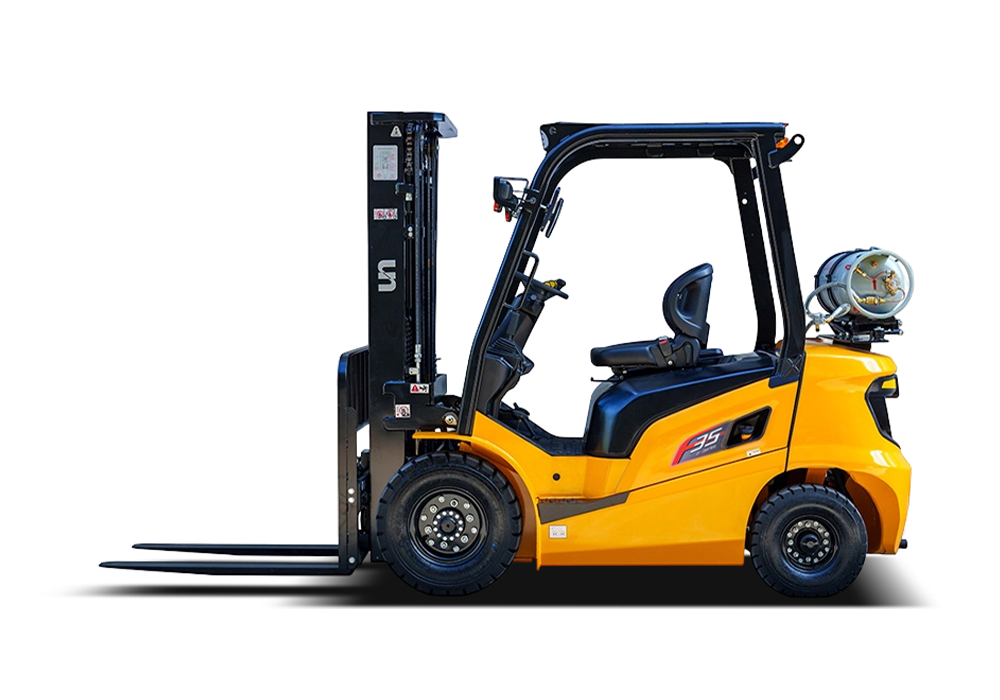
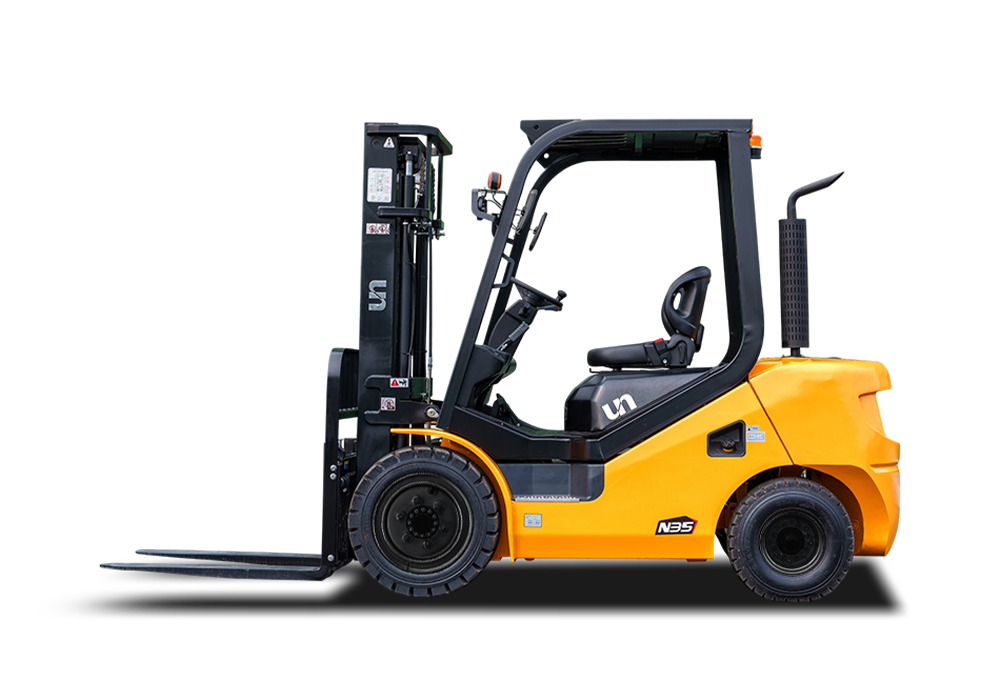
Admin 2026-06-09The N Series 3.0T-3.5T LPG and Gasoline Forklift is designed for operations that require dependable lifting capacity, fast handling cycles, comfortable driving, and consistent performance across indoor and outdoor work areas. In warehouses, logistics yards, industrial plants, building-material depots, wholesale markets, and manufacturing facilities, users often need one truck that can move smoothly between clean indoor floors and open-air loading zones. This forklift answers that demand with a powerful LPG or gasoline power system, a compact and maneuverable chassis, a reliable hydraulic system, and a structure built for daily productivity.
Unlike equipment that is limited to narrow single-purpose applications, this 3.0T-3.5T model range is positioned as a versatile mid-capacity solution. It is strong enough to handle demanding palletized loads, yet compact enough for common warehouse aisles. It offers the practical advantages of internal combustion power, including rapid refueling, long operating shifts, stable torque output, and strong gradeability. At the same time, its cleaner LPG option makes it suitable for many environments where reduced emissions and more controlled exhaust output are important.
For buyers comparing different lift truck options, the key question is not only whether a forklift can lift a stated load. The more important question is whether it can deliver the same reliable performance hour after hour, shift after shift, while reducing operator fatigue and simplifying maintenance. This product is built around that real-world requirement. Its high-reliability powertrain, precision chassis, wide-vision mast, ergonomic operator area, strong overhead guard, and convenient service access all contribute to lower operational stress and improved lifecycle value.
Zhejiang UN Forklift Co., Ltd. supports the product with decades of manufacturing experience, a broad global sales and service network, and an integrated capability covering research, production, sales, and service. Founded in 1978, the company has grown into a professional material handling equipment manufacturer with a wide product range and an annual production capacity reaching 15,000 units. Its long-term focus on energy saving, environmental protection, efficiency, and safety provides a solid industrial foundation for this N Series forklift.
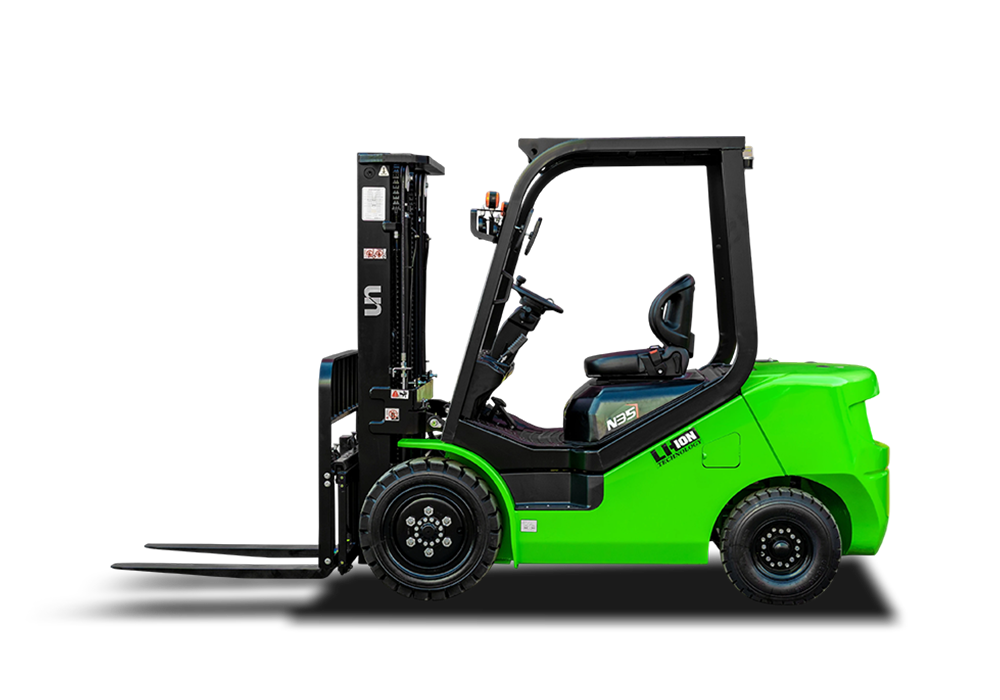
N Series 3.0T-3.5T LPG&Gasoline Forklift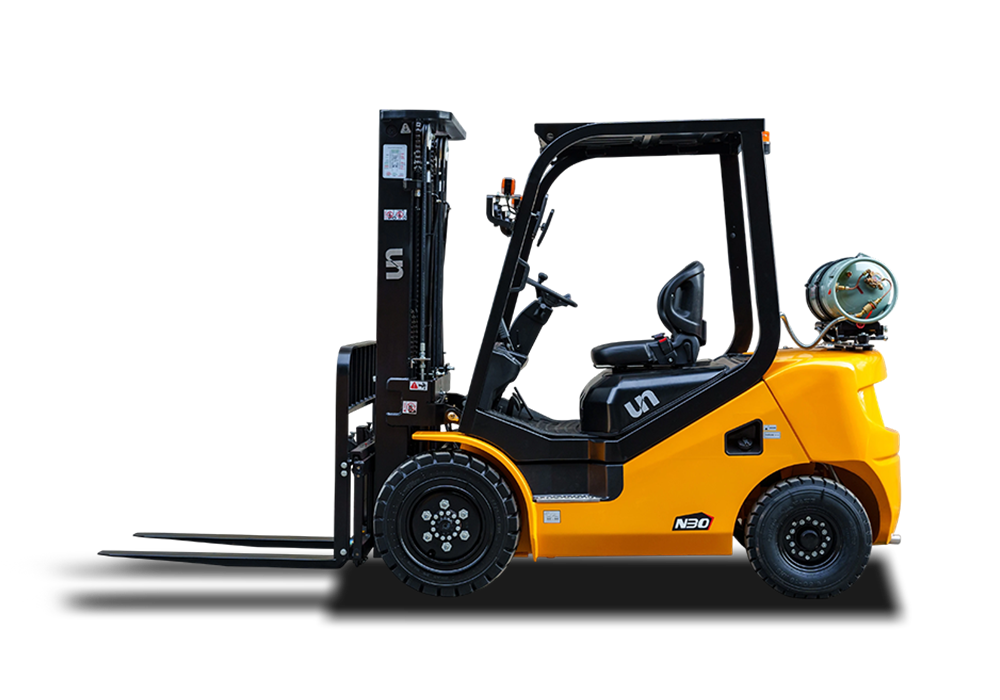
Product Positioning and Core Value
The N Series 3.0T-3.5T LPG and Gasoline Forklift is intended for customers who need a balanced combination of load capacity, operating comfort, easy control, and economical ownership. In practical terms, the 3.0-ton and 3.5-ton load classes are among the most widely used categories in material handling. They are common in factories, distribution centers, beverage warehouses, packaging plants, portside storage areas, metalworking facilities, construction supply yards, and export packing operations.
The product is especially suitable for frequent handling operations and medium-duty loading scenarios. It is not designed merely as a low-cost lifting device, but as a complete working tool for companies that value uptime. Its engine output, transmission response, hydraulic precision, cooling performance, and frame strength are coordinated so that the truck performs smoothly during repeated acceleration, braking, lifting, lowering, reversing, and stacking.
One of the strongest advantages of this forklift is its dual relevance to indoor and outdoor work. Electric forklifts can be excellent for clean indoor environments, but they may require charging infrastructure and downtime if battery management is not optimized. Diesel forklifts often provide strong outdoor power, but they may not be acceptable in certain semi-enclosed or cleaner operating environments. LPG and gasoline forklifts sit in a practical middle ground. They provide quick energy replenishment and robust power while offering a cleaner alternative to conventional diesel in many use cases.
The compact design of the N Series further increases its value. A forklift with strong capacity is useful only if it can reach the load efficiently. With a 1225 mm overall width for the 3.0T-3.5T range, a turning radius of approximately 2425 mm to 2500 mm depending on model, and a practical right-angle stacking aisle requirement, the truck is well suited to facilities that need capacity without sacrificing maneuverability. For managers trying to improve pallet flow, reduce congestion, or optimize space utilization, these dimensional characteristics matter as much as raw engine power.
Power System Designed for Productive Shifts
The power system is a major reason why this forklift stands apart from many competing models. It is equipped with high-powered engine configurations such as GCT engine options, including GK25 or related K series configurations depending on model and market specification. These engines are selected for steady output, responsive torque, and proven reliability in industrial operating conditions.
In material handling, power delivery must be predictable. Operators need confidence when approaching a ramp, lifting a loaded pallet, or traveling across uneven yard surfaces. The N Series supports this requirement with an engine and hydraulic transmission system that provide smooth movement and practical drawbar pull. In the 3.0T-3.5T specification group, travel speed without load can reach around 19 km/h, while full-load gradeability reaches approximately 20% for 3.0T models and 18% for 3.5T models in the listed configuration. These figures indicate that the forklift can maintain efficient movement even where ramps, yard slopes, or dock transitions are part of the job.
Compared with lower-grade forklifts that may feel underpowered when fully loaded, this model maintains working confidence. Strong engine performance reduces hesitation, improves cycle efficiency, and helps operators maintain a consistent pace. The result is not only faster load transfer, but also more predictable workflow. Predictability is important because it allows supervisors to schedule loading operations, dispatch trucks, and coordinate warehouse activity with fewer interruptions.
The LPG option is particularly important for customers who need cleaner emissions than many diesel alternatives. LPG combustion generally produces lower particulate emissions and can be more acceptable in semi-indoor areas when appropriate ventilation and operating standards are followed. The gasoline option provides another practical fuel choice in markets where gasoline supply, service habits, or application needs make it preferable. This flexibility gives buyers greater freedom to match the truck to local fuel availability and operating policy.
Transmission and Driving Control
A forklift may have a capable engine, but if the transmission is rough or inefficient, the operator experience suffers. The N Series uses a hydraulic transmission configuration with a practical forward and reverse stage arrangement. This helps deliver smooth directional changes and controlled driving response during frequent loading cycles. The shift mechanism is designed to support reliable operation and easy handling, contributing to efficient maneuvering in busy industrial spaces.
Many forklift applications involve constant repetition: drive forward, brake, lift, reverse, turn, lower, and repeat. Over hundreds of cycles per day, a responsive transmission reduces driver fatigue and protects cargo from abrupt movement. A smoother powertrain also helps reduce shock loads to drivetrain components, pallets, and carried goods. In competitive comparisons, forklifts with less refined transmission behavior may appear acceptable during a short test drive but become tiring in full-shift use. The N Series is built with long-duration operation in mind.
The model’s turning performance also supports productivity. With an outside turning radius of approximately 2425 mm for 3.0T versions and 2500 mm for 3.5T versions, operators can navigate common warehouse layouts with confidence. The right-angle stacking aisle width of about 4180 mm to 4255 mm supports standard pallet handling operations. These figures show the product’s balance: it is not oversized for its capacity class, and it remains practical for many existing facilities without requiring expensive redesign of storage layouts.
Hydraulic Precision for Lifting and Steering
Hydraulic performance is central to forklift quality. The N Series uses well-selected hydraulic components, including high-quality pumps and valves, to provide accurate lifting and steering control. In daily use, hydraulic precision affects safety, cargo stability, and operator confidence. A forklift that lifts too abruptly, responds inconsistently, or lowers unpredictably can damage goods and increase risk. The N Series is designed to provide controlled response across lifting, lowering, and steering functions.
The rated lift height is commonly 3000 mm in the listed standard configuration, which is suitable for many pallet rack, truck loading, and stacking applications. The mast tilt angle of 6 degrees forward and 12 degrees backward helps operators position loads securely and safely. The fork size varies by model, with the 3.0T configuration using 1070 mm by 125 mm by 45 mm forks and the 3.5T configuration using 1070 mm by 125 mm by 50 mm forks in the main specification table. This design matches the structural demands of the load class.
Lifting speed and lowering control are also important. In the listed 3.0T-3.5T configuration, full-load lifting speed can reach around 390 mm per second, while lowering speed is controlled to support safe load placement. These figures contribute to efficient cycle times without sacrificing handling control. For customers operating in distribution and production environments, each second saved per pallet can accumulate into meaningful productivity improvement over a month or year.
Compared with competitors that focus only on engine output, the N Series highlights the importance of an integrated hydraulic system. Engine power, hydraulic flow, valve response, mast stability, and operator controls must work together. The product’s balanced system design helps prevent the common problem of having enough power but poor controllability. This makes the forklift easier to learn, easier to operate precisely, and more suitable for mixed-skill operator teams.
Safety Features for Demanding Workplaces
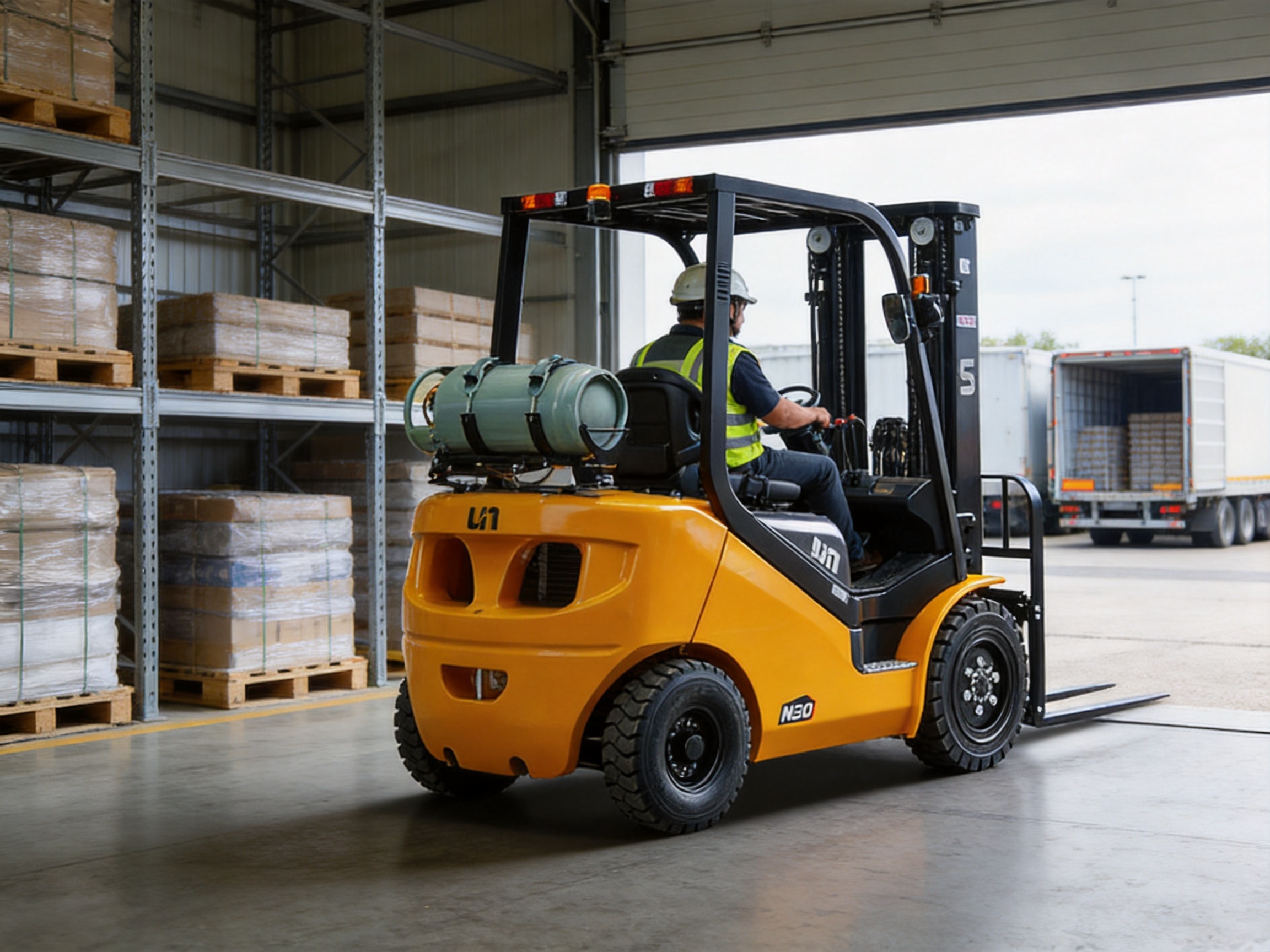
Safety is not a single component; it is the result of structure, visibility, control, stability, and operator discipline. The N Series incorporates several design elements that help create safer working conditions. These include an OPS system, a seat switch, a wide-vision mast, and a high-strength overhead guard. Together, these features support operator protection and better situational awareness.
The OPS system and seat switch help ensure that the truck is operated in a controlled and intentional manner. In busy warehouses or yards, unintended movement can create serious hazards. Systems that encourage correct operator presence and control help reduce risk. The wide-vision mast supports visibility during load handling, allowing operators to see the forks, load, and surrounding area more clearly. Better visibility can reduce pallet damage, rack impact, and pedestrian risk.
The overhead guard is another essential safety feature. In material handling environments, falling objects can occur due to unstable pallets, damaged packaging, or rack handling errors. A high-strength overhead guard provides a protective structure above the operator and is a fundamental part of forklift safety design. The N Series also provides ergonomic positioning, helping operators maintain better posture and awareness throughout the shift.
Competitor comparison should consider how safety influences total cost. A forklift with a lower initial price but poor visibility, uncomfortable controls, or weak structural protection can create hidden costs through accidents, damaged goods, training difficulties, and operator turnover. The N Series is intended to reduce these risks by combining protection, visibility, and controllability in one coherent design.
Ergonomic Operator Environment
Operator comfort directly affects productivity. A forklift driver may spend several hours per day seated in the machine, repeatedly steering, reversing, lifting, and checking surroundings. If the operator area is cramped, noisy, poorly positioned, or physically tiring, performance declines. The N Series addresses this with a suspended frame design that provides more foot space and a more comfortable working posture. Adjustable steering and seat options allow operators to adapt the driving position to their body size and preference.
The ergonomic layout supports easier access to controls, clearer forward visibility, and reduced fatigue. For fleet owners, this matters because a comfortable operator is more likely to work consistently and carefully. Fatigue is not only a comfort issue; it affects safety and precision. A tired operator may misjudge fork height, turn too sharply, or place loads inaccurately. By improving the driver environment, the forklift contributes to more stable performance across long shifts.
An optional suspended powertrain system can be added for customized performance. This option can help reduce vibration transfer and improve operating comfort in certain working conditions. Vibration reduction is especially valuable in facilities with uneven floors, yard transitions, or long travel distances. Lower vibration can also contribute to reduced mechanical stress and improved perceived machine quality.
When compared with basic forklifts that treat the operator compartment as an afterthought, this model shows a more mature design philosophy. It recognizes that equipment performance is inseparable from human performance. A machine that supports the operator will often deliver better real-world productivity than a machine that looks powerful on paper but is tiring to use.
Durable Chassis and Structural Reliability
The chassis is the foundation of forklift performance. The N Series uses a precision-engineered chassis designed to withstand repeated load cycles and industrial impact conditions. Forklifts operate in difficult environments: they pass over dock plates, yard surfaces, warehouse joints, and sometimes imperfect floors. The frame must resist twisting, vibration, and stress concentration while supporting the mast, counterweight, powertrain, and operator compartment.
The listed total weight for the 3.0T model is approximately 4460 kg, and for the 3.5T model approximately 4775 kg. These operating weights reflect the counterbalanced structure required for load stability. Axle weight distribution under loaded and unloaded conditions is carefully managed to support traction, braking, and lifting safety. A well-balanced truck feels stable during travel and stacking, especially when handling loads at height.
Durability is also reflected in tire and wheelbase specifications. The 3.0T-3.5T models use front tires such as 28 by 9-15-12PR and rear tires such as 6.50-10-10PR in the listed configuration. The wheelbase is around 1700 mm, supporting stability while maintaining maneuverability. These design choices help the truck perform in both indoor and outdoor environments, including applications that involve short yard travel or mixed floor surfaces.
Some competitors attempt to reduce cost by using lighter structural components or simplified chassis designs. While this may reduce purchase price, it can also affect long-term rigidity, stability, and maintenance costs. The N Series emphasizes structural dependability. For customers who use forklifts as essential production assets, durability is not optional. It is the basis of return on investment.
Cooling System for High-Temperature Operation
Forklifts often work in hot environments, especially in regions such as the Americas, Eastern Europe, the Middle East, Southeast Asia, and industrial areas where indoor heat accumulates. High ambient temperature, continuous operation, dust, and frequent load cycles can challenge engine cooling. The N Series addresses this with advanced cooling systems and large radiator capacity, supporting consistent performance even during demanding shifts.
Effective cooling protects the engine, transmission, hydraulic oil, and related components. Overheating can reduce power, shorten component life, increase downtime, and create unpredictable service costs. A strong cooling design allows the truck to continue operating in conditions where less capable competitors may require frequent pauses or repairs. This is particularly important for applications such as beverage loading, building material handling, metal fabrication, and logistics operations with tight delivery schedules.
Cooling reliability is part of total productivity. A forklift that performs well only in moderate conditions may not be suitable for global markets. By designing for high-temperature stability, the product becomes more adaptable to varied climates and operating environments. This adaptability is one reason the model is popular in markets such as the Americas and Eastern Europe, where customers often require rugged machines capable of mixed indoor and outdoor work.
Maintenance Access and Service Efficiency
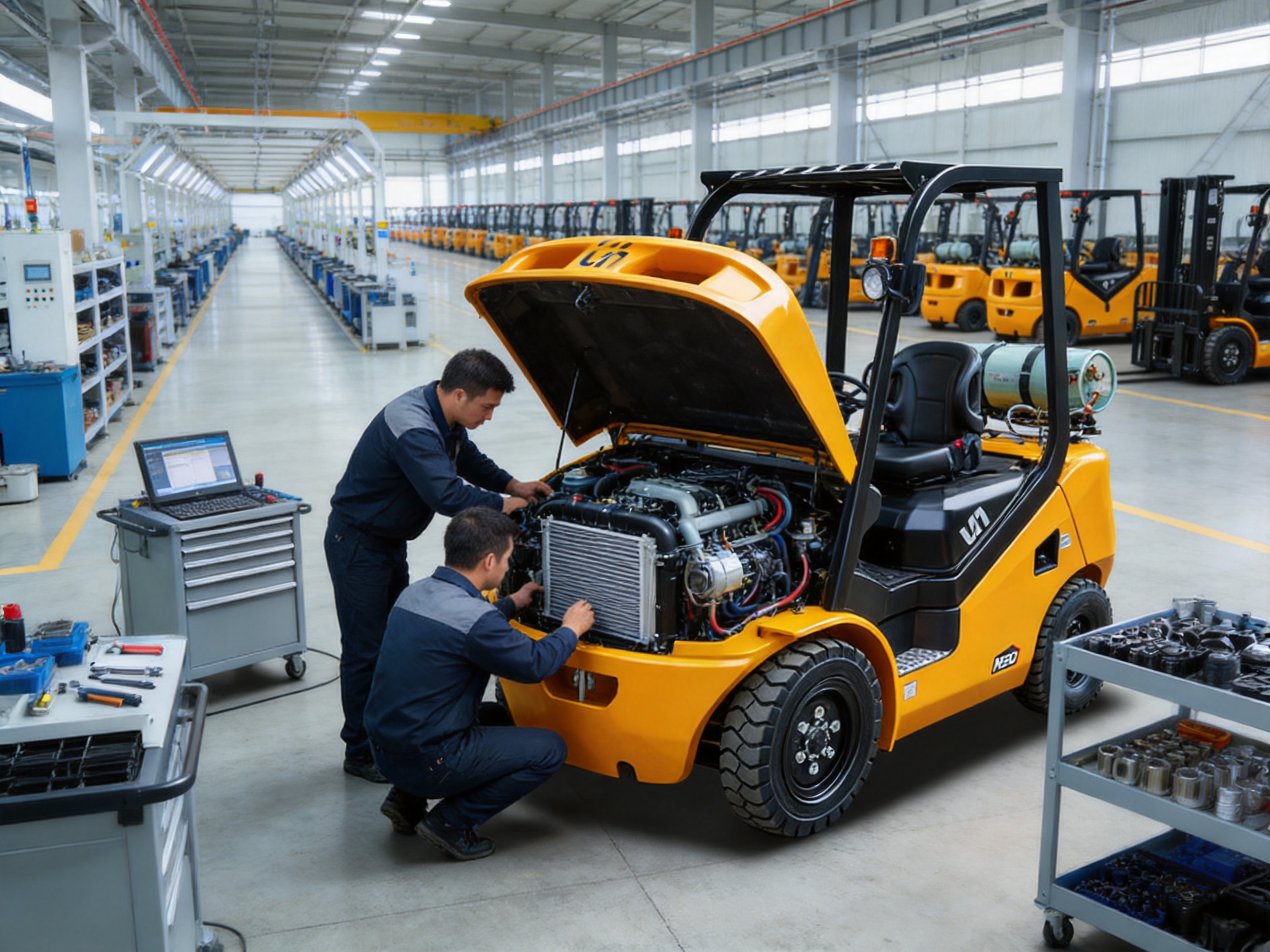
Maintenance convenience is a major advantage of the N Series. The engine hood can tilt up to 90 degrees, providing broad access for inspection, service, and component replacement. This simple but important feature reduces service time and improves technician efficiency. The transmission oil filter is also designed for convenient replacement, helping maintenance teams perform routine service with less disruption.
For fleet owners, ease of maintenance directly affects uptime. A forklift that is difficult to service may spend longer in the workshop for simple tasks. Poor access can also discourage timely inspection, which increases the risk of failure. By making the service points easier to reach, the N Series supports preventive maintenance and helps extend machine life.
Maintenance advantages also affect labor costs. In large fleets, even small time savings per service event can accumulate into meaningful reductions in annual maintenance hours. For smaller businesses, faster service means the forklift returns to work sooner. In both cases, accessible design improves ownership value.
Compared with competitors that may prioritize exterior styling over service practicality, this product emphasizes real industrial use. The design recognizes that forklifts are working machines. They must not only perform well when new; they must remain serviceable over years of operation. This is a practical advantage for customers who measure value by total lifecycle cost rather than purchase price alone.
Main Technical Specification Overview
The following table summarizes selected specifications for the 3.0T and 3.5T LPG and gasoline configurations. Specifications may vary according to market, optional equipment, mast type, and final configuration, so customers should confirm exact details before purchase.
Item |
Unit |
3.0T Model |
3.5T Model |
Rated Load Capacity |
kg |
3000 |
3500 |
Load Center |
mm |
500 |
500 |
Rated Lift Height |
mm |
3000 |
3000 |
Fork Size |
mm |
1070 x 125 x 45 |
1070 x 125 x 50 |
Mast Tilt Angle |
degree |
6 forward / 12 backward |
6 forward / 12 backward |
Overall Width |
mm |
1225 |
1225 |
Turning Radius |
mm |
2425 |
2500 |
Travel Speed Without Load |
km/h |
19 |
19 |
Maximum Gradeability With Full Load |
percent |
20 |
18 |
Total Weight |
kg |
4460 |
4775 |
Wheelbase |
mm |
1700 |
1700 |
Engine Model |
Configuration |
GK25 or equivalent market configuration |
GK25 or equivalent market configuration |
Competitive Advantages in Real Operations
The N Series 3.0T-3.5T LPG and Gasoline Forklift offers several advantages over competing products in the same capacity class. The first advantage is balanced performance. Some forklifts are strong but bulky. Others are compact but underpowered. This model combines 3000 kg to 3500 kg load capacity with practical width, turning radius, and aisle performance. That balance allows it to fit more workplaces without compromising lifting capability.
The second advantage is fuel flexibility. In markets where users require rapid refueling and long shifts, LPG and gasoline power can be more convenient than battery-dependent equipment. LPG also provides a cleaner combustion profile than many diesel applications, making it suitable for operations that move between indoor and outdoor spaces. This flexibility gives fleet managers more choices when planning energy supply, shift scheduling, and operating zones.
The third advantage is component reliability. The product uses a high-reliability power system, carefully selected hydraulic components, and robust cooling architecture. These features contribute to stable operation in demanding environments. Competitors may advertise similar load capacities, but long-term reliability depends on component quality and system integration. The N Series is designed as a complete industrial solution rather than a collection of isolated parts.
The fourth advantage is operator-centered design. A wide-vision mast, comfortable operating space, adjustable steering and seat, and optional suspended powertrain system all support safer and more efficient operation. In facilities where multiple drivers share the same forklift, adjustability and visibility are especially important. They make the truck easier to operate consistently across different users.
The fifth advantage is maintenance efficiency. The 90-degree opening engine hood and convenient oil filter replacement help reduce downtime. Many buyers underestimate service access when purchasing a forklift, but they recognize its importance after the machine enters daily use. The N Series turns maintenance practicality into an ownership advantage.
Applications Across Industries
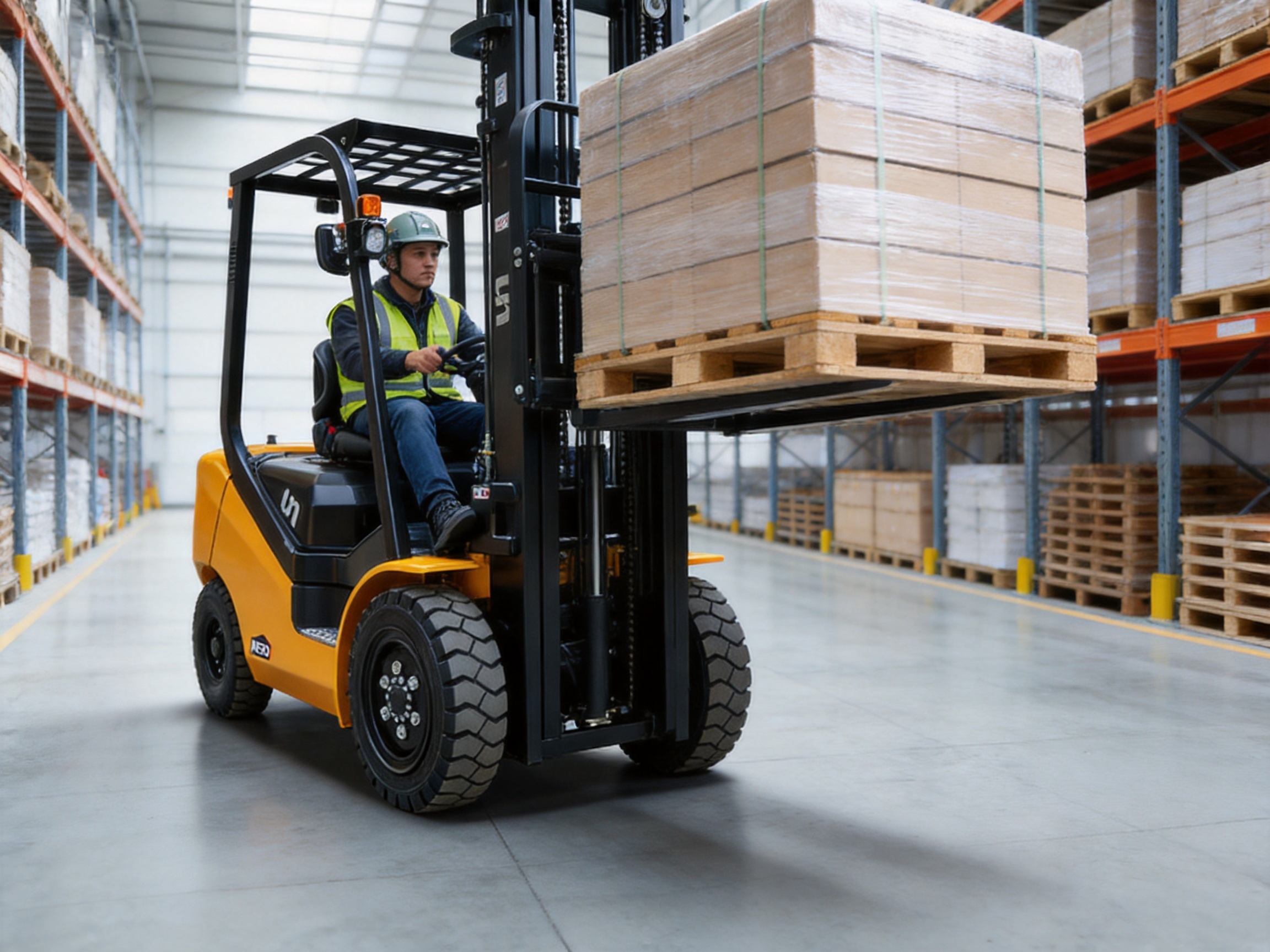
This forklift is suitable for a wide range of industries. In manufacturing plants, it can transport raw materials, semi-finished goods, tooling, and finished products between production areas and warehouses. Its stable power helps support frequent handling cycles, while its maneuverability allows it to work around production lines and storage zones.
In logistics and distribution centers, the truck can load and unload trailers, move palletized goods, and support staging operations. The 3.0T-3.5T capacity range is useful for goods that are heavier than standard light-duty pallets but do not require large heavy-duty equipment. The 3000 mm standard lift height is practical for many warehouse stacking tasks.
In building material and construction supply yards, the forklift can handle packaged cement, bricks, tiles, steel components, timber products, and other dense materials. The internal combustion power system and strong gradeability are useful where outdoor movement, ramps, and rougher surfaces are common. While it is not a rough terrain forklift, it is suitable for many prepared yard surfaces and mixed indoor-outdoor routes.
In beverage, food packaging, and consumer goods operations, the LPG option can provide cleaner operation than many diesel alternatives while still allowing fast refueling. This is useful where forklifts must maintain high utilization throughout the day. In export packing and container loading operations, the truck’s maneuverability and responsive transmission support repeated travel, turning, and stacking cycles.
In agricultural processing, paper products, plastics, metalworking, and wholesale distribution, the forklift can serve as a reliable all-purpose handling machine. Its combination of capacity, compact design, service accessibility, and operator comfort gives it broad relevance across different business sizes.
Manufacturing Strength Behind the Product
A forklift is only as reliable as the organization that designs and manufactures it. Zhejiang UN Forklift Co., Ltd. has built its reputation through long-term involvement in the material handling equipment industry. Established in 1978, the company integrates research and development, production, sales, and service. This integrated structure helps ensure that product feedback from customers and service teams can influence future engineering improvements.
The company occupies 53,400 square meters and has an annual production capacity of 15,000 units. Scale matters because forklift manufacturing requires controlled processes, repeatable assembly, quality inspection, supplier coordination, and final testing. A manufacturer with established production capacity can support stable delivery, consistent quality, and spare parts availability more effectively than a small workshop-style producer.
The company’s product range includes multiple forklift categories and specifications, covering electric forklifts, internal combustion forklifts, warehouse equipment, cushion tire forklifts, rough terrain equipment, and compact loaders. This broad range reflects deep engineering experience across different drive systems, chassis layouts, lifting structures, and market requirements. Such experience supports better product development because lessons learned from one category can improve another.
The company has participated in the formulation of electric forklift industry standards in China and holds national patents related to electric forklift technologies. Although the N Series discussed here is an LPG and gasoline forklift, this broader technical background demonstrates a culture of engineering development. A manufacturer active in standards and patents is generally more capable of improving product design, adapting to regulations, and responding to changing customer expectations.
Advanced Production and Quality Control
Modern forklift manufacturing requires more than welding steel and assembling components. It requires disciplined process control from material preparation to final inspection. For a product such as the N Series, manufacturing quality begins with structural parts, machining accuracy, frame alignment, mast fabrication, hydraulic cleanliness, powertrain installation, electrical system routing, and performance testing.
Advanced manufacturing processes help ensure dimensional consistency. The chassis and mast must be accurately produced because misalignment can affect lifting stability, tire wear, steering behavior, and long-term durability. Precision-engineered frames support better balance and reduce stress concentration. In high-use applications, this manufacturing accuracy becomes visible through smoother operation and longer service life.
Hydraulic system cleanliness is another important manufacturing factor. Contaminants in hydraulic lines can damage pumps, valves, and cylinders. A capable manufacturer uses controlled assembly practices and inspection procedures to reduce contamination risk. Reliable hydraulic performance in the field begins with careful handling during production.
Engine and transmission installation also requires process discipline. Mounting alignment, connection integrity, hose routing, cooling system assembly, and electrical connections all influence reliability. A forklift may appear simple from the outside, but it is a coordinated machine with mechanical, hydraulic, electrical, and ergonomic systems. The manufacturing process must verify that these systems work together before delivery.
Final inspection and testing are essential. A professional manufacturer checks lifting, lowering, steering, braking, transmission response, engine performance, hydraulic operation, safety functions, and overall appearance. Such testing helps identify issues before the forklift reaches the customer. For buyers, strong factory quality control means fewer early failures and a smoother start-up experience.
Global Market Experience and Service Network
The N Series is particularly popular in the Americas and Eastern European markets. These regions often demand practical, robust forklifts that can work in varied climates and operating environments. Market acceptance in these areas suggests that the product meets real-world expectations for durability, usability, and value.
Zhejiang UN Forklift Co., Ltd. has developed a worldwide sales and service network, with partners in Europe, South America, North America, Africa, and Asia. This network is important because forklifts are long-term assets. Customers need not only a machine, but also access to product support, parts, technical guidance, and after-sales assistance. A global network gives international buyers greater confidence when selecting equipment.
The company has also served as an OEM supplier for well-known domestic and overseas companies, including major machinery and industrial equipment groups. OEM cooperation requires consistent quality, production reliability, and the ability to meet partner requirements. This background strengthens confidence in the manufacturing discipline behind the N Series forklift.
For customers comparing suppliers, global experience can be a decisive factor. A manufacturer that understands international markets is more likely to design machines that meet varied emission expectations, usage habits, documentation requirements, and service needs. This reduces risk for importers, dealers, and end users.
Environmental and Efficiency Considerations
Global material handling is changing. Customers increasingly care about fuel efficiency, emissions, operating cost, and environmental responsibility. The N Series LPG and gasoline forklift fits into this transition by offering a cleaner alternative to many conventional diesel operations while preserving the productivity advantages of internal combustion power.
LPG forklifts are often selected for applications where operators need reduced smoke and lower particulate output compared with diesel. When used properly in suitable environments, LPG power can support cleaner working conditions. This is valuable in warehouses, semi-enclosed loading areas, and industries where exhaust control matters. Gasoline configurations provide another option for markets where gasoline service infrastructure is more convenient.
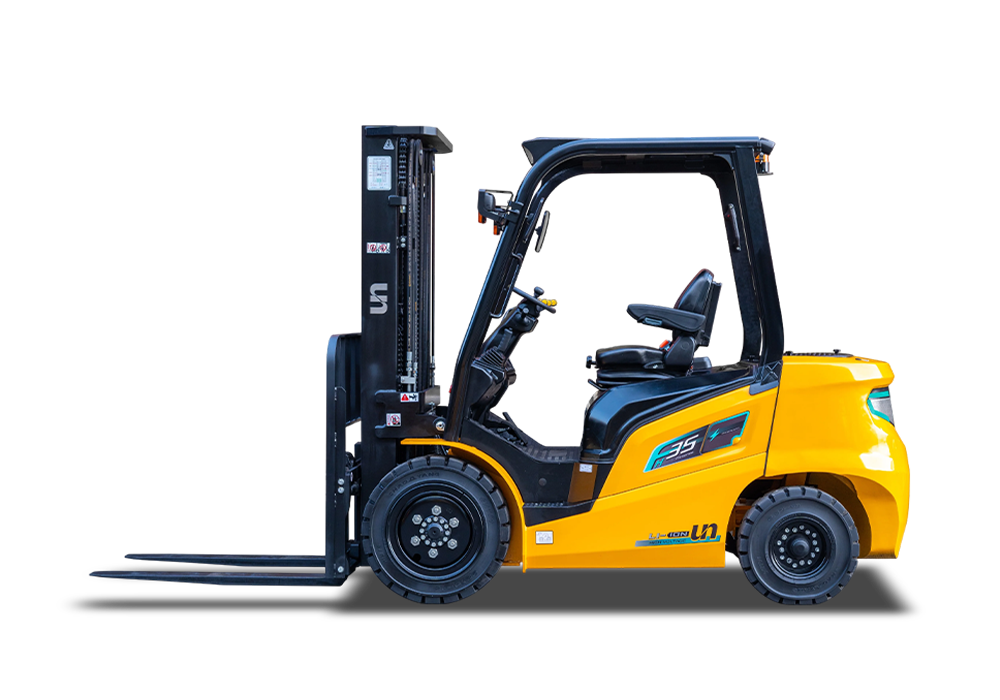
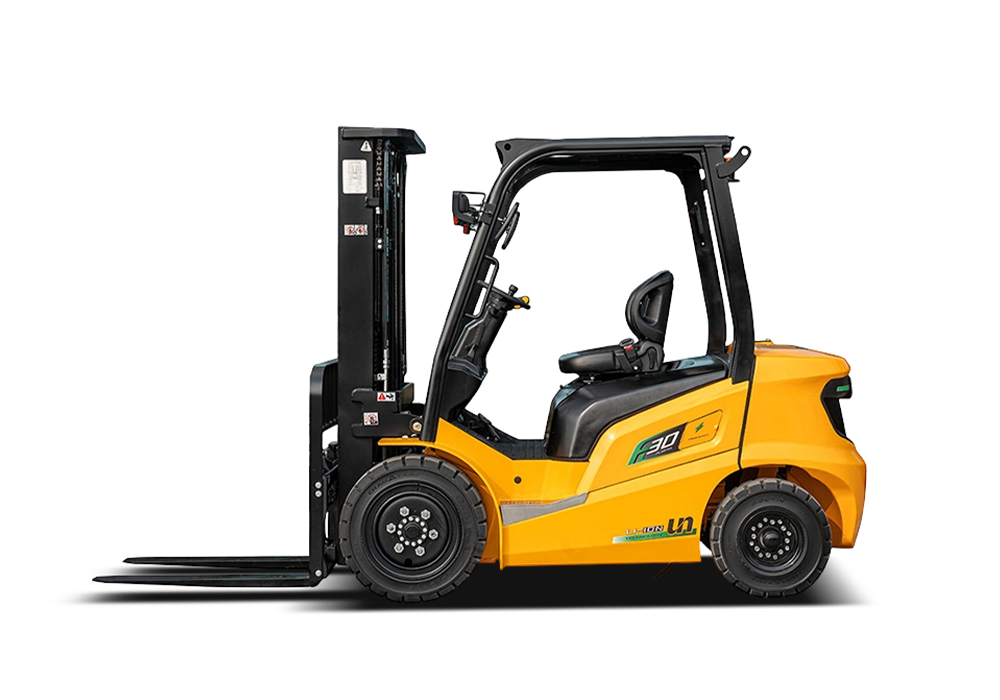
The company’s broader development direction also includes new energy forklifts, such as lithium-ion battery models and diesel-to-lithium conversion concepts. This shows that the manufacturer is not limited to traditional power systems. Instead, it is actively responding to market demand for energy-saving and lower-emission solutions. For buyers, this indicates that the company has a long-term product strategy and can support different energy choices as regulations and operating needs evolve.
Efficiency is not only about fuel. It also includes handling speed, maintenance time, operator fatigue, spare parts availability, and uptime. The N Series improves efficiency through fast travel, stable lifting, easy maintenance, and comfortable operation. These factors combine to reduce wasted time and improve the cost per pallet moved.
How the Forklift Supports Lower Total Cost of Ownership
Total cost of ownership includes purchase price, fuel cost, maintenance, downtime, repair parts, operator productivity, residual value, and service support. A forklift that costs less at purchase may become expensive if it breaks down frequently, consumes excessive fuel, or is difficult to maintain. The N Series is designed to provide value over the full ownership cycle.
First, reliable components reduce unexpected downtime. Engine, transmission, hydraulic, cooling, and structural systems are selected and integrated for industrial use. Second, maintenance access lowers service labor and encourages preventive care. Third, operator comfort and visibility reduce fatigue and handling errors, protecting goods and infrastructure. Fourth, strong manufacturing support and global service channels improve parts and technical availability.
Fuel flexibility also contributes to ownership value. Users can select LPG or gasoline configurations according to local fuel cost and operational requirements. Rapid refueling supports multi-shift use and reduces the need for charging downtime. In high-utilization environments, this can be a significant advantage over equipment that requires long energy replenishment periods.
Durability further improves long-term value. A stable chassis, strong mast, high-strength overhead guard, and well-cooled powertrain contribute to longer service life. When a forklift remains dependable over years of use, the effective cost per operating hour becomes more attractive.
Comparison With Electric and Diesel Alternatives
Electric forklifts are excellent in many indoor applications. They are quiet, locally emission-free, and increasingly popular as battery technology improves. However, they require charging infrastructure, battery management, and sometimes spare batteries or charging schedules for long shifts. For customers without suitable electrical infrastructure, or for applications requiring continuous refueling flexibility, LPG and gasoline forklifts can be more practical.
Diesel forklifts are strong outdoor performers and are widely used in heavy industrial environments. However, diesel exhaust can be a concern in indoor or semi-enclosed spaces. Emission regulations and workplace air quality expectations are becoming stricter in many markets. LPG and gasoline forklifts offer a middle path, delivering internal combustion performance with cleaner operating characteristics than many diesel alternatives.
The N Series is therefore well suited for mixed-use facilities. It can operate in yards, loading docks, and warehouses where electric-only or diesel-only solutions may not be ideal. This versatility reduces the need for separate fleets and simplifies equipment planning. A company may use one model type across multiple departments, improving operator familiarity and maintenance consistency.
Selection Guidance for Buyers
When selecting between the 3.0T and 3.5T versions, buyers should consider average load weight, maximum load weight, load center, attachment use, aisle width, floor condition, and operating hours. The rated load capacity assumes a 500 mm load center. If loads are longer, irregular, or used with attachments such as clamps or side shifters, capacity may be reduced. Buyers should consult technical support to confirm the correct configuration.
The 3.0T model may be ideal for users who need strong capacity with slightly better maneuverability and gradeability. The 3.5T model is suitable where heavier loads are common and the additional capacity margin is important. Both models share many core characteristics, including overall width, standard lift height, and power system philosophy.
Mast selection is also important. The listed standard lift height is 3000 mm, but different mast options may be required for higher stacking, container entry, or restricted overhead clearance. Fork length and attachment requirements should also be considered. The forklift can be configured to meet different handling needs, but correct selection at the beginning improves safety and efficiency.
Fuel choice should match the work environment. LPG may be preferred for cleaner mixed indoor-outdoor operation, while gasoline may be selected where fuel availability or operating habits favor it. Ventilation, local regulations, and workplace safety rules must always be followed.
Q&A Section
What type of work is this 3.0T-3.5T LPG and gasoline forklift best suited for?
It is best suited for frequent material handling, medium-duty loading, warehouse movement, truck loading and unloading, production logistics, yard transfer, and pallet stacking. It is particularly effective in mixed indoor and outdoor environments where rapid refueling, stable power, and reliable lifting capacity are required.
Why choose LPG or gasoline instead of diesel?
LPG and gasoline power can provide strong internal combustion performance while offering cleaner operation than many diesel applications, especially in terms of smoke and particulate output. LPG is often chosen for semi-indoor or mixed-use facilities where diesel emissions may be less desirable. Gasoline may be useful in markets where gasoline supply and service support are convenient.
How does this forklift compare with electric forklifts?
Electric forklifts are excellent for clean indoor work, but they require charging infrastructure and battery planning. This LPG and gasoline forklift offers quick refueling and long shift capability, making it practical for operations that cannot afford charging downtime or that move frequently between indoor and outdoor areas.
What are the main safety advantages?
The forklift includes safety-focused features such as an OPS system, seat switch, wide-vision mast, and high-strength overhead guard. These features help improve operator presence control, visibility, and protection during daily operation.
What makes the forklift comfortable for operators?
The operator area provides more foot space, adjustable steering, an adjustable seat, and an ergonomic layout. An optional suspended powertrain system can further improve comfort by reducing vibration in selected applications.
Is maintenance convenient?
Yes. The engine hood can tilt up to 90 degrees, making service access easier. The transmission oil filter is also designed for convenient replacement. These features help reduce maintenance time and support preventive service.
What are the key specifications of the 3.0T and 3.5T models?
The rated load capacities are 3000 kg and 3500 kg at a 500 mm load center. Standard lift height is commonly 3000 mm. Overall width is about 1225 mm. Travel speed without load is about 19 km/h. The total weight is approximately 4460 kg for the 3.0T model and 4775 kg for the 3.5T model in the listed configuration.
Can the forklift work outdoors?
Yes. It is suitable for many outdoor and mixed indoor-outdoor applications, especially on prepared yard surfaces, loading areas, and industrial roads. However, for extremely uneven ground or off-road terrain, a dedicated rough terrain forklift may be more appropriate.
Why is manufacturer experience important?
Manufacturer experience affects design quality, production consistency, parts availability, service support, and long-term reliability. Zhejiang UN Forklift Co., Ltd. has decades of experience, broad production capacity, global partners, and a wide product portfolio, all of which support dependable equipment supply.
Conclusion
The N Series 3.0T-3.5T LPG and Gasoline Forklift is a strong choice for businesses that need reliable capacity, fuel flexibility, indoor-outdoor versatility, and long-term operating value. It combines a high-powered engine, smooth hydraulic transmission, precise hydraulic control, wide-vision mast, ergonomic operator space, durable chassis, strong cooling system, and easy maintenance access. These features are not isolated selling points; they work together to improve daily productivity and reduce ownership stress.
Its advantages over many competitors are clear. It offers a practical balance between power and maneuverability, supports cleaner LPG operation, provides operator-centered ergonomics, and is backed by a manufacturer with long-standing industrial experience. For customers in logistics, manufacturing, building materials, warehousing, export handling, and general industrial operations, the forklift provides a dependable platform for efficient material movement.
Behind the product is Zhejiang UN Forklift Co., Ltd., a professional manufacturer with integrated research, production, sales, and service capabilities. The company’s production scale, global network, technical background, and commitment to energy saving, environmental protection, efficiency, and safety strengthen the value of the forklift itself. A good forklift is not only a machine; it is the result of engineering, manufacturing discipline, service readiness, and market understanding.
For buyers seeking a 3.0T or 3.5T forklift that can perform consistently across demanding work environments, this LPG and gasoline model deserves serious consideration. It is built for companies that want practical performance today and dependable value over the full service life of the equipment.
References
Industrial Truck Association. General Principles of Powered Industrial Truck Selection and Operation.
International Organization for Standardization. Industrial Trucks Safety Requirements and Verification Standards.
Material Handling Industry. Guidelines for Forklift Productivity, Ergonomics, and Fleet Planning.
Occupational Safety and Health Administration. Powered Industrial Trucks Safety Guidance.
Internal Combustion Forklift Engineering Handbook. Powertrain, Hydraulic, and Chassis Design Principles.
Forklift Fleet Management Review. Total Cost of Ownership and Maintenance Planning for Industrial Lift Trucks.
Product: N Series 3.0T-3.5T LPG&Gasoline Forklift
For exclusive deals and latest offers, sign up by entering your email address below.
Stay In Touch
ADDRESS : NO.1 ROAD ONE, XINDENG NEW DISTRICT, FUYANG, HANGZHOU, ZHEJIANG, CHINA 311404.
PHONE : +86-571-8688 8355 (AMERICA)
PHONE : +86-571-8886 9363 (EUROPE)
PHONE : +86-571-8688 8377 (ASIA, AFRICA, OCEANIA)
EMAIL : [email protected]
EMAIL : [email protected](PARTS INQUIRY)

