


 中文简体
中文简体 Français
 русский
 Español
 عربى
عربى Deutsch



Heavy-Duty Lithium Battery Forklift for High-Capacity Material Handling
Admin 2026-06-17The transition from fuel-powered industrial vehicles to high-performance electric material handling equipment is no longer limited to light warehouse applications. Heavy-duty operations increasingly require electric forklifts that can replace internal combustion models without sacrificing strength, uptime, operator confidence, or outdoor capability. The NL Series 5.0T–7.0T Li-ion Battery Forklift is designed for exactly that purpose: it brings lithium battery efficiency into a rugged forklift platform built for demanding loads, long shifts, and mixed indoor-outdoor use.
This article examines the product’s engineering concept, its operational advantages, its competitive strengths, its manufacturing background, and its suitability for modern logistics, industrial production, storage yards, ports, building-material distribution, and other high-capacity handling environments. Although the product is electric, it is not simply a warehouse truck scaled upward. It is built around a proven internal-combustion-style chassis architecture, then integrated with advanced lithium battery power, electronic protection, and low-maintenance systems.
For companies seeking to reduce emissions and operating costs while preserving the productivity of large-tonnage forklifts, this product offers a practical bridge between traditional power and new-energy performance. It is especially relevant for operations where diesel forklifts have historically dominated because of payload, stability, and durability requirements.
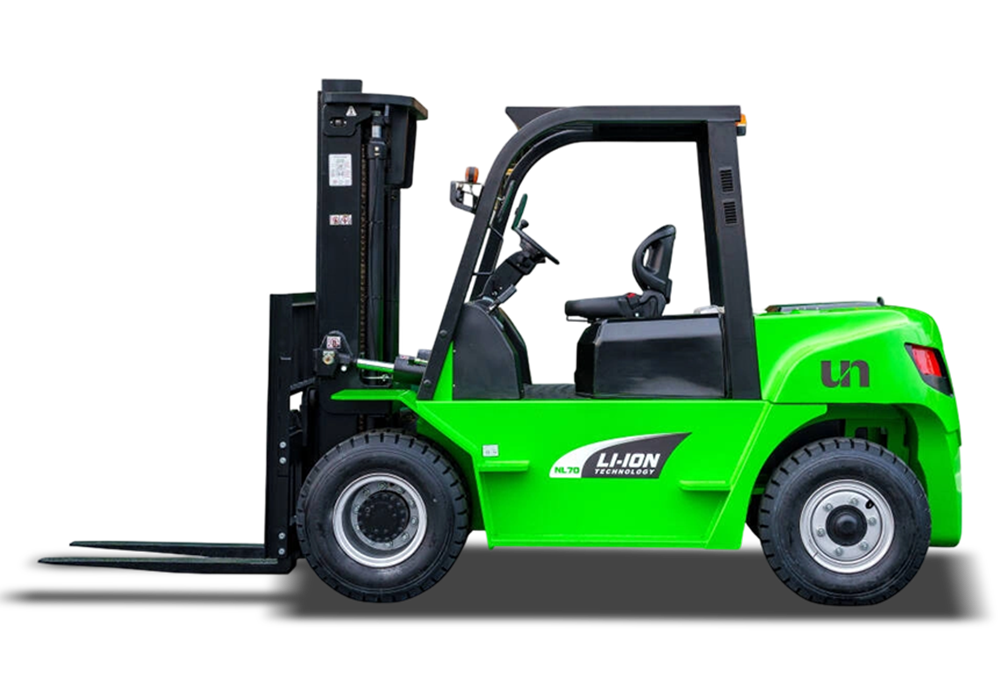
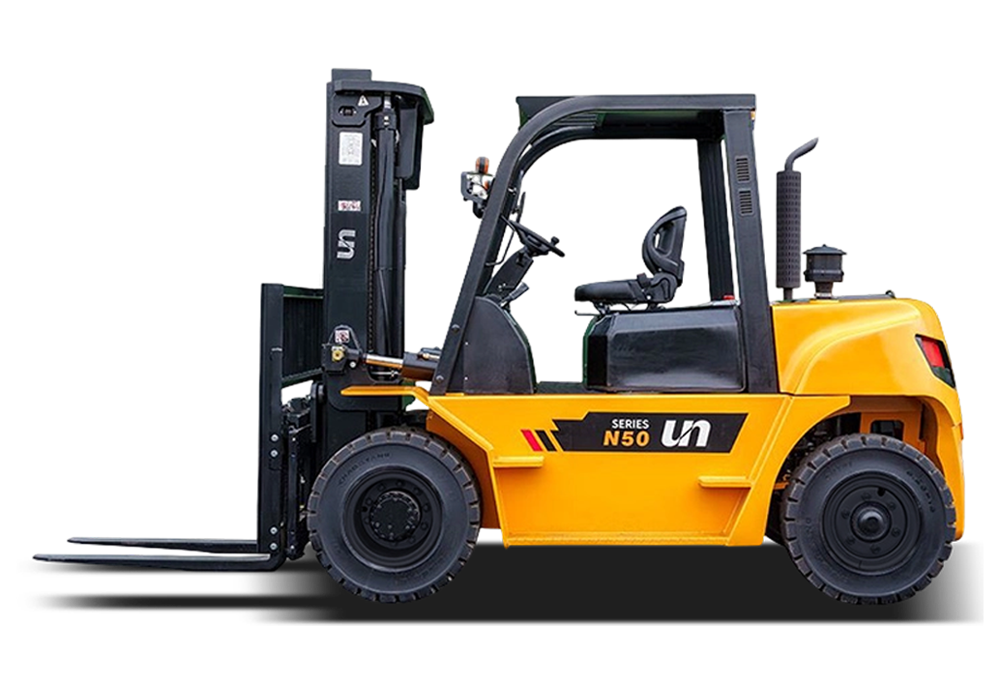
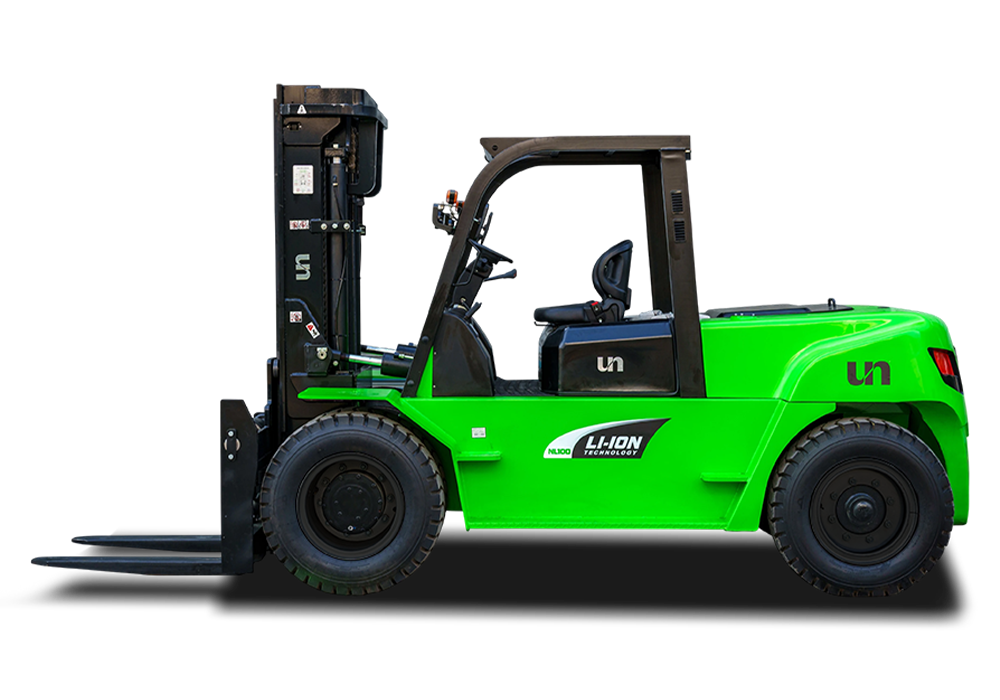
NL Series 5.0T-7.0T Li-ion Battery Forklift
Product Positioning: A New-Energy Alternative to Heavy Internal Combustion Forklifts
The NL Series lithium battery forklift platform is positioned as a heavy-duty new-energy solution for users who need the lifting strength of a large-tonnage forklift but want the cleaner operating profile of electric power. The available specification data includes 5,000 kg, 7,000 kg, and 10,000 kg rated load capacity configurations, making the platform suitable for substantial industrial workloads.
In many facilities, the decision to electrify is not simple. Smaller electric forklifts are widely accepted in warehouses, but high-capacity applications often involve uneven floors, outdoor loading, heavy attachments, long travel distances, and multi-shift duty cycles. Conventional electric forklifts may struggle to match the durability or stability expected from internal combustion machines. The NL Series addresses this concern by combining an internal-combustion-style structural layout with lithium battery technology.
This design philosophy gives the forklift a familiar heavy-duty foundation. The frame, mast-related components, drive axle compatibility, and general architecture reflect decades of proven forklift construction. At the same time, the power system provides zero tailpipe emissions, low noise, reduced vibration, and simpler maintenance. This combination is one of the product’s main competitive advantages: it does not ask heavy-duty users to choose between power and sustainability.
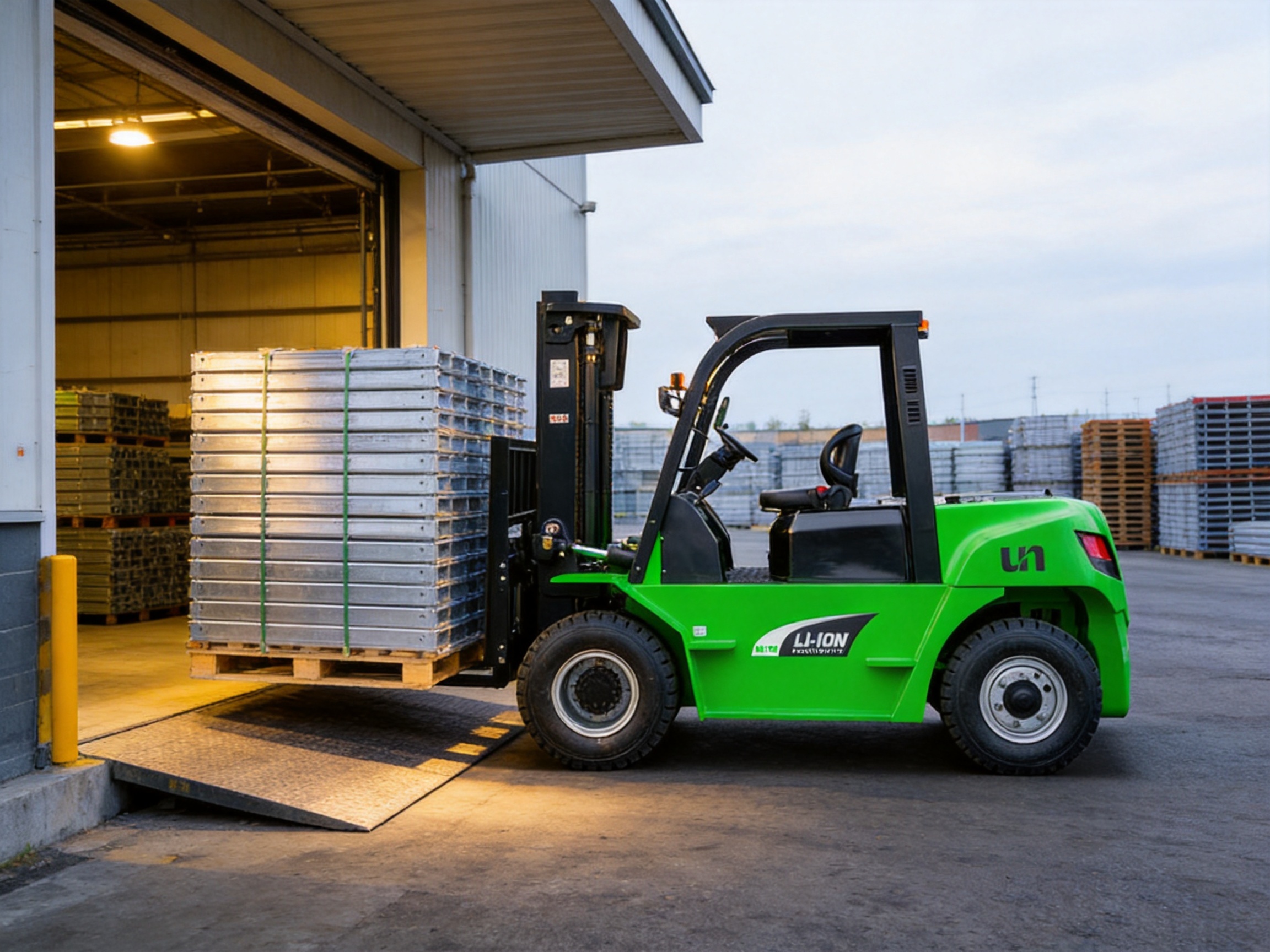
The forklift is also developed for all-weather operation. Its robust waterproof and dustproof performance helps it work across diverse conditions, which is essential for industries where trucks move between production halls, loading docks, covered warehouses, and outdoor yards. This broad use capability differentiates the machine from many electric forklifts that are designed primarily for clean, dry indoor spaces.
Core Product Advantages
The NL Series 5.0T–7.0T Li-ion Battery Forklift offers a set of advantages that directly address the main concerns of heavy-duty forklift buyers: performance, durability, operating cost, safety, maintenance, and environmental compliance. Each advantage is important on its own, but the product’s strongest value comes from the way these advantages work together in daily operation.
Heavy-Duty Chassis Architecture
One of the most important advantages is the adoption of a forklift architecture derived from internal combustion models with long market-proven reliability. Heavy-duty forklifts face substantial stress: high axle loads, repeated lifting cycles, mast movement, braking forces, turning loads, uneven ground impacts, and attachment-related strain. A durable chassis is therefore more than a structural feature; it is the foundation of safe and predictable productivity.
The use of an internal-combustion-style frame helps the forklift deliver the strong feel that heavy-duty operators expect. Unlike some electric forklifts that focus mainly on compact warehouse maneuverability, this product emphasizes strength, rigidity, and endurance. The result is a forklift suitable for customers who are replacing diesel or LPG equipment and do not want to compromise on frame durability.
Lithium Battery Power for Modern Operations
The forklift uses lithium battery technology to provide efficient electric performance under demanding conditions. Lithium batteries offer several operational advantages compared with traditional lead-acid batteries. They support opportunity charging, have a long service life, require no routine watering, and deliver stable power output. The listed battery configurations include 76.8V/560Ah, 76.8V/700Ah, and 76.8V/840Ah options for different capacities in the product family.
The product information highlights a lithium battery life of 4,000 charge-discharge cycles and a 5-year warranty, offering confidence for long-term fleet planning. A fast charging time of about two hours also supports multi-shift work environments. Instead of removing and replacing batteries during shifts, users can recharge flexibly during breaks, shift changes, or downtime.
This capability is especially important for heavy-duty fleets. Fuel-powered forklifts traditionally have an uptime advantage because refueling is quick. Fast-charging lithium technology narrows that gap while reducing fuel expenses and emissions. For operations with planned charging infrastructure, the forklift can serve as a practical replacement for internal combustion machines.
Zero Emissions and Cleaner Working Conditions
Electric lithium power eliminates tailpipe emissions at the point of use. This is a significant advantage for indoor or semi-indoor operations, food and beverage distribution, building-material storage, paper and packaging plants, metal processing facilities, and logistics centers where air quality matters. Even when used outdoors, zero local emissions support corporate sustainability goals and can help companies respond to stricter environmental expectations.
Compared with diesel forklifts, lithium battery forklifts also produce lower noise and less vibration. This improves the working environment for operators and nearby employees. Lower vibration can also contribute to reduced fatigue during long shifts, particularly when operators handle repetitive loading, unloading, and stacking tasks.
Lower Total Ownership Cost
Total ownership cost is a central factor in forklift selection. Purchase price alone does not determine real value. Fuel, maintenance labor, service intervals, parts replacement, downtime, ventilation requirements, and battery handling all influence lifecycle cost. The NL Series lithium forklift is designed to reduce several of these long-term expenses.
Because it uses lithium battery power, it eliminates routine fuel costs associated with diesel or LPG forklifts. It also removes maintenance tasks such as engine oil changes, oil filter replacement, fuel filter service, exhaust system inspection, and many combustion-engine-related repairs. Lithium batteries are described as maintenance-free, reducing service workload and simplifying fleet management.
At the same time, the product retains compatibility with critical components such as drive axles and masts from traditional internal combustion forklifts. This interchangeability helps control repair costs and reduces service complexity. For users already familiar with heavy-duty IC forklifts, this parts strategy makes the transition to electric power easier and more economical.
Competitive Advantages Over Conventional Alternatives
The NL Series competes not only with other lithium forklifts but also with diesel, LPG, lead-acid electric, and standard electric heavy-duty models. Its strongest competitive position comes from combining the benefits of several forklift categories while reducing their disadvantages.
Compared with Diesel and LPG Forklifts
Diesel and LPG forklifts are widely used in heavy-duty applications because they offer strong torque, robust frames, and fast refueling. However, they generate emissions, require regular engine maintenance, produce noise and vibration, and depend on ongoing fuel purchases. In facilities with indoor use, emissions can also require ventilation management.
The NL Series provides a cleaner alternative while preserving a heavy-duty structural character. Its zero-emission operation supports indoor and outdoor flexibility. Its lithium power reduces maintenance requirements and avoids fuel expenses. Its quick charging helps support multi-shift operation. For customers with sustainability targets, this makes the forklift a practical replacement for combustion models rather than a limited-use electric substitute.
Compared with Lead-Acid Electric Forklifts
Lead-acid forklifts are common in electric material handling, but they can be less convenient in high-intensity operations. Lead-acid batteries often require longer charging times, watering, cooling periods, battery rooms, and additional handling equipment for battery replacement. Performance may decline as charge levels fall, and maintenance discipline is essential.
Lithium battery technology changes this operating model. The NL Series supports flexible recharging and fast charging, allowing users to keep the truck working with less battery-related interruption. Maintenance-free battery design reduces labor and avoids acid handling. The long cycle life also supports predictable long-term fleet planning.
Compared with Typical Lithium Forklifts
Not all lithium forklifts are built for the same type of work. Many lithium electric forklifts are designed around warehouse use, prioritizing compactness, smooth floors, and lower-capacity lifting. For heavy-duty users, a compact electric platform may not provide the stability, ground clearance, or structural confidence needed in outdoor or mixed environments.
The NL Series differentiates itself by drawing from a traditional internal combustion forklift architecture. It provides strong frame durability, higher ground clearance, outdoor suitability, and familiar component layouts. The product information also notes improved leg space and comfort compared with typical lithium forklifts, which is important for operators spending long hours in the cab area.
In short, the product is not merely “electric.” It is engineered as a heavy-duty forklift first, then powered by lithium technology. This order of priorities matters in demanding material handling applications.
Compared with Low-Cost Electric Alternatives
Some electric forklifts compete mainly on purchase price. While low initial cost may appear attractive, heavy-duty operations require uptime, stable performance, safety systems, serviceability, and long-term reliability. A truck that experiences frequent downtime or cannot handle outdoor conditions can become expensive despite a lower purchase price.
The NL Series is positioned around lifecycle value. Its durable chassis, lithium battery longevity, BMS protection, CAN bus monitoring, quick access for maintenance, and component interchangeability all support reduced downtime and lower operating risk. For industrial users, this is often more valuable than a small difference in upfront cost.
Key Technical Highlights
The product’s specifications show a forklift designed for serious work. The 5,000 kg and 7,000 kg models are the primary focus of the title, while the broader technical table also shows a 10,000 kg model in the same family. This indicates a platform approach that can serve a range of heavy-duty load requirements.
| Specification Item | 5.0T Model | 7.0T Model | Operational Meaning |
| Rated Load Capacity | 5,000 kg | 7,000 kg | Suitable for heavy pallets, metal materials, construction products, machinery parts, and industrial loads. |
| Load Centre | 600 mm | 600 mm | Designed for stable handling of large industrial loads. |
| Rated Lift Height | 3,000 mm | 3,000 mm | Supports common loading, unloading, stacking, and production transfer tasks. |
| Travel Speed Without Load | 14/15 km/h | 12/13 km/h | Provides practical travel efficiency in yard and warehouse movement. |
| Lifting Speed at Full Load | 350/400 mm/sec | 300/350 mm/sec | Maintains productivity during repetitive loading cycles. |
| Turning Radius | 3,280 mm | 3,360 mm | Supports maneuvering in industrial aisles and loading areas. |
| Total Weight | 8,260 kg | 9,760 kg | Provides counterweight mass and stability for heavy-duty operation. |
| Battery | 76.8V/560Ah | 76.8V/700Ah | Offers lithium energy storage matched to load class and duty cycle. |
| Drive Motor | 25 kW | 25 kW | Provides electric traction power for industrial travel requirements. |
| Lift Motor | 21 kW x 2 | 21 kW x 2 | Supports heavy lifting performance and hydraulic productivity. |
The values above demonstrate that the forklift is designed for high-capacity material movement, not light-duty work. The combination of strong lifting motors, substantial vehicle weight, large tires, and heavy-duty dimensions shows the practical engineering direction of the product.
Performance in Real-World Applications
A heavy-duty forklift must be evaluated according to real working conditions, not only specification sheets. The NL Series is suited for industrial sites where loads are heavy, operating hours are long, and movement patterns vary throughout the day.
Manufacturing Plants
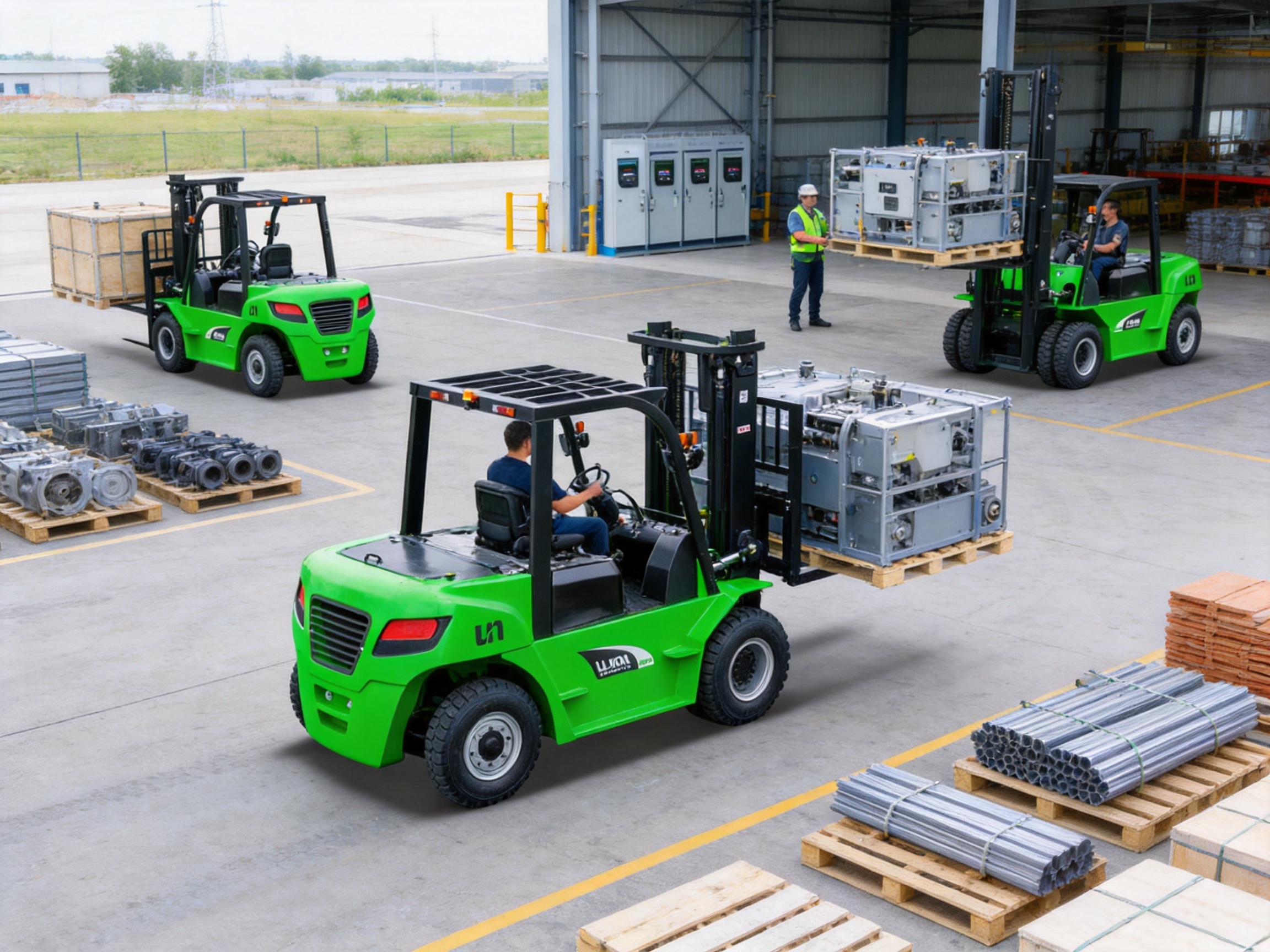
In manufacturing plants, forklifts often move raw materials, semi-finished parts, dies, molds, heavy packaging, and finished products. The working environment may include indoor production halls, outdoor storage zones, and loading docks. Electric forklifts used in such environments must combine clean operation with structural strength.
The NL Series supports this type of mixed operation. Zero emissions are beneficial inside production buildings, while the durable chassis and all-weather capability help the truck remain useful outdoors. Fast charging also supports continuous production schedules, where forklift downtime can disrupt material flow.
Building Materials and Construction Supply
Building-material yards handle cement products, blocks, bricks, steel, timber, pipes, stone, and large packaged goods. These loads are often heavy and may be stored outdoors. Ground conditions may be less controlled than in a warehouse. A forklift in this sector must be stable, strong, and durable.
The product’s internal-combustion-style architecture gives it a competitive advantage in these environments. It has the heavy-duty character users expect from diesel machines, but its lithium battery power reduces fuel cost and local emissions. For companies that want cleaner equipment without giving up yard capability, this is an important benefit.
Logistics and Distribution Centers
Large distribution centers increasingly need low-emission equipment, especially when forklifts operate around docks, trailers, storage aisles, and staging areas. Heavy-duty electric forklifts are valuable when goods are dense or oversized, such as appliances, machinery, paper rolls, beverage products, or industrial packaging.
The NL Series can support these operations by offering strong lifting capacity, clean indoor performance, and quick recharge capability. Its lower noise level also helps create a more comfortable environment in busy logistics facilities.
Metal, Machinery, and Industrial Goods Handling
Metal processing, machinery manufacturing, and industrial component handling often involve concentrated loads that demand stability and frame strength. Forklift operators may transport steel plates, coils, machine parts, tooling, and large crates. These environments are tough on equipment.
The product’s robust chassis, strong lift system, and heavy-duty configuration make it suitable for these demanding tasks. Meanwhile, reduced maintenance requirements can improve fleet availability, which is vital in production environments where material flow must remain consistent.
Safety and Control Systems
Safety is central to heavy-duty forklift operation. Larger loads increase the importance of stability, braking behavior, steering response, and system monitoring. The NL Series includes several design elements that support safe and predictable use.
The optimized hydraulic station helps maintain steering performance and stability during braking. This is particularly important when handling heavy loads because sudden changes in movement can affect operator confidence and load control. Stable hydraulic performance contributes to smoother operation in tight areas, on ramps, or during dock work.
The product also uses CAN bus and BMS protection. CAN bus communication allows key systems to exchange operating data, improving monitoring and control. The battery management system protects the lithium battery by monitoring operating conditions and helping prevent abnormal use. Together, these systems support reliability and reduce the risk of battery-related issues.
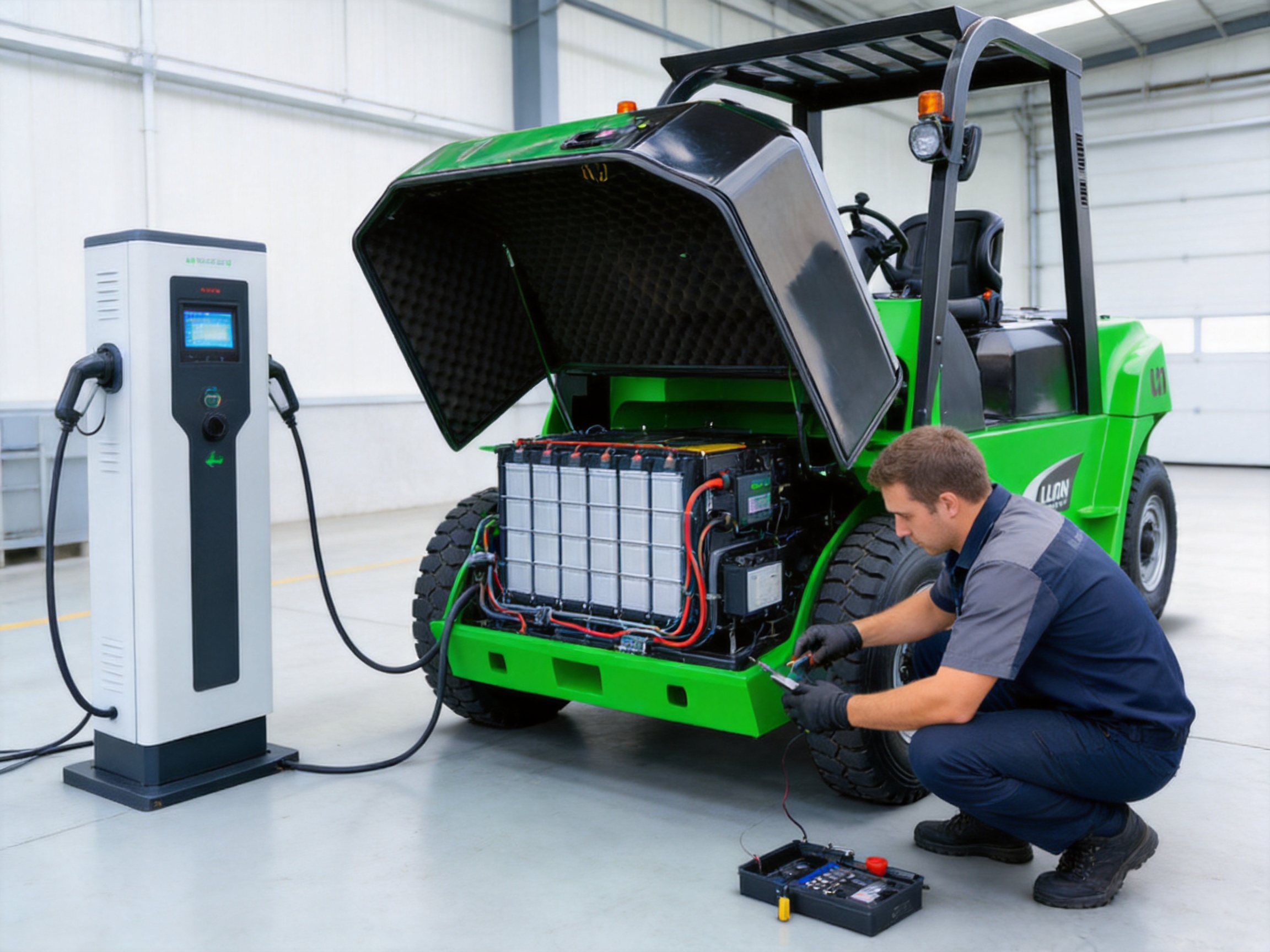
Maintenance access is also part of safety. A hood with an increased opening angle allows technicians to inspect and service key areas more easily. When maintenance is simpler, inspections are more likely to be performed correctly and on time. This supports safer operation over the forklift’s service life.
Operator Comfort and Ergonomics
Forklift productivity depends not only on mechanical performance but also on the operator’s ability to work comfortably and accurately. Heavy-duty forklift operators may spend many hours seated, turning, lifting, reversing, and maneuvering in active industrial environments. Fatigue can reduce efficiency and increase the risk of mistakes.
The NL Series is designed with improved comfort and ergonomics. The product information highlights superior stability, a low center of gravity, a smooth ride during turning operations, and expanded leg space. These details are important in real work. A stable truck helps operators feel more confident when transporting heavy loads. More leg space improves comfort for different body types and reduces strain during long shifts.
Compared with many typical lithium forklifts, which may use compact layouts, this product benefits from a larger heavy-duty architecture. The result is a more spacious and familiar operating environment. For companies that prioritize both productivity and workforce comfort, this is a meaningful advantage.
Maintenance Strategy and Serviceability
Maintenance is one of the strongest reasons to consider lithium battery forklifts, especially in fleets currently using internal combustion equipment. The NL Series reduces several routine maintenance demands while keeping service access practical and parts strategy familiar.
The lithium battery is maintenance-free, eliminating tasks associated with lead-acid batteries such as watering, acid checks, and equalization routines. It also removes combustion-engine maintenance items such as oil, filters, spark components, fuel system parts, and exhaust system service. This reduces both direct service cost and downtime.
The forklift’s design also allows critical components such as the drive axle and mast to be interchangeable with traditional IC forklift parts. This provides a major practical benefit. Service teams familiar with IC forklifts can adapt more easily. Spare parts planning becomes simpler. Repairs can be quicker and more economical because the product does not depend entirely on unfamiliar specialty components.
Easy access through the wider-opening hood further improves serviceability. In daily fleet management, small maintenance conveniences accumulate into significant savings. Technicians can inspect components more quickly, diagnose problems more efficiently, and return the truck to service sooner.
Battery Life, Charging, and Multi-Shift Operation
For heavy-duty forklift users, battery performance is often the deciding factor. A machine may be powerful and clean, but if it cannot support the required shift pattern, it will not replace internal combustion equipment effectively. The NL Series addresses this concern through long battery cycle life and quick charging.
The stated lithium battery endurance of 4,000 charge-discharge cycles provides a strong foundation for long-term use. A 5-year warranty adds assurance for customers evaluating total cost of ownership. Because lithium batteries support flexible charging, operators can recharge during breaks instead of waiting for a full end-of-shift charging cycle.
The approximately two-hour charging time is particularly valuable in multi-shift environments. In many operations, a forklift can be charged during scheduled downtime, lunch breaks, shift changes, or production pauses. With proper charging infrastructure and fleet planning, users can reduce the number of trucks needed to perform the same amount of work.
Compared with lead-acid battery systems, lithium charging also avoids battery changing rooms, spare battery handling, acid exposure, and long cooling periods. This simplifies facility design and improves daily convenience.
Environmental Value and Corporate Sustainability
Environmental performance is becoming an important purchasing criterion for industrial equipment. Companies are under pressure to reduce carbon emissions, improve workplace air quality, and demonstrate responsible operations. Forklifts are an important part of this transition because they operate daily and often run for many hours.
The NL Series supports sustainability by using clean lithium battery power. It produces no tailpipe emissions during operation, reduces noise, and lowers vibration. These benefits improve both external environmental performance and internal working conditions.
For indoor applications, the air-quality advantage is immediate. Operators and nearby workers are not exposed to diesel exhaust or LPG combustion gases from the forklift. For outdoor operations, the product helps companies reduce reliance on fossil fuel handling equipment. When charged with increasingly cleaner electricity sources, the long-term environmental benefit becomes even greater.
The forklift also contributes to sustainability through lower maintenance material consumption. Fewer oil changes, filters, and engine-service materials mean less waste over the machine’s life. This supports a broader approach to responsible fleet management.
Manufacturing Strength Behind the Product
A heavy-duty lithium forklift is only as reliable as the manufacturer’s engineering and production capability. The company behind this product is a professional material handling equipment manufacturer integrating research and development, production, sales, and service. Founded in 1978, it has decades of experience in forklift technology and industrial vehicle manufacturing.
The manufacturing site covers 53,400 square meters and has an annual production capacity of 15,000 units. This scale supports stable production, consistent supply, and the ability to serve different customer requirements. It also reflects a mature manufacturing base rather than a short-term assembly operation.
The company offers a broad range of forklift products, including multiple varieties, series, and specifications. This breadth is important because it means the product is developed within a larger engineering ecosystem. Experience gained from internal combustion forklifts, electric forklifts, warehouse equipment, and specialized trucks can be applied to new-energy models such as the NL Series.
The company has participated in the formulation of electric forklift industry standards in China and holds national patents for electric forklift technologies. These facts demonstrate technical involvement beyond basic production. They indicate a manufacturer with engineering depth, industry recognition, and long-term commitment to electric material handling development.
The company has also served as a designated OEM supplier for well-known domestic and overseas companies, including major industrial equipment groups. OEM cooperation requires production discipline, quality control, engineering communication, and delivery reliability. These capabilities are directly relevant to customers considering the NL Series for fleet deployment.
Advanced Manufacturing Processes and Quality Philosophy
Advanced forklift manufacturing is not defined by one single process. It depends on the integration of structural design, welding, machining, assembly, electrical system installation, hydraulic system integration, inspection, testing, and service feedback. The NL Series benefits from a manufacturing background that combines traditional forklift craftsmanship with modern new-energy technology.
The heavy-duty chassis reflects long-term structural manufacturing knowledge. Producing a durable forklift frame requires control over material preparation, welding quality, dimensional accuracy, and assembly alignment. A strong chassis must handle repeated stress over years of lifting and traveling. The company’s long experience with internal combustion forklifts provides a strong foundation for this structural work.
Electric system integration is another key manufacturing capability. Lithium battery forklifts require careful matching between battery packs, controllers, motors, BMS systems, wiring, and communication networks. The use of CAN bus and battery management protection shows that the product is not merely a simple battery conversion. It is an integrated electric vehicle system designed for monitoring, protection, and practical operation.
Hydraulic performance is equally important. Heavy-duty forklifts rely on precise hydraulic control for lifting, lowering, mast tilt, steering, and attachment use. The product’s optimized hydraulic station contributes to steering stability during braking, indicating attention to operational control under real working conditions.
Quality control must cover both mechanical and electrical systems. A lithium forklift must meet structural strength requirements while also maintaining safe battery operation, reliable motor performance, and consistent control response. Mature production capacity and decades of manufacturing experience help support this balance.
The company’s global sales and service network further strengthens product value. Heavy-duty equipment buyers need not only a machine but also parts support, technical response, and after-sales coordination. A worldwide service presence helps customers in different regions operate with greater confidence.
Why the Product Fits Today’s Material Handling Market
The market for forklifts is changing. Customers want cleaner machines, but they cannot accept lower productivity. They want reduced maintenance, but they still need rugged equipment. They want lower operating costs, but they also need reliable after-sales support. The NL Series is aligned with these market demands.
For companies currently using diesel forklifts, the product provides a path toward electrification without moving to a fragile or overly specialized platform. For companies using lead-acid electric forklifts, it offers faster charging and lower battery maintenance. For companies considering low-cost electric alternatives, it provides a more robust heavy-duty design philosophy.
The forklift is also suitable for companies that need flexible deployment. Because it can work indoors and outdoors, users can assign it to mixed tasks rather than limiting it to one area. This improves fleet utilization and reduces the need for separate indoor and outdoor equipment types.
In addition, global demand for high-emission-standard equipment continues to rise. The company has already developed models for markets with strict emission requirements and has actively expanded new-energy forklift offerings. This background supports the NL Series as part of a broader strategic move toward energy-saving, intelligent, and cost-effective industrial vehicles.
Application-Based Purchasing Considerations
When evaluating the NL Series 5.0T–7.0T Li-ion Battery Forklift, buyers should consider several practical questions. The first is load profile. If daily loads frequently approach 5,000 kg or 7,000 kg, a heavy-duty electric forklift with a proven chassis is more appropriate than a light electric machine used near its limits.
The second is operating environment. If the forklift must move between indoor and outdoor areas, waterproof and dustproof performance becomes important. The NL Series is designed for multi-scenario operation, making it suitable for facilities that do not have perfectly controlled warehouse conditions.
The third is shift pattern. Multi-shift users should evaluate charging windows, charger capacity, electrical infrastructure, and workflow timing. With approximately two-hour charging and flexible opportunity charging, the product can be integrated into many demanding schedules, but proper planning maximizes the benefit.
The fourth is maintenance strategy. Companies seeking to reduce engine maintenance and fuel-related costs will gain significant value from lithium power. Companies with existing experience servicing IC forklifts may also appreciate the interchangeability of critical components.
The fifth is sustainability policy. If a company has environmental goals, indoor air-quality requirements, or customer-facing sustainability commitments, an electric heavy-duty forklift can contribute directly to those objectives.
Frequently Asked Questions
What type of work is the NL Series 5.0T–7.0T Li-ion Battery Forklift designed for?
It is designed for heavy-duty material handling where users need the lifting capacity and durability traditionally associated with internal combustion forklifts but want the benefits of lithium battery power. Suitable applications include manufacturing plants, logistics centers, industrial storage, building-material yards, machinery handling, and mixed indoor-outdoor operations.
How does it differ from a conventional diesel forklift?
It offers comparable heavy-duty purpose while eliminating tailpipe emissions, reducing noise and vibration, removing fuel expenses, and lowering routine maintenance requirements. Unlike diesel forklifts, it does not require engine oil changes, fuel filter service, or exhaust system maintenance.
How does it differ from a typical warehouse electric forklift?
Many warehouse electric forklifts are designed mainly for smooth indoor floors and lighter-duty cycles. This product is built on an internal-combustion-style heavy-duty architecture, giving it stronger structural character, outdoor suitability, and robust multi-scenario capability.
Why is lithium battery technology important?
Lithium battery technology supports fast charging, opportunity charging, long cycle life, and maintenance-free operation. The product information highlights 4,000 charge-discharge cycles, a 5-year battery warranty, and approximately two-hour charging, which are valuable for multi-shift operations.
Can it be used indoors?
Yes. Because it produces zero tailpipe emissions during operation, it is well suited for indoor and semi-indoor facilities. Lower noise and reduced vibration also improve the working environment.
Can it be used outdoors?
Yes. The product is designed for multi-scenario capability and has robust waterproof and dustproof performance. Its internal-combustion-style architecture supports indoor and outdoor movement better than many electric forklifts intended only for clean warehouse environments.
What are the main maintenance benefits?
The maintenance-free lithium battery reduces battery service work. Electric power eliminates many combustion-engine maintenance tasks. In addition, key components such as the drive axle and mast can be interchangeable with traditional IC forklift components, supporting faster and more economical repair.
What safety systems are included?
The forklift includes CAN bus communication and BMS protection for system monitoring and battery safety. It also has an optimized hydraulic station that helps maintain steering performance and stability during braking.
Is it suitable for multi-shift operation?
Yes, it is designed for demanding use, including multi-shift environments. The quick two-hour charging capability and flexible recharge options help reduce downtime when charging infrastructure and operating schedules are properly planned.
Why should a buyer consider the manufacturer’s background?
Heavy-duty forklifts require reliable engineering, production quality, parts support, and service capability. The manufacturer has decades of material handling equipment experience, large-scale production capacity, electric forklift technology patents, participation in industry standards, and a worldwide sales and service network. These strengths support long-term product reliability and customer confidence.
Conclusion
The NL Series 5.0T–7.0T Li-ion Battery Forklift represents a practical solution for companies that want to electrify heavy-duty material handling without sacrificing strength, stability, and outdoor capability. Its greatest value lies in its balanced design: a proven internal-combustion-style chassis combined with modern lithium battery power.
Compared with diesel and LPG forklifts, it offers zero local emissions, lower noise, reduced vibration, and lower routine maintenance. Compared with lead-acid electric forklifts, it offers faster charging, maintenance-free battery use, and more flexible shift planning. Compared with many typical lithium forklifts, it offers a heavier-duty architecture, better multi-scenario capability, and operator comfort advantages.
The product’s strong specifications, lithium battery endurance, BMS and CAN bus protection, optimized hydraulic system, easy maintenance access, and component interchangeability all contribute to lifecycle value. For industrial users, these features translate into cleaner operation, reduced operating cost, improved uptime, and a smoother transition from combustion power to electric power.
Behind the product is a manufacturer with long experience in forklift development, large-scale production capability, electric forklift engineering strengths, industry-standard participation, global service reach, and a broad product portfolio. These manufacturing and organizational strengths are important because heavy-duty material handling equipment must perform reliably for years, not only look attractive on paper.
For businesses seeking a durable, efficient, and sustainable alternative to traditional large-tonnage forklifts, the NL Series lithium battery forklift is a compelling option. It is built for the realities of heavy work while meeting the demands of a cleaner and more cost-conscious industrial future.
References
Product specification materials for NL Series lithium battery forklift platform, including rated capacity, dimensions, performance, chassis, weight, and power data.
Company profile materials describing manufacturing history, production capacity, research and development capability, electric forklift technology background, and global service network.
Industry knowledge on lithium-ion forklift battery operation, opportunity charging, maintenance reduction, and total cost of ownership considerations.
General material handling engineering references concerning forklift stability, heavy-duty chassis design, hydraulic control, and industrial fleet management.
Product: NL Series 5.0T-7.0T Li-ion Battery Forklift
For exclusive deals and latest offers, sign up by entering your email address below.
Stay In Touch
ADDRESS : NO.1 ROAD ONE, XINDENG NEW DISTRICT, FUYANG, HANGZHOU, ZHEJIANG, CHINA 311404.
PHONE : +86-571-8688 8355 (AMERICA)
PHONE : +86-571-8886 9363 (EUROPE)
PHONE : +86-571-8688 8377 (ASIA, AFRICA, OCEANIA)
EMAIL : [email protected]
EMAIL : [email protected](PARTS INQUIRY)

