


 中文简体
中文简体 Français
 русский
 Español
 عربى
عربى Deutsch



N Series Mini 4.0T Diesel Forklift: Compact Dimensions, Heavy-Duty Capability, and Industrial Reliability
Admin 2026-07-27In demanding material-handling environments, a forklift must do more than lift a rated load. It must start reliably, move safely, operate efficiently, withstand long working cycles, and remain easy to maintain throughout its service life. The N Series Mini 4.0T Diesel Forklift is designed around these practical requirements. By combining a compact 3.5-ton-class chassis with a 4,000-kilogram rated lifting capacity, it delivers a useful balance between high capacity, maneuverability, durability, and operating economy.
This forklift is intended for customers that require the strength of a heavy-duty internal-combustion machine but cannot afford the excessive dimensions, turning requirements, or operating costs associated with larger models. Its compact structure helps it work in restricted yards, loading areas, factories, warehouses, construction sites, manufacturing plants, and outdoor storage facilities. At the same time, its diesel powertrain, robust chassis, high-capacity cooling system, and industrial mast options allow it to perform in high-intensity applications.
The machine is manufactured by Zhejiang UN Forklift Co., Ltd., a long-established material-handling equipment producer with experience in research and development, production, sales, and service. Its manufacturing capabilities support a broad range of internal-combustion forklifts, electric forklifts, warehouse trucks, and specialized material-handling equipment. The company’s production philosophy emphasizes energy efficiency, environmental responsibility, operating safety, dependable performance, and practical value for fleet owners.
This article examines the product’s design, engineering advantages, applications, performance, safety systems, maintenance features, available configurations, and the manufacturing strengths behind it. It also explains how the N Series Mini 4.0T compares with common alternatives in the same capacity class.
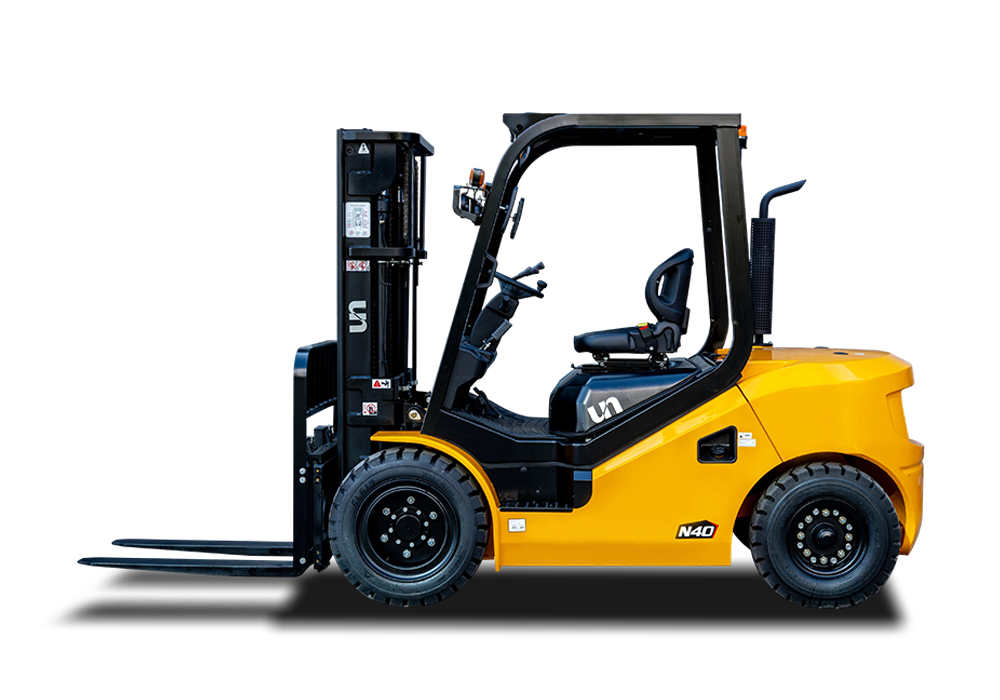
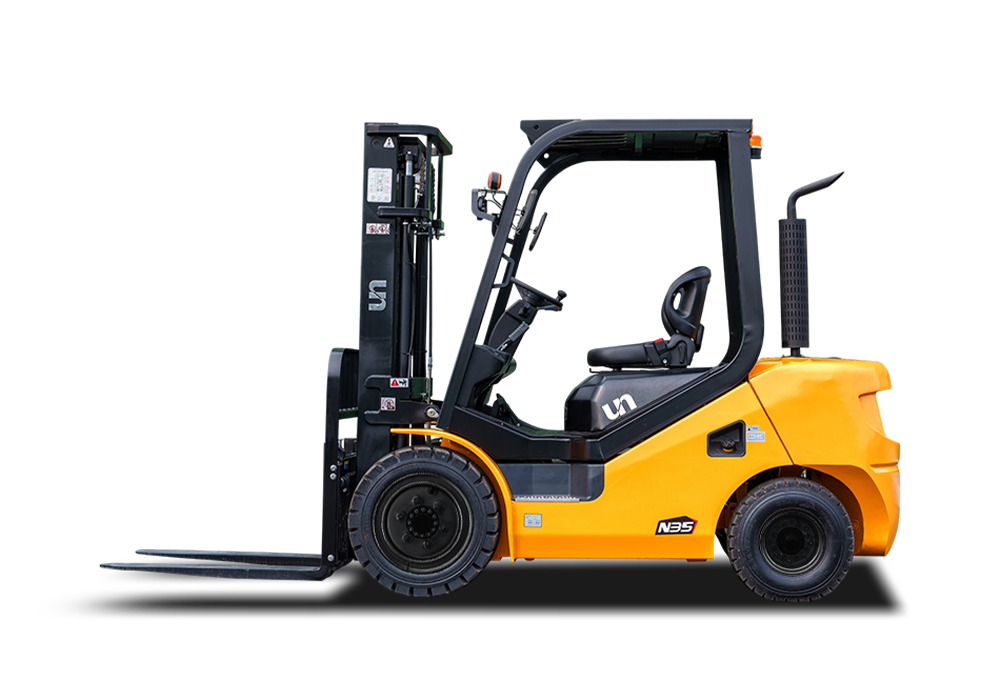
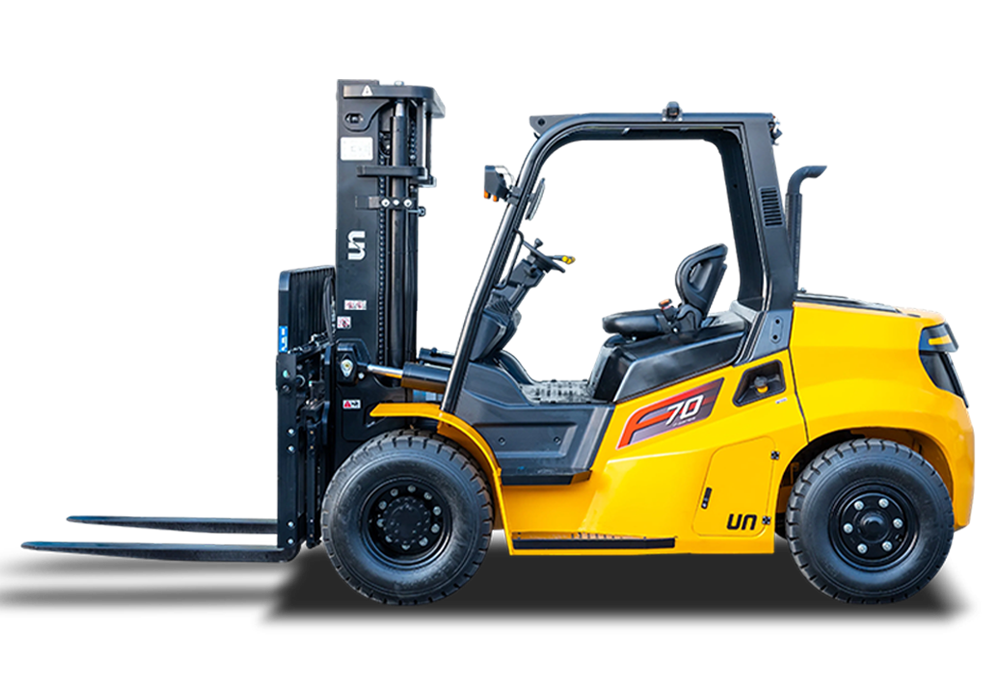
N Series Mini 4.0T Diesel Forklift
1. The Engineering Concept Behind a Mini 4.0T Forklift
The central engineering idea of the N Series Mini 4.0T Diesel Forklift is to provide a 4-ton lifting capability without using an unnecessarily large chassis. In many product ranges, increasing capacity also means increasing wheelbase, overall length, turning radius, counterweight size, and aisle requirements. Although this approach can improve stability, it may make the forklift difficult to use in confined working areas.
The N Series Mini model takes a different approach. It uses a scientifically optimized chassis derived from a 3.5-ton platform while strengthening the machine for a 4,000-kilogram rated load. This creates a compact heavy-duty forklift capable of handling substantial loads while retaining useful maneuverability. The result is a machine suitable for businesses that need more capacity than a conventional 3-ton forklift but do not want to move immediately to a larger 5-ton class machine.
With a 500-millimeter load center and a standard rated lift height of 3,000 millimeters, the forklift is configured for common palletized goods, industrial materials, metal products, building materials, machinery components, timber-related products, and manufacturing loads. The standard fork size is 1,070 by 150 by 50 millimeters, providing a strong and practical interface for many everyday lifting tasks.
The compact design does not mean that the forklift is intended only for light-duty work. Its rated travel speed without load is approximately 20 kilometers per hour, its full-load lifting speed is approximately 450 millimeters per second, and its maximum gradeability under full load is approximately 20 percent. These values support productive movement across industrial yards and warehouse approaches while maintaining the pulling power expected from a diesel-powered forklift.
1.1 A Practical Alternative to Larger Forklifts
A conventional 4-ton or 5-ton forklift may offer strong capacity, but it can also require more operating space. Larger models often have increased turning radii and wider bodies, which can limit access to loading bays, production lanes, container areas, and narrow storage zones. The N Series Mini model addresses this issue with an overall width of approximately 1,410 millimeters and an outside turning radius of approximately 2,675 to 2,740 millimeters depending on configuration.
These dimensions are important when planning a worksite. A forklift that can physically enter a location but cannot turn effectively is not a productive machine. The N Series Mini model is designed to provide a more favorable relationship between rated capacity and required working space. This can reduce unnecessary travel, simplify traffic planning, and increase the number of areas in which a 4-ton forklift can be used.
The compact chassis is also useful for customers operating mixed fleets. A business may use smaller forklifts for light pallets, electric models for indoor work, and the N Series Mini diesel forklift for heavy loads or outdoor handling. Because its dimensions remain controlled, the machine can complement existing equipment without requiring a complete redesign of the facility layout.
1.2 Load Capacity and Stability
A forklift’s capacity is determined not only by its nominal lifting rating but also by its load center, mast configuration, attachment selection, lifting height, and operating conditions. The N Series Mini model is rated at 4,000 kilograms at a 500-millimeter load center under the applicable standard configuration. Operators must always refer to the specific capacity plate and mast rating for the actual machine and attachment combination.
The chassis, counterweight, axle system, mast, hydraulic structure, and overhead protection system work together to support stable operation. The front axle carries a substantial portion of the load during lifting, while the counterweight and rear structure help maintain the required balance. Proper load positioning remains essential. Loads should be centered on the forks, kept within the rated capacity, and transported with the mast tilted according to safe operating procedures.
The product range includes mast options with different lift heights and capacity ratings. As lift height increases, the permissible load may change. Side shifters and other attachments can also affect the rated capacity. For example, the supplied specifications indicate that a separated side shifter may reduce load capacity by approximately 200 kilograms, while an integrated side shifter may reduce it by approximately 100 kilograms. These reductions demonstrate the importance of selecting equipment based on the complete working configuration rather than the base forklift alone.
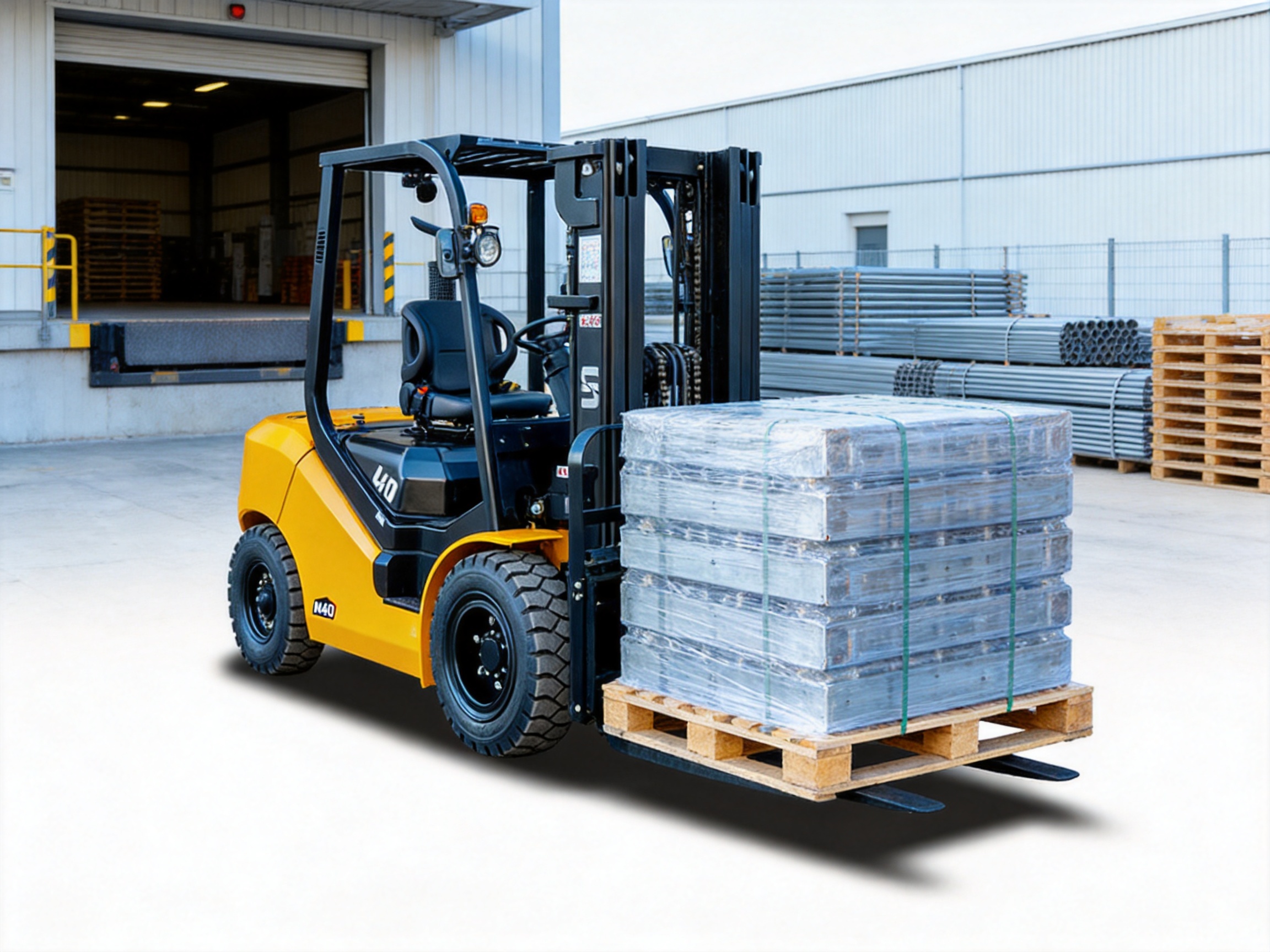
2. Powertrain Options for Different Operating Requirements
Diesel power is a major advantage when a forklift must work outdoors, carry heavy loads continuously, travel over uneven surfaces, or operate for long shifts without frequent recharging. The N Series Mini 4.0T Diesel Forklift is available with engine options from established manufacturers, including Xinchai and Isuzu. Depending on the specified model, the engine output is approximately 36.8 to 46 kilowatts.
The engine alternatives allow customers to select a configuration that fits local emission regulations, service capabilities, fuel preferences, and purchasing budgets. The Xinchai A498BPG-521 engine, for example, is listed with an output of approximately 45 kilowatts at 2,500 revolutions per minute and torque of approximately 193 newton-meters at 1,800 revolutions per minute. The Isuzu 4JG2 option is listed with output in the range of approximately 44.9 to 46 kilowatts and torque of approximately 184.7 newton-meters.
Another Xinchai engine option, the 4D32G31-066, is listed with an output of approximately 36.8 kilowatts and torque of approximately 186 newton-meters. These specifications provide different power levels within the same general forklift platform. The available engines use four cylinders, with displacements of approximately 3.059 to 3.167 liters, giving the machine the low-speed torque required for controlled lifting and loaded travel.
2.1 Fuel Efficiency and Emission Considerations
The product description emphasizes an eco-friendly engine system that improves fuel efficiency while reducing emissions. In practice, fuel consumption depends on load, operating surface, idle time, ambient temperature, lifting frequency, tire condition, maintenance, and operator behavior. Nevertheless, an appropriately sized engine and efficient transmission can help reduce unnecessary fuel use during normal work.
Reduced fuel consumption provides more than an environmental benefit. It can lower the cost per operating hour, extend the time between refueling stops, and improve fleet availability. For companies that operate several forklifts over multiple shifts, small savings in fuel consumption can become significant over the annual service life of the equipment.
The company’s broader product-development strategy also reflects the changing requirements of international markets. It supplies internal-combustion forklifts designed for higher emission standards and has developed new-energy solutions, including diesel-to-lithium-ion and standard lithium-ion forklift models. This experience helps support a product portfolio that can address different regulatory environments and application needs.
2.2 Transmission and Traction
The forklift is specified with a one-forward, one-reverse transmission arrangement. Depending on the model version, the transmission is listed as YQXD40 or hydraulic. A simple forward-and-reverse configuration is practical for many industrial applications because it provides straightforward control and reduces unnecessary complexity.
The maximum drawbar pull is listed at approximately 17 to 22 kilonewtons, depending on the configuration. Combined with a maximum gradeability of approximately 20 percent under full load, this gives the forklift useful traction for ramps, loading platforms, outdoor yards, and industrial surfaces. Operators should still adapt speed and load height to road conditions and should never exceed safe operating limits.
The hydraulic system is designed to provide controlled lifting, lowering, steering, and attachment operation. The supplied product information identifies Shimadzu pumps and other premium hydraulic components as available system elements. Reliable hydraulic performance is particularly important in heavy-duty applications because inconsistent flow can reduce productivity, increase operator fatigue, and create unnecessary stress on the mast and load.
3. Chassis Design and Heavy-Duty Construction
The chassis is one of the most important differences between an ordinary warehouse forklift and a machine intended for intensive industrial work. The N Series Mini model uses a reinforced structure designed to support high loads while maintaining a compact footprint. Its wheelbase is approximately 1,900 millimeters, and its total operating weight is approximately 5,470 to 5,490 kilograms depending on the specific model.
A strong chassis improves the forklift’s ability to absorb shocks from uneven surfaces, repeated loading cycles, and frequent directional changes. It also supports more consistent handling when the machine is carrying dense materials. The structure must withstand not only the static weight of a load but also the dynamic forces created during acceleration, braking, turning, lifting, and lowering.
The front tires are specified as 250-15, 16-ply tires, while the rear tires are specified as 6.50-10 tires. The front tread is approximately 1,160 millimeters and the rear tread is approximately 980 millimeters. This combination supports load-bearing strength at the front while preserving maneuverability at the rear.
The ground clearance beneath the mast is approximately 130 millimeters. This clearance is useful when traveling across industrial yards, ramps, and surfaces with minor irregularities. However, the forklift should be operated only on surfaces appropriate for its weight and tire configuration. A well-designed chassis improves capability, but it does not eliminate the need for suitable site preparation.
3.1 Cooling for High-Temperature Work
Heavy-duty forklifts frequently operate in hot environments, under direct sunlight, near furnaces, in foundries, or in areas where long working cycles generate continuous engine and hydraulic heat. The N Series Mini model uses a high-capacity radiator and an effective cooling arrangement to help maintain operating stability in elevated temperatures.
Cooling performance influences more than engine temperature. It also affects transmission reliability, hydraulic oil condition, component life, fuel efficiency, and operator confidence. When heat is not properly managed, a forklift may suffer from reduced performance, warning alarms, premature fluid degradation, or unplanned downtime. A high-capacity cooling system is therefore a practical advantage for demanding applications.
Cooling components must be kept clean to maintain their designed performance. Dust, fibers, chaff, plastic fragments, and other debris can block airflow. Regular inspection and cleaning should be included in the maintenance schedule, particularly when the forklift works in dusty yards or recycling operations.
3.2 Structural Adaptability
The N Series platform is available in several related configurations, including different model codes, engine arrangements, hydraulic systems, and mast specifications. This adaptability allows the manufacturer to use a common engineering foundation while tailoring the final forklift to regional requirements and customer applications.
A common platform can also benefit fleet owners. Familiar control layouts, service procedures, replacement parts, and training requirements may be shared across related models. This can reduce the complexity of fleet management and make it easier for maintenance teams to support several capacity classes.
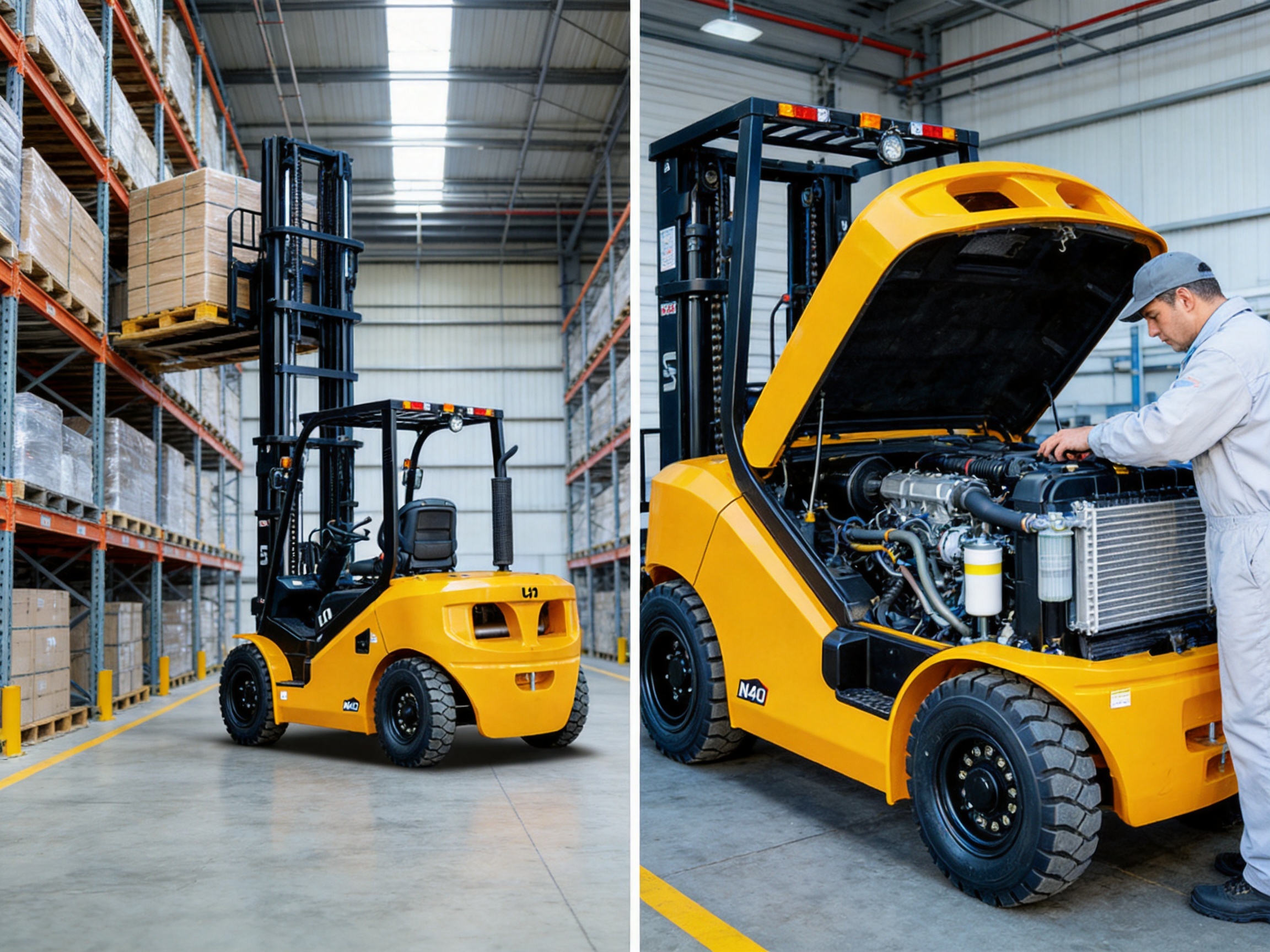
4. Mast Configurations and Rated Capacity Planning
The mast is the working heart of a forklift. It determines how high the load can be lifted, how much free lift is available, how the machine performs near ceilings or containers, and how the rated capacity changes at different elevations. The N Series Mini 4.0T model offers a broad range of mast choices, including wide-view two-stage masts and three-stage full-free wide-view masts.
Standard specifications identify a rated lift height of approximately 3,000 millimeters and a free lift height of approximately 150 millimeters. The mast lowered height is approximately 2,175 millimeters, while the mast extended height with backrest is approximately 4,230 millimeters in the listed standard configuration. The overhead guard height is approximately 2,235 to 2,240 millimeters depending on the model.
These dimensions allow the standard machine to work in many factories, warehouses, loading bays, and outdoor storage locations. For facilities with high racking, the available mast range extends to lift heights of approximately 6,000 millimeters. The exact capacity at each height depends on the selected mast, model, attachment, load center, and configuration.
4.1 Wide-View Two-Stage Masts
The wide-view mast series includes options identified as M270, M290, M300, M320, M330, M350, M370, M400, M450, and M500. These mast names correspond to different lift-height ranges and structural arrangements. The available maximum fork heights extend from approximately 3,000 millimeters to 5,500 millimeters.
At lower lift heights, the machine can retain a 4,000-kilogram capacity in the listed configuration. At higher lift heights, the rated capacity decreases progressively. This is a normal characteristic of forklift engineering. As the load is raised, the center of gravity moves forward and the mast experiences greater structural forces. A responsible capacity plan must therefore consider the actual lifting height rather than relying only on the base rating.
The wide-view design improves the operator’s sightline through the mast. Visibility is especially important when placing pallets into racks, approaching trailers, aligning with production equipment, or traveling in areas shared with pedestrians. Clear sightlines can reduce hesitation and improve handling precision while lowering the risk of contact with goods or structures.
4.2 Three-Stage Full-Free Wide-View Masts
The three-stage full-free mast family includes TFM400, TFM430, TFM450, TFM470, TFM500, TFM525, TFM550, and TFM600 configurations. These options provide lift heights from approximately 4,000 to 6,000 millimeters, subject to the selected model and rating.
Full free lift is valuable when the operator must raise a load inside a low-clearance area without extending the mast significantly. This can be useful in containers, low-roof warehouses, railcars, trailers, and buildings with overhead obstructions. The mast can lift the forks through the free-lift range before the overall mast height increases substantially.
Three-stage masts are particularly useful for high-rack storage. They offer greater vertical reach within a controlled lowered height, although the complete equipment specification must be checked before use. The total machine height, overhead guard height, extended mast height, free-lift capacity, and residual capacity should all be compared with the facility’s physical constraints.
4.3 Forklift Attachments
The forklift can be configured for attachments and specialized handling requirements. Side shifters, clamps, rotators, fork positioners, paper-roll clamps, and other devices can increase productivity when matched correctly to the load. However, every attachment adds weight and may move the effective load center forward.
Attachment selection should therefore be treated as an engineering decision. The attachment’s own weight, hydraulic requirements, mounting method, capacity, and visibility impact must be included in the analysis. The supplied information lists operating pressures of approximately 18.5 to 20.5 megapascals for attachments depending on the configuration. The hydraulic circuit should be specified according to the attachment manufacturer’s requirements.
5. Safety and Operator Ergonomics
Productivity is closely connected to operator safety and comfort. A forklift that causes excessive fatigue may encourage poor operating habits, while a machine with limited visibility or inconvenient controls can increase the likelihood of mistakes. The N Series Mini model includes several design features intended to provide a safer, more comfortable, and more controllable working environment.
An operator presence system with a seat switch helps ensure that certain functions are controlled according to the operator’s position. This system is designed to reduce the risk of unintended operation when the operator is not properly seated. It is one part of a complete safety program and should be used together with seat belts, training, site rules, speed controls, and regular inspections.
The wide-visibility mast supports better awareness of the forks and load. The overhead guard provides protection from falling objects and other potential hazards from above. The suspended frame design, additional legroom, adjustable steering column, and comfortable seat help reduce the physical burden of repeated operations.
5.1 Visibility and Control
Visibility affects nearly every stage of a forklift cycle. The operator must see the load, fork tips, rack openings, nearby workers, floor markings, dock edges, and travel path. The N Series Mini model’s wide-view mast is intended to keep the operating area as clear as possible while maintaining structural strength.
Adjustable steering supports different operator body sizes and working postures. A comfortable seating position helps the operator maintain control over long shifts and can reduce unnecessary movement. The machine’s control layout should be adjusted before work begins so that the operator can reach all required functions without leaning or twisting.
Suspended powertrain arrangements are available as an option for applications that require additional vibration isolation. By reducing the transmission of vibration from the chassis and powertrain, such a system can improve comfort and help protect selected components from repeated shock loads.
5.2 Safe Operation in Industrial Environments
The forklift is suitable for industrial applications, but safe operation depends on the workplace as much as on the machine. Operators should inspect the travel surface, identify overhead restrictions, maintain clear visibility, sound warning devices where required, and keep loads stable during movement. Loads should not be carried higher than necessary while traveling.
When traveling on ramps, the load should be positioned according to established forklift safety procedures. Speed should be reduced before turning, and the operator should maintain a safe distance from dock edges, open platforms, other vehicles, and pedestrians. The rated capacity plate must remain visible and readable, and any damaged or missing safety labels should be replaced.
Regular safety inspections should include the brakes, steering, mast chains, forks, hydraulic hoses, tires, lights, alarms, seat belt, overhead guard, operator presence system, and attachment locking devices. A strong product design supports safety, but disciplined inspection and operator training remain essential.
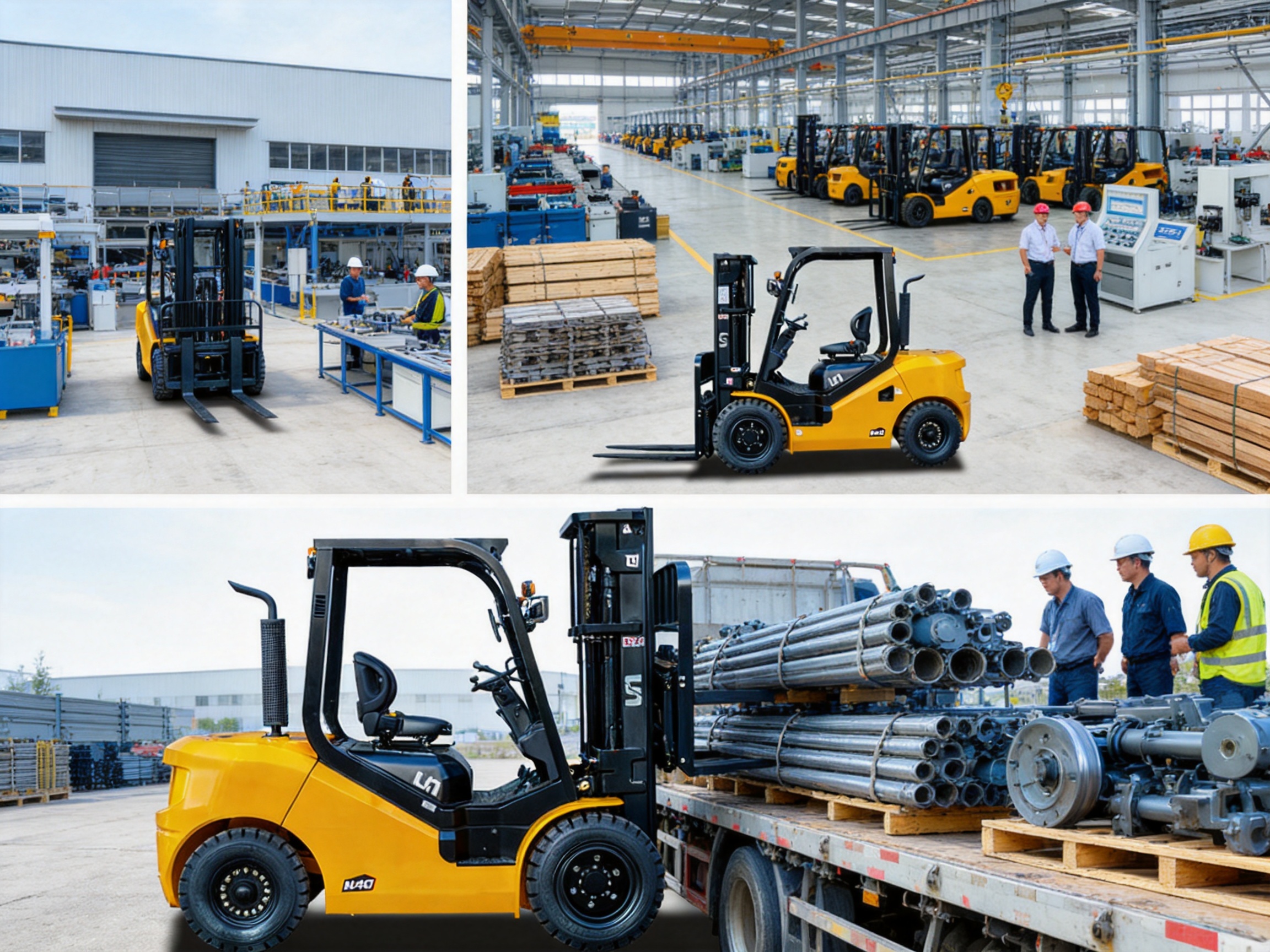
6. Maintenance Efficiency and Serviceability
Maintenance is a major factor in total cost of ownership. A forklift that is difficult to inspect or repair may require longer service interruptions and higher labor costs. The N Series Mini model includes practical access features intended to simplify routine maintenance and parts replacement.
The engine hood opens to nearly 90 degrees, providing broad access to the engine compartment. This makes it easier for technicians to inspect filters, belts, hoses, electrical connections, fluid levels, and other service points. Wide access also helps reduce the time needed for scheduled maintenance and troubleshooting.
The transmission oil filter is designed for convenient replacement. Easy filter access encourages maintenance teams to follow the recommended service intervals instead of postponing work because access is inconvenient. Consistent fluid and filter maintenance can help preserve transmission performance and reduce contamination-related wear.
6.1 Preventive Maintenance Priorities
Daily inspections should include engine oil, coolant, hydraulic oil, fuel level, tire condition, fork condition, chain tension, visible leaks, warning lights, and the general condition of the mast. Operators should report unusual noises, vibration, steering resistance, slow lifting, irregular lowering, or changes in braking performance.
Engine maintenance should follow the selected engine manufacturer’s recommendations. Diesel engines require clean fuel, suitable lubrication, correct filter replacement, and proper cooling-system care. Poor-quality fuel or neglected filtration can lead to injection-system problems, reduced power, difficult starting, and increased emissions.
The hydraulic system requires clean oil and careful inspection of hoses, fittings, cylinders, pumps, and valves. Hydraulic leaks should never be checked with bare hands because pressurized fluid can penetrate skin. Any leak should be repaired by qualified personnel, and the machine should not be used if hydraulic performance is unsafe.
Tire condition is equally important. The specified front tires carry substantial load forces, and damage, incorrect inflation, or excessive wear can affect stability, steering, braking, and fuel consumption. Solid or pneumatic tire selection should be based on the operating surface and the manufacturer’s recommendation.
6.2 Reducing Unplanned Downtime
Unplanned downtime is especially expensive in material-handling operations because it can interrupt production, delay shipments, and force other vehicles to work beyond their intended capacity. A structured maintenance program helps identify small problems before they become major failures.
The manufacturer’s experience in producing multiple forklift types supports the development of standardized service practices and component knowledge. A worldwide sales and service network also helps customers obtain technical assistance and replacement parts in different regions. For international buyers, this support structure can be as important as the initial machine specification.
Fleet managers should maintain service records for each forklift. Records should include operating hours, maintenance dates, replaced parts, tire changes, hydraulic repairs, engine work, and safety inspections. An accurate service history improves resale value, supports warranty discussions, and helps predict future maintenance requirements.
7. Manufacturing Strength and Quality-Oriented Production
The product’s competitive position is supported by the manufacturer’s long-term industrial experience. Zhejiang UN Forklift Co., Ltd. was founded in 1978 and operates a manufacturing site covering approximately 53,400 square meters. Its stated annual production capacity is approximately 15,000 units, supported by a product portfolio that includes many forklift categories, series, and specifications.
Manufacturing scale can offer several advantages. It allows engineering teams to accumulate experience across diesel, gasoline, electric, warehouse, reach, and specialized forklift applications. It also helps the company develop common components, improve production planning, and establish repeatable assembly and inspection procedures.
The company integrates research and development, production, sales, and service. This integrated structure enables product feedback from dealers, service technicians, and end users to return to the engineering process. Design improvements can therefore be based on actual operating conditions rather than only laboratory assumptions.
7.1 Research and Development Experience
The company has contributed to the development of China’s material-handling industry and has participated in the formulation of electric forklift industry standards. It is also associated with the development of China’s early reach forklift and very-narrow-aisle truck products. This background indicates experience with both conventional internal-combustion equipment and more specialized warehouse technologies.
Research and development experience is valuable for a heavy-duty diesel forklift because performance depends on the interaction of many systems. The engine, transmission, chassis, axle, mast, hydraulics, cooling system, counterweight, operator compartment, and electronic controls must work together. Improvements in one area can influence the others, so a broad engineering base is an advantage.
7.2 OEM and International Market Capability
The company serves customers in Europe, South America, North America, Africa, and Asia through a global sales and service network. It is also identified as an original-equipment supplier for well-known domestic and overseas companies, including Hyundai Heavy Industries and Xuzhou Construction Machinery Group.
Original-equipment manufacturing requires consistent quality, reliable production scheduling, technical documentation, and the ability to meet customer-specific specifications. Experience in this area can strengthen the company’s ability to provide customized forklift configurations, engine options, mast arrangements, attachments, and market-specific equipment.
International market experience also requires attention to different regulations, operating conditions, fuel qualities, climate zones, safety expectations, and service practices. The N Series Mini model’s available engine and configuration options reflect the need to adapt a common platform for different customers and regions.
8. Competitive Advantages Over Common Alternatives
The N Series Mini 4.0T Diesel Forklift competes with several types of equipment. These include standard 3-ton diesel forklifts, larger 4.5-ton or 5-ton forklifts, electric forklifts in the 3.5- to 4-ton range, and older used machines. Its advantages become clearer when these alternatives are examined according to application requirements.
8.1 Compared with 3-Ton Diesel Forklifts
A 3-ton forklift may be less expensive and slightly smaller, but it may not provide sufficient capacity for dense or oversized loads. Attempting to handle a load near or beyond the limit of a smaller forklift can reduce safety margins and accelerate component wear. The N Series Mini model provides an additional capacity reserve for operations that regularly handle loads around 3,500 to 4,000 kilograms.
At the same time, the compact design avoids some of the maneuverability penalties associated with moving directly to a much larger model. This makes it an attractive option for companies that have outgrown a 3-ton forklift but still work in restricted spaces.
8.2 Compared with Larger 5-Ton Forklifts
A 5-ton forklift may be appropriate for extremely heavy loads, but it often carries a larger counterweight, wider body, greater operating weight, and larger turning requirements. If the average load is close to 4 tons rather than 5 tons, the larger machine may represent unnecessary capital and operating expense.
The N Series Mini model can provide a more efficient match between actual load requirements and equipment size. It offers 4,000 kilograms of rated capacity, 20-kilometer-per-hour unloaded travel speed, strong gradeability, and a chassis designed for intensive work while retaining a more compact footprint.
8.3 Compared with Electric Forklifts
Electric forklifts offer important advantages for indoor air quality, noise reduction, and emissions control. They are highly suitable for clean indoor environments and operations with established charging infrastructure. However, heavy electric forklifts may require substantial battery capacity, charging time, battery management, and investment in charging facilities.
A diesel forklift remains attractive for outdoor work, long shifts, rough surfaces, heavy-duty applications, and operations where rapid refueling is preferred. The N Series Mini model can work continuously with fuel replenishment rather than waiting for battery charging. Its powertrain is also well suited to applications requiring sustained pulling force and frequent movement across yards.
The correct choice depends on the facility. Some companies may use both technologies: electric forklifts indoors and the N Series Mini diesel model outdoors or for the heaviest loads. The manufacturer’s wider product portfolio makes this mixed-fleet strategy practical.
8.4 Compared with Used Forklifts
Used equipment may offer a lower purchase price, but its remaining service life and maintenance history can be uncertain. Hidden wear in the mast, transmission, hydraulic system, axles, and engine can lead to unexpected repair costs. Older machines may also lack modern operator-presence systems, ergonomic features, emission improvements, and easily available replacement parts.
A new N Series Mini forklift provides a documented specification, current production support, selectable engine options, and access to a structured service network. For businesses that depend on equipment availability, these benefits may outweigh the higher initial purchase price.
| Evaluation Area | N Series Mini 4.0T Diesel Forklift | Typical Smaller Diesel Forklift | Typical Larger 5-Ton Forklift |
|---|---|---|---|
| Rated capacity | 4,000 kilograms | Approximately 2,500 to 3,500 kilograms | Approximately 5,000 kilograms |
| Compactness | Designed around a compact heavy-duty chassis | Usually compact | Generally larger and heavier |
| Outdoor capability | Strong suitability for yards and industrial sites | Suitable, depending on specification | Very strong, but may require more space |
| Standard load center | 500 millimeters | Often 500 millimeters | Often 600 millimeters or more, depending on model |
| Travel speed without load | Approximately 20 kilometers per hour | Often lower or similar | Often similar, depending on powertrain |
| Mast choices | Two-stage and three-stage options, including full-free configurations | Usually more limited | Often broad, but with greater machine dimensions |
| Maintenance access | Engine hood opens nearly 90 degrees; accessible transmission filter | Varies by manufacturer | Varies by manufacturer |
| Best application balance | High capacity with controlled operating dimensions | Light to medium loads | Very heavy loads and large open sites |
9. Application Suitability
The N Series Mini 4.0T Diesel Forklift is suitable for a wide range of sectors where high capacity, reliability, and outdoor mobility are important. Its practical application areas include manufacturing, construction materials, metal processing, timber handling, logistics yards, ports, machinery production, agricultural supply, recycling, and general industrial warehousing.
In manufacturing plants, it can move dies, molds, steel components, castings, machinery parts, and packaged products between production lines and storage areas. Its compact dimensions help it operate near buildings and loading bays where a larger forklift may be difficult to position.
In construction-material operations, the forklift can handle bricks, stone products, concrete components, steel sections, pipes, tiles, and bagged materials. These loads are often dense and require the stable performance of a diesel machine. Operators must select the correct fork length and attachment for long or irregular products.
In logistics and distribution yards, the forklift can load and unload trucks, organize pallets, and transfer goods between outdoor staging areas and warehouse entrances. Its travel speed, gradeability, and diesel range support repeated movement over longer distances than a typical indoor warehouse truck.
In recycling and industrial processing, the machine can work around dust, uneven surfaces, and mixed materials. The cooling system and heavy-duty chassis are useful in these environments, but additional protection, specialized attachments, and more frequent cleaning may be required.
9.1 Indoor and Outdoor Use
The forklift can operate in selected indoor applications where ventilation is adequate and local regulations permit diesel equipment. It is especially suitable for facilities with large doors, strong floor structures, sufficient aisle width, and a need to handle heavy loads.
For enclosed facilities, operators and managers must evaluate exhaust ventilation, noise, fire safety, floor load limits, turning clearances, and pedestrian separation. Where indoor air quality is highly sensitive, an electric or other low-emission alternative may be more appropriate. The diesel model is often most effective in mixed indoor-outdoor operations or well-ventilated industrial buildings.
9.2 Port, Yard, and Construction Conditions
Outdoor applications place additional demands on tires, cooling, steering, brakes, electrical components, and corrosion protection. The N Series Mini model’s industrial structure and diesel powertrain make it suitable for these conditions when the correct tire and protection configuration is selected.
Operating surfaces should be inspected regularly. Deep potholes, loose gravel, excessive slopes, standing water, and unstable ground can reduce safety regardless of forklift capacity. A well-maintained road network improves tire life, operator comfort, fuel economy, and overall productivity.
10. Selecting the Correct Configuration
Customers should begin with the actual load profile rather than selecting a forklift solely by nominal capacity. Important questions include the maximum load weight, load dimensions, load center, required lift height, operating surface, daily hours, indoor or outdoor location, temperature, slope, attachment needs, emission requirements, and available service support.
If most loads are close to 4,000 kilograms, the customer should consider whether the load center remains at 500 millimeters or moves farther forward. Long, wide, or irregular loads can reduce the effective capacity. If a side shifter, clamp, rotator, or other attachment is required, its weight and capacity effect must be included in the calculation.
Mast selection should be based on both maximum lift height and lowered height. A high mast may be necessary for racking, but it must also fit beneath doors, sprinkler systems, beams, and other overhead structures. Full-free three-stage configurations are valuable for container and low-clearance applications, while two-stage masts may be simpler and more economical for standard warehouse work.
Engine selection should take into account local service availability, emission regulations, fuel quality, expected duty cycle, and operator preference. The available Xinchai and Isuzu options provide flexibility, but the final selection should be confirmed with the supplier for the target market and application.
10.1 Total Cost of Ownership
The purchase price is only one part of forklift ownership. Total cost includes fuel, scheduled maintenance, tires, filters, hydraulic components, operator training, downtime, insurance, financing, and eventual resale value. A compact machine that can perform the required work without excessive fuel use or maintenance interruption may provide a better long-term return than a cheaper but under-capacity model.
Fuel efficiency is influenced by operator behavior. Excessive idling, rapid acceleration, harsh braking, unnecessary high-speed travel, and lifting loads higher than required can increase consumption. Training operators to use smooth controls and appropriate travel speeds can improve both economy and component life.
Maintenance access also affects ownership cost. The near-90-degree engine hood and accessible transmission oil filter can reduce service time. When combined with a planned maintenance program and readily available parts, these features help protect equipment availability.
11. Manufacturing Process Considerations
Although individual production details may vary by configuration, a heavy-duty forklift of this type depends on a sequence of controlled manufacturing processes. These generally include steel preparation, chassis fabrication, welding, machining, painting, component assembly, hydraulic installation, powertrain integration, mast assembly, electrical inspection, performance testing, and final quality control.
Chassis welding must maintain dimensional accuracy because frame alignment affects axle installation, mast positioning, steering behavior, and load stability. Mast components require precise fabrication and inspection because rollers, chains, channels, cylinders, and fork carriage parts must operate smoothly under high loads.
Hydraulic systems require clean assembly practices. Contamination can damage pumps, valves, cylinders, and control components. Correct hose routing is important to prevent abrasion, excessive bending, or interference with moving parts. Electrical harnesses must be positioned and protected against vibration, heat, oil, and mechanical damage.
Final testing should verify starting performance, travel, braking, steering, lifting, lowering, mast tilt, hydraulic response, safety functions, and visible leaks. Load testing and inspection of the completed machine help ensure that the forklift conforms to the required specification before shipment.
11.1 Quality Consistency at Production Scale
A production capacity of approximately 15,000 units per year requires organized supply-chain management, standardized assembly procedures, trained personnel, inspection systems, and reliable component sourcing. Production scale alone does not guarantee quality, but it creates the foundation for repeatable processes when supported by effective quality management.
The use of recognized engine, hydraulic, transmission, and tire suppliers can improve component compatibility and serviceability. The supplied information identifies Japanese-quality transmission standards and premium hydraulic pump brands as part of the product’s reliability strategy. Such component choices can help reduce the risk associated with demanding duty cycles.
Quality should also be considered after delivery. A manufacturer that provides technical documentation, service support, parts assistance, and dealer training can help customers maintain the original performance of the machine over time.
12. Operating Practices for Maximum Productivity
To obtain the best results from the N Series Mini forklift, operators should complete a pre-shift inspection and plan each movement. Loads should be approached squarely, forks should be inserted fully when appropriate, and the load should be balanced before lifting. Operators should avoid sudden steering or braking with an elevated load.
Travel speed should be adjusted to the surface, visibility, load, and pedestrian traffic. The unloaded maximum speed of approximately 20 kilometers per hour is not a target for every situation. In congested warehouses, loading bays, and mixed-traffic areas, lower speeds are essential.
When stacking, the operator should verify that the floor, rack, pallet, and load are suitable for the weight. The mast should be positioned carefully, and the operator should confirm that the load is stable before reversing. If visibility is obstructed, the operator should travel in the direction that provides the clearest view or use a trained spotter according to site rules.
Efficient operation also means reducing unnecessary movements. Workflows should be arranged so that forklifts travel the shortest safe distance, loading and unloading zones are clearly marked, and pedestrians are separated from vehicle lanes. Good site organization allows the forklift’s compact dimensions and strong performance to translate into measurable productivity.
13. Frequently Asked Questions
Q1: What is the rated capacity of the N Series Mini forklift?
The standard rated load capacity is 4,000 kilograms at a 500-millimeter load center, subject to the exact model, mast, attachment, and operating configuration. The capacity may be reduced at greater lift heights or when attachments are installed.
Q2: Why is it called a mini 4.0T forklift?
The model combines a 4-ton lifting capacity with a compact chassis derived from a smaller capacity platform. The term “mini” refers primarily to its controlled dimensions and maneuverability rather than to light-duty construction.
Q3: What engines are available?
Available engine options include Xinchai and Isuzu diesel engines. Listed outputs range from approximately 36.8 to 46 kilowatts, depending on the engine and model configuration. The final engine option should be confirmed according to the destination market and application.
Q4: What is the standard lift height?
The listed standard rated lift height is approximately 3,000 millimeters, with a free lift height of approximately 150 millimeters. Other two-stage and three-stage mast options can provide lift heights from approximately 3,300 millimeters to 6,000 millimeters.
Q5: Can the forklift work in narrow areas?
It is designed to offer more maneuverability than many larger 4.5-ton or 5-ton forklifts. The overall width is approximately 1,410 millimeters, and the outside turning radius is approximately 2,675 to 2,740 millimeters depending on the model. Actual aisle requirements must be calculated for the load, pallet, mast, and operating method.
Q6: Is the forklift suitable for outdoor use?
Yes. Its diesel powertrain, heavy-duty chassis, industrial tires, cooling system, drawbar pull, and gradeability make it suitable for many outdoor industrial applications. The operating surface, weather, tire selection, and maintenance program must still be appropriate.
Q7: Can attachments be installed?
Yes. The forklift can be configured for attachments such as side shifters and other material-handling devices. Attachment weight, hydraulic requirements, load center, and capacity reductions must be considered before operation.
Q8: How does the forklift support maintenance work?
The engine hood opens to nearly 90 degrees for easier servicing and parts replacement. The transmission oil filter is designed for convenient replacement. These features can reduce service time when combined with scheduled inspections and proper maintenance procedures.
Q9: What safety features are included?
The listed safety and ergonomic features include an operator presence system with seat switch, a wide-visibility mast, a heavy-duty overhead guard, adjustable steering, additional legroom, comfortable seating, and an optional suspended powertrain system. These features must be supported by operator training and workplace safety procedures.
Q10: Is this forklift suitable for indoor warehouses?
It can be used in suitable indoor industrial environments with adequate ventilation, floor strength, aisle space, and compliance with local regulations. For clean, quiet, or highly enclosed operations, an electric forklift may be more appropriate. The diesel model is particularly useful for mixed indoor-outdoor work and heavy-duty applications.
Q11: What should customers check before ordering?
Customers should confirm maximum load weight, load center, lifting height, mast lowered height, attachment requirements, operating surface, daily working hours, engine and emission requirements, tire type, service support, and the exact capacity chart for the selected configuration.
Q12: How can the forklift’s service life be extended?
Regular inspections, timely oil and filter replacement, clean cooling components, correct tire maintenance, careful operation, proper load handling, and prompt repair of leaks or warning signs can significantly extend service life. Operator training is also essential because driving habits directly influence wear and fuel consumption.
14. Conclusion
The N Series Mini 4.0T Diesel Forklift is designed for organizations that need serious lifting performance without the excessive footprint of a larger heavy-duty forklift. Its 4,000-kilogram rated capacity, compact chassis, 500-millimeter load center, strong diesel powertrain, wide mast selection, industrial tires, high-capacity cooling system, and practical maintenance access create a well-balanced solution for demanding applications.
Its greatest competitive advantage is the combination of capacity and controlled dimensions. Compared with a smaller 3-ton forklift, it provides additional lifting capability and a stronger reserve for dense loads. Compared with a larger 5-ton forklift, it may require less operating space and provide a more economical match for customers whose normal loads are near 4 tons. Compared with electric alternatives, it offers the range, rapid refueling, and outdoor durability associated with diesel power.
The manufacturer’s long history, research and development experience, production scale, international service network, OEM capability, and broad product portfolio further support the machine’s market position. These strengths help provide not only a forklift but also a complete equipment solution involving configuration advice, technical support, parts availability, and lifecycle service.
For the best result, the machine should be specified according to the real load profile and working environment. Correct mast selection, attachment planning, capacity verification, operator training, and preventive maintenance are essential. When these factors are properly managed, the N Series Mini 4.0T Diesel Forklift can provide reliable performance, productive handling, and long-term value in a wide range of industrial operations.
References
1. Product specification materials for the N Series Mini 4.0T Diesel Forklift, including dimensions, capacities, engine options, mast configurations, and performance data.
2. Manufacturer-provided product information concerning reliability, hydraulic systems, operator safety, ergonomics, cooling, and maintenance access.
3. Manufacturer company profile and corporate information concerning research and development, production capacity, OEM experience, and international service operations.
4. General industrial forklift safety principles covering rated capacity, load centers, mast operation, attachment selection, operator training, and workplace traffic management.
5. General preventive-maintenance practices for diesel engines, hydraulic systems, forklift tires, mast assemblies, transmissions, cooling systems, and industrial vehicles.
Product: N Series Mini 4.0T Diesel Forklift
For exclusive deals and latest offers, sign up by entering your email address below.
Stay In Touch
ADDRESS : NO.1 ROAD ONE, XINDENG NEW DISTRICT, FUYANG, HANGZHOU, ZHEJIANG, CHINA 311404.
PHONE : +86-571-8688 8355 (AMERICA)
PHONE : +86-571-8886 9363 (EUROPE)
PHONE : +86-571-8688 8377 (ASIA, AFRICA, OCEANIA)
EMAIL : [email protected]
EMAIL : [email protected](PARTS INQUIRY)

