


 中文简体
中文简体 Français
 русский
 Español
 عربى
عربى Deutsch



Heavy-Duty 4.0–5.0T LPG and Gasoline Forklift for Demanding Material Handling
Admin 2026-06-13In modern material handling, productivity depends on more than lifting capacity alone. A forklift must combine stable power, operator safety, low operating cost, dependable braking and steering, easy maintenance, and adaptability to changing work conditions. The N Series 4.0T–5.0T LPG and gasoline forklift is designed for medium to large-scale handling operations where loads are heavy, shifts are long, and reliability is not optional. With rated capacities of 4,000 kg, 4,500 kg, and 5,000 kg, this forklift range supports demanding warehouse, manufacturing, logistics, building material, beverage, port, timber, and industrial applications.
The product belongs to the LPG and gasoline forklift category and is engineered to deliver high load capacity with reduced emissions compared with many conventional internal combustion alternatives. Its LPG power option is particularly attractive for companies that need strong outdoor performance while also improving air quality and reducing carbon output. The forklift’s robust structure, efficient cooling system, wide-view mast, ergonomic operator area, and service-friendly design create a balanced heavy-duty solution for users who want performance without unnecessary downtime.
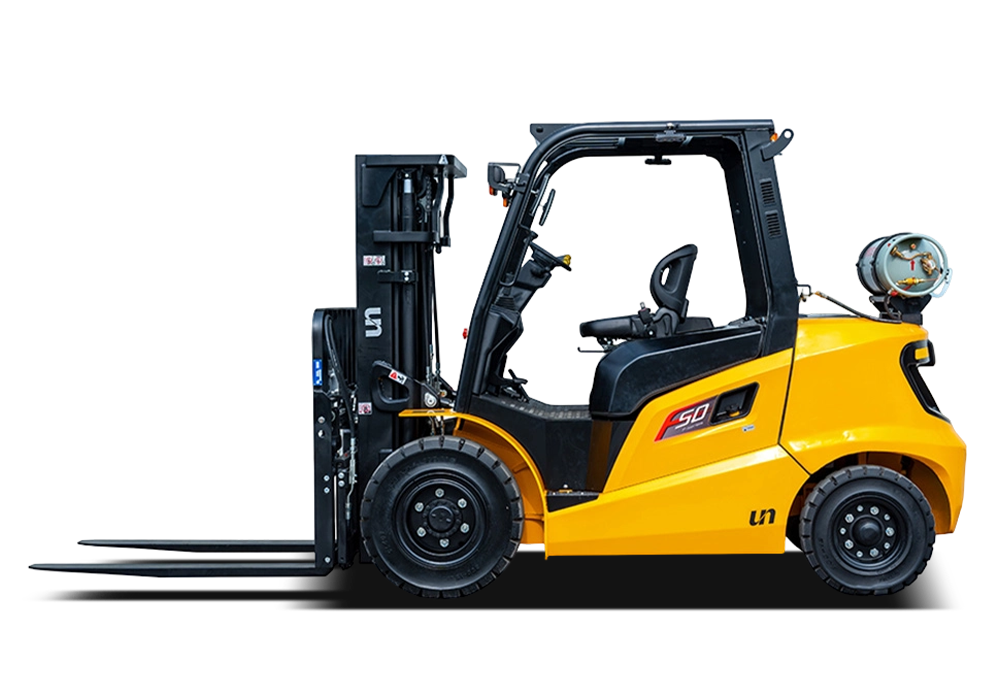
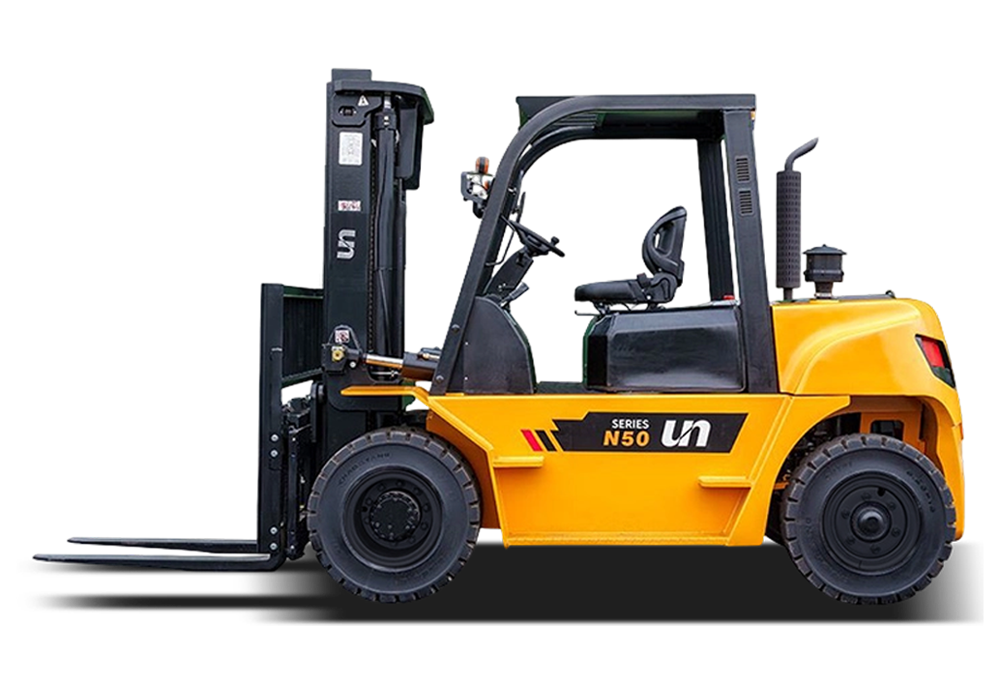
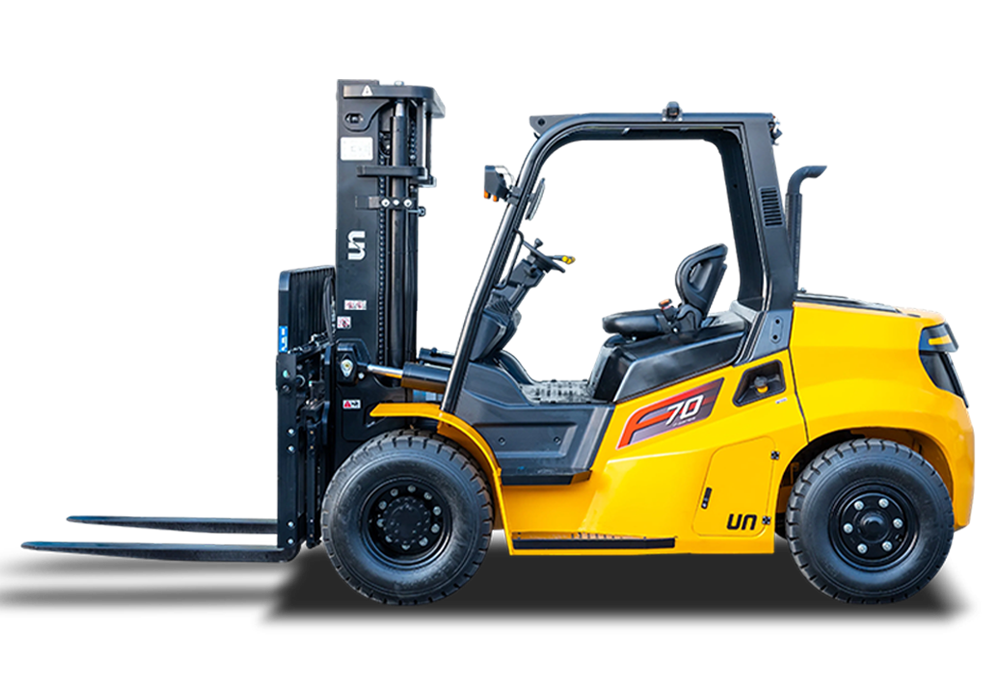
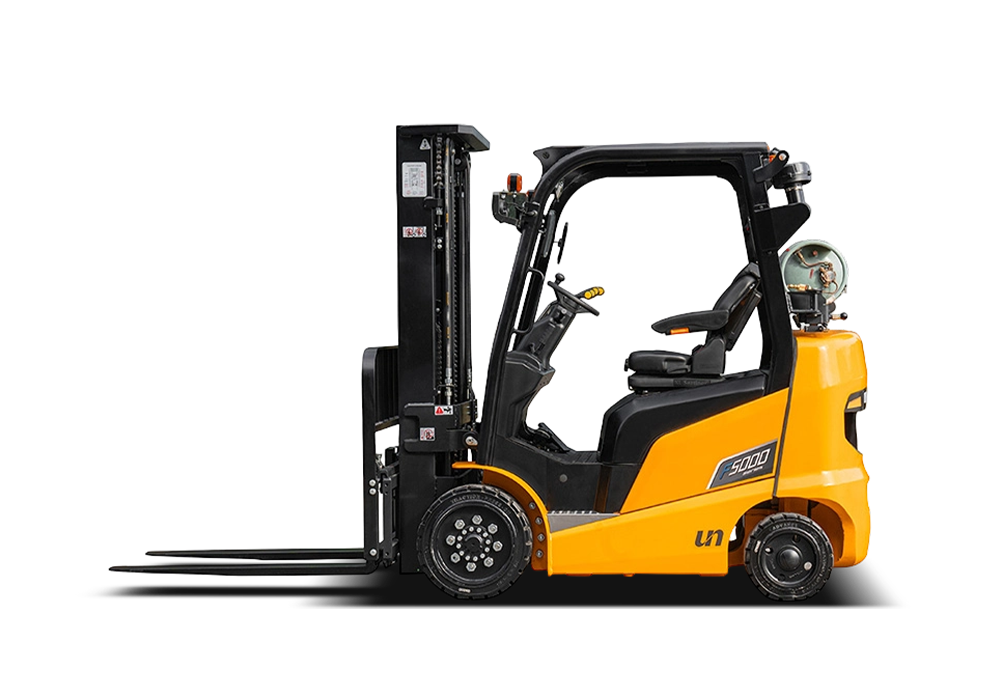
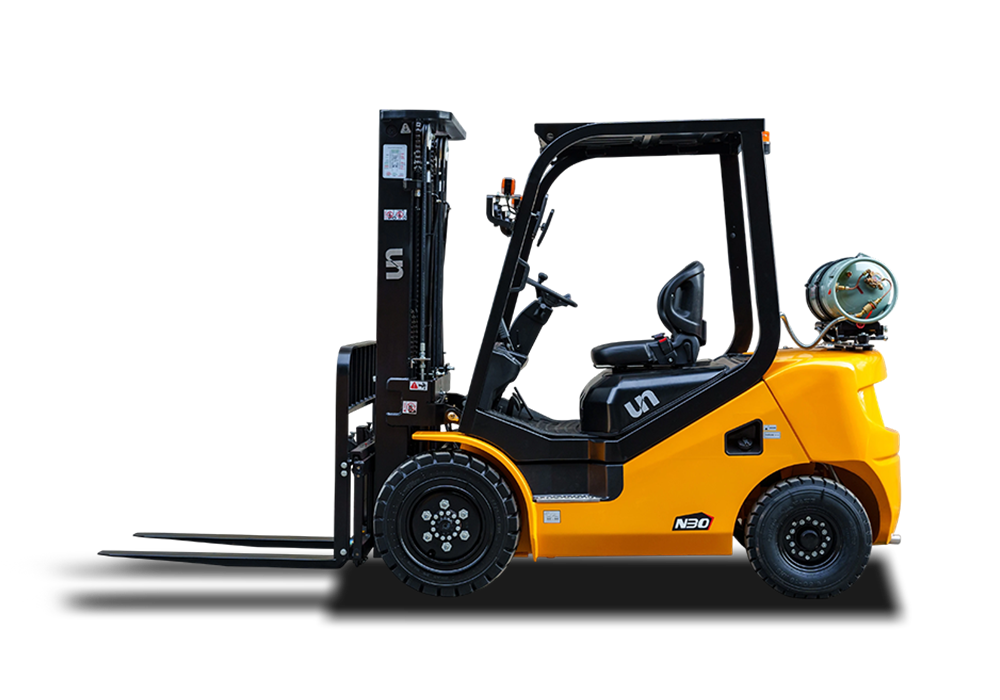
N Series 4.0T-Mini5.0T LPG&Gasoline Forklift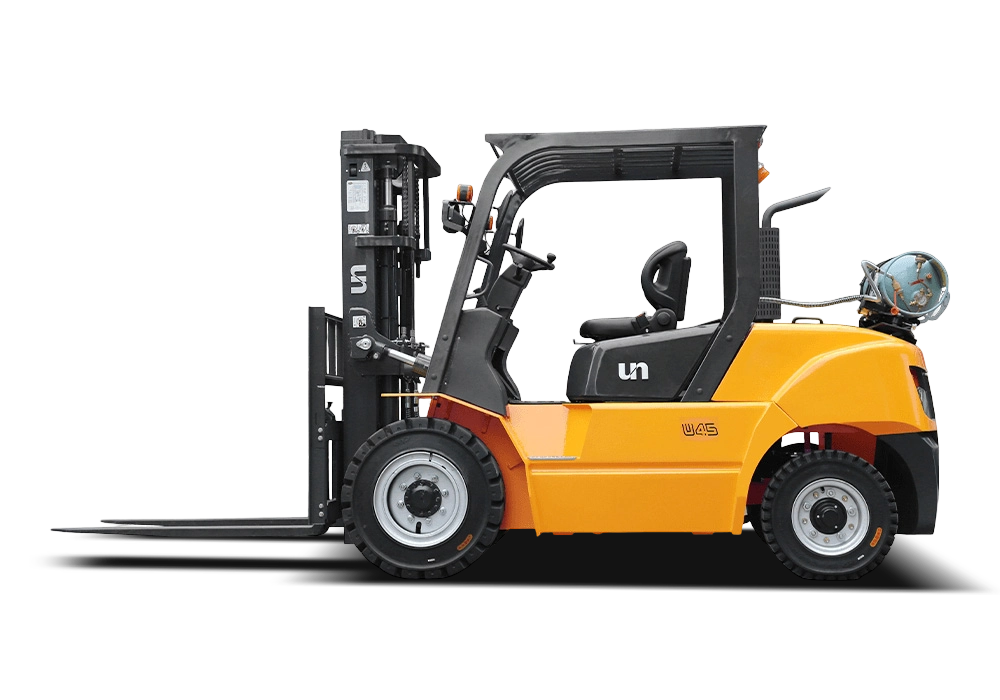
Product Positioning and Application Value
The N Series 4.0T–5.0T LPG and gasoline forklift is positioned as a high-capacity internal combustion lift truck for users who need stable power, flexible operation, and high utilization. In many industries, electric forklifts are increasingly popular, but heavy-duty operations still often require an internal combustion solution because of long operating hours, fast refueling, strong travel performance, and dependable operation in outdoor or mixed indoor-outdoor environments. LPG and gasoline forklifts offer a practical bridge between traditional diesel strength and cleaner energy expectations.
This forklift range is especially useful for facilities that cannot accept long charging windows or battery change complexity. LPG cylinders can be replaced quickly, allowing the truck to return to work with minimal interruption. Gasoline configurations provide another fuel option for users with existing fuel infrastructure. The ability to maintain productivity across long shifts makes this series valuable for logistics yards, distribution centers, construction supply depots, metal processing plants, paper mills, recycling operations, and production lines handling large pallets or heavy components.
Compared with smaller 1.5T to 3.5T forklifts, the 4.0T–5.0T range offers a much stronger structural platform and more powerful engine output. Compared with very large heavy-duty machines, it remains maneuverable enough for many warehouse aisles and industrial yards. This middle-heavy range is often the practical choice for companies that frequently move loads beyond ordinary warehouse capacity but do not require oversized port equipment.
Core Advantages Over Competing Forklifts
The first competitive advantage is the balance between power and emissions. Many heavy-duty forklifts rely on diesel engines because diesel delivers high torque, but diesel can create higher particulate emissions and may be restricted in certain indoor or semi-enclosed environments. LPG power can significantly reduce visible smoke, odor, and particulate emissions, making the forklift more suitable for mixed-use facilities. For operations concerned with environmental standards, worker comfort, and corporate sustainability targets, this is a meaningful advantage.
The second advantage is continuous work capability. Battery-electric heavy-duty forklifts can be clean and quiet, but they depend on charging infrastructure, battery management, and sometimes long charging time. In high-throughput applications, a forklift that can be refueled quickly can reduce idle time. The N Series 4.0T–5.0T LPG and gasoline forklift therefore fits operations where the machine is expected to run continuously across multiple shifts or where unpredictable workloads make charging schedules difficult.
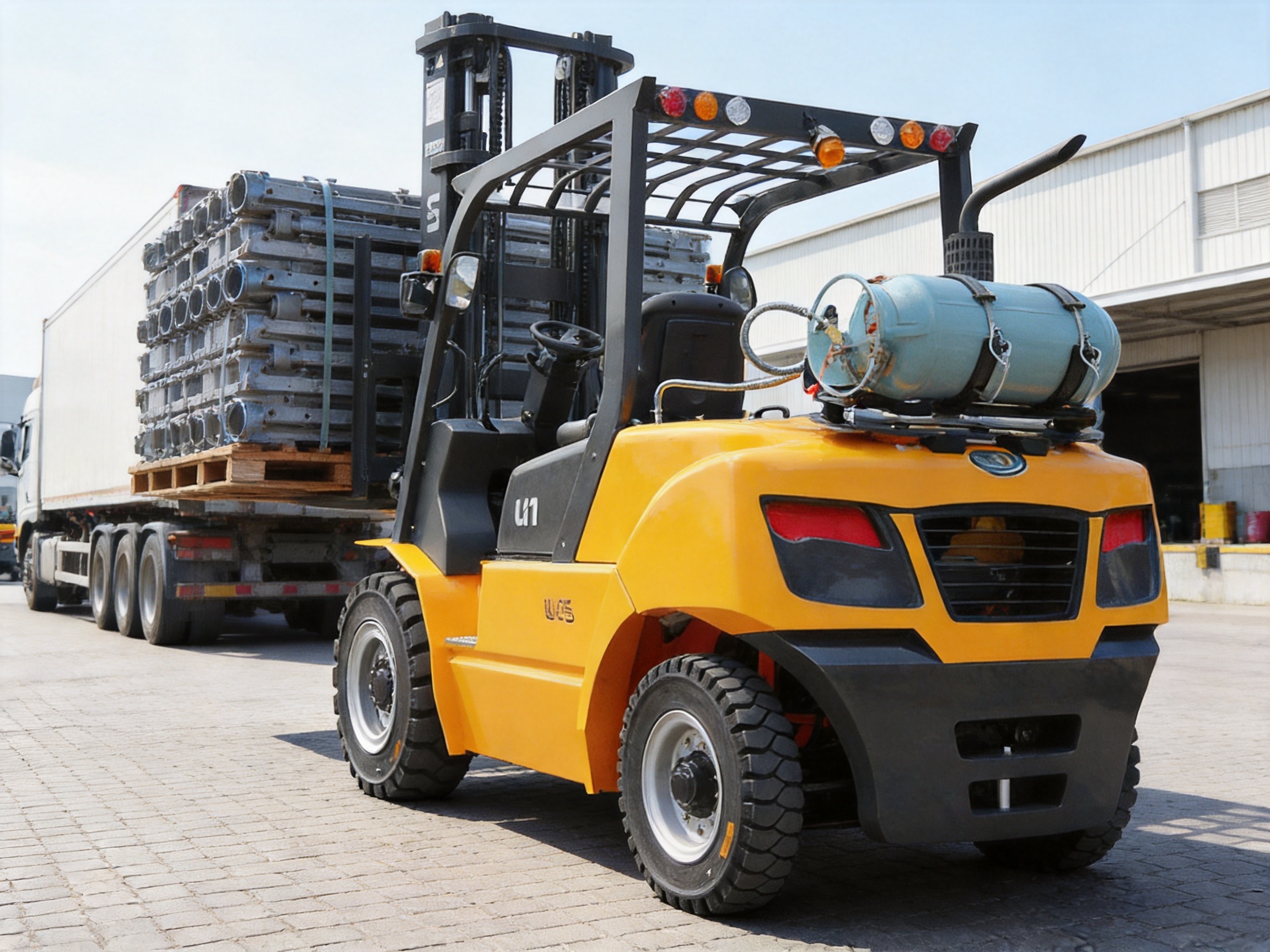
The third advantage is a robust structure designed for demanding use. Heavy loads create repeated stress on the mast, chassis, axle, and transmission. A forklift in this capacity class must not only lift the rated load but also maintain stability and precision during frequent travel, turning, stacking, and lowering. The product’s strong chassis, high-strength overhead guard, wide-visibility mast, and stable hydraulic system all contribute to safe, repeatable handling.
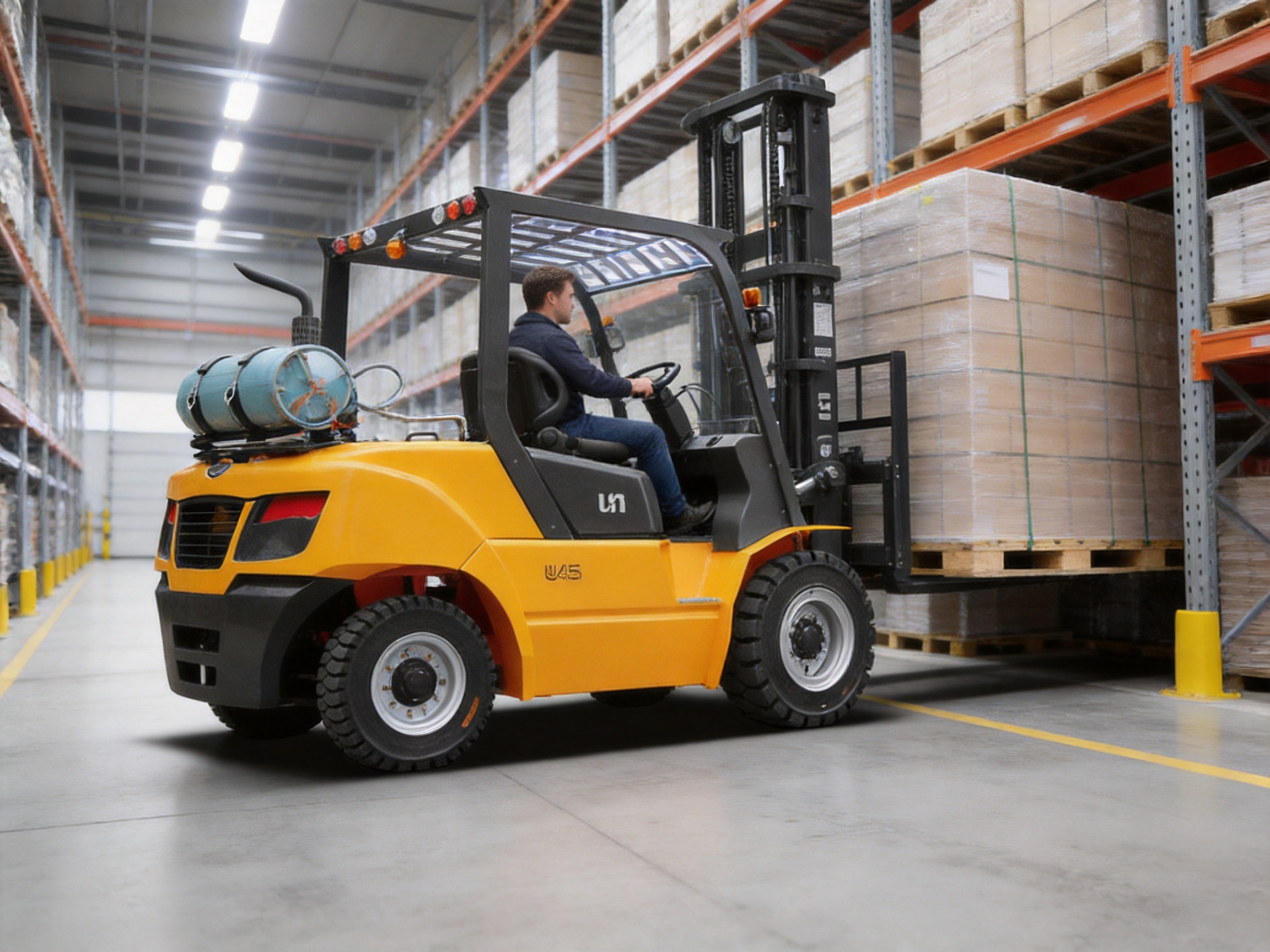
The fourth advantage is maintenance accessibility. Competitors sometimes sacrifice service access for compact appearance or low initial cost. In contrast, this forklift is built with a nearly 90-degree opening engine cover, making routine inspection and component replacement easier. The transmission oil filter is designed for faster replacement. These details matter because every hour saved in maintenance can contribute directly to improved fleet availability and lower lifetime operating cost.
The fifth advantage is operator-centered design. In heavy-duty forklift work, operator fatigue can create safety risk and productivity loss. The suspended chassis provides larger foot space, while adjustable steering and an ergonomic seat help operators maintain a comfortable posture. The OPS and seat switch systems support safe operation by reducing the risk of unintended movement when the operator is not properly seated. Wide mast visibility helps operators position forks accurately, reducing pallet damage and improving stacking confidence.
Power System and Driving Performance
The listed models in this series are FGL40T, FGL45T, and FGL50T, with rated load capacities of 4,000 kg, 4,500 kg, and 5,000 kg respectively. The power system uses a PSI4.3 engine, a six-cylinder unit with 4.294 L displacement. It is rated at 63 kW at 2,000 rpm and provides 298 N·m of torque at 1,200 rpm. This torque characteristic is important in forklift operation because material handling is not simply about high travel speed; it is about strong low-speed response, smooth acceleration, and the ability to move heavy loads without hesitation.
The transmission is a powershift type with 2 forward stages and 1 reverse stage. Powershift transmission is suitable for industrial handling because it allows smoother direction changes and better control during repetitive travel cycles. In a loading yard or warehouse, a forklift may shift between forward and reverse hundreds of times per shift. A transmission that responds predictably helps reduce operator fatigue and improves cycle efficiency.
The no-load travel speed is listed at 22/20 km/h, providing enough mobility for large sites while maintaining controllability. The lifting speed is 450 mm/sec for some configurations and 430 mm/sec for heavier configurations, while lowering speed is 480 mm/sec. These figures show that the forklift is designed not only to lift heavy loads but also to complete repeated handling cycles efficiently. The maximum drawbar pull at full load is greater than 21 kN, and full-load gradeability is at least 20%, supporting ramps, dock transitions, and outdoor yard conditions.
Hydraulic Precision and Load Handling Stability
A forklift’s hydraulic system determines how smoothly and precisely the operator can lift, lower, tilt, and handle attachments. The N Series uses hydraulic systems with Shimadzu pumps and comparable premium components. This is significant because heavy loads require stable hydraulic response. Jerky lifting or delayed response can cause load instability, pallet damage, and reduced operator confidence.
The standard rated lift height is 3,000 mm, with a load center of 500 mm. The fork size is 1070 × 150 × 50 mm, providing strong support for large pallets and industrial loads. The mast tilt angle is 6 degrees forward and 12 degrees backward for standard configurations, helping operators pick up loads securely, stabilize them during travel, and place them accurately. The operating pressure for attachments is 17 MPa, giving the forklift the hydraulic capability required for various material handling attachments when properly configured.
For many operations, attachment use is a deciding factor. Side shifters, fork positioners, clamps, rotators, and special load-handling tools can transform a forklift into a more versatile machine. However, attachments also affect residual capacity. The mast specification notes that a separated side shifter subtracts 200 kg from load capacity, while an integrated side shifter subtracts 100 kg. This transparency helps users select configurations safely and accurately.
Main Technical Specifications
| Item | FGL40T | FGL45T | FGL50T |
| Rated Load Capacity | 4000 kg | 4500 kg | 5000 kg |
| Load Center | 500 mm | 500 mm | 500 mm |
| Rated Lift Height | 3000 mm | 3000 mm | 3000 mm |
| Power Type | LPG | LPG | LPG |
| Engine Model | PSI4.3 | PSI4.3 | PSI4.3 |
| Rated Output | 63 kW at 2000 rpm | 63 kW at 2000 rpm | 63 kW at 2000 rpm |
| Rated Torque | 298 N·m at 1200 rpm | 298 N·m at 1200 rpm | 298 N·m at 1200 rpm |
| Transmission Type | Powershift | Powershift | Powershift |
| Travel Speed, No Load | 22/20 km/h | 22/20 km/h | 22/20 km/h |
| Full-Load Gradeability | At least 20% | At least 20% | At least 20% |
| Overall Width | 1485 mm | 1485 mm | 1485 mm |
| Turning Radius | 2790 mm | 2830 mm | 2830 mm |
| Total Weight | 6600 kg | 6800 kg | 7100 kg |
Structure, Chassis, and Stability
Heavy-duty forklifts must be built around stability. The total truck weight ranges from 6,600 kg to 7,100 kg depending on the model. This mass, combined with the proper counterweight distribution and chassis design, helps support safe operation when lifting loads up to 5,000 kg at the specified load center. Front and rear axle weight distribution values show that the forklift is engineered to manage both loaded and unloaded conditions.
The wheelbase is 2,000 mm, providing a stable foundation while still allowing a practical turning radius. The front tread is 1,180 mm and rear tread is 1,190 mm. The standard tire specification is 300-15-18PR for the front and 7.00-12-12PR for the rear. These industrial tires are suited for heavy loads and demanding ground conditions typical of warehouses, loading docks, production yards, and paved outdoor sites.
Ground clearance at the bottom of the mast is 175 mm. This supports operation over typical floor transitions and yard surfaces while maintaining a low enough center of gravity for stable handling. The length to face of fork is 3091 mm for the 4.0T model and 3125 mm for the heavier configurations, while the overall width is 1485 mm. These dimensions make the forklift a substantial heavy-duty machine while preserving maneuverability for many industrial environments.
Visibility and Mast Options
Visibility is a major safety and productivity factor. The wide-visibility mast is designed to provide clear sightlines to the forks and load. In heavy-duty operations, loads are often bulky, irregular, or valuable. A mast that blocks the operator’s view can slow down every cycle and increase the risk of product, rack, or facility damage. By improving fork visibility, the forklift helps operators place loads more accurately and move with greater confidence.
The mast range includes wide view mast options and three-stage full free wide view mast options. Standard mast configurations include heights from 3,000 mm up to 5,500 mm, while three-stage full free mast options extend lifting capability up to 6,000 mm. This gives buyers flexibility to match the forklift to their warehouse racking height, truck loading requirements, and overhead clearance limits.
For users who work in containers or facilities with low doorways, free lift and lowered height are important. Three-stage full free mast options are valuable when the forklift must lift loads without immediately raising the outer mast, such as inside containers or low-ceiling storage zones. The available mast configurations make the forklift more than a single-purpose machine; it can be tailored to a variety of operating sites.
Safety Design for Operators and Worksites
Safety begins with predictable machine behavior, stable load handling, and clear visibility. The N Series includes OPS and a seat switch to support driver safety. These systems help ensure that the forklift responds appropriately only when the operator is properly positioned. In busy industrial environments, such safety systems can reduce the risk of unintended movement and contribute to better fleet management practices.
The high-strength overhead guard protects the operator from falling objects. This is especially important in racking areas, loading yards, construction material operations, and manufacturing plants where stacked goods or overhead handling activities may create falling-object risks. The overhead guard height is 2260 mm, matching the need for operator protection while preserving practical access in many industrial spaces.
The wide-view mast further contributes to safety by reducing blind areas. Many forklift incidents happen not because the operator lacks skill, but because visibility is compromised by the mast, load, or work environment. Better sightlines support safer fork insertion, more accurate stacking, and fewer impacts with pallets, racks, trailers, and nearby workers.
Ergonomics is also a safety feature. The forklift includes a suspended chassis design that provides larger foot space, adjustable steering, and an ergonomic seat. An operator who is comfortable is less likely to make mistakes caused by fatigue, poor posture, or repeated strain. Optional suspended powertrain configuration can further enhance comfort by reducing vibration and improving overall operating feel.
Cooling System and All-Weather Adaptability
A heavy-duty forklift often works in hot, dusty, and high-load environments. Engine temperature control is critical because overheating can reduce performance, shorten component life, and cause unexpected downtime. The N Series is equipped with efficient cooling solutions and large radiators designed to maintain stable operation in hot environments. This is a key advantage over lower-grade machines that may perform well during short demonstrations but struggle under continuous industrial use.
All-weather adaptability means the forklift can support work across seasons, climates, and shift patterns. In outdoor yards, temperature changes, humidity, dust, and long travel distances can challenge machinery. A well-designed cooling system, durable chassis, and stable powertrain help the forklift continue operating reliably when conditions are not ideal. For companies running logistics or manufacturing schedules, this reliability is often more valuable than a minor difference in purchase price.
Maintenance Access and Lifecycle Cost
Forklift buyers increasingly evaluate total cost of ownership instead of only purchase price. A low-cost forklift that requires frequent service, has limited parts availability, or takes too long to repair can become expensive over its lifetime. The N Series addresses lifecycle cost with accessible service points and a practical maintenance layout.
The engine cover rotates nearly 90 degrees, allowing technicians to access the engine compartment more easily. This simplifies daily inspection, routine maintenance, and component replacement. The transmission oil filter is also designed for quick and user-friendly replacement. These design choices reduce service time and make preventive maintenance easier to perform on schedule.
Easy maintenance supports fleet availability. If a forklift is difficult to service, routine checks may be delayed or skipped. Over time, this can cause small issues to become major failures. A service-friendly design encourages better maintenance discipline, helps technicians work faster, and reduces the chance of unnecessary downtime.
In comparison with competing forklifts that may hide components behind cramped panels, the N Series offers a more practical approach. For fleet managers, this means reduced labor time, more predictable maintenance planning, and improved confidence in long-term operation.
Manufacturing Strength and Industrial Experience
The product is manufactured by Zhejiang UN Forklift Co., Ltd., a professional material handling equipment manufacturer integrating research and development, production, sales, and service. Founded in 1978, the company has decades of experience in forklift engineering and industrial application. Its manufacturing site covers 53,400 square meters and supports an annual production capacity of 15,000 units.
This production scale matters because forklift quality depends on more than design drawings. It requires stable manufacturing processes, controlled assembly, welding consistency, component sourcing, hydraulic testing, powertrain matching, painting, inspection, and final commissioning. A manufacturer with long-term specialization can better manage these complex processes and maintain repeatable quality across product batches.
The company offers a broad product range, including 17 varieties, 96 series, and more than 200 specifications. This breadth demonstrates experience across multiple forklift categories and load classes. It also means the company understands different customer requirements, from warehouse equipment and electric forklifts to internal combustion forklifts and heavy-duty lift trucks.
Advanced manufacturing strength also comes from engineering heritage. China’s first reach forklift and VNA truck were born at this company, and the company holds national patents related to electric forklift technologies. It has also participated in the formulation of China’s electric forklift industry standards. Although the N Series 4.0T–5.0T is an LPG and gasoline internal combustion product, the company’s wider engineering background supports better integration of safety, ergonomics, energy efficiency, and modern industrial design.
Quality Control and Component Philosophy
Quality in a forklift is built through component selection and process control. The N Series combines a scientifically designed body with trusted power, transmission, and hydraulic systems. Premium hydraulic components such as Shimadzu pumps and comparable brands contribute to accurate control. Proven powershift transmission architecture supports smooth operation. The PSI4.3 engine provides the torque and output required for heavy-duty work.
The manufacturing approach emphasizes reliability and performance rather than superficial features. In actual industrial use, buyers need a forklift that starts reliably, lifts consistently, brakes safely, turns predictably, and withstands daily stress. A forklift may look similar to competitors from a distance, but differences appear after thousands of hours of operation. Strong welds, accurate machining, proper alignment, hydraulic sealing quality, cooling efficiency, and wiring reliability all determine real-world value.
The company’s experience as an OEM supplier for well-known domestic and overseas enterprises further reflects its ability to meet external quality requirements. OEM partnerships typically require consistency, documentation, and production discipline. For customers choosing the N Series, this manufacturing background provides confidence that the forklift is supported by established industrial capability.
Environmental and Energy Considerations
Global attention to carbon emissions is reshaping material handling. Many companies now look for equipment that can reduce environmental impact without sacrificing productivity. LPG forklifts are an important option in this transition. Compared with many diesel forklifts, LPG can reduce smoke and particulate emissions, helping improve air quality in semi-enclosed or mixed-use operations.
The N Series 4.0T–5.0T LPG and gasoline forklift is designed for users who need internal combustion power but also want a cleaner alternative to traditional heavy-duty diesel operation. Its LPG power option supports reduced carbon emission and makes the truck suitable for companies improving environmental performance step by step. For facilities not yet ready to convert heavy-duty fleets fully to lithium-ion electric forklifts, LPG can be a practical and cost-effective bridge technology.
The manufacturer has also actively developed new energy forklifts, including diesel-to-lithium-ion models and standard lithium-ion battery forklifts. This broader product development direction shows that the company is not limited to one power solution. Instead, it responds to different market requirements, including high-emission-standard internal combustion models for regions such as the European Union and North America, as well as new energy equipment for customers pursuing further emission reductions.
Operator Productivity in Daily Work
Productivity depends on how the forklift feels during a full shift. A machine with adequate power but poor ergonomics may slow down operators over time. A forklift with strong lift capacity but poor visibility may require constant repositioning. The N Series addresses productivity through a combination of power, control, comfort, and visibility.
The 63 kW engine output and 298 N·m torque provide strong response for heavy loads. Powershift transmission improves travel control and directional changes. Hydraulic precision supports smooth lifting and lowering. Wide mast visibility helps operators position the forks accurately. Adjustable steering and ergonomic seating support comfort. Together, these features reduce wasted motion and help operators complete more cycles with less fatigue.
For example, in a building material yard, a forklift may unload trucks, move pallets of cement or tiles, stack materials, and feed production or dispatch areas. In such work, time is lost if the machine struggles on grades, overheats in hot weather, or requires constant correction due to poor visibility. The N Series is designed to reduce these inefficiencies.
Configuration Flexibility and Mast Selection
Choosing the right mast is essential. A 3,000 mm mast may be suitable for ground-level handling, truck loading, and low stacking. Higher masts such as 4,000 mm, 4,500 mm, 5,000 mm, or 5,500 mm support taller storage but may reduce rated capacity at height. The available wide view mast options allow customers to select the best balance between height, visibility, and residual capacity.
Three-stage full free wide view mast options are particularly useful in facilities where overhead clearance is limited but higher lift height is still required. These masts can help inside containers, low-door warehouses, and multi-level storage operations. However, because mast height and attachment choices affect capacity, professional selection is important. Users should evaluate maximum load weight, load center, pallet dimensions, lift height, aisle width, ramp conditions, and attachment needs before finalizing configuration.
The listed mast capacities show that as fork height increases, load capacity generally decreases. This is normal for forklifts because higher loads increase leverage and stability risk. The manufacturer provides detailed mast specification data so users can match the truck safely to real work conditions.
Comparison with Diesel Forklifts
Diesel forklifts remain common in heavy-duty applications, but LPG and gasoline models provide important advantages. LPG combustion is generally cleaner than diesel combustion in terms of visible exhaust and particulate matter. This can improve the working environment where forklifts operate near people, loading docks, or partially enclosed areas. Diesel machines may still be preferred for some extremely rugged outdoor applications, but LPG often offers a better balance between strength and environmental friendliness.
The N Series competes with diesel forklifts by offering high capacity, strong torque, and reliable continuous operation while supporting reduced emissions. It gives fleet managers a way to maintain internal combustion productivity without accepting all the disadvantages of traditional diesel exhaust. For businesses facing stricter environmental expectations, this balance can be decisive.
Comparison with Electric Forklifts
Electric forklifts offer quiet operation, zero tailpipe emissions, and lower energy cost in many cases. However, heavy-duty electric forklifts require careful battery planning, charging infrastructure, and sometimes higher initial investment. In applications with long shifts, remote yards, limited electrical capacity, or frequent outdoor travel, LPG and gasoline forklifts can still be more practical.
The N Series offers fast refueling and dependable performance without waiting for battery charging. It can be especially attractive for users who need high capacity now but do not yet have the electrical infrastructure for a heavy-duty electric fleet. While electric forklifts are excellent in many indoor applications, LPG and gasoline machines remain highly competitive where continuous uptime and fuel flexibility are priorities.
Global Sales and Service Capability
A forklift is not only a machine; it is also part of a support system. The manufacturer has a worldwide sales and service network, with partners in Europe, South America, North America, Africa, and Asia. This international presence helps customers obtain product consultation, configuration advice, spare parts, and service support.
For heavy-duty equipment, after-sales capability is critical. The best forklift choice is not always the cheapest initial option, but the one that can be supported throughout its working life. Parts availability, technical documentation, trained service channels, and responsive communication all influence fleet uptime. The company’s international network helps make the N Series suitable for global buyers who need dependable equipment and ongoing support.
Ideal Users and Operating Scenarios
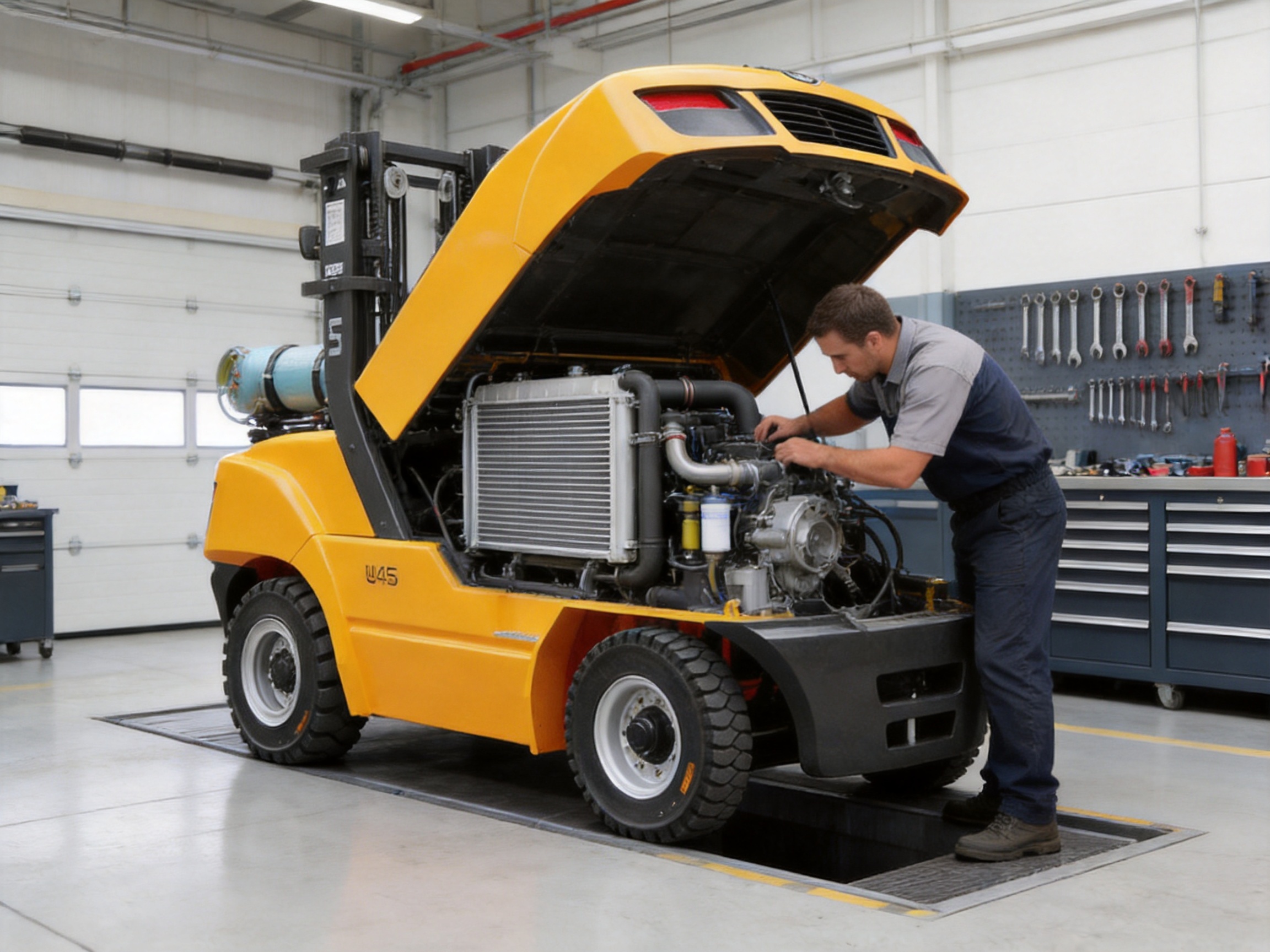
This forklift is ideal for users who frequently handle loads between 4,000 kg and 5,000 kg and require reliable operation over long shifts. It fits factories moving large steel parts, logistics companies handling heavy pallets, construction material suppliers moving blocks and packaged materials, beverage and paper operations managing dense loads, and outdoor yards where internal combustion power remains necessary.
It is also suitable for companies transitioning toward cleaner handling equipment but not yet ready for full electrification. LPG operation can reduce emissions compared with traditional diesel equipment while preserving fast refueling and strong performance. For mixed indoor-outdoor work, the forklift provides a practical combination of power, flexibility, and cleaner operation.
Purchasing Considerations
Before purchasing, users should define their maximum load weight, typical load center, required lift height, aisle width, surface condition, shift length, fuel availability, and attachment needs. The standard load center is 500 mm, but long loads can change the effective load center and reduce safe capacity. Users should also consider whether a side shifter, integrated side shifter, fork positioner, or other attachment will be installed.
It is also important to evaluate facility dimensions. The overall width is 1485 mm, the overhead guard height is 2260 mm, and the turning radius ranges from 2790 mm to 2830 mm. The minimum aisle width for pallets is listed at 4640 mm or 4680 mm depending on model. These figures should be compared with real aisle dimensions, rack layout, truck dock conditions, and doorway heights.
For operations with high ambient temperatures or dusty environments, the cooling system and maintenance schedule should be reviewed. The large radiator and efficient cooling design are advantages, but proper maintenance remains essential. Radiator cleaning, hydraulic oil checks, transmission service, tire inspection, brake inspection, and engine maintenance should be included in fleet management routines.
Q&A Section
What capacities are available in this forklift range?
The range includes 4,000 kg, 4,500 kg, and 5,000 kg rated load capacities. The corresponding models are FGL40T, FGL45T, and FGL50T. All are designed around a 500 mm load center for the listed ratings.
Why choose an LPG and gasoline forklift instead of a diesel forklift?
LPG operation can reduce visible exhaust, odor, and particulate emissions compared with many diesel forklifts. It is a practical choice for users who need internal combustion power but want a cleaner working environment and improved environmental performance.
Is this forklift suitable for continuous operation?
Yes. The forklift is designed for medium to large-scale handling operations and long working shifts. Its powerful engine, powershift transmission, strong structure, efficient cooling system, and quick refueling capability support continuous industrial use.
What makes the forklift easier to maintain?
The engine cover opens nearly 90 degrees, giving technicians easier access for inspection and service. The transmission oil filter is also designed for quick replacement. These features reduce maintenance time and support better fleet availability.
How does the forklift improve operator safety?
Safety features include OPS, a seat switch, a wide-visibility mast, and a high-strength overhead guard. The ergonomic operator space, adjustable steering, and comfortable seat also help reduce fatigue during long shifts.
Can the forklift be equipped with different mast options?
Yes. The forklift offers wide view mast options and three-stage full free wide view mast options. Lift heights can be selected according to the user’s worksite requirements, with available configurations reaching up to 6,000 mm.
Does adding a side shifter affect capacity?
Yes. A separated side shifter reduces load capacity by 200 kg, while an integrated side shifter reduces load capacity by 100 kg. Users should consider this when selecting attachments and calculating residual capacity.
What industries can benefit most from this forklift?
Industries such as logistics, manufacturing, construction materials, metal processing, paper products, beverage distribution, warehousing, and outdoor yard operations can benefit from the forklift’s heavy-duty capacity, fuel flexibility, and dependable performance.
Conclusion
The N Series 4.0T–5.0T LPG and gasoline forklift is a strong solution for companies that require heavy-duty lifting, dependable operation, reduced emissions, and practical maintenance. It combines a powerful PSI4.3 engine, powershift transmission, precise hydraulic control, wide mast visibility, stable chassis design, and ergonomic operator features. With rated capacities from 4,000 kg to 5,000 kg, it serves the demanding middle-heavy segment where productivity and reliability have direct economic impact.
Its advantages over competing forklifts are clear: cleaner operation than many diesel alternatives, faster refueling than many electric solutions, strong continuous work capability, accessible maintenance, and configuration flexibility. The product is supported by a manufacturer with decades of experience, broad production capability, international service networks, and a strong background in material handling innovation.
For buyers seeking a forklift that can handle heavy loads while supporting modern expectations for efficiency, safety, environmental responsibility, and lifecycle value, this LPG and gasoline forklift range offers a practical and competitive choice.
References
Industrial Truck Association. General Principles of Powered Industrial Truck Operation and Safety.
International Organization for Standardization. ISO 3691 Series, Industrial Trucks Safety Requirements and Verification.
Material Handling Industry. Guidelines for Forklift Selection, Fleet Productivity, and Warehouse Safety.
Internal Combustion Engine Association. LPG Engine Performance and Emission Characteristics in Industrial Equipment.
Forklift Engineering Handbook. Load Stability, Mast Design, Hydraulic Systems, and Powertrain Selection for Industrial Trucks.
Product: N Series 4.0T-Mini5.0T LPG&Gasoline Forklift
For exclusive deals and latest offers, sign up by entering your email address below.
Stay In Touch
ADDRESS : NO.1 ROAD ONE, XINDENG NEW DISTRICT, FUYANG, HANGZHOU, ZHEJIANG, CHINA 311404.
PHONE : +86-571-8688 8355 (AMERICA)
PHONE : +86-571-8886 9363 (EUROPE)
PHONE : +86-571-8688 8377 (ASIA, AFRICA, OCEANIA)
EMAIL : [email protected]
EMAIL : [email protected](PARTS INQUIRY)

