


 中文简体
中文简体 Français
 русский
 Español
 عربى
عربى Deutsch



Heavy-Duty Lithium-Ion Forklifts for High-Capacity Material Handling
Admin 2026-06-15In demanding logistics, manufacturing, building materials, ports, timber, metalworking, and large-scale warehousing operations, the forklift is no longer just a lifting machine. It is a productivity platform that affects labor efficiency, energy consumption, safety performance, maintenance planning, and the total cost of every pallet movement. The NL Series 5.0T-7.0T Li-ion Battery Forklift is designed for this modern operating reality. It combines the rugged structure of a proven internal combustion forklift platform with the cleaner, quieter, and more efficient power advantages of lithium-ion technology.
This product is positioned as a heavy-duty new energy solution for customers who need to replace traditional large-tonnage internal combustion forklifts without compromising strength, stability, or outdoor capability. Many electric forklifts are highly efficient indoors, yet some struggle when they are expected to work like diesel or LPG forklifts in difficult, multi-shift, mixed indoor and outdoor environments. The NL Series was developed to close that gap. It is built around a durable chassis concept, supports large load capacities, offers fast opportunity charging, and reduces routine maintenance tasks commonly associated with combustion engines.
For heavy-duty users, the key question is not simply whether a forklift is electric. The real question is whether it can deliver reliable lifting, traction, braking, steering, operator comfort, environmental compliance, and economical operation over years of use. The NL Series answers that need by combining lithium battery power, robust structural design, intelligent electrical protection, and practical serviceability. It reflects the manufacturing experience and engineering capability of Zhejiang UN Forklift Co., Ltd., a material handling equipment manufacturer with decades of industrial background, broad product coverage, and international market experience.
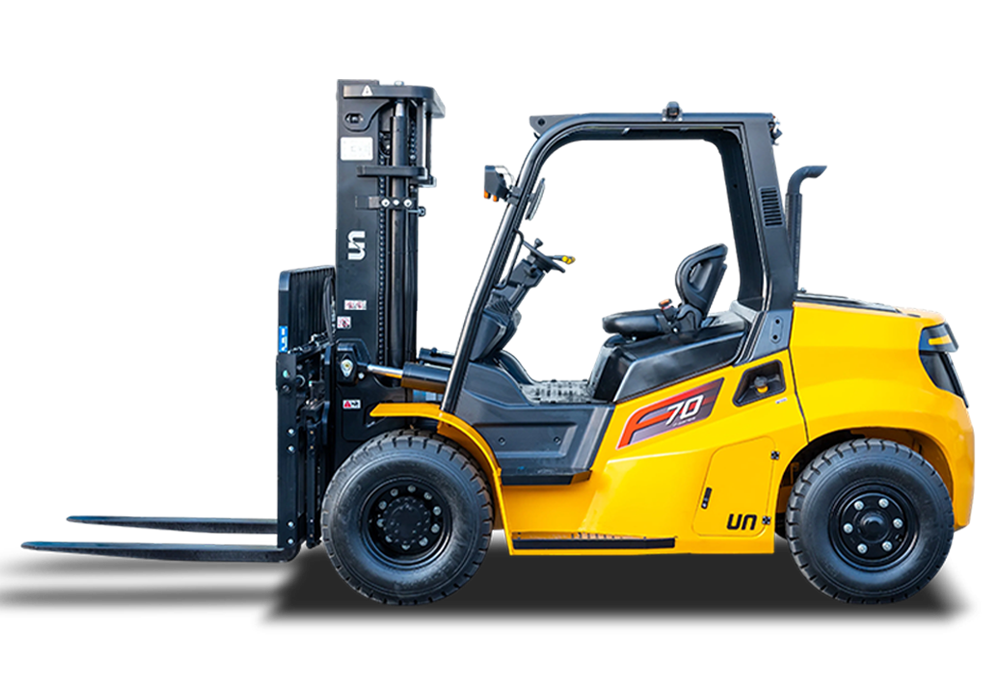
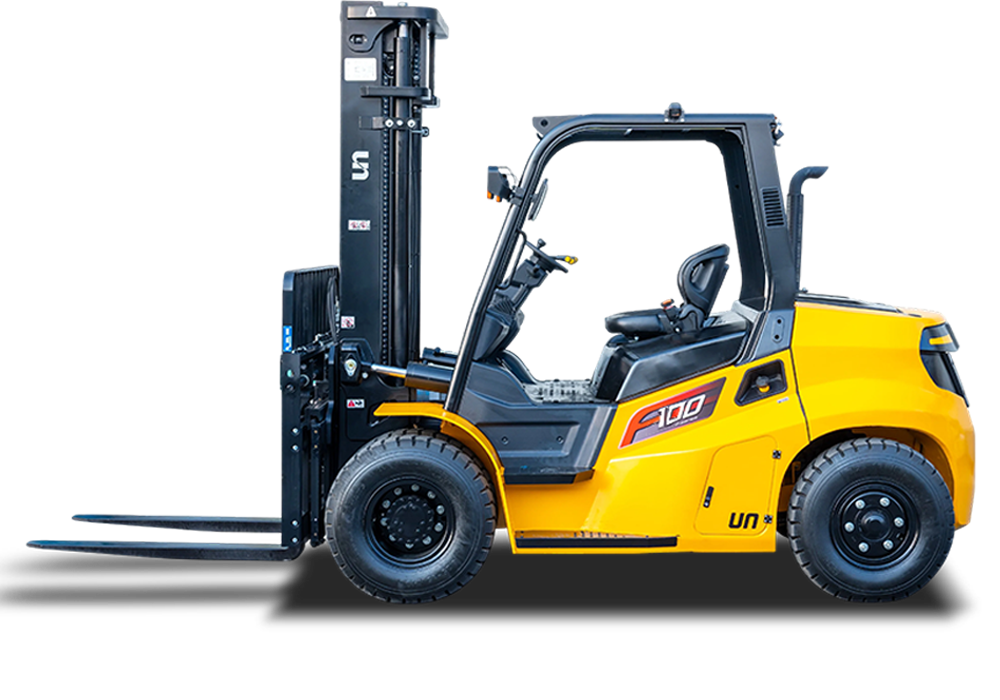
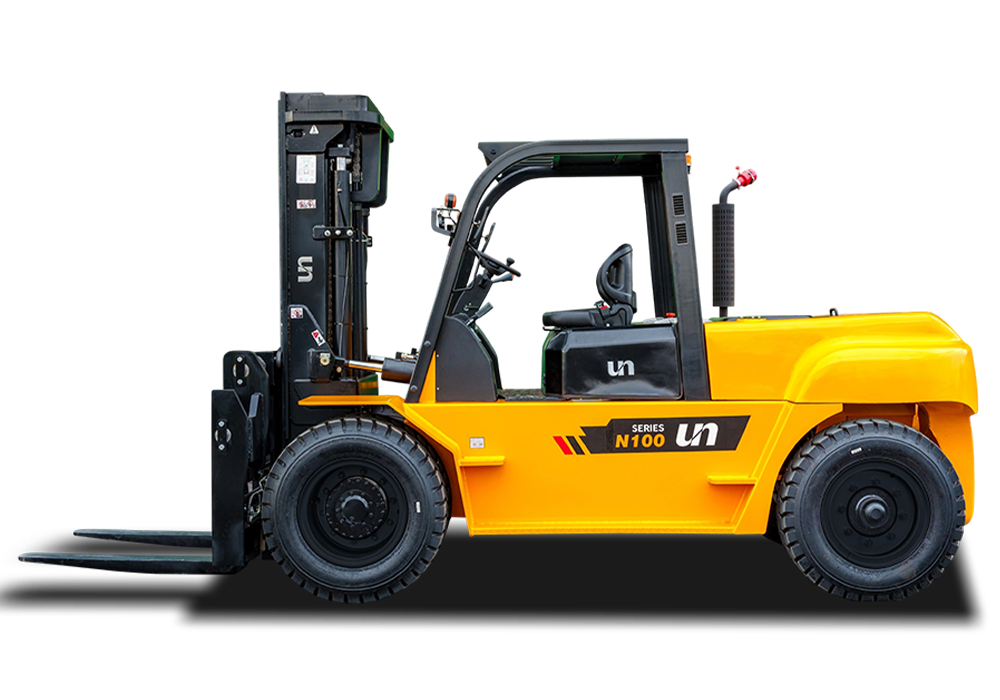
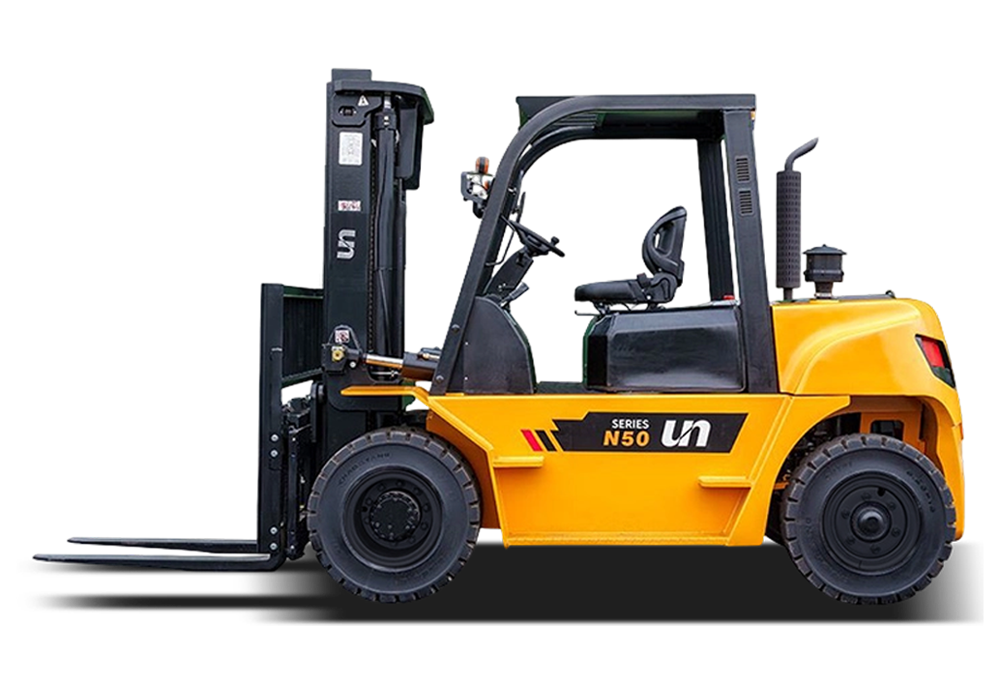
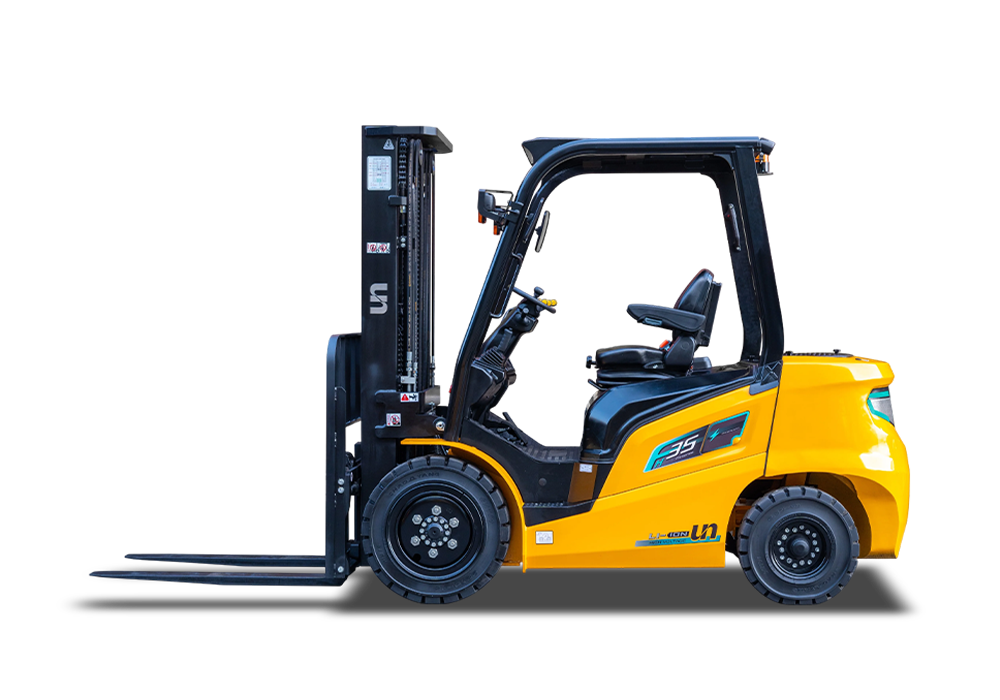
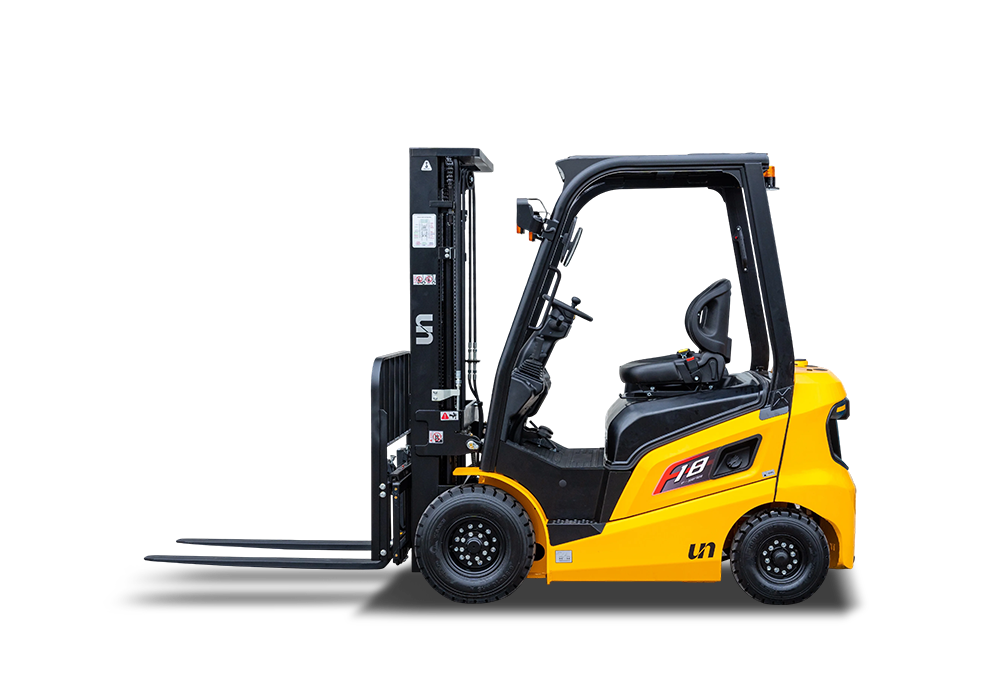
NL Series 5.0T-7.0T Li-ion Battery Forklift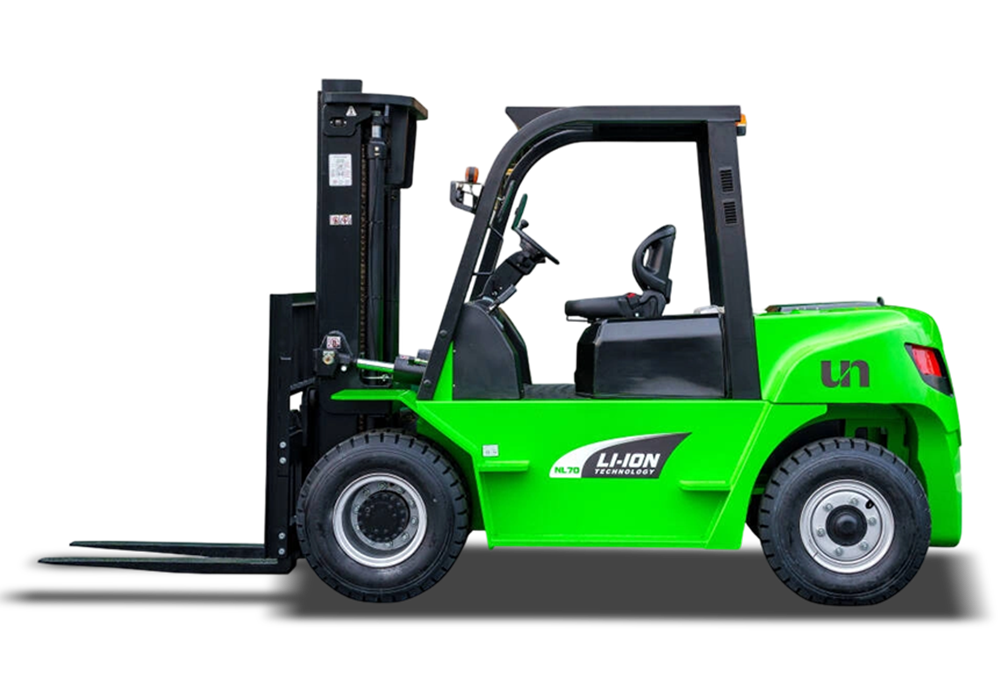
Product Overview: A Heavy-Duty Electric Alternative to Combustion Forklifts
The NL Series 5.0T-7.0T Li-ion Battery Forklift is part of a high-capacity lithium-ion electric forklift family designed for customers who want clean energy performance in demanding applications. The product data also includes a 10.0T configuration within the broader specification range, showing the platform’s ability to support heavy loads beyond ordinary warehouse duties. With rated load capacities of 5000 kg, 7000 kg, and 10000 kg in the listed specification tables, the platform is suitable for heavy palletized goods, industrial materials, machinery components, containers, stone, steel, paper rolls, and other high-density loads.
Unlike lightweight electric warehouse trucks that are mainly optimized for smooth indoor floors, this series draws heavily from the architecture of traditional internal combustion forklifts. That means the frame, drive axle layout, mast relationship, ground clearance, and general structural philosophy are closer to the kind of forklift that customers already trust for outdoor or all-weather heavy-duty use. At the same time, the combustion engine is replaced by a lithium-ion battery system that produces zero tailpipe emissions, low noise, reduced vibration, and lower daily service requirements.
The product has a rated lift height of 3000 mm in the main specification data, which is a practical standard for many loading, unloading, stacking, and production transfer applications. A 600 mm load center supports stable handling of larger industrial loads. The forklift’s performance figures, including travel speed, lifting speed, gradeability, and turning radius, show that the design is intended to maintain productive operation while carrying heavy loads.
For users comparing electric and internal combustion equipment, the most important advantage is the balance between familiar strength and future-ready energy efficiency. The NL Series does not ask operators and fleet managers to choose between power and sustainability. It offers a path to electrification while preserving the durability, operating confidence, and service practicality expected from large-tonnage forklifts.
Core Advantages Over Conventional Internal Combustion Forklifts
Traditional diesel and LPG forklifts have long been used in heavy-duty material handling because they provide strong traction, continuous operation, and durable construction. However, they also bring fuel costs, exhaust emissions, engine maintenance, noise, heat, and regulatory pressure. The NL Series is designed to keep the practical advantages of heavy-duty forklift architecture while removing many of the disadvantages associated with combustion power.
The most visible advantage is zero tailpipe emissions. In warehouses, workshops, food processing areas, enclosed loading bays, and production spaces, emissions control is increasingly important. Diesel exhaust and LPG emissions can require ventilation, create odor, and affect employee comfort. A lithium-ion forklift eliminates tailpipe emissions at the point of use, helping operators improve air quality and meet stricter environmental expectations.
The second advantage is lower energy cost. Fuel prices fluctuate, and high-capacity diesel forklifts can consume substantial fuel in multi-shift operations. Lithium-ion power allows companies to manage energy consumption through electrical charging, which is often more predictable and easier to integrate with facility energy planning. Over the life of the forklift, the removal of fuel expenditures can create major savings, especially for fleets with intensive daily utilization.
The third advantage is reduced routine maintenance. Combustion forklifts require engine oil changes, filter replacements, fuel system maintenance, exhaust system care, cooling system checks, and other engine-related service tasks. The NL Series uses maintenance-free lithium battery technology, removing many of these recurring requirements. The result is fewer service interruptions, lower maintenance labor, reduced parts consumption, and cleaner workshop management.
The fourth advantage is operator comfort. Electric power reduces vibration and engine noise, which can improve driver concentration during long shifts. Lower noise also improves communication and safety in busy facilities. For customers that operate indoors and outdoors throughout the day, the ability to reduce noise without giving up heavy-duty capability is a meaningful operational improvement.
The fifth advantage is sustainability and brand value. Many companies now evaluate suppliers, logistics partners, and production sites based on carbon reduction strategies. Replacing heavy-duty combustion forklifts with lithium-ion forklifts can become part of a measurable sustainability program. The NL Series helps companies modernize their fleets while maintaining the productivity required for industrial work.
Advantages Over Ordinary Electric Forklifts
Not all electric forklifts are suitable for heavy-duty mixed-use applications. Some electric models are built primarily for indoor warehousing, narrow aisles, smooth floors, and relatively clean environments. They may perform well in those conditions but can be less suitable for outdoor yards, uneven surfaces, wet conditions, dust, heavier loads, and long duty cycles. The NL Series addresses these limitations through a design philosophy based on heavy-duty internal combustion forklift architecture.
A major competitive advantage is the strong chassis. The product adopts an internal combustion forklift architecture supported by more than 20 years of market-proven reliability. This gives the forklift a strong and durable frame, which is essential when lifting large loads or operating in applications where ground conditions and load impacts are more severe. Compared with lighter electric designs, this structural foundation helps improve durability and confidence.
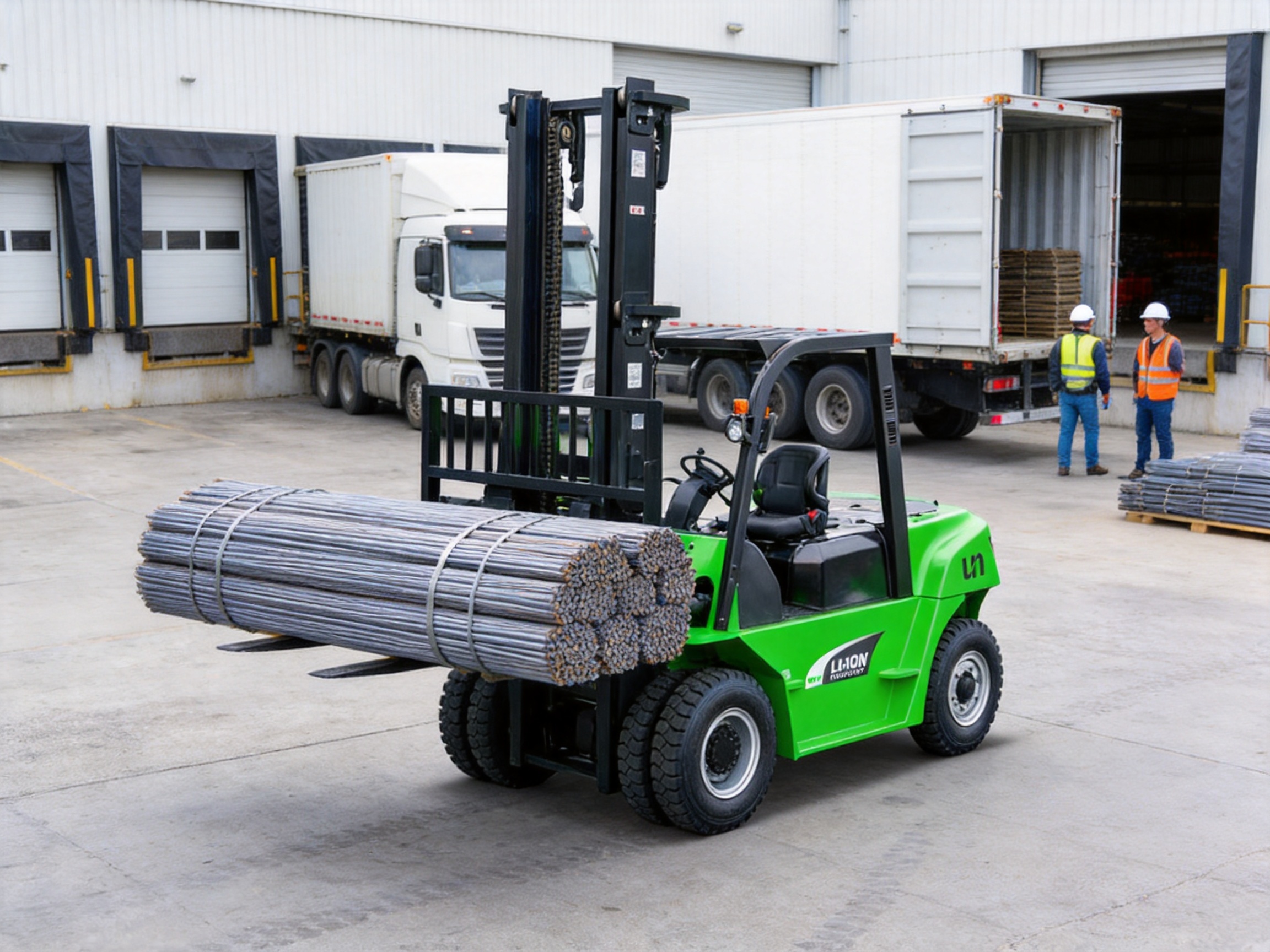
The series is also designed with multi-scenario capability. It can work efficiently indoors and outdoors, supported by robust waterproof and dustproof performance. This is especially important for companies that do not want separate fleets for warehouse interiors and outdoor yards. A forklift that can cross between environments allows more flexible equipment allocation and higher utilization.
Another advantage is service practicality. Critical components such as the drive axle and mast are interchangeable with those of traditional internal combustion forklifts. This is valuable because many service teams, dealers, and maintenance departments already understand the structure and maintenance approach of IC-style forklift components. Interchangeability can reduce repair cost, shorten downtime, and simplify parts planning.
The NL Series also offers improved operator space compared with many typical lithium forklifts. Lithium battery packaging sometimes reduces cabin comfort in compact electric designs. This series uses a design that provides expanded leg space and a stable, low center of gravity. Better ergonomics are not a luxury in heavy-duty applications; they directly affect fatigue, safety, and productivity across long shifts.
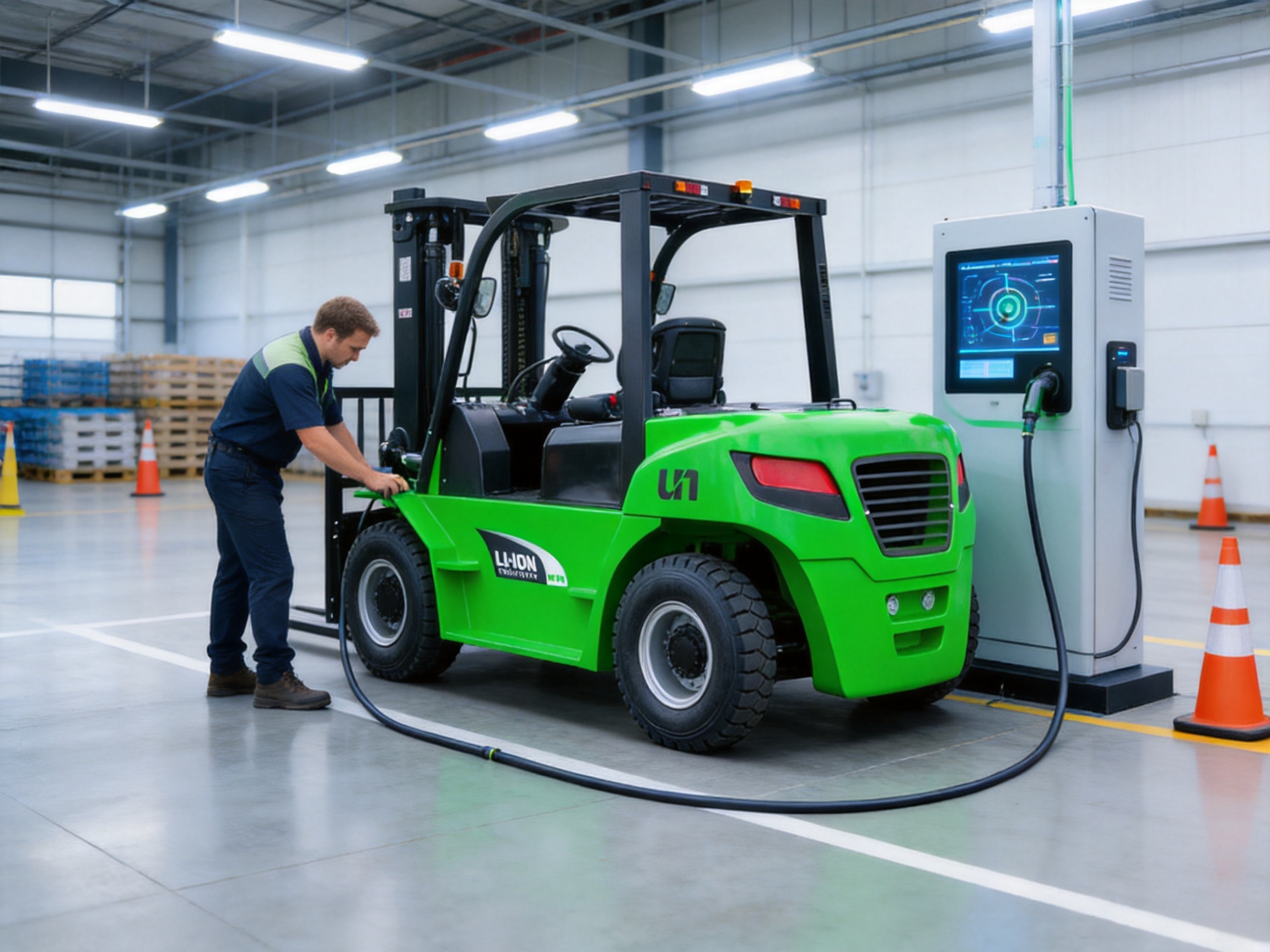
Fast charging further distinguishes the product from many battery-powered alternatives. The lithium battery can be charged quickly, with a typical charging time of about two hours according to the product information. Opportunity charging allows the forklift to be recharged during breaks, shift changes, loading pauses, or planned intervals. This helps maintain continuous fleet availability without the long downtime often associated with traditional lead-acid battery charging.
Lithium-Ion Battery Performance and Lifecycle Value
The battery system is one of the central strengths of the NL Series. The specification data lists battery configurations such as 76.8V/560Ah, 76.8V/700Ah, and 76.8V/840Ah, with related product information also referring to 80V class battery options. These capacities correspond to the heavy-duty needs of 5.0T, 7.0T, and 10.0T models. The battery is not merely an energy source; it is a productivity asset that determines availability, charging behavior, maintenance cost, and long-term value.
Lithium-ion batteries offer several advantages over traditional lead-acid batteries. They can be charged faster, accept opportunity charging more effectively, and generally do not require watering or acid maintenance. They also avoid battery room management, acid spills, and some of the handling requirements associated with lead-acid battery exchange. For high-capacity forklifts, avoiding battery exchange equipment and associated labor can simplify operations significantly.
The product information notes that the lithium battery is designed for approximately 4000 charge-discharge cycles and is supported by a five-year warranty. This reflects a lifecycle approach. Fleet managers do not purchase forklifts for a single season; they plan for years of service. A durable battery with long cycle life helps protect the investment and supports predictable operating costs.
Quick two-hour charging is particularly important in multi-shift work environments. In many facilities, equipment availability is more important than theoretical maximum battery capacity. A forklift that can recharge during planned intervals can remain available throughout the working day with less need for spare units. This can reduce fleet size, save floor space, and improve asset utilization.
The battery system is supported by CAN bus communication and BMS protection. A battery management system monitors key conditions and protects the battery from abnormal operation. In a heavy-duty electric forklift, intelligent monitoring is critical because the machine handles large loads and operates under changing traction, lifting, braking, and environmental demands. Continuous monitoring helps improve safety, reliability, and confidence.
From a cost perspective, lithium technology can reduce total ownership cost through lower energy expenses, fewer maintenance parts, reduced downtime, and longer service intervals. While purchase price is only one part of the fleet equation, operating cost over the machine’s life often determines the real economic result. The NL Series is designed to deliver cost parity with traditional internal combustion models at purchase while eliminating fuel expenses and many routine engine service tasks.
Chassis, Structural Strength, and Heavy-Duty Stability
Heavy-duty forklifts must resist deformation, impact, twisting, vibration, and repeated load stress. The NL Series uses a chassis and frame concept derived from internal combustion forklift architecture. This matters because IC forklifts have historically been built for hard outdoor work, rougher yards, and high-load handling. By applying lithium power to such an architecture, the forklift gains the environmental and operational advantages of electrification without becoming fragile or overly specialized.
A strong frame improves more than durability. It also supports mast stability, steering precision, braking confidence, and operator control. When lifting 5000 kg or 7000 kg loads at a 600 mm load center, structural stiffness is essential. Flex or instability can reduce driver confidence and affect the safety of stacking operations. The NL Series is built to provide the stable foundation required for industrial material handling.
The low center of gravity contributes to smooth and stable turning. Stability during turns is especially important for large-tonnage forklifts because load momentum increases with weight. The product information highlights superior stability and a comfortable ride during turning operations. This is a meaningful advantage in factories and yards where operators must maneuver around production lines, trucks, storage racks, and other vehicles.
The series also provides practical ground clearance. The specification data lists ground clearance values such as 200 mm and 245 mm depending on model configuration. This supports use across transitions, ramps, uneven surfaces, yard areas, and outdoor environments. While it is not a rough terrain forklift, it is designed to be more versatile than many indoor-only electric alternatives.
The mast and drive axle compatibility with traditional internal combustion forklifts provides another structural advantage. Customers benefit from proven heavy-duty components and easier maintenance. In competitive comparisons, some electric forklifts use specialized components that may increase repair complexity or parts lead time. The NL Series reduces that risk by using familiar and serviceable architecture where practical.
Hydraulic, Steering, and Safety Systems
Safety in a heavy-duty forklift depends on multiple systems working together. Braking, steering, hydraulic lifting, electrical control, battery protection, visibility, ergonomics, and structural design all contribute to safe operation. The NL Series includes an optimized hydraulic station designed to maintain steering performance and stability during braking. This is especially important because heavy-duty forklifts experience large dynamic forces when carrying full loads.
Reliable steering under braking helps operators maintain control in real working conditions. In busy industrial environments, a forklift may need to slow, stop, or adjust direction quickly while handling heavy materials. A hydraulic system that supports steering performance during braking adds confidence and reduces operational risk.
The CAN bus and BMS protection system continuously monitors the forklift and battery condition. This helps detect abnormal conditions and supports system-level safety management. In lithium-ion equipment, battery safety is a key concern for fleet owners. A properly managed battery system helps protect the machine and supports stable power delivery.
The hood’s increased opening angle improves maintenance access. Safety is not only about operation; it is also about service. When technicians can access key components quickly and clearly, inspection quality improves and service time decreases. Easy access encourages regular checks and reduces the chance of neglected maintenance.
Reduced noise and vibration also support safety. Operators who are less fatigued and better able to hear surrounding signals can respond more effectively. Electric forklifts can improve communication between drivers, pedestrians, and supervisors, especially in indoor spaces where engine noise can echo and intensify.
For heavy-load handling, stability is a central safety factor. The forklift’s design supports stable turning, a strong chassis, and a low center of gravity. These features are particularly valuable in applications involving tall loads, uneven load distribution, or frequent movement between indoor and outdoor surfaces.
Operator Comfort and Ergonomic Productivity
Operator comfort directly affects productivity. A forklift may appear strong on a specification sheet, but if the driver experiences fatigue, restricted leg space, vibration, or poor maneuvering comfort, productivity decreases and safety risks increase. The NL Series addresses operator comfort through a design that provides expanded leg space, smoother electric operation, and stable turning behavior.
Compared with typical lithium forklifts, this series offers a more comfortable driving environment because its architecture is not limited to a compact battery-focused layout. The product information specifically highlights expanded leg space, which can be especially valuable for long shifts. Drivers who repeatedly climb in and out of the forklift, operate pedals, turn the steering wheel, and adjust posture throughout the day benefit from a more spacious cabin area.
Electric drive reduces vibration compared with diesel power. Less vibration means less physical fatigue for the operator and potentially less stress on vehicle components. Reduced noise improves the working environment and can help operators remain focused during repetitive handling cycles.
Stable turning improves comfort as well as safety. A low center of gravity and strong chassis help the forklift feel more controlled during movement. Operators can work with greater confidence when the vehicle responds predictably. This is particularly important when handling expensive or fragile heavy goods.
The product’s fast charging and reduced maintenance also indirectly improve operator productivity. If a forklift is more available, operators spend less time waiting for equipment, changing batteries, or dealing with engine-related issues. A comfortable, reliable, and available machine helps create smoother workflow throughout the facility.
Application Scenarios and Industry Fit
The NL Series is suitable for customers who need high-load electric forklifts capable of replacing large internal combustion forklifts. It is especially relevant where companies want to reduce emissions without sacrificing outdoor performance or heavy-duty capability. Applications include manufacturing plants, warehouses, logistics centers, construction material storage, steel processing, timber handling, paper and packaging, ports, equipment assembly, recycling facilities, and large distribution operations.
In manufacturing plants, the forklift can move raw materials, dies, molds, machinery parts, finished goods, and heavy pallets between production zones. The absence of exhaust emissions is advantageous when the forklift enters workshops or enclosed spaces. Fast charging supports shift-based production, allowing the vehicle to recharge during breaks or scheduled pauses.
In warehouses and distribution centers, the forklift provides high lifting capacity for large palletized loads. Its electric operation reduces noise and improves indoor air quality. While smaller warehouse trucks may handle standard pallets efficiently, heavy-duty goods require a machine with stronger structure and higher capacity. The NL Series fills that role.
In outdoor yards, the robust chassis and waterproof and dustproof performance provide practical flexibility. Many facilities need forklifts to operate between loading docks, covered warehouses, outdoor storage zones, and truck parking areas. A forklift that can cross these environments helps avoid the need for separate diesel and electric fleets.
In environmentally regulated industries, the forklift can support carbon reduction goals. Companies facing customer audits, government regulations, or internal sustainability targets can use lithium-ion forklifts as part of their emissions reduction strategy. The NL Series provides a heavy-duty pathway toward cleaner operations.
In high-utilization operations, the quick charging and low maintenance requirements become especially valuable. Multi-shift users often calculate every hour of equipment availability. A forklift that charges quickly, avoids fuel handling, and reduces routine service can improve uptime and reduce operating complexity.
Main Technical Specifications
The following table summarizes key specification data for the heavy-duty lithium-ion forklift platform. Specifications and characteristics may vary by configuration and are subject to change without notice.
Item |
FB50 Configuration |
FB70 Configuration |
FD100 Configuration |
Power Type |
Electric |
Electric |
Electric |
Rated Load Capacity |
5000 kg |
7000 kg |
10000 kg |
Load Center |
600 mm |
600 mm |
600 mm |
Rated Lift Height |
3000 mm |
3000 mm |
3000 mm |
Overall Width |
1995 mm |
1995 mm |
2165 mm |
Turning Radius |
3280 mm |
3360 mm |
3900 mm |
Travel Speed Without Load |
14/15 km/h |
12/13 km/h |
12/13 km/h |
Lifting Speed With Full Load |
350/400 mm/sec |
300/350 mm/sec |
270/320 mm/sec |
Maximum Gradeability With Full Load |
15 percent |
14 percent |
12/13 percent |
Total Weight |
8260 kg |
9760 kg |
12900 kg |
Battery |
76.8V/560Ah |
76.8V/700Ah |
76.8V/840Ah |
Drive Motor |
25 kW |
25 kW |
35 kW |
Lift Motor |
21 kW x 2 |
21 kW x 2 |
25.4 kW x 2 |
Operating Pressure for Attachments |
19.5 MPa |
19.5 MPa |
19.5 MPa |
These specifications show that the platform is designed for serious industrial use. The 5000 kg and 7000 kg models are especially aligned with the named NL Series 5.0T-7.0T focus, while the larger 10000 kg data demonstrates the scalability of the engineering concept. Customers can evaluate the correct configuration based on load weight, working aisle width, lifting requirements, ground conditions, travel distances, and charging opportunities.
Total Cost of Ownership: Where the Product Creates Long-Term Value
The purchase price of a forklift is only the beginning of the ownership cost. A full cost evaluation includes fuel or electricity, maintenance labor, replacement parts, downtime, battery lifecycle, operator productivity, facility ventilation, emissions compliance, resale value, and fleet management complexity. The NL Series is designed to reduce total ownership cost by attacking several major cost categories at once.
Fuel savings are one of the most direct benefits. Internal combustion forklifts require diesel or LPG throughout their service life. In high-use operations, fuel cost can become one of the largest operating expenses. Lithium-ion forklifts use electrical energy instead, which is often more economical and easier to control. Facilities can charge during off-peak periods or integrate charging into planned work cycles.
Maintenance savings are another major benefit. Removing the combustion engine eliminates many routine service items: engine oil, oil filters, air filters, fuel filters, spark-related components in some fuel types, exhaust components, and engine cooling system issues. The lithium battery is maintenance-free in normal use, which reduces service labor and avoids lead-acid watering routines.
Downtime reduction is equally important. A forklift that is not working can interrupt production, delay shipments, or require backup equipment. Fast charging and simplified maintenance help keep the machine available. The two-hour charging capability and flexible recharge options support multi-shift operations where conventional battery charging schedules might be difficult.
Component interchangeability also reduces ownership cost. Since key components such as the drive axle and mast are interchangeable with traditional IC forklift parts, maintenance teams can perform repairs more quickly and economically. This advantage should not be underestimated. Specialized electric forklift components may be more expensive or slower to obtain, while familiar heavy-duty components support practical fleet service.
Operator productivity contributes to total cost as well. A comfortable, quiet, stable forklift allows drivers to work efficiently with less fatigue. In operations where forklifts run for many hours per day, even small improvements in cycle time and operator comfort can create measurable annual value.
Manufacturing Strength Behind the Product
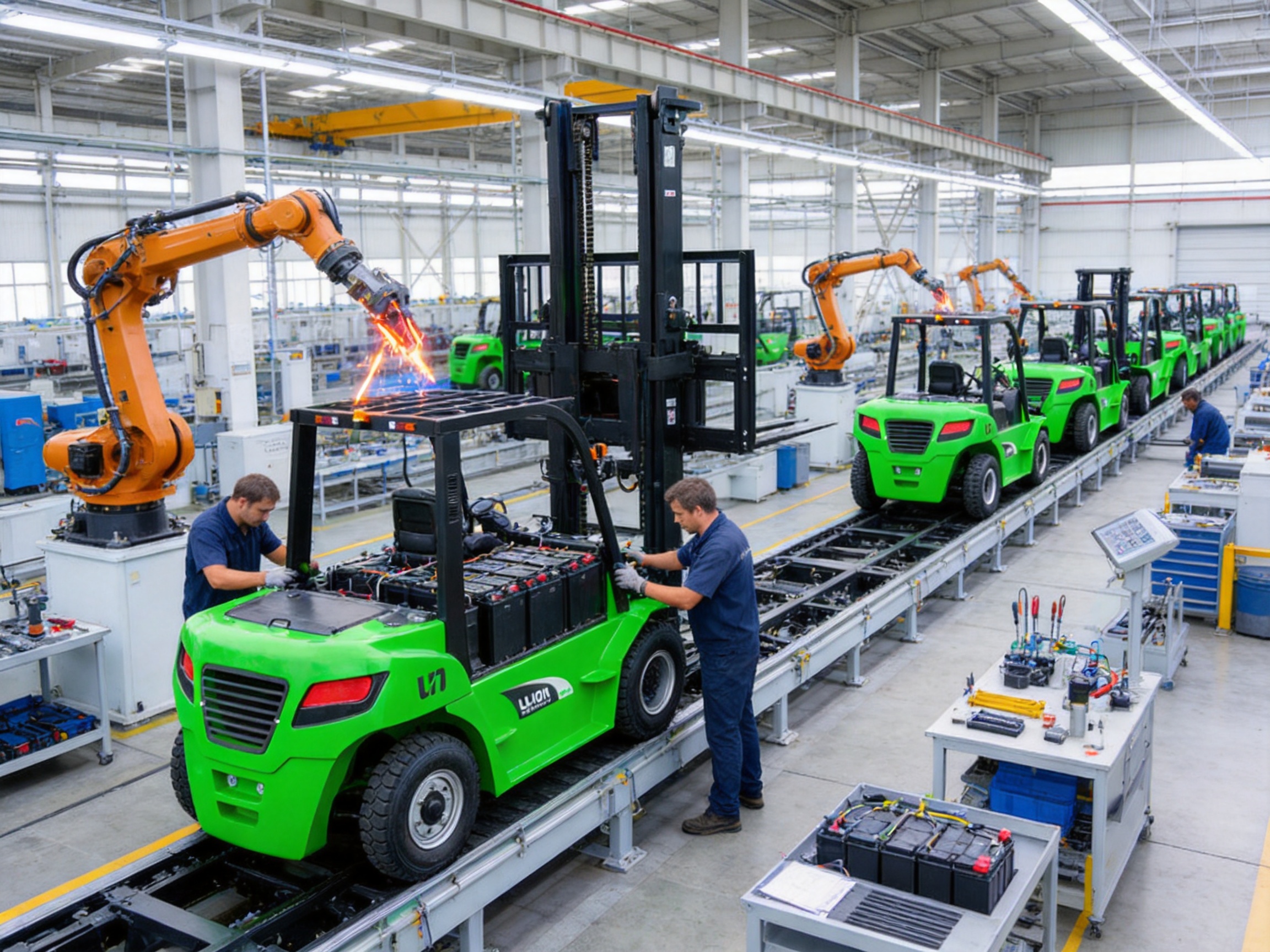
The performance of a heavy-duty forklift depends not only on design but also on manufacturing discipline. Zhejiang UN Forklift Co., Ltd. is a professional material handling equipment manufacturer integrating research and development, production, sales, and service. Founded in 1978, the company has decades of experience in forklift engineering and industrial manufacturing. This long operating history supports product reliability because forklift manufacturing requires accumulated knowledge in welding, machining, mast production, hydraulic systems, powertrain integration, electrical control, testing, and final assembly.
The company occupies 53,400 square meters and has an annual production capacity of 15,000 units. This scale supports stable production, systematic quality control, parts supply coordination, and the ability to serve international customers. A manufacturer with broad capacity can maintain consistent output while supporting different product categories, options, and market requirements.
The product range includes internal combustion forklifts, electric forklifts, warehouse equipment, cushion tire forklifts, rough terrain forklifts, and compact construction-related handling equipment. This wide product base gives the manufacturer a broad technical foundation. The NL Series benefits from this background because it combines internal combustion forklift structure with lithium-ion power. A company experienced in both IC and electric technology is better positioned to integrate the strengths of each.
The company has participated in the formulation of electric forklift industry standards in China and holds national patents for electric forklift technologies. This indicates that its role is not limited to assembly. It has engineering participation in the development of the sector. For customers, this matters because advanced products such as lithium-ion heavy-duty forklifts require knowledge of battery systems, electrical protection, hydraulic integration, drive performance, and safety standards.
The manufacturer’s history includes notable innovation, including the development of China’s first reach forklift and VNA truck. These achievements demonstrate long-term technical ambition in warehouse and material handling equipment. Innovation capability is essential for new energy forklifts because the market is evolving rapidly. Customers need products that are not only durable today but also aligned with future energy, safety, and efficiency expectations.
The company also serves international markets through a worldwide sales and service network with partners in Europe, South America, North America, Africa, and Asia. For heavy-duty equipment buyers, after-sales support is critical. A forklift is a working asset, and customers need access to service, parts, technical assistance, and product guidance. A global network improves confidence for international buyers considering fleet modernization.
Advanced Manufacturing Processes and Quality Orientation
Heavy-duty forklift manufacturing requires a combination of robust mechanical processes and modern electrical integration. The NL Series reflects a production philosophy that combines proven mechanical platforms with new energy system integration. This type of manufacturing is more complex than simply replacing an engine with a battery. The frame must support battery placement, weight distribution, cooling behavior, service access, wiring protection, and system safety.
Chassis manufacturing begins with structural design and material preparation. Heavy-duty frames require strong steel components, precise cutting, accurate forming, and controlled welding. Proper welding quality is essential because the frame carries load stress, mast forces, counterweight forces, and dynamic impacts during travel. Consistent welding processes help ensure long-term durability and reduce the risk of fatigue issues.
Mast production is another critical area. The mast must lift heavy loads smoothly while maintaining stability and alignment. Manufacturing quality affects lifting smoothness, visibility, wear behavior, and service life. The use of proven mast components compatible with IC forklift architecture helps support reliability and easier maintenance.
Hydraulic system assembly requires cleanliness, pressure control, seal quality, and accurate testing. The NL Series includes an optimized hydraulic station that supports steering and stability during braking. To deliver this performance reliably, hydraulic components must be assembled and tested carefully. Contamination control is especially important because hydraulic system contamination can lead to premature wear or valve issues.
Electrical integration is central to lithium-ion forklift production. Wiring harnesses, controllers, sensors, CAN bus communication, battery management systems, chargers, motors, and safety circuits must be integrated as a complete system. The BMS must communicate properly with the forklift control system to monitor battery condition and protect the machine. Manufacturing consistency in this area directly affects safety and uptime.
Final assembly and testing are essential. Heavy-duty forklifts must be checked for travel performance, lifting function, braking, steering, hydraulic pressure, electrical system behavior, battery communication, safety functions, and operational smoothness. Product reliability depends on both component quality and final validation. A manufacturer with decades of forklift production experience can apply accumulated testing knowledge to new energy models.
Quality orientation also includes design for maintenance. The increased hood opening angle, maintenance-free battery, and interchangeable components show that serviceability was considered during product development. A forklift that is easier to inspect and repair is more likely to remain in good operating condition throughout its service life.
Engineering Philosophy: Combining Proven Architecture with New Energy Technology
One of the strongest aspects of the NL Series is its engineering balance. Some new energy products are designed around novelty, but heavy-duty users need reliability above all. The NL Series uses a proven internal combustion forklift architecture as a foundation, then incorporates lithium-ion battery technology and electric drive systems to improve efficiency, emissions performance, and operating cost.
This engineering philosophy reduces risk. Operators and maintenance teams are already familiar with many aspects of IC-style forklifts: mast behavior, chassis robustness, axle layout, and service procedures. By retaining much of this familiarity, the product makes fleet transition easier. Companies can electrify without completely changing the practical character of their equipment.
At the same time, the forklift gains the advantages of electric power. Electric motors provide smooth response, lower vibration, and reduced noise. Lithium batteries support fast charging and low maintenance. Electronic control systems allow monitoring and protection that combustion engines cannot provide in the same way.
The result is not merely an electric forklift; it is a heavy-duty electrification solution. It is built for users who need to move large loads reliably while meeting modern expectations for lower emissions, improved workplace comfort, and lower lifecycle cost.
Environmental and Workplace Benefits
Environmental performance is a major reason companies choose lithium-ion forklifts. The NL Series uses clean, low-carbon lithium batteries that produce no tailpipe emissions during operation. This helps reduce the environmental impact of material handling and supports corporate sustainability initiatives.
For indoor workplaces, zero tailpipe emissions can improve air quality and reduce the need for ventilation associated with combustion exhaust. This is especially beneficial in enclosed warehouses, manufacturing halls, food-related facilities, and logistics spaces where workers and forklifts operate in close proximity.
Noise reduction is another workplace benefit. Combustion forklifts can be loud, especially under acceleration or load. Electric forklifts operate more quietly, improving communication and reducing noise fatigue. Lower noise can also support operations in areas with sound restrictions or near offices and residential zones.
Reduced vibration improves both operator comfort and component protection. Over long shifts, vibration can contribute to fatigue. A smoother electric forklift helps create a better working environment and supports safer operation.
Cleaner operation also affects facility cleanliness. Without engine exhaust and fuel handling, the working environment can remain cleaner. Maintenance areas may also benefit from fewer oil-related service tasks and reduced fluid disposal requirements.
Fleet Transition Strategy: Moving from Diesel to Lithium-Ion
For many companies, the move from diesel or LPG forklifts to lithium-ion forklifts is a strategic decision. It should be planned based on workload, charging infrastructure, shift patterns, energy supply, operator training, and service support. The NL Series is well suited for transition programs because it retains familiar heavy-duty forklift characteristics while introducing cleaner power.
The first step is load analysis. Fleet managers should identify the heaviest regular loads, load centers, attachments, lift heights, travel distances, ground conditions, and shift intensity. The 5.0T and 7.0T models are suitable for many heavy industrial applications, while larger configurations may be considered where heavier loads are common.
The second step is charging planning. The two-hour charging capability and flexible recharge options allow opportunity charging. Facilities can locate chargers near operating zones, loading docks, or parking areas. Charging can be scheduled during meal breaks, shift changes, production pauses, or planned maintenance intervals.
The third step is operator training. Drivers familiar with diesel forklifts may need guidance on electric driving characteristics, charging practices, display warnings, and battery care. Because the platform keeps a familiar heavy-duty architecture, the transition can be easier than switching to a completely different machine type.
The fourth step is maintenance planning. Service teams should understand lithium battery safety, BMS monitoring, electrical inspection, hydraulic service, and mechanical component checks. The maintenance-free battery reduces routine workload, but proper inspection remains important for long-term reliability.
The fifth step is performance tracking. Companies should compare energy cost, downtime, maintenance hours, operator feedback, and productivity before and after the transition. These data points help prove total ownership cost benefits and guide future fleet decisions.
Why This Product Stands Out in a Competitive Market
The forklift market includes many electric models, but the NL Series stands out because it targets heavy-duty users who need more than a standard warehouse electric truck. Its competitive advantages can be summarized in five areas: rugged architecture, lithium energy efficiency, fast charging, service practicality, and manufacturing depth.
Rugged architecture gives the forklift the structural confidence expected from large internal combustion machines. This is important for users who work outdoors, handle heavy loads, or operate in mixed environments. It differentiates the product from lighter electric forklifts that may be less suitable for demanding industrial conditions.
Lithium energy efficiency gives the forklift a lower-emission and lower-maintenance operating profile. It provides an answer to customers facing rising fuel costs, stricter emissions expectations, and the need for cleaner workplaces.
Fast charging supports high utilization. A forklift that can be recharged quickly and flexibly is more practical for multi-shift operations. This helps address one of the historic objections to electric forklifts: downtime for charging.
Service practicality reduces risk. Interchangeability of key components with traditional IC forklifts, combined with easy maintenance access, helps keep the machine economical to maintain. Customers do not want advanced technology that creates service difficulty; they want innovation that improves practical reliability.
Manufacturing depth adds confidence. Zhejiang UN Forklift Co., Ltd. has decades of manufacturing experience, broad product coverage, patent activity, industry standards participation, and international service reach. These strengths support the product behind the specification sheet.
Q&A Section
What type of customer is the NL Series 5.0T-7.0T Li-ion Battery Forklift designed for?
It is designed for heavy-duty customers who need high-capacity material handling with cleaner energy, lower noise, and reduced routine maintenance. It is especially suitable for companies replacing diesel or LPG forklifts in manufacturing plants, warehouses, outdoor yards, logistics centers, and industrial facilities.
How does this forklift compare with a diesel forklift?
It offers similar heavy-duty structural confidence by using internal combustion forklift architecture, but it eliminates tailpipe emissions, reduces noise and vibration, removes fuel expenses, and reduces engine-related maintenance. It is a practical alternative for companies that want diesel-like durability with lithium-ion efficiency.
Can it operate outdoors?
Yes. The product is designed for multi-scenario operation and can work indoors and outdoors. Its robust structure, practical ground clearance, and waterproof and dustproof performance make it more versatile than many indoor-only electric forklifts.
How long does charging take?
The product information highlights quick charging of about two hours. Flexible recharge options and opportunity charging help support multi-shift operations with less downtime.
What is the battery lifecycle?
The lithium battery is designed for approximately 4000 charge-discharge cycles and is supported by a five-year warranty. This helps provide long-term value and predictable operating performance.
Why is lithium-ion better than lead-acid for this type of forklift?
Lithium-ion batteries charge faster, support opportunity charging, require no watering, reduce maintenance work, and avoid many of the handling issues associated with lead-acid battery exchange. These advantages are especially valuable in high-capacity, multi-shift applications.
Does the forklift require special maintenance?
The lithium battery is maintenance-free in normal use, and many combustion-engine maintenance tasks are eliminated. Regular inspection of mechanical, hydraulic, tire, brake, and electrical systems is still important. The increased hood opening angle and component interchangeability help make service easier.
What capacities are available?
The listed product data includes 5000 kg, 7000 kg, and 10000 kg configurations. The 5.0T and 7.0T models are central to the NL Series focus, while the broader platform data shows heavy-duty scalability.
What makes the product comfortable for operators?
The forklift offers reduced vibration and noise due to electric drive, stable turning supported by a low center of gravity, and expanded leg space compared with many typical lithium forklifts. These features help reduce fatigue during long shifts.
Why is the manufacturer’s experience important?
Heavy-duty lithium forklifts require strong mechanical engineering and reliable electrical integration. The manufacturer has decades of forklift production experience, broad product coverage, patent activity in electric forklift technologies, industry standards participation, and international service capability. These strengths support product quality and long-term customer confidence.
Conclusion
The NL Series 5.0T-7.0T Li-ion Battery Forklift represents a practical and forward-looking solution for heavy-duty material handling. It is not simply an electric version of a traditional forklift, nor is it a light warehouse truck stretched into a heavier role. It is a carefully balanced product that combines proven internal combustion forklift architecture with modern lithium-ion power, intelligent protection, fast charging, and maintenance-friendly design.
For customers replacing diesel or LPG forklifts, the advantages are clear: zero tailpipe emissions, lower noise, reduced vibration, fewer routine maintenance tasks, and lower long-term energy costs. For customers comparing electric forklifts, the product stands out through its rugged chassis, outdoor and indoor versatility, stable handling, service practicality, and heavy-duty operating confidence.
The forklift’s value is strengthened by the manufacturing background of Zhejiang UN Forklift Co., Ltd. With a history dating back to 1978, large-scale production capacity, broad product expertise, research and development capability, electric forklift technology patents, participation in industry standards, and a global service network, the company provides more than a machine. It provides the industrial foundation needed to support customers through fleet modernization and the transition to cleaner energy.
As material handling operations face pressure to become more efficient, more sustainable, and more cost-effective, heavy-duty lithium-ion forklifts will play an increasingly important role. The NL Series offers a strong answer for companies that cannot compromise on capacity or durability but still want the operational benefits of electrification. It is a product built for today’s demanding industrial workloads and tomorrow’s cleaner logistics future.
References
Industrial Truck Association. General Guidance on Powered Industrial Truck Applications and Safety Principles.
International Organization for Standardization. Standards Relating to Industrial Trucks, Stability, Safety, and Performance Testing.
Battery University. Technical Overview of Lithium-Ion Battery Characteristics, Charging Behavior, and Cycle Life.
Material Handling Industry. Best Practices for Forklift Fleet Management, Energy Planning, and Total Cost of Ownership Analysis.
Occupational Safety and Health Administration. Powered Industrial Truck Safety Guidance and Operator Training Principles.
Product: NL Series 5.0T-7.0T Li-ion Battery Forklift
For exclusive deals and latest offers, sign up by entering your email address below.
Stay In Touch
ADDRESS : NO.1 ROAD ONE, XINDENG NEW DISTRICT, FUYANG, HANGZHOU, ZHEJIANG, CHINA 311404.
PHONE : +86-571-8688 8355 (AMERICA)
PHONE : +86-571-8886 9363 (EUROPE)
PHONE : +86-571-8688 8377 (ASIA, AFRICA, OCEANIA)
EMAIL : [email protected]
EMAIL : [email protected](PARTS INQUIRY)

