


 中文简体
 Français
 русский
 Español
 عربى
 Deutsch




Forklift Speed Control: Safe Limits, Electronic Governors, and Settings
Admin 2026-11-19At a busy loading dock, two identical 2.5 t counterbalance trucks can feel like different machines. One creeps toward a blind corner at walking pace; the other arrives at 10 km/h with a full pallet and a distracted operator. The difference is rarely the throttle alone. It is the sum of governor settings, controller profiles, hydraulic flow, floor conditions, and site rules. The practical conclusion: treat forklift speed control as a site-specific system, not a single number on a datasheet.
What forklift speed control actually covers
Speed control is often reduced to "fast or slow," but a forklift has several speed outputs that need separate attention. Travel speed is only the most visible one. Acceleration, lift and lower speed, creep, and braking all affect whether a load arrives intact and whether pedestrians get a warning before the truck reaches them.
- Travel speed: maximum forward and reverse ground speed.
- Acceleration: how quickly the truck reaches the set speed.
- Lift and lower speed: mast raise and lower rate under load.
- Creep: fine movement in racks, trailers, and congested docks.
- Braking: service brake response, plugging, and regenerative braking.
| Control point | What it changes | Common adjustment |
|---|---|---|
| Travel speed | Maximum ground speed in forward and reverse | Engine governor, controller speed profile, or pedal map |
| Acceleration | How quickly the truck reaches set speed | Controller ramp, throttle response, motor torque limit |
| Lift and lower speed | Mast raise and lower rate | Hydraulic flow control valve, proportional valve, pump setting |
| Creep speed | Fine movement in tight spaces | Controller mode, pedal curve, inch or creep function |
| Braking | Stopping distance and load stability | Brake adjustment, regenerative braking, speed interlock |
Safe speed starts with zones, not one global number
A common starting guideline is no more than about 8 mph (12.8 km/h) in open areas, dropping to about 3 mph (5 km/h) where pedestrians, blind corners, or racking create risk. Those figures are starting points, not a universal law. A 3 t load on a smooth concrete aisle behaves differently from an empty truck in a yard, and a wet dock plate can turn a normal stop into a slide.
The more useful output is a zone map. Many operations set lower limits at the dock and in pedestrian areas, a moderate limit in main aisles, and a higher limit only in open outdoor areas with clear visibility. The map should also account for blind corners, cross-aisles, charging stations, and trailer entries. A zone-based traffic plan is often more effective than a single global limit, as outlined in UN Forklift's warehouse logistics solutions.
How mechanical governors and electronic speed control differ
Internal combustion forklifts often rely on a mechanical or electronic engine governor to hold engine speed within a set range. Electric trucks use a motor controller, which can limit speed and torque more precisely. An electronic system can read wheel speed, motor speed, or CAN messages, then apply a programmed profile for each zone. Some controllers also support PIN-protected profiles, event logs, and limp-home modes so a supervisor can see whether a limit was changed.
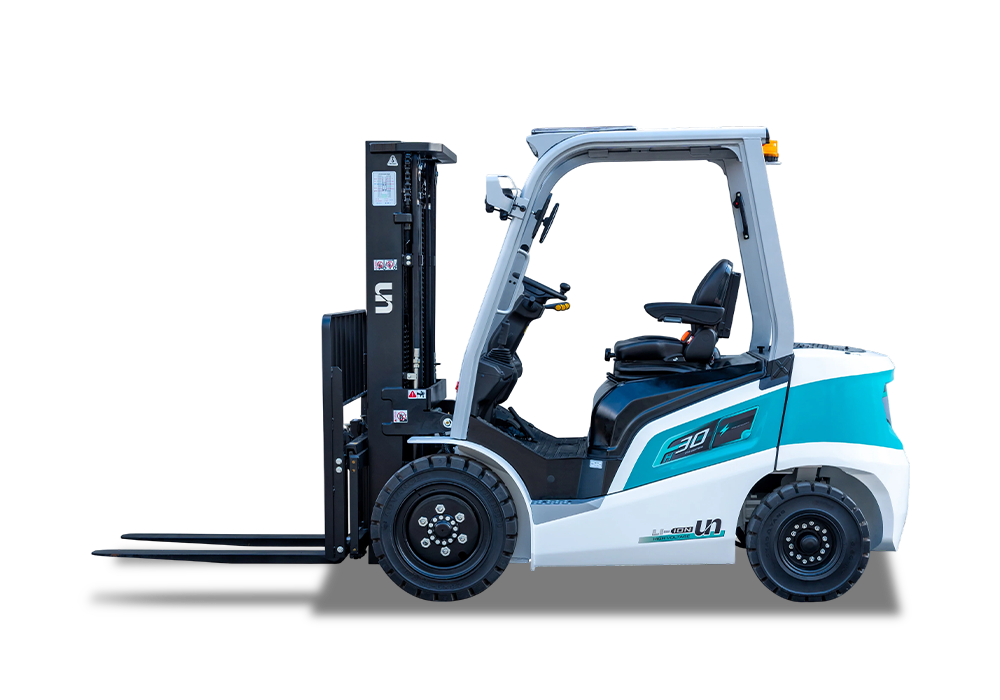
For buyers comparing electric models, the key question is not just the top speed. It is whether the controller allows separate travel, acceleration, and lift limits, and whether those settings can be locked after commissioning. UN Forklift's lithium-electric range is one example of a platform where these settings can be matched to warehouse and dock duty.
Lift speed is part of speed control
A truck that travels slowly but lifts fast can still spill a load or rock the mast. Lift speed is controlled by hydraulic flow, often through a proportional valve or flow-control setting. Too much flow raises the load quickly but can increase mast sway, especially with a high lift and a heavy load. Too little flow slows the cycle and may encourage operators to compensate with travel speed.
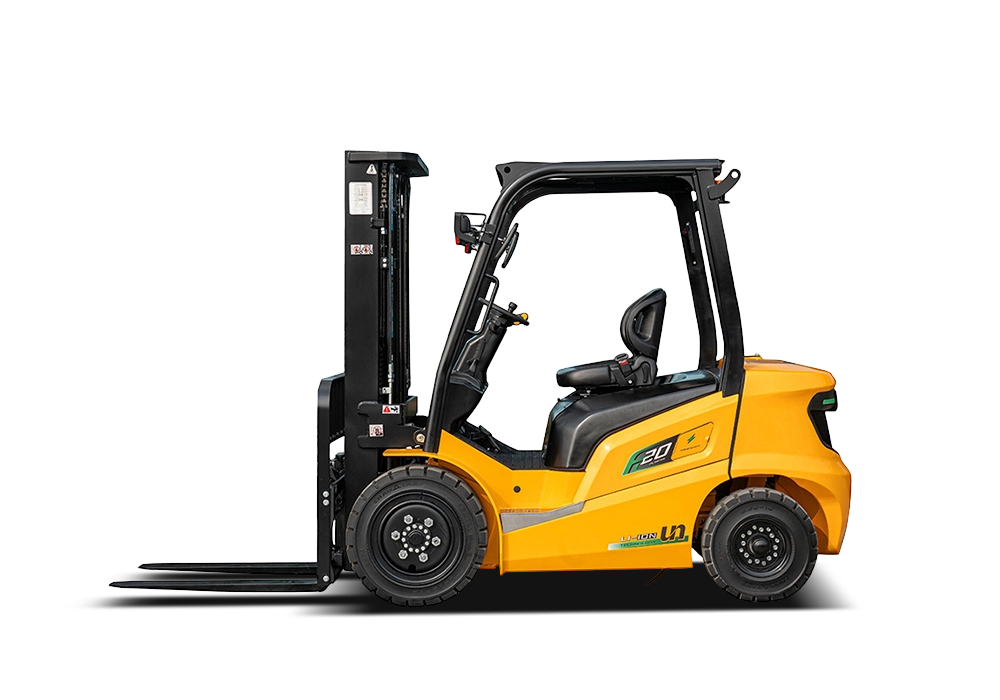
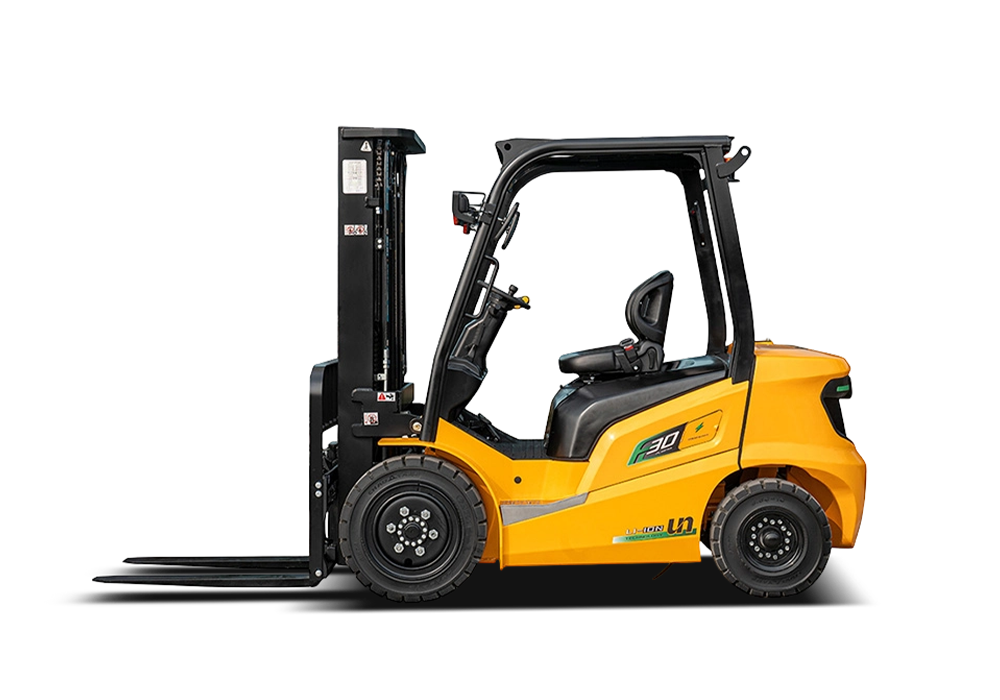
Set lift speed with the load chart, mast type, and attachment in mind. A 2.0-3.5 t counterbalance truck used for pallet handling may need a different lift profile from a truck working in a trailer or a racking aisle. The IC models in UN Forklift's F series show how engine, hydraulic, and transmission settings are packaged for different duty levels.
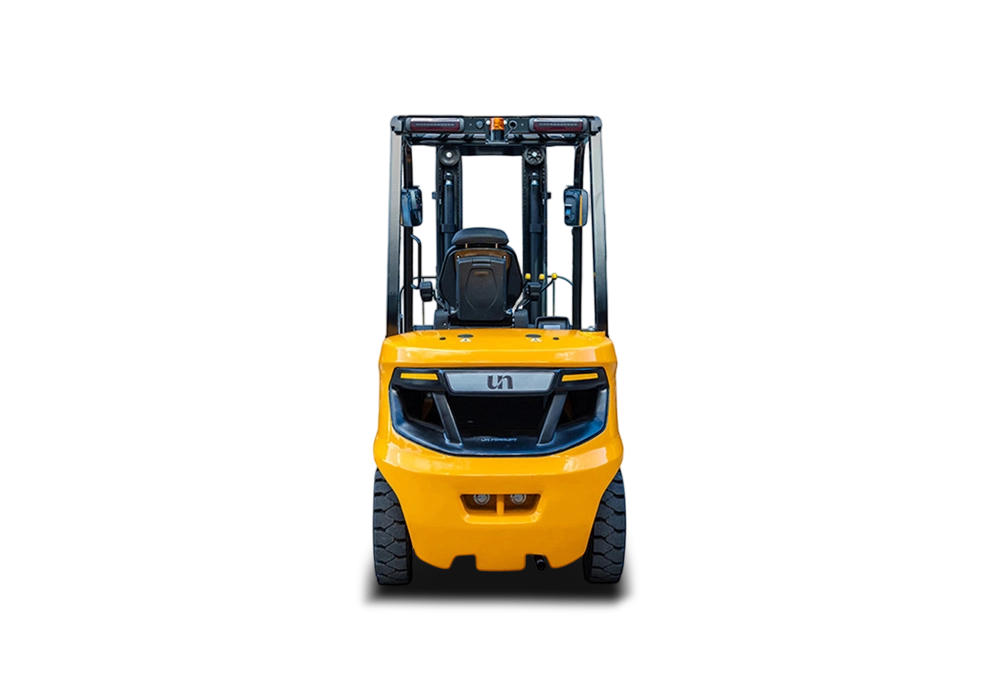 F Series 2.0T–2.5T Diesel Counterbalance ForkliftCompare the FD20T and FD25T models, engine options, and hydraulic transmission settings when matching a 2.0–2.5 t truck to specific duty levels.View Product →
Match settings to the application
The same 2.5 t truck may need different profiles across one site. A high-throughput warehouse usually benefits from electric power, programmed travel and lift limits, and regenerative braking. A loading dock needs creep mode and a strict limit near trailer edges. An outdoor yard can allow a higher open-area limit, but the limit should drop in turns and near blind corners. Cold stores need attention to battery performance and brake response. Rough-terrain work needs lower travel speeds and good load retention, not just a higher engine rating.
- High-throughput warehouse: electric truck, locked travel and lift profiles, operator training by zone.
- Loading dock: creep speed, trailer restraint, and a limit that drops near dock edges.
- Outdoor yard: higher open-area limit, reduced speed in turns and near pedestrians.
- Cold store: battery and brake checks before speed settings are finalized.
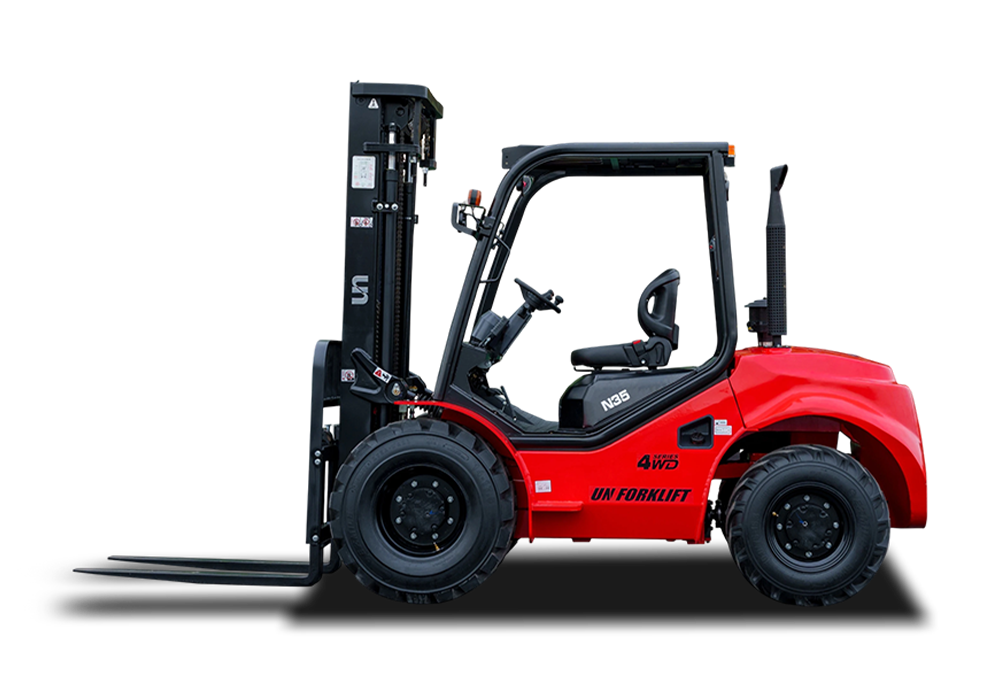
- Rough terrain: lower travel speed, load retention, and a stable mast profile.
Three-wheel electric trucks are often used where aisle space is tight and a small turning radius matters. In those layouts, a low creep setting is more valuable than a high top speed.
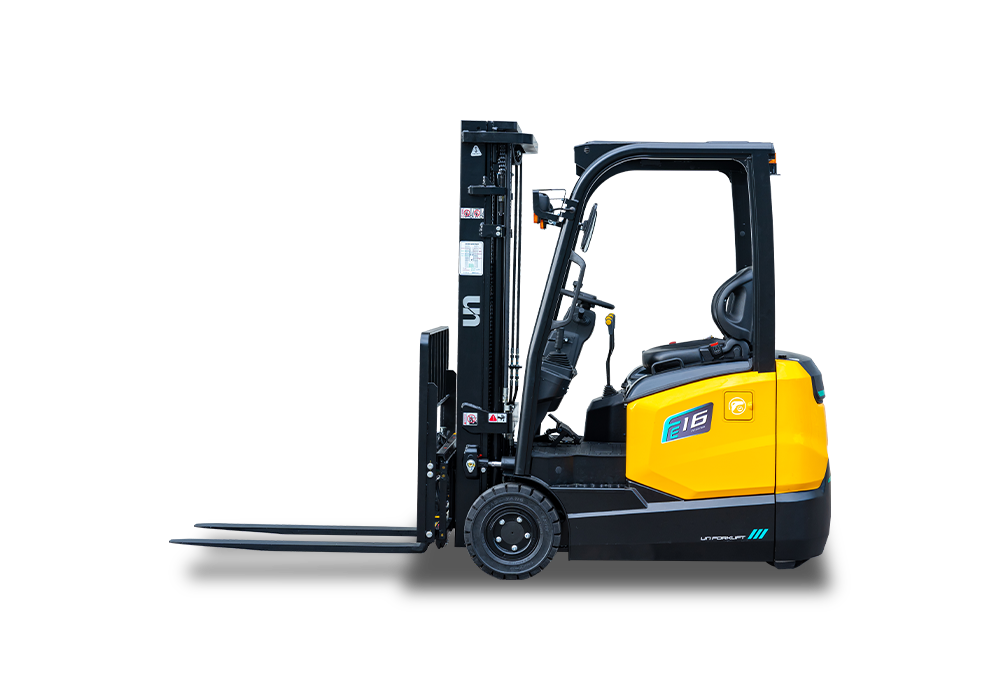 Three-Wheel Electric 1.6T–2.0T Forklift SeriesReview the FE Series models for narrow aisles and frequent steering, where compact three-wheel electric trucks need low creep settings and verified speed profiles.View Product →
Set, test, and verify the limits
Commissioning is where many speed-control plans fail. A limit written in a manual is not the same as a limit verified on the floor. Use a simple sequence: map the zones, measure current travel and lift speeds, set the profiles, test empty and loaded, measure stopping distance, then document the result and brief operators.
- Walk the route and mark dock, aisle, cross-aisle, pedestrian, and outdoor zones.
- Measure current speed and stopping distance with a representative load.
- Set travel, acceleration, lift, and creep limits for each zone.
- Test again with a full load and with a worn floor or wet surface.
- Record the settings, lock the controller, and include the limits in training.
Illustrative stopping distance by travel speed
These figures are illustrative only; tire type, load, floor, and brake condition can change the result. The point is that stopping distance rises faster than speed, so a small increase in travel speed can consume a large amount of aisle space. The forklift use safety guidance is a useful starting point for operator briefings.
Procurement checklist for speed control
When buying or retrofitting a truck, ask for evidence rather than a promise. Can the controller hold separate profiles for travel, acceleration, lift, and creep? Can settings be locked with a PIN or service tool? Does the truck log speed events or overload events? Are the brakes and tires matched to the intended duty? Will the supplier support commissioning and operator training?
- Lockable speed profiles with clear password control.
- Independent travel and lift limits.
- Event logging for audits and incident review.
- Brake and tire specification matched to the zone map.
- Commissioning support and operator training included.
A well-controlled forklift is not the slowest one on site. It is the one whose speed matches the zone, the load, and the task every shift.
For exclusive deals and latest offers, sign up by entering your email address below.
Stay In Touch
ADDRESS : NO.1 ROAD ONE, XINDENG NEW DISTRICT, FUYANG, HANGZHOU, ZHEJIANG, CHINA 311404.
PHONE : +86-571-8688 8355 (AMERICA)
PHONE : +86-571-8886 9363 (EUROPE)
PHONE : +86-571-8688 8377 (ASIA, AFRICA, OCEANIA)
EMAIL : [email protected]
EMAIL : [email protected](PARTS INQUIRY)

