


 中文简体
 Français
 русский
 Español
 عربى
 Deutsch




Forklift Pedestrian Accident Statistics: Risks, Causes, and Safety Controls
Admin 2026-11-26A forklift and a pedestrian can share the same aisle for years without a serious incident. That is exactly why the statistics matter: they show where routine exposure turns into severe outcomes. Pedestrian collisions are consistently listed among common forklift accident categories, and they cluster around predictable places: blind corners, loading docks, rack ends, doorways, and crosswalks. The fix is rarely a single alarm; it is a layout, visibility, speed, and training system.
What forklift pedestrian accident statistics actually show
Commonly cited U.S. figures put forklift-related deaths at roughly 75–100 per year and serious injuries at about 34,900 annually, with another 61,800 non-serious injuries. One widely repeated total is about 110,000 forklift accidents per year. The National Safety Council figure cited for 2022 was almost 25,000 workers injured in forklift-related accidents, which reflects a different reporting scope. Use these as ranges, not as a single precise count.
| Measure | Frequently cited estimate | What it means for pedestrian risk |
|---|---|---|
| Work-related deaths | 75–100 per year | Fatalities are rare per site but often involve struck-by or crush scenarios. |
| Serious injuries | About 34,900 per year | Pedestrian impacts can produce fractures, crush injuries, and amputations. |
| Non-serious injuries | About 61,800 per year | Minor impacts and near misses are useful warning signals. |
| Total accidents | About 110,000 per year | Many general-industry events are unreported, so totals are conservative. |
| Injured workers, NSC 2022 | Almost 25,000 | Different scope; use for trend context, not direct comparison. |
Annual U.S. forklift injury estimates
Bar lengths compare the two injury categories in one commonly cited estimate set. They do not show what share involved pedestrians.
The pedestrian-specific lesson is less about a single number and more about severity. A pedestrian struck by a forklift has no crumple zone, no seat belt, and no steel frame. Even a low-speed impact can cause fractures, crush injuries, or fatal internal injuries. A site with one or two near misses a month should treat those near misses as leading indicators, not as proof that the aisle is safe.
Where pedestrian incidents cluster
Most pedestrian incidents are not random. They happen where traffic patterns force people and trucks into the same space at the same time.
- Blind corners and aisle intersections: racking, walls, and stacked loads hide both operator and pedestrian until the last second.
- Loading docks and trailer entries: drivers focus on the trailer, dock plate, and load while pedestrians cross behind or beside the truck.
- Rack ends and pick faces: a pedestrian steps out from a pick aisle while the operator watches the fork tip, not the aisle.
- Doorways and floor transitions: light changes, floor surfaces, and traffic speed change at the same point.
- Charging and break areas: informal walkways appear where no marked route exists.
In logistics and warehousing operations, the highest-risk locations are often the most familiar: the main cross-aisle, the battery-changing area, and the dock corner where a truck turns with a load. Familiarity is not evidence of safety; it is evidence that exposure is high.
Why pedestrians lose the visibility battle
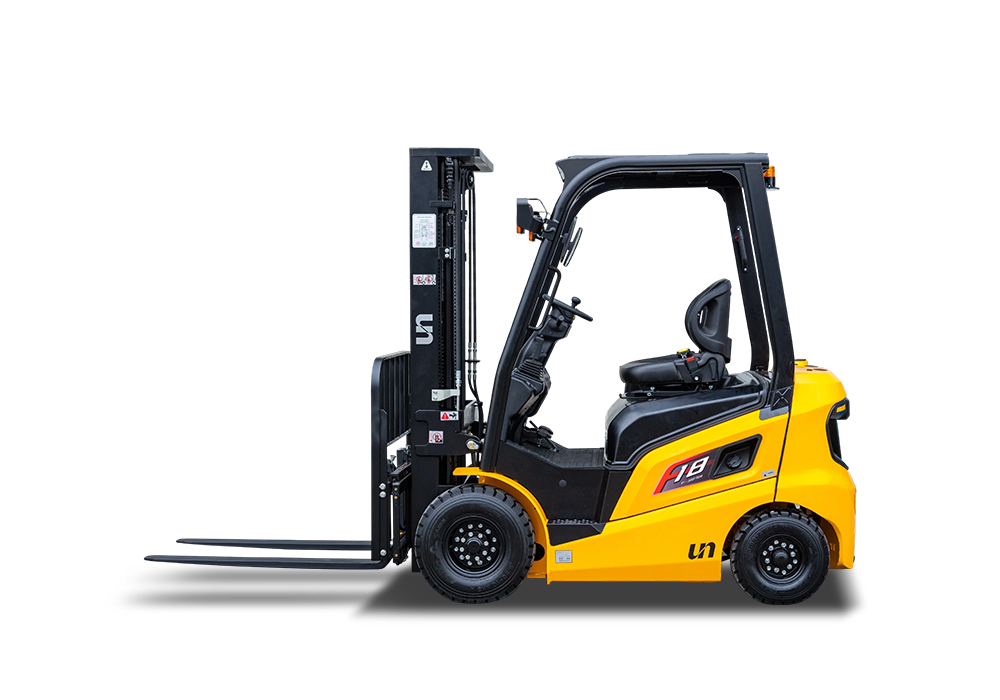
Forklift design creates blind spots that a pedestrian may not appreciate. The mast, carriage, and load block the forward view. The counterweight and rear body create a rear blind zone. The operator sits low and may be looking up at a raised load, back at a trailer, or down at a fork tip. A pedestrian walking behind a reversing truck can be outside the operator’s field of view even when the operator is doing the right thing.
- Load obstruction: a tall load can hide a person at a crosswalk.
- Rear swing: the tail of a counterbalance truck swings outward in a turn.
- Noise contrast: electric trucks are quieter, so footsteps and warning calls carry differently.
- Attention competition: horns, radios, racking, and production pressure all compete for attention.
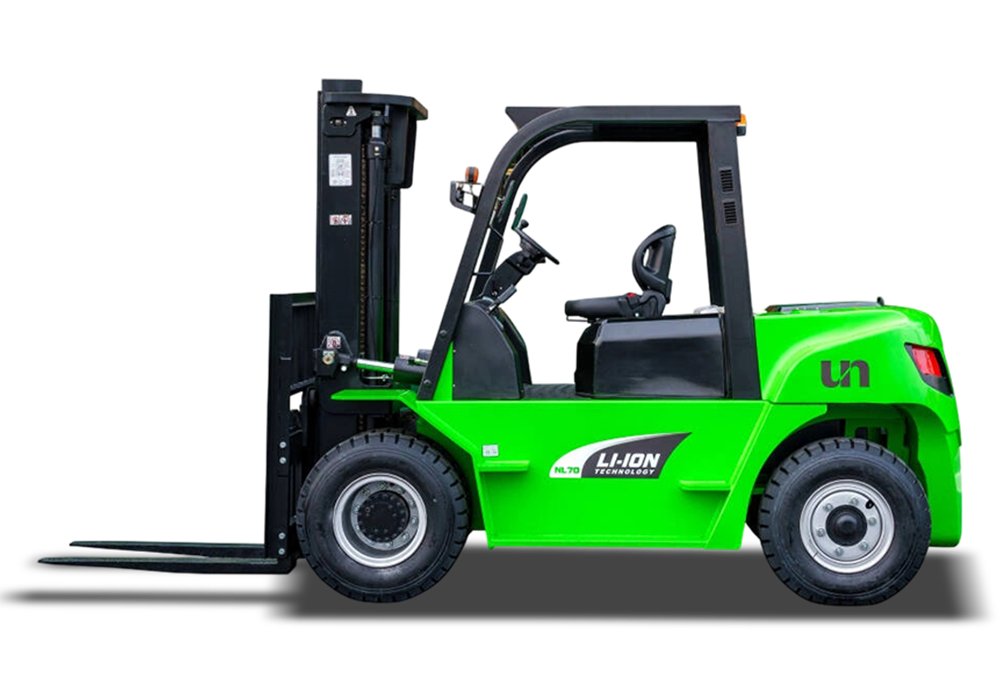
Electric forklifts reduce exhaust emissions and noise, but quiet operation can make them harder to hear in a busy plant. Visibility features, warning lights, mirrors, and route design still matter more than the power source.
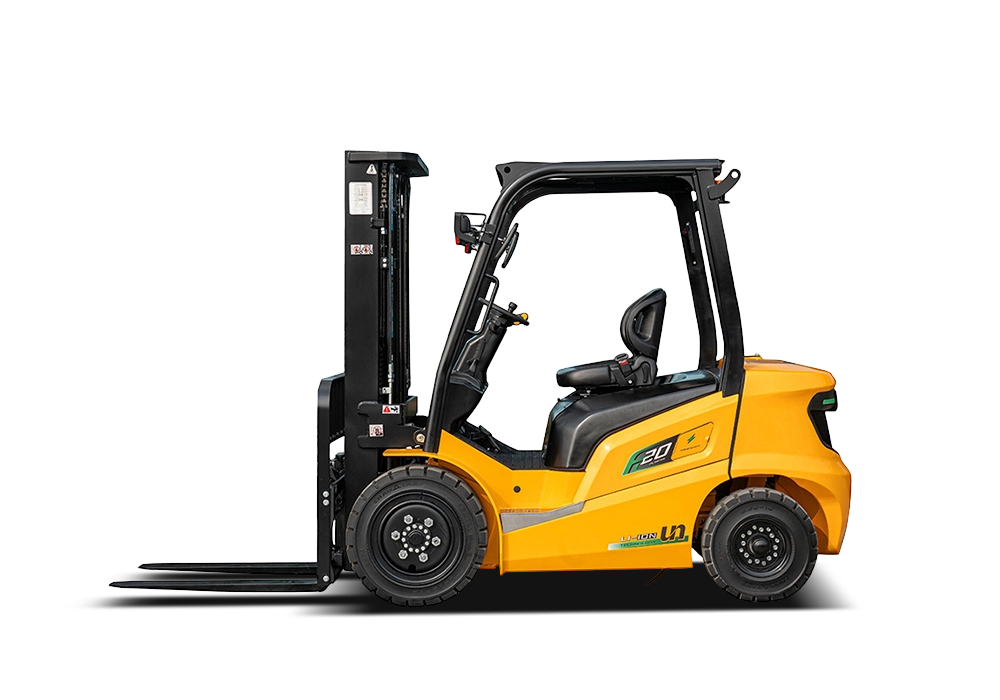
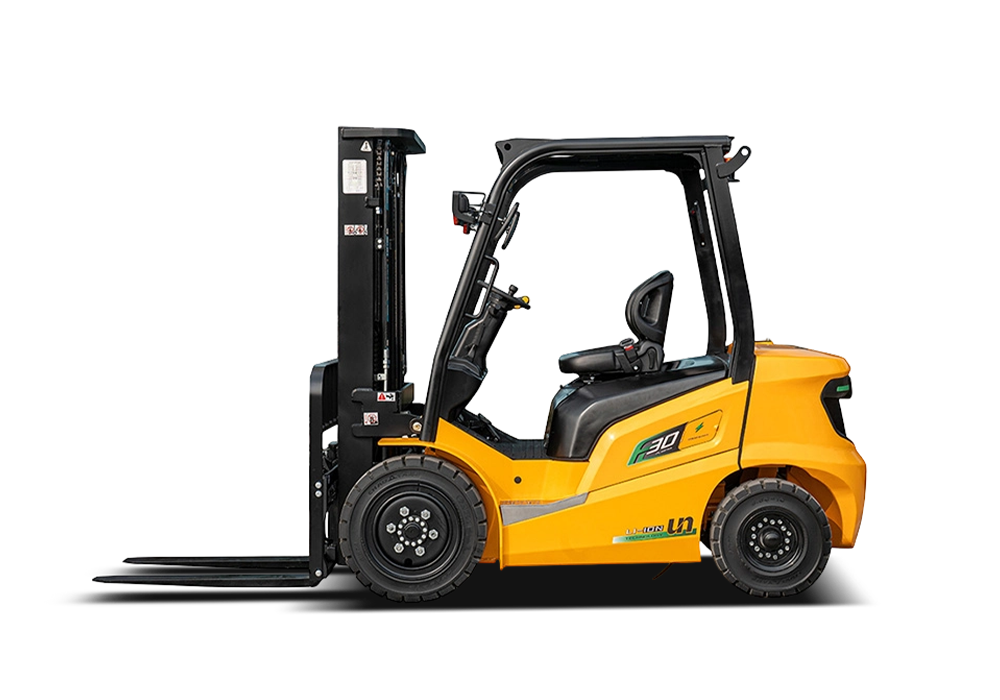
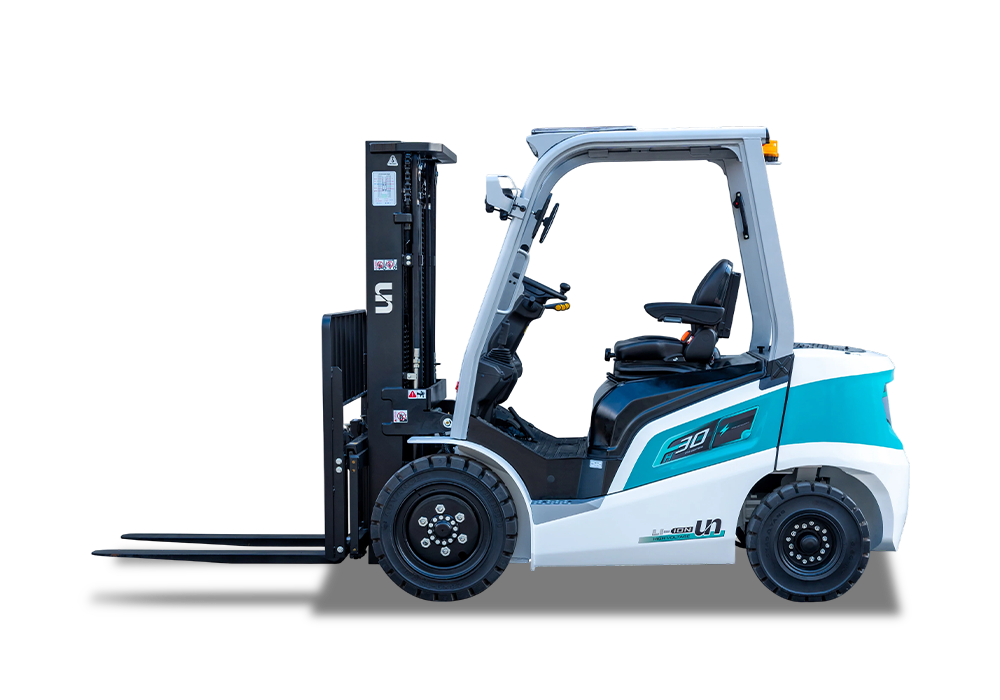
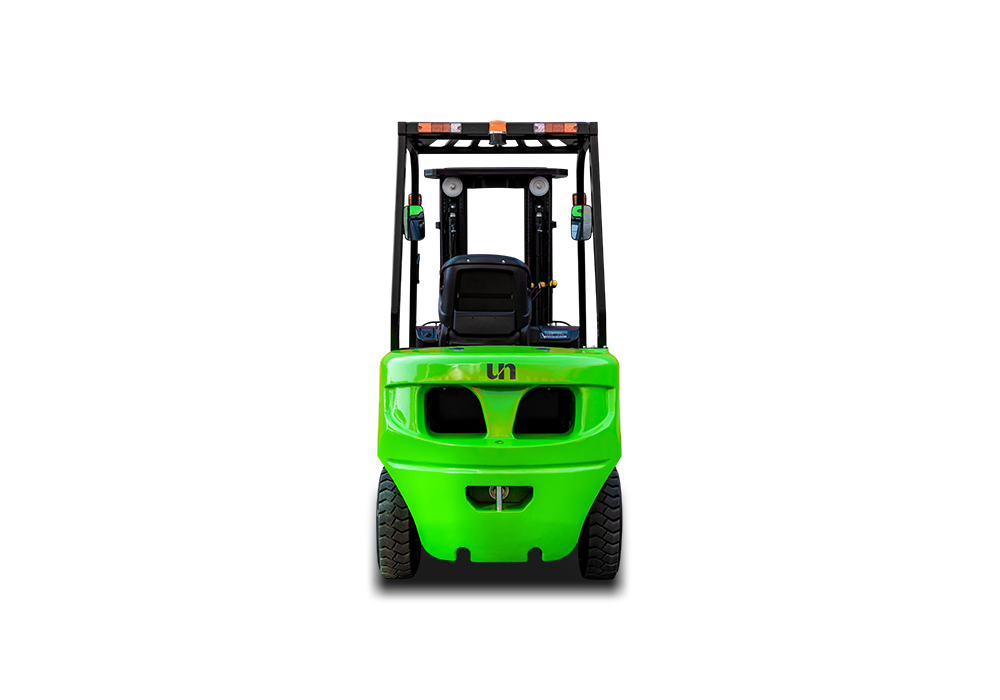 NL Series 2.0T–2.5T Lithium-Ion Battery ForkliftCompact lithium-ion electric forklift for light-duty handling, with fast charging and zero emissions; assess visibility features separately for busy aisles.View Product →
Narrow-aisle equipment adds another visibility problem: the truck may be stable and efficient, but the operator’s sightline is constrained by the mast and racking.
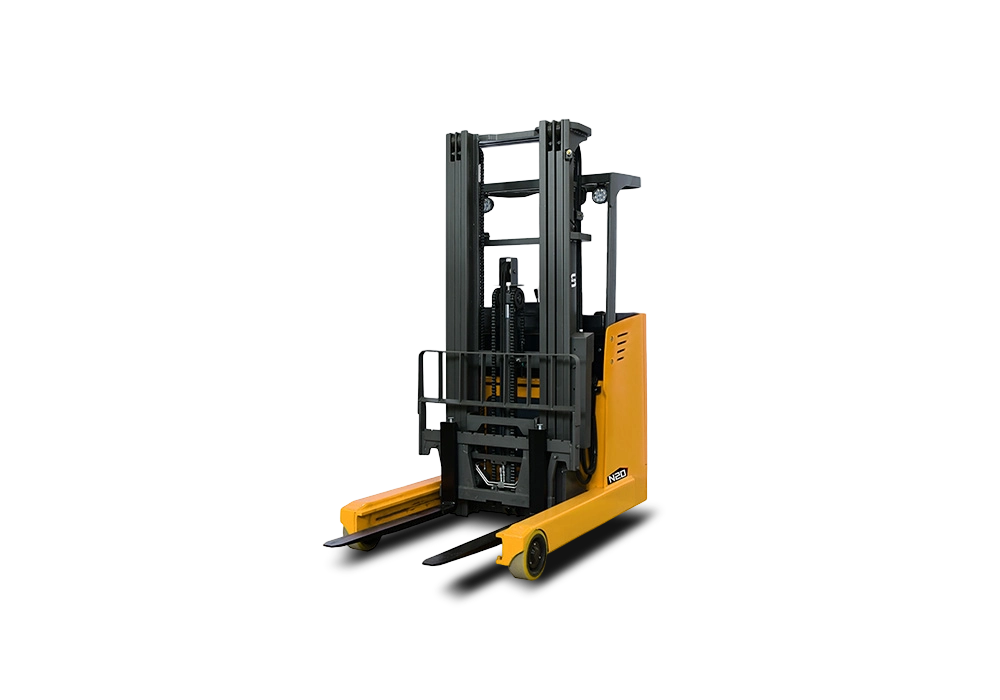 Stand-In Reach Truck for Warehouse and Narrow-Aisle HandlingStand-in reach truck with 1,500–2,500 kg capacities, wide-view mast, and regenerative braking for efficient warehouse handling in constrained aisles.View Product →
The severity math: speed, mass, and reaction distance
A counterbalance forklift can weigh several thousand pounds before the load; a loaded machine can exceed 9,000 lb. At 5 mph, a truck covers about 7.3 feet per second. At 10 mph, it covers about 14.7 feet per second. Double the speed, and kinetic energy roughly quadruples. That is why a “minor” speed increase changes a near miss into a crush injury.
Reaction distance is only part of the problem. A pedestrian may freeze, step backward, or move in the same direction as the truck. The operator may need to stop a heavy machine while the load is raised and the rear steering is already turning. Speed limits, stop lines, and sight-distance checks at intersections buy time that neither person has.
What safety programs get wrong
Many programs over-invest in operator discipline and under-invest in traffic design. A trained operator can still hit a pedestrian who steps from behind a rack. A pedestrian who has been warned can still walk through an unmarked aisle because it is the shortest route to the break room.
- Training without layout changes: people are told to be careful, but the aisle still invites conflict.
- Horns as the main control: a horn is a warning, not a separation barrier.
- Ignoring contractors and visitors: agency workers, drivers, and visitors may not know the traffic rules.
- No near-miss reporting: small events stay invisible until a serious injury occurs.
- One-time assessments: layouts change, racking moves, and seasonal volume shifts.
A practical pedestrian safety checklist
Use this as an audit rather than a policy statement. The goal is to make the safe route the obvious route.
| Control area | What good looks like | How to verify it |
|---|---|---|
| Physical separation | Barriers, guardrails, and dedicated walkways keep people out of truck lanes. | Walk the route at shift change; check whether pedestrians can step into an aisle without noticing. |
| Visibility | Convex mirrors, stop lines, and cleared corners protect blind intersections. | Measure sight distance from the operator seat and from pedestrian eye height. |
| Traffic rules | One-way aisles, speed limits, and defined crossing points reduce conflict. | Observe actual behavior, not posted rules. |
| Training | Operators and pedestrians practice the same route rules and near-miss reporting. | Ask a new employee to explain where they are allowed to walk. |
| Technology | Warning lights, horns, and proximity alerts supplement, not replace, layout controls. | Test alarms in the noisiest part of the shift. |
| Maintenance | Brakes, steering, tires, and visibility aids are checked before use. | Review pre-shift inspections for repeat defects. |
Pair layout changes with forklift use safety training that covers both operators and pedestrians. A pedestrian who understands blind spots is more likely to make eye contact and wait for a signal.
How to read accident statistics without being misled
Statistics are useful for setting priorities, but they are poor at proving a specific aisle is safe. Reporting thresholds differ, near misses are undercounted, and exposure hours are rarely recorded. A site with 20 trucks and 200 pedestrians may look safer than a smaller site simply because it has more reporting discipline.
- Check the definition: a “forklift accident” may include property damage, near misses, or only injuries.
- Separate frequency from severity: pedestrian incidents may be rare but disproportionately fatal.
- Use exposure rates: incidents per 100 trucks, per shift, or per 1,000 hours are more useful than raw counts.
- Track near misses: they are the cheapest early warning system a site has.
- Compare like with like: warehouse fleets, dock operations, and construction sites have different traffic patterns.
Turning the numbers into site-specific action
Start with a pedestrian route map, not a poster. Mark every point where a person must cross a truck lane, then rank those points by truck volume, speed, load height, and blind spots. Walk the map at shift change, when traffic is highest and attention is lowest.
- Remove or reroute crossings that can be eliminated.
- Add physical barriers where separation is not possible.
- Set speed limits by zone and enforce them with layout, not only signs.
- Train operators and pedestrians on the same map and the same stop rules.
- Review near misses monthly and fix the location, not just the person.
The statistics do not say that forklifts are inherently unsafe. They say that pedestrian exposure is predictable. Once a site maps its blind corners, dock edges, and cross-aisles, the most effective controls usually become obvious and measurable.
For exclusive deals and latest offers, sign up by entering your email address below.
Stay In Touch
ADDRESS : NO.1 ROAD ONE, XINDENG NEW DISTRICT, FUYANG, HANGZHOU, ZHEJIANG, CHINA 311404.
PHONE : +86-571-8688 8355 (AMERICA)
PHONE : +86-571-8886 9363 (EUROPE)
PHONE : +86-571-8688 8377 (ASIA, AFRICA, OCEANIA)
EMAIL : [email protected]
EMAIL : [email protected](PARTS INQUIRY)

