


 中文简体
中文简体 Français
 русский
 Español
 عربى
عربى Deutsch



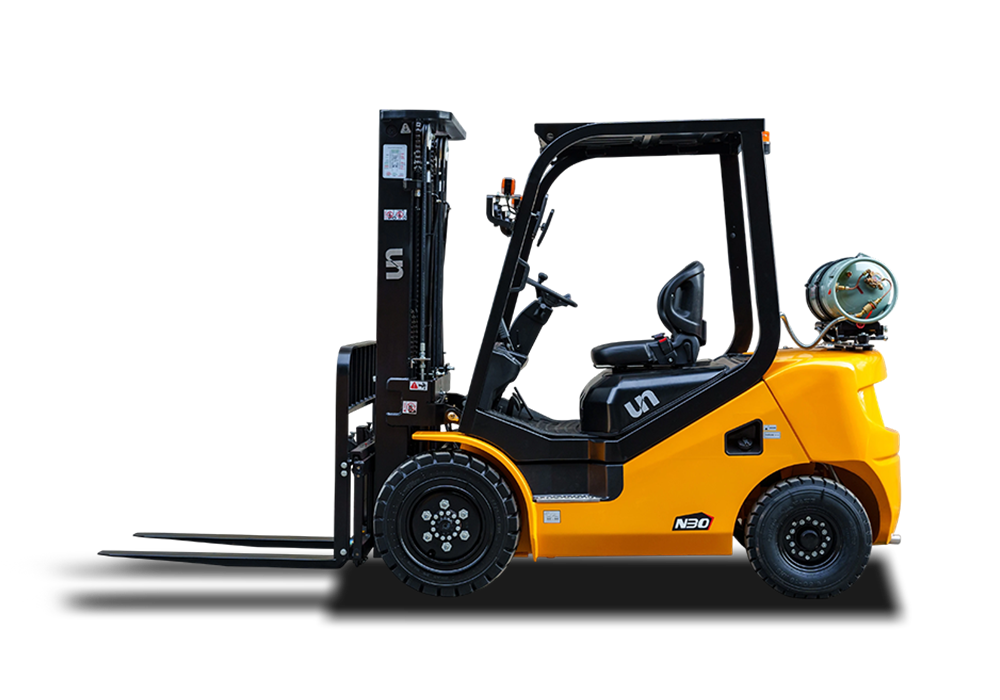
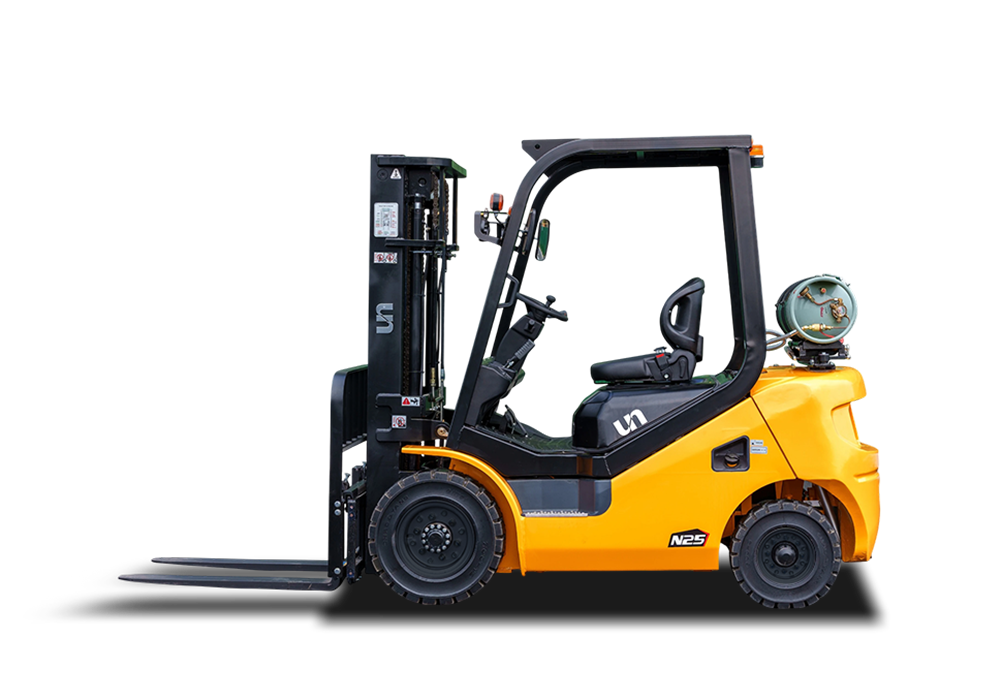
N Series LPG and Gasoline Forklifts: Compact Power, Reliable Handling, and Practical Industrial Performance
Admin 2026-07-21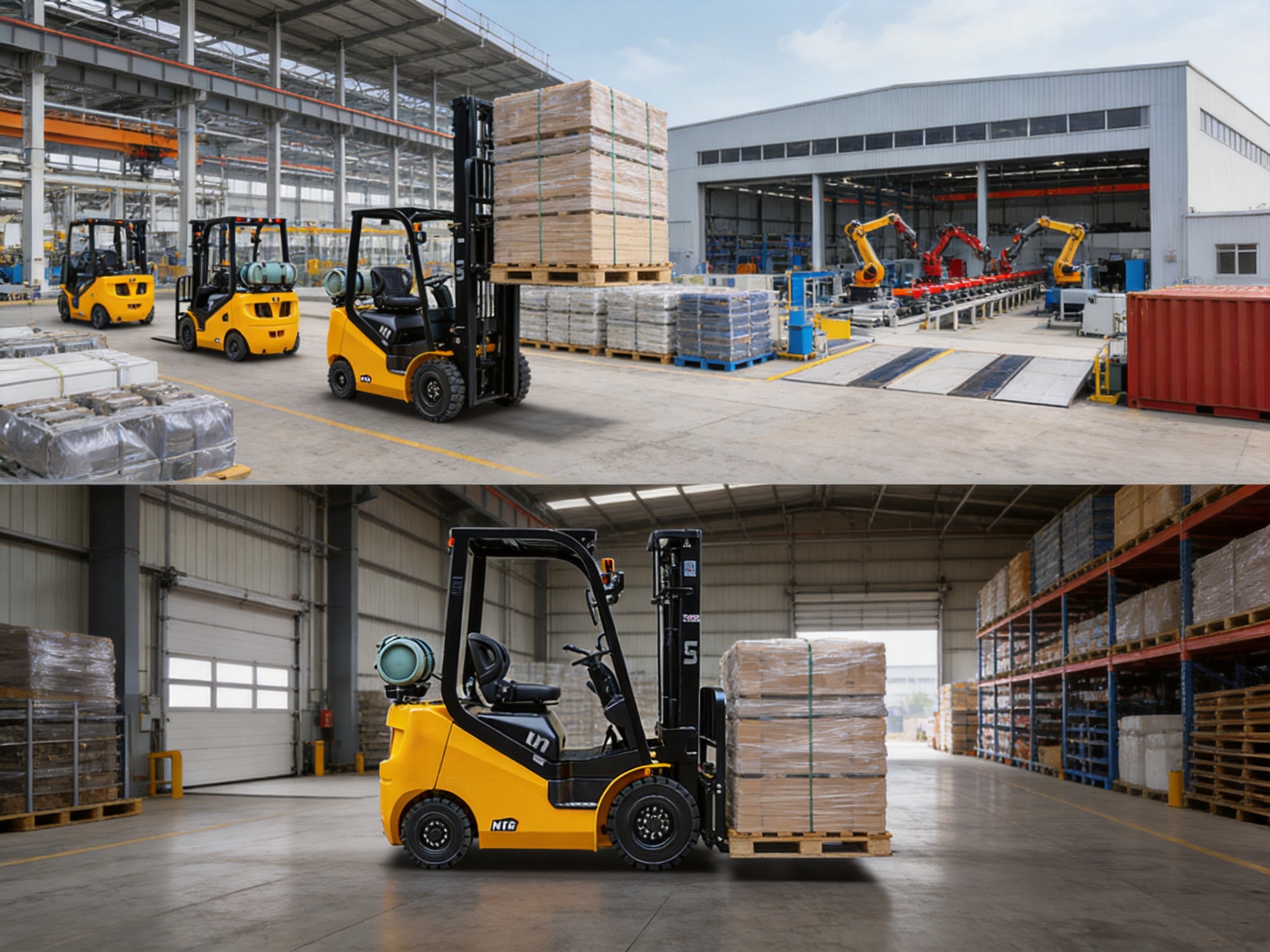
Material handling operations demand equipment that can perform consistently, safely, and economically under demanding working conditions. In warehouses, distribution centers, manufacturing plants, retail logistics facilities, and outdoor loading areas, a forklift must do more than lift a rated load. It must start reliably, move smoothly, operate safely around people and inventory, fit available aisles, and remain easy to maintain throughout its service life.
The N Series LPG and gasoline forklift is designed around these practical requirements. With compact dimensions, responsive handling, a proven internal-combustion power system, and a broad range of operator-focused features, the series provides a balanced solution for companies that need dependable lifting performance without the complexity of a larger or more specialized machine.
The featured capacity range begins with the 1.5-ton and 1.8-ton configurations. The broader platform and related specifications also cover models from 2.0 tons through 3.5 tons, allowing users to select a machine that matches their application. This product family combines the flexibility of LPG and gasoline power with a chassis, hydraulic system, cooling package, transmission, and operator compartment engineered for continuous industrial use.
1. A Practical Solution for Indoor and Mixed-Environment Handling
LPG and gasoline forklifts occupy an important position between battery-electric and diesel-powered equipment. Electric forklifts are highly suitable for quiet, clean environments, but their operating time, charging requirements, and battery replacement process may not suit every application. Diesel forklifts provide strong outdoor performance, but their exhaust emissions, noise, and larger dimensions can be less desirable in enclosed or semi-enclosed facilities.
The N Series offers a flexible alternative. Its LPG and gasoline engine configuration is suitable for clean indoor environments where low noise and comparatively low emissions are important, while still providing the fast refueling and continuous operating capability associated with internal-combustion equipment.
LPG fuel is especially useful for operations that require reduced visible exhaust and a cleaner working atmosphere than conventional diesel equipment can provide. Gasoline operation can be advantageous where fuel availability, operating practices, or local fleet standards favor gasoline engines. The dual-fuel concept gives fleet managers greater flexibility in planning daily operations and responding to fuel supply conditions.
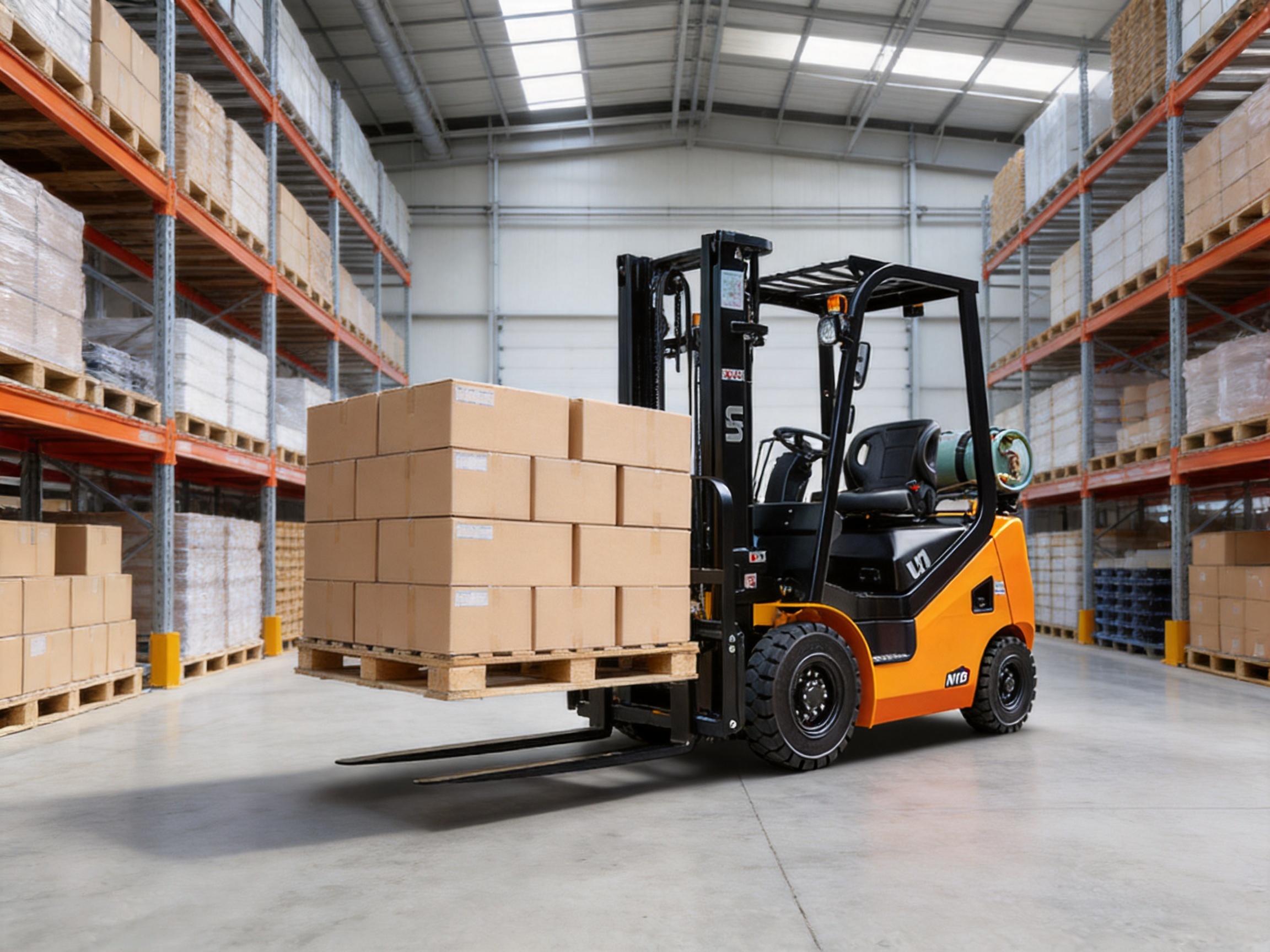
The forklift is compact and agile, making it appropriate for pallet movement, production-line feeding, raw-material handling, finished-goods loading, and general warehouse transport. Its design emphasizes straightforward operation rather than unnecessary complexity. This makes it accessible to a wide range of operators and practical for companies seeking predictable ownership costs.
2. Product Positioning and Capacity Options
The principal product is identified as the N Series 1.5T–1.8T LPG and gasoline forklift. The available related configurations include models such as FL15T, FL18T, FGL15T, FGL18T, FG15T, and FG18T. Depending on configuration and fuel arrangement, the model designation may distinguish gasoline, LPG, or gasoline/LPG operation.
The supplied specifications also list the FG15T, FGL15T, FG18T, FGL18T, FG20T, FGL20T, FG25T, FGL25T, FG30T, FGL30T, FG35T, and FGL35T model groups. These models cover rated load capacities from 1,500 kilograms to 3,500 kilograms at a 500-millimeter load center. This broader range is valuable for customers who want to standardize a fleet on a common design platform while selecting different capacities for different work areas.
| Model Capacity Group | Rated Load Capacity | Load Centre | Rated Lift Height | Typical Fork Size |
|---|---|---|---|---|
| 1.5-ton class | 1,500 kg | 500 mm | 3,000 mm | 920 × 120 × 35 mm |
| 1.8-ton class | 1,800 kg | 500 mm | 3,000 mm | 920 × 120 × 35 mm |
| 2.0-ton class | 2,000 kg | 500 mm | 3,000 mm | 1,070 × 120 × 40 mm |
| 2.5-ton class | 2,500 kg | 500 mm | 3,000 mm | 1,070 × 120 × 40 mm |
| 3.0-ton class | 3,000 kg | 500 mm | 3,000 mm | 1,070 × 125 × 45 mm |
| 3.5-ton class | 3,500 kg | 500 mm | 3,000 mm | 1,070 × 125 × 50 mm |
The 1.5-ton and 1.8-ton versions are particularly well suited to warehouse and light-to-medium industrial duties. They offer the maneuverability needed in restricted spaces while retaining the structural strength and lifting stability expected from a conventional counterbalanced forklift. Larger versions extend the same general concept to heavier pallet loads and more intensive material-handling tasks.
As with all industrial equipment, exact specifications may vary according to mast design, tire selection, fuel system, attachments, optional equipment, and regional configuration. The published figures should therefore be treated as a product reference, while the final configuration should be confirmed for the intended application.
3. Reliable Power and Transmission Performance
A forklift’s value depends heavily on the interaction between its engine, transmission, chassis, hydraulic system, and cooling package. A powerful engine alone does not guarantee useful productivity. The machine must convert engine output into smooth acceleration, controlled travel, dependable lifting, and stable performance under changing loads.
The N Series uses the GCT K21/K25 engine family in the main product description, while the detailed 1.5-ton and 1.8-ton data identify the GK21 engine. The listed engine manufacturer is GCT, with a rated output of 31.2 kilowatts at 2,300 revolutions per minute, rated torque of 144 newton-metres at 1,600 revolutions per minute, four cylinders, a displacement of 2,065 cubic centimetres, and a bore-by-stroke dimension of 89 by 83 millimetres.
These specifications provide a useful balance between power and controllability. The engine is sized to support regular pallet handling, ramp travel, and repeated lifting cycles without requiring an oversized power unit. The four-cylinder layout contributes to stable operation and familiar service procedures for technicians accustomed to conventional industrial engines.
The transmission system is designed to deliver dependable forward and reverse travel, with hydraulic transmission operation listed in the detailed specifications. Depending on capacity, the transmission stages vary from one forward/one reverse to configurations with additional forward or reverse stages. The IMPOCO shift system is described as comparable to Japanese technology standards, supporting smooth gear selection and responsive handling.
For the 1.5-ton and 1.8-ton configurations, the listed no-load travel speed is 14.5 kilometres per hour. The maximum gradeability under full load is 20 percent, and maximum drawbar pull is listed as 17 kilonewtons under full load and 14.5 kilonewtons under no-load conditions. These figures indicate that the forklift is intended for active industrial environments rather than occasional, low-intensity movement only.
Good transmission calibration is particularly important in warehouse operations. Sudden engagement can damage loads, increase tire wear, and reduce operator confidence. A properly matched hydraulic transmission allows the driver to control the truck smoothly around storage racks, loading docks, and production equipment. It also helps reduce the mechanical shock transmitted to the drivetrain during repeated directional changes.
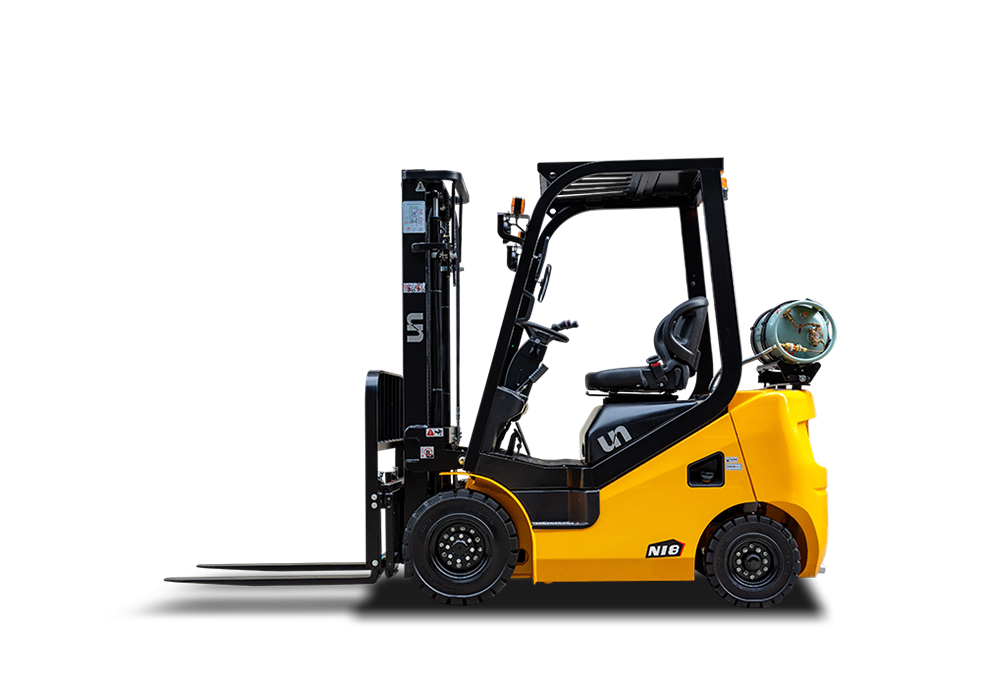
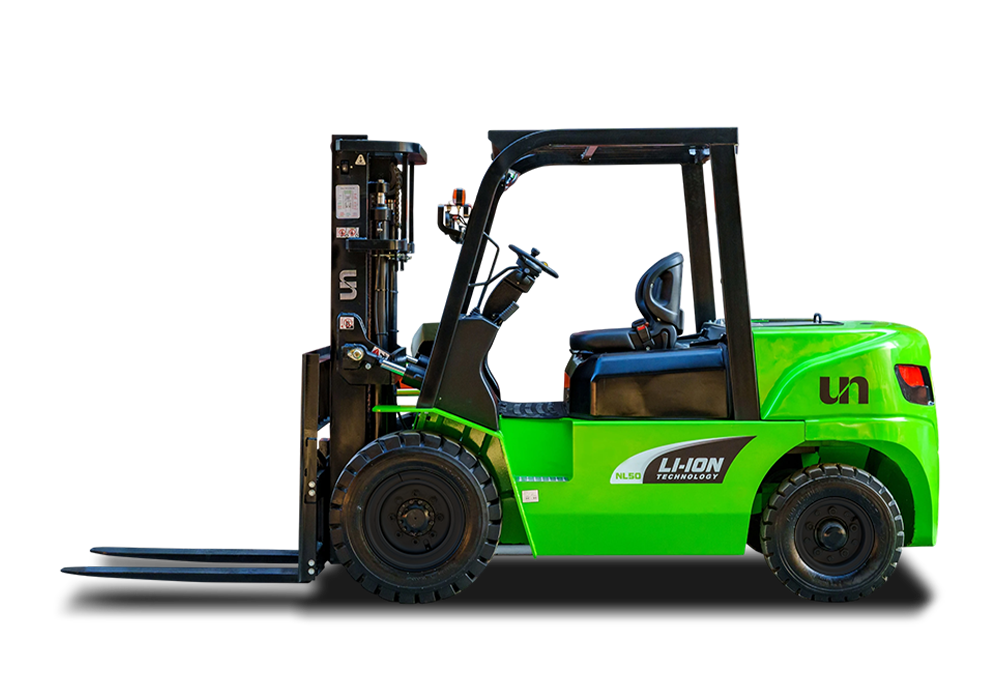
N Series 1.5T-1.8T LPG&Gasoline Forklift
4. Hydraulic Precision for Lifting and Steering
The hydraulic system is one of the most important performance systems on a forklift because it controls the mast, forks, steering, and many optional attachments. Inaccurate or inconsistent hydraulics can make load placement difficult and create unnecessary risks. The N Series uses Shimadzu hydraulic pumps and valves, selected to support precise and smooth lifting and steering functions.
For the capacity range covered by the detailed specifications, attachment operating pressure is listed at 14.5 megapascals for the smaller models and up to 17.5 megapascals for several higher-capacity configurations. This provides the hydraulic capability required for standard forks and supports the use of suitable attachments when correctly specified.
The rated lift height is 3,000 millimetres in the supplied standard data. Free lift height is listed as approximately 100 millimetres in the broader specification set and between 135 and 140 millimetres in the detailed 1.5-ton and 1.8-ton configuration table. The difference reflects variations between specification sets or mast configurations, so customers should confirm the exact free-lift value for the selected model.
Full-load lifting speed is listed at 560 millimetres per second for the 1.5-ton and 1.8-ton versions. The broader range lists 510 millimetres per second for 2.0-ton and 2.5-ton models, 430 millimetres per second for the 3.0-ton model, and 400 millimetres per second for the 3.5-ton model. These figures reflect the normal relationship between lifting capacity and hydraulic response: heavier machines are designed to lift greater loads while maintaining controlled and stable movement.
Full-load lowering speed is listed as 450 millimetres per second in the broader table. Another detailed specification describes no-load lowering at not less than 300 millimetres per second and full-load lowering at not more than 600 millimetres per second. Controlled lowering is essential when positioning fragile or high-value goods, especially in applications where pallets must be placed accurately on racks or production platforms.
The use of quality pumps and valves helps the operator make small adjustments without excessive lever movement. This is beneficial when inserting forks into a pallet, aligning a load with a rack beam, or maintaining a safe load position while traveling over an uneven floor. Smooth hydraulic behavior also supports a more comfortable work environment and helps reduce stress on the mast assembly.
5. Cooling Capacity for Demanding Working Conditions
Internal-combustion forklifts often work in environments where heat, dust, long operating cycles, and restricted airflow place additional demands on the cooling system. Excessive engine or transmission temperature can reduce efficiency, accelerate component wear, and create unplanned downtime.
The N Series uses a large-capacity radiator and an efficient cooling arrangement to maintain stable operation in high-temperature conditions. This feature is important for facilities with extended shifts, frequent loading and unloading, or limited opportunities for the equipment to cool between work cycles.
A capable radiator also benefits productivity during summer operations, container loading, outdoor staging, and warm manufacturing environments. Stable thermal performance helps maintain consistent engine output and reduces the likelihood of heat-related interruptions. It supports the broader design objective of providing a forklift that can perform reliably throughout the workday rather than only during short operating intervals.
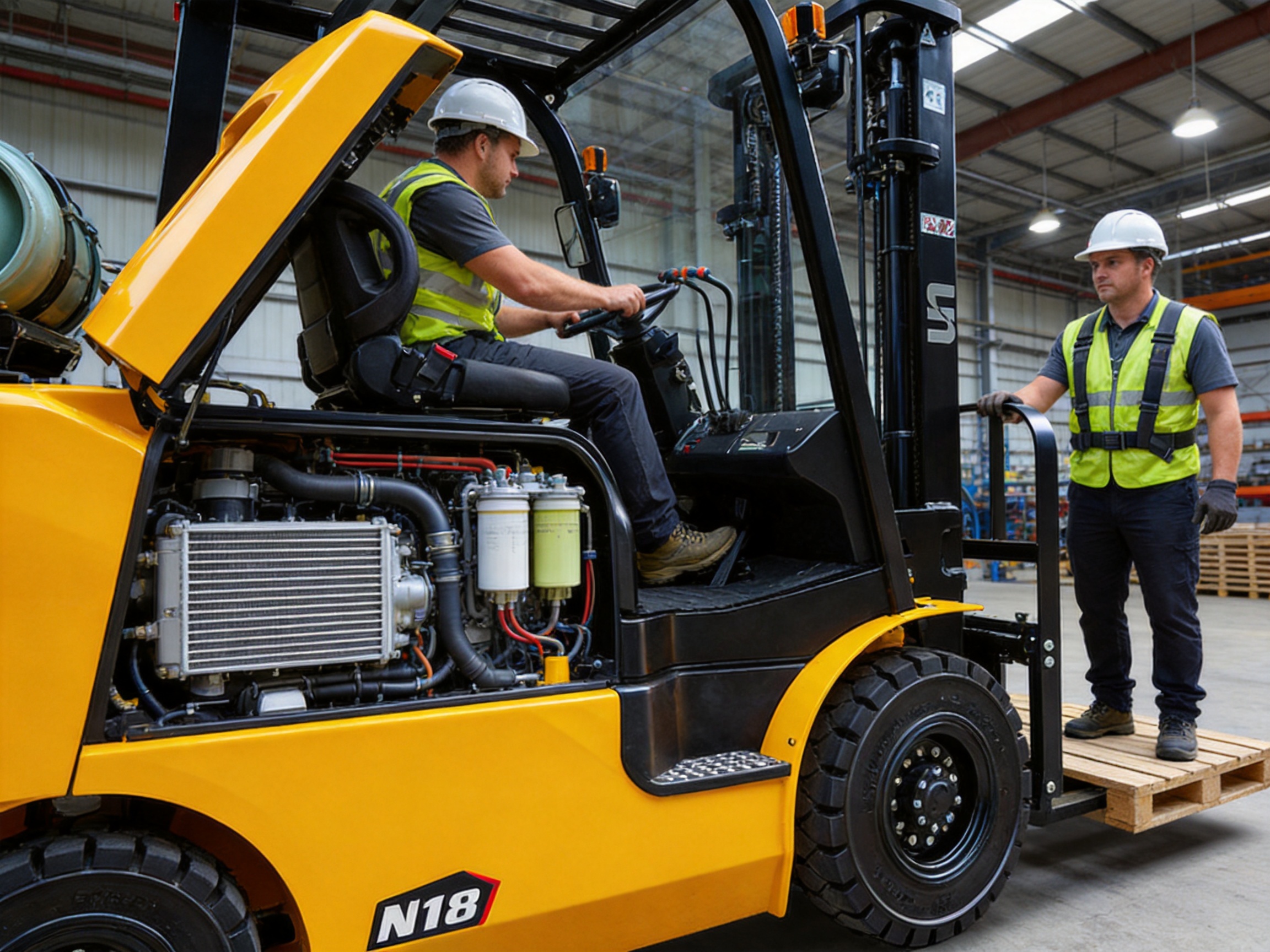
Cooling performance is influenced by more than radiator size. Airflow management, fan performance, engine compartment layout, cleanliness, and maintenance access all affect the result. The N Series combines these design considerations with a service-friendly engine compartment, allowing operators and maintenance teams to inspect and clean key areas more efficiently.
6. Compact Dimensions and Maneuverability
Space utilization is a major concern in modern warehouses and factories. Every additional metre of aisle width can reduce storage density, while poor maneuverability can increase handling time and the risk of contact with racks, walls, and other equipment.
The 1.5-ton and 1.8-ton specifications list an overall width of 1,082 millimetres, a turning radius of 2,100 millimetres, and a minimum pallet aisle width of 3,700 millimetres. The length to the face of the forks without forks is approximately 2,285 to 2,294 millimetres, depending on the specification set and selected model. These dimensions give the forklift a compact footprint for its capacity class.
The wheelbase is listed at 1,410 millimetres in the detailed specification set. A relatively short wheelbase can support agile turning and efficient positioning, provided that the chassis and counterweight are correctly balanced for stability. The result is a machine that can move confidently through warehouse aisles while still handling normal loading-dock and yard operations.
For larger capacity configurations, dimensions increase appropriately. The broader data list overall widths from 1,150 millimetres for 2.0-ton and 2.5-ton models to 1,225 millimetres for 3.0-ton and 3.5-ton models. Turning radius increases from approximately 2,365 millimetres to 2,500 millimetres, and minimum pallet aisle width ranges from 4,120 to 4,255 millimetres.
These dimensions allow fleet planners to select equipment based on actual facility geometry. The smaller models can serve high-density storage and production areas, while the larger versions offer additional capacity for heavier pallets, building materials, packaged goods, and industrial components.
The mast tilt angle is listed as six degrees forward and twelve degrees rearward across the range. This supports practical load positioning and helps the operator secure a load during travel. Ground clearance beneath the mast is approximately 110 millimetres on the smaller models and increases on larger configurations, supporting operation over typical industrial surfaces.
7. Operator Safety and Ergonomic Design
Productivity and safety are closely connected. Operators who have a clear view, comfortable seating, logical controls, and appropriate protective systems can work more accurately and with less fatigue. The N Series incorporates several features designed to support safe, confident operation.
Operator Presence System, or OPS, and seat-switch protection help prevent unintended movement when the operator is not correctly positioned. These systems are valuable in busy facilities where operators frequently mount and dismount, pause to inspect loads, or reposition themselves during a shift. They form part of a broader safety approach that combines engineering controls with proper training and operating procedures.
The wide-vision mast is designed to preserve the operator’s line of sight toward the load and surrounding work area. Visibility is particularly important when approaching pallets, traveling through intersections, or placing loads at height. Reduced obstruction can improve accuracy and help the operator identify people, equipment, and floor hazards earlier.
The overhead guard provides protection from falling objects and contributes to the operator’s safety envelope. The listed overhead guard height is approximately 2,160 millimetres for the 1.5-ton and 1.8-ton configurations. Larger models use a guard height of approximately 2,215 to 2,235 millimetres. Facility managers should compare this measurement with doorways, container openings, ceiling heights, and sprinkler systems before selecting a configuration.
A suspended frame creates additional foot space and contributes to a more comfortable operating position. Adjustable steering and a comfortable seat help accommodate different operators and reduce fatigue during long shifts. Ergonomics are not merely a comfort feature; reduced fatigue can improve control precision, reduce avoidable mistakes, and support safer work practices.
An optional suspended powertrain is also identified. This option can provide additional flexibility in performance and vibration management, depending on the selected configuration. Such options allow customers to adapt the forklift to their operating priorities rather than accepting a single fixed specification.
Safety equipment must always be used together with appropriate workplace controls. Operators should follow rated-capacity charts, inspect loads, maintain safe travel speeds, wear suitable protective equipment, and receive formal forklift training. No safety feature can replace correct operating procedures.
8. Easy Maintenance and Reduced Downtime
Maintenance access has a direct effect on fleet availability. A forklift that is technically reliable but difficult to inspect can still generate high ownership costs if routine service is delayed or repairs require excessive labor.
The N Series engine hood opens to nearly 90 degrees, creating broad access to the engine compartment. This supports faster daily inspection, cleaning, lubrication, filter checks, and replacement of service parts. The open hood also gives technicians a better view of the engine, hoses, wiring, cooling components, and transmission-related systems.
The transmission oil filter is designed for easier replacement. Simplifying this routine service task can reduce maintenance time and encourage operators or technicians to follow recommended service intervals. Consistent filter replacement helps protect the transmission and hydraulic components from contamination and premature wear.
Maintenance planning should include daily, weekly, and periodic inspections. Daily checks commonly include engine oil, coolant, hydraulic oil, fuel connections, tires, forks, mast chains, warning devices, brakes, steering, and visible leaks. Periodic maintenance should follow the manufacturer’s service schedule and account for operating hours, load intensity, dust levels, temperature, and attachment use.
The straightforward internal-combustion layout can also be advantageous for companies that already have technicians familiar with gasoline and LPG power systems. Standardized service knowledge may reduce the need for specialized training and simplify spare-parts planning across a mixed fleet.
9. Manufacturing Strength and Engineering Capability
The product is manufactured by Zhejiang UN Forklift Co., Ltd., a material-handling equipment producer integrating research and development, production, sales, and service. The company was founded in 1978 and operates a facility covering approximately 53,400 square metres, with an annual production capacity of about 15,000 units.
This combination of long-term industry experience, dedicated production space, and planned manufacturing capacity supports consistent product development and supply. A forklift is a system product: the engine, transmission, hydraulic equipment, mast, chassis, counterweight, electrical system, tires, and operator protection structure must work together. Manufacturing experience across these systems helps a producer refine compatibility, assembly procedures, inspection methods, and field support.
The company offers a broad product portfolio identified as 17 varieties, 96 series, and more than 200 specifications. This range includes electric forklifts, internal-combustion forklifts, reach trucks, very-narrow-aisle equipment, and other material-handling solutions. A broad portfolio can benefit customers by providing a single-source opportunity for different areas of a facility, from indoor pallet movement to outdoor heavy-duty handling.
The company’s engineering history includes the development of China’s first reach forklift and very-narrow-aisle truck. It also holds national patents related to electric forklift technologies and has participated in the formulation of Chinese electric forklift industry standards. Although the N Series is an LPG and gasoline product, this wider engineering background demonstrates experience in vehicle architecture, control systems, energy efficiency, and specialized material-handling applications.
The company also identifies itself as an original equipment manufacturer for recognized domestic and overseas companies, including Hyundai Heavy Industries and Xuzhou Construction Machinery Group. OEM experience generally requires disciplined production control, documentation, quality assurance, component traceability, and the ability to meet customer-specific technical requirements.
A worldwide sales and service network with partners in Europe, South America, North America, Africa, and Asia supports international distribution and after-sales assistance. For fleet operators, service availability is a major factor in selecting a forklift supplier. The value of a machine depends not only on its purchase price but also on access to parts, technical information, warranty support, and trained service personnel.
10. Manufacturing Processes That Support Product Reliability
Advanced manufacturing is not limited to automation or the use of individual premium components. It includes the complete process by which a product is designed, fabricated, assembled, inspected, tested, delivered, and supported in service.
10.1 Integrated Product Development
Integrating research and development with production allows design teams to evaluate manufacturability at an early stage. Chassis geometry, mast mounting, hydraulic routing, engine access, counterweight distribution, and operator protection structures can be developed with assembly and service requirements in mind.
This approach helps reduce the risk of designs that perform well in a prototype but are difficult to produce consistently. It also supports continuous improvement when field feedback identifies opportunities to improve access, durability, visibility, vibration control, or component life.
10.2 Component Coordination
The N Series illustrates the importance of coordinated components. The GCT engine provides the power source, the hydraulic transmission manages travel, Shimadzu pumps and valves control lifting and steering, and the large-capacity radiator supports thermal stability. The chassis, mast, counterweight, axles, tires, and overhead guard complete the working platform.
Reliable operation depends on the correct matching of these components. Hydraulic pressure must be compatible with the pump, valves, cylinders, hoses, and attachments. The chassis must accommodate the engine and transmission while preserving weight distribution. The mast must provide adequate lifting capacity and visibility. The cooling system must support the expected duty cycle. Integrated engineering helps ensure that these systems are not treated as isolated parts.
10.3 Production Consistency
A substantial manufacturing facility and established production capacity can support repeatable assembly procedures. Consistency is important because small variations in fastener torque, hose routing, electrical connections, mast alignment, or control calibration can affect long-term performance.
Inspection points throughout production help identify issues before a forklift reaches the customer. Typical quality-control activities may include dimensional inspection, weld assessment, hydraulic testing, engine and transmission checks, brake and steering verification, mast function testing, and final operational inspection. Exact inspection methods vary by production program and market requirements, but the principle remains the same: reliability must be built into the process rather than added only at the end.
10.4 Application-Oriented Configuration
The availability of multiple capacities, fuel arrangements, mast options, tires, and attachments allows the forklift to be configured for different working conditions. This reduces the temptation to use an undersized machine for heavy work or an oversized machine in restricted spaces.
Application-oriented configuration is a competitive advantage because it helps customers purchase the capability they actually need. A properly matched 1.5-ton or 1.8-ton forklift can be more efficient and easier to maneuver than a larger machine used for the same task. Conversely, a 3.0-ton or 3.5-ton model may provide a safer and more durable solution where heavier loads are routine.
11. Advantages Compared with Competing Forklift Options
Every forklift category has strengths and limitations. The N Series competes by offering a balanced combination of operating flexibility, compact size, maintainability, and established component technology.
11.1 Compared with Diesel Forklifts
Compared with a diesel forklift of similar capacity, an LPG and gasoline model can offer lower perceived noise and cleaner operation in indoor or semi-enclosed environments. This may be beneficial in warehouses, food-related logistics areas where permitted, retail distribution centers, and manufacturing plants with strict workplace-air requirements.
The N Series also provides a compact option for applications where diesel power is unnecessarily large or where diesel exhaust would be inconvenient. However, fuel regulations and indoor-air requirements differ by country and facility, so the customer must confirm that LPG or gasoline operation is permitted in the intended environment.
11.2 Compared with Battery-Electric Forklifts
Compared with battery-electric forklifts, the N Series can offer rapid refueling and the ability to return to work without a long charging period. This is useful for multi-shift operations, seasonal peaks, emergency loading requirements, and facilities without sufficient charging infrastructure.
Internal-combustion equipment may also maintain performance more consistently during long continuous cycles, provided that fuel supply and routine servicing are properly managed. Battery-electric equipment may remain preferable where zero tailpipe emissions, extremely low noise, or highly controlled indoor air quality is the primary requirement. The most suitable choice depends on duty cycle, operating environment, energy infrastructure, and total cost of ownership.
11.3 Compared with Larger or Premium Imported Models
Against larger or premium imported forklifts, the N Series emphasizes practical specifications and serviceability. The use of recognized engine, hydraulic, and transmission technologies can help customers obtain dependable functionality without paying for features that are unnecessary for their application.
Its compact dimensions, clear operator-focused design, accessible engine hood, and broad capacity range can also make it easier to integrate into existing facilities. A competitive forklift is not necessarily the one with the highest theoretical performance; it is the one that delivers the required performance reliably at an acceptable operating cost.
11.4 Compared with Basic Low-Cost Forklifts
Compared with entry-level forklifts built primarily around purchase price, the N Series places greater emphasis on engineering coordination, hydraulic quality, cooling capacity, operator protection, and maintenance access. These features may provide better long-term value by reducing downtime, improving control, and supporting more predictable service.
Fleet managers should evaluate a forklift using the complete ownership equation: purchase cost, fuel consumption, operator productivity, maintenance labor, replacement parts, tire wear, downtime, resale value, and safety performance. A machine with a slightly higher initial cost may become the more economical choice if it remains available for more operating hours and requires fewer major repairs.
12. Main Technical Specifications
The following table summarizes key data from the supplied product information. It focuses on the 1.5-ton and 1.8-ton class, while selected larger-capacity values are included to show the range of the platform.
| Specification | 1.5-ton Class | 1.8-ton Class | 2.0-ton Class | 2.5-ton Class | 3.0-ton Class | 3.5-ton Class |
|---|---|---|---|---|---|---|
| Power type | LPG or gasoline/LPG configuration | LPG or gasoline/LPG configuration | LPG | LPG | LPG | LPG |
| Rated capacity | 1,500 kg | 1,800 kg | 2,000 kg | 2,500 kg | 3,000 kg | 3,500 kg |
| Load centre | 500 mm | 500 mm | 500 mm | 500 mm | 500 mm | 500 mm |
| Rated lift height | 3,000 mm | 3,000 mm | 3,000 mm | 3,000 mm | 3,000 mm | 3,000 mm |
| Travel speed, no load | 14.5 km/h | 14.5 km/h | 19 km/h | 19 km/h | 19 km/h | 19 km/h |
| Lifting speed, full load | 560 mm/s | 560 mm/s | 510 mm/s | 510 mm/s | 430 mm/s | 400 mm/s |
| Maximum gradeability | 20% | 20% | 20% | 20% | 20% | 20% |
| Overall width | 1,082 mm | 1,082 mm | 1,150 mm | 1,150 mm | 1,225 mm | 1,225 mm |
| Turning radius | 2,100 mm | 2,100 mm | 2,365 mm | 2,365 mm | 2,425 mm | 2,500 mm |
| Overhead guard height | 2,160 mm | 2,160 mm | 2,215 mm | 2,215 mm | 2,235 mm | 2,235 mm |
| Fuel tank capacity | 50 L | 50 L | 50 L | 50 L | 50 L | 50 L |
The detailed 1.5-ton and 1.8-ton data also list front tires of 6.50-10-10PR, rear tires of 5.00-8-10PR, a total weight of approximately 2,860 kilograms for the 1.5-ton version and approximately 2,990 kilograms for the 1.8-ton version. The battery specification in that table is 12 volts/60 ampere-hours, while another broader specification lists 12 volts/90 ampere-hours. This variation should be verified with the supplier for the exact regional model.
13. Applications Across Industrial Sectors
The N Series is suitable for a wide range of handling tasks. In general warehousing, it can unload delivery vehicles, transfer pallets between receiving and storage, and stage finished orders for dispatch. Its compact footprint is useful where aisles and loading zones must accommodate both forklifts and pedestrian traffic.
In manufacturing, the forklift can supply components to production lines, move work-in-progress, collect finished goods, and handle packaging materials. LPG and gasoline power can be attractive in facilities that require more operating flexibility than a battery-only fleet provides.
In construction-material distribution, larger configurations can handle heavier pallets of tiles, blocks, timber products, equipment, or packaged materials. The 20 percent full-load gradeability rating and robust chassis concept support operation across typical industrial yards, subject to surface conditions and safe operating procedures.
In logistics and distribution centers, rapid refueling and continuous availability can support high daily utilization. Fleets can also combine smaller 1.5-ton and 1.8-ton units for indoor pallet work with higher-capacity models for dockside or yard operations.
Potential applications include:
- Warehouse pallet handling and order staging.
- Manufacturing-line material supply.
- Loading and unloading at distribution centers.
- Packaging, paper, textile, and general industrial operations.
- Building-material and hardware distribution.
- Retail logistics and regional stock handling.
- Mixed indoor and outdoor material movement.
Before purchase, users should review floor conditions, aisle width, load dimensions, operating hours, ventilation, fuel storage, attachment requirements, ramp gradients, door clearances, and local emissions regulations.
14. Selecting the Correct Configuration
Rated capacity should be selected according to the heaviest routine load, not merely the average load. The load centre is equally important. A load that extends farther forward than the rated 500-millimetre centre can reduce the effective lifting capacity and affect stability.
Mast height must be matched to the highest storage position while allowing sufficient clearance beneath ceilings, lights, sprinkler systems, and doorways. A 3,000-millimetre rated lift height may be appropriate for many standard warehouse applications, but higher or specialized mast configurations may be required for high-bay storage.
Tire selection should reflect the floor and operating environment. Cushion or solid tires may be suitable for smooth indoor floors, while pneumatic or resilient tire options may be more appropriate for uneven outdoor surfaces. Tire condition affects braking, ride comfort, traction, and stability, so the selected tire type should be confirmed during the quotation process.
Attachments can expand the forklift’s usefulness, but they also affect capacity, load centre, visibility, and hydraulic demand. Side shifters, fork positioners, clamps, rotators, and other attachments must be approved for the specific truck and included in the capacity assessment.
Fuel choice should reflect facility ventilation, refueling infrastructure, local safety rules, and operating practices. LPG systems require appropriate cylinder handling, inspection, storage, and connection procedures. Gasoline systems require suitable fuel storage and spill-control practices. A professional site assessment is recommended before commissioning the truck.
15. Sustainability and Future-Oriented Manufacturing
Although the N Series is powered by LPG and gasoline, it forms part of a broader effort to improve energy efficiency, environmental performance, and operating productivity in material handling. Compared with older high-emission internal-combustion equipment, a modern gas-powered forklift can help reduce noise and improve the working environment when correctly maintained and operated in suitable locations.
The company also develops new-energy forklifts, including diesel-to-lithium-ion and standard lithium-ion battery models. This broader development direction demonstrates an understanding that customers require different power solutions as regulations, energy costs, and sustainability goals evolve.
For many operations, the most sustainable choice is the machine that matches the application and remains productive for a long service life. Poorly matched equipment can consume more energy, suffer premature wear, and require early replacement. By offering multiple power types and capacities, a manufacturer can help customers select equipment according to actual duty cycles rather than applying one solution to every work area.
Energy efficiency also includes maintenance efficiency, component durability, operator productivity, and reduced downtime. A forklift that starts reliably, handles loads smoothly, and can be serviced quickly may contribute to a lower total environmental and financial burden over its working life.
16. Service, Parts, and International Support
International customers often evaluate a forklift supplier according to the strength of its service system as much as the machine itself. A dependable support network can shorten repair times, simplify technical communication, and improve confidence when equipment is deployed far from the manufacturing site.
The manufacturer identifies sales and service partners across Europe, South America, North America, Africa, and Asia. This global presence supports the distribution of equipment and helps customers obtain assistance for maintenance, troubleshooting, operator training, and parts procurement.
Parts support is especially important for wear components such as filters, belts, hoses, mast rollers, chains, brake components, tires, seals, and electrical items. Customers should establish a recommended spare-parts list according to fleet size, operating intensity, and distance from the service center.
A preventive-maintenance agreement may be appropriate for high-utilization fleets. Such an agreement can define inspection intervals, response times, consumables, reporting procedures, and major component support. It also encourages a data-driven approach to fleet management by tracking operating hours, service history, recurring faults, and parts consumption.
The manufacturer’s experience as an OEM supplier further supports the expectation of structured production and customer-service procedures. Fleet buyers should nevertheless confirm warranty terms, parts availability, technical documentation, delivery schedules, and local service capability before finalizing an order.
17. Recommendations for Safe and Efficient Operation
Operators should complete a pre-shift inspection before using the forklift. This inspection should include the forks, mast, chains, hydraulic cylinders, hoses, tires, wheels, brakes, steering, horn, lights, warning alarms, seat belt, overhead guard, fuel system, engine oil, coolant, and visible signs of leakage or damage.
Loads must be positioned evenly on the forks and kept within the approved capacity at the applicable load centre. Operators should travel with the load low and tilted appropriately, avoid sudden turns, slow down at intersections, and maintain adequate clearance from pedestrians and fixed objects.
When operating indoors, ventilation must be sufficient for the chosen fuel and local regulations. Exhaust emissions should be monitored where required. LPG cylinders and fuel connections should be inspected and handled only by trained personnel.
Ramps, uneven surfaces, wet floors, and dock edges require additional caution. The forklift should not be operated beyond its rated gradeability or on surfaces unable to support its total weight. The overhead guard and mast should be checked against door and ceiling clearances before entering restricted areas.
Safe operation is enhanced when the forklift’s dimensions and capacity are correctly matched to the worksite. This is one of the main reasons to select a compact model for narrow areas rather than relying on operator skill alone to compensate for an oversized machine.
18. Frequently Asked Questions
What type of forklift is the N Series?
The N Series is a counterbalanced LPG and gasoline forklift family designed for indoor and mixed-environment material handling. The featured models are in the 1.5-ton and 1.8-ton capacity classes, while related specifications extend from 2.0 tons to 3.5 tons.
What are the rated capacities of the featured models?
The main featured capacities are 1,500 kilograms and 1,800 kilograms at a 500-millimetre load centre. The broader product data also list capacities of 2,000, 2,500, 3,000, and 3,500 kilograms.
Is the forklift suitable for indoor use?
It is designed for clean indoor environments where low noise and low-emission gas or gasoline operation are desired. Indoor use must comply with local ventilation, fuel, fire, and emissions requirements.
What engine is used?
The product description refers to the GCT K21/K25 engine family. The detailed 1.5-ton and 1.8-ton specification identifies the GCT GK21 engine, with 31.2 kilowatts of rated output at 2,300 revolutions per minute and 2,065 cubic centimetres of displacement.
What is the standard lifting height?
The supplied standard specifications list a rated lift height of 3,000 millimetres. Other mast heights and configurations may be available, subject to confirmation for the selected model.
How maneuverable is the 1.5-ton or 1.8-ton model?
The smaller models have an overall width of approximately 1,082 millimetres and an outside turning radius of approximately 2,100 millimetres. The listed minimum pallet aisle width is approximately 3,700 millimetres.
What hydraulic components are used?
The hydraulic system uses Shimadzu pumps and valves. The system is designed to provide controlled lifting and steering, with attachment operating pressure listed at 14.5 megapascals for the smaller models.
What safety features are included?
Listed safety and ergonomic features include OPS and seat-switch protection, a wide-vision mast, an overhead guard, a suspended frame, adjustable steering, and a comfortable seat. Optional suspended powertrain equipment is also identified.
How easy is routine maintenance?
The engine hood opens to nearly 90 degrees for access to the engine compartment and service parts. The transmission oil filter is also designed for easier replacement, supporting faster preventive maintenance.
What are the advantages over a battery-electric forklift?
The LPG and gasoline configuration can provide rapid refueling and continuous operation without waiting for a battery recharge. It may be especially useful for multi-shift or high-utilization applications. Battery-electric equipment remains preferable where zero tailpipe emissions and extremely low noise are the overriding requirements.
What are the advantages over a diesel forklift?
LPG and gasoline operation can offer lower noise and cleaner operation in suitable indoor or semi-enclosed environments. The N Series also provides a compact alternative for applications where diesel power is unnecessary or undesirable.
Can attachments be installed?
Attachments may be available, but they must be correctly matched to the forklift’s hydraulic capacity, rated load, load centre, and visibility requirements. The final capacity with an attachment should be confirmed before operation.
Who manufactures the forklift?
The forklift is manufactured by Zhejiang UN Forklift Co., Ltd., a material-handling equipment producer with integrated research and development, production, sales, and service operations.
What should customers confirm before ordering?
Customers should confirm the exact model, fuel type, capacity, mast height, free lift, tire specification, battery rating, dimensions, attachment requirements, local emissions compliance, warranty conditions, parts availability, and service support.
19. Conclusion
The N Series LPG and gasoline forklift is a practical, flexible, and service-oriented solution for companies that need dependable internal-combustion handling equipment in clean indoor or mixed operating environments. Its strongest advantages include compact dimensions, useful maneuverability, smooth hydraulic control, a proven GCT power system, hydraulic transmission performance, large-capacity cooling, operator protection, and accessible maintenance points.
The 1.5-ton and 1.8-ton models are well suited to warehouse, manufacturing, distribution, and general industrial duties. The wider platform extends the concept to capacities up to 3.5 tons, giving customers an opportunity to standardize equipment across multiple work areas.
Its competitive value also comes from the manufacturer’s broader capabilities. Decades of industry experience, integrated research and development, a substantial production facility, a broad equipment portfolio, OEM supply experience, and international service coverage provide a foundation for dependable product delivery and long-term fleet support.
For customers comparing LPG, gasoline, diesel, and electric forklifts, the right decision should be based on duty cycle, operating environment, fuel infrastructure, maintenance resources, load requirements, and total cost of ownership. When those factors align with its strengths, the N Series can provide a productive combination of performance, flexibility, operator comfort, and practical long-term value.
References
1. N Series LPG and Gasoline Forklift Product Description and Feature Information.
2. N Series Main Specifications for 1.5-ton to 3.5-ton LPG Forklift Configurations.
3. Detailed Technical Specification Sheet for FL15T, FL18T, FGL15T, FGL18T, FG15T, and FG18T Models.
4. Industrial Forklift Safety and Operator Training Principles.
5. General Principles of Internal-Combustion Forklift Maintenance and Fleet Management.
6. Manufacturer Profile and Corporate Capability Information supplied for Zhejiang UN Forklift Co., Ltd.
Product: N Series 1.5T-1.8T LPG&Gasoline Forklift
For exclusive deals and latest offers, sign up by entering your email address below.
Stay In Touch
ADDRESS : NO.1 ROAD ONE, XINDENG NEW DISTRICT, FUYANG, HANGZHOU, ZHEJIANG, CHINA 311404.
PHONE : +86-571-8688 8355 (AMERICA)
PHONE : +86-571-8886 9363 (EUROPE)
PHONE : +86-571-8688 8377 (ASIA, AFRICA, OCEANIA)
EMAIL : [email protected]
EMAIL : [email protected](PARTS INQUIRY)

