


 中文简体
中文简体 Français
 русский
 Español
 عربى
عربى Deutsch



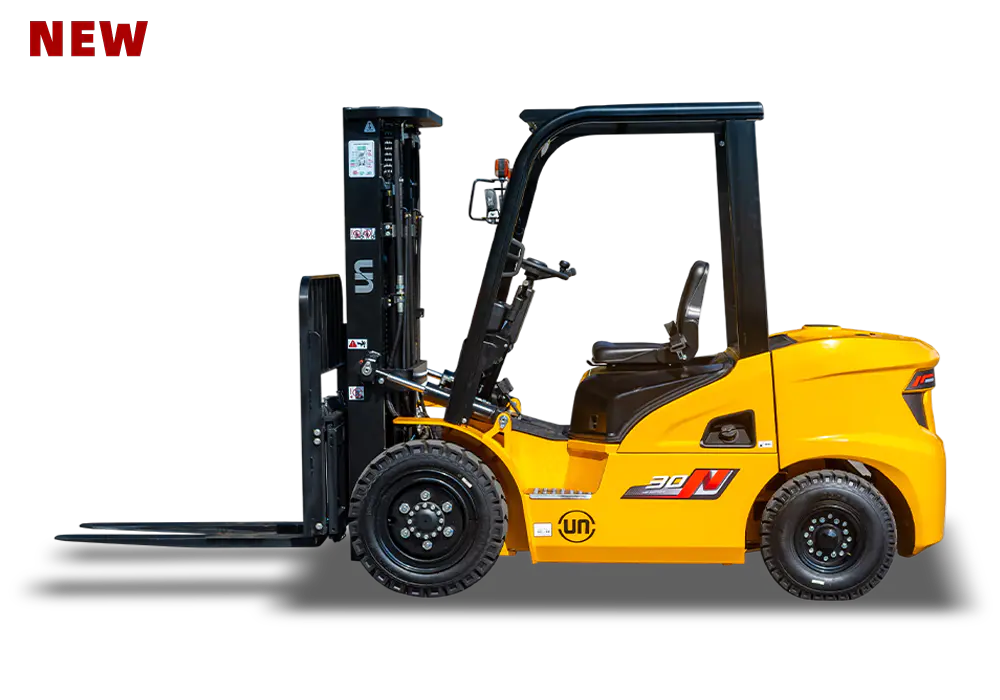
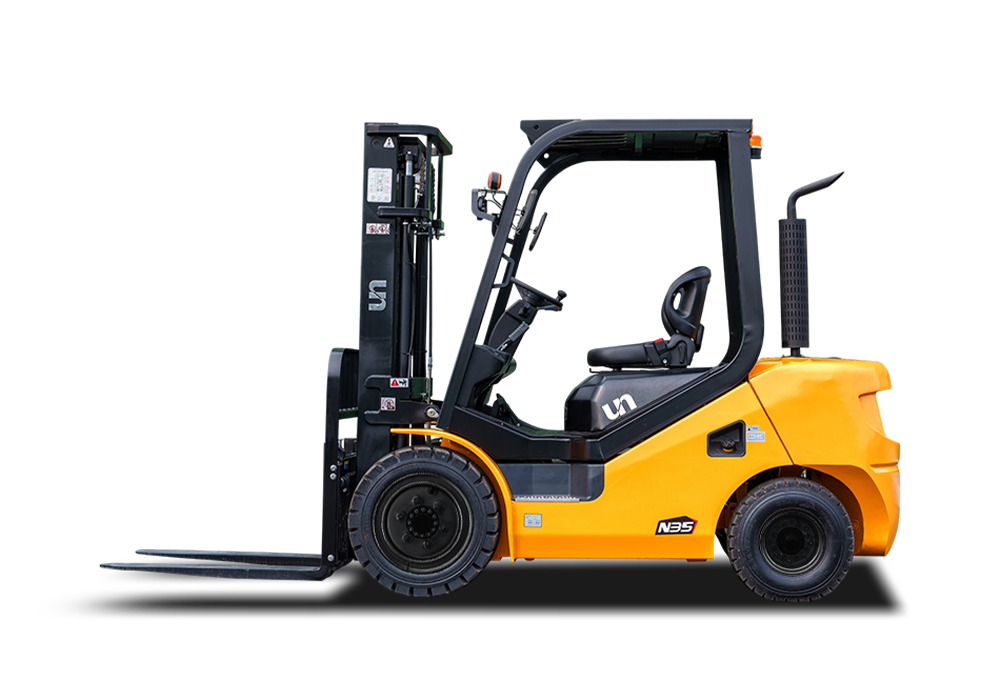
N Series 3.0T–3.5T LPG and Gasoline Forklift: Heavy-Duty Productivity with Practical Operating Flexibility
Admin 2026-08-30Modern material-handling operations require more than a forklift with a high rated capacity. Warehouses, distribution centers, manufacturing plants, construction supply yards, agricultural facilities, and logistics terminals need equipment that can lift safely, travel efficiently, withstand demanding working conditions, and remain economical over a long service life. The N Series 3.0T–3.5T LPG and gasoline forklift is designed around these practical requirements.
With rated load capacities of 3,000 kg and 3,500 kg at a 500 mm load center, this forklift is positioned for medium- to heavy-duty handling work. It combines a high-output engine, hydraulic lifting and steering systems, a robust chassis, ergonomic operator protection, and maintenance-friendly access. Its design is suitable for both indoor and outdoor operations where users need the flexibility of LPG or gasoline power without sacrificing the performance expected from a conventional internal-combustion forklift.
The machine is particularly appropriate for businesses that handle palletized products, steel, timber, building materials, machinery, packaged goods, industrial components, and other substantial loads. It is also suited to frequent handling cycles in which acceleration, lifting response, stability, and uptime directly influence operating costs.
Built for 3.0T and 3.5T Handling Applications
The central advantage of the N Series is its balance between lifting capability and operational maneuverability. A 3.0T forklift can handle a broad range of industrial loads while remaining relatively compact for its capacity class. The 3.5T version provides additional capacity for heavier pallets, denser materials, and applications in which a greater safety margin is desirable.
Both capacity ratings are specified at a 500 mm load center. This measurement is important because rated capacity is not determined solely by the nominal lifting figure. The farther a load’s center of gravity extends from the fork face, the greater the overturning moment placed on the forklift. By specifying the load center clearly, the equipment gives operators and fleet managers a practical basis for matching the truck to their loads.
The forklift uses a 3,000 mm rated lift height in the supplied configuration. This height is suitable for many standard warehouse racks, production-floor storage areas, loading bays, and outdoor stacking operations. Alternative mast configurations may be considered for applications that require higher lifting, but the actual rated capacity must always be confirmed for the selected mast, attachment, load center, and operating conditions.
The standard fork dimensions reflect the different requirements of the two capacity classes. The 3.0T model uses forks measuring approximately 1,070 × 125 × 45 mm, while the 3.5T model uses approximately 1,070 × 125 × 50 mm forks. The thicker fork profile on the higher-capacity model supports the demands associated with heavier loads.
Powertrain Designed for Frequent Handling
Frequent handling operations place repeated demands on the engine, transmission, hydraulic system, cooling system, and chassis. A forklift that performs well for a short duty cycle may not provide the same value when it is required to accelerate, stop, lift, lower, reverse, and reposition loads continuously throughout the day. The N Series is designed to provide stable power during this type of repetitive work.
The supplied specifications identify the GK25 engine, manufactured by GCT, as the power source for the 3.0T and 3.5T configurations. The engine has four cylinders, a displacement of 2,472 cc, and a rated output of 37.4 kW at 2,500 rpm. Its rated torque is listed as 176.5 N·m at 1,600 rpm. This combination provides useful low- and mid-speed torque for starting with a load, traveling across ramps, and maintaining working momentum in busy yards and warehouses.
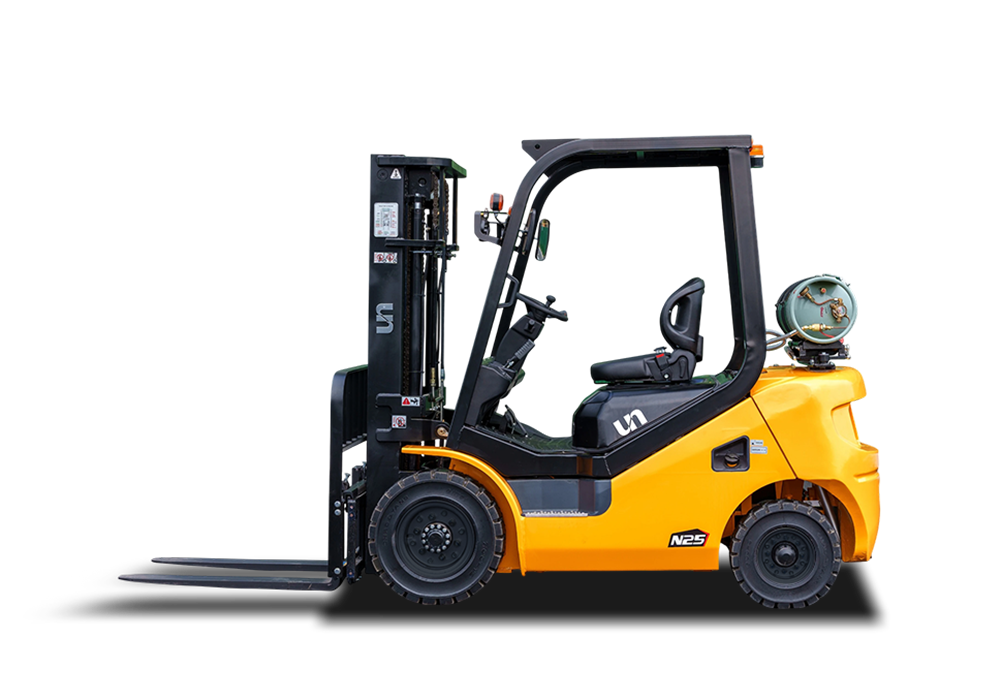
The power system is available in LPG and gasoline/LPG configurations according to the model designation and market requirement. This gives fleet operators a degree of fuel flexibility. LPG can be advantageous in applications that require comparatively cleaner combustion than traditional diesel power, while gasoline-based operation may be useful where fuel availability, local infrastructure, or fleet standardization makes it practical.
Fuel selection should be made according to the operating environment, local regulations, duty cycle, ventilation conditions, fuel availability, and the exact truck configuration. LPG-powered trucks are often selected for indoor or mixed indoor-outdoor work because they can offer lower visible emissions and reduced diesel-related odor. Adequate ventilation and proper fuel-cylinder handling remain essential in every indoor application.
The transmission is specified as hydraulic with one forward and one reverse stage. This simple arrangement is well suited to forklift work, where the operator frequently changes direction and prioritizes controlled movement over a large number of road-speed ratios. Hydraulic transmission also supports smooth direction changes and practical operation during loading, unloading, and aisle maneuvering.
Stable Torque for Real-World Loads
Rated engine output alone does not define forklift productivity. In actual work, operators need responsive torque when moving away from a standstill, approaching a loading ramp, or positioning a heavy pallet. The GK25 power unit’s torque rating at a relatively low engine speed supports this type of work.
The specifications list a maximum drawbar pull of approximately 22 kN under full-load conditions and 18 kN under no-load conditions for the 3.0T and 3.5T configurations. The stated maximum gradeability is 20 percent for the 3.0T model and 18 percent for the 3.5T model under full load. These figures indicate that the truck is intended for demanding industrial travel, although actual performance depends on surface condition, tire condition, ramp length, load position, weather, and operator technique.
No-load travel speed is listed at 19 km/h. This provides useful relocation speed between workstations without making the machine unnecessarily large or complicated. In a properly controlled facility, the speed allows the forklift to complete repeated handling cycles efficiently while still permitting operators to maintain safe control.
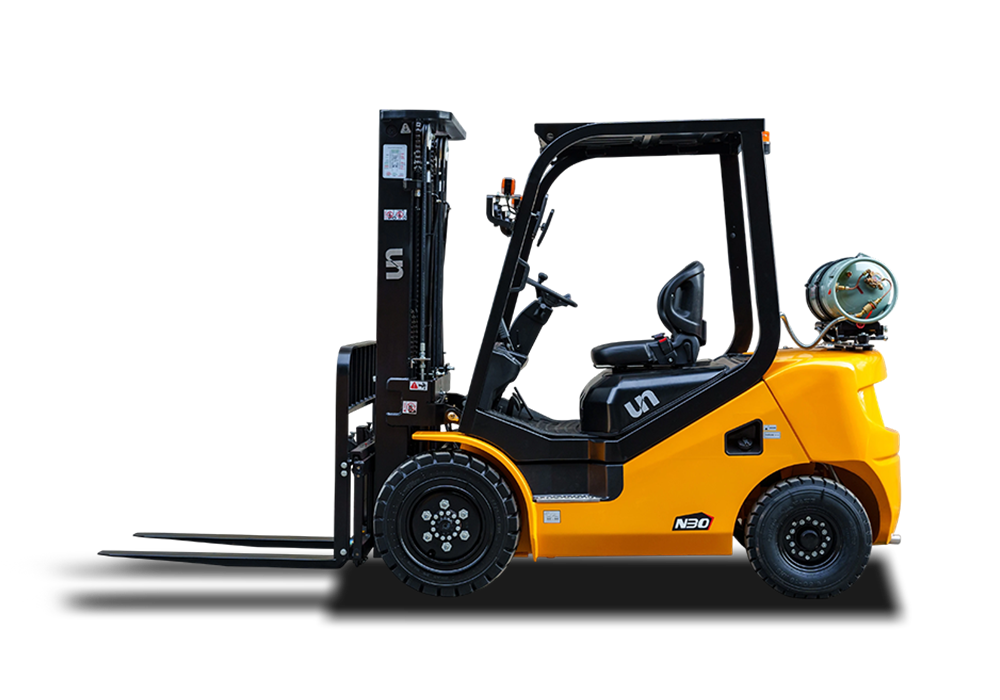
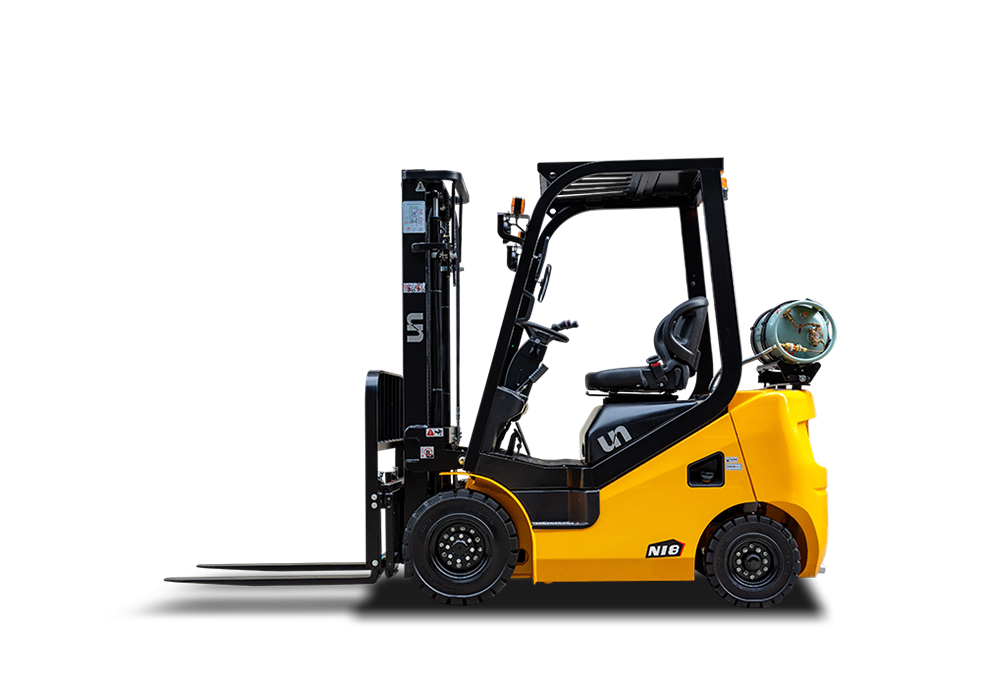
N Series 3.0T-3.5T LPG&Gasoline Forklift
Hydraulic Performance for Controlled Lifting
A forklift’s value is measured not only by how much it can lift, but also by how precisely it can lift, hold, position, and lower a load. The N Series hydraulic system is designed to support controlled mast movement and responsive steering. The supplied product information identifies Shimadzu pumps and valves as part of the hydraulic system.
Precision hydraulic components help the operator make gradual adjustments when entering a pallet, aligning with a rack, placing a load on a platform, or withdrawing forks from beneath a pallet. Smooth hydraulic response is especially important when handling fragile or unstable goods, because abrupt movement can cause load shift, product damage, or unnecessary stress on the mast and carriage.
The rated lifting speed under full load is listed at approximately 390 mm per second for the 3.0T and 3.5T configurations. This figure provides a useful balance between productivity and controllability. A very slow lifting cycle reduces output, while an excessively aggressive response can make load placement difficult. The N Series specification is intended for regular industrial work in which operators need both speed and predictable control.
Lowering performance is also important. The supplied data identifies a no-load lowering speed of at least 300 mm per second and a full-load lowering speed of no more than 600 mm per second. Controlled lowering helps protect goods, racking, floors, and the forklift itself. Operators should still lower loads smoothly and avoid sudden directional changes, especially when working at height.
Attachment operation is supported by hydraulic pressure listed at approximately 18.5 MPa for the 3.0T version and 20.5 MPa for the 3.5T version in the detailed configuration table. Because attachments can significantly affect residual capacity, forward load center, visibility, and hydraulic demand, the selected attachment must be approved for the truck and used within the manufacturer’s rated limits.
Cooling Capacity for Demanding Environments
Heat is one of the most serious long-term challenges for internal-combustion forklifts. Continuous travel, repeated lifting, high ambient temperatures, dusty yards, and heavy loads can increase thermal stress on the engine, transmission, hydraulic oil, and electrical systems. The N Series addresses this requirement with an advanced cooling arrangement and large radiator design.
A large radiator helps maintain stable operating temperatures by providing more effective heat dissipation during demanding cycles. Consistent cooling is especially valuable in hot climates, where insufficient thermal capacity can lead to performance loss, accelerated component wear, increased fuel consumption, and unexpected downtime.
Cooling performance also depends on maintenance. Radiator surfaces must be kept free of dust, chaff, plastic film, packaging debris, and other contaminants that restrict airflow. Operators and service personnel should follow the recommended inspection and cleaning procedures, particularly when the forklift works in recycling, agricultural, cement, wood-processing, or outdoor construction environments.
Compared with many low-cost forklifts that may be designed primarily around initial purchase price, a properly engineered cooling system provides an important lifecycle advantage. It supports more consistent performance and reduces the likelihood that the truck will need to be operated under repeated thermal limits. This is particularly relevant for fleets that work multiple shifts.
Chassis Strength and Stability
Heavy-duty forklift performance begins with the chassis. The frame must support the counterweight, axles, mast, powertrain, hydraulic equipment, and load forces while absorbing the vibration generated by uneven industrial surfaces. The N Series uses a precision-engineered chassis intended to provide a stable foundation for lifting and traveling.
The 3.0T model has a listed total weight of approximately 4,460 kg, while the 3.5T model has a listed total weight of approximately 4,775 kg. This operating mass contributes to stability and traction. The heavier construction is not simply a disadvantage; it is part of the engineering balance that allows the truck to handle substantial loads while maintaining predictable behavior.
Full-load front axle weight distribution is listed at approximately 6,714 kg for the 3.0T configuration and 6,997 kg for the 3.5T configuration. Rear axle distribution is listed at approximately 746 kg and 777 kg respectively. These figures demonstrate how strongly the load transfers toward the front axle during lifting. They also reinforce the importance of correct load positioning, mast tilt, tire condition, and compliance with the capacity plate.
When unloaded, the weight distribution changes substantially. The listed front axle values are approximately 1,784 kg for the 3.0T model and 1,910 kg for the 3.5T model, while the rear axle values are approximately 2,676 kg and 2,865 kg. This distribution helps explain why steering and rear-wheel behavior differ between loaded and unloaded travel.
The wheelbase is listed at 1,700 mm. This contributes to a stable platform while helping the forklift remain maneuverable in industrial work areas. A long wheelbase can improve stability but increase turning requirements; a short wheelbase can improve maneuverability but may require closer attention to load behavior. The N Series specification aims to balance both needs.
Suitable for Indoor and Outdoor Work
The forklift’s configuration supports mixed-use environments. In warehouses and factories, the compact body and precise steering help the operator work around pallets, production equipment, dock doors, and storage lanes. Outdoors, the internal-combustion powertrain, solid industrial chassis, and pneumatic-style load tires support work on loading yards, transport depots, construction material sites, and other areas where continuous battery charging may not be convenient.
The tires listed for the 3.0T and 3.5T models are approximately 28 × 9-15-12PR at the front and 6.50-10-10PR at the rear. These tire sizes are intended to provide a practical combination of load support, traction, and durability. The correct tire type must be selected for the surface. Pneumatic tires, cushion tires, and solid tires have different characteristics, and the final choice should reflect floor quality, puncture risk, temperature, and outdoor exposure.
Maneuverability in Working Areas
Forklift productivity is strongly affected by how easily the truck can turn, position, and reverse. The N Series has an outside turning radius of approximately 2,425 mm for the 3.0T configuration and 2,500 mm for the 3.5T configuration. These dimensions allow the truck to work effectively in many conventional industrial layouts while providing the stability associated with a heavy-duty counterbalanced design.
The minimum right-angle stacking aisle width is listed at approximately 4,180 mm for the 3.0T model and 4,255 mm for the 3.5T model. Aisle requirements must always be calculated using the actual pallet dimensions, fork length, load overhang, mast type, attachment, and local operating method. However, the published figures provide a useful starting point for warehouse planning.
The overall width is approximately 1,225 mm, while the length to the face of the forks without the forks is approximately 2,695 mm for the 3.0T model and 2,780 mm for the 3.5T model. These dimensions allow fleet planners to evaluate dock access, trailer loading, production-line clearance, turning space, and storage-lane geometry before purchasing.
Compared with larger-capacity forklifts, the N Series can offer a more practical footprint for companies that occasionally handle heavy loads but do not want the excessive size, cost, or turning space associated with a much larger truck. Compared with smaller forklifts, it offers higher capacity and stronger construction for operations where load weights regularly approach or exceed the limits of a 2.5T truck.
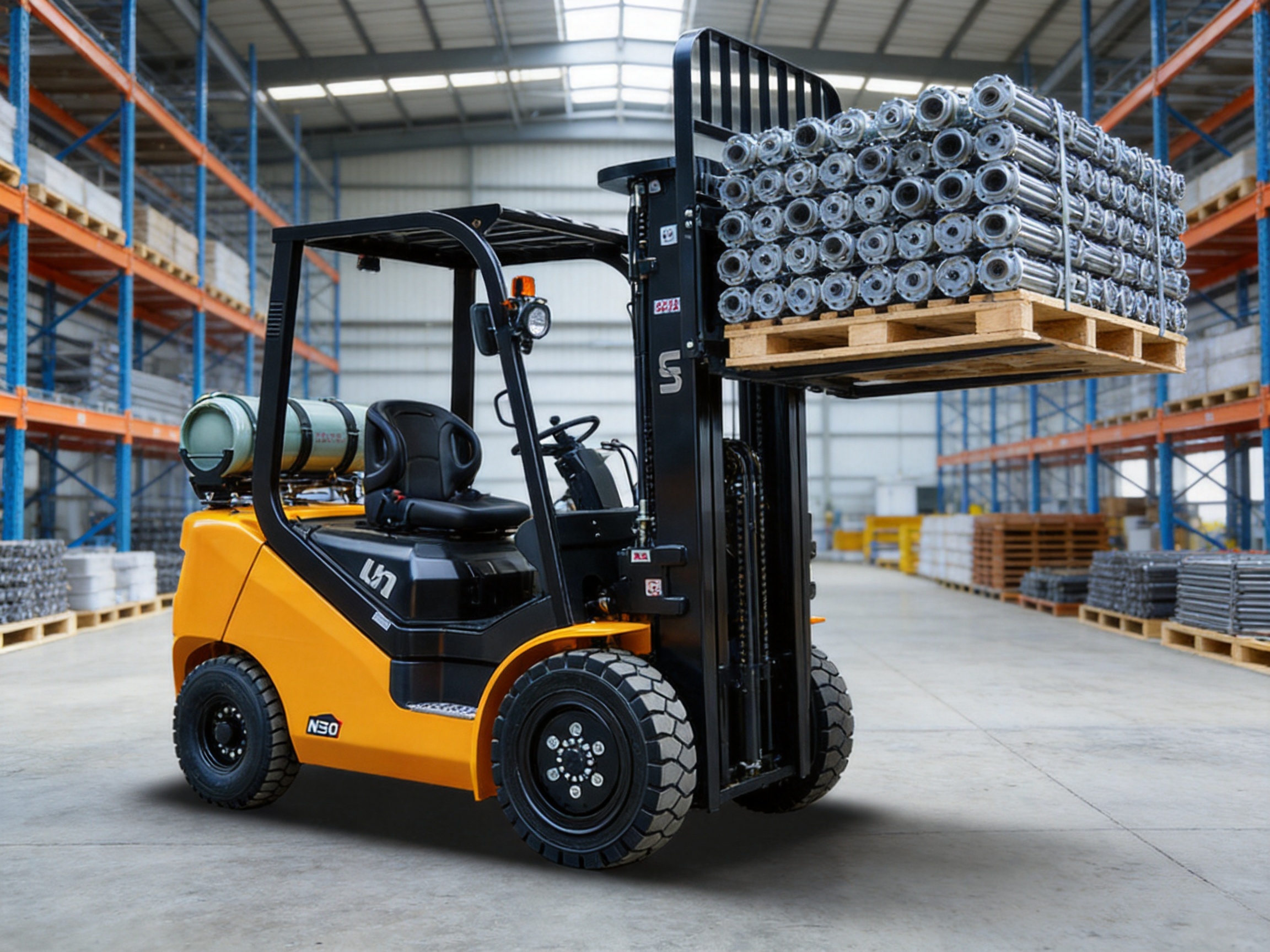
Operator Safety and Ergonomics
Safety and comfort have a direct relationship with productivity. An operator who has good visibility, comfortable controls, adequate foot space, and effective protection can work more consistently and is less likely to make errors caused by fatigue or awkward posture. The N Series incorporates several features intended to improve the operator’s working environment.
The OPS system and seat switch enhance operating safety. These systems are designed to help prevent unintended operation when the operator is not correctly seated or when required operating conditions are not met. Such features should be regarded as part of a complete safety program that also includes training, site traffic rules, pre-shift inspections, load assessment, and regular supervision.
The wide-vision mast supports visibility toward the load and the working area. Good mast visibility helps the operator align the forks with pallet openings, monitor load placement, and identify obstacles. Visibility can still be affected by the load height, pallet design, attachments, lighting, and travel direction, so operators must reverse or use a spotter when forward visibility is obstructed.
The high-strength overhead guard protects the operator from falling objects and provides an important barrier between the operator and materials being handled. It is not designed to protect against every possible impact or falling-load scenario, and it must never be modified without approval. Loads should be stable, correctly secured, and within the truck’s rated capacity.
The suspended frame provides increased foot space and contributes to ergonomic comfort. Together with an adjustable steering column and adjustable seat, this design allows the operator to establish a more suitable driving position. Improved posture can reduce strain during long shifts, particularly when the truck is used for repetitive loading and unloading.
A suspended powertrain system is available as an option for customized performance. Isolating or suspending powertrain components can help reduce vibration transmitted to the operator and chassis, depending on the final configuration. This option may be especially valuable in operations with long working hours, uneven outdoor surfaces, or a strong focus on operator comfort.
Safety in Mixed-Traffic Facilities
In a warehouse or production plant, the forklift often operates near pedestrians, trucks, racks, conveyors, and fixed machinery. The N Series provides the mechanical foundation for safe operation, but site management remains responsible for controlling traffic risks. Separate pedestrian routes, warning signs, speed limits, mirrors, lighting, audible alarms, and clearly marked crossing points should be considered according to the facility layout.
Operators should keep the load as low as practical while traveling, maintain a safe distance from edges and ramps, sound the horn at blind intersections, and avoid turning on slopes. The mast should be tilted appropriately for the load, and the operator should never exceed the rated capacity shown on the truck’s data plate.
Maintenance-Friendly Engineering
Downtime is an important cost in material handling. A forklift that is difficult to inspect or service may remain out of operation longer than necessary, even when the required repair is relatively minor. The N Series includes access features intended to simplify routine maintenance and component replacement.
The engine hood tilts through approximately 90 degrees. This provides broad access to the engine compartment, filters, belts, hoses, electrical connections, and other service points. Wide access reduces the time required for inspection and makes it easier for technicians to identify leaks, loose connections, damaged components, and contamination before they become serious problems.
Convenient transmission oil filter replacement is another practical maintenance feature. Regular filter replacement helps protect the hydraulic transmission from contamination and supports stable shift performance. The exact replacement interval should follow the maintenance schedule and may need to be adjusted for severe-duty applications, high dust levels, extended operating hours, or unusual temperature conditions.
Preventive maintenance should include engine oil and filter checks, coolant inspection, radiator cleaning, hydraulic oil inspection, mast-chain lubrication, fork examination, tire inspection, brake testing, steering checks, battery and electrical-system inspection, and examination of hoses and fittings. A structured inspection program generally costs less than unscheduled downtime caused by neglected wear.
Maintenance Access as a Lifecycle Advantage
Initial purchase price is only one part of forklift ownership cost. Fuel consumption, tires, scheduled service, repairs, operator productivity, parts availability, and downtime all contribute to the total cost of ownership. Easy access to service points can reduce labor time and help service teams complete inspections more consistently.
This is an area in which the N Series can compete effectively with low-cost alternatives. Some inexpensive forklifts appear attractive during procurement but become less economical when access is restricted, service intervals are difficult to follow, or replacement parts are not readily coordinated. A design that supports routine maintenance helps protect the investment over the entire working life of the truck.
Fleet managers can further improve value by recording operating hours, service events, fault reports, tire changes, fuel use, and operator comments. Such data makes it easier to identify recurring problems and determine whether an attachment, tire type, fuel choice, or operating procedure should be changed.
Manufacturing Strength and Engineering Capability
The product is manufactured by Zhejiang UN Forklift Co., Ltd., a material-handling equipment company integrating research and development, production, sales, and service. The company was founded in 1978 and operates a production facility covering approximately 53,400 square meters, with an annual production capacity of approximately 15,000 units.
This scale provides several important advantages. First, an established manufacturer can accumulate experience across multiple forklift categories and capacity ranges. Second, an integrated organization can coordinate product development, component selection, assembly, quality control, sales support, and after-sales service more effectively than a trading company that simply sources finished machines.
The company offers a broad product portfolio covering internal-combustion forklifts, electric forklifts, warehouse equipment, reach trucks, and other material-handling products. Its reported range includes 17 varieties, 96 series, and more than 200 specifications. A broad portfolio supports component and application knowledge across different operating conditions and gives customers more options when standardizing a mixed fleet.
The company also reports experience in the development of reach forklifts and very-narrow-aisle equipment, as well as national patents related to electric forklift technology. This background is relevant to the N Series because modern forklift engineering increasingly depends on the integration of mechanical systems, hydraulics, electronics, ergonomics, safety controls, and energy-efficiency considerations.
As a professional internal-combustion forklift manufacturer, the company supplies models for international markets and develops products to meet different emission and application requirements. It also acts as an original-equipment manufacturer for recognized industrial companies. Such experience indicates familiarity with structured production, specification control, customer audits, and the consistency requirements associated with long-term industrial supply.
Integrated Production and Quality Control
An integrated manufacturing process typically begins with application analysis and engineering design. Product teams define the required load capacity, load center, mast geometry, axle loads, powertrain output, hydraulic performance, turning radius, operator environment, and maintenance access. These requirements must then be translated into a frame, mast, counterweight, steering system, braking system, and power system that function as one complete vehicle.
Frame and chassis production require accurate welding, dimensional control, and appropriate inspection. The chassis must remain aligned under repeated loading because small deviations can affect mast movement, tire wear, steering response, and long-term durability. Critical welded structures should therefore be controlled through repeatable fixtures, process standards, and inspection procedures.
Mast assembly requires particular attention to rail alignment, chain routing, roller adjustment, carriage fit, fork positioning, and hydraulic-cylinder operation. These factors influence lifting smoothness, residual capacity, noise, and operator confidence. Consistency during production is essential because the mast is one of the most highly loaded assemblies on the forklift.
Powertrain installation requires correct alignment between the engine, transmission, axles, cooling package, hydraulic pump, exhaust or fuel system, and electrical harnesses. The stated use of a hydraulic transmission, GCT engine, Shimadzu hydraulic components, and large cooling equipment reflects a component-based approach in which each major system is selected for its role in overall performance.
Final assembly and testing should verify steering, braking, lifting, lowering, tilting, travel, engine performance, hydraulic pressure, safety switches, instrument functions, and leakage control. Testing under representative conditions helps identify assembly issues before delivery and provides a stronger basis for dependable field operation.
How the N Series Compares with Other Forklift Options
Every power type has strengths and limitations. The right choice depends on the facility, duty cycle, load profile, energy infrastructure, local regulations, and total cost objectives. The N Series is designed for customers who want the operating flexibility and sustained output associated with an internal-combustion forklift while using LPG or gasoline rather than relying exclusively on diesel.
| Evaluation Area | N Series LPG and Gasoline Forklift | Typical Electric Alternative | Typical Diesel Alternative |
|---|---|---|---|
| Rated capacity range in this configuration | 3,000–3,500 kg | Varies by model and battery capacity | Commonly available in this capacity range |
| Refueling or energy replenishment | Rapid fuel replacement or refueling, subject to local procedures | Requires charging, battery exchange, or opportunity charging | Rapid refueling with suitable fuel infrastructure |
| Indoor suitability | Suitable where ventilation and local regulations permit LPG or gasoline operation | Generally well suited to indoor use | Usually more restricted indoors because of emissions |
| Outdoor capability | Well suited to mixed indoor and outdoor work | Depends on tire, battery, weather, and operating conditions | Well suited to demanding outdoor work |
| Continuous heavy-duty work | Strong potential with stable fuel supply and cooling maintenance | Limited by battery capacity and charging strategy | Strong potential for extended heavy-duty cycles |
| Primary selection advantage | Balanced capacity, maneuverability, fuel flexibility, and practical uptime | Low operating noise and zero tailpipe emissions during operation | High torque and established outdoor heavy-duty performance |
The N Series can be more flexible than an electric forklift when the truck must work continuously across multiple shifts and charging infrastructure is limited. Refueling or replacing a compliant LPG cylinder can generally return the machine to work faster than waiting for a large traction battery to recharge. This can reduce the number of spare batteries required in certain operations.
Compared with a diesel forklift, the LPG and gasoline configuration can be attractive for mixed-use facilities that need to reduce visible exhaust, odor, or diesel-related emissions. The choice is not universal, however. Facilities must evaluate ventilation, fuel storage, fire protection, indoor-air requirements, and local legislation before selecting an internal-combustion truck for indoor operation.
Compared with smaller-capacity forklifts, the N Series offers greater structural capacity and stronger load-handling potential. Compared with larger forklifts, it can provide a more manageable footprint and lower infrastructure demands for applications that do not require extreme capacity. This middle position is one of its most important competitive strengths.
Operational Efficiency and Environmental Considerations
Efficiency should be measured by completed handling cycles, not simply by fuel consumption at idle. A forklift can improve productivity when it accelerates predictably, lifts at an appropriate rate, turns within the available space, and spends less time unavailable for service. The N Series supports this objective through its 19 km/h no-load travel speed, 390 mm per second full-load lifting speed, responsive hydraulic controls, and compact industrial dimensions.
LPG operation can help reduce emissions compared with conventional diesel operation in suitable applications. The supplied product description emphasizes stable power and cleaner emissions, making the forklift appropriate for both indoor and outdoor use when the operating environment is properly ventilated and compliant with applicable regulations.
Environmental performance also depends on operating behavior. Excessive idling, aggressive acceleration, overloaded travel, underinflated tires, dirty air filters, and poor maintenance can increase fuel consumption and emissions. Operator training and preventive maintenance are therefore important parts of the product’s environmental value.
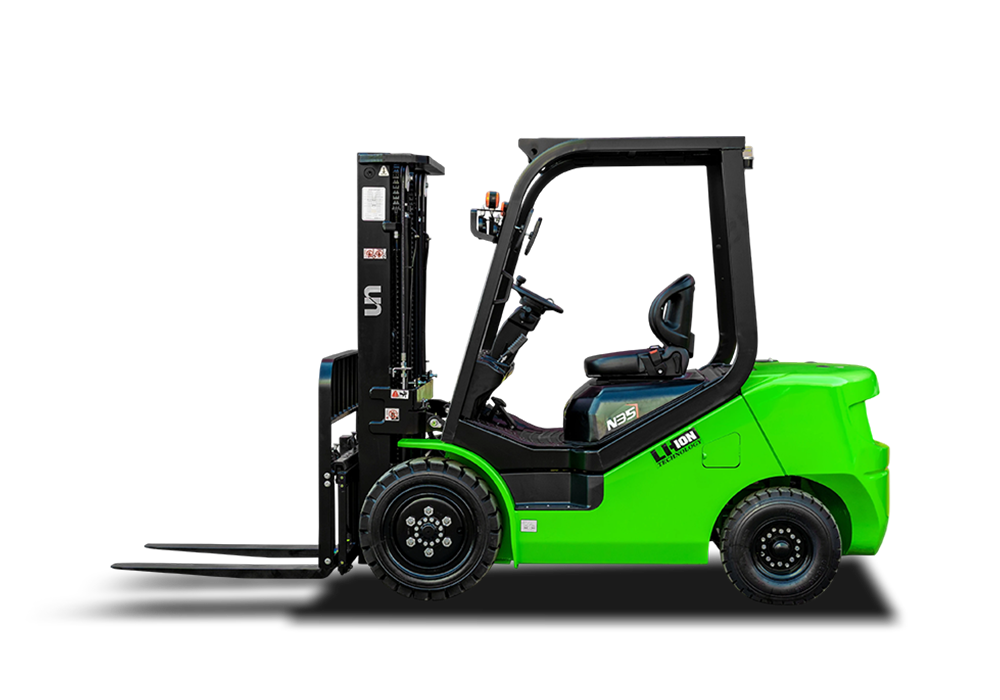
The company’s broader focus on energy saving, environmental protection, safety, and high efficiency supports the development of forklift products for changing market expectations. Its more recent work includes diesel-to-lithium-ion conversion concepts and standard lithium-ion forklifts, demonstrating an effort to address multiple energy pathways rather than relying on a single technology.
Applications Across Different Industries
Manufacturing Plants
Manufacturing facilities often need to move raw materials, work-in-process goods, finished products, tooling, molds, and packaging. The 3.0T and 3.5T capacities are appropriate for many production environments in which loads are too heavy for compact warehouse trucks but do not require a very large industrial forklift.
The truck can support line feeding, finished-goods removal, pallet transfer, and loading-dock operations. Its precise hydraulic control is useful when positioning materials close to machinery or placing products in designated storage locations.
Warehousing and Distribution
Distribution centers require fast and repeatable handling. The N Series can move pallets between receiving areas, staging zones, storage lanes, and outbound docks. The turning-radius and aisle figures provide a reference for facility planning, while the wide-vision mast assists with rack approach and load placement.
For indoor warehouse use, managers should evaluate ventilation, fuel-cylinder storage, charging alternatives, aisle width, rack protection, pedestrian separation, and local emissions standards. The truck should be specified with the mast, tire, attachment, and safety equipment appropriate to the site.
Construction Materials
Construction material yards commonly handle concrete products, steel sections, bricks, timber, tiles, pipes, panels, and bagged materials. These goods can be dense, irregular, or difficult to position. The robust chassis, high rated capacity, substantial front axle load capacity, and internal-combustion powertrain make the N Series suitable for many such applications.
Outdoor sites require special attention to surface conditions, water, mud, slopes, loose gravel, dust, and visibility. Tire selection, cleaning schedules, protective equipment, and operator training should be matched to these conditions.
Food, Beverage, and Consumer Goods
LPG forklifts are often considered for facilities that need internal-combustion productivity while controlling odor and visible exhaust. Food and beverage operations must apply strict site-specific policies concerning fuel storage, ventilation, hygiene, emissions, and contamination control. The forklift should be maintained carefully, and the selected configuration must meet the facility’s internal standards.
Ports, Logistics Yards, and Agricultural Operations
Logistics yards and agricultural facilities often require a combination of indoor and outdoor travel. Pallets, crates, bins, equipment, and packaged goods may be moved over longer distances than in a conventional warehouse. The N Series provides useful travel speed, gradeability, and fuel flexibility for this mixed environment.
Dust and debris control are particularly important in agricultural and outdoor operations. Radiator cleaning, air-filter inspection, tire checks, and protection of exposed hydraulic and electrical components should be incorporated into the service plan.
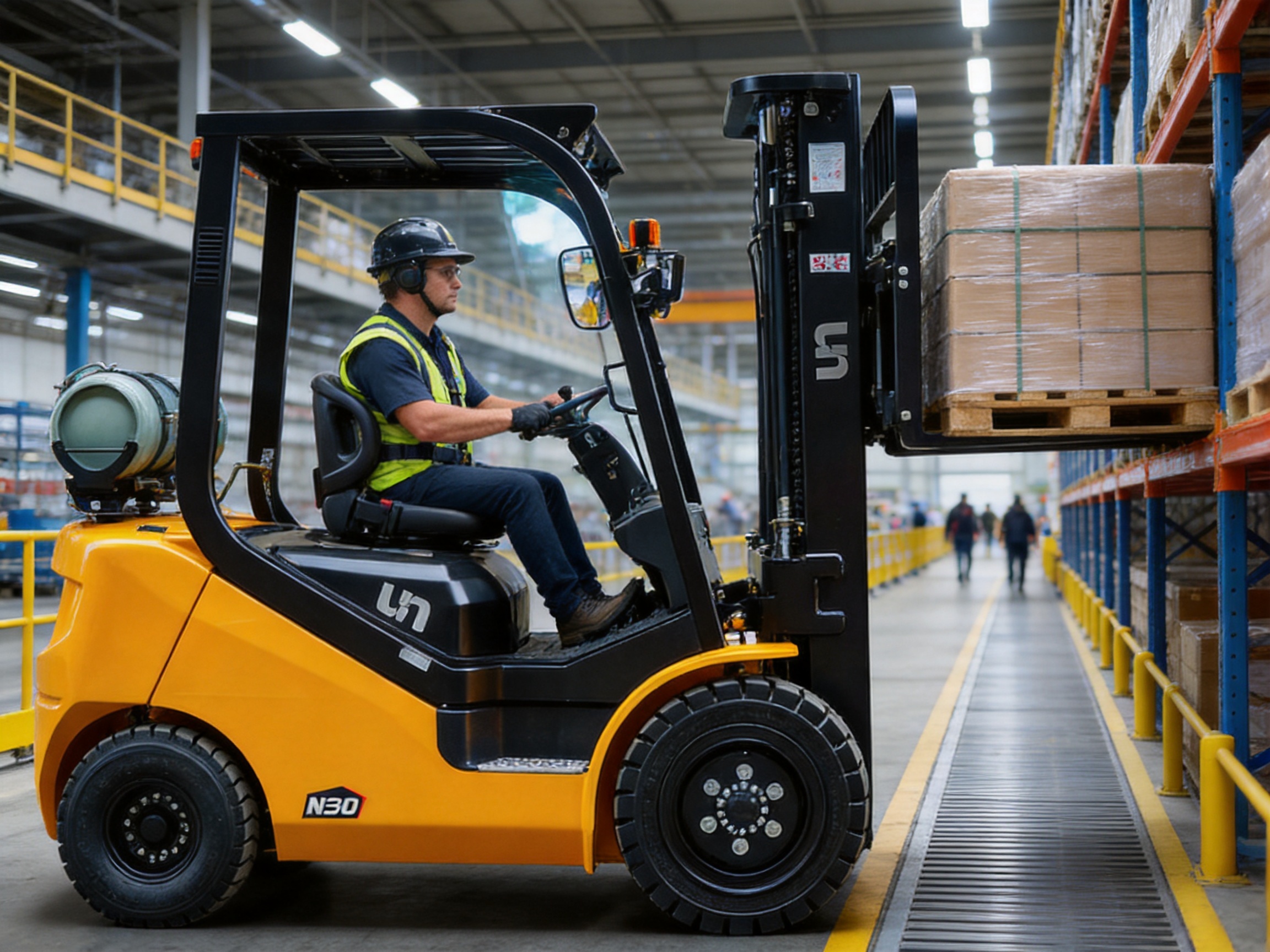
Configuration and Purchasing Guidance
Choosing the correct forklift requires more than selecting the highest nominal capacity. Buyers should begin by documenting the heaviest load, average load, load dimensions, load center, lifting height, pallet type, operating surface, aisle width, shift pattern, indoor and outdoor usage, and required attachments.
The 3.0T model may be the more efficient choice where typical loads fall comfortably within 3,000 kg and maneuverability or operating cost is a priority. The 3.5T model provides additional capacity for heavier loads and can offer greater flexibility when load weights vary. The higher-capacity version is also suitable where future production growth may increase material weights.
The 500 mm load center should not be overlooked. If loads are unusually long, unevenly distributed, or handled with an attachment that moves the center of gravity forward, the available capacity may be lower than the nominal rating. The residual-capacity chart and data plate for the exact truck must govern every operation.
Mast selection should reflect the lowest overhead clearance in the facility and the highest required storage position. The standard 3,000 mm rated lift height is suitable for many general applications, but the extended mast height in the supplied configuration reaches approximately 4,070 mm with the backrest. Buyers should check doorways, sprinkler systems, overhead beams, trailer roofs, and rack clearances.
Attachment selection should consider hydraulic flow and pressure, attachment weight, visibility, load center, and mechanical compatibility. Side shifters, fork positioners, clamps, rotators, bale clamps, and other tools can improve productivity, but they can also reduce residual capacity. Every attachment should be evaluated as part of the complete truck configuration.
Recommended Fleet Management Practices
A well-designed forklift delivers the greatest value when it is managed systematically. Fleet owners should assign each truck an inspection and service history, record operating hours, and establish a clear process for reporting faults. Operators should complete pre-shift inspections before using the machine.
Pre-shift checks should include tires, forks, mast chains, hydraulic hoses, fluid levels, brakes, steering, horn, lights, warning systems, seat belt, overhead guard, seat switch, and visible leaks. Any condition that affects safe operation should be reported immediately and corrected before the truck returns to service.
Operators should be trained for the specific truck and attachment. Training should cover load capacity, stability triangle principles, ramp travel, pedestrian interaction, LPG or gasoline handling, battery and electrical safety, parking, emergency procedures, and daily inspection requirements.
Fuel handling requires particular discipline. LPG cylinders should be inspected, stored, connected, and replaced according to approved procedures. Gasoline should be stored in designated areas using suitable containers and fire-prevention controls. Fuel systems should never be modified by unqualified personnel.
Service intervals should be adapted to operating severity. A forklift operating one shift on a clean indoor floor may require a different maintenance schedule from a truck operating two or three shifts in a dusty outdoor yard. The manufacturer’s recommended schedule should be used as the baseline, with additional inspections where conditions demand them.
Advantages for International Buyers
The manufacturer has a worldwide sales and service network with partners in Europe, South America, North America, Africa, and Asia. International support is important because forklift customers need more than a machine shipment. They need spare parts coordination, technical information, warranty procedures, service training, and application assistance.
The company provides regional contact channels for customers in the Americas, Europe, Asia, Africa, and Oceania, as well as a dedicated parts inquiry contact. This structure can help customers direct requests to the appropriate support team and reduce communication delays during procurement or after-sales service.
The company’s experience as an OEM supplier is also valuable for international customers that require consistent specifications, private-label cooperation, documentation control, or integration into an existing equipment program. OEM experience generally requires attention to repeatability, production scheduling, inspection records, and customer-specific requirements.
For importers and distributors, the broad portfolio can make it easier to develop a complete material-handling offering. A distributor may be able to support customers with internal-combustion forklifts, electric units, warehouse equipment, reach products, and specialized models from one established manufacturing source.
Strengths in Manufacturing Development
The company’s long operating history provides a foundation for continuous product development. Since its establishment in 1978, it has expanded from forklift manufacturing into a broader material-handling equipment portfolio. This development reflects the changing requirements of warehouses, factories, logistics operators, and international markets.
Research and development capability is especially important as forklift design becomes more integrated. Customers increasingly expect improved ergonomics, lower emissions, electronic monitoring, energy efficiency, safer operating systems, and compatibility with fleet-management tools. A manufacturer with experience in both internal-combustion and electric equipment is better positioned to respond to these overlapping demands.
The company’s reported involvement in the development of China’s electric forklift industry and standards demonstrates participation beyond basic assembly. Its experience with patents, electric technologies, reach forklifts, and narrow-aisle equipment contributes to a broader engineering base that can support future improvements in conventional forklift platforms.
At the same time, the N Series retains the straightforward serviceability and proven operating logic valued by many industrial customers. The combination of a familiar hydraulic transmission, accessible engine compartment, conventional counterbalanced layout, and modern safety and ergonomic features makes the product practical for fleets that want dependable technology without excessive system complexity.
Technical Summary
| Specification | 3.0T Configuration | 3.5T Configuration |
|---|---|---|
| Rated load capacity | 3,000 kg | 3,500 kg |
| Load center | 500 mm | 500 mm |
| Rated lift height | 3,000 mm | 3,000 mm |
| Free lift height | Approximately 145 mm | Approximately 150 mm |
| Fork size | 1,070 × 125 × 45 mm | 1,070 × 125 × 50 mm |
| Overall width | Approximately 1,225 mm | Approximately 1,225 mm |
| Length to fork face without forks | Approximately 2,695 mm | Approximately 2,780 mm |
| Mast lowered height | Approximately 2,070 mm | Approximately 2,070 mm |
| Overhead guard height | Approximately 2,235 mm | Approximately 2,235 mm |
| Outside turning radius | Approximately 2,425 mm | Approximately 2,500 mm |
| No-load travel speed | 19 km/h | 19 km/h |
| Full-load lifting speed | Approximately 390 mm/s | Approximately 390 mm/s |
| Maximum gradeability at full load | 20 percent | 18 percent |
| Total weight | Approximately 4,460 kg | Approximately 4,775 kg |
| Engine | GK25, four-cylinder | GK25, four-cylinder |
| Engine output | 37.4 kW at 2,500 rpm | 37.4 kW at 2,500 rpm |
| Engine torque | 176.5 N·m at 1,600 rpm | 176.5 N·m at 1,600 rpm |
| Transmission | Hydraulic, 1 forward/1 reverse | Hydraulic, 1 forward/1 reverse |
| Front tires | Approximately 28 × 9-15-12PR | Approximately 28 × 9-15-12PR |
| Rear tires | Approximately 6.50-10-10PR | Approximately 6.50-10-10PR |
Specifications may vary according to power type, market, mast, attachment, tire selection, emissions configuration, and other optional equipment. Buyers should confirm the final technical data, residual-capacity chart, dimensions, and compliance requirements before placing an order.
Q&A
What is the rated capacity of the N Series forklift?
The product range covered here includes a 3.0T model rated to lift 3,000 kg and a 3.5T model rated to lift 3,500 kg. These ratings are associated with a 500 mm load center in the supplied specifications. The exact permissible load depends on the mast, attachment, load height, load center, and truck configuration.
Is the forklift powered by LPG, gasoline, or both?
The N Series is offered in LPG and gasoline/LPG configurations depending on the model and market. The final power type should be confirmed during quotation because fuel-system details, emissions equipment, operating procedures, and applicable regulations can vary by region.
Can it be used indoors?
It can be used indoors where LPG or gasoline operation is permitted and adequate ventilation is provided. Facility managers must verify local emissions rules, indoor-air requirements, fire-prevention measures, fuel-storage procedures, and the building’s ventilation capacity before deployment.
What is the standard lift height?
The supplied configuration lists a rated lift height of 3,000 mm. The extended mast height with backrest is approximately 4,070 mm. Other mast options may be available, but the final capacity and overhead-clearance requirements must be confirmed for each option.
What engine is used?
The detailed specifications identify the GK25 engine manufactured by GCT. It is a four-cylinder, 2,472 cc engine with a listed output of 37.4 kW at 2,500 rpm and torque of 176.5 N·m at 1,600 rpm.
What makes the forklift suitable for heavy-duty work?
The key factors include its 3,000–3,500 kg rated capacity, precision-engineered chassis, hydraulic transmission, high-output engine, large radiator, robust tires, strong front axle loading capability, and hydraulic lifting system. These features are intended to support repetitive handling and medium- to heavy-duty industrial applications.
How does the operator benefit from the ergonomic design?
The operator benefits from a wide-vision mast, adjustable steering and seat, increased foot space, a suspended frame, and a high-strength overhead guard. The OPS system and seat switch add safety support. An optional suspended powertrain system can be considered where reduced vibration and increased comfort are priorities.
How easy is routine maintenance?
The engine hood tilts approximately 90 degrees to provide access to the engine and related components. The transmission oil filter is also designed for convenient replacement. Regular inspection and scheduled maintenance remain essential for reliable operation.
What attachments can be used?
Potential attachments include side shifters, fork positioners, clamps, rotators, and other tools, subject to compatibility. Attachment weight, hydraulic pressure, visibility, load center, and residual capacity must be checked before use. The capacity plate for the complete truck and attachment combination governs safe operation.
How should a buyer choose between the 3.0T and 3.5T versions?
The 3.0T version is suitable when the maximum and typical load weights remain within 3,000 kg and a slightly smaller operating envelope is preferred. The 3.5T version is appropriate for heavier loads or applications that need additional capacity. The decision should also consider aisle width, floor loading, pallet dimensions, attachment use, and future growth.
Where is the manufacturer based?
The manufacturer is Zhejiang UN Forklift Co., Ltd., based in Fuyang, Hangzhou, Zhejiang, China. It operates an integrated material-handling equipment business covering research and development, production, sales, and service.
Does the manufacturer provide international support?
The company reports a worldwide sales and service network with partners in Europe, South America, North America, Africa, and Asia. Regional contact channels and a dedicated parts inquiry service are available for international customers, subject to the specific market and distributor arrangement.
Conclusion
The N Series 3.0T–3.5T LPG and gasoline forklift is designed for companies that need substantial lifting capability, dependable power, practical maneuverability, and flexible operation across indoor and outdoor environments. Its 3,000 kg and 3,500 kg capacity classes cover a broad segment of manufacturing, warehousing, logistics, construction, agricultural, and industrial applications.
Its competitive value comes from the combination of features rather than a single specification. The GK25 engine provides useful output and torque, the hydraulic system supports controlled lifting and steering, the large radiator contributes to thermal stability, and the chassis and axles provide a stable foundation for heavy loads. A wide-vision mast, overhead guard, OPS system, seat switch, suspended frame, and adjustable operator station support safer and more comfortable work.
Maintenance access further strengthens the product’s lifecycle appeal. A 90-degree tilting engine hood and convenient transmission filter replacement can help service teams reduce inspection and repair time. When combined with preventive maintenance, operator training, correct fuel handling, and proper attachment selection, these features can support high availability and predictable operating costs.
The manufacturer’s long history, integrated production capability, broad product portfolio, international service network, OEM experience, and continuing development in both internal-combustion and electric forklift technologies provide additional confidence for fleet owners and distributors. For buyers seeking a balanced heavy-duty forklift rather than an oversized or overly specialized machine, the N Series offers a practical platform for efficient material handling.
References
1. Product technical specification sheets for the N Series 3.0T–3.5T LPG and gasoline forklift.
2. Manufacturer product information covering reliability, performance, safety, ergonomics, and maintenance features.
3. Manufacturer corporate profile and material-handling equipment portfolio information.
4. Internal-combustion forklift operating and maintenance principles for industrial applications.
5. General forklift capacity, load-center, stability, and attachment-selection guidance.
6. General industrial fleet-management and preventive-maintenance practices.
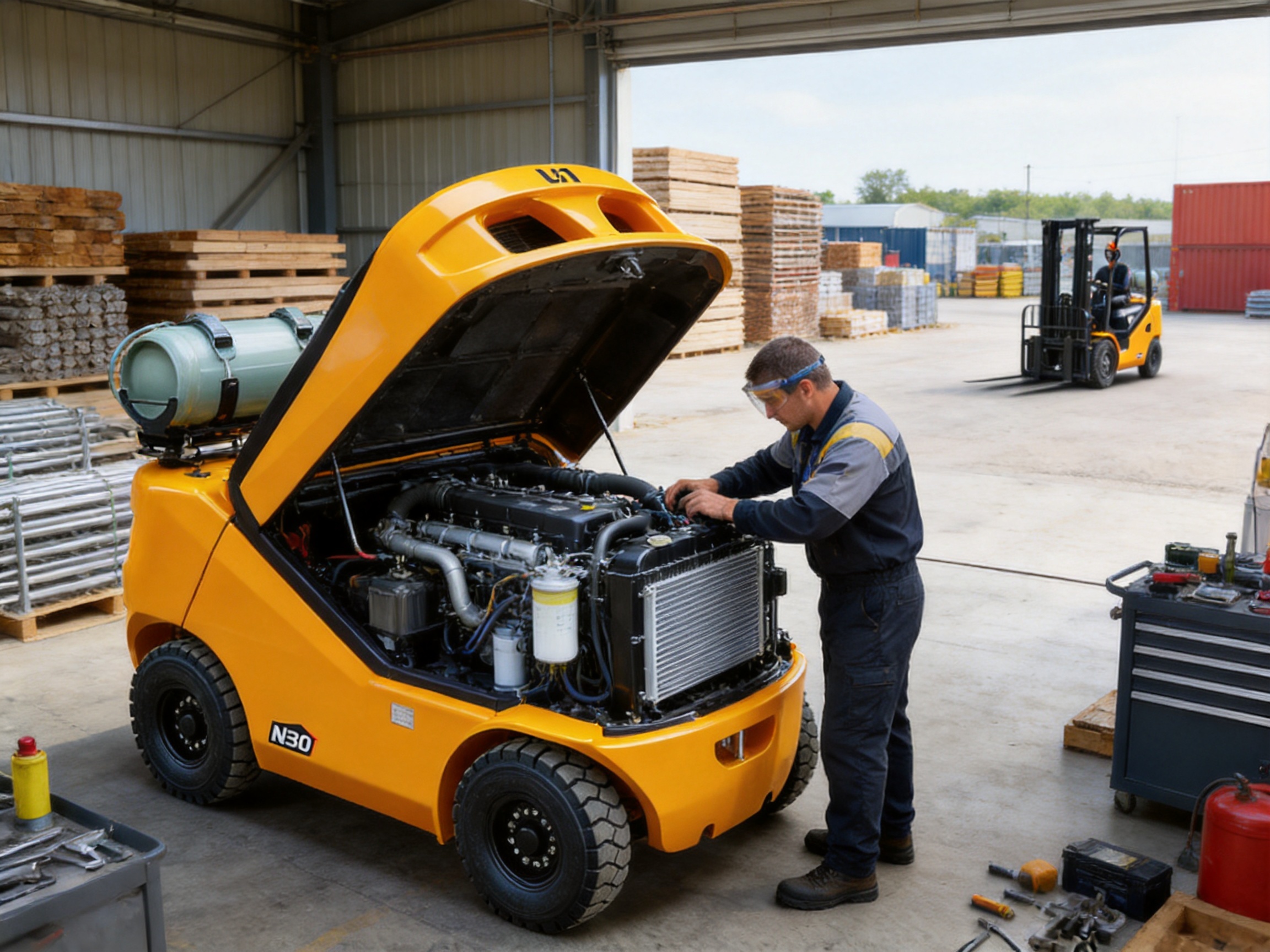
Product: N Series 3.0T-3.5T LPG&Gasoline Forklift

For exclusive deals and latest offers, sign up by entering your email address below.
Stay In Touch
ADDRESS : NO.1 ROAD ONE, XINDENG NEW DISTRICT, FUYANG, HANGZHOU, ZHEJIANG, CHINA 311404.
PHONE : +86-571-8688 8355 (AMERICA)
PHONE : +86-571-8886 9363 (EUROPE)
PHONE : +86-571-8688 8377 (ASIA, AFRICA, OCEANIA)
EMAIL : [email protected]
EMAIL : [email protected](PARTS INQUIRY)

