


 中文简体
中文简体 Français
 русский
 Español
 عربى
عربى Deutsch



Advanced 3.0–3.5 Ton LPG and Gasoline Forklifts for Demanding Material Handling
Admin 2026-09-27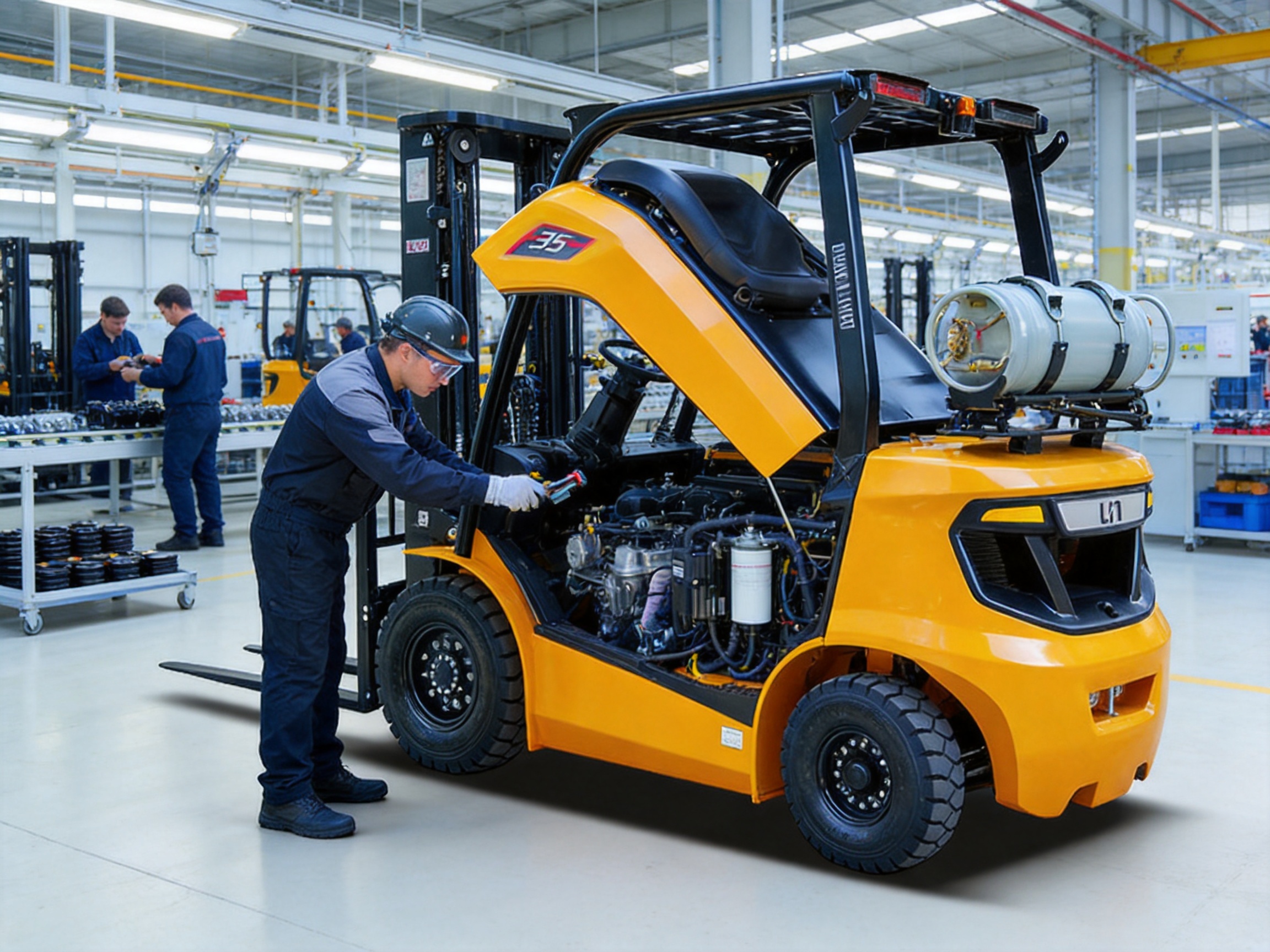
Modern warehouses, manufacturing plants, logistics centers, construction supply yards, and distribution facilities require lifting equipment that combines high capacity, precise control, dependable uptime, and reasonable operating cost. A forklift must do more than move a load from one location to another. It must work safely in confined aisles, maintain stable performance through long operating cycles, protect the operator from fatigue, and remain accessible for inspection and service. The 3.0–3.5 ton LPG and gasoline forklift series has been developed around these practical requirements.
Designed for medium- and heavy-duty applications, this forklift series provides rated capacities of 3,000 kg and 3,500 kg, a 500 mm load center, a robust counterbalanced chassis, and powertrain options suitable for a wide range of working environments. The FGL30T and FGL35T models support gasoline and LPG operation, while the FL30T and FL35T models are configured for LPG power. With a travel speed of up to 20 km/h without load, lifting performance matched to each capacity class, and a practical hydraulic system for attachments, these forklifts offer a strong balance between productivity and control.
The series also benefits from a mature manufacturing platform. Its design reflects years of product optimization, market testing, and engineering refinement. Structural strength, operator visibility, electrical reliability, hydraulic performance, and maintenance access have been considered together rather than treated as separate features. This integrated approach helps the forklifts compete effectively with other products in the same capacity range.
Built for High-Utilization Material Handling
A forklift working in a busy industrial environment is exposed to repeated acceleration, braking, lifting, lowering, steering, and load positioning. These actions generate mechanical and thermal stress throughout the vehicle. A suitable forklift must therefore have a chassis that can withstand repeated loading, a mast capable of maintaining alignment, a powertrain with sufficient reserve performance, and a hydraulic system that can respond consistently.
The 3.0–3.5 ton series is positioned for applications that require more capacity than compact warehouse trucks but do not necessarily require the size and operating cost of a very large industrial forklift. It can handle palletized goods, steel products, building materials, packaged machinery, containers, timber products, and other loads commonly found in industrial and commercial operations.
The 3,000 kg and 3,500 kg capacity options allow users to select a model according to their typical load profile. The 3.0 ton models are suitable for facilities that need strong lifting capacity while maintaining relatively compact dimensions. The 3.5 ton models provide additional reserve capacity for heavier or denser loads. Both capacity classes use a 500 mm load center, making the rated figures easy to interpret for standard pallet and industrial handling applications.
A key advantage of this capacity range is versatility. The forklifts can operate indoors in areas with suitable ventilation and outdoors on paved or semi-paved surfaces. LPG operation can be particularly useful for facilities seeking a cleaner-burning internal combustion solution than conventional diesel, while gasoline/LPG dual-fuel configurations provide additional fuel flexibility. The actual fuel selection should be matched to local regulations, ventilation conditions, duty cycle, and the availability of refueling infrastructure.
Product Range and Main Configurations
The principal models in the series are FGL30T, FGL35T, FL30T, and FL35T. The FGL models are designed for gasoline and LPG operation, while the FL models are LPG configurations. The 30 and 35 designations correspond to approximately 3.0 ton and 3.5 ton rated capacity classes.
| Model | Power Type | Rated Capacity | Load Center | Overall Width | Wheelbase |
|---|---|---|---|---|---|
| FGL30T | Gasoline/LPG | 3,000 kg | 500 mm | 1,220 mm | 1,700 mm |
| FGL35T | Gasoline/LPG | 3,500 kg | 500 mm | 1,220 mm | 1,700 mm |
| FL30T | LPG | 3,000 kg | 500 mm | 1,220 mm | 1,700 mm |
| FL35T | LPG | 3,500 kg | 500 mm | 1,220 mm | 1,700 mm |
The shared dimensional platform simplifies fleet planning. Companies operating several forklifts can standardize operator training, maintenance procedures, tires, and certain replacement components. At the same time, the available power configurations give fleet managers the ability to choose between dual-fuel flexibility and LPG-focused operation.
For accurate purchasing decisions, customers should confirm the final engine, emission specification, mast configuration, tire type, attachment package, and local certification requirements before ordering. Rated capacity is affected by mast height, load center, attachment weight, and the characteristics of the load.
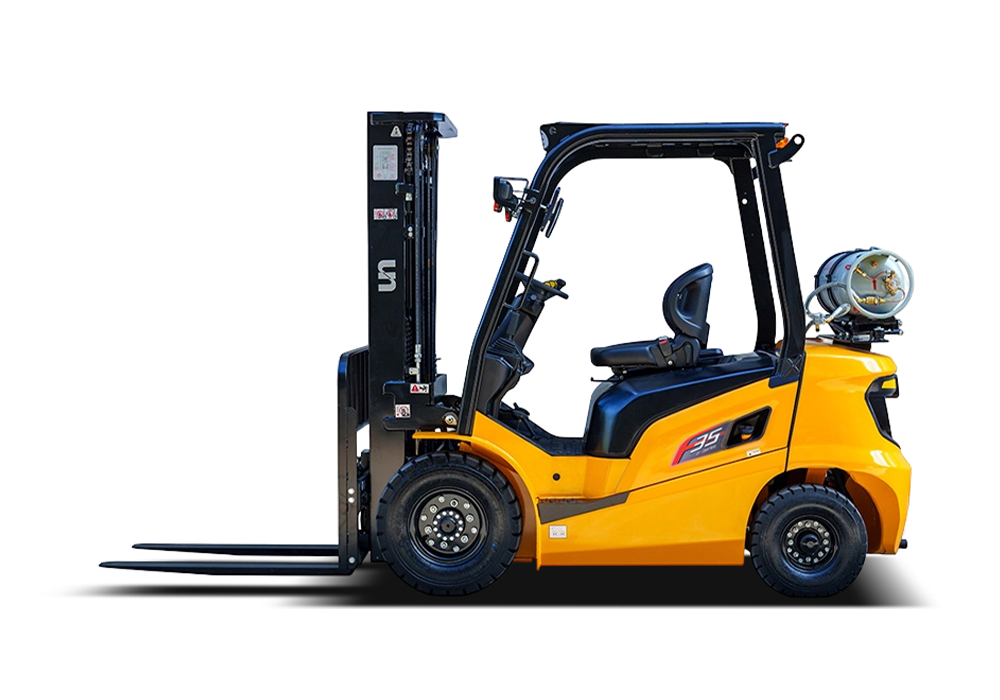
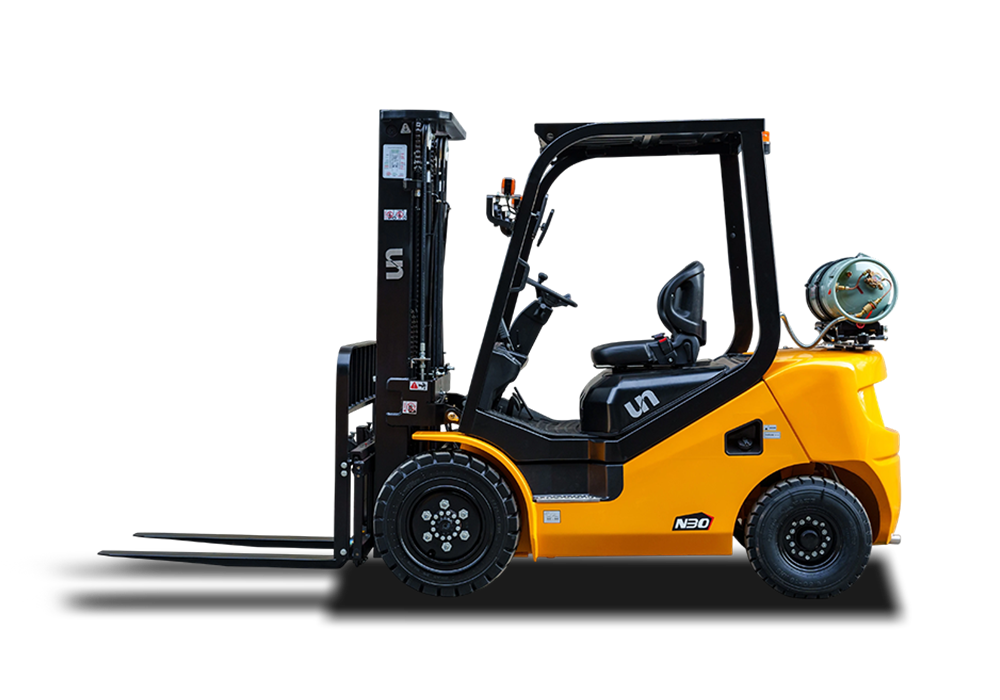
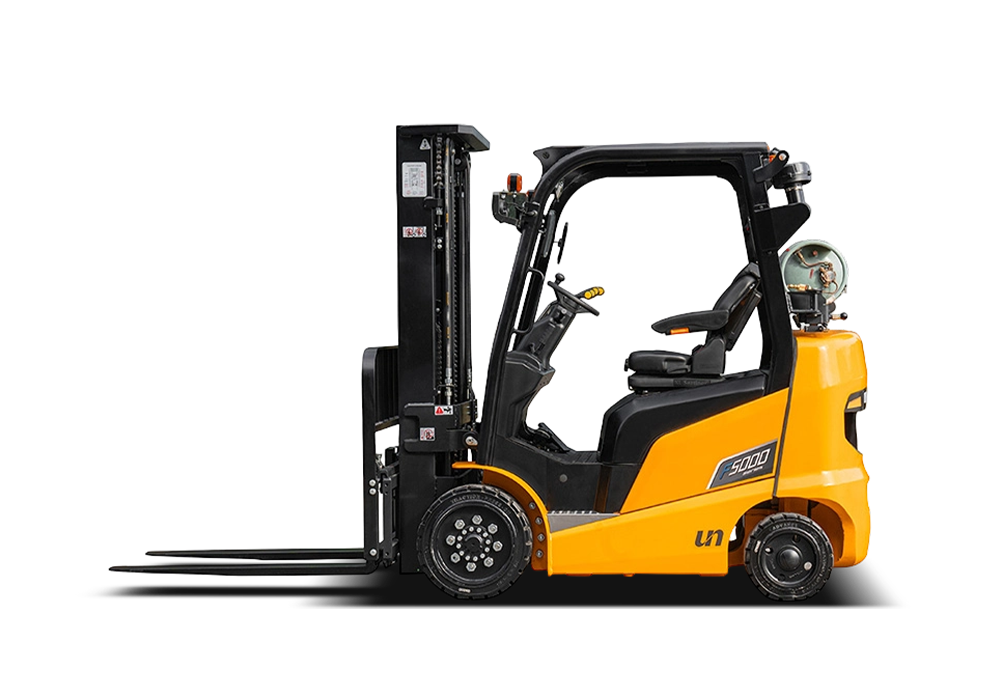
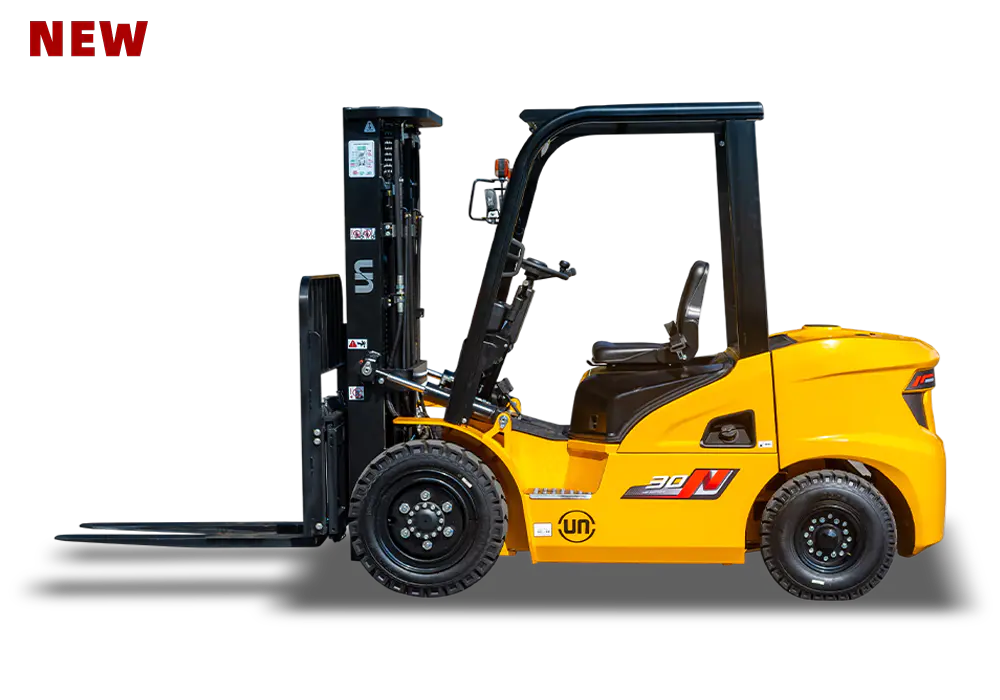
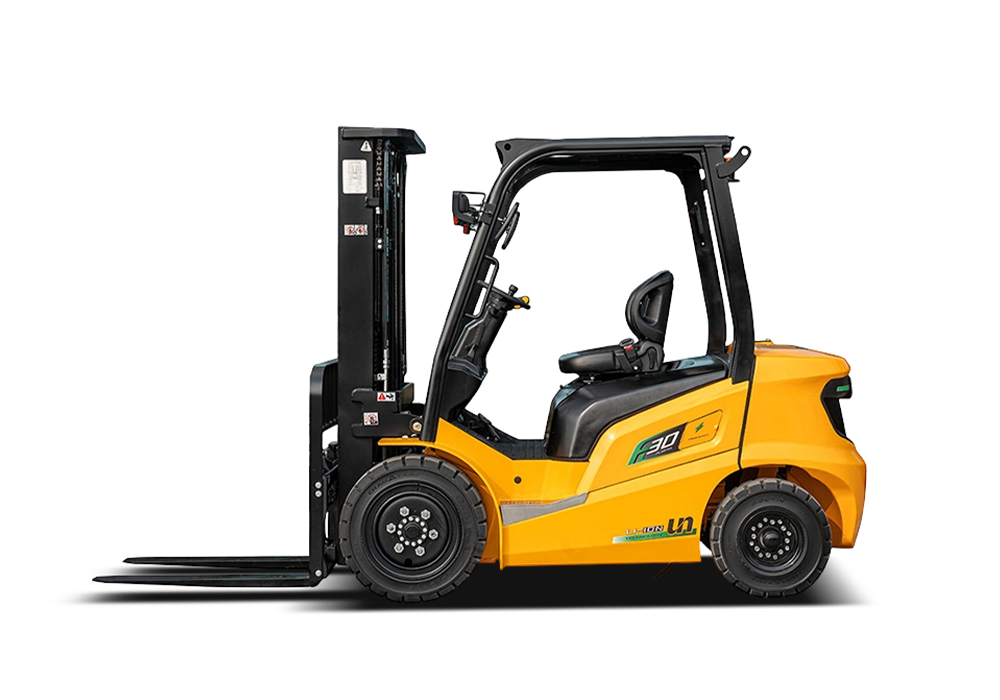
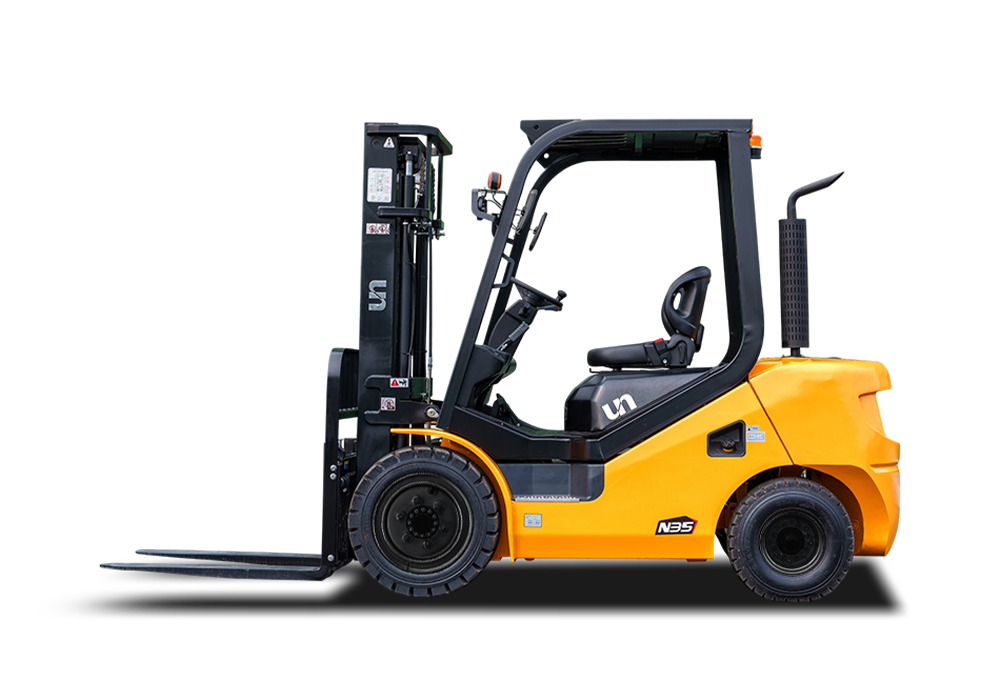
F Series 3.0T-3.5T LPG&Gasoline Forklift
Strong Performance from a Mature Powertrain Platform
Powertrain performance is one of the main factors separating a productive forklift from an underpowered machine. A forklift may have a high nominal capacity, but if its engine, transmission, cooling system, or hydraulic supply cannot maintain performance under load, productivity will suffer. The series addresses this concern with engine options and a hydraulic transmission designed for repeated industrial operation.
The listed engine options include the GK25 gasoline/LPG engine for the FGL models and the GK25 or HMC 2.4-liter engine options for the FL models, depending on specification and market requirement. The broader product platform also supports a range of established industrial engine technologies for different emission standards and regional regulations. Engine selection can therefore be adapted to the destination market, fuel preference, and regulatory environment.
Gasoline and LPG engines offer several practical advantages in material handling applications. LPG can support relatively clean operation, quick refueling, and consistent performance during repeated shifts. A dual-fuel gasoline/LPG configuration can provide operational flexibility when fuel availability changes or when equipment must work across different sites. In facilities where diesel emissions or particulate levels are a concern, an LPG solution may be more appropriate, provided that adequate ventilation and fuel-handling procedures are maintained.
The hydraulic transmission uses one forward and one reverse stage. This configuration is simple for operators to understand and supports smooth direction changes in normal forklift applications. A straightforward transmission layout can also assist service technicians by reducing system complexity and making routine diagnosis more familiar.
Travel speed without load reaches up to 20 km/h on the gasoline/LPG models. The LPG configurations are specified at approximately 20 or 19 km/h depending on the selected model and engine configuration. These speeds support efficient movement between loading points while still allowing the operator to maintain appropriate control. Actual operating speed should always be adapted to floor conditions, pedestrian traffic, visibility, load height, and site safety rules.
Maximum gradeability under full load is listed at up to 26 percent for the 3.0 ton models and up to 23 percent for the 3.5 ton models, with some LPG configurations showing slightly different values according to engine selection. These figures indicate useful reserve capability for ramps and sloped industrial surfaces. They should not be interpreted as permission to travel at high speed on steep slopes. Operators must follow the load-handling guidance, travel with the load positioned safely, and use site-specific procedures.
Hydraulic Capacity for Productive Lifting
Forklift productivity depends heavily on the speed and precision of the hydraulic system. A slow lifting cycle can reduce the number of loads moved per hour, while an overly aggressive system can make load placement difficult. The series is designed to provide a practical balance between lifting speed, load control, and operating stability.
Depending on model, full-load lifting speed ranges from approximately 468 to 485 mm per second in the 3.0–3.5 ton platform specifications. The 3.5 ton models use a slightly lower lifting speed than the 3.0 ton models, reflecting the relationship between load capacity, hydraulic demand, and controlled operation. This performance is suitable for common pallet handling, truck loading, production-line supply, and storage operations.
Full-load lowering speed is controlled at no more than 600 mm per second, while the no-load lowering specification is at least 300 mm per second. Controlled lowering is especially important when handling fragile goods, stacking at height, or positioning loads near workers and equipment. The operator can combine mast movement with careful travel control to place loads accurately.
The attachment operating pressure is listed at 18.5 MPa for most configurations and 20.5 MPa for the 3.5 ton diesel-platform specification included in the technical data. Because attachment requirements vary, customers should confirm hydraulic flow, pressure, auxiliary valve configuration, and residual capacity before selecting side shifters, fork positioners, clamps, rotators, or other equipment.
A load-sensing steering system further supports hydraulic efficiency and maneuverability. By responding to steering demand, the system can help provide smooth steering control while avoiding unnecessary hydraulic effort when steering input is low. This is valuable in repetitive operations where operators make frequent corrections in narrow aisles or around loading docks.
Visibility and Maneuverability in Confined Areas
Capacity alone does not determine how useful a forklift will be. A machine that cannot maneuver effectively or provide a clear view of the load can increase handling time and safety risk. The series uses a slim-profile steel mast intended to reduce visual obstruction and improve forward visibility. The wide-view mast design allows the operator to see more of the fork area and load during approach, lifting, and placement.
The mast is specified with a 3,000 mm rated lift height in the main platform data. Free lift height varies by model from approximately 120 to 130 mm. The lowered mast height is approximately 2,100–2,115 mm, while mast extended height with backrest reaches approximately 4,198–4,213 mm. The overhead guard height is approximately 2,235 mm for the 3.0–3.5 ton LPG and gasoline models.
Before bringing a forklift into a building, users must compare the overhead guard and mast dimensions with doorways, container entrances, rack beams, sprinkler systems, and other overhead obstructions. Optional mast configurations may alter the overall height and free lift performance. The selected mast should be based on the actual storage height and the clearance limitations of the facility.
The outside turning radius is approximately 2,425 mm for the 3.0 ton configurations and 2,500 mm for the 3.5 ton configurations. The listed minimum aisle width for pallets is approximately 4,120 to 4,255 mm depending on model and configuration. These dimensions give warehouse planners useful starting points when laying out traffic lanes, although the final aisle requirement also depends on pallet size, rack design, load overhang, attachment type, operator behavior, and required clearance.
The wheelbase is 1,700 mm for the main LPG and gasoline models. This provides a useful foundation for load stability while retaining practical maneuverability. A longer wheelbase can support stability, but it may increase turning space; therefore, the balance between wheelbase, counterweight design, steering angle, and chassis proportions is important.
Stable Chassis and Load Support
Counterbalanced forklifts rely on the relationship between the load, forks, mast, drive axle, counterweight, and rear steering axle. The chassis must distribute forces effectively during lifting and travel. A well-designed counterweight contributes to rear stability, while a rigid frame helps maintain predictable handling under changing loads.
The series uses a bold counterweight with sharply defined contours. In addition to giving the forklift a distinctive industrial appearance, the counterweight is an important functional component that contributes to the balance of the vehicle. Its shape is integrated into the overall body design rather than added as an isolated block.
The rated load center is 500 mm across the principal models. This is a common reference point for industrial pallet loads, but operators must understand that capacity decreases when the load center increases. Long, irregular, liquid, or poorly distributed loads may create a higher moment than a standard pallet. Forks should be positioned correctly, loads should be centered, and the manufacturer’s capacity plate must be followed.
The main platform includes fork sizes appropriate to the capacity class. In the broader 2.0–3.5 ton specification table, fork dimensions increase as capacity rises, with the 3.0 ton configuration listed at approximately 1,070 × 122 × 45 mm and the 3.5 ton configuration at approximately 1,070 × 122 × 50 mm. The final fork dimensions should be confirmed for the ordered LPG or gasoline model and the intended application.
The mast tilt angle is specified at 6 degrees forward and 12 degrees backward in the platform data. Mast tilt supports load positioning and helps keep loads close to the backrest during travel. Operators should avoid excessive tilt or abrupt movement, especially when handling tall, unstable, or unsecured loads.
Ergonomic Design for Long Shifts
Forklift operators may spend many hours entering and leaving the vehicle, looking over the mast, steering, reversing, and adjusting the forks. Operator comfort is therefore closely connected to productivity and safety. Excessive vibration, restricted legroom, awkward controls, and limited visibility can cause fatigue and reduce concentration.
The series includes a suspension seat designed to reduce vibration transmitted to the operator. A suspension seat can help improve comfort when the forklift travels over uneven surfaces, expansion joints, loading ramps, or rough yard pavement. Seat adjustment should be configured for the operator’s weight and working position so that the suspension system functions effectively.
A generous footwell provides room for the operator to enter and exit the cab area with less obstruction. Easy access is especially useful in applications requiring frequent dismounting, such as quality inspection, load checking, and short-distance staging operations.
The compact steering wheel is paired with an adjustable steering column. This arrangement allows operators of different body sizes to establish a more natural driving position. It can also reduce unnecessary shoulder and wrist movement during repeated steering corrections.
The ratchet-style handbrake is designed to require less operating force. A practical parking brake contributes to convenient daily use, particularly when the forklift is repeatedly parked at loading bays or production areas. As with all safety systems, the handbrake should be inspected regularly and used according to the operating instructions.
The interactive dashboard provides real-time operating information. Depending on the final specification, the display may help operators and service personnel monitor essential conditions such as operating hours, fuel or system status, warning indicators, and maintenance reminders. Clear information can support earlier response to abnormal conditions and improve preventive maintenance planning.
Safety Features for Industrial Operation
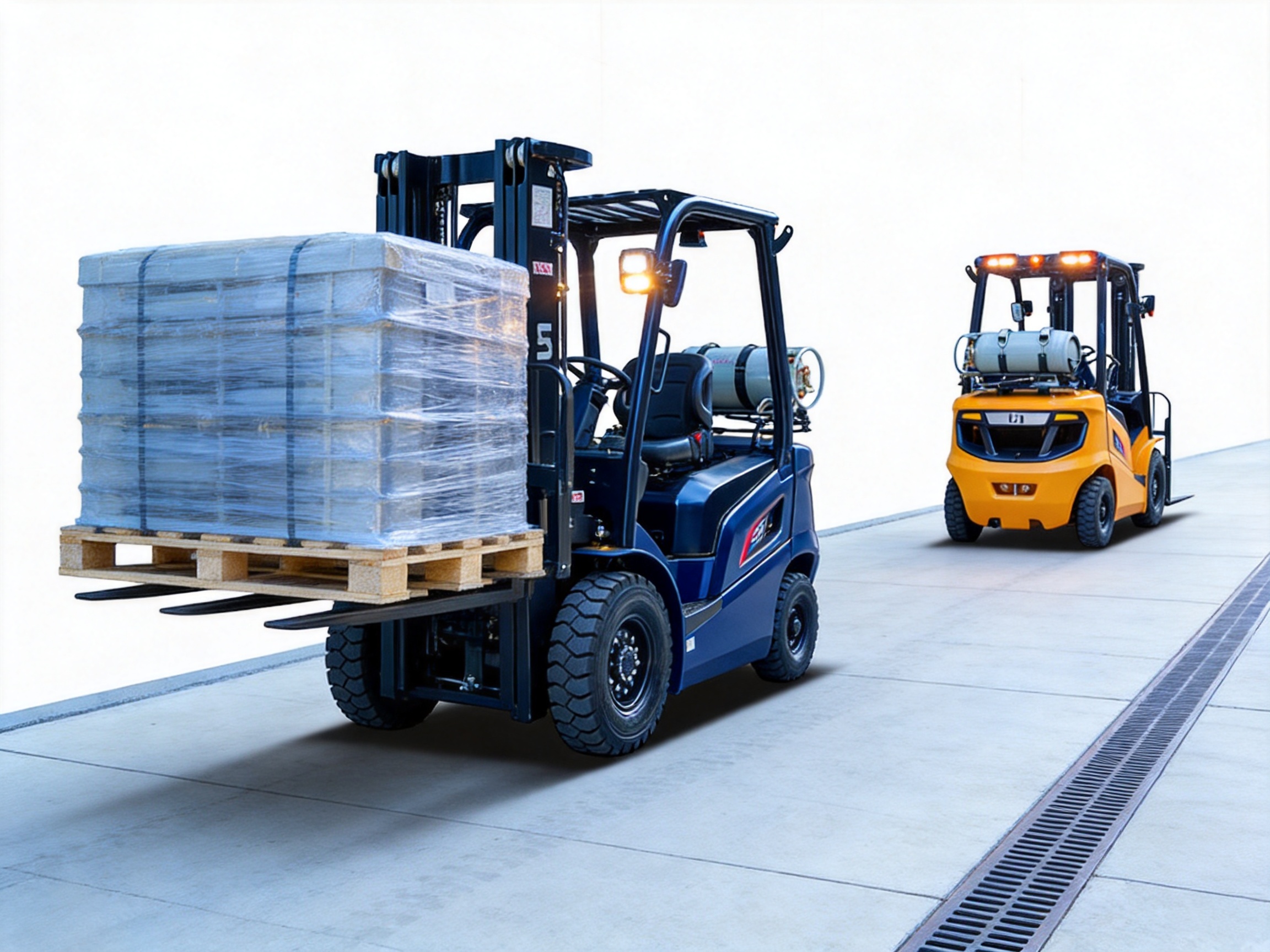
Safety is not a single component. It is the result of structural design, visibility, control layout, operator behavior, maintenance, training, and workplace planning. The series incorporates several features intended to support safe operation in demanding environments.
The stamped overhead guard is designed for strength and durability. It protects the operator from falling objects within the limits of its design and provides a rigid protective structure above the seating area. The overhead guard must never be modified without approval, and the forklift should not be operated if the structure is damaged or improperly mounted.
The Operator Presence System helps prevent accidental or unintended startup or movement when the operator is not correctly positioned. This type of system adds an additional layer of protection, but it does not replace safe operating procedures. Operators must still apply the parking brake, lower the forks, turn off the engine, and remove the key when leaving the forklift unattended.
Critical connectors and joints are sealed to improve water resistance. This is beneficial when forklifts work in humid facilities, near loading docks, or in environments where occasional water exposure may occur. Water resistance does not make the forklift waterproof. High-pressure washing, immersion, and exposure to corrosive chemicals should be avoided unless specifically permitted by the operating and maintenance instructions.
The LED lighting system provides brighter illumination while using energy efficiently. LED headlights, work lights, and taillights can improve visibility around the forklift, especially during early morning, evening, or indoor operations. Advanced LED taillights also make the vehicle more visible to pedestrians and other drivers.
The rear design and lighting system create a clear visual presence without compromising the functional role of the counterweight. In busy industrial environments, a forklift that is easy to recognize can contribute to better traffic awareness. Nevertheless, pedestrians must remain separated from forklift routes wherever possible, and lighting should be supplemented with warning alarms, mirrors, barriers, and traffic management procedures as required.
Modern Appearance with Functional Engineering
Industrial equipment is increasingly expected to combine performance with a professional appearance. The series features a sleek, aerodynamic body design, a strong counterweight profile, sharp contours, and contrasting colors. These design choices give the forklift a modern visual identity while supporting practical engineering objectives.
Body panels are shaped to create a coherent exterior and provide access to internal systems. The design avoids an unnecessarily bulky appearance, helping the machine look compact in relation to its lifting capacity. A professional finish can also contribute to the presentation of a logistics facility, manufacturing plant, rental fleet, or equipment distributor.
Appearance, however, is only one part of the design process. The more important benefit is that the body, mast, counterweight, lighting, dashboard, and operator compartment are integrated into a complete working machine. A well-coordinated design makes it easier to understand the controls, inspect the vehicle, and identify damage or abnormal conditions during daily checks.
Service Access and Maintenance Efficiency
Maintenance access has a direct effect on total ownership cost. If routine inspection requires excessive disassembly, service work may be delayed. Delayed maintenance can increase the risk of unexpected downtime, accelerate wear, and reduce the useful life of components. The series is designed with removable side panels and a wide-opening engine hood to simplify access.
Removable side panels provide a practical route to components that require regular inspection and cleaning. Service technicians can more easily check hoses, wiring, filters, belts, fluid levels, and surrounding areas. Quick access is particularly valuable in facilities with preventive maintenance schedules based on operating hours or shift cycles.
The wide-opening engine hood improves access to the engine compartment and related systems. This can make routine service more straightforward and help technicians identify leaks, loose connections, accumulated debris, or signs of overheating. A clean engine compartment is easier to inspect and can support reliable cooling and component life.
Maintenance planning should include daily operator inspections, scheduled lubrication, engine oil and filter replacement, cooling system checks, hydraulic system inspection, tire examination, brake testing, mast and chain inspection, fork inspection, and battery or electrical system checks. LPG systems require particular attention to hoses, regulators, valves, fittings, and connections. Any suspected leak should be addressed immediately by qualified personnel.
The use of established industrial engine options and a mature hydraulic platform can also help simplify service support. Familiar engine technologies may be easier for local technicians to diagnose, and widely available service skills can shorten repair times. Before purchasing, fleet managers should evaluate the availability of trained technicians, filters, seals, hoses, tires, electrical components, and other replacement parts in their region.
Manufacturing Strength and Engineering Experience
The manufacturer behind this product is an established material handling equipment producer founded in 1978. Its operations integrate research and development, production, sales, and service. The company occupies approximately 53,400 square meters and has an annual production capacity of about 15,000 units. This scale provides a substantial foundation for product engineering, component purchasing, production planning, quality control, and after-sales support.
The company’s product range covers 17 varieties, 96 series, and more than 200 specifications. Such breadth indicates experience across internal combustion forklifts, electric forklifts, reach equipment, very narrow aisle equipment, and other material handling products. A manufacturer with multiple product categories can transfer knowledge between platforms, particularly in areas such as mast engineering, steering systems, operator protection, battery systems, electronic controls, and manufacturing quality.
The company has also contributed to the development of domestic electric forklift technologies and participated in the formulation of industry standards. Its engineering history includes the development of early reach forklift and very narrow aisle truck products in China. These achievements suggest a broad technical background rather than a narrow focus on a single forklift type.
Manufacturing capability is important because a forklift is a system made of many interdependent parts. Frame welding, machining, painting, assembly, electrical integration, hydraulic installation, mast alignment, and final testing must be coordinated. A weakness in any stage can affect reliability in the field. An experienced producer can use standardized procedures and accumulated feedback to improve consistency.
Product optimization is also supported by field experience. Forklifts used by customers across different industries reveal how machines perform under real conditions, including varying floor surfaces, climate, load types, duty cycles, and operator habits. Feedback from these applications can inform updates to body panels, hydraulic routing, operator controls, mast visibility, protective sealing, and maintenance access.
Quality Control Through the Production Process
Advanced manufacturing is not defined only by the presence of modern equipment. It also depends on process discipline. A strong forklift production system normally includes incoming component inspection, material verification, controlled welding, dimensional checks, paint preparation, assembly inspection, electrical testing, hydraulic testing, functional checks, and final quality review.
Frame and counterweight production require careful attention to dimensional accuracy and weld quality. Variations in frame geometry can influence mast alignment, steering response, tire wear, and load stability. Controlled fixtures and inspection procedures help ensure that structural parts remain within the intended tolerances.
Mast production requires similar precision. The rails, rollers, chains, carriage, backrest, and hydraulic cylinders must work together smoothly. Proper alignment reduces friction and uneven wear. It also supports consistent lifting and lowering behavior. Final testing should include mast movement, tilt operation, fork positioning, and inspection of hydraulic connections.
Electrical assembly must be protected against vibration, moisture, abrasion, and incorrect routing. Sealed connectors and carefully secured harnesses help improve reliability, while clear inspection procedures can reduce assembly errors. LED lighting, dashboard functions, safety interlocks, and the Operator Presence System should be tested before the forklift leaves the production facility.
Hydraulic assembly demands cleanliness and correct torque on fittings. Contamination can damage pumps, valves, and cylinders, while loose connections can create leaks or reduce performance. Pressure testing and functional verification help identify problems before delivery.
Final testing should consider not only whether the forklift starts, but whether it performs as a complete machine. Test items may include travel, braking, steering, lifting, lowering, mast tilt, parking brake operation, warning lights, dashboard functions, safety interlocks, and abnormal noise. This comprehensive approach supports dependable field performance.
Competitive Advantages in the 3.0–3.5 Ton Class
The first competitive advantage is the combination of capacity and practical dimensions. A 3.0 or 3.5 ton forklift must provide strong lifting capability without becoming unnecessarily large for everyday industrial spaces. The approximately 1,220 mm overall width, 1,700 mm wheelbase, and turning radius in the 2,425–2,500 mm range create a useful balance between stability and maneuverability.
The second advantage is powertrain flexibility. Gasoline/LPG models offer fuel choice, while LPG-only models provide a focused configuration for users who prefer LPG operation. This flexibility can help distributors and fleet operators serve different industries and regional requirements without switching to a completely different chassis platform.
The third advantage is operator-oriented design. Improved forward visibility, a suspension seat, adjustable steering column, spacious footwell, compact steering wheel, low-force handbrake, and interactive dashboard features can reduce fatigue and simplify daily operation. These details may appear small individually, but their combined effect becomes significant during long shifts.
The fourth advantage is serviceability. Removable side panels and a wide-opening hood reduce barriers to routine maintenance. Easier access can shorten inspection time, encourage more consistent service, and help technicians identify developing problems before they become major failures.
The fifth advantage is the combination of modern safety and rugged construction. The stamped overhead guard, sealed connectors, Operator Presence System, LED lighting, robust counterweight, and steel mast provide a comprehensive equipment foundation. These features do not eliminate the need for training and supervision, but they support a safer operating environment.
The sixth advantage is manufacturing depth. A broad product portfolio, long industry history, engineering capability, and international sales and service network can provide greater confidence than purchasing from a manufacturer with limited product experience. Customers can benefit from established production processes, technical documentation, and support resources.
Applications Across Multiple Industries
In general manufacturing, the forklifts can transport raw materials, work-in-process goods, finished products, molds, machine components, and packaging. The 3.0 ton models are suitable for many standard industrial loads, while the 3.5 ton versions provide additional capacity for denser products.
In warehousing and distribution, the forklifts can load and unload trucks, move pallets between receiving and storage areas, and stage goods for dispatch. Their maneuverability and visibility are useful around dock doors and transfer zones, where operators must work near buildings, trailers, pedestrians, and other equipment.
In construction materials handling, the forklifts can support the movement of bricks, tiles, panels, pipes, bagged materials, timber, and packaged hardware. Outdoor use requires careful consideration of ground conditions, weather, tire selection, and load security. Rough or uneven surfaces may require a different forklift category, so the site should be assessed before deployment.
In metalworking and fabrication facilities, the forklifts can handle steel products, coils, fabricated frames, tooling, and finished assemblies when the load is correctly supported and within capacity. Attachments may be needed for special products, and the residual capacity must be calculated with the attachment installed.
In the food, beverage, and packaging sectors, LPG operation may be selected where an internal combustion forklift is required and site ventilation is appropriate. Hygiene rules, indoor air quality, fuel storage, and local emissions regulations must be considered. Some operations may require electric equipment instead, particularly in enclosed or highly controlled environments.
In ports, yards, and logistics centers, higher travel speed and gradeability can improve movement between loading points. However, operators must consider weather, surface grip, visibility, traffic separation, and the potential for heavy loads to shift during travel.
How to Select the Correct Configuration
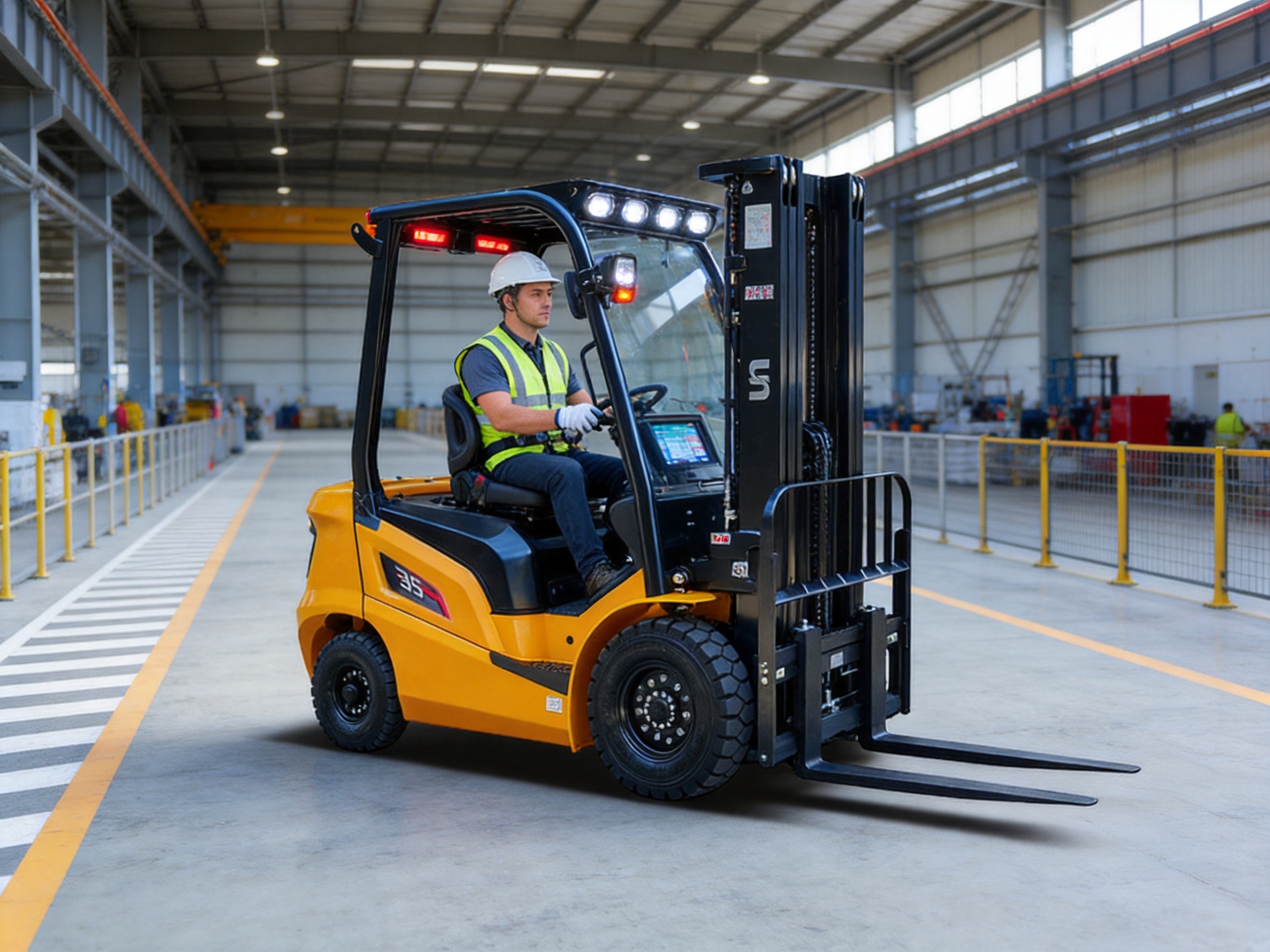
The first selection factor is rated capacity. Buyers should calculate the maximum actual load, not simply choose a forklift based on average load weight. The load center, height, shape, packaging, and stability all affect the required capacity. A 3,500 kg forklift is not automatically rated for 3,500 kg at every lift height and load center.
The second factor is fuel and operating environment. LPG may be appropriate when users need rapid refueling and reduced emissions relative to certain diesel applications. Gasoline/LPG flexibility may be useful for mixed operating conditions. Indoor use requires adequate ventilation and compliance with local safety requirements.
The third factor is mast height. The standard 3,000 mm lift height is suitable for many warehouse and industrial applications, but higher stacking requirements may call for an alternative mast. The lowered mast height must be checked against doorways and ceiling clearance, while the extended height must be checked against rack beams, sprinkler systems, and overhead structures.
The fourth factor is tire selection. Pneumatic or cushion tire options may influence ground clearance, ride comfort, turning behavior, and suitability for indoor or outdoor surfaces. The tire should be selected according to floor quality, debris levels, traction needs, and operating temperature.
The fifth factor is attachments. Side shifters, fork positioners, clamps, rotators, and specialized forks can increase productivity, but they also add weight and move the load center forward. The forklift capacity plate and residual capacity calculation must reflect the selected attachment.
The sixth factor is service support. Buyers should confirm warranty terms, preventive maintenance requirements, spare parts availability, technician training, diagnostic support, and response times. A competitively priced forklift may become expensive if service support is slow or replacement components are difficult to obtain.
Operating Practices That Protect Productivity
Operators should complete a pre-shift inspection before using the forklift. The inspection should include tires, forks, mast chains, hydraulic hoses, cylinders, steering, brakes, lights, warning devices, seat, seat belt, overhead guard, fuel system, and visible leaks. Any defect that could affect safe operation should be reported and corrected before work begins.
Loads should be placed evenly on the forks, with the forks inserted as far as practical beneath the load. The load should be secured if it is unstable, and the mast should be tilted appropriately for travel. Operators should avoid sudden acceleration, sharp turns, excessive speed, and abrupt braking, particularly when carrying an elevated load.
When traveling, the load should generally be kept low enough to preserve visibility and stability. If the load blocks forward vision, the operator should travel in reverse when safe to do so or use a spotter according to site procedures. Pedestrian routes should be separated from forklift routes, and intersections should be approached with reduced speed and appropriate warning.
On ramps, operators should follow the correct direction of travel for the load and slope. Loads must not be carried in a way that creates a tipping risk. The forklift should never be used beyond its rated capacity, and unauthorized passengers should not be carried.
At the end of a shift, the forks should be lowered, the mast returned to a safe position, the parking brake applied, and the engine shut down. LPG cylinders or fuel systems should be handled according to approved procedures. The forklift should be parked in an authorized area away from emergency exits and traffic lanes.
Frequently Asked Questions
What is the rated capacity of this forklift series?
The principal models have rated capacities of 3,000 kg and 3,500 kg. The actual allowable capacity depends on lift height, load center, mast configuration, attachment weight, and the capacity plate supplied with the individual forklift.
Which models support gasoline and LPG operation?
The FGL30T and FGL35T models are listed as gasoline/LPG configurations. They can provide fuel flexibility, subject to the final engine specification and local approval requirements.
Which models are designed for LPG operation?
The FL30T and FL35T models are listed as LPG configurations. The final engine and emission package should be confirmed for the intended market before purchase.
What is the standard load center?
The principal models use a 500 mm load center. If the load extends farther forward, the effective capacity may be lower. Users should consult the capacity plate and obtain guidance before handling long or irregular loads.
What is the standard lifting height?
The main platform specifications list a rated lift height of 3,000 mm. Other mast configurations may be available. Customers should confirm the required lift height, lowered height, free lift, and extended height before ordering.
How fast can the forklift travel?
The gasoline/LPG models are listed with a no-load travel speed of up to 20 km/h. LPG versions are listed at approximately 20 or 19 km/h depending on model and engine configuration. Site rules and load conditions should determine actual operating speed.
Is the forklift suitable for indoor use?
It may be suitable for indoor use where ventilation, emissions control, fire safety, and local regulations permit internal combustion or LPG equipment. Facilities with limited ventilation or strict indoor air-quality requirements may need electric forklifts instead.
What maintenance access does the design provide?
Removable side panels and a wide-opening engine hood provide improved access to the engine compartment, filters, wiring, hoses, and other service points. Routine inspection and servicing should still be performed by trained personnel.
Does the forklift support attachments?
The hydraulic system includes an attachment operating-pressure specification, indicating support for suitable hydraulic attachments. The exact attachment must be approved for the forklift, and residual capacity must be calculated because attachments can change weight distribution and load center.
What safety systems are included?
Key safety-related features include a stamped overhead guard, Operator Presence System, sealed electrical connectors and joints, LED lighting, wide-view mast design, and a stable counterbalanced chassis. These systems complement, but do not replace, operator training and workplace safety procedures.
How should buyers compare this series with competing forklifts?
Buyers should compare more than rated capacity and purchase price. Important factors include actual fuel consumption, lifting and travel performance, visibility, turning radius, operator comfort, maintenance access, attachment compatibility, emissions compliance, parts availability, warranty coverage, and local service capability. The overall cost of ownership is often more important than the initial price.
Total Ownership Value
A forklift’s value is determined by its performance over years of operation. Purchase price is only one component. Fuel use, tires, scheduled maintenance, unplanned repairs, operator productivity, residual value, safety incidents, and downtime all influence total ownership cost.
The series is designed to support ownership value through a practical combination of durable structure, established powertrain options, service access, operator comfort, and manufacturing experience. A forklift that is easy to inspect and comfortable to operate may encourage better maintenance and reduce avoidable operating errors.
Fuel selection also affects operating economics. LPG and gasoline availability varies by country and application. Fleet managers should compare local fuel prices, storage requirements, delivery arrangements, consumption, and regulatory obligations. A dual-fuel model may offer flexibility, but the most economical choice depends on actual operating conditions.
Productivity should be assessed through the complete work cycle rather than top travel speed alone. Turning, positioning, lifting, lowering, visibility, operator fatigue, and refueling time all affect the number of loads moved per shift. A balanced forklift can outperform a faster but less comfortable or less maneuverable machine in real production conditions.
Conclusion
The 3.0–3.5 ton LPG and gasoline forklift series is designed for businesses that need dependable internal combustion equipment with strong capacity, practical dimensions, modern operator features, and flexible power options. The FGL30T, FGL35T, FL30T, and FL35T configurations cover important applications in manufacturing, warehousing, logistics, construction materials, metalworking, and general industrial handling.
Its competitive strengths include 3,000 kg and 3,500 kg capacity options, a 500 mm load center, up to 20 km/h travel speed without load, useful gradeability, a load-sensing steering system, improved mast visibility, LED lighting, a stamped overhead guard, an Operator Presence System, sealed connectors, ergonomic controls, and convenient maintenance access.
Behind these product features is an experienced manufacturer with a long history in material handling equipment, broad product coverage, integrated research and development, established production capacity, and an international service network. Its manufacturing and engineering background supports a mature approach to structural design, powertrain selection, hydraulic integration, safety, and quality control.
For customers comparing forklifts in this capacity class, the most important step is to match the specification to the real application. Load weight, load center, lifting height, floor condition, indoor or outdoor use, fuel availability, attachment requirements, local emissions rules, and service support should all be evaluated. When correctly configured and properly maintained, this series can provide a productive and dependable solution for demanding material handling work.
References
1. Manufacturer product specifications for 3.0–3.5 ton LPG and gasoline forklift configurations.
2. Manufacturer technical data for forklift dimensions, capacities, performance, chassis, and powertrain systems.
3. General principles of powered industrial truck operation, load stability, and operator safety.
4. Industrial forklift preventive maintenance and inspection practices.
5. Material handling equipment design principles covering mast visibility, hydraulic performance, steering systems, and ergonomic operator compartments.
6. Internal combustion forklift fuel, ventilation, emissions, and workplace application considerations.
Product: F Series 3.0T-3.5T LPG&Gasoline Forklift
For exclusive deals and latest offers, sign up by entering your email address below.
Stay In Touch
ADDRESS : NO.1 ROAD ONE, XINDENG NEW DISTRICT, FUYANG, HANGZHOU, ZHEJIANG, CHINA 311404.
PHONE : +86-571-8688 8355 (AMERICA)
PHONE : +86-571-8886 9363 (EUROPE)
PHONE : +86-571-8688 8377 (ASIA, AFRICA, OCEANIA)
EMAIL : [email protected]
EMAIL : [email protected](PARTS INQUIRY)

