


 中文简体
中文简体 Français
 русский
 Español
 عربى
عربى Deutsch



8.0–10.0 Ton Heavy-Duty Diesel Forklifts for Demanding Industrial Operations
Admin 2026-08-26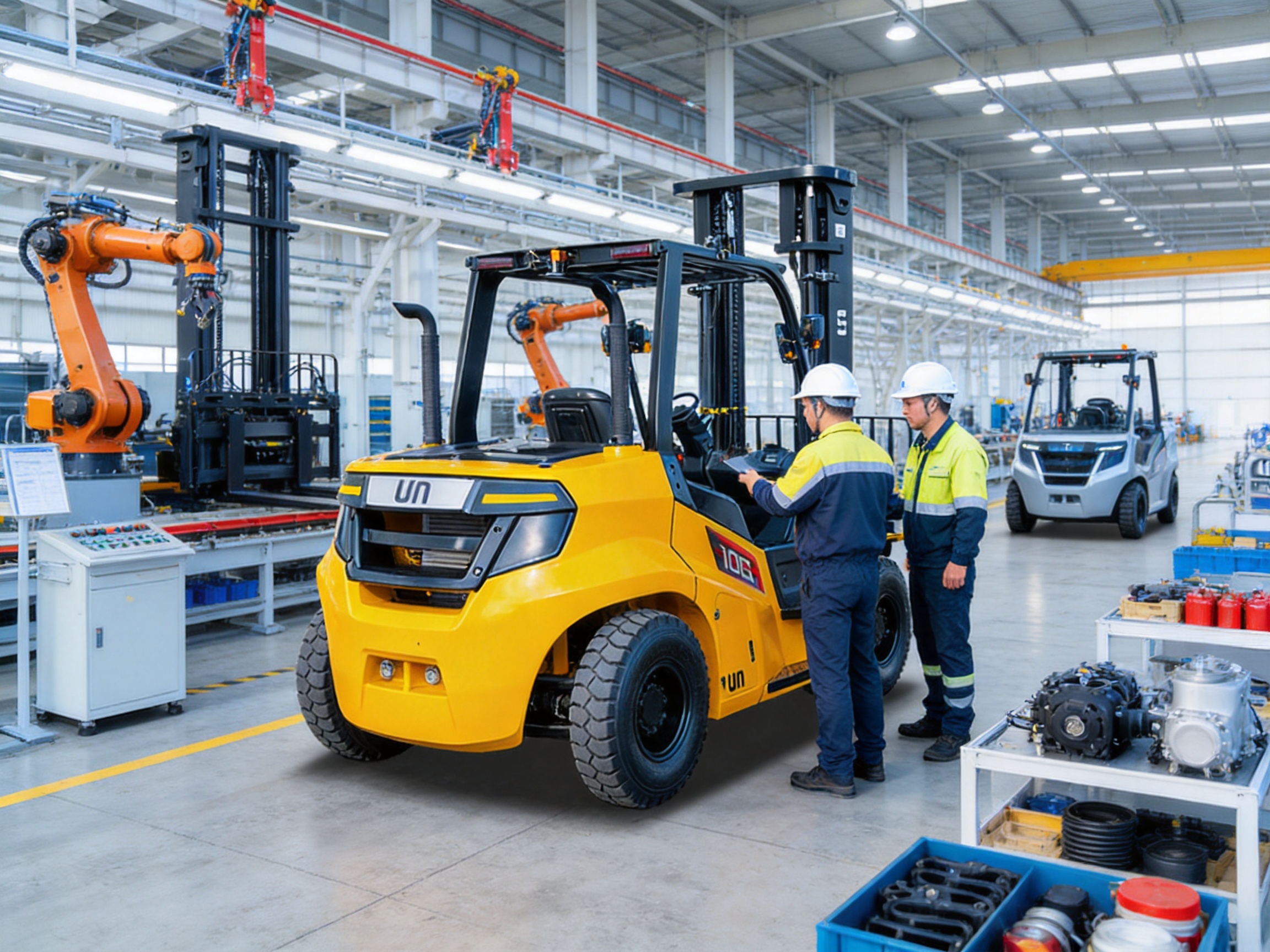
In demanding material-handling environments, forklift performance is measured by much more than rated capacity. Ports, steel plants, construction-material yards, logistics parks, and other industrial sites require equipment that can move heavy loads safely, repeatedly, and efficiently throughout long operating shifts. The forklift must also withstand uneven surfaces, dust, temperature changes, intensive travel, frequent loading cycles, and the daily impact of demanding work.
The F Series 8.0T–10.0T heavy-duty diesel forklift is designed for precisely these conditions. With rated lifting capacities of 7,000 kg and 10,000 kg, the series combines high load capability, strong structural design, practical operating dimensions, high travel speed, and robust diesel power. The FD70T and FD100T models provide options for companies handling heavy industrial goods while maintaining a familiar internal-combustion configuration that is suitable for outdoor and semi-outdoor applications.
These forklifts are built for organizations that cannot afford unnecessary downtime. Their modern and streamlined appearance supports a professional fleet image, while their underlying design focuses on durability, stability, serviceability, and productive operation. From the reinforced chassis to the high-capacity powertrain, every major element is intended to support high-intensity and long-duty applications.
Designed for High-Intensity Material Handling
Heavy loads place greater demands on every part of a forklift. The mast, fork carriage, chassis, counterweight, steering system, axles, tires, transmission, and braking system must work together as one integrated platform. A forklift rated for 8 or 10 tons cannot be treated as a scaled-up version of a light warehouse truck. It needs a stronger foundation, predictable handling, and a power system capable of maintaining performance under load.
The F Series addresses these requirements with a heavy-duty internal-combustion configuration. The FD70T is rated for 7,000 kg, while the FD100T is rated for 10,000 kg. Both models use a 600 mm load centre, providing a clear reference for evaluating their rated lifting performance. This load-centre specification is particularly relevant when handling compact steel products, machinery components, packaged building materials, coils, timber, stone, and other dense industrial goods.
The series is especially suitable for operations where loads are too heavy, too large, or too irregular for standard warehouse forklifts. Its diesel powertrain and large physical platform are also appropriate for applications involving extended outdoor travel, ramps, loading yards, and surfaces that may not be perfectly smooth.
Typical Applications
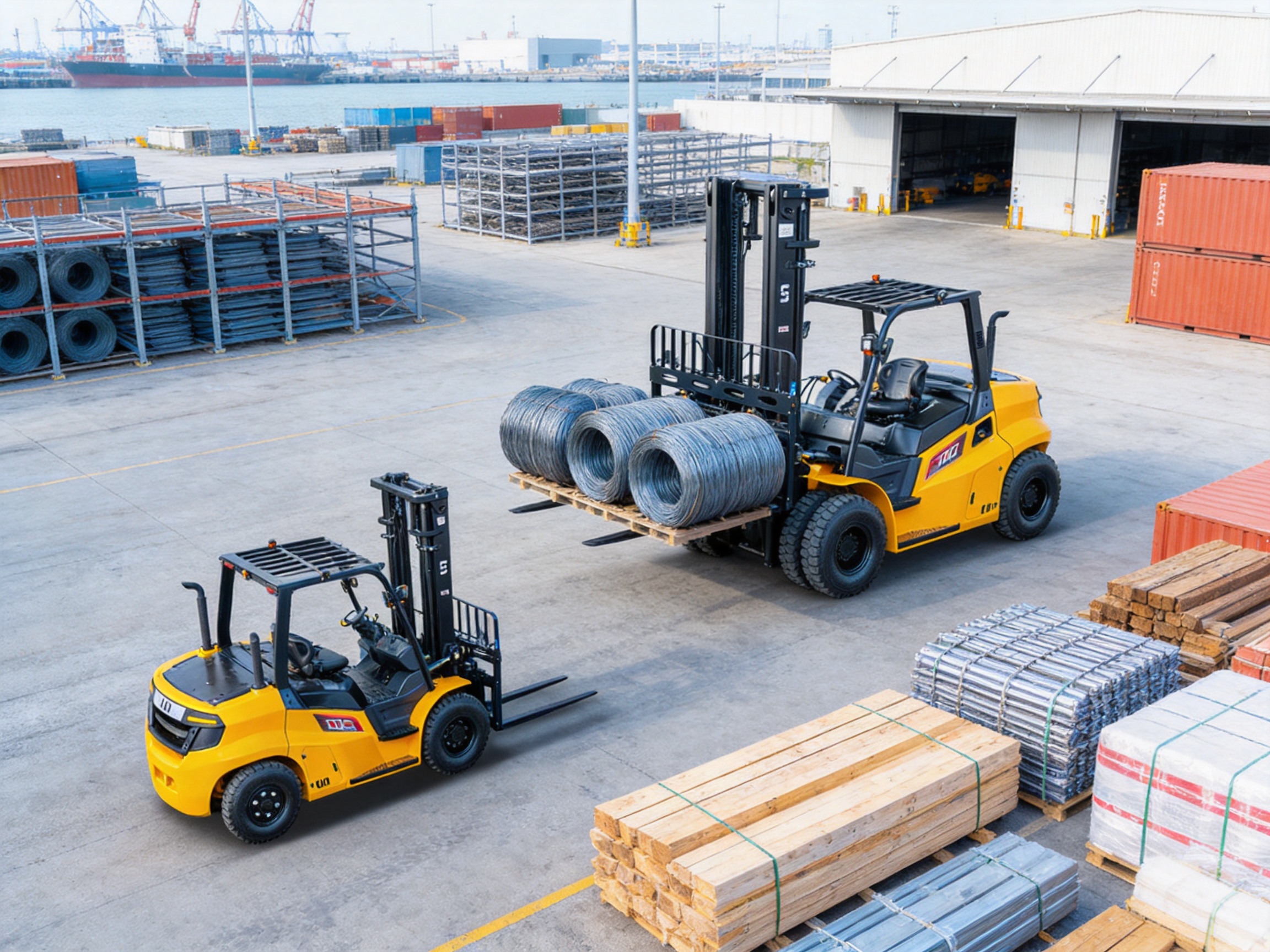
Ports and freight terminals require forklifts that can move containers, cargo units, machinery, metal products, and packaged materials between storage areas and transport zones. A high-capacity forklift can reduce the need for multiple handling stages and help keep loading schedules on track.
Steel plants and metal-processing facilities often handle products with high density and concentrated weight. Steel billets, bars, plates, coils, molds, and fabricated components demand lifting equipment with substantial rated capacity and stable handling characteristics. The 600 mm load centre of the F Series provides a useful baseline for heavy-load planning, subject to the actual attachment, load shape, and operating conditions.
Construction-material yards commonly handle concrete products, stone, glass, bricks, structural sections, pipes, and packaged materials. These goods may be moved over long distances across yards and may be exposed to dust or changing weather. A diesel forklift is often preferred in such conditions because it is designed for outdoor work and can be refuelled quickly within an established industrial operation.
Logistics parks and large distribution facilities may use heavy-duty forklifts for oversized cargo, industrial equipment, project logistics, and transfer operations. The combination of rated capacity and travel speed helps these sites coordinate lifting and transportation rather than relying only on fixed lifting equipment.
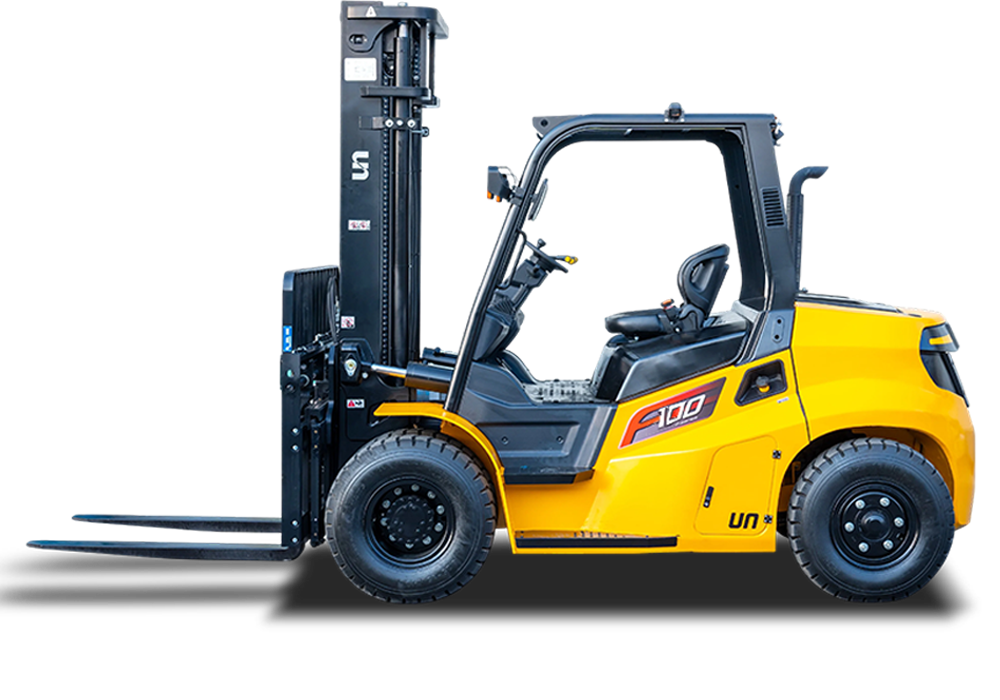
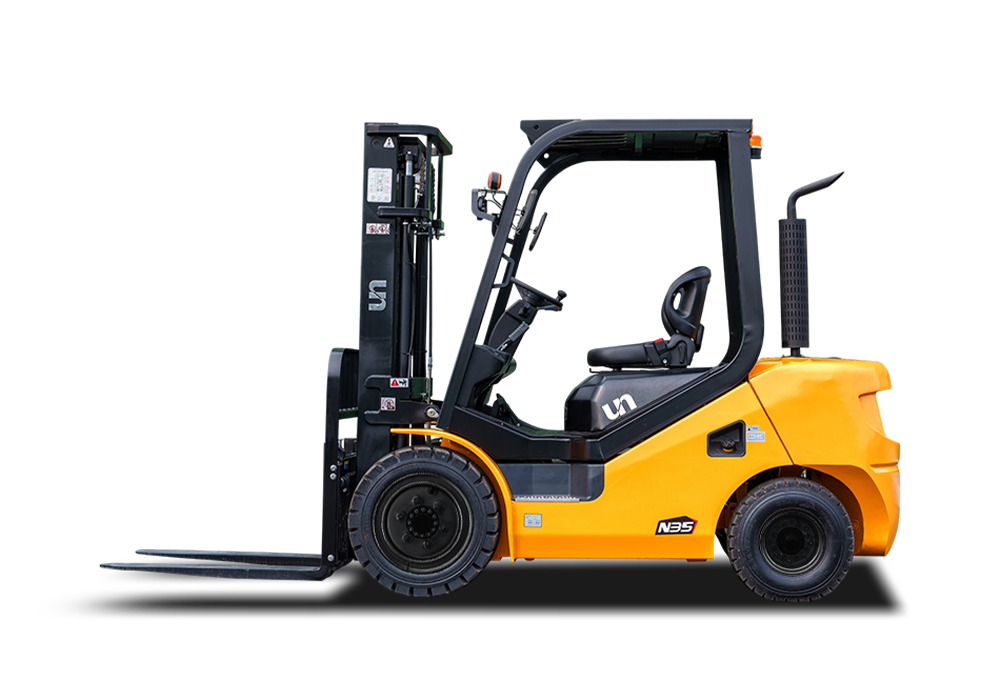
F Series 8.0T-10.0T Heavy Duty Diesel Forklift
Core Specification Overview
The FD70T and FD100T models share the same heavy-duty product family, but they serve different capacity requirements. The FD70T is suitable for loads up to 7,000 kg under its rated conditions. The FD100T extends the capacity to 10,000 kg for applications involving heavier products and greater handling demands.
| Specification | Unit or Symbol | FD70T | FD100T |
|---|---|---|---|
| Rated Load Capacity | Q (kg) | 7,000 | 10,000 |
| Load Centre | C (mm) | 600 | 600 |
| Length to Fork Face, Without Fork | L1 (mm) | 3,582 | 4,200 |
| Overall Width | B1 (mm) | 2,045 | 2,165 |
| Overhead Guard Height | H5 (mm) | 2,440 | 2,550 |
| Outside Turning Radius | Wa (mm) | 3,340 | 3,940 |
| Travel Speed, Full Load / No Load | km/h | 29 / 31 | 30 / 32 |
| Maximum Gradeability, Full Load / No Load | % | 32 / 20 | 21 / 20 |
| Wheelbase | Y (mm) | 2,300 | 2,800 |
| Total Weight | kg | 9,400 | 12,800 |
| Engine Model | — | F3.8 / 6BG1 | F3.8 / 6BG1 |
Specifications should always be assessed together rather than individually. For example, rated capacity alone does not determine whether a forklift is appropriate for a particular job. Load shape, attachment weight, lifting height, load-centre position, surface conditions, mast configuration, and local safety requirements all influence the actual operating capacity. The table provides the principal reference figures for comparing the two models, while a site-specific application review should determine the final configuration.
Capacity for Heavy Industrial Loads
The most visible advantage of the F Series is its high rated capacity. At 7,000 kg and 10,000 kg, the two models cover a substantial portion of heavy-duty industrial handling requirements. This allows fleet managers to select a truck that more closely matches the load instead of overloading a smaller forklift or using several low-capacity units for one task.
Correct capacity matching can improve operational safety and efficiency. A forklift that is properly selected for the load can reduce repeated repositioning, minimize unnecessary transfers, and support more direct material flow. It can also help organizations standardize procedures for recurring cargo types.
Stable Heavy-Load Platform
The FD70T has a 2,300 mm wheelbase, while the FD100T uses a longer 2,800 mm wheelbase. A longer wheelbase can contribute to a stable platform during heavy-load operations, although turning space and route planning must also be considered. The larger FD100T is designed for greater capacity and consequently has a wider operating footprint.
The total weights of 9,400 kg for the FD70T and 12,800 kg for the FD100T reflect the substantial structure required for heavy-duty lifting. This mass, combined with the counterbalanced forklift layout, supports stability when the truck is operated within its specified limits. Operators must still follow load charts, speed limits, surface restrictions, and workplace safety procedures.
Performance for Long-Distance Yard Movement
Heavy-duty forklift productivity depends on more than lifting and lowering. In ports, construction yards, steel facilities, and logistics parks, the truck may travel considerable distances between loading points and storage areas. Travel speed therefore has a direct effect on cycle time.
The FD70T reaches a listed travel speed of 29 km/h with a full load and 31 km/h without a load. The FD100T reaches 30 km/h with a full load and 32 km/h without a load. These figures provide strong transport capability for a heavy forklift, helping operators move material efficiently between work zones when the site layout and safety rules permit.
Speed must always be used responsibly. Heavy loads require appropriate acceleration, braking, cornering, and visibility practices. The benefit of a high-speed capability is not that the forklift should always travel at maximum speed; rather, it gives fleet operators additional performance capacity when operating conditions are suitable.
Gradeability in Industrial Environments
Industrial yards are not always level. Ramps, loading bays, temporary access routes, bridge plates, and uneven ground can create additional demands on the powertrain and traction system. The listed maximum gradeability of the FD70T is 32 percent with a full load and 20 percent without a load. The FD100T is listed at 21 percent with a full load and 20 percent without a load.
Gradeability values are reference specifications and should not be interpreted as permission to operate on any slope without a risk assessment. Actual performance can be affected by tire condition, surface material, weather, load distribution, attachment type, ramp length, and operator technique. Nevertheless, these figures indicate that the F Series is intended for more demanding industrial routes than ordinary indoor warehouse equipment.
Practical Dimensions and Site Planning
Heavy forklifts must be selected with attention to both lifting requirements and available working space. The FD70T has an overall width of 2,045 mm and an outside turning radius of 3,340 mm. The FD100T is 2,165 mm wide and has an outside turning radius of 3,940 mm. These dimensions should be incorporated into aisle design, loading-zone planning, gate access, transport routes, and emergency clearances.
The FD70T has a length to the face of the fork, without the fork, of 3,582 mm. The corresponding dimension for the FD100T is 4,200 mm. The larger dimensions of the FD100T are consistent with its higher rated capacity and longer wheelbase. Before purchasing, users should check the dimensions of storage bays, trailers, rail-side areas, production lines, and transfer platforms.
Overhead clearance is another important consideration. The overhead guard height is 2,440 mm for the FD70T and 2,550 mm for the FD100T. Facilities should verify clearance at entrances, covered loading areas, low beams, canopy structures, and maintenance buildings. Early planning helps prevent route restrictions after delivery.
Balancing Capacity and Maneuverability
The FD70T may be advantageous where the operation requires substantial lifting capacity but has comparatively tighter working areas. Its smaller overall dimensions and turning radius can simplify movement in yards with restricted space. The FD100T, by contrast, is intended for higher-capacity work and needs more room for turning and positioning.
This difference does not mean that one model is universally better than the other. The correct choice depends on the heaviest regular load, the physical characteristics of the cargo, the frequency of handling, the route geometry, and future expansion plans. A company that frequently handles loads near 10 tons may benefit from the FD100T, while a site that usually handles loads below 7 tons may find the FD70T a more balanced choice.
Diesel Power for Outdoor and Heavy-Duty Work
Diesel forklifts remain important in applications where high torque, extended operating periods, rapid refuelling, and outdoor versatility are priorities. The F Series uses F3.8 / 6BG1 engine configurations for both listed models. The diesel power system is designed to support the demands of heavy lifting, travel, ramp work, and repeated industrial cycles.
Internal-combustion forklifts can be particularly practical in environments where battery charging infrastructure is limited or where work schedules do not easily allow extended charging periods. Refuelling can be integrated into established fleet procedures, helping equipment return to service quickly between shifts, subject to site regulations and fuel-management practices.
Diesel equipment is also commonly selected for outdoor applications where dust, moisture, uneven terrain, and long travel distances are present. However, operating locations must be evaluated for emissions, ventilation, noise, and environmental regulations. For enclosed facilities or areas with strict emission requirements, the appropriate low-emission configuration or an alternative energy model should be considered.
Powertrain Selection and Lifecycle Planning
Choosing diesel power is a lifecycle decision rather than a simple purchase decision. Users should assess fuel availability, average operating hours, duty cycle, service access, local emission rules, operator preferences, and the cost of downtime. In a heavy-duty application, a powertrain that can sustain repeated high-load work may provide value through productivity and operational continuity.
The engine specification also provides a foundation for maintenance planning. Fleet managers can establish preventive service intervals, maintain appropriate filters and lubricants, monitor cooling-system condition, and train technicians on the relevant engine configuration. Regular maintenance is essential to preserve performance and prevent avoidable failures.
Modern Design Combined with Structural Strength
The F Series presents a modern, robust, and streamlined design. For a heavy-duty forklift, styling is not merely cosmetic. A well-planned external design can support visibility, access to service points, protection of key components, and improved integration of the operator station with the chassis.
The robust construction is intended for high-intensity applications in which the forklift may operate for long hours and carry heavy loads repeatedly. The structure must handle dynamic forces created during acceleration, braking, lifting, lowering, turning, and travelling over industrial surfaces. A heavy-duty design also needs to tolerate the practical challenges of loading areas, including frequent starts and stops and changing work patterns.
The streamlined form can help create a clear visual profile around the operator area and major vehicle components. In a busy industrial yard, good visibility and predictable vehicle dimensions contribute to safer manoeuvring. Operators should still use spotters, warning systems, mirrors, cameras, and designated traffic controls whenever required by the worksite.
Operator-Centred Productivity
Operator performance strongly influences forklift productivity. A capable truck must be paired with a working environment that allows the operator to maintain concentration throughout a long shift. The F Series is designed as a practical industrial machine, with the operator positioned to control lifting, travelling, steering, and load placement from a dedicated counterbalanced platform.
When evaluating the truck for a particular site, buyers should review seat comfort, control layout, visibility to the fork tips, access and exit, overhead protection, vibration, noise, and the availability of optional monitoring equipment. These factors can affect operator fatigue, handling precision, and the consistency of daily production.
Training remains essential. Even an advanced heavy-duty forklift cannot compensate for incorrect load positioning, excessive speed, poor route selection, or operation beyond the rated capacity. Operators should be trained in the specific model, attachment, load type, and site conditions.
Manufacturing Strength and Engineering Capability
The manufacturer behind the F Series is a professional material-handling equipment company integrating research and development, production, sales, and service. Established in 1978, the company has developed long-term experience in forklift engineering and industrial vehicle manufacturing. Its production base covers approximately 53,400 square meters and has an annual production capacity of 15,000 units.
This scale supports a structured approach to product development and manufacturing. Heavy-duty forklifts require coordination among design engineering, component sourcing, welding, machining, painting, assembly, testing, quality control, logistics, and after-sales service. An integrated manufacturer can align these activities more effectively than a supplier that focuses only on final assembly or distribution.
The company offers a broad portfolio comprising 17 varieties, 96 series, and more than 200 specifications. Such product breadth indicates experience across different capacity classes, power systems, operating environments, and customer requirements. It also gives customers the possibility of building a more consistent fleet from one established product source.
Research and Development Heritage
The company has contributed to the development of specialized material-handling equipment, including China’s first reach forklift and very-narrow-aisle truck. It also holds national patents related to electric forklift technologies and has participated in the formulation of Chinese electric forklift industry standards.
Although the F Series is a diesel product, this broader engineering background is relevant. Forklift manufacturing increasingly involves the integration of mechanical systems, electrical controls, energy management, ergonomics, safety systems, and digital monitoring. Experience in electric and specialized trucks can strengthen an organization’s overall understanding of industrial vehicle design.
The manufacturer has also expanded its new-energy portfolio in response to global interest in carbon reduction. Its development work includes diesel-to-lithium-ion forklifts and standard lithium-ion battery forklifts. This suggests an ability to support customers whose energy strategies may evolve over time, while continuing to supply internal-combustion products for applications where diesel remains the practical choice.
Production Process Considerations
Manufacturing a high-capacity forklift begins with engineering calculations and application analysis. Rated load, load centre, wheelbase, axle capacity, mast forces, counterweight distribution, braking requirements, and tire loads must be evaluated together. A design suitable for a 10-ton application requires appropriate structural margins and compatibility among major components.
Fabrication quality is especially important in the frame, mast, fork carriage, counterweight supports, and other load-bearing structures. Controlled welding procedures, dimensional inspection, and appropriate material selection help maintain consistency between units. Machined interfaces and mounting points must also be accurate so that assemblies remain aligned during operation.
Assembly processes should include systematic torque control, fluid-system inspection, electrical checks, steering verification, brake testing, and functional testing of the lifting system. A complete manufacturing process does not end when the forklift starts; it includes inspection, adjustment, documentation, and preparation for delivery.
Testing should reflect the intended working environment as closely as practical. Heavy-duty trucks may be evaluated for lifting response, travel performance, steering, braking, grade operation, stability, vibration, and control behaviour. Quality procedures help identify deviations before the equipment reaches the customer’s site.
Advantages Compared with Conventional Lower-Capacity Forklifts
The F Series offers several practical advantages over conventional forklifts designed for lighter industrial work. The first is the ability to handle heavier loads in fewer stages. When the load is within the approved rating and configuration, a high-capacity truck can move cargo that would exceed the limits of a standard warehouse forklift.
The second advantage is suitability for outdoor industrial routes. Diesel power, substantial vehicle mass, and a heavy-duty chassis are better aligned with long-distance yard movement, ramps, and uneven surfaces than many compact electric warehouse models. This does not make the F Series a replacement for every forklift; it makes it a specialized solution for applications where capacity and outdoor endurance are central.
The third advantage is operating speed. The listed travel speeds of up to 31 km/h for the FD70T and 32 km/h for the FD100T can support efficient movement across large sites. A lower-capacity truck may have to make more trips, use multiple vehicles, or be restricted from handling particular cargo. A suitable heavy-duty forklift can simplify the material flow.
The fourth advantage is model choice. The FD70T and FD100T allow a business to select between two capacity levels within the same product family. This can support fleet standardization, shared operator training, common maintenance procedures, and easier management of spare parts, subject to the final configuration.
Advantages Compared with Unspecialized Heavy Equipment
Some industrial sites use cranes, loaders, or other mobile equipment for tasks that could be performed more directly by a forklift. While those machines have their own strengths, a counterbalanced forklift provides a dedicated method for fork-based pickup, short-distance travel, positioning, and stacking.
The F Series can be useful where loads need to be collected from floor level, transported through a yard, aligned with a truck, or placed on supports. Its fork-based operating method can reduce handling transitions and provide flexibility when loads arrive at different points within a facility.
The right choice depends on the cargo and workflow. Cranes may be preferable for suspended loads, loaders may suit bulk materials, and specialized attachments may be required for coils, paper rolls, pipes, or other non-palletized products. The F Series provides a strong base for heavy-load handling, but application-specific equipment selection remains important.
Safety and Responsible Operation
Heavy-capacity forklifts require disciplined safety management. Before operation, the truck should be inspected for tire condition, forks, mast components, hydraulic hoses, fluid levels, brakes, steering, lights, warning devices, seat restraints, and visible structural damage. Any defect that could affect safe operation should be reported and corrected before the truck is used.
Loads must be stable, adequately supported, and positioned within the permitted load centre. Operators should never exceed the rated capacity or use an attachment without understanding its effect on capacity and visibility. Long or irregular loads may change the centre of gravity and require a revised operating method.
Traveling with a load raised can reduce stability and visibility. Loads should generally be carried as low as practical while maintaining ground clearance. Operators should slow down at intersections, blind corners, ramps, doorways, and pedestrian crossings. Site management should separate pedestrian and forklift routes wherever possible.
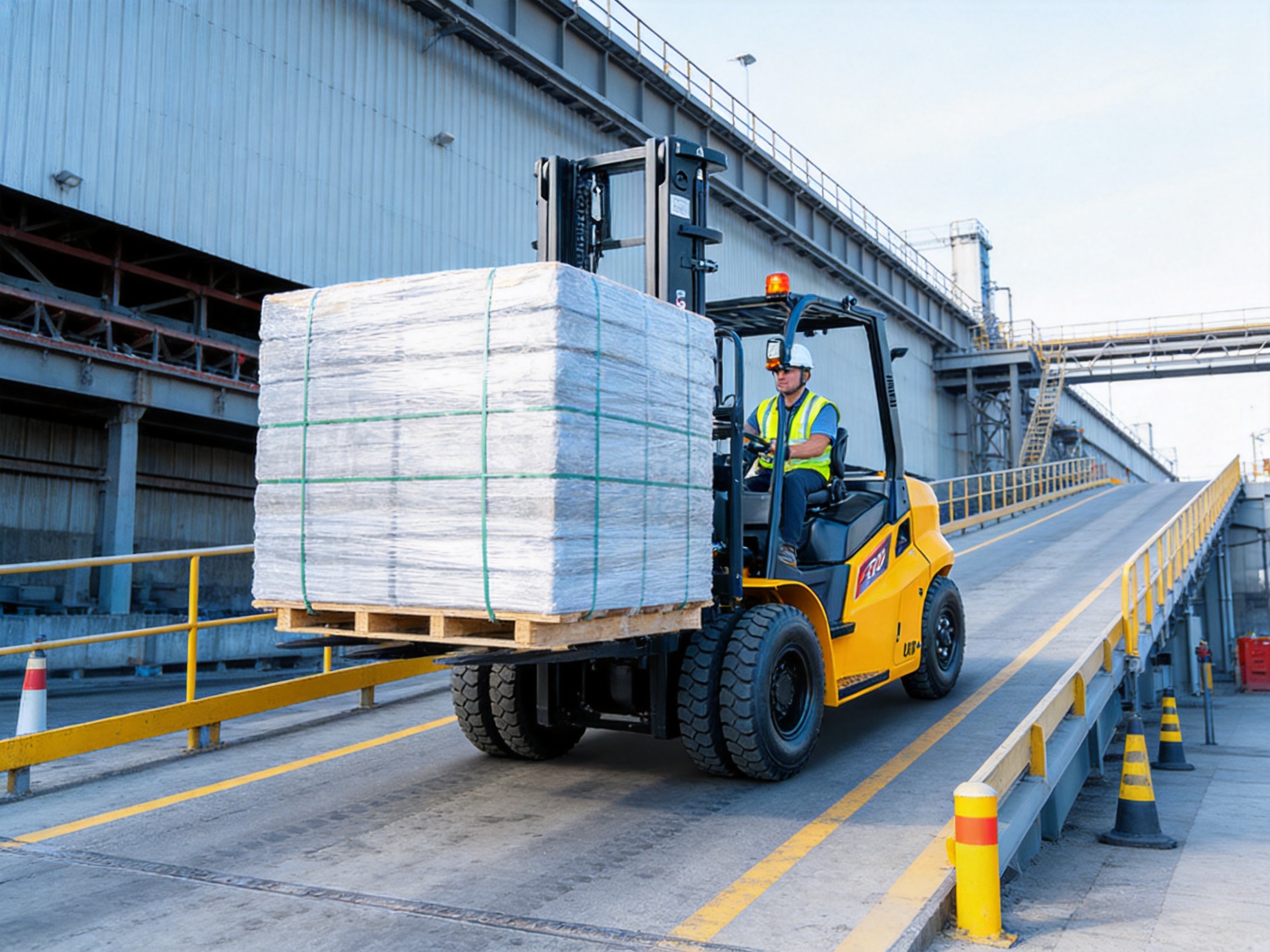
Grade operation requires particular care. Operators should understand the direction of travel recommended for loaded and unloaded conditions, avoid sudden steering movements, and maintain suitable speed. Ramps should be inspected for surface condition, width, edge protection, and load-bearing capability.
Fleet Management Recommendations
A heavy-duty forklift should be incorporated into a complete fleet-management program. The program should record operating hours, fuel consumption, maintenance tasks, inspections, repairs, tire replacements, hydraulic work, and safety incidents. Trend information can help identify components that require attention before a failure interrupts production.
Preventive maintenance should follow the manufacturer’s instructions and the actual duty cycle. A forklift used in steel processing, dusty yards, or extended shifts may require more frequent inspection than one used in a cleaner and less intensive environment. Cooling systems, air filters, engine oil, transmission fluid, hydraulic components, brakes, and tires deserve particular attention in heavy-duty work.
Operator feedback is also valuable. Operators often identify changes in steering feel, braking response, lifting smoothness, unusual vibration, or engine behaviour before these issues become severe. A reporting culture can reduce downtime and improve the useful life of the truck.
Service Network and Global Market Experience
The manufacturer has established a worldwide sales and service network with partners in Europe, South America, North America, Africa, and Asia. For an industrial buyer, international service coverage can be an important part of total equipment value. A forklift is not only a machine; it is a long-term operational asset requiring parts, technical support, maintenance knowledge, and communication.
The company supplies internal-combustion forklifts to international markets and acts as an original-equipment supplier for recognized domestic and overseas companies, including Hyundai Heavy Industries and Xuzhou Construction Machinery Group. This experience reflects familiarity with business-to-business equipment requirements, production consistency, and customized supply arrangements.
For customers in markets with strict emissions requirements, the company also develops models designed for higher emission standards, including requirements associated with the European Union and North America. The exact specification and certification should be confirmed for the target market before purchase, because regulations and approval requirements vary by country and application.
Parts and After-Sales Planning
Parts availability is particularly important for a high-capacity forklift because downtime can affect an entire material flow. Buyers should discuss recommended spare parts, service intervals, technical documentation, warranty conditions, and local response arrangements before placing an order.
Common planning items may include filters, belts, fluids, brake components, tires, hydraulic seals, fork components, lighting parts, and other wear items. The appropriate stock level depends on fleet size, operating hours, local supplier access, and the importance of uninterrupted operation.
Service technicians should be trained in safe isolation procedures and heavy-equipment maintenance. Lifting systems, counterweights, hydraulic pressure, and large structural components present significant hazards during repair. Maintenance should be carried out by qualified personnel using suitable tools and procedures.
Environmental and Energy Considerations
Diesel forklifts remain appropriate for many heavy-duty applications, but responsible users should consider fuel efficiency, emissions, noise, maintenance quality, and operating location. Proper engine tuning, clean filters, correct lubrication, and timely maintenance can support efficient operation and reduce avoidable emissions.
Where the forklift works indoors or near occupied buildings, ventilation and emission controls must be evaluated. Some customers may require alternative-energy models because of environmental policies, local regulations, or corporate carbon-reduction objectives. The manufacturer’s broader range includes lithium-ion and other new-energy solutions for customers whose operating conditions support electrification.
Energy selection should be based on the full duty cycle. A diesel forklift may provide advantages in extended outdoor work, heavy loads, and rapid refuelling. An electric forklift may be more suitable for quiet indoor operations, zero tailpipe emissions at the point of use, and facilities with established charging infrastructure. The best solution depends on load, shift pattern, environment, energy cost, infrastructure, and regulatory requirements.
How to Select Between the FD70T and FD100T
The FD70T should be considered when the regular load requirement is up to approximately 7,000 kg under the applicable rated conditions, and when a somewhat more compact truck is beneficial. Its smaller width, shorter wheelbase, and tighter turning radius may support better movement in restricted industrial areas.
The FD100T should be considered when the operation regularly handles loads approaching 10,000 kg or when additional capacity is needed for future cargo requirements. Its larger dimensions and higher total weight should be matched with sufficient yard space, ground strength, transport access, and maintenance facilities.
Purchasers should not select a truck solely according to the heaviest occasional load. They should examine the normal load profile, load-centre variation, attachment requirements, lift heights, operating hours, terrain, route length, and future expansion. A capacity study performed before purchase can prevent both under-specification and unnecessary over-investment.
Pre-Purchase Assessment Checklist
First, document the weight, dimensions, shape, and packaging of every major load type. Identify whether loads are palletized, bundled, coiled, boxed, suspended, or irregular. Determine whether a special attachment is needed.
Second, measure the operating environment. Record aisle widths, turning areas, door heights, ramp gradients, ground conditions, loading-bay dimensions, overhead clearance, and pedestrian routes.
Third, calculate the duty cycle. Note operating hours per shift, number of shifts, average travel distance, lifting frequency, idle periods, and peak seasonal demand.
Fourth, confirm legal and environmental requirements. Review emission rules, noise limitations, operator-certification requirements, workplace traffic regulations, and any site-specific safety standards.
Fifth, evaluate service support. Confirm parts availability, technician capability, warranty coverage, maintenance response times, training resources, and documentation.
Long-Term Value for Industrial Fleets
The value of a heavy-duty forklift is determined by the work it performs over its service life. A truck that can safely move more material per cycle, travel efficiently across a large site, and remain available through planned maintenance may contribute to lower handling complexity and better production continuity.
Fleet standardization can also provide long-term benefits. When multiple trucks share a product family, operators may become familiar with common controls and procedures. Maintenance teams may be able to streamline inspections and training. Purchasing teams may simplify supplier management and parts planning.
However, standardization should not eliminate application matching. A heavy-duty diesel forklift should be assigned to work that justifies its capacity and operating characteristics. Using an oversized truck for light indoor tasks may increase fuel consumption and reduce manoeuvrability, while using an undersized truck for heavy loads can create safety and reliability risks.
The F Series is therefore best viewed as a focused solution for high-capacity work. Its strengths are most evident where the operation needs robust diesel power, heavy-load capability, productive travel speed, stable counterbalanced handling, and a platform intended for demanding industrial environments.
Q&A
What are the rated capacities of the two models?
The FD70T has a rated load capacity of 7,000 kg, and the FD100T has a rated load capacity of 10,000 kg. These ratings apply under specified conditions, including the listed 600 mm load centre. The actual capacity must be confirmed for the selected mast, attachment, lift height, and load configuration.
What industries are suitable for this forklift series?
The series is designed for demanding applications such as ports, steel plants, construction-material yards, logistics parks, freight handling areas, machinery yards, and other industrial sites requiring high-capacity lifting and outdoor travel.
Why choose a diesel forklift for heavy-duty work?
Diesel forklifts can provide strong torque, long operating capability, rapid refuelling, and suitability for outdoor environments. They are often practical where battery charging infrastructure is limited or where the duty cycle involves extended travel and frequent heavy lifting.
Can these forklifts be used indoors?
Indoor use depends on ventilation, emission regulations, noise requirements, facility layout, and the specific engine configuration. Users should confirm local regulations and site conditions before operating a diesel forklift inside an enclosed building.
Which model is more suitable for a restricted yard?
The FD70T has the smaller listed overall width and outside turning radius, so it may be easier to manoeuvre in a more restricted area. The final choice must still consider the required capacity, load centre, route design, and safety clearances.
How does the FD100T support heavier operations?
The FD100T provides a rated capacity of 10,000 kg, a 2,800 mm wheelbase, a 12,800 kg total weight, and a larger overall structure. These specifications support heavier applications, but they also require sufficient ground strength, turning space, overhead clearance, and transport access.
What should be considered when using attachments?
An attachment can change the load centre, effective capacity, visibility, and overall operating behaviour of the forklift. The attachment must be approved for the truck, correctly installed, and evaluated using the applicable capacity information. Operators must be trained in its use.
What maintenance is important for long-duty operation?
Regular inspections and preventive maintenance should cover the engine, filters, cooling system, fluids, transmission, hydraulic system, brakes, steering, tires, forks, mast, lights, warning devices, and structural components. Maintenance intervals should reflect the actual operating environment and duty cycle.
Does the manufacturer offer other energy options?
Yes. In addition to internal-combustion forklifts, the manufacturer has developed new-energy products, including diesel-to-lithium-ion forklifts and standard lithium-ion battery forklifts. The appropriate energy system depends on the customer’s application, infrastructure, emissions requirements, and operating schedule.
What support should buyers request before ordering?
Buyers should request a complete technical specification, capacity information, engine and transmission details, attachment compatibility, delivery configuration, warranty terms, service arrangements, parts support, operator training information, and compliance documentation for the target market.
Conclusion
The F Series 8.0T–10.0T heavy-duty diesel forklift range is built for material-handling operations where capacity, durability, travel performance, and outdoor practicality are essential. The FD70T and FD100T provide rated capacities of 7,000 kg and 10,000 kg, respectively, with a 600 mm load centre and specifications suited to demanding industrial work.
Its advantages over conventional lower-capacity equipment include stronger heavy-load capability, productive travel speeds, substantial gradeability references, and a diesel configuration suited to long-duty outdoor applications. The two-model range also gives fleet managers a practical way to match equipment size with load requirements and site conditions.
Behind the product is a manufacturer with experience dating back to 1978, an integrated research, production, sales, and service structure, a 53,400-square-meter production base, and annual capacity of approximately 15,000 units. Its broad product portfolio, engineering heritage, international service network, original-equipment supply experience, and development of both internal-combustion and new-energy forklifts provide a foundation for serving varied industrial markets.
For the best result, buyers should evaluate the forklift as part of a complete handling system. Correct capacity selection, suitable attachments, trained operators, preventive maintenance, safe traffic planning, and local regulatory compliance are all necessary. When these factors are properly addressed, the F Series can become a dependable heavy-duty tool for ports, steel operations, construction-material handling, logistics parks, and other high-intensity industrial environments.
References
1. Manufacturer-provided F Series 8.0T–10.0T product specifications and application information.
2. Manufacturer-provided company profile, production capacity, research and development history, and global service information.
3. General principles of industrial forklift capacity selection, load-centre assessment, and attachment evaluation.
4. General workplace guidance concerning forklift inspection, operator training, pedestrian separation, ramp operation, and preventive maintenance.
5. General material-handling engineering practices for ports, steel plants, construction-material yards, and logistics facilities.
Product: F Series 8.0T-10.0T Heavy Duty Diesel Forklift
For exclusive deals and latest offers, sign up by entering your email address below.
Stay In Touch
ADDRESS : NO.1 ROAD ONE, XINDENG NEW DISTRICT, FUYANG, HANGZHOU, ZHEJIANG, CHINA 311404.
PHONE : +86-571-8688 8355 (AMERICA)
PHONE : +86-571-8886 9363 (EUROPE)
PHONE : +86-571-8688 8377 (ASIA, AFRICA, OCEANIA)
EMAIL : [email protected]
EMAIL : [email protected](PARTS INQUIRY)

