


 中文简体
中文简体 Français
 русский
 Español
 عربى
عربى Deutsch



High-Efficiency LPG and Gasoline Forklift for 3.0 to 3.5 Ton Material Handling
Admin 2026-07-19The N Series 3.0T-3.5T LPG and gasoline forklift is designed for companies that need dependable internal combustion performance, cleaner operation than many traditional diesel alternatives, and the flexibility to work across both indoor and outdoor material handling environments. In warehouses, distribution yards, manufacturing plants, ports, logistics centers, timber facilities, building-material depots, and regional distribution operations, the 3.0 to 3.5 ton capacity class is one of the most frequently used segments. It must be strong enough for demanding loads, compact enough for routine aisle work, comfortable enough for long shifts, and economical enough to justify daily operation. This forklift series addresses those needs through a balanced combination of power, maneuverability, safety, serviceability, and manufacturing quality.
The product is built around a practical operating concept: strong engine output, stable hydraulic response, reliable transmission, clear visibility, operator-focused ergonomics, and reduced maintenance complexity. Compared with conventional internal combustion forklifts that focus only on power, this series emphasizes a more complete ownership experience. It is intended not only to lift and move pallets, but also to help users reduce downtime, improve operator confidence, simplify service routines, and achieve more consistent productivity over the life of the equipment.
As a product from Zhejiang UN Forklift Co., Ltd., the forklift benefits from decades of manufacturing experience in material handling equipment. The company was founded in 1978 and has developed into a professional manufacturer integrating research and development, production, sales, and service. With a production base covering 53,400 square meters and an annual production capacity of 15,000 units, the company has the scale and experience required to support international customers. Its global sales and service network reaches Europe, South America, North America, Africa, and Asia, making the N Series especially suitable for buyers who require both product quality and long-term service support.
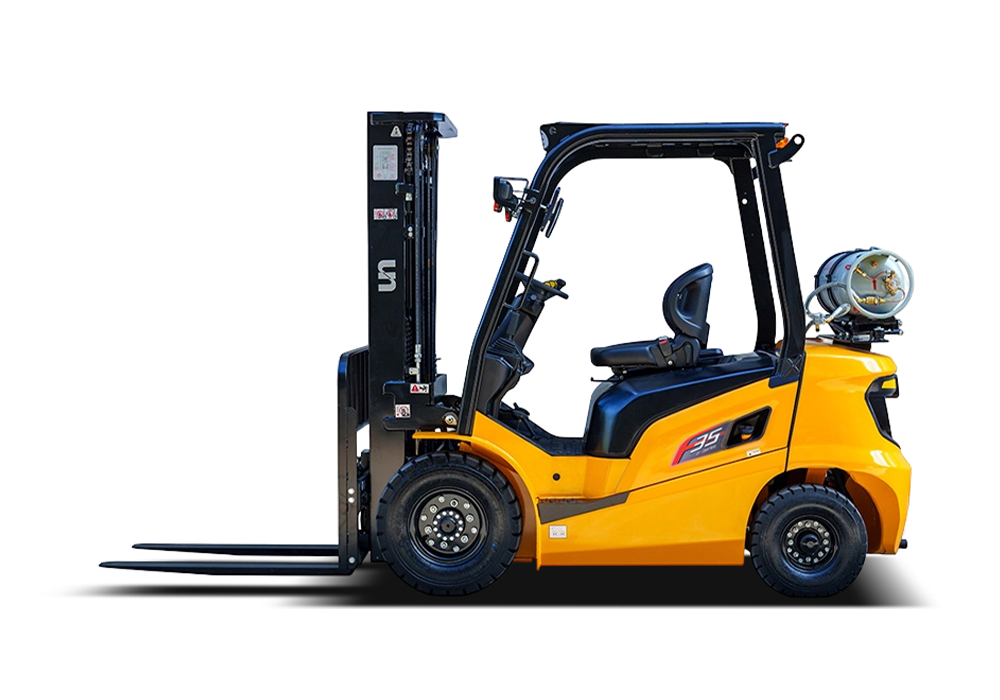
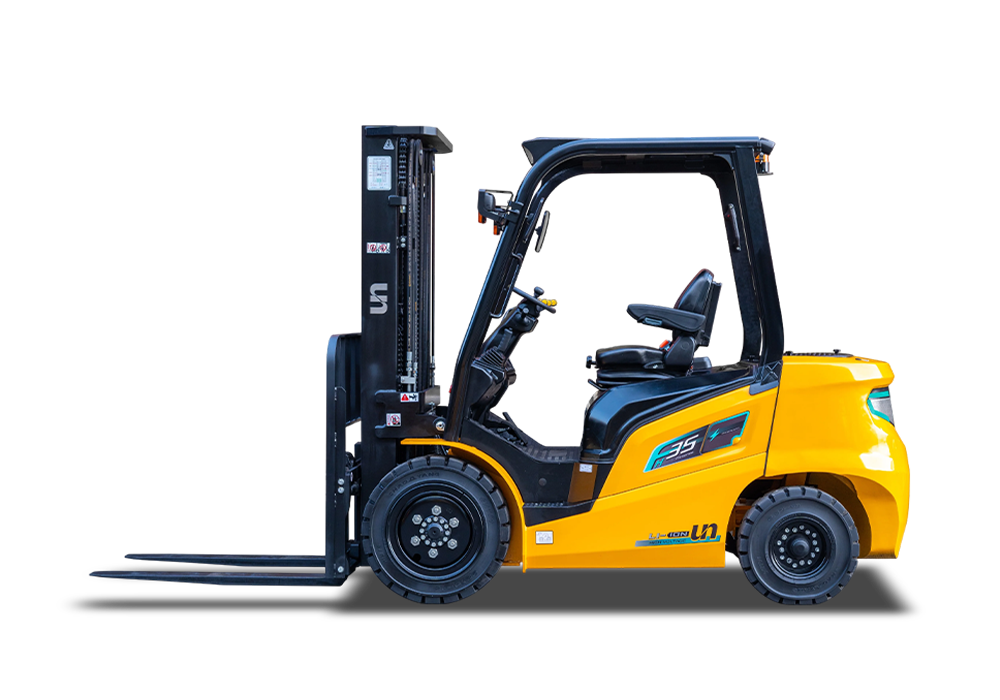
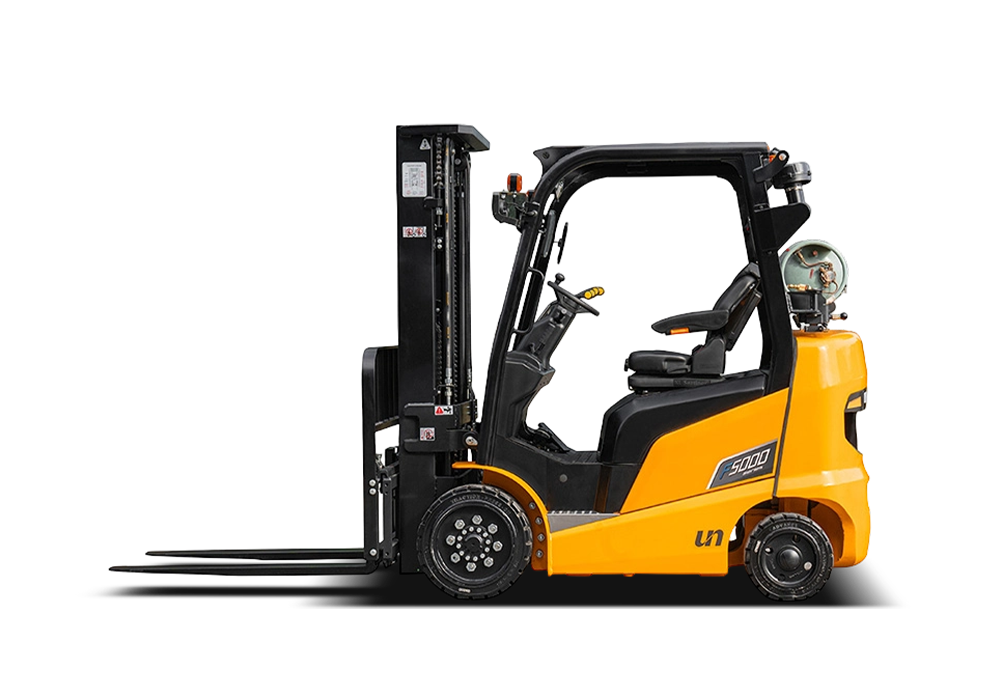
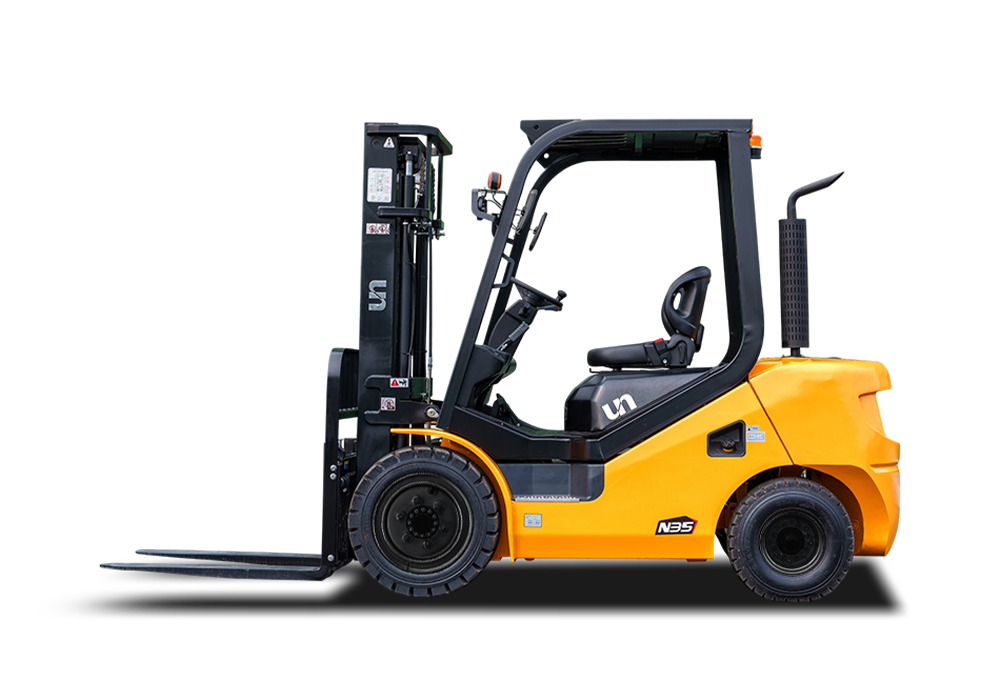
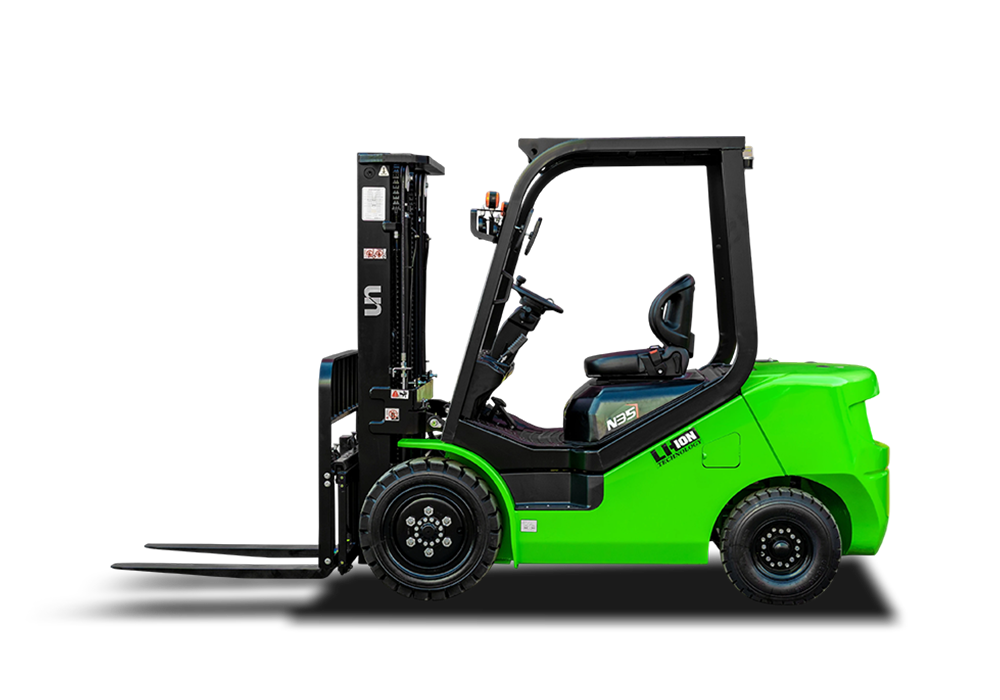
N Series 3.0T-3.5T LPG&Gasoline Forklift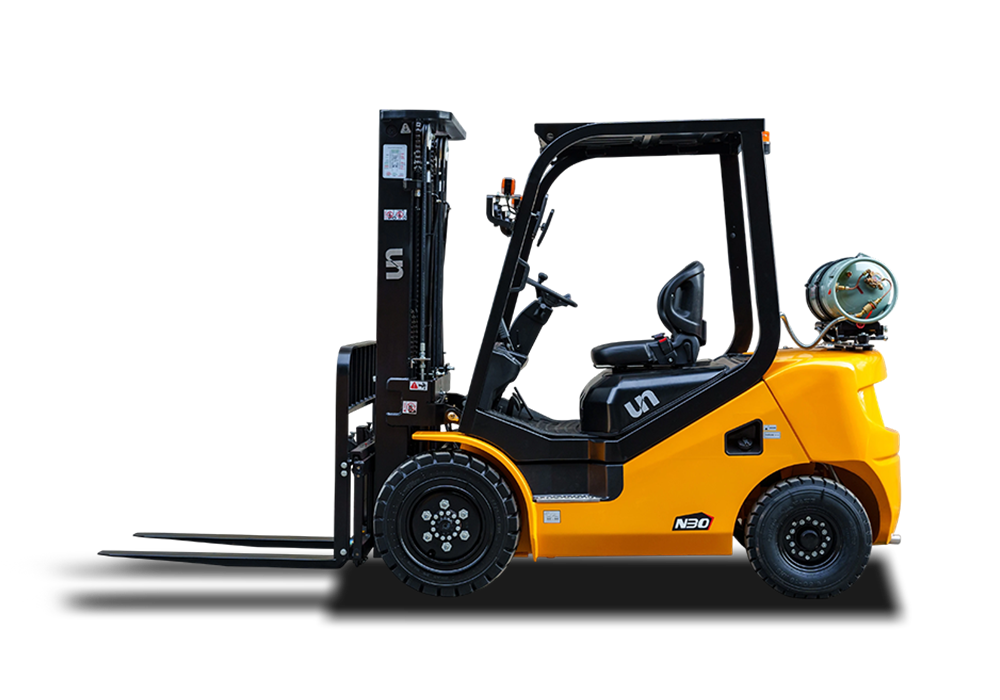
Product Positioning and Application Value
The N Series 3.0T-3.5T LPG and gasoline forklift occupies a practical position between lightweight warehouse trucks and heavier industrial forklifts. With rated load capacities of 3,000 kg and 3,500 kg at a 500 mm load center, it is suitable for a wide range of goods, including palletized products, machinery parts, packaged building materials, beverages, chemicals, agricultural supplies, and general industrial cargo. For many users, this capacity range provides the ideal balance between lifting strength and vehicle size.
The forklift is particularly useful in operations that require frequent handling rather than occasional lifting. Frequent handling places stress on every system: the engine must maintain stable output, the hydraulic system must respond smoothly, the transmission must shift reliably, the cooling system must prevent overheating, and the operator station must reduce fatigue. The N Series is engineered to perform under these working patterns, making it suitable for medium-duty loading scenarios where reliability directly affects daily output.
One of the strongest advantages of LPG and gasoline power is operational flexibility. Battery-electric forklifts can be excellent for clean indoor environments, but they may require charging infrastructure, battery management, and downtime for charging or swapping. Diesel forklifts offer strong outdoor performance, but emissions, noise, and indoor restrictions can limit their use. An LPG and gasoline forklift offers a useful middle path. It provides internal combustion power and refueling convenience while supporting cleaner operation compared with many diesel-powered alternatives.
This makes the product well suited for businesses that operate across mixed environments. A single facility may include indoor storage, semi-open loading docks, outdoor yards, and transfer routes between buildings. The N Series can adapt to these different spaces without the same limitations that may affect single-purpose equipment. For companies that want to standardize their fleet while keeping operational flexibility, this is a meaningful advantage.
Key Product Advantages Over Competitors
In the competitive 3.0 to 3.5 ton forklift market, many products appear similar at first glance. Capacity, mast height, fork dimensions, and basic travel speed may look comparable on specification sheets. The true difference is found in the integration of components, the attention to operator safety, the quality of manufacturing, the serviceability of the machine, and the ability of the supplier to support the product after delivery. The N Series is designed to compete strongly in these areas.
First, the forklift provides stable power for frequent handling. It uses a high-powered engine configuration, including GCT engine technology in the 3.0 to 3.5 ton specification range. The GK25 engine listed in the main specifications delivers rated output of 37.4 kW at 2,500 rpm and rated torque of 176.5 N.m at 1,600 rpm. This gives the truck the strength required for acceleration, travel, lifting, and grade performance in daily use. For users who frequently move heavy pallets, engine torque is not only a number; it affects how confidently the forklift performs when starting, climbing, and maneuvering with load.
Second, the forklift is designed with a transmission system on par with Japanese standards and an IMPOCO shift mechanism. This is important because transmission behavior strongly influences both productivity and driver comfort. A rough or poorly matched transmission increases operator fatigue and may reduce confidence during load movement. A reliable hydraulic transmission with a practical forward and reverse stage arrangement supports smooth operation, precise control, and reduced mechanical stress during repetitive work cycles.
Third, the hydraulic system uses Shimadzu pumps and valves, which support accurate control for lifting and steering. Forklift operators rely on predictable hydraulic response. If lifting is too abrupt, loads may become unstable. If steering response is inconsistent, maneuvering in confined spaces becomes difficult. A refined hydraulic system allows operators to place loads more accurately, reduce cargo damage, and maintain safer operating habits.
Fourth, the N Series includes advanced cooling with large radiators. This feature is especially valuable in regions with hot climates or in operations where forklifts run for long periods with limited rest. Heat is one of the common enemies of internal combustion forklifts. Overheating can reduce productivity, shorten component life, and create unplanned downtime. By strengthening cooling capacity, the forklift is better prepared for demanding environments, including the Americas and Eastern European markets where operating conditions can vary widely.
Fifth, safety and ergonomics are treated as core product elements rather than optional afterthoughts. The forklift includes an OPS system and seat switch to enhance operational safety. The wide-vision mast helps operators maintain visibility of the load and surrounding area. The high-strength overhead guard protects the operator from falling objects. The suspended frame design creates more foot space and improves comfort, while adjustable steering and seat settings allow different operators to find a suitable working position.
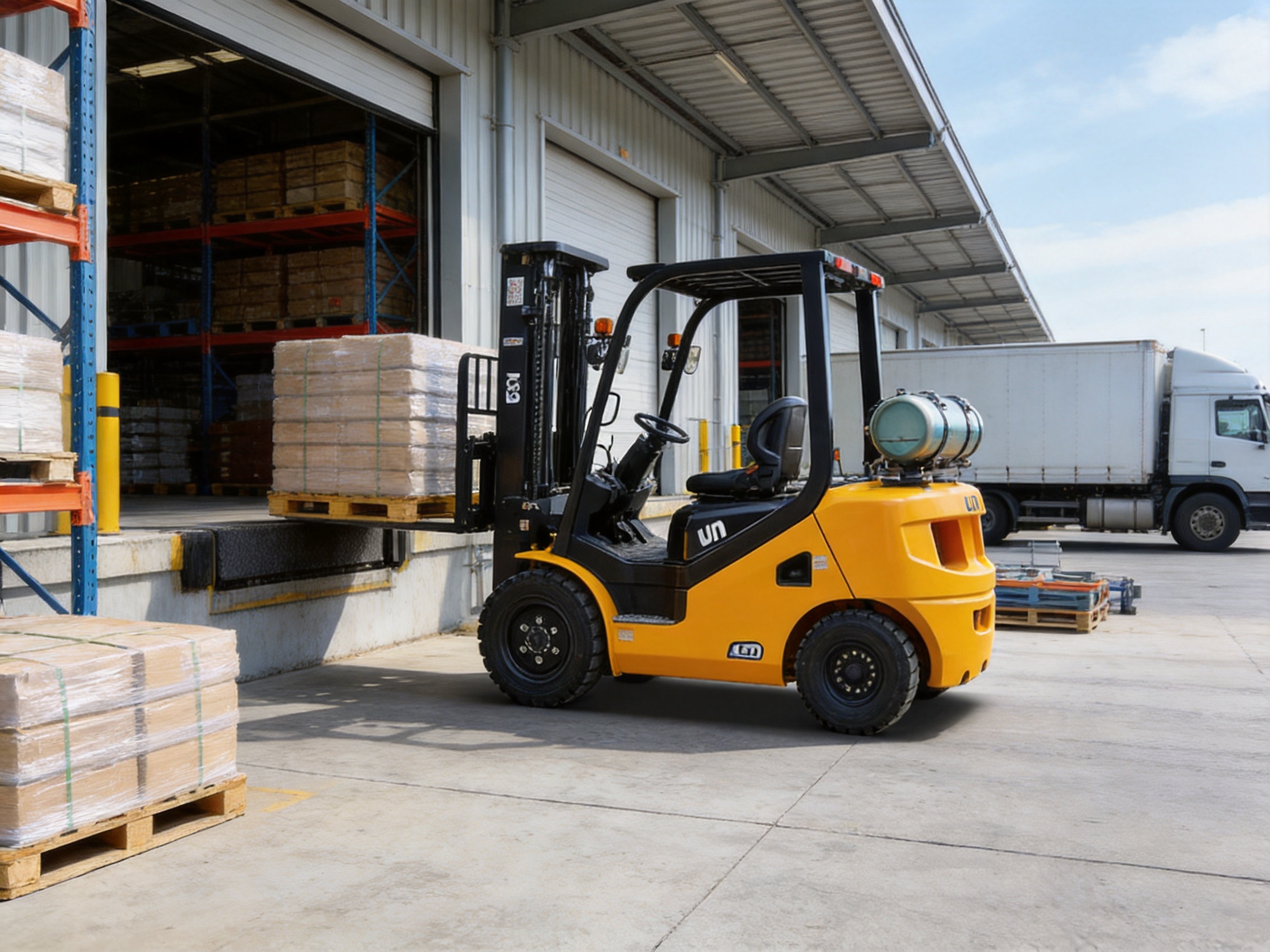
Sixth, maintenance access is simplified. The engine hood tilts 90 degrees, making daily inspection, maintenance, and component replacement easier. Transmission oil filter replacement is designed to be convenient and efficient. In real fleet operation, service access matters as much as lifting capacity. A machine that is easier to inspect and maintain is more likely to receive proper service, which improves long-term reliability.
Core Specifications and Practical Meaning
Specifications are valuable only when they connect to real operating needs. The N Series 3.0T-3.5T models provide practical values that support medium-duty material handling. The standard rated lift height is 3,000 mm, making the machine suitable for common racking, truck loading, and warehouse stacking tasks. The 500 mm load center matches standard pallet handling expectations and helps users calculate capacity requirements for typical loads.
The 3.0 ton model provides a compact and productive configuration with an outside turning radius of 2,425 mm. The 3.5 ton model has an outside turning radius of 2,500 mm. These values support maneuvering in industrial yards, warehouses, and loading zones. With an overall width of 1,225 mm, the forklift maintains a stable stance while remaining manageable in common handling spaces.
Travel speed without load reaches 19 km/h, which supports efficient movement across larger facilities. Full-load gradeability is 20 percent for 3.0 ton configurations and 18 percent for 3.5 ton configurations, helping the forklift handle ramps and uneven worksite conditions. The wheelbase of 1,700 mm supports stability and turning balance. Total weight is approximately 4,460 kg for the 3.0 ton model and 4,775 kg for the 3.5 ton model, contributing to counterbalance stability during load movement.
Specification Item |
3.0 Ton Model |
3.5 Ton Model |
Operational Benefit |
Rated Load Capacity |
3,000 kg |
3,500 kg |
Suitable for standard medium-duty industrial loads |
Load Center |
500 mm |
500 mm |
Compatible with common palletized cargo handling |
Rated Lift Height |
3,000 mm |
3,000 mm |
Supports truck loading, stacking, and warehouse operations |
Overall Width |
1,225 mm |
1,225 mm |
Balances stability with practical maneuverability |
Outside Turning Radius |
2,425 mm |
2,500 mm |
Allows efficient maneuvering in busy facilities |
Travel Speed Without Load |
19 km/h |
19 km/h |
Improves cycle efficiency across larger work areas |
Maximum Gradeability Full Load |
20 percent |
18 percent |
Supports ramp and yard movement under load |
Engine Model |
GK25 |
GK25 |
Provides strong power for frequent handling operations |
Fuel Tank Capacity |
50 L |
50 L |
Enables extended operation between refueling intervals |
These specifications show that the forklift is not designed as a narrow specialty machine. Instead, it is a versatile workhorse for facilities that need dependable daily performance. The combination of 3,000 mm lift height, 19 km/h travel speed, strong gradeability, and stable dimensions makes it especially useful for logistics and manufacturing environments where load movement must be continuous and predictable.
Power System Designed for Real Work
The engine is one of the most important elements of any internal combustion forklift. In material handling, power must be available at the right moment and delivered smoothly. The N Series uses a high-reliability power system matched with its chassis and transmission. This integrated design helps prevent the mismatch that can occur when an engine is strong on paper but poorly coordinated with the vehicle’s hydraulic and drive systems.
The GK25 engine configuration provides four-cylinder performance with 2,472 cc displacement, a bore and stroke of 92 mm by 93 mm, rated output of 37.4 kW at 2,500 rpm, and rated torque of 176.5 N.m at 1,600 rpm. These values indicate an engine tuned for practical industrial power rather than high-speed passenger-vehicle behavior. In forklift use, low-to-mid-range torque is especially important because the machine frequently starts, stops, lifts, reverses, and turns while carrying load.
LPG and gasoline operation also provides useful fleet advantages. LPG is often preferred in environments where cleaner emissions and lower odor are important. Gasoline operation can provide familiar refueling convenience where LPG supply is not the primary infrastructure. This dual-fuel concept gives fleet managers more freedom when planning fuel logistics, especially across different countries, dealer networks, or operating sites.
Compared with diesel competitors, an LPG and gasoline forklift can offer reduced visible smoke and cleaner working characteristics. Compared with electric competitors, it can operate without waiting for battery charging and without requiring major charging station investment. This does not mean one energy type is best for every situation. Instead, it means the N Series provides a practical solution for users who need internal combustion endurance with improved operational flexibility.
Hydraulic and Transmission Performance
The hydraulic system determines how confidently an operator can lift, lower, tilt, and steer. The N Series uses Shimadzu pumps and valves to support precise hydraulic control. This can reduce jerky mast movement and improve load placement accuracy. Smooth hydraulic behavior is especially important when handling fragile goods, stacked materials, or loads positioned at height.
Full-load lifting speed is listed at 390 mm per second in the 3.0 to 3.5 ton LPG and gasoline specification group. This speed supports productive pallet movement without compromising operator control. Lowering performance is controlled to support safe handling, with no-load and full-load performance ranges designed for practical work. The hydraulic system also supports attachment operating pressure, with values reaching 18.5 MPa for 3.0 ton configurations and 20.5 MPa for 3.5 ton configurations. This makes the forklift suitable for many common forklift attachments when properly matched and approved.
The hydraulic transmission supports smooth forward and reverse operation. In high-frequency material handling, operators may shift direction hundreds of times in a shift. A transmission that responds predictably reduces operator stress and mechanical shock. The IMPOCO shift mechanism further supports the goal of stable, efficient, and controlled movement.
Safety Systems and Operator Protection
Safety is one of the clearest areas where forklift design separates professional equipment from low-cost alternatives. The N Series includes an OPS system and seat switch, helping ensure that machine operation is linked to proper operator presence. This is especially important in busy loading zones, warehouses, and shared work environments where unexpected movement can create risk.
The wide-vision mast improves the operator’s ability to see the forks, load, and travel path. Visibility is a major factor in forklift safety. Poor visibility increases the risk of striking racks, cargo, doors, pedestrians, and other equipment. A wide-vision mast helps operators position loads with greater confidence and reduces the need for excessive leaning or repeated repositioning.
The high-strength overhead guard protects the operator from falling objects. In warehouse and industrial environments, loads may shift, packaging may fail, or materials may fall during stacking. A strong overhead guard is essential for operator protection and compliance with safe operating expectations.
The forklift also includes ergonomic features that improve safety indirectly. A suspended frame provides more foot space, and adjustable steering and seat features help operators maintain a comfortable posture. Fatigue is a real safety issue in forklift operation. When operators become uncomfortable, they may make slower decisions, lose concentration, or develop poor operating habits. A comfortable operator station helps maintain alertness during long shifts.
Maintenance Access and Lower Downtime
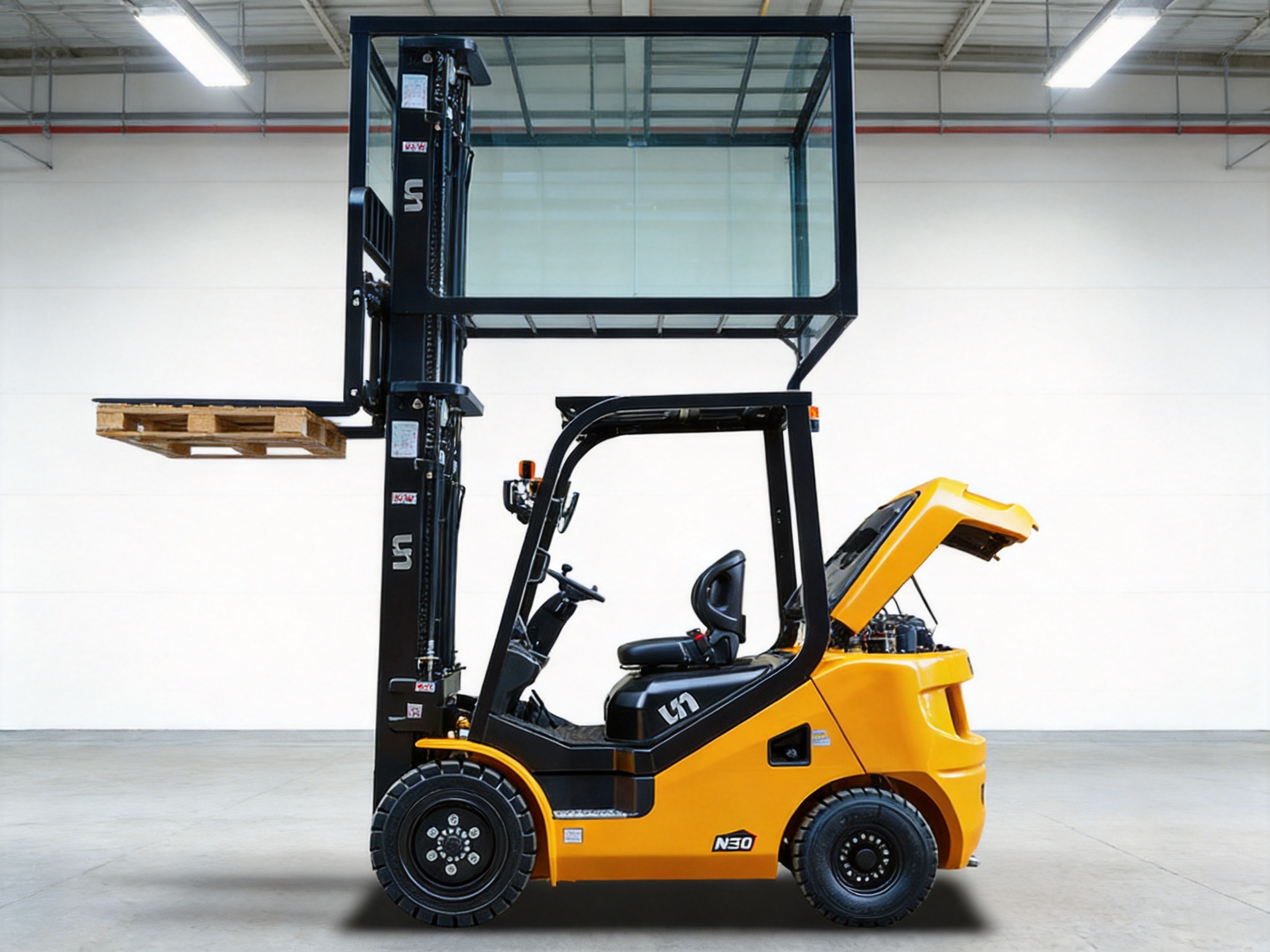
Downtime is one of the most expensive hidden costs in material handling. A forklift that is unavailable can delay truck loading, stop production lines, increase labor costs, and disrupt shipping schedules. The N Series addresses this issue with maintenance-friendly design. The engine hood tilts 90 degrees, allowing technicians to access important components more easily. This simplifies routine inspection and accelerates repair tasks.
The transmission oil filter is also designed for convenient replacement. This detail may appear small, but in fleet maintenance it is important. Components that are difficult to reach are often serviced late or improperly. Easy access encourages proper maintenance discipline, which helps protect the transmission and reduce long-term costs.
The cooling system with large radiators also contributes to reduced downtime. In high-temperature conditions, insufficient cooling can cause performance loss or shutdowns. A stronger cooling package helps the forklift maintain stable operation during long work periods. For companies working in hot climates, outdoor yards, or multi-shift schedules, this reliability advantage is highly valuable.
Manufacturing Strength Behind the Product
A forklift is only as reliable as the manufacturing system behind it. Zhejiang UN Forklift Co., Ltd. brings extensive experience to the production of internal combustion forklifts, electric forklifts, warehouse equipment, and specialized handling machines. The company’s background includes the development of China’s first reach forklift and VNA truck, and it has participated in the formulation of electric forklift industry standards in China. This engineering foundation supports product design, testing, production control, and continuous improvement.
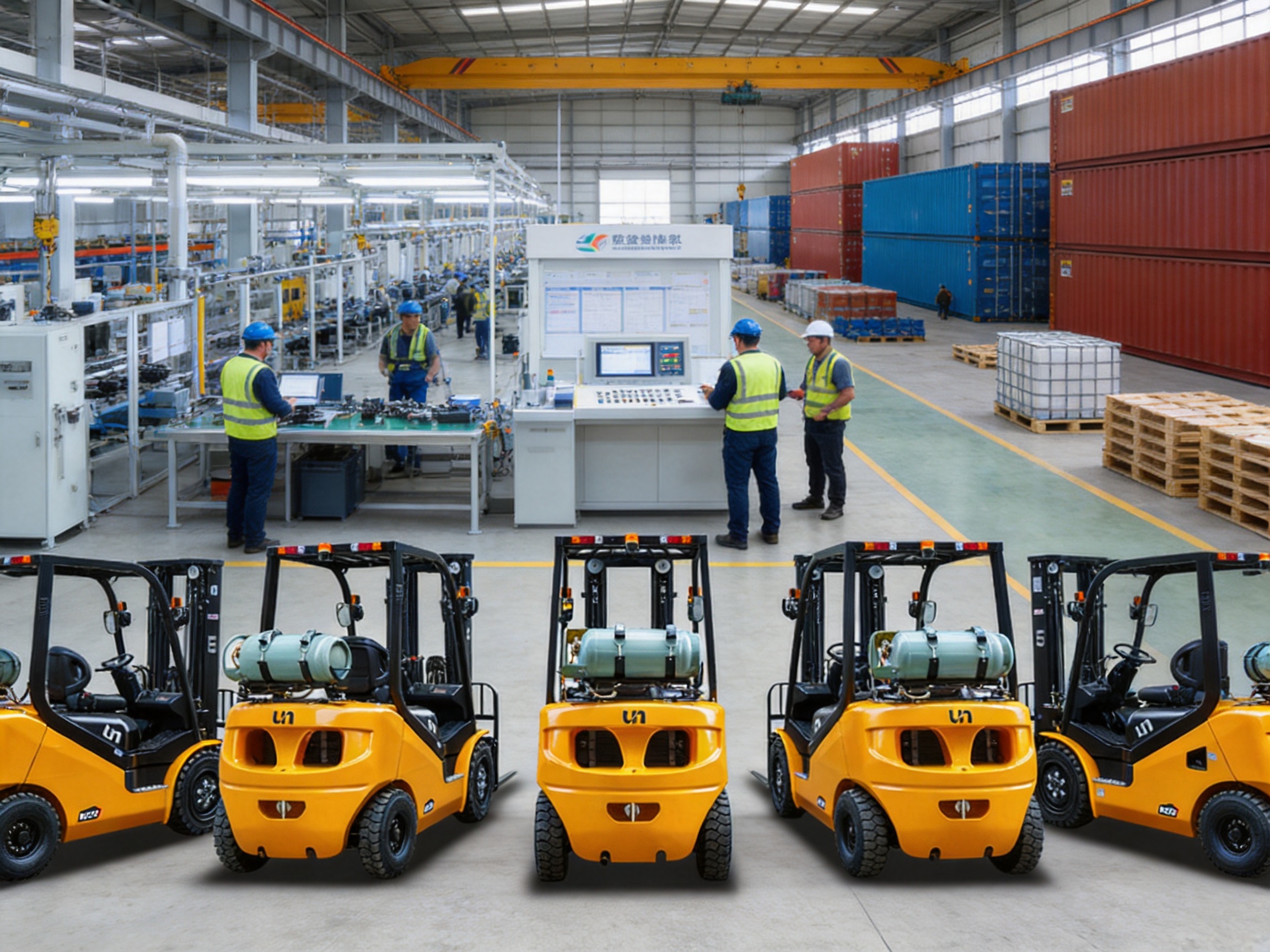
The company’s 53,400 square meter facility and 15,000-unit annual capacity provide the scale needed for consistent manufacturing. Large-scale production is not only about quantity. It also supports stable supply chains, trained production teams, standardized assembly processes, quality control procedures, and spare parts planning. For international buyers, this reduces the risk associated with inconsistent small-batch manufacturing.
Advanced manufacturing strength can be seen in several areas. Precision chassis engineering supports vehicle stability and durability. Powertrain integration ensures the engine, transmission, cooling system, and hydraulic functions work as a coordinated system. Structural welding and machining processes help maintain frame strength and component alignment. Assembly procedures focus on repeatability, ensuring that each forklift meets expected performance standards before delivery.
The company’s experience as an OEM supplier for well-known domestic and overseas companies, including Hyundai Heavy Industries and Xuzhou Construction Machinery Group, further demonstrates manufacturing capability. OEM supply requires consistent quality, reliable production management, and the ability to meet external technical requirements. This experience benefits the N Series by reinforcing a disciplined manufacturing culture.
The company also offers a complete product range with 17 varieties, 96 series, and more than 200 specifications. This broad portfolio helps the manufacturer understand different operating environments, from warehouse equipment to heavy duty forklifts and new energy forklifts. Lessons learned across product categories can improve component selection, ergonomics, safety design, and serviceability.
Quality Through Engineering Integration
Many forklift problems arise not from a single weak component, but from poor integration. An engine may be powerful but create heat issues. A transmission may be strong but shift roughly. A mast may lift high but restrict visibility. A hydraulic system may lift quickly but lack fine control. The N Series is designed to avoid these compromises through balanced engineering.
The precision-engineered chassis provides the foundation for durability. A stable chassis supports load handling, reduces vibration, and protects drivetrain alignment. The mast, overhead guard, counterweight, axle layout, and operator compartment must all work together to create a forklift that feels secure and predictable. This is especially important in the 3.0 to 3.5 ton range because the truck is frequently used for substantial loads in confined or semi-confined areas.
The power system is matched with the hydraulic transmission and cooling system. This helps the forklift maintain performance under demanding duty cycles. The large radiator system is not an isolated feature; it is part of the vehicle’s ability to protect the engine and transmission during long operation. The hydraulic system is similarly matched to lifting requirements, steering response, and attachment pressure needs.
The result is a forklift that competes not only by capacity but by consistency. For professional users, consistency is often more valuable than peak performance. A forklift that performs predictably every day supports better scheduling, safer operation, and more efficient labor use.
Market Suitability in the Americas and Eastern Europe
The N Series is particularly popular in the Americas and Eastern European markets. These regions include a wide range of operating environments, from large outdoor yards and agricultural facilities to indoor warehouses and regional logistics centers. Equipment in these markets must often handle temperature variation, rough work schedules, different fuel availability, and a mixture of indoor and outdoor travel.
The LPG and gasoline configuration fits these requirements well. In areas where LPG infrastructure is developed, users can benefit from cleaner combustion and convenient cylinder or tank supply. In areas where gasoline availability is more practical, the forklift can support familiar refueling logistics. This flexibility makes the machine easier to introduce into fleets with different operating patterns.
The strong cooling system is also valuable in regions with hot summers or continuous outdoor use. The 3.0 and 3.5 ton capacities match common industrial and distribution requirements. The compact turning radius and 1,225 mm overall width support maneuverability in warehouses and loading docks, while the internal combustion power system supports outdoor work and ramp travel.
Comparison With Common Alternatives
When compared with diesel forklifts, the N Series offers cleaner operating characteristics and broader suitability for mixed indoor and outdoor environments. Diesel forklifts remain useful for certain heavy outdoor applications, but their emissions and noise can be limiting. An LPG and gasoline forklift provides internal combustion strength while improving usability in facilities where cleaner operation matters.
When compared with electric forklifts, the N Series offers longer continuous operation without charging downtime. Electric forklifts are excellent for indoor applications with charging infrastructure, but they can be less convenient for sites without battery management systems or for users who need continuous multi-shift refueling flexibility. The N Series can be refueled quickly and returned to work, which is an advantage in time-sensitive operations.
When compared with low-cost LPG forklifts, the N Series stands out through component selection and manufacturing depth. The use of reliable engine technology, Shimadzu hydraulic components, a strong cooling package, operator safety systems, and service-friendly design improves long-term value. A cheaper forklift may appear attractive at purchase, but poor reliability, difficult maintenance, weak support, and operator discomfort can create higher total cost of ownership.
Operator Experience and Productivity
Productivity depends heavily on the operator. Even the best mechanical platform cannot reach its potential if operators are uncomfortable or lack confidence. The N Series addresses operator needs through visibility, control, space, and comfort. The wide-vision mast helps the operator monitor load placement. Adjustable steering and seat features support different body types and working preferences. More foot space reduces fatigue during repeated entry, exit, and pedal operation.
The suspended frame and optional suspended powertrain system support improved comfort and customized performance. Vibration reduction is important in internal combustion equipment because engine and drivetrain vibration can contribute to fatigue. Reducing vibration helps operators stay focused and comfortable during long shifts.
Clear and predictable control response also improves productivity. When steering, lifting, lowering, and direction changes feel natural, operators can work faster without sacrificing safety. This is especially valuable in high-cycle operations such as loading docks, beverage distribution, manufacturing feed lines, and warehouse transfer routes.
Total Cost of Ownership
Purchase price is only one part of forklift cost. A professional buyer should consider fuel efficiency, maintenance frequency, parts availability, downtime risk, operator productivity, service access, resale value, and supplier support. The N Series is positioned to deliver strong total value rather than simply low initial cost.
Its durable chassis, reliable power system, quality hydraulic components, and cooling capacity support long service life. Easy maintenance access reduces labor time during inspections and repairs. Safety features help reduce operational risk. Operator comfort supports productivity and may reduce fatigue-related incidents. Fuel flexibility helps users choose the most practical energy source for their region and application.
For fleet managers, standardization can also reduce cost. Using a proven 3.0 to 3.5 ton LPG and gasoline platform across several departments can simplify operator training, parts inventory, maintenance scheduling, and equipment allocation. Because the N Series includes several model options in this capacity range, users can choose the correct capacity while maintaining fleet consistency.
Recommended Operating Environments
The forklift is suitable for manufacturing plants where raw materials, components, and finished goods must move continuously. It can support loading and unloading of trucks, internal transfer between production zones, and warehouse stacking. The 3,000 mm lift height and 3.0 to 3.5 ton capacity range fit many standard industrial workflows.
In logistics and distribution centers, the forklift can handle pallet movement, dock operations, and staging areas. Its 19 km/h no-load travel speed helps reduce cycle time where travel distances are meaningful. The compact turning radius supports maneuvering in busy dock zones.
In building-material and agricultural supply yards, the internal combustion power system and gradeability help the forklift move loads across outdoor surfaces and ramps. LPG and gasoline flexibility can be useful where operating areas include both covered storage and open yards.
In export-oriented warehouses and regional depots, the machine’s safety features and serviceability support standardized operations. Businesses that must maintain reliable shipping schedules can benefit from the forklift’s combination of uptime, power, and ease of maintenance.
Why This Forklift Is a Strong Procurement Choice
The N Series 3.0T-3.5T LPG and gasoline forklift is a strong procurement choice because it addresses both operational and ownership requirements. It has enough capacity for demanding medium-duty loads, enough maneuverability for common industrial spaces, enough speed for efficient transport, and enough comfort for long operator shifts. It also includes safety and maintenance features that support responsible fleet management.
Its advantages over competitors are not based on a single feature. Instead, they come from the combined value of power, cleaner fuel flexibility, hydraulic precision, cooling capacity, operator protection, ergonomic design, service access, and manufacturing support. This combination makes the forklift suitable for buyers who want a reliable lift truck rather than a short-term purchase.
The manufacturer’s long history, broad product range, international service network, and OEM experience add confidence for global buyers. Material handling equipment is a long-term investment, and supplier reliability matters. A forklift must be supported with parts, service knowledge, and production consistency. The company’s experience since 1978 and its continuing development of energy-saving, environmentally conscious, efficient, and safe forklift solutions reinforce the value of the product.
Q&A Section
What is the main capacity range of this forklift?
The main product focus is the 3.0 to 3.5 ton capacity range, with rated load capacities of 3,000 kg and 3,500 kg at a 500 mm load center.
Is this forklift suitable for both indoor and outdoor use?
Yes. The LPG and gasoline power configuration makes it suitable for mixed environments, including warehouses, loading docks, semi-open facilities, and outdoor yards. It offers cleaner operation than many diesel alternatives while maintaining internal combustion endurance.
What engine is used in the 3.0 to 3.5 ton specification group?
The listed specification group includes the GK25 engine from GCT, with rated output of 37.4 kW at 2,500 rpm and rated torque of 176.5 N.m at 1,600 rpm.
What are the key safety features?
The forklift includes an OPS system, seat switch, wide-vision mast, and high-strength overhead guard. These features help improve operator presence control, visibility, and protection from falling objects.
How does it compare with diesel forklifts?
Compared with many diesel forklifts, the LPG and gasoline model provides cleaner working characteristics and better suitability for mixed indoor and outdoor environments. It is a practical choice where users need internal combustion power but want reduced emissions concerns.
How does it compare with electric forklifts?
Compared with electric forklifts, it offers quick refueling and continuous operation without charging downtime. This can be advantageous for users without charging infrastructure or for operations requiring long working hours.
Why is the hydraulic system important?
The hydraulic system affects lifting, lowering, tilting, and steering. The use of Shimadzu pumps and valves supports precise control, helping operators place loads accurately and work more safely.
What makes maintenance easier?
The engine hood tilts 90 degrees for easier access, and the transmission oil filter is designed for convenient replacement. These features help reduce maintenance time and encourage proper service routines.
What markets is the forklift especially popular in?
The product is particularly popular in the Americas and Eastern European markets, where mixed operating environments, fuel flexibility, and durable internal combustion performance are often important.
What manufacturing strengths support the product?
The manufacturer has decades of experience, a 53,400 square meter production base, annual production capacity of 15,000 units, a broad product portfolio, international service coverage, and OEM supply experience for recognized industrial equipment companies.
Conclusion
The N Series 3.0T-3.5T LPG and gasoline forklift is a capable and practical lift truck for modern material handling. It combines the strength of internal combustion power with the flexibility of LPG and gasoline operation. It is built for frequent handling, medium-duty loading, warehouse transfer, yard movement, and mixed indoor-outdoor work. With a 3,000 to 3,500 kg capacity range, 3,000 mm lift height, 19 km/h no-load travel speed, strong gradeability, and compact operating dimensions, it fits the needs of many professional users.
Its value is strengthened by dependable engine performance, hydraulic precision, a reliable transmission system, advanced cooling, strong safety features, ergonomic design, and convenient maintenance access. These qualities help it compete effectively against diesel, electric, and low-cost LPG alternatives. More importantly, they help reduce operating uncertainty and support long-term productivity.
Backed by Zhejiang UN Forklift Co., Ltd., a manufacturer with extensive industry experience and global service capability, the N Series offers more than mechanical specifications. It offers a complete solution for businesses seeking a durable, efficient, and serviceable lift truck in the 3.0 to 3.5 ton class. For buyers who value reliability, operational flexibility, operator comfort, and total cost control, this forklift is a strong choice for demanding material handling environments.
References
Material Handling Industry. Industrial Truck Selection and Application Guidelines.
International Organization for Standardization. Safety Requirements for Industrial Trucks and Powered Industrial Equipment.
Forklift Engineering Handbook. Internal Combustion Forklift Powertrain and Hydraulic System Design Principles.
Industrial Fleet Management Review. Total Cost of Ownership Factors in Forklift Procurement.
Warehouse Operations Manual. Best Practices for Lift Truck Safety, Maintenance, and Productivity.
Product: N Series 3.0T-3.5T LPG&Gasoline Forklift
For exclusive deals and latest offers, sign up by entering your email address below.
Stay In Touch
ADDRESS : NO.1 ROAD ONE, XINDENG NEW DISTRICT, FUYANG, HANGZHOU, ZHEJIANG, CHINA 311404.
PHONE : +86-571-8688 8355 (AMERICA)
PHONE : +86-571-8886 9363 (EUROPE)
PHONE : +86-571-8688 8377 (ASIA, AFRICA, OCEANIA)
EMAIL : [email protected]
EMAIL : [email protected](PARTS INQUIRY)

