


 中文简体
中文简体 Français
 русский
 Español
 عربى
عربى Deutsch



F Series 2.0T–3.5T Diesel Forklift: Efficient Power for Modern Material Handling
Admin 2026-06-29The F Series 2.0T–3.5T diesel forklift is designed for businesses that need dependable lifting power, controlled operating costs, operator comfort, and long service life in demanding material handling environments. Built around a modern internal combustion platform, this forklift series combines proven diesel performance with a redesigned structure, improved visibility, advanced safety features, and service-friendly engineering. It is suitable for warehouses, manufacturing plants, logistics yards, construction material depots, ports, distribution centers, timber yards, building material suppliers, and other operations where strong traction and consistent load handling are essential.
In the competitive forklift market, buyers often compare machines by rated capacity, engine reliability, mast visibility, safety systems, ergonomics, turning performance, maintenance convenience, fuel efficiency, and total cost of ownership. The F Series addresses these decision points with a practical but forward-looking design. Its smooth and streamlined body gives the forklift a strong professional appearance, while the contrasting counterweight design and dynamic LED taillights create a more modern visual identity. More importantly, behind the exterior is a machine developed for real workplace challenges: lifting loads from 2,000 kg to 3,500 kg, maintaining stable operation, supporting efficient shifts, and reducing daily fatigue for operators.
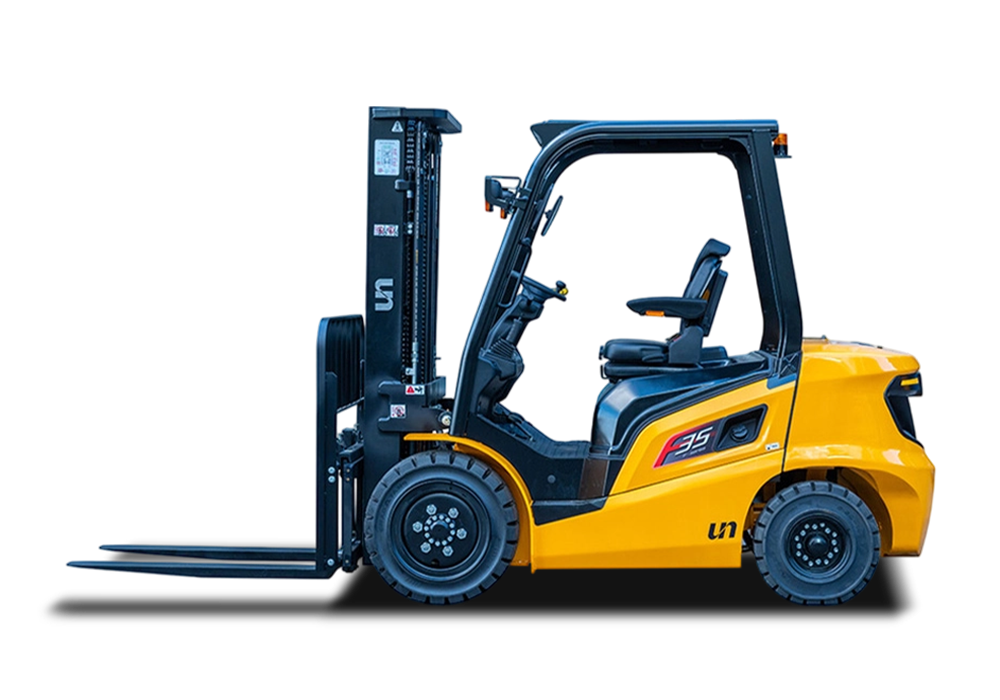
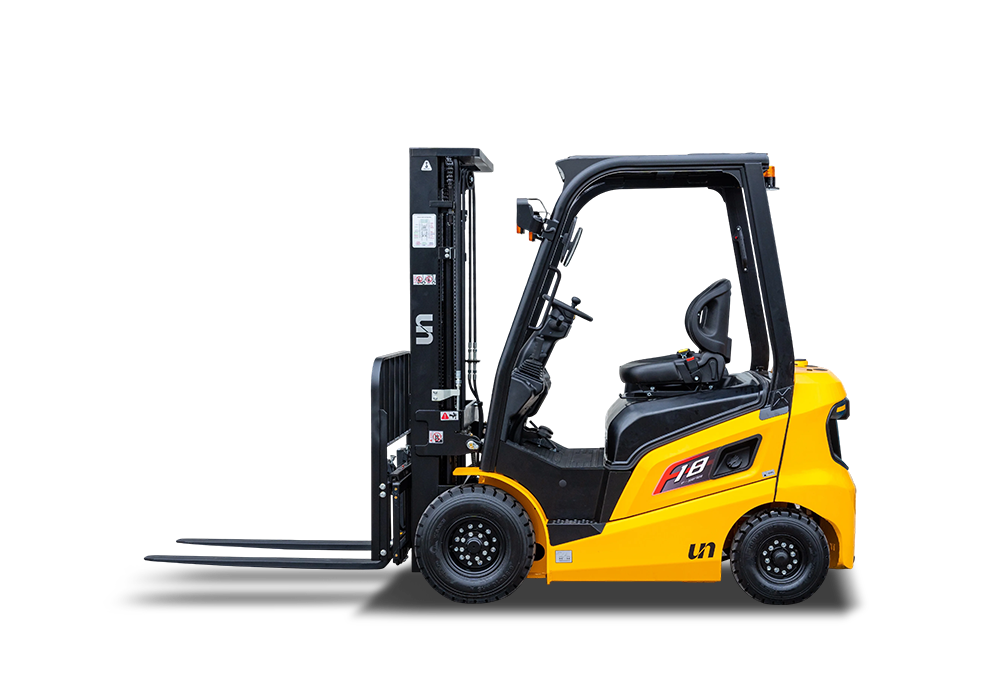
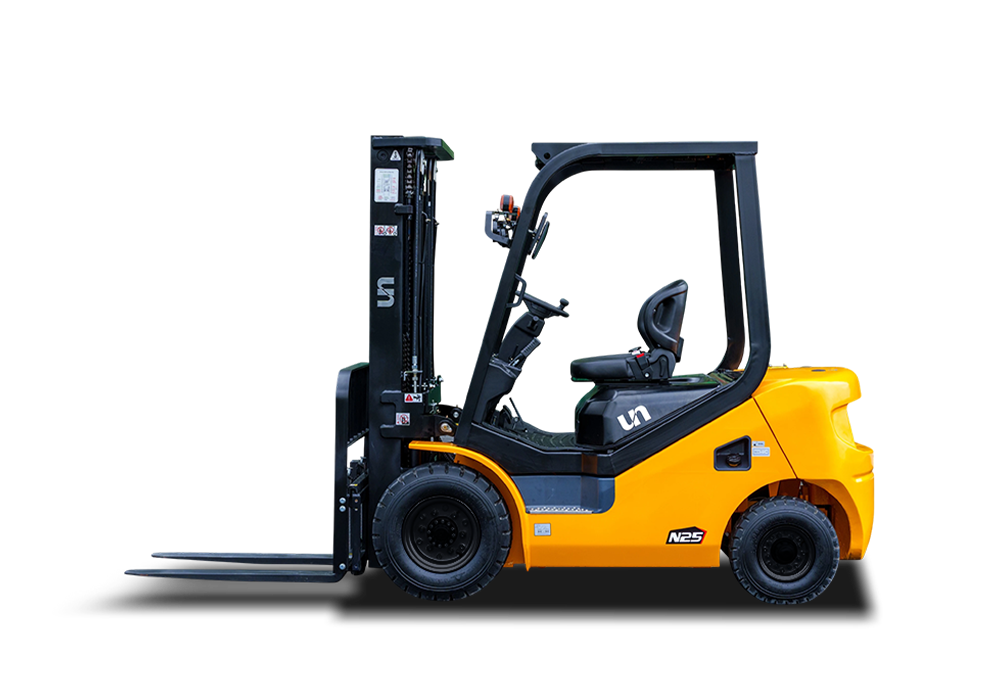
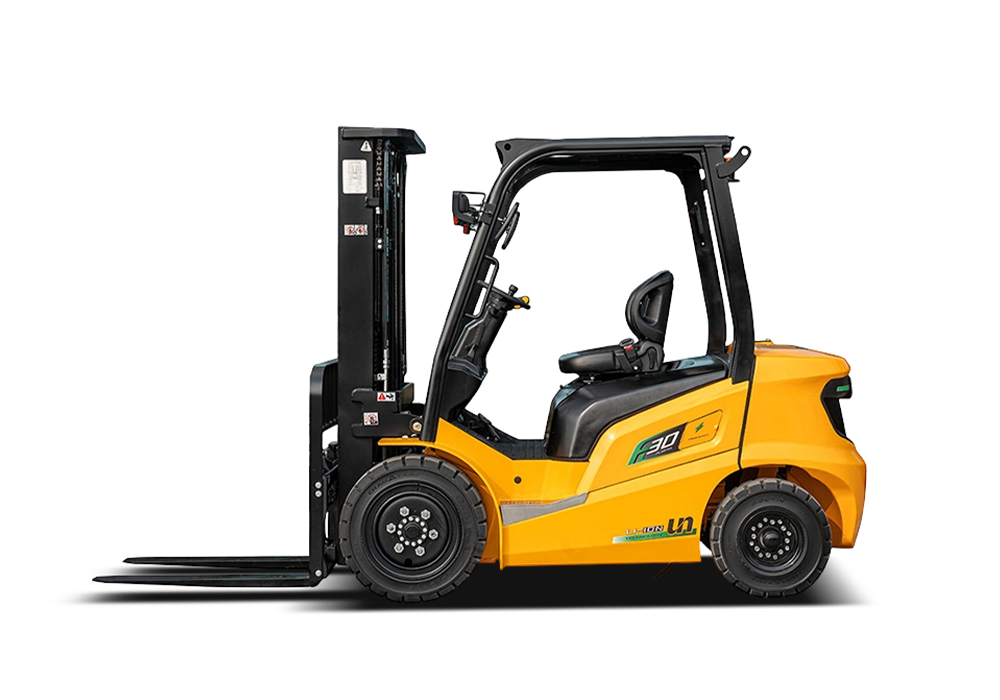
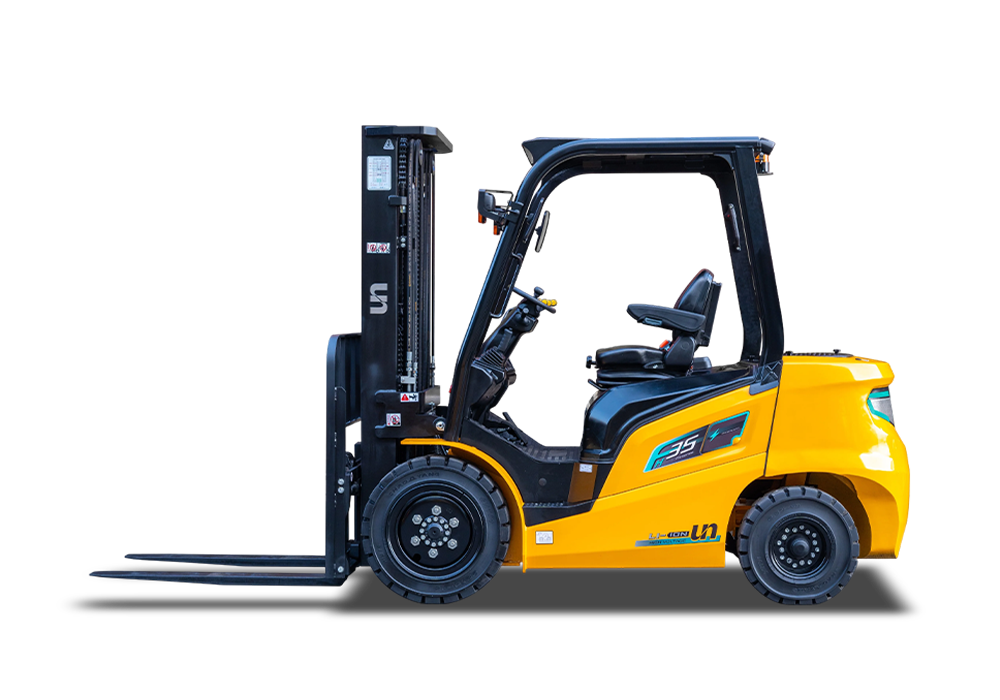
F Series 2.0T-2.5T Diesel Forklift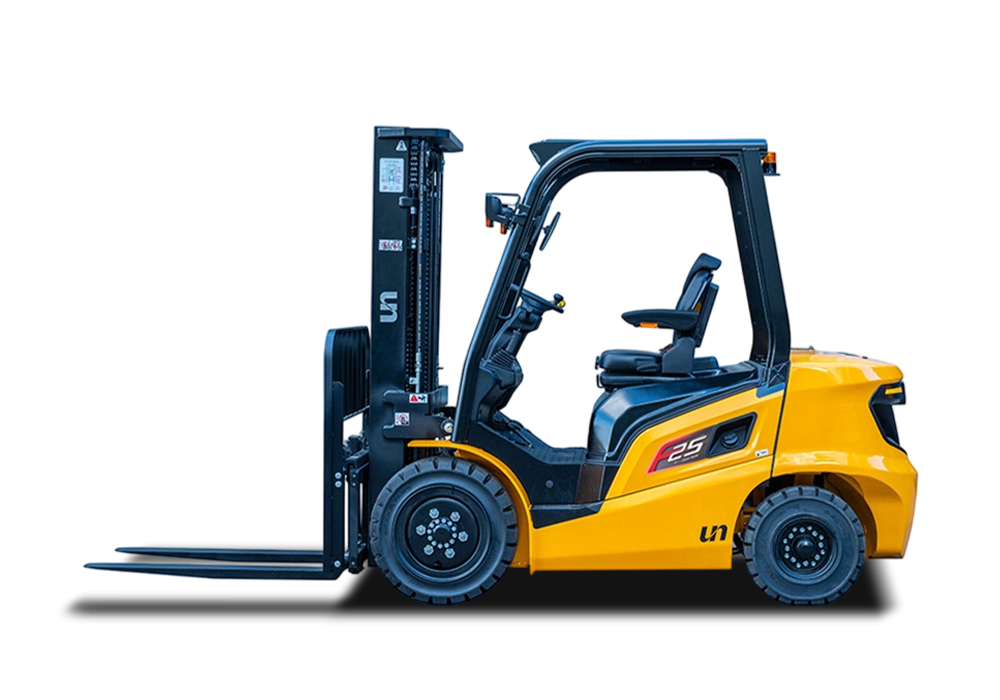
Product Positioning and Application Value
The F Series belongs to the compact-to-medium diesel forklift class, a category that remains essential for industries requiring continuous outdoor and semi-outdoor operation. Compared with light warehouse trucks, diesel forklifts offer stronger gradeability, better suitability for rougher yard surfaces, and longer continuous working capability in heavy-duty loading environments. Compared with larger industrial lift trucks, a 2.0T–3.5T forklift offers more flexible maneuverability, lower purchase cost, and broader application versatility.
This capacity range is one of the most widely used in global material handling. A 2.0T or 2.5T model is ideal for palletized goods, packaged materials, general manufacturing supplies, beverages, retail distribution, and medium-weight cargo. The 3.0T and 3.5T models extend capability for heavier loads such as construction materials, metal products, machinery components, stone, timber, and industrial containers. Because the family shares a common design philosophy, fleet managers can select different rated capacities while maintaining similar operating habits, maintenance routines, and parts management principles.
The product is particularly valuable for companies that need a durable forklift but do not want unnecessary complexity. The F Series uses hydraulic transmission, a 1/1 forward and reverse transmission stage, diesel power, and a standard 500 mm load center. These specifications reflect a focus on reliability and ease of operation. The forklift is not designed merely to look advanced; it is designed to work steadily in real industrial environments where downtime, operator fatigue, and maintenance access directly affect profitability.
Modern Exterior Design with Practical Industrial Purpose
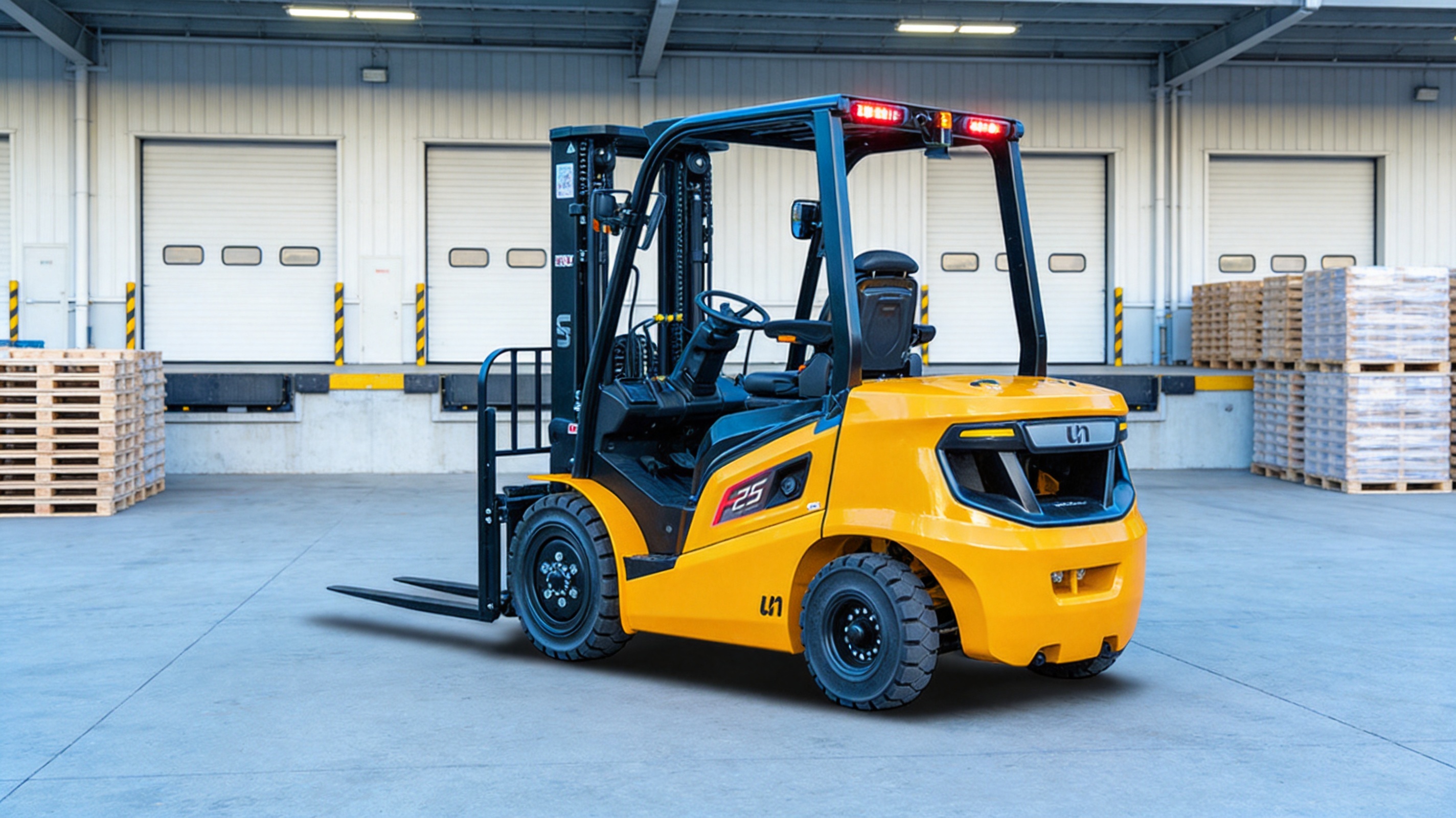
The redesigned exterior of the F Series is more than a styling update. A smooth and streamlined body supports a more powerful, refined appearance while also helping operators and fleet owners recognize the machine as part of a modern generation of internal combustion forklifts. The sharp edges and contrast color design of the counterweight give the rear structure a more distinctive profile, improving visual recognition in busy yards and warehouses.
Visual design matters in industrial equipment for several reasons. First, a well-designed forklift often reflects disciplined manufacturing and careful engineering. Second, a clear and recognizable vehicle profile helps improve site awareness, especially in mixed traffic areas where forklifts operate near pedestrians, trucks, racks, and loading docks. Third, a modern appearance supports the professional image of the fleet, which can be important for logistics providers, export manufacturers, and customer-facing industrial sites.
The dynamic LED taillight system is another notable feature. Traditional forklifts may use basic rear lights that provide limited visibility and limited styling value. The F Series adopts LED lighting with a more technological appearance, creating a strong visual impact while improving operational awareness. In environments where forklifts reverse frequently, operate near loading bays, or work during early morning and evening shifts, reliable lighting contributes to safety and confidence.
High-Performance Diesel Powertrain Options
One of the key advantages of the F Series is its engine selection. The forklift can be configured with internationally recognized diesel engine options, including Mitsubishi and Kubota platforms, as well as additional engine choices suitable for different emission standards and market requirements. Available engine references include D04EG, V2403, S4S, C240PKJ30, D24, 3E22YG51, A498BPG-521, and C490BPG-237, depending on model configuration and regional compliance needs.
For buyers in regions with strict environmental rules, engine compliance is a major purchasing factor. The F Series supports high-emission-standard configurations, including options associated with Stage V, Tier 4 Final, European standards, and other market-specific requirements. This gives importers, distributors, rental companies, and end users more flexibility when selecting models for different countries and working environments.
The Mitsubishi D04EG and Kubota V2403 options illustrate the product’s focus on globally trusted engine technology. In the available specifications, the D04EG is rated at 36 kW at 2,250 rpm, while the V2403 is rated at 42.6 kW at 2,400 rpm. Torque values include 177 N·m at 1,800 rpm for D04EG configurations and 195.6 N·m at 1,500 rpm for V2403 configurations. These figures demonstrate that the forklift is designed not only for travel speed, but also for practical pulling force, lifting response, and load handling under working conditions.
Compared with many competitor forklifts that rely on limited regional engine options, the F Series provides broader flexibility. This matters because fuel quality, emission law, parts availability, service network capability, and operator expectations vary by market. By offering multiple engine configurations, the product can be adapted for customers who prioritize premium emission compliance, economical operation, simplified maintenance, or strong regional parts support.
Engine and Transmission Built for Real Work Cycles
Diesel forklifts are commonly selected for multi-shift operations, outdoor yards, heavy pallets, and environments where battery charging infrastructure is not ideal. The F Series uses a hydraulic transmission, which supports smooth directional changes and practical driving control during loading and unloading. A 1/1 forward and reverse stage layout keeps operation straightforward, reducing complexity for operators who must repeatedly move between pallets, trucks, storage zones, and production lines.
Travel speed for the models is approximately 19 km/h with no load, supporting efficient movement across warehouses and yard areas. Full-load lifting speeds vary by model and configuration, with values such as 510 mm/sec in one specification set and values including 587 mm/sec, 552 mm/sec, 485 mm/sec, and 468 mm/sec in another specification set. These lifting speeds show the forklift’s ability to maintain productive load handling across the capacity range.
Gradeability is another important performance indicator, especially for yards, ramps, container areas, and industrial sites with uneven surfaces. The F Series offers full-load gradeability figures such as 20 percent in one configuration set and broader ranges including 22–34 percent, 19–30 percent, and 17–26 percent in another set, depending on model and engine option. This gives customers the ability to match the forklift to their operating terrain and duty cycle.
Fuel tank capacity is listed as 50 L in one engine-specific table and 60 L in another model specification table. This range supports extended working hours and reduces interruptions for refueling. In practical terms, fuel capacity is important for operations that run long shifts, load and unload multiple trucks, or work in outdoor yards where refueling points may be located away from the main handling zone.
Improved Mast Visibility and Load Handling Confidence
Visibility is one of the most important factors in forklift productivity and safety. Operators must see the forks, load edges, pallet openings, rack levels, pedestrians, vehicle paths, and floor conditions. The F Series uses a wide-view mast and a new narrow-groove steel mast concept to reduce overall vehicle weight and improve forward visibility. This design helps operators position forks more accurately and work with greater confidence.
Compared with conventional mast structures that may obstruct the operator’s line of sight, a visibility-focused mast reduces the need for repeated repositioning. This can save time during pallet entry, truck loading, and rack placement. It can also reduce the chance of pallet damage, product damage, rack impact, and fork misalignment. For companies handling fragile goods, export packaging, high-value inventory, or tightly arranged storage areas, the value of visibility should not be underestimated.
The standard rated lift height is 3,000 mm, a practical height for many industrial and warehouse applications. Standard fork sizes vary by capacity, including combinations such as 1,070×100×40 mm, 1,070×120×40 mm, 1,070×122×40 mm, 1,070×125×45 mm, and 1,070×125×50 mm, depending on model and configuration. The mast tilt angle is typically 6 degrees forward and 12 degrees backward, providing useful control for load pickup, travel stability, and stacking.
Load center is 500 mm across the family, aligning with common pallet and material handling standards. This makes the forklift suitable for standard industrial pallets and many common load formats. Rated capacities include 2,000 kg, 2,500 kg, 3,000 kg, and 3,500 kg, allowing customers to select a model that fits their maximum load requirements while avoiding overinvestment in oversized equipment.
Operator-Centered Ergonomics for Lower Fatigue
A forklift can have strong engine performance, but if the operator is uncomfortable, productivity will eventually decline. The F Series places strong emphasis on ergonomics. The wide-view mast provides a broader working view, while the suspended seat reduces vibration transmitted to the operator. This is especially important in diesel forklifts, which often operate outdoors or on uneven industrial surfaces where vibration and shock can accumulate during long shifts.
The spacious foot area makes entry and exit easier. This matters more than it may first appear. Operators frequently step on and off the machine to inspect loads, check pallets, communicate with warehouse personnel, or handle documentation. A cramped footwell increases fatigue and can increase the risk of slips or awkward movements. By providing better foot space, the F Series improves daily usability.
The adjustable steering column and small steering wheel are designed to make operation more effortless. Operators come in different body sizes and have different posture preferences. An adjustable steering column helps them find a comfortable position, improving control and reducing strain. A smaller steering wheel reduces steering effort during repeated maneuvering in tight aisles, loading areas, and yard corners.
The forklift also adopts a new ratchet handbrake design that reduces operating force. In high-frequency applications, even small reductions in hand force can improve comfort over hundreds of cycles per day. This attention to small but meaningful ergonomic details gives the F Series an advantage over competitor models that may focus only on basic mechanical specifications.
Safety and Reliability Features
Safety is a central requirement for modern material handling equipment. The F Series includes multiple safety-oriented design elements, beginning with a stamped overhead guard that offers increased durability and reliability. The overhead guard protects the operator from falling objects and contributes to the structural integrity of the operator compartment. A durable guard is especially important in applications involving palletized goods, construction materials, metal components, and stacked loads.
The forklift also uses waterproof key connectors and joints. Industrial worksites expose equipment to dust, humidity, water spray, cleaning processes, and outdoor weather. Electrical problems caused by moisture can create downtime, warning errors, lighting failures, or starting issues. Waterproof connector design helps improve reliability and reduces maintenance concerns in challenging operating environments.
The OPS system is another important safety feature. Operator Presence Sensing systems are designed to help prevent unintended forklift startup or unsafe operation when the operator is not properly positioned. In real workplaces, accidental movement can occur if controls are engaged unintentionally. By integrating OPS functionality, the F Series supports safer operation and aligns with modern expectations for industrial equipment.
The LED lighting system also contributes to safety. Forward and rear visibility are essential when forklifts operate near workers, truck drivers, loading docks, and other machines. LED lights generally offer better brightness, faster response, and longer service life than conventional bulbs. A new-generation lighting system reduces the likelihood of poor visibility during early shifts, late shifts, indoor-outdoor transitions, and low-light operations.
Load-Sensing Steering for Control and Efficiency
The F Series is equipped with a load-sensing steering system. This feature improves steering control by matching hydraulic response to the actual steering demand. In practical terms, it can help reduce unnecessary energy consumption, improve steering smoothness, and make the forklift easier to maneuver.
Compared with older steering systems that may consume hydraulic power continuously or provide less refined feedback, load-sensing steering is a more advanced solution. It supports better control when approaching pallets, turning in confined spaces, reversing near racks, and positioning loads near trucks. For operators, the result is a machine that feels more responsive and less tiring. For fleet owners, the benefit may include reduced fuel waste, improved component life, and more consistent handling performance.
Turning radius is another practical measure of maneuverability. The F Series includes values such as 2,365 mm for 2.0T and 2.5T models, approximately 2,450 mm or 2,425 mm for certain 3.0T configurations, and 2,500 mm for 3.5T configurations. These figures help customers evaluate aisle suitability and yard layout requirements. The minimum aisle width for pallets is listed around 4,120 mm for several models and 4,255 mm for the 3.5T class, making the forklift suitable for many general warehouse and industrial layouts.
Maintenance-Friendly Structure
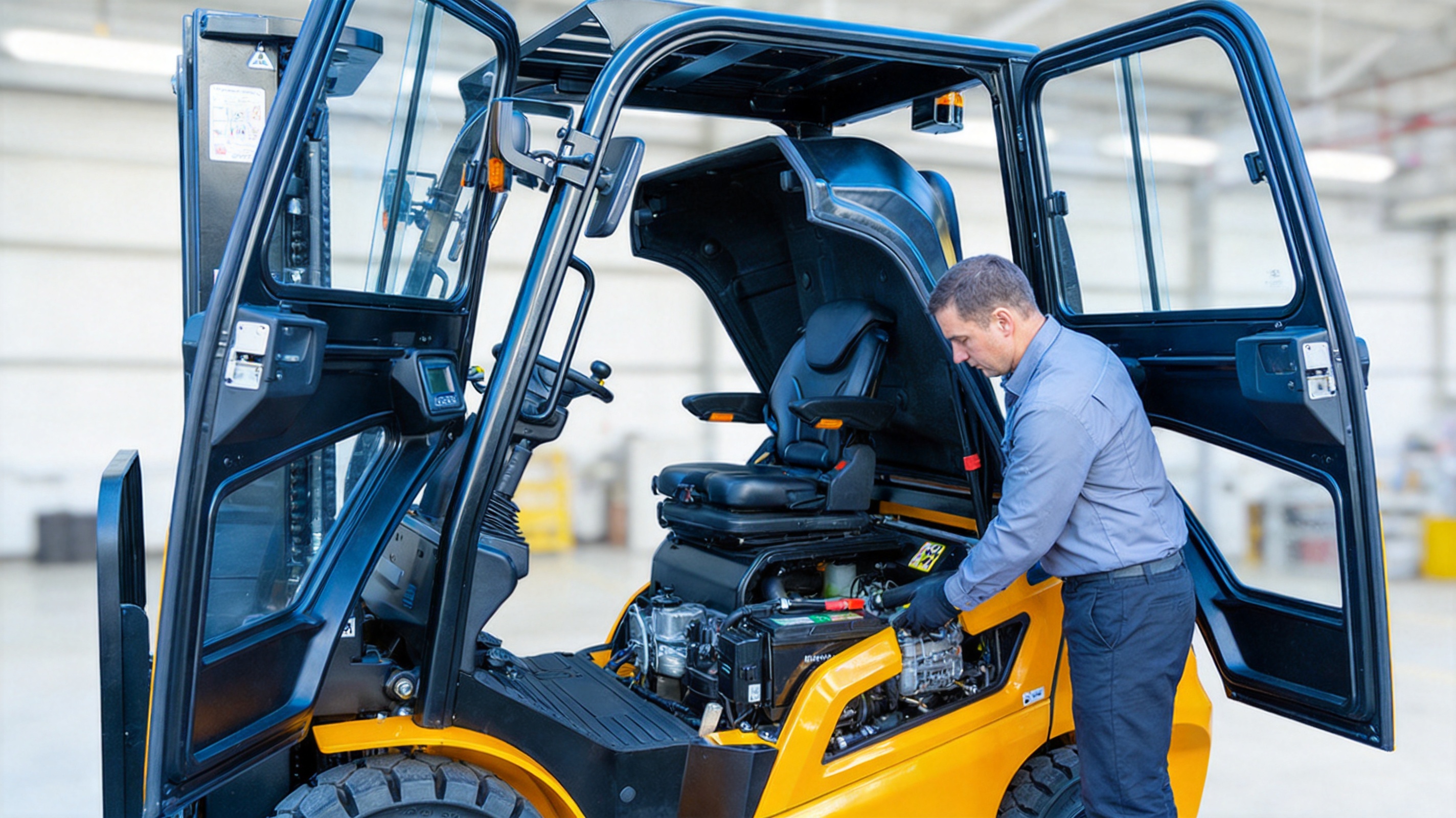
Easy maintenance is one of the strongest long-term advantages of the F Series. The forklift includes detachable side panels that make maintenance and cleaning more convenient. This allows technicians to access internal components more easily, inspect connections, remove accumulated dust, and perform routine checks with less disassembly time.
The engine hood has a large opening angle, making engine compartment access easier. For diesel forklifts, routine service tasks may include checking engine oil, filters, coolant, belts, hoses, battery condition, wiring, hydraulic connections, and general cleanliness. When access is limited, maintenance becomes slower and may be postponed, increasing the risk of mechanical issues. A wide-opening hood encourages proper preventive maintenance.
Compared with competitor forklifts that require more time to remove panels or access service points, the F Series can help reduce maintenance labor and downtime. This is especially valuable for rental fleets, logistics companies, manufacturers with multiple shifts, and remote operations where service windows are limited. A forklift that is easier to maintain is more likely to remain reliable throughout its service life.
The product also benefits from a design philosophy centered on practical reliability rather than unnecessary complexity. Hydraulic transmission, strong diesel engines, robust mast construction, waterproof electrical connectors, and accessible service panels all support long-term ownership value. In heavy equipment purchasing, the lowest initial price is not always the most economical choice. A forklift that reduces downtime, service difficulty, and operator complaints can deliver better total value.
Key Specifications Overview
Item |
FD20T Class |
FD25T Class |
FD30T Class |
FD35T Class |
Power Type |
Diesel |
Diesel |
Diesel |
Diesel |
Rated Load Capacity |
2,000 kg |
2,500 kg |
3,000 kg |
3,500 kg |
Load Center |
500 mm |
500 mm |
500 mm |
500 mm |
Rated Lift Height |
3,000 mm |
3,000 mm |
3,000 mm |
3,000 mm |
Travel Speed Without Load |
19 km/h |
19 km/h |
19 km/h |
19 km/h |
Typical Turning Radius |
2,365 mm |
2,365 mm |
About 2,425–2,450 mm |
2,500 mm |
Transmission Type |
Hydraulic |
Hydraulic |
Hydraulic |
Hydraulic |
Common Engine Options |
Mitsubishi, Kubota, and other market-specific options |
Mitsubishi, Kubota, and other market-specific options |
Mitsubishi, Kubota, and other market-specific options |
Mitsubishi, Kubota, and other market-specific options |
Operating Pressure for Attachments |
18.5 MPa |
18.5 MPa |
18.5 MPa |
Up to 20.5 MPa in some configurations |
The table summarizes major specification points, but final configuration may vary by market, engine choice, emission requirement, mast type, tire type, attachment selection, and customer application. Buyers should confirm detailed specifications before ordering, especially when selecting equipment for regulated markets or specialized operating conditions.
Competitive Advantages in the Diesel Forklift Market
The F Series competes in a crowded market where many manufacturers offer diesel forklifts in the 2.0T–3.5T class. Its advantage comes from a balanced combination of performance, safety, design, ergonomics, serviceability, and manufacturing support. Instead of relying on a single selling point, the series delivers a complete package for long-term use.
Advantage One: Broader Engine Flexibility
Competitor models may be limited to one or two engine choices, which can create problems for international buyers. If the available engine does not meet local emission standards, the forklift may not be suitable for import or operation. If parts support is weak in a region, maintenance cost may increase. The F Series offers multiple engine options, including internationally recognized engines and market-specific alternatives. This makes it easier to match the forklift to local regulations, service networks, and customer budgets.
Advantage Two: Strong Emission Standard Compatibility
Many global markets are tightening emission rules. A forklift that cannot support higher emission standards may quickly become less competitive. The F Series supports advanced diesel configurations associated with strict emission requirements, including options for regions such as Europe and North America. This gives distributors and end users confidence when planning long-term fleet purchases.
Advantage Three: Better Operator Experience
Some industrial forklifts still treat operator comfort as secondary. The F Series takes a more modern approach by offering a suspended seat, adjustable steering column, small steering wheel, spacious foot area, wide-view mast, and reduced-force handbrake. These features help reduce fatigue and improve daily productivity. A comfortable operator is more likely to work accurately, safely, and consistently.
Advantage Four: Maintenance Access
Detachable side panels and a large-opening hood make routine maintenance easier. This advantage is significant because forklift uptime directly affects operations. If a machine is difficult to service, small issues may be ignored until they become costly failures. The F Series encourages preventive maintenance through better access.
Advantage Five: Safety-Oriented Details
The stamped overhead guard, waterproof connectors, OPS system, LED lighting, and improved visibility all support safer operation. Competitors may offer some of these features, but the value of the F Series lies in combining them into one practical machine. Safety is not only about compliance; it is about reducing risk every hour the forklift is in use.
Advantage Six: Modern Appearance with Functional Benefits
Industrial buyers increasingly expect equipment that looks professional and modern. The F Series provides a streamlined body, attractive counterweight design, and dynamic LED taillights. These visual improvements also support awareness and fleet image. Compared with older-looking models in the market, the F Series offers a more contemporary presentation without sacrificing ruggedness.
Manufacturing Strength Behind the Product
The value of a forklift depends not only on its design, but also on the manufacturing capability behind it. The company behind the F Series is a professional material handling equipment manufacturer integrating research and development, production, sales, and service. Founded in 1978, it has decades of experience in forklift engineering and industrial vehicle production. This long operating history gives the manufacturer deep knowledge of customer needs, machine durability, regional market requirements, and continuous product improvement.
The production base covers 53,400 square meters and has an annual production capacity of 15,000 units. This scale supports stable manufacturing, quality control, supply capability, and timely delivery. For international distributors and fleet buyers, production capacity matters because it affects lead times, parts supply, model continuity, and after-sales support. A manufacturer with organized production capability is better positioned to support long-term cooperation.
The company offers a complete range of forklifts, including numerous product varieties, series, and specifications. This broad portfolio demonstrates engineering depth. A manufacturer that develops electric forklifts, internal combustion forklifts, warehouse equipment, rough terrain forklifts, cushion tire forklifts, and specialized material handling solutions can apply cross-category knowledge to new product development. Lessons from electric vehicle ergonomics, warehouse maneuverability, diesel durability, and heavy-duty applications can all contribute to better forklift design.
The company has also participated in the formulation of electric forklift industry standards and holds national patents for electric forklift technologies. These achievements show that the manufacturer is not merely assembling machines; it is involved in technical development and industry progress. Its role as a designated OEM supplier for recognized domestic and overseas companies further reflects manufacturing credibility, process discipline, and quality assurance capability.
Advanced Production and Quality Control Philosophy
Modern forklift manufacturing requires precision welding, structural component processing, painting, assembly, hydraulic system integration, electrical system installation, mast production, powertrain matching, and final testing. A well-built forklift must perform consistently under vibration, load stress, directional changes, braking, lifting cycles, and environmental exposure. The F Series benefits from a manufacturing organization that integrates design, production, quality inspection, and service feedback.
Advanced manufacturing begins with engineering design. The F Series underwent a comprehensive redesign led with professional design input, resulting in improvements to both appearance and performance. This type of redesign requires coordination between industrial designers, mechanical engineers, hydraulic specialists, electrical engineers, production planners, and service teams. A forklift must be attractive, but it must also remain manufacturable, durable, easy to assemble, easy to service, and cost-effective.
Structural reliability is especially important in forklift production. The mast, chassis, overhead guard, counterweight, axle mounting points, and hydraulic lifting system must withstand repeated load cycles. Welding quality, material selection, and dimensional consistency directly influence durability. The adoption of a stamped overhead guard and improved mast structure indicates attention to both strength and production repeatability.
Electrical reliability is also increasingly important. Modern forklifts include LED lighting, dashboards, sensors, safety systems, and engine control interfaces. Waterproof key connectors and joints reduce the risk of electrical failures in difficult environments. Manufacturing processes must ensure that these connectors are properly installed, routed, protected, and tested. A strong quality control system helps prevent defects that could cause downtime after delivery.
Hydraulic system assembly is another critical area. Forklift performance depends on steering response, mast lifting speed, tilt control, attachment pressure, and transmission behavior. The F Series includes load-sensing steering and operating pressures suitable for attachments. These systems require clean assembly procedures, correct hose routing, proper sealing, pressure testing, and calibration. Advanced manufacturing capability helps ensure consistent performance across different models.
Global Market Adaptability
The F Series is designed for international use. The manufacturer has a worldwide sales and service network with partners across Europe, South America, North America, Africa, and Asia. This global presence matters because forklifts are long-life assets. Customers need access to service knowledge, spare parts, technical documentation, and configuration support throughout the machine’s life cycle.
Different markets have different priorities. European customers may place greater emphasis on emissions, safety, ergonomics, and compactness. North American customers may focus on Tier-compliant engines, durability, and dealer service support. African and South American customers may prioritize ruggedness, fuel quality tolerance, easy maintenance, and competitive ownership cost. Asian markets may require versatile configurations for dense factories, mixed logistics environments, and variable working conditions. The F Series addresses these differences through engine options, practical maintenance access, strong chassis design, and a broad capacity range.
The company’s experience as an OEM supplier also strengthens global adaptability. OEM partnerships typically require strict standards for manufacturing consistency, documentation, process control, and product customization. This experience helps the manufacturer understand the expectations of international industrial equipment buyers and brand partners.
Performance in Common Work Environments
Manufacturing Plants
In manufacturing plants, forklifts move raw materials, semi-finished products, finished goods, molds, packaging materials, and machine components. The F Series provides a strong balance of capacity and maneuverability. Its 2.0T and 2.5T models are suitable for daily pallet handling, while 3.0T and 3.5T models support heavier industrial loads. The wide-view mast helps operators position loads accurately around production lines and storage zones.
Logistics and Distribution Centers
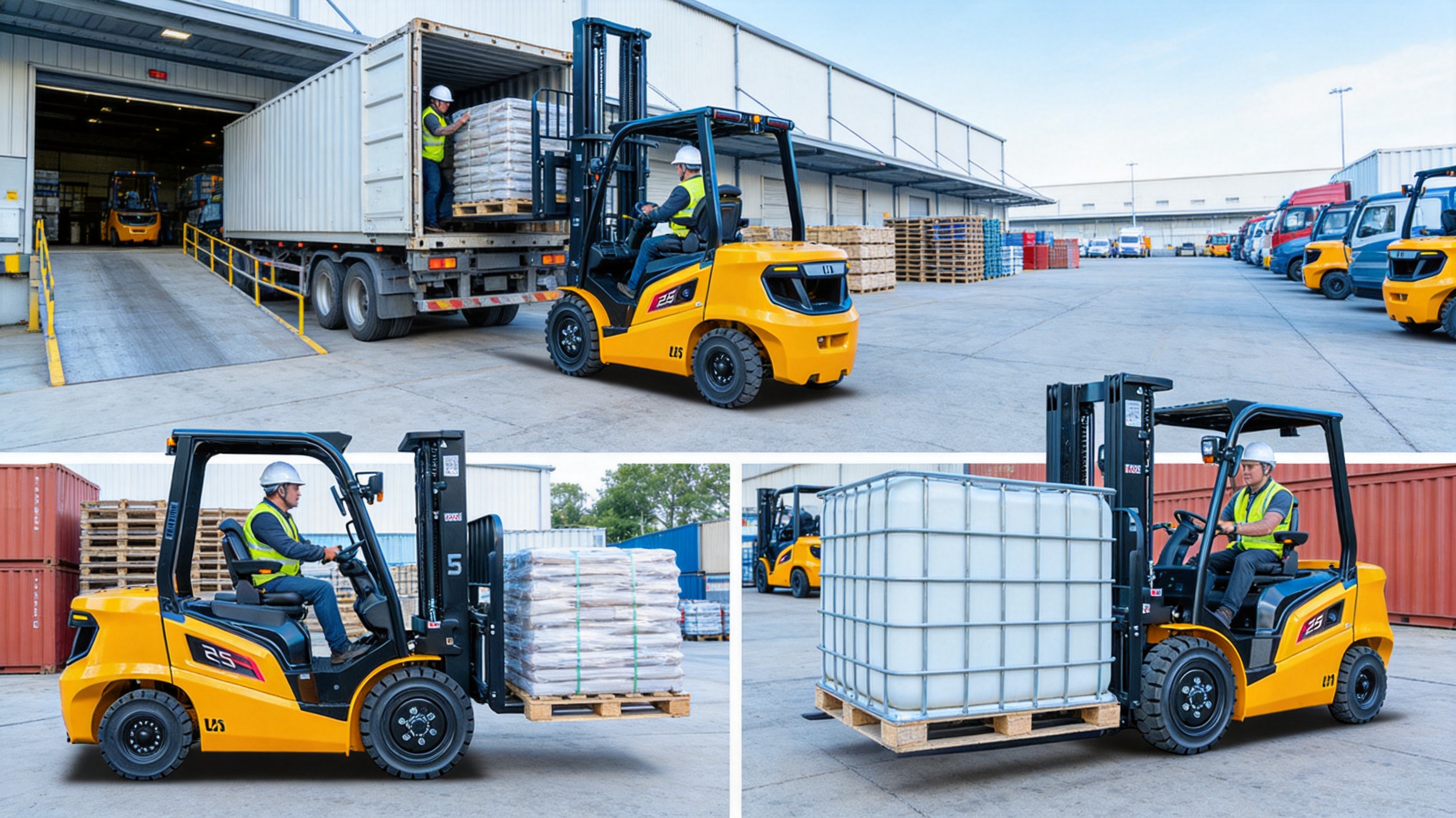
Logistics operations demand efficiency and uptime. Forklifts may load and unload trucks repeatedly throughout the day. A travel speed of 19 km/h without load, practical turning radius values, hydraulic transmission, and comfortable operator layout all help support productive truck loading cycles. LED lighting and OPS safety features are valuable in high-traffic loading areas.
Outdoor Yards
Outdoor material yards often have uneven surfaces, ramps, and weather exposure. Diesel power, strong gradeability, waterproof connectors, and durable construction make the F Series suitable for these conditions. The fuel tank capacity supports extended operation, while easy maintenance access helps teams clean and inspect the machine after dusty or wet shifts.
Construction Material Handling
Building material suppliers and construction-related operations handle bricks, tiles, cement products, steel, pipes, timber, and stone. The 3.0T and 3.5T models are especially useful for heavier loads. Strong mast control, stable counterweight design, and diesel torque contribute to safer and more efficient movement of dense materials.
Export and Industrial Warehousing
Export warehouses often require forklifts that can work with containers, pallets, crates, and packaged goods. The F Series offers standard 500 mm load center performance, practical lift height, good visibility, and easy operation. Its modern appearance also supports a professional fleet image for companies visited by customers, auditors, and logistics partners.
Total Cost of Ownership
Total cost of ownership is a better purchasing measure than initial price alone. A forklift’s true cost includes purchase price, fuel use, maintenance labor, parts, downtime, operator productivity, safety incidents, resale value, and fleet management complexity. The F Series is designed to improve ownership value through multiple channels.
First, reliable engine options reduce the risk of powertrain-related downtime. Recognized engine platforms also support service confidence. Second, easy maintenance access reduces labor time and encourages preventive care. Third, operator comfort improves productivity and may reduce errors caused by fatigue. Fourth, safety systems reduce operational risk. Fifth, emission-compatible configurations help customers avoid regulatory limitations and extend fleet usability.
The forklift’s broad model range also supports efficient fleet planning. A company can use 2.0T models for lighter daily tasks and 3.5T models for heavier work while keeping similar operating layouts. This can simplify operator training, service planning, and parts stocking. For distributors and rental fleets, a common product family across multiple capacities improves inventory flexibility.
Why Diesel Still Matters in Material Handling
Electric forklifts are growing rapidly, especially in indoor warehouses and low-emission environments. However, diesel forklifts remain highly relevant. They are often preferred where outdoor use, continuous operation, heavy duty cycles, limited charging infrastructure, and strong gradeability are required. A diesel forklift can refuel quickly and return to work, making it practical for sites where long charging times or battery swapping are not convenient.
The F Series reflects a modern approach to diesel forklift design. It does not ignore environmental expectations; instead, it provides advanced engine options that can meet stricter emission standards in demanding markets. This makes it suitable for customers who need diesel performance but still want responsible technology and regulatory compatibility.
In mixed fleets, diesel forklifts often complement electric models. Electric trucks may handle indoor rack work, while diesel forklifts handle outdoor yards, heavy pallets, loading docks, and rougher surfaces. The F Series can serve as the powerful backbone of such a fleet, especially where durability and flexible deployment are priorities.
Operator Dashboard and Monitoring
The F Series is equipped with an interactive dashboard as standard for real-time monitoring. A clear dashboard helps operators and supervisors understand vehicle status, respond to warnings, and operate with confidence. In modern fleet management, information visibility is increasingly important. Operators need to know when the machine requires attention, and maintenance teams need early indications of potential issues.
Compared with basic instrument panels, an interactive dashboard supports a more professional operating environment. It can help reduce uncertainty and improve daily inspection routines. When paired with a strong maintenance program, real-time monitoring contributes to longer machine life and fewer unexpected interruptions.
Structural Dimensions and Practical Layout
The F Series is designed with practical dimensions for industrial use. Overall width values are approximately 1,170 mm to 1,225 mm depending on model and specification set. This width range provides stability while maintaining maneuverability. Length to face of fork varies by capacity, with values such as 2,630 mm, 2,662 mm, 2,700 mm, 2,780 mm, and similar class dimensions depending on configuration.
Overhead guard height values are typically around 2,190 mm to 2,235 mm, depending on model. This is important for customers evaluating entrance heights, container areas, workshop doors, and covered loading docks. Mast lowered and extended heights should also be reviewed when selecting a forklift for indoor or rack applications.
Tire specifications include front tire sizes such as 7.00-12-12PR and 28×9-15 variants, with rear tires such as 6.00-9-10PR and 6.50-10-10PR. Tire configuration influences stability, traction, ride comfort, and surface suitability. Customers should choose tire type and specification according to surface conditions, load weight, and operating environment.
Attachment Capability
Many industrial forklifts require attachments such as side shifters, fork positioners, clamps, rotators, bale clamps, carton clamps, or specialized handling devices. The F Series includes operating pressure for attachments, with values such as 18.5 MPa and up to 20.5 MPa in certain configurations. This supports practical hydraulic attachment operation.
Attachment selection should always consider rated capacity reduction, load center changes, hydraulic flow requirements, and operator visibility. The F Series provides a strong foundation for common attachments, but customers should consult technical support before finalizing specialized equipment. Correct attachment matching improves safety, productivity, and machine life.
Service Support and Long-Term Cooperation
Forklift purchasing is not a one-time transaction. Customers need technical consultation before purchase, configuration support during ordering, training after delivery, spare parts during operation, and service guidance throughout the machine’s life. The manufacturer’s international sales and service network supports this long-term relationship.
For dealers and distributors, the F Series offers a product that is visually modern, technically practical, and flexible for different regional markets. For end users, it offers dependable performance and accessible maintenance. For rental companies, it provides a capacity range suitable for many customer applications. For industrial fleets, it offers strong value through ergonomic improvements, safety features, and engine flexibility.
Sustainability and Future-Oriented Development
Global attention to carbon emissions is reshaping the material handling industry. The manufacturer has actively developed new energy forklift models, including lithium-ion and diesel-to-lithium solutions. This broader development direction matters even for diesel forklift buyers because it shows that the company understands the industry’s transition and continues to invest in more energy-saving, intelligent, and cost-effective products.
The F Series fits within this future-oriented strategy by offering modern diesel performance with advanced emission options. In markets where diesel remains necessary, cleaner engine configurations help reduce environmental impact. In fleets transitioning gradually toward electrification, the F Series can continue handling heavy and outdoor tasks while electric models are introduced for indoor operations.
Selection Guidance for Buyers
When choosing between the 2.0T, 2.5T, 3.0T, and 3.5T models, buyers should begin with maximum load weight and load center. If loads are consistently near the upper limit, selecting a higher capacity model may improve safety margin and machine life. If the work involves standard pallets and moderate weights, the 2.0T or 2.5T model may provide the best balance of cost and maneuverability.
Operating environment should be considered next. For tight warehouses, turning radius and aisle width are critical. For outdoor yards, tire selection, gradeability, ground clearance, and engine torque become more important. For markets with strict emission laws, engine configuration must be confirmed carefully. For long shifts, operator comfort and fuel capacity should be prioritized.
Maintenance capability is another important factor. If the customer has an in-house service team, easy access panels and a large-opening hood will reduce service time. If the customer relies on a dealer, parts availability and regional support should be confirmed. In either case, the F Series is designed to support efficient maintenance through its service-friendly layout.
Q&A Section
What is the rated capacity range of the F Series diesel forklift?
The series covers common industrial capacities including 2,000 kg, 2,500 kg, 3,000 kg, and 3,500 kg, with a standard 500 mm load center. This makes it suitable for general pallet handling, manufacturing, logistics, construction material handling, and heavier industrial applications.
What makes this forklift different from many competing diesel forklifts?
Its main differences include multiple engine options, compatibility with strict emission requirements, a redesigned streamlined appearance, dynamic LED lighting, a wide-view mast, load-sensing steering, an interactive dashboard, ergonomic improvements, waterproof electrical connectors, OPS safety functionality, and easier maintenance access through detachable side panels and a large-opening engine hood.
Which engine options are available?
Available configurations may include internationally recognized engines such as Mitsubishi and Kubota platforms, along with other market-specific engine choices. Engine availability depends on model, region, emission standard, and customer requirements.
Is the forklift suitable for international markets with strict emission rules?
Yes. The product supports high-emission-standard configurations associated with markets such as Europe and North America. Buyers should confirm the exact engine and certification requirements for their local regulations before ordering.
How does the F Series improve operator comfort?
The forklift includes a suspended seat, spacious foot area, adjustable steering column, smaller steering wheel, wide-view mast, and reduced-force ratchet handbrake. These features help reduce fatigue and support more accurate operation during long shifts.
What safety features are included?
Safety-related features include a stamped overhead guard, OPS system, waterproof key connectors and joints, new-generation LED lighting, improved visibility, and reliable structural design. These features help reduce risks in busy industrial environments.
Is maintenance easy?
Yes. The F Series includes detachable side panels and a large-opening engine hood, making routine inspection, cleaning, and maintenance more convenient. This helps reduce downtime and supports preventive maintenance.
Can the forklift use attachments?
Yes. The forklift supports hydraulic attachment operation, with operating pressure values such as 18.5 MPa and up to 20.5 MPa in some configurations. Attachment selection should be confirmed based on load capacity, hydraulic needs, and application conditions.
Where is this diesel forklift most suitable?
It is suitable for manufacturing plants, logistics centers, outdoor yards, construction material suppliers, industrial warehouses, export facilities, loading docks, and mixed indoor-outdoor operations where diesel power and strong load handling are needed.
Why should buyers consider the manufacturer behind this product?
The manufacturer has decades of material handling equipment experience, a large production base, significant annual production capacity, broad product development capability, international sales and service partnerships, industry standard participation, patented technologies, and OEM supply experience. These strengths support product reliability and long-term service confidence.
Conclusion
The F Series 2.0T–3.5T diesel forklift is a practical and modern solution for businesses that need reliable internal combustion lifting power. It combines strong diesel performance, flexible engine options, emission-standard adaptability, improved visibility, operator-centered ergonomics, safety features, and maintenance-friendly design. Its rated capacities cover the most common industrial handling needs, while its hydraulic transmission, load-sensing steering, LED lighting, OPS system, and service-access design give it meaningful advantages over many traditional competitor models.
Behind the product is a manufacturer with long industry experience, broad production capability, technical development strength, global service reach, and a complete material handling equipment portfolio. This manufacturing foundation supports consistent quality, international adaptability, and long-term customer value. For companies seeking a diesel forklift that balances power, durability, comfort, safety, and cost-effective ownership, the F Series is a strong candidate for modern material handling operations.
References
Industrial Truck Association. General Principles of Powered Industrial Truck Selection and Operation.
International Organization for Standardization. Industrial Trucks: Safety Requirements and Verification Guidelines.
Forklift Engineering Handbook. Diesel Forklift Powertrain, Mast, and Hydraulic System Design Principles.
Material Handling Industry Research Reports. Global Trends in Forklift Applications, Emissions, and Fleet Management.
Occupational Safety and Health Training Materials. Powered Industrial Truck Safety and Operator Best Practices.
Product: F Series 2.0T-2.5T Diesel Forklift
For exclusive deals and latest offers, sign up by entering your email address below.
Stay In Touch
ADDRESS : NO.1 ROAD ONE, XINDENG NEW DISTRICT, FUYANG, HANGZHOU, ZHEJIANG, CHINA 311404.
PHONE : +86-571-8688 8355 (AMERICA)
PHONE : +86-571-8886 9363 (EUROPE)
PHONE : +86-571-8688 8377 (ASIA, AFRICA, OCEANIA)
EMAIL : [email protected]
EMAIL : [email protected](PARTS INQUIRY)

