


 中文简体
中文简体 Français
 русский
 Español
 عربى
عربى Deutsch



Three-Wheel Electric Forklift: Performance, Efficiency, and Smart Warehouse Productivity
Admin 2026-08-04Introduction
Modern warehouses, manufacturing plants, distribution centers, and retail logistics operations require material-handling equipment that can combine power, precision, reliability, and environmental responsibility. The FE Series 2.0T 3-Wheel Electric Forklift is designed to meet these demands with a compact layout, electric drive technology, intelligent control systems, and a rated capacity of up to 2,000 kilograms.
Unlike conventional internal-combustion forklifts, this three-wheel electric forklift is engineered primarily for indoor work, where low noise, zero exhaust emissions, smooth control, and reduced turning space are especially important. Its compact chassis allows operators to work efficiently in narrow aisles and confined loading areas, while its dual-drive configuration provides responsive traction and stable operation.
The forklift is part of a fully upgraded electric model family developed from an earlier platform. The upgrade focuses on practical improvements in energy efficiency, ergonomics, maintenance access, braking performance, battery technology, and operating intelligence. These improvements make the machine suitable for businesses that want to increase productivity without expanding warehouse space or compromising operator safety.
With a maximum rated capacity of 2.0 tons, a 500-millimeter load center, a 3,000-millimeter rated lift height, travel speeds of up to 13 kilometers per hour under load and 14 kilometers per hour without load, the forklift provides a balanced combination of lifting capability and maneuverability. Its outside turning radius is approximately 1,655 millimeters in the 2.0-ton configuration, helping it navigate demanding indoor environments.
This article examines the forklift’s design, performance, energy system, operator environment, safety technologies, maintenance advantages, manufacturing strengths, and practical applications. It also explains why a compact three-wheel electric design can offer important advantages compared with larger, less maneuverable, or less energy-efficient alternatives.
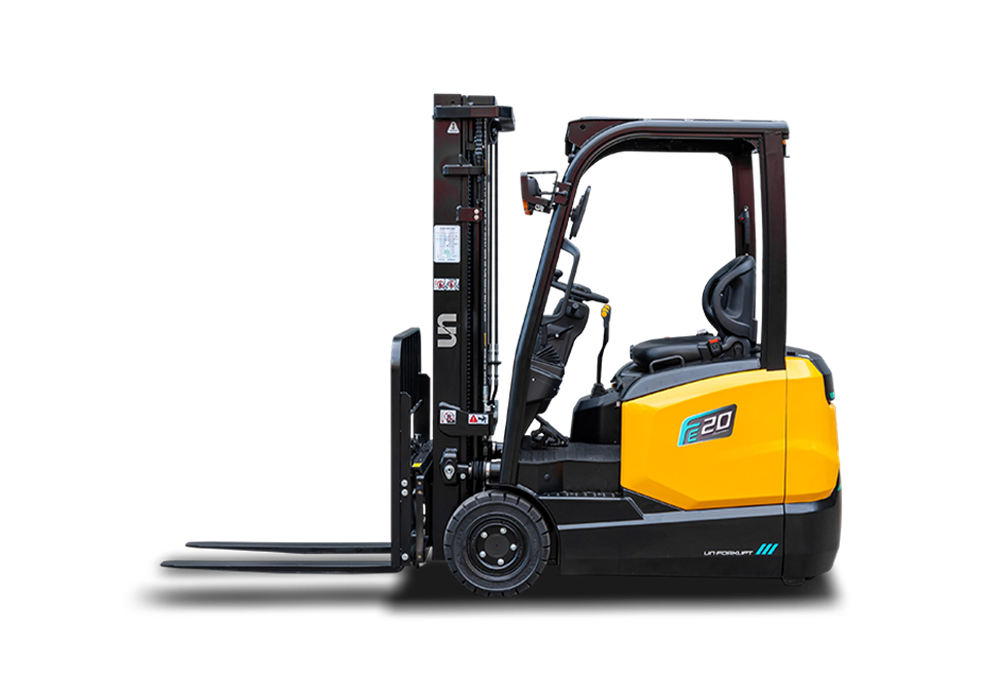
FE Series 2.0T 3-Wheel Electric Forklift
Product Overview
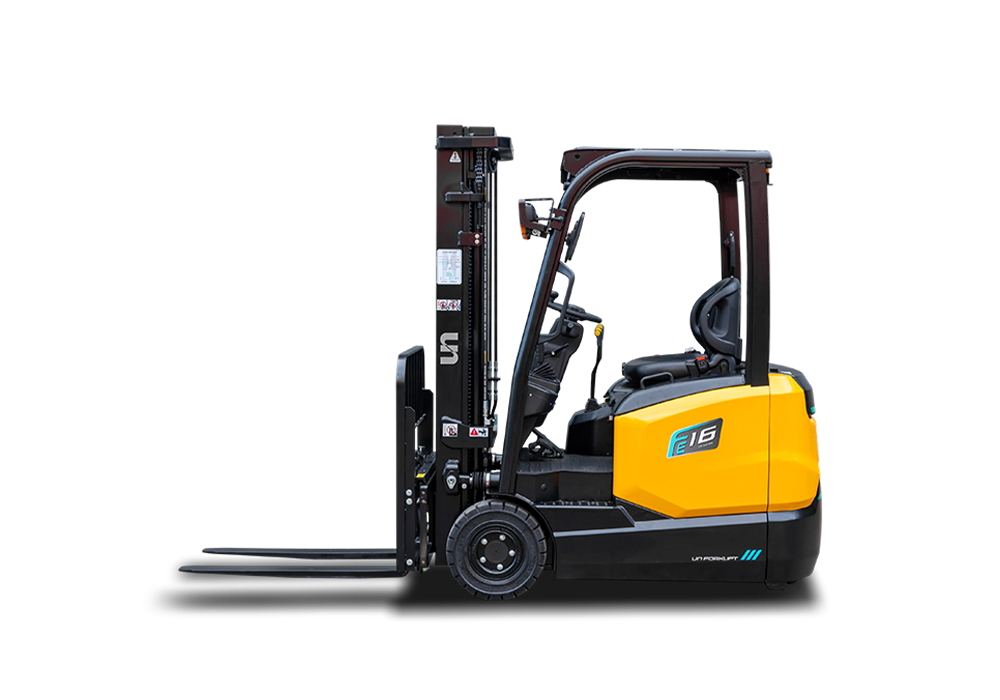
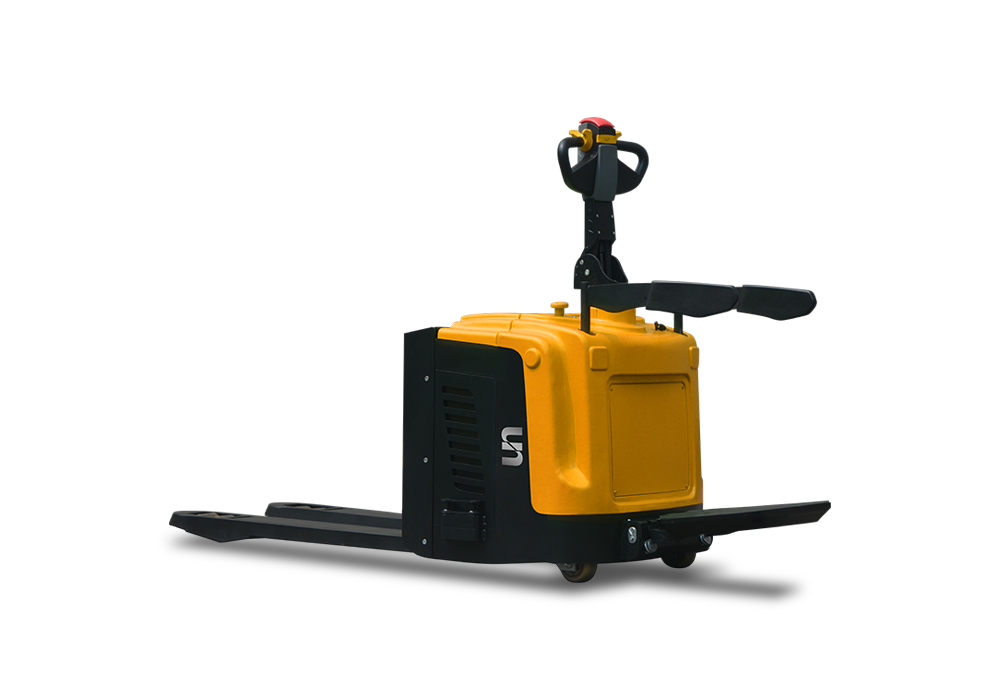
The FE Series 2.0T 3-Wheel Electric Forklift is a seated electric forklift intended for professional material handling. It uses a rear steering wheel arrangement and two front drive motors, creating a three-wheel configuration that supports tight turning performance while maintaining a stable working platform.
The forklift is available within a family covering approximately 1.6-ton, 1.8-ton, and 2.0-ton rated capacities. The 2.0-ton version is identified by the FBT20 configuration in the supplied specifications. It is designed for customers that need more lifting capacity than a small warehouse truck can provide but still require the agility normally associated with a compact three-wheel machine.
The machine uses a battery-electric powertrain. The 2.0-ton configuration can be equipped with a 48-volt, 540-ampere-hour battery or an alternative lithium battery configuration rated at 77.28 volts and 150 ampere-hours, depending on the selected power system. The battery system supports quiet operation, reduced local emissions, and consistent performance during repeated warehouse cycles.
A 9.5-kilowatt or 11-kilowatt lift motor option supports hydraulic lifting and mast functions. The dual drive motors are rated at approximately 2 × 4.8 or 2 × 5 kilowatts, depending on configuration. Together, these systems provide sufficient traction and hydraulic responsiveness for pallet transport, loading, unloading, stacking, and internal production logistics.
The standard specification includes a 3,000-millimeter rated lift height, 2,025-millimeter mast lowered height, and 2,085-millimeter overhead guard height. These dimensions make the forklift practical for many standard warehouse racks, production areas, and loading zones while preserving adequate overhead protection for the operator.
Core specification summary
| Specification | 2.0-ton configuration |
|---|---|
| Drive type | Battery electric |
| Operator position | Seated |
| Rated capacity | 2,000 kilograms |
| Load center | 500 millimeters |
| Wheelbase | 1,450 millimeters |
| Rated lift height | 3,000 millimeters |
| Overhead guard height | 2,085 millimeters |
| Overall width | 1,120 millimeters |
| Turning radius | 1,655 millimeters |
| Travel speed with full load | 13 kilometers per hour |
| Travel speed without load | 14 kilometers per hour |
| Maximum gradeability | 15 percent |
| Battery option | 48 volts/540 ampere-hours or lithium configuration |
| Service brake | Hydraulic |
| Parking brake | Mechanical |
Compact Three-Wheel Architecture
The most visible advantage of the forklift is its three-wheel design. A conventional four-wheel forklift generally offers a broad stability footprint, but it may require a larger turning area. A three-wheel electric forklift places emphasis on maneuverability, allowing the rear steering wheel to guide the machine through tight turns and restricted spaces.
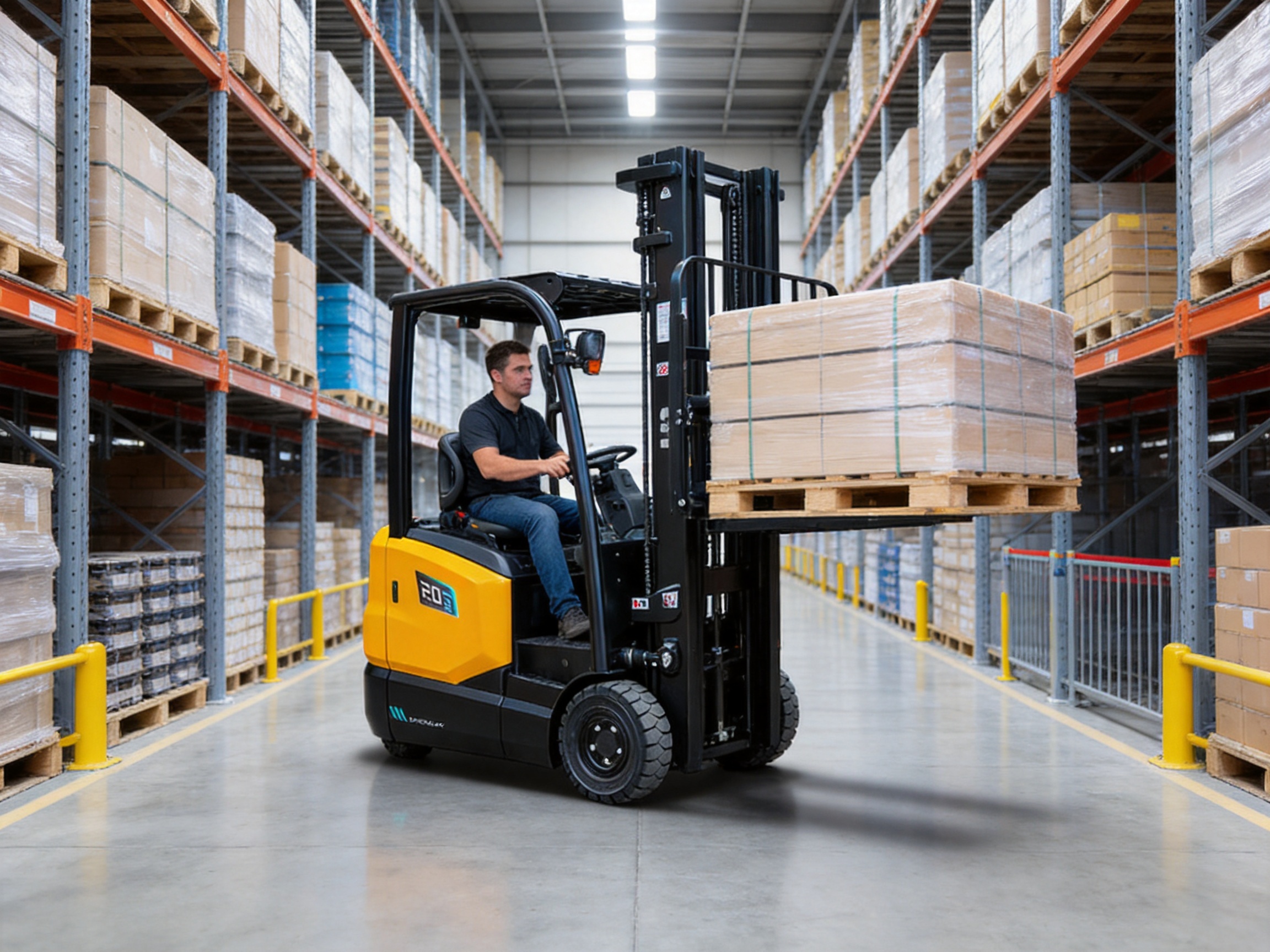
For indoor users, this layout can translate directly into improved floor utilization. Narrower aisles can make it possible to add storage locations, shorten travel routes, or increase the number of pallets handled within an existing facility. The 2.0-ton configuration has an overall width of approximately 1,120 millimeters and an outside turning radius of approximately 1,655 millimeters, supporting efficient movement in space-constrained environments.
The compact chassis is also useful in mixed-use facilities. Many operations include production lines, storage racks, staging areas, and truck-loading zones within the same building. A forklift that can transition between these areas without requiring excessive clearance can reduce interruptions and improve workflow continuity.
Three-wheel construction does not mean that stability has been neglected. The forklift uses a carefully engineered chassis, a robust overhead guard, dual front drive motors, and double rear tires. These components work together to support controlled handling during lifting, carrying, turning, and positioning.
As with every forklift, safe operation depends on respecting the rated load capacity, load center, mast height, floor conditions, turning speed, and operating environment. The three-wheel configuration is particularly valuable when the customer’s priority is agile indoor handling rather than heavy-duty outdoor travel over uneven terrain.
Why compact dimensions matter
Warehousing costs are strongly influenced by floor area. When a truck requires wide aisles, a facility may need to sacrifice storage capacity or invest in additional space. A compact forklift can help reduce this pressure by operating within tighter aisle layouts, provided that the rack design, pallet dimensions, floor conditions, and safety clearances are properly evaluated.
The supplied specifications indicate an aisle width of approximately 3,351 millimeters for 1,000-by-1,200-millimeter pallets transported crossways and approximately 3,476 millimeters for 800-by-1,200-millimeter pallets transported lengthways in the 2.0-ton model. These figures provide a useful starting point for warehouse planning, although actual requirements should be confirmed for each attachment, pallet type, load shape, and operating procedure.
Electric Power and Energy Efficiency
Electric forklifts are increasingly selected for facilities that require clean operation, lower noise, and more predictable energy costs. The FE Series uses a battery-electric drive system that eliminates tailpipe emissions during operation. This is particularly beneficial in enclosed warehouses, food and beverage facilities, pharmaceutical environments, electronics plants, and other areas where air quality is important.
The available battery systems are designed to provide strong power output and extended operating duration. The 48-volt, 540-ampere-hour configuration for the 2.0-ton model provides a large energy reserve for demanding work cycles. A lithium battery option may offer additional advantages for users seeking opportunity charging, reduced battery maintenance, and high daily utilization.
Battery selection should be based on the operating schedule, average load, travel distance, charging infrastructure, ambient temperature, shift pattern, and required uptime. Lead-acid and lithium systems can serve different business cases. A traditional high-capacity battery may be appropriate for operations with planned charging and battery replacement procedures, while a lithium system can be attractive for multi-shift users that want fast charging and reduced routine maintenance.
The forklift also incorporates intelligent regenerative braking technology. During deceleration, part of the vehicle’s kinetic energy can be converted into electrical energy and returned to the battery system. Regenerative braking reduces energy loss, supports smoother deceleration, and may help reduce wear on mechanical braking components.
Energy efficiency is not determined by the battery alone. The controller, drive motors, hydraulic pump, operator behavior, load handling strategy, tire selection, floor quality, and maintenance condition all influence total energy consumption. The forklift’s electronic control architecture helps coordinate these systems so that power is delivered according to actual operating requirements.
Multiple operating modes
Multiple speed modes allow the forklift to be adapted to different work environments. A lower-speed mode can be used in narrow aisles, pedestrian areas, loading zones, or locations requiring precise positioning. A higher-performance mode can be selected for open warehouse travel when conditions allow.
Speed-mode flexibility is useful because not every operating task has the same requirements. Rapid travel may improve cycle times over long distances, while controlled speed is more appropriate near racks, intersections, doors, and production workers. Matching the operating mode to the task can improve both productivity and safety.
Electronic controls also make it possible to tune acceleration, deceleration, steering response, lifting performance, and other operating characteristics. This provides fleet managers with a more adaptable tool than a basic forklift with limited control settings.
Drive and Hydraulic Performance
The dual-drive arrangement is one of the principal performance features of the forklift. Two drive motors deliver traction through the front wheels and support smooth movement during acceleration, turning, and load transport. This configuration can provide responsive handling while allowing the machine to remain compact.
Independent electronic management of the drive system helps maintain balanced performance. When the forklift turns, the controller can coordinate motor behavior to support controlled cornering and reduce unnecessary tire slip. The result is a handling response that is appropriate for indoor logistics, where frequent starts, stops, reversals, and direction changes are common.
The forklift reaches a travel speed of approximately 13 kilometers per hour with a full load and 14 kilometers per hour without a load. These speeds support efficient movement while remaining suitable for controlled warehouse operation. Actual productivity depends on aisle length, traffic, floor conditions, operator training, load characteristics, and site speed policies.
The hydraulic system uses a high-power hydraulic pump motor and a low-noise, high-displacement pump. This combination is intended to provide effective lifting and tilting performance without creating excessive noise. The rated lifting speed with a full load is approximately 300 millimeters per second. The no-load lifting speed is approximately 400 millimeters per second in the 2.0-ton family specifications.
A load-sensing steering gear contributes to responsive steering and can help improve hydraulic efficiency. By supplying hydraulic flow according to demand, load-sensing technology may reduce unnecessary energy consumption during periods when full hydraulic output is not required.
The operating pressure for attachments is listed at approximately 17.5 megapascals. This allows the forklift to support suitable hydraulic attachments when correctly specified. Attachment selection must consider residual capacity, load center changes, hydraulic flow requirements, visibility, mast performance, and the manufacturer’s approved configuration.
Gradeability and worksite mobility
The maximum gradeability is listed at 15 percent with and without a load. This provides useful capability for ramps and modest inclines commonly found in distribution centers and industrial buildings. Gradeability should not be interpreted as permission to operate on any slope without assessment. Ramp surface, load stability, direction of travel, wet conditions, and site rules must always be considered.
Electric drive systems can provide smooth low-speed control, which is valuable when approaching ramps, dock edges, pallet locations, or rack positions. Consistent torque delivery helps reduce abrupt movement and supports controlled load placement.
Safety and Reliability Features
Safety is central to forklift design because the machine operates around people, elevated loads, racks, vehicles, and infrastructure. The FE Series combines mechanical construction, electronic control, braking technologies, visibility features, and operator-focused controls to support safe work practices.
The stamped overhead guard provides a robust protective structure above the operator. It is designed to help protect the operator from falling objects within the limits of the applicable safety standard and approved operating conditions. The guard also contributes to the overall rigidity and visual identity of the machine.
Electric braking is combined with wet braking to provide two layers of braking protection. Regenerative or electric braking can assist with routine deceleration, while the service braking system provides dependable stopping performance. Wet braking systems are known for enclosed braking components that can offer protection against contamination and consistent performance in demanding conditions.
The forklift uses a hydraulic service brake and a mechanical parking brake. This combination gives the operator a conventional and dependable method for stopping and securing the machine. Parking brake engagement remains important whenever the forklift is left unattended, parked on a designated surface, or stopped during loading and unloading procedures.
Turning-speed deceleration is another useful safety function. When the forklift enters a turn, automatic speed reduction can help limit lateral forces and provide a more controlled response. This function is especially valuable in narrow aisles, at warehouse intersections, and in areas where visibility is restricted.
Proportional lifting enables smoother control of the mast and forks. Instead of relying only on abrupt on-or-off hydraulic movement, the operator can make finer adjustments when positioning a pallet. Smooth lifting and lowering can reduce load shock, improve placement accuracy, and help protect goods and racks.
Double rear tires enhance the rear contact area and contribute to stability. They also support a balanced chassis arrangement around the steering axle. As with all forklift safety systems, tire condition, correct inflation, load distribution, and adherence to rated capacity remain essential.
Battery protection
The third-generation battery system is described as having IP67 waterproof and dustproof protection. This rating indicates a high level of enclosure protection against dust ingress and water exposure under defined test conditions. It does not remove the need for correct charging, inspection, cleaning, and storage procedures.
Battery protection is important in warehouses where dust, moisture, cleaning operations, temperature changes, and frequent charging may affect equipment. A well-protected battery enclosure can support reliability by reducing the likelihood that contaminants will reach sensitive electrical components.
Battery safety also depends on correct charger compatibility, ventilation where required, cable condition, connector inspection, and trained personnel. Lithium battery systems require management electronics and approved charging procedures. Operators and maintenance personnel should follow the applicable battery and charger instructions.
Operator Ergonomics and User Experience
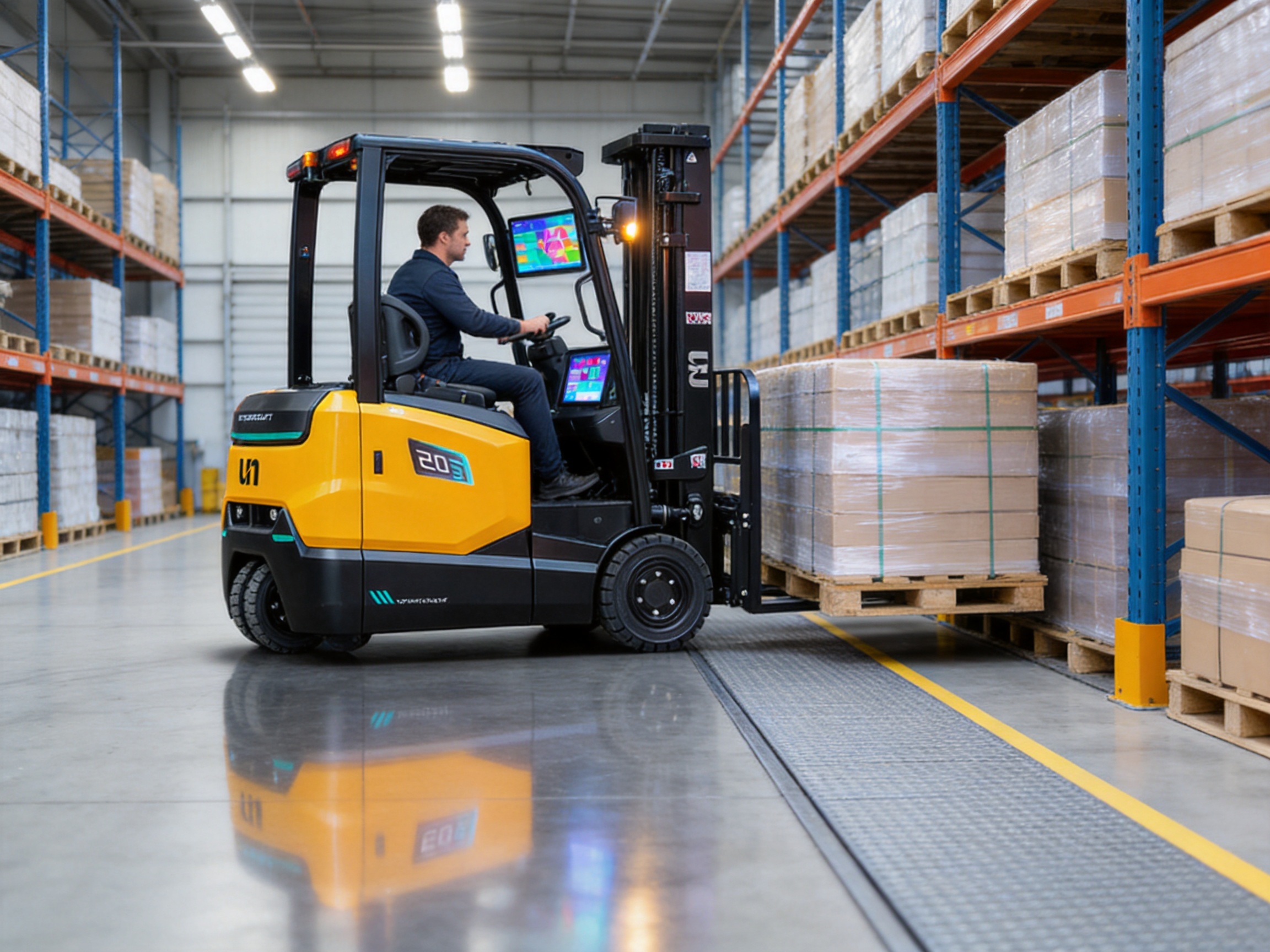
Forklift productivity depends heavily on the operator. A machine may have strong specifications, but poor visibility, uncomfortable controls, vibration, or awkward access can reduce efficiency and increase fatigue. The FE Series addresses these concerns with an adjustable steering wheel, an adjustable seat, an enclosed instrument console, a multifunction color display, a document holder, and a USB port.
The adjustable steering wheel allows the operator to select a comfortable position according to body size, posture, and task requirements. Correct steering-wheel placement can reduce unnecessary shoulder and arm movement during repeated turning operations.
The seat provides flexible adjustment options so that operators can find an appropriate driving position. A suitable seat position helps support visibility, pedal access, steering control, and posture. In multi-operator facilities, adjustable seating is especially important because different users can configure the machine without requiring physical modifications.
The fully enclosed instrument console combines comfort with protection. It helps organize control components and shields electrical interfaces from routine contact and contamination. The console design also creates a more structured work environment, allowing the operator to locate essential information and controls quickly.
The multifunction color display panel presents operating information in a clear and intuitive format. Depending on configuration, the display may provide information such as battery status, operating mode, speed, fault alerts, service reminders, and other machine conditions. Clear information supports faster response to warning signals and helps reduce avoidable downtime.
A document holder provides a practical location for work instructions, delivery documents, inspection forms, or warehouse notes. The USB port can support mobile-device charging and connectivity, helping operators maintain communication during extended shifts when permitted by site policy.
Visibility and control
Visibility is an important part of forklift ergonomics. The operator must be able to see the forks, load, travel path, rack locations, pedestrians, and surrounding equipment. Mast configuration, fork dimensions, load shape, seat position, lighting, and driving direction all affect visibility.
The standard fork dimensions for the 2.0-ton configuration are approximately 1,070 millimeters in length, 100 millimeters in width, and 40 millimeters in thickness. These dimensions are suitable for many general pallet-handling tasks, although users should confirm compatibility with their pallet openings and load geometry.
Operator training remains essential. Electronic assistance can support safe behavior, but it cannot replace visual checks, controlled speed, proper load engagement, communication with pedestrians, or compliance with site procedures.
Maintenance Accessibility
Maintenance access influences the total cost of ownership. Even a reliable forklift requires daily inspections, periodic servicing, battery care, tire checks, hydraulic inspections, and electrical system diagnostics. If service points are difficult to reach, maintenance may take longer or be postponed.
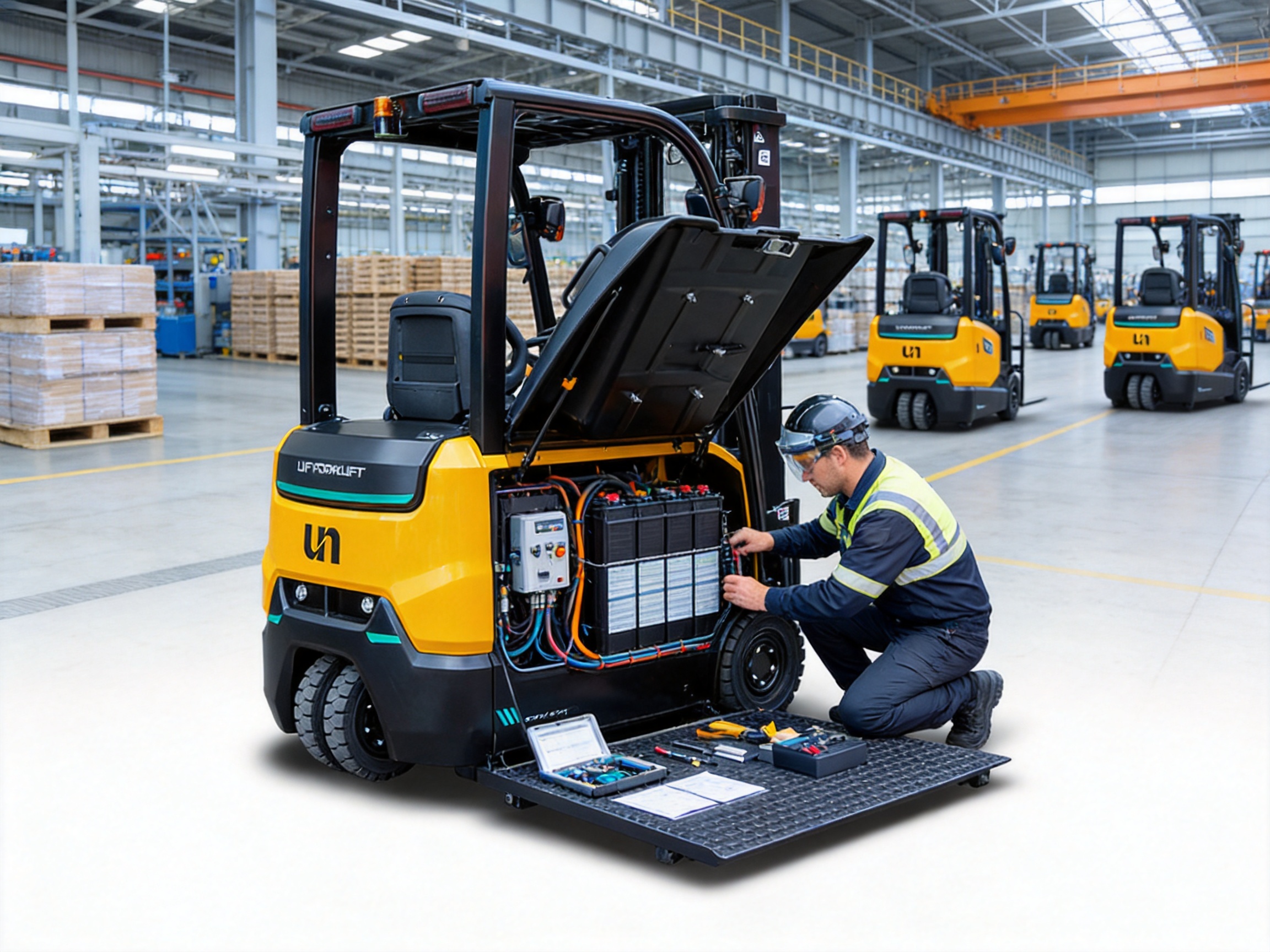
The FE Series is designed with several access features intended to simplify routine service. The engine cover, although the vehicle is electric, is described as opening fully to provide broad access to internal components. The electrical control cover also opens completely, allowing technicians to inspect and service controllers, wiring, connectors, and related systems.
The floor plate can be removed without tools. This feature improves access to lower electrical and mechanical components and can reduce the time required for inspection. Tool-free access is particularly valuable during daily checks, troubleshooting, and planned preventive maintenance.
The side battery extraction system supports practical battery removal and replacement. For facilities using multiple batteries or requiring scheduled battery service, side extraction can simplify the process and reduce the need for overhead lifting equipment. Battery handling procedures must still be performed by trained personnel using appropriate equipment.
Maintenance advantages are not limited to physical access. The electronic control architecture can assist technicians with fault diagnosis. The ZAPI controller uses a high-frequency MOSFET integrated control mode, while the AC controller manages driving, steering, lifting, and tilting functions through coordinated electronic control.
Electronic diagnostics can help identify abnormal conditions more quickly than manual troubleshooting alone. Earlier fault identification may reduce downtime, support preventive maintenance planning, and make it easier to track recurring issues across a fleet.
Preventive maintenance priorities
Daily inspections should include tire condition, fork damage, mast operation, hydraulic leaks, battery charge level, warning devices, steering response, brakes, overhead guard condition, and visible structural damage. Operators should report unusual sounds, vibrations, error codes, or changes in performance immediately.
Scheduled maintenance should include hydraulic oil and filter checks, electrical connections, drive motor inspection, braking components, steering components, mast rollers, chains, attachments, and battery systems. Maintenance intervals should be established according to operating hours, working environment, manufacturer instructions, and local regulations.
Clean service access can also improve workplace safety. When technicians can reach components without excessive disassembly, they may be more likely to complete inspections correctly and identify small issues before they develop into major failures.
Manufacturing Strength and Engineering Capability
The manufacturer behind the forklift is a professional material-handling equipment producer integrating research and development, production, sales, and service. Its history extends back to 1978, providing decades of experience in forklift engineering and industrial vehicle manufacturing.
The company operates a manufacturing site covering approximately 53,400 square meters and has an annual production capacity of approximately 15,000 units. This scale supports structured production planning, component coordination, quality management, product testing, and after-sales service development.
The product portfolio includes multiple forklift categories and more than 200 specifications. Such product breadth can be valuable for customers operating mixed fleets. A supplier with experience in electric forklifts, internal-combustion forklifts, reach trucks, warehouse equipment, and specialized products can provide equipment recommendations based on the complete application rather than a single model.
The manufacturer has also contributed to the development of electric forklift technologies and participated in the formulation of Chinese electric forklift industry standards. Its engineering history includes the development of reach forklift and very-narrow-aisle truck products, demonstrating experience in applications where precision, compact dimensions, and controlled handling are essential.
Research and development capability is especially important for modern electric forklifts. Electric vehicles require coordinated development of battery systems, controllers, motors, hydraulic systems, displays, braking systems, and safety functions. A manufacturer that integrates these areas can improve compatibility and streamline technical support.
Quality-oriented production
Advanced forklift manufacturing involves more than assembling purchased components. It includes design verification, structural analysis, welding quality, surface treatment, electrical testing, hydraulic testing, load testing, brake testing, steering evaluation, and final inspection.
Structural components such as the chassis, mast, overhead guard, counterweight, and fork carriage must be produced with consistent dimensions and reliable weld quality. Accurate manufacturing supports correct alignment, predictable load handling, and long-term durability.
Electrical and electronic systems require careful routing, protection, connector control, software validation, and functional testing. Battery-powered equipment is particularly dependent on reliable communication between the battery management system, charger, vehicle controller, display, drive motors, and hydraulic system.
Manufacturing consistency is a major advantage for fleet buyers. When multiple units are produced according to stable engineering and inspection standards, operators can transfer between machines more easily, maintenance teams can standardize procedures, and spare-parts planning becomes more efficient.
Competitive Advantages
The FE Series 2.0T 3-Wheel Electric Forklift offers several advantages when compared with conventional alternatives. Its strongest competitive position is the balance between capacity and compactness. A smaller warehouse forklift may be easier to maneuver but lack the required lifting capacity. A larger four-wheel forklift may carry more weight but require wider aisles and more turning space. The 2.0-ton three-wheel design occupies the middle ground.
Compared with internal-combustion forklifts, the electric model provides zero direct exhaust emissions during operation, lower operating noise, and smooth electric control. These advantages are particularly meaningful indoors and in facilities where employees work near the forklift for long periods.
Compared with basic electric forklifts, the FE Series offers a more advanced control package. Dual drive motors, regenerative braking, multiple speed modes, proportional lifting, load-sensing steering, intelligent electronic control, and a multifunction display support more precise operation and better adaptability.
Compared with machines that are difficult to service, the forklift provides full-opening covers, tool-free floor access, and side battery extraction. These features can reduce maintenance effort and make daily inspections more practical.
Compared with forklifts designed only for basic transport, the model offers a more complete operator environment. Adjustable controls, a flexible seat, a color display, a document holder, and a USB port help create a more comfortable and productive workplace.
Competitive comparison by operating priority
| Operating priority | How the forklift responds | Practical benefit |
|---|---|---|
| Narrow indoor aisles | Three-wheel chassis and compact turning radius | Improved maneuverability and better use of floor space |
| Clean indoor operation | Battery-electric drive with no direct exhaust emissions | Better suitability for enclosed work areas |
| Frequent starts and stops | Regenerative braking and electronic drive control | Smoother deceleration and improved energy management |
| Precise pallet placement | Proportional lifting and responsive hydraulic control | More controlled handling near racks and production lines |
| Long daily operating cycles | High-capacity battery options | Extended operating potential between charges |
| Fleet maintenance | Accessible covers, removable floor plate, and side battery extraction | Reduced service complexity and easier inspections |
| Operator comfort | Adjustable seat, steering wheel, display, and storage features | Lower fatigue and improved control consistency |
Applications
The forklift is well suited to indoor warehouses where aisle space is limited and pallet movement is frequent. It can transport goods from receiving areas to storage locations, retrieve pallets from racks, stage orders, and transfer finished products to shipping zones.
Manufacturing plants can use the machine for line-side delivery, raw-material handling, work-in-progress movement, finished-goods transport, and loading operations. Its low-noise electric drive can be advantageous in facilities where production employees work near material-handling routes.
Retail distribution centers may benefit from the forklift’s combination of capacity and compactness. The machine can support pallet movement in back-room storage areas, cross-docking zones, and replenishment operations without the emissions associated with an internal-combustion truck.
Food and beverage operations often require clean indoor equipment. The electric powertrain is appropriate for environments where exhaust control, low noise, and smooth handling are important. Site-specific hygiene, battery, and floor-cleaning requirements should be reviewed before deployment.
Electronics and precision manufacturing facilities may value the controlled movement and low-emission characteristics of an electric forklift. Smooth acceleration, proportional lifting, and precise steering can help reduce sudden load movement during delicate handling tasks.
Third-party logistics providers can use the model in mixed customer environments because it combines general-purpose pallet handling with a compact footprint. Its broad capacity range within the FE Series also allows fleet managers to select different capacities while maintaining a familiar platform and operating philosophy.
Ownership Value and Fleet Management
Total cost of ownership includes more than the purchase price. Energy consumption, maintenance labor, replacement parts, battery life, downtime, operator productivity, facility utilization, and resale value all influence the economic performance of a forklift.
The electric powertrain can reduce fuel-related operating costs compared with internal-combustion equipment. Regenerative braking may further improve energy utilization, while high-capacity batteries can support longer work periods. Actual savings depend on electricity prices, duty cycle, battery type, charging practices, and maintenance quality.
Compact dimensions may also create indirect economic value. If the forklift allows a facility to operate narrower aisles or use storage space more efficiently, the customer may gain capacity without moving to a larger building. This benefit should be calculated together with rack design, fire protection, pedestrian routes, and required safety clearances.
Downtime reduction is another important factor. Accessible service points, electronic diagnostics, robust components, and battery options can support better fleet availability. Preventive maintenance scheduling is essential because planned service is generally less disruptive than unexpected breakdowns during peak operating periods.
Fleet managers should monitor battery state, operating hours, fault records, tire wear, brake condition, hydraulic performance, and operator behavior. Data from inspections and display systems can help identify trends and determine when a forklift needs service or when operating procedures should be adjusted.
Choosing the correct configuration
Customers should confirm the rated capacity required at the actual load center rather than selecting a forklift only by nominal tonnage. Attachments, long loads, uneven load distribution, and elevated lift heights can reduce available capacity. The manufacturer or authorized distributor should provide a capacity chart for the exact mast and attachment configuration.
Battery selection should reflect shift length and charging strategy. A lithium system may be beneficial for high-utilization operations with opportunity charging, while a conventional high-capacity battery may suit facilities with scheduled charging and battery change procedures.
Tire selection must match the floor and operating environment. Pneumatic tires are listed in the supplied specifications, but customers should evaluate whether pneumatic, solid, superelastic, or polyurethane tires are appropriate for their surfaces, traction requirements, puncture risks, and indoor-outdoor duty cycle.
Optional attachments should be selected according to the goods being handled. Side shifters, fork positioners, clamps, rotators, and other tools can improve productivity, but they also affect visibility, residual capacity, hydraulic requirements, and overall dimensions.
Q&A
What is the rated capacity of the forklift?
The 2.0-ton configuration has a rated load capacity of 2,000 kilograms at a 500-millimeter load center. The actual capacity can vary with lift height, mast type, attachment, load shape, and center of gravity. Operators should always use the capacity chart for the specific truck configuration.
Why choose a three-wheel electric forklift?
A three-wheel electric forklift is a strong choice when maneuverability and indoor efficiency are important. Its compact architecture and rear steering arrangement support tight turning performance, helping it operate in areas where a larger four-wheel forklift may require more space.
Is the forklift suitable for indoor use?
Yes. The electric powertrain, low-noise operation, compact dimensions, and zero direct exhaust emissions make it particularly suitable for indoor warehouses, factories, distribution centers, and production facilities.
What lift height does the standard specification provide?
The supplied standard specification lists a rated lift height of 3,000 millimeters. The mast lowered height is approximately 2,025 millimeters, while the mast extended height with backrest is approximately 4,052 millimeters.
What battery options are available?
The 2.0-ton configuration is listed with a 48-volt, 540-ampere-hour battery option and a lithium configuration rated at 77.28 volts and 150 ampere-hours. The appropriate choice depends on shift pattern, charging infrastructure, operating hours, and maintenance preferences.
How does regenerative braking help?
Regenerative braking can recover part of the energy produced during deceleration and return it to the battery. It also supports smoother speed control and may reduce reliance on mechanical braking during normal operation.
What is the maximum travel speed?
The listed travel speed is approximately 13 kilometers per hour with a full load and 14 kilometers per hour without a load. Site-specific speed limits should always take priority over the machine’s maximum capability.
Can the forklift operate on ramps?
The listed maximum gradeability is 15 percent with and without a load. Actual ramp use must consider surface condition, load stability, direction of travel, traffic, visibility, and the safety rules of the facility.
Is proportional lifting available?
Yes. The safety and reliability features include a proportional lifting function. This allows more controlled hydraulic movement for pallet placement and load handling.
How does the forklift support maintenance?
The forklift includes a fully opening electrical control cover, a tool-free removable floor plate, and a side battery extraction system. These features help technicians access important components and perform inspections more efficiently.
What type of controller is used?
The specifications identify MOS/AC drive control and list ZAPI as the controller manufacturer. The electronic system manages driving, steering, lifting, and tilting functions through coordinated control.
What should be checked before purchase?
Customers should verify load capacity at the actual load center, required lift height, aisle dimensions, pallet size, tire type, battery and charger configuration, attachment requirements, floor conditions, operating hours, local safety regulations, and service support availability.
Conclusion
The FE Series 2.0T 3-Wheel Electric Forklift is designed for businesses that need the lifting capability of a 2.0-ton forklift without giving up compact maneuverability. Its three-wheel architecture, 1,120-millimeter overall width, and approximately 1,655-millimeter turning radius support efficient operation in confined indoor environments.
Its advantages extend beyond dimensions. Dual drive motors, regenerative braking, multiple speed modes, load-sensing steering, proportional lifting, high-capacity battery options, and electronic control systems provide a comprehensive performance package. Safety features such as electric and wet braking, turning-speed deceleration, double rear tires, a robust overhead guard, and battery protection support dependable operation.
Operator-focused equipment, including an adjustable steering wheel, adjustable seat, enclosed console, color display, document holder, and USB port, helps improve comfort and day-to-day usability. Maintenance features such as full-opening covers, tool-free floor access, and side battery extraction can support lower service effort and improved fleet availability.
Backed by decades of forklift manufacturing experience, integrated research and development, broad product coverage, and established production capacity, the manufacturer has the engineering and industrial foundation to serve both individual equipment buyers and larger fleet customers.
For warehouses, factories, distribution centers, and other indoor operations, the forklift offers a practical balance of capacity, agility, energy efficiency, safety, comfort, and serviceability. When correctly configured for the application and operated according to approved procedures, it can contribute to improved warehouse productivity and a more sustainable material-handling strategy.
References
1. Manufacturer-provided FE Series electric forklift product specifications.
2. Manufacturer-provided technical information for three-wheel electric forklift configurations.
3. General principles of industrial truck capacity, stability, and safe operation.
4. General guidance on battery-electric vehicle maintenance and charging practices.
5. General warehouse planning principles for aisle width, pallet handling, and storage utilization.
6. General material-handling equipment practices for preventive maintenance and operator training.
Product: FE Series 2.0T 3-Wheel Electric Forklift
For exclusive deals and latest offers, sign up by entering your email address below.
Stay In Touch
ADDRESS : NO.1 ROAD ONE, XINDENG NEW DISTRICT, FUYANG, HANGZHOU, ZHEJIANG, CHINA 311404.
PHONE : +86-571-8688 8355 (AMERICA)
PHONE : +86-571-8886 9363 (EUROPE)
PHONE : +86-571-8688 8377 (ASIA, AFRICA, OCEANIA)
EMAIL : [email protected]
EMAIL : [email protected](PARTS INQUIRY)

