


 中文简体
中文简体 Français
 русский
 Español
 عربى
عربى Deutsch



How Does the Four Wheel Electric 1.5T-5.0T Perform in Terms of Cornering Stability?
Structural Layout and Its Influence on Stability
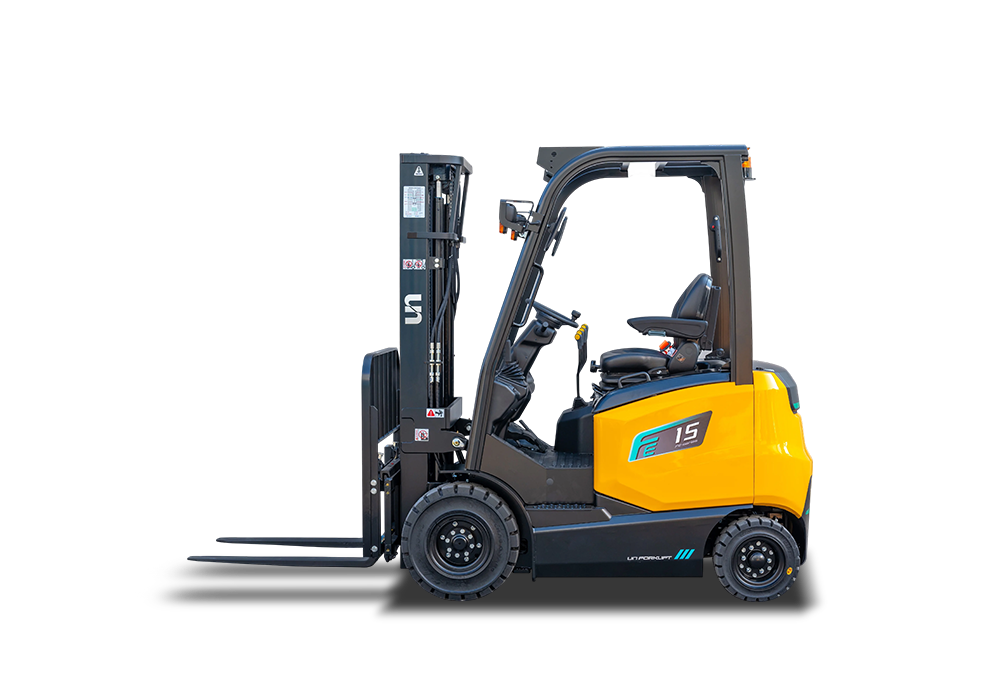
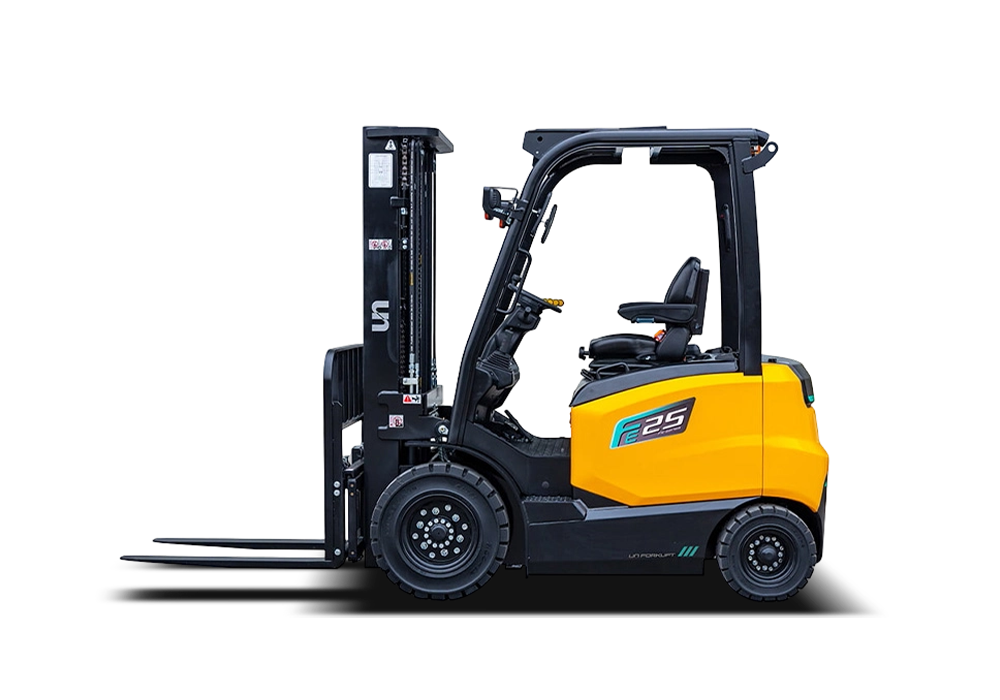
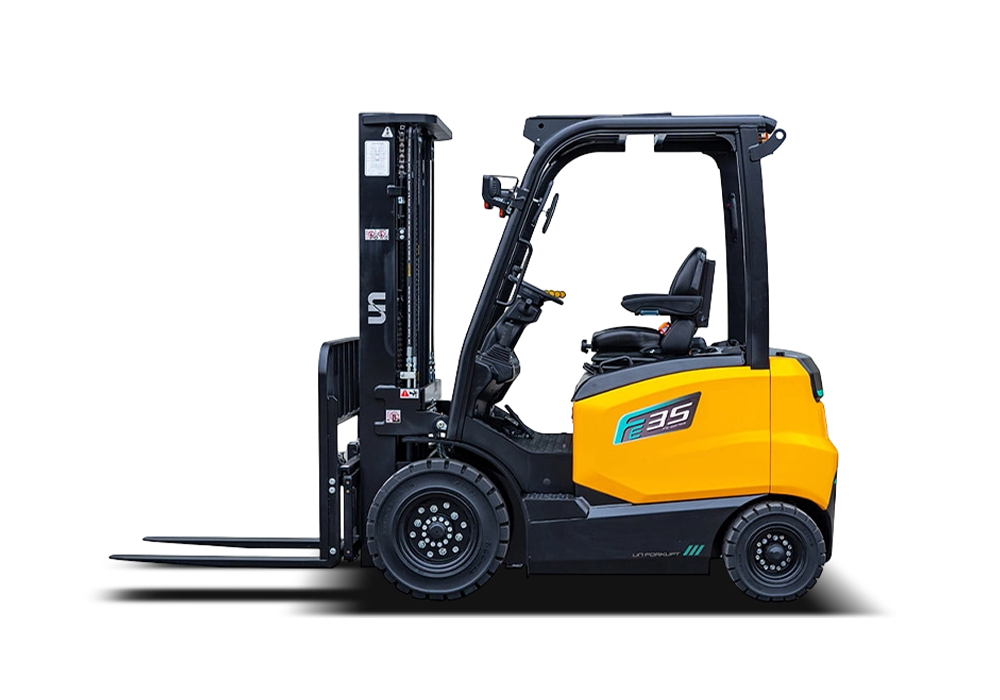
The cornering stability of a forklift is closely related to its structural layout, including chassis design, wheelbase distribution, and center of gravity positioning. In the four wheel electric 1.5T-5.0T range, structural balance plays a central role in ensuring safe maneuverability during turning operations. Compared with three-wheel configurations, four-wheel electric forklifts typically provide a more stable support base due to their rectangular wheel distribution. This structural advantage allows the forklift to maintain consistent ground contact during directional changes, particularly when handling medium to heavy loads.
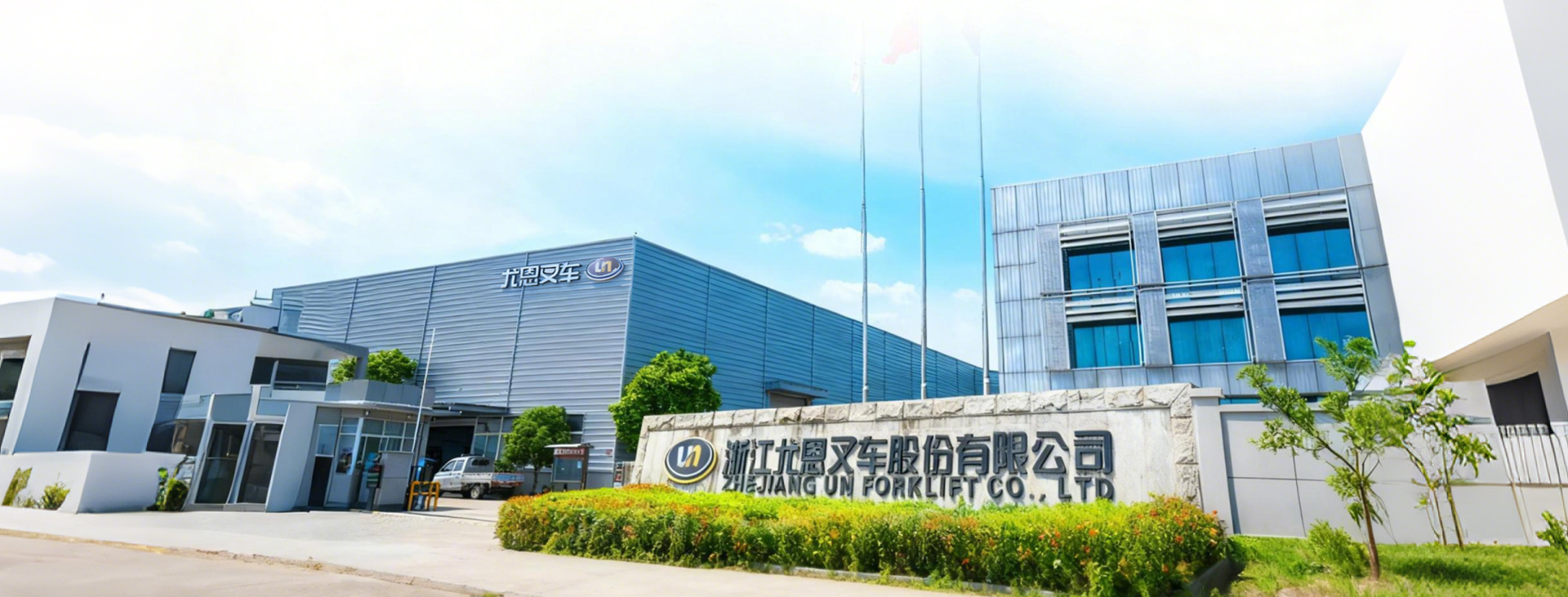
Zhejiang UN Forklift Co., Ltd., established in 1978, integrates research and development with production and testing within its 53,400 square meter manufacturing facility. With an annual production capacity of 15,000 units, the company applies systematic engineering analysis to frame geometry and load distribution. In the four wheel electric 1.5T-5.0T models, careful chassis reinforcement and weight balancing contribute to stable turning behavior across different industrial environments.
Center of Gravity Management During Cornering
During a turn, centrifugal force shifts the combined center of gravity of the forklift and its load toward the outer side of the curve. The stability of the four wheel electric 1.5T-5.0T depends on how effectively this shift is controlled. Engineers calculate load center distance, rated capacity, and mast tilt angles to ensure that the stability triangle remains within safe limits even when turning with partial loads.
The battery placement in electric forklifts significantly influences center of gravity distribution. In many four-wheel electric designs, the battery pack is positioned low within the chassis, acting as a counterweight. This low positioning helps reduce vertical center of gravity height, which contributes to controlled lateral movement when cornering.
Steering System and Turning Control
The steering configuration of the four wheel electric 1.5T-5.0T typically utilizes rear-wheel steering, allowing tighter turning radii while maintaining front axle stability. The coordination between steering angle, drive motor torque output, and hydraulic response affects how smoothly the forklift transitions into and out of a turn.
Electronic steering assistance systems further support predictable control. By regulating steering sensitivity and limiting abrupt directional changes, these systems help operators maintain stability when navigating narrow warehouse aisles or loading docks. UN Forklift incorporates safety-oriented design principles into steering calibration to align with its concept of high efficiency and safety.
Drive Motor Response and Speed Regulation
Cornering stability is also influenced by drive motor characteristics. The four wheel electric 1.5T-5.0T models typically use AC drive motors that allow controlled acceleration and deceleration. Smooth torque delivery reduces sudden lateral shifts that may occur if acceleration is uneven during turning.
Speed control systems may automatically reduce travel speed when the steering angle exceeds a certain threshold. This electronic limitation prevents excessive centrifugal force during sharp turns. By coordinating motor output with steering input, the forklift maintains balanced handling characteristics under varying operational conditions.
| Factor | Influence on Cornering Stability |
| Wheelbase Length | Longer wheelbase enhances lateral stability |
| Battery Position | Lower placement reduces center of gravity height |
| Steering Calibration | Controls turning smoothness |
| Speed Limitation System | Reduces risk during sharp turns |
Tire Selection and Ground Contact
Tire composition and contact surface characteristics also affect stability during cornering. Solid pneumatic tires and cushion tires offer different traction profiles depending on indoor or outdoor usage. In warehouse environments with smooth concrete floors, uniform tire contact ensures balanced grip when turning under load.
The four wheel electric 1.5T-5.0T configuration distributes weight evenly across four support points, which can improve traction consistency compared to designs with fewer ground contact points. Stable traction reduces the likelihood of lateral slipping during directional changes.
Load Handling Dynamics While Turning
When carrying loads at elevated heights, the stability margin becomes narrower during turns. Operators must coordinate lifting height with travel speed to maintain safe operation. The mast structure and tilt mechanism of the four wheel electric 1.5T-5.0T are engineered to provide rigid support, minimizing forward and lateral sway.
UN Forklift applies engineering verification processes during product development to evaluate load behavior under simulated turning conditions. These tests assess frame deflection, mast rigidity, and axle load distribution. The goal is to maintain consistent performance across the rated capacity range from 1.5 tons to 5.0 tons.
Comparative Stability Across Capacity Range
The 1.5T to 5.0T capacity range covers diverse operational needs, from light warehouse handling to heavier industrial transport. As load capacity increases, chassis dimensions and counterweight mass are adjusted accordingly. This scaling ensures that stability characteristics remain proportionate to the forklift’s rated capacity.
| Capacity Range | Typical Application | Stability Consideration |
| 1.5T–2.5T | Indoor warehousing | Agility and moderate load height |
| 3.0T–3.5T | General manufacturing | Balanced load and turning control |
| 4.0T–5.0T | Heavy material handling | Enhanced counterweight and wider chassis |
Role of Operator Behavior in Stability
Even with advanced structural and electronic systems, cornering stability is influenced by operator technique. Smooth steering input, controlled acceleration, and proper load positioning contribute significantly to safe turning performance. Training programs and clear operational guidelines support the safe use of the four wheel electric 1.5T-5.0T models in various industrial settings.
UN Forklift’s global service network across Europe, North America, South America, Africa, and Asia supports customers with operational guidance and after-sales service. This network ensures that users receive technical support tailored to local regulatory standards and working conditions.
Integration of Energy Efficiency and Stability
The design philosophy of energy saving and environmental protection influences more than just power systems. Efficient motor control reduces unnecessary energy spikes during cornering, while stable structural design minimizes mechanical strain. By aligning performance with controlled energy use, the four wheel electric 1.5T-5.0T maintains operational consistency across varied handling scenarios.
Through integrated research, production, and testing processes, Zhejiang UN Forklift Co., Ltd. continues to refine structural and electronic coordination in its electric forklift range. The resulting cornering behavior reflects the interaction between mechanical design, electronic control, and practical operating requirements in modern material handling environments.
FAQ
Q: How does the four wheel electric 1.5T-5.0T adapt to different warehouse aisle widths?
A: The four wheel electric 1.5T-5.0T is designed with balanced steering geometry and optimized turning radius to accommodate various aisle layouts. Through UN’s integrated R&D and production system, chassis dimensions and steering calibration are adjusted to support maneuverability in both standard and moderately narrow warehouse environments.
Q: What battery configurations are typically available for the four wheel electric 1.5T-5.0T?
A: Depending on operational requirements, the four wheel electric 1.5T-5.0T can be equipped with lead-acid or lithium battery systems. UN evaluates energy consumption patterns and shift intensity to match battery capacity with working hours, aligning with its design concept of energy saving and environmental protection.
Q: How does UN ensure consistent manufacturing quality for this capacity range?
A: With a production facility covering 53,400 square meters and an annual capacity of 15,000 units, UN maintains internal control over key assembly and testing processes. Each four wheel electric 1.5T-5.0T unit undergoes inspection procedures related to structural integrity, electrical systems, and hydraulic performance before delivery.
Q: Is the four wheel electric 1.5T-5.0T suitable for both indoor and semi-outdoor operations?
A: Yes, this series is commonly applied in warehouses, manufacturing plants, and loading areas. Tire selection, ground clearance, and motor protection levels can be configured to match indoor smooth floors or semi-outdoor surfaces, ensuring operational stability across different working conditions.
Q: How does the four wheel electric 1.5T-5.0T contribute to operator comfort during long shifts?
A: Operator cabins are designed with ergonomic seating, adjustable steering columns, and intuitive control layouts. Reduced vibration from electric drive systems and balanced chassis construction help maintain a stable working environment during extended operating hours.
Q: What safety systems are integrated into the four wheel electric 1.5T-5.0T models?
A: Safety features may include speed control during turning, parking brake interlocks, load backrests, and electronic monitoring systems. These elements support stable handling and controlled operation, reflecting UN’s commitment to safety in product design.
Q: How does UN support global customers using the four wheel electric 1.5T-5.0T?
A: UN Forklift has established sales and service partners across Europe, North America, South America, Africa, and Asia. This international network provides spare parts supply, maintenance guidance, and technical consultation, helping customers maintain operational continuity in different markets.
Q: What factors should be considered when selecting a specific model within the 1.5T-5.0T range?
A: Customers should evaluate load weight, lifting height, daily operating hours, floor conditions, and charging infrastructure. UN’s integrated development and manufacturing approach allows configuration adjustments to meet diverse material handling requirements while maintaining efficiency and operational stability.

