


 中文简体
中文简体 Français
 русский
 Español
 عربى
عربى Deutsch



Mastering Electric Forklift Batteries: Location, Charging, and Longevity Tips for Efficient Warehousing
Admin 2026-05-07Electric forklifts have become the dominant choice in modern warehousing and distribution — and for good reason. They produce zero direct emissions, run more quietly than internal combustion models, and deliver lower total operating costs over their service life. But the battery system that powers them is also their most complex and expensive component, often representing 30–40% of the total forklift purchase price. Knowing exactly where the battery sits, how it is accessed, how it is charged, and how to extend its service life is not optional knowledge for fleet managers or operators — it is essential to keeping equipment productive and avoiding costly mistakes.
This guide addresses all three areas in practical depth: the design and operation of electric forklifts, the location and removal of forklift batteries, and the selection and use of battery chargers — including the critical differences between charger types and why using the wrong one shortens battery life dramatically.
How Electric Forklifts Work and Why They Dominate Indoor Operations
An electric forklift replaces the internal combustion engine found in LPG or diesel models with one or more electric motors powered by a large traction battery. The motor drives the wheels, the hydraulic pump for the lifting mechanism, and all auxiliary systems. Because electric motors deliver full torque from zero RPM, electric forklifts are often more responsive than their combustion counterparts — particularly in acceleration from a standing start.
The global market reflects a clear trend: according to the Industrial Truck Association, electric forklifts now account for over 65% of all new forklift shipments in North America and a higher proportion in Europe. The drivers are not just environmental — electric models have fewer mechanical components (no engine, no transmission, no exhaust system), which translates directly into lower maintenance costs. A typical electric counterbalance forklift requires roughly 30% less maintenance spend annually than an equivalent LPG model.
Main Types of Electric Forklifts
Not all electric forklifts are designed the same way, and battery placement varies by type:
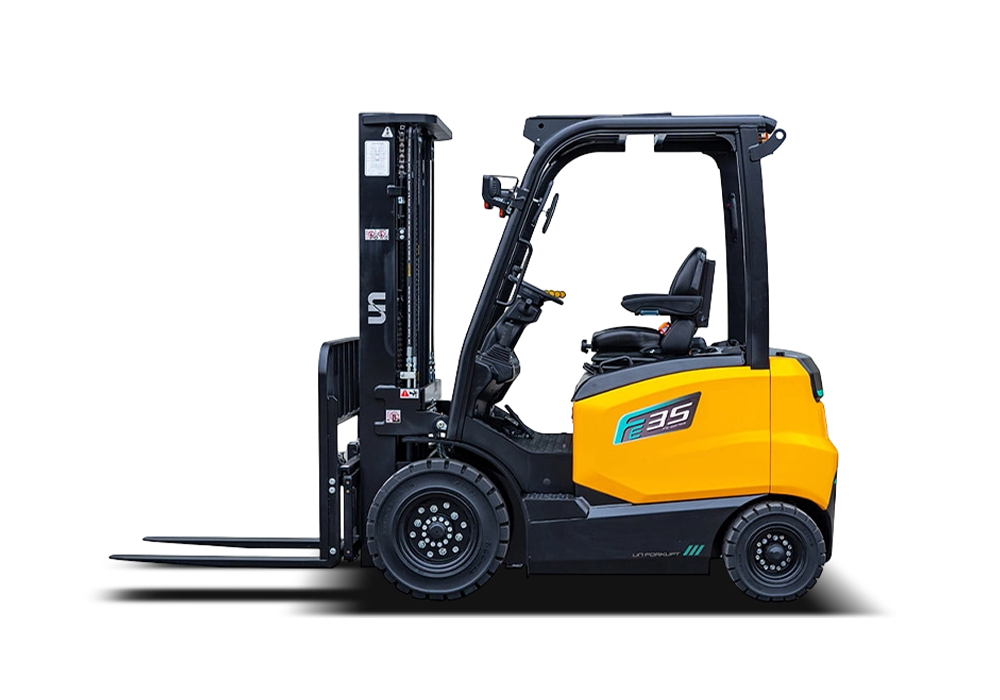
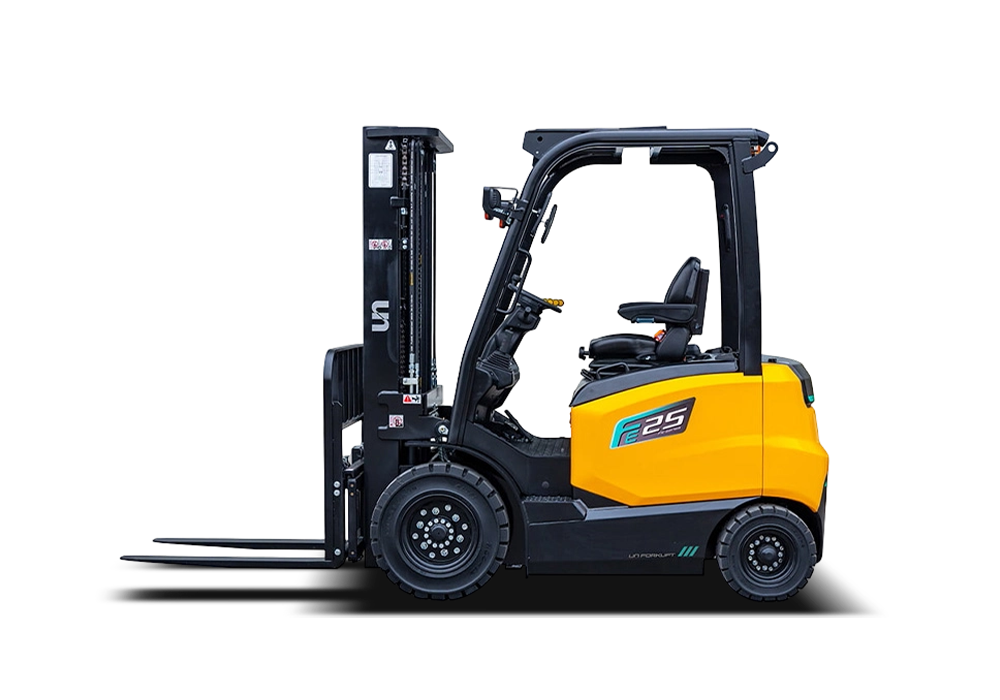
- Electric counterbalance forklift (3-wheel or 4-wheel): The most common type for general warehouse use. Lift capacities typically range from 1,000 kg to 5,000 kg (2,200–11,000 lb). The battery is housed in the rear section of the frame, acting as a counterweight to the load.
- Reach truck: Designed for narrow-aisle racking systems with working heights up to 12 metres (40 ft). Battery is centrally positioned within the mast frame for balance.
- Order picker: The operator rides the platform up with the load. Battery sits low in the frame for stability.
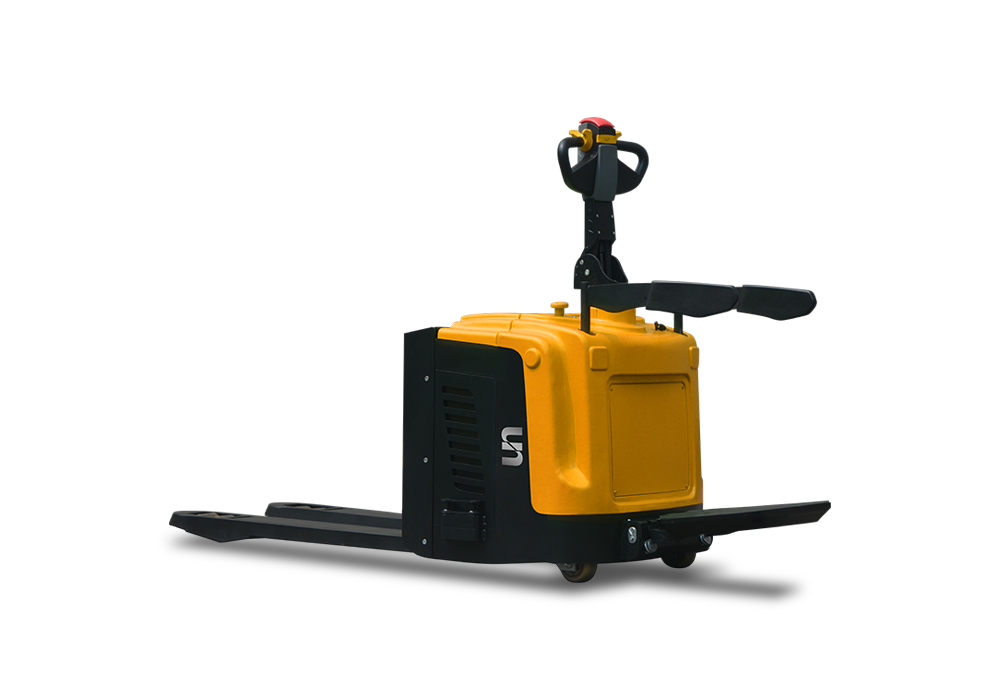
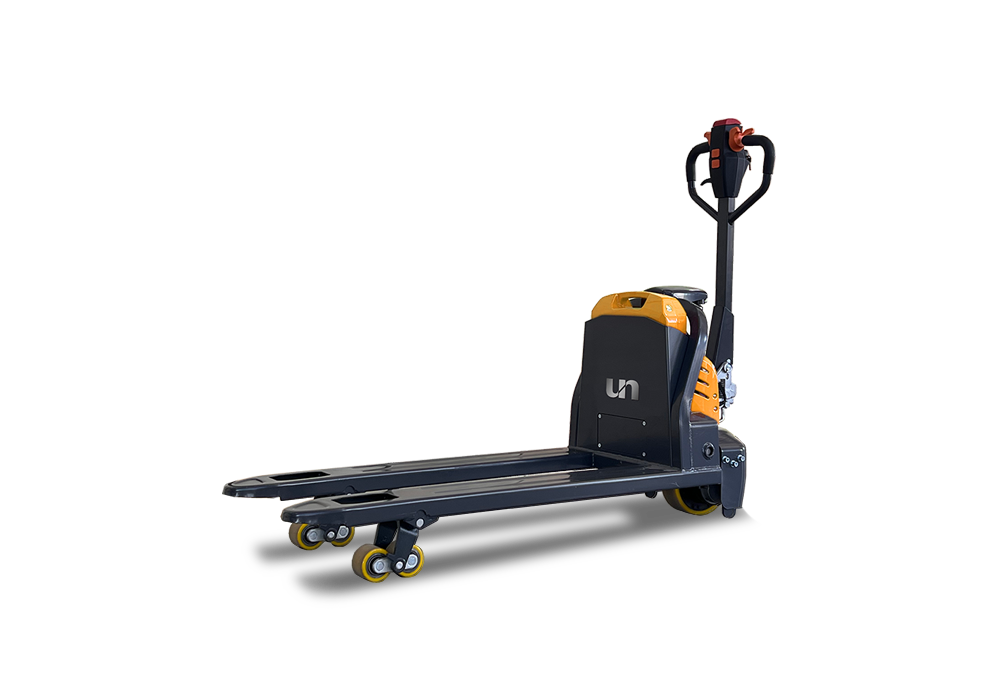
- Pallet jack (powered walkie or rider): Lower-capacity machines (typically up to 2,500 kg) used for horizontal transport. Battery is compact and located in the main body of the jack.
- Very Narrow Aisle (VNA) truck: Operates in aisles as narrow as 1.6 m. Battery placement is highly integrated into the chassis to minimise overall machine width.
Where Is the Battery on a Forklift? Location by Machine Type
The battery on a forklift is not simply a power source — it is also a structural component. In electric counterbalance forklifts, the battery is deliberately heavy (a typical 48V / 750 Ah lead-acid battery weighs between 800 kg and 1,500 kg / 1,760–3,300 lb) and positioned to counterbalance the weight of loads being lifted at the front. Remove the battery and the forklift's stability triangle collapses — the machine becomes dangerous or inoperable.
Counterbalance Forklifts: Battery in the Rear Compartment
On a standard sit-down counterbalance electric forklift, the battery is located in a dedicated battery compartment behind the operator's seat, within the rear section of the chassis. Access is provided in one of two ways:
- Side extraction: The operator hood (the panel the seat is mounted on) tilts or swings open to the side, and the battery slides out horizontally on roller rails. This is the most common configuration on counterbalance machines from manufacturers including Toyota, Crown, Hyster, and Yale.
- Overhead extraction: Less common. The battery is lifted vertically out of the compartment by an overhead crane or battery changing crane. Used in some older designs and certain heavy-capacity machines.
The battery compartment is sealed from the operator area, with ventilation to manage hydrogen gas released during charging. A battery connector (typically a SB-Series plug by Anderson or an equivalent) links the battery to the truck's electrical system. Disconnecting this plug isolates the battery completely and is the correct procedure before any maintenance or battery removal.
Reach Trucks: Battery in the Central Mast Frame
Reach trucks do not rely on battery weight for counterbalancing in the same way as counterbalance forklifts — they use outrigger legs at the front. The battery is located centrally within the main body of the truck, typically accessed from the side or the front via a sliding compartment. Because reach trucks operate in narrow aisles, the battery compartment is designed for quick side-loading to minimise battery change time.
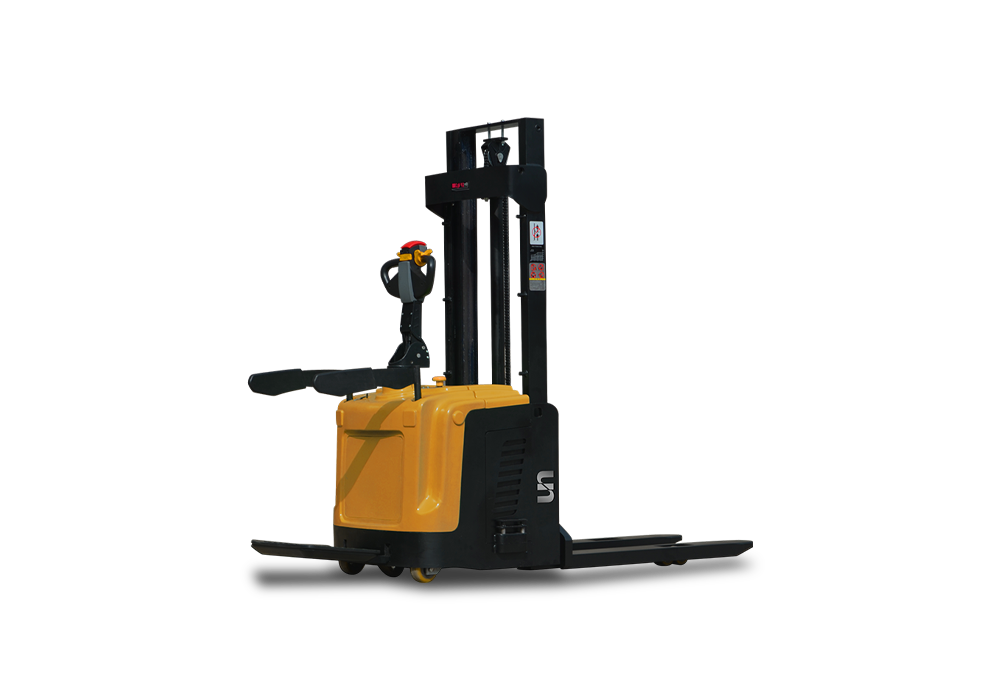
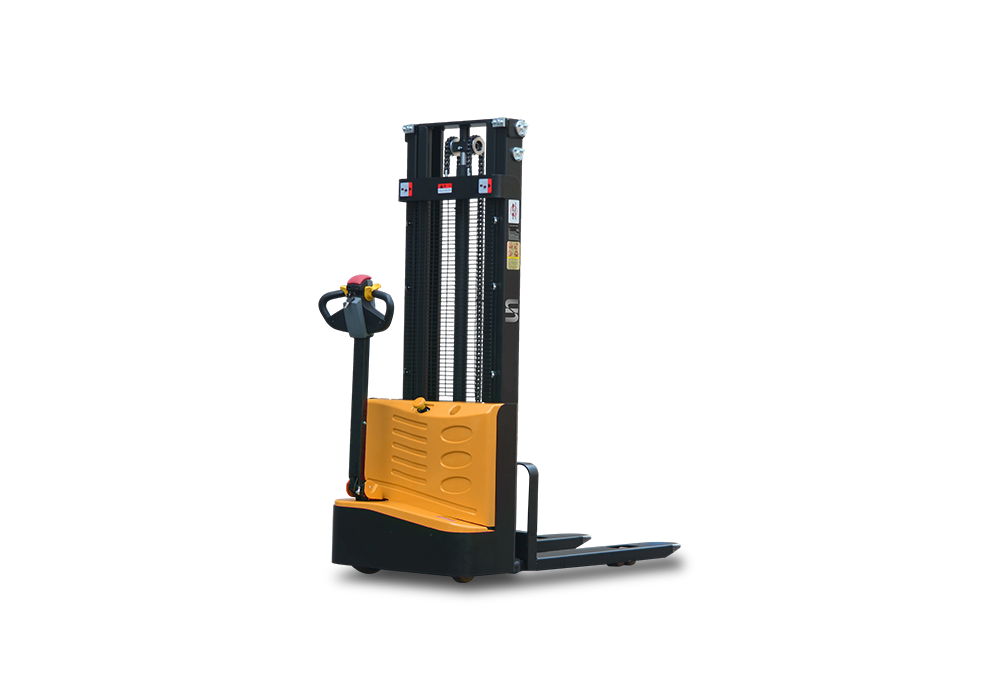
Pallet Jacks and Walkie Stackers: Battery in the Main Body
On powered pallet jacks and walkie stackers, the battery is housed in the main body of the machine — typically beneath a removable cover panel near the tiller (steering arm). These batteries are much smaller than those in sit-down machines, ranging from 24V / 100 Ah units in light walkie jacks to 24V / 300 Ah batteries in larger rider pallet trucks. Many pallet jack models are designed to charge in place (opportunity charging), with a built-in onboard charger that connects directly to a standard wall outlet.
| Forklift Type | Battery Location | Access Method | Typical Battery Weight |
|---|---|---|---|
| Counterbalance (sit-down) | Rear chassis compartment | Side extraction via roller rails | 800–1,500 kg |
| 3-Wheel Counterbalance | Rear/central chassis | Side or overhead extraction | 600–1,000 kg |
| Reach Truck | Central mast frame body | Side-slide access panel | 400–900 kg |
| Order Picker | Lower chassis frame | Front or side panel removal | 300–700 kg |
| Powered Pallet Jack | Main body beneath cover | Cover panel removal / onboard charger | 50–200 kg |
Forklift Battery Types: Lead-Acid vs. Lithium-Ion
The electric forklift market is currently split between two battery chemistries, each with distinct operating characteristics, charging requirements, and cost profiles.
Lead-Acid (Flooded Cell) Batteries
The traditional and still most widely installed technology. Lead-acid traction batteries consist of lead plates submerged in a sulphuric acid electrolyte solution within individual cells. A 48V battery contains 24 cells; an 80V battery, 40 cells. Key characteristics:
- Rated service life of 1,000–1,500 full charge cycles, equating to approximately 5 years with single-shift operations.
- Require a full charge cycle of 8–10 hours followed by a mandatory cooling period of 6–8 hours before returning to service.
- Must be watered regularly — electrolyte levels need topping up with deionised water every 5–10 charge cycles to prevent plate damage.
- Release hydrogen gas during charging, requiring dedicated ventilated charging areas.
- Lower upfront cost — typically $3,000–$8,000 USD for a mid-range counterbalance battery.
- Depth of discharge should not regularly exceed 80% to avoid premature degradation.
Lithium-Ion (Li-Ion) Batteries
Lithium-ion forklift batteries have grown rapidly in adoption over the past decade, particularly in multi-shift operations. They differ fundamentally from lead-acid in both chemistry and operational behaviour:
- Rated service life of 2,000–3,000+ full charge cycles, equating to 8–12 years in typical warehouse applications.
- Fast charging capability: a lithium-ion battery can reach 80% charge in approximately 1 hour and 100% in 2 hours, enabling opportunity charging during breaks.
- No watering, no equalisation charges, no hydrogen gas emission, no mandatory cooling period.
- Maintain consistent voltage output across the entire discharge curve — lead-acid batteries lose voltage progressively as they discharge, reducing truck performance toward the end of a shift.
- Higher upfront cost — typically $8,000–$20,000 USD for an equivalent counterbalance battery — but frequently lower total cost of ownership over the battery's lifetime when labour savings and productivity gains are factored in.
- Contain a Battery Management System (BMS) that monitors and protects individual cells from overcharge, over-discharge, and thermal events.
| Attribute | Lead-Acid | Lithium-Ion |
|---|---|---|
| Cycle life | 1,000–1,500 cycles | 2,000–3,000+ cycles |
| Full charge time | 8–10 hours | 1.5–2 hours |
| Opportunity charging | Not recommended | Fully supported |
| Maintenance required | Watering, cleaning, equalisation | Minimal (BMS managed) |
| Hydrogen gas emission | Yes — ventilation required | No |
| Initial battery cost | $3,000–$8,000 | $8,000–$20,000 |
| Performance at low charge | Degrades progressively | Consistent to ~95% discharge |
| Best suited for | Single-shift, cost-sensitive ops | Multi-shift, high-utilisation ops |
Battery Chargers for Forklifts: Types, Specifications, and Selection
Selecting the correct battery charger for a forklift is as important as selecting the battery itself. An incompatible or undersized charger will fail to fully recharge the battery, shorten its service life, and in some cases cause dangerous overheating. A correctly matched charger, by contrast, maximises each charge cycle and actively protects battery health. The charger must match the battery's voltage, capacity (Ah), and chemistry.
Understanding Charger Voltage and Ampere-Hour Rating
Forklift batteries operate at standard voltages — most commonly 24V, 36V, 48V, 72V, or 80V. The charger must match this voltage exactly. Beyond voltage, the charger's output current (amps) must be appropriate for the battery's capacity:
- For lead-acid batteries, the standard charging rate is 10–13% of the battery's Ah capacity. A 600 Ah battery, for example, should be charged at 60–78 amps for a standard overnight charge. Charging at higher rates accelerates plate degradation.
- For lithium-ion batteries, charging rates can be significantly higher — up to 30–50% of Ah capacity for fast charging — but must be precisely controlled by the charger's algorithm in coordination with the battery's BMS.
Types of Forklift Battery Chargers
The forklift charger market offers several distinct technology generations, each with different performance and cost characteristics:
- Ferroresonant (conventional) chargers: The oldest technology, using a transformer with a single fixed charge rate. Simple and durable, but energy inefficient (typically 75–80% efficiency) and not adaptable to battery state. They apply the same charge profile regardless of battery condition, which can overcharge a partially depleted battery. Largely being phased out but still found in older facilities.
- SCR (Silicon-Controlled Rectifier) chargers: Improved over ferroresonant models; the charge rate adjusts based on battery voltage feedback. More energy efficient (82–88%) and better suited to varied battery states. A common mid-range choice for lead-acid fleet charging.
- High-frequency (HF) chargers: The current standard for most modern facilities. Use high-frequency switching circuitry to deliver a precisely controlled, adaptive charge profile. Efficiency typically exceeds 92–94%, and they adjust charge current dynamically throughout the cycle. Substantially lighter and smaller than transformer-based chargers. Compatible with multi-voltage configurations (a single HF charger can often be set to charge 24V, 36V, or 48V batteries). High-frequency chargers are the recommended choice for lead-acid batteries in most modern applications.
- Opportunity chargers: Designed to deliver rapid, partial charges during breaks of 15–30 minutes, restoring 15–25% capacity per session. Suitable for lithium-ion batteries and certain high-duty-cycle lead-acid applications where battery swapping is not practical. Must be specifically rated for opportunity charging — a standard overnight charger cannot safely perform this function.
- Lithium-specific chargers: Purpose-built for lithium-ion chemistry, communicating directly with the battery's BMS via CAN bus or proprietary protocols to coordinate charge rates in real time. Never use a lead-acid charger on a lithium-ion battery — the charge profile is incompatible and can trigger thermal events or permanently damage the cells.
Charger Output and Electrical Supply Requirements
Industrial forklift chargers draw significant power from the facility's electrical supply. A charger for a large 80V / 750 Ah lead-acid battery may draw 15–25 kW during the bulk charge phase. Most industrial chargers require a three-phase 208–480V electrical supply; smaller chargers for pallet jacks or reach trucks may operate on single-phase 208–240V. Before installing charger equipment, electrical capacity and wiring must be verified by a qualified electrician — undersized circuits cause nuisance tripping and pose fire risk from sustained overload.
Choosing the Right Charger: A Practical Matching Guide
Getting the charger-battery match right requires checking four parameters against each other. Errors at any of these points result in undercharging, overcharging, or chemistry incompatibility:
- Match voltage exactly. Confirm the battery's voltage (stamped on the battery label or listed in the forklift manual). Select a charger rated for that precise voltage, or a multi-voltage HF charger configured for it. A 48V charger will not safely charge a 36V battery and vice versa.
- Confirm Ah compatibility. Calculate the required charge rate (10–13% of Ah for lead-acid). Verify the charger's output current matches this range. A charger significantly underpowered for the battery's Ah capacity will extend charge time excessively; one significantly overpowered may damage lead-acid cells.
- Confirm chemistry compatibility. Lead-acid and lithium-ion require different charge algorithms. Never interchange chargers between these chemistries. Lithium-ion batteries require a charger that communicates with the BMS.
- Match the connector type. Forklift batteries use industry-standard connectors — Anderson SB-Series plugs (SB50, SB175, SB350) are most common in North America; DIN 320 and similar standards are prevalent in Europe. The charger output connector must match the battery's connector exactly, or an appropriate rated adapter must be used.
| Operation Type | Battery Chemistry | Recommended Charger Type | Charging Strategy |
|---|---|---|---|
| Single shift (8 hrs), one truck | Lead-acid | High-frequency conventional | Full overnight charge (8–10 hrs) |
| Two or three shifts, battery swap | Lead-acid | High-frequency with equalisation | Full charge per battery between shifts |
| Multi-shift, no battery swap | Lithium-ion | Lithium-specific opportunity charger | Opportunity charging during breaks |
| Pallet jacks / light duty | Lead-acid or Li-ion | Onboard charger (integrated) | Plugged in during non-use periods |
| High-capacity counterbalance fleet | Lead-acid | Three-phase HF, fleet management | Managed charging with equalisation schedule |
Battery Charging Procedures and Critical Rules
Correct charging procedure protects both the battery and the personnel working around it. Lead-acid forklift batteries release hydrogen gas during charging — in sufficient concentration, this gas is explosive. The following procedures should be standard practice in any facility operating electric forklifts:
- Charge only in designated, ventilated areas. OSHA standard 29 CFR 1910.178(g) requires that battery charging areas have adequate ventilation to disperse hydrogen gas, and prohibits smoking or open flames within the charging zone.
- Connect the charger before switching it on. Always connect the charger output plug to the battery before energising the charger. Disconnect in reverse order — switch off the charger first, then unplug. This prevents arcing at the connector.
- Never charge a battery below 20% state of charge without assessment. Deeply discharged lead-acid batteries (below 20%) can develop sulphation — a crystalline build-up on the lead plates that permanently reduces capacity. If a battery has been deep-discharged, a recovery (desulphation) charge cycle should be performed.
- Allow the battery to cool before charging if it is warm from use. Charging a thermally elevated battery accelerates degradation. A 30-minute cooling period after intensive use is sufficient in most cases.
- Do not interrupt the charge cycle for lead-acid batteries. Partial charges without completing the full cycle cause stratification of the electrolyte, reducing battery performance over time. Lithium-ion batteries do not share this limitation.
- Perform equalisation charges on lead-acid batteries monthly. An equalisation charge applies a controlled overcharge (typically 110–115% of the normal charge voltage) to fully reverse sulphation and balance cell voltages across the battery. Most modern HF chargers include an automated equalisation function triggered on a configurable schedule.
- Keep accurate charge records. Logging charge cycles, equalisation dates, and watering intervals allows early identification of a battery approaching end of service life — before a failure event causes operational disruption.
Signs That an Electric Forklift Battery Needs Attention or Replacement
Lead-acid traction batteries degrade gradually, but the warning signs are recognisable if operators and maintenance staff know what to look for. Acting on early signs prevents a managed battery replacement from becoming an emergency one.
- Shortened run time per shift: A battery that previously lasted a full 8-hour shift but now depletes in 5–6 hours has lost usable capacity. When a lead-acid battery retains less than 80% of its rated Ah capacity, it is generally considered at end of economic service life.
- Slow or incomplete charging: If the charger consistently fails to reach the full-charge termination point within the expected time window, or if the battery does not accept a full charge, cell degradation or internal shorts are likely.
- Excessive water consumption: A battery requiring watering more frequently than every 5 charge cycles may have overcharging damage or individual cell failures causing accelerated electrolyte loss.
- Visible corrosion or leakage at terminals: Electrolyte leakage around terminal posts indicates cracked or deteriorated cell cases. This is a safety issue as well as a performance issue — spilled sulphuric acid is a chemical hazard.
- Reduced truck performance: If the forklift noticeably slows or loses hydraulic lifting speed under normal loads, particularly toward the end of a shift, the battery is no longer delivering adequate voltage under load.
- Battery management system fault codes (lithium-ion): A BMS fault light or error code on the truck's display indicates a cell imbalance, thermal event, or communication error that requires immediate diagnosis by a qualified technician.
Setting Up an Effective Charging Station for Your Forklift Fleet
A well-designed charging station is as important as the equipment itself. Poor layout leads to accidents, inefficient charging, and unnecessary equipment damage. The following design principles apply to facilities of any scale:
- Dedicate and clearly mark the charging area. The charging zone should be separate from active traffic routes, clearly signed, and accessible only by authorised personnel during active charging. Post OSHA-compliant hazard signs for hydrogen gas, no smoking, and electrical hazard.
- Install adequate ventilation. Natural ventilation is acceptable for small operations; forced ventilation is required for larger charging rooms. The NFPA 505 standard recommends air exchange rates sufficient to maintain hydrogen concentration below 1% by volume (25% of the lower explosive limit).
- Provide eyewash and emergency shower access. OSHA 1910.151 requires emergency eyewash stations within 10 seconds of travel from areas where employees work with corrosive materials — which includes lead-acid battery maintenance and charging.
- Install battery rollers or changing equipment. For counterbalance forklifts requiring battery extraction, a dedicated battery roller stand, changing beam, or battery changing cart is required. Attempting to move a 1,000 kg battery without appropriate equipment is a serious injury risk.
- Use fleet management software where possible. Modern charger systems from manufacturers including Hawker, EnerSys, and Fronius can connect to fleet management platforms, logging charge cycles, flagging underperforming batteries, and scheduling equalisation charges automatically. For fleets of five or more electric forklifts, this investment pays back in extended battery service life and reduced emergency replacement costs.
- Plan electrical capacity for growth. If the fleet may expand, size the electrical supply infrastructure during initial installation rather than retrofitting later. Adding a second three-phase circuit to an existing panel is far less expensive than trenching new supply cabling after floors are finished.
For exclusive deals and latest offers, sign up by entering your email address below.
Stay In Touch
ADDRESS : NO.1 ROAD ONE, XINDENG NEW DISTRICT, FUYANG, HANGZHOU, ZHEJIANG, CHINA 311404.
PHONE : +86-571-8688 8355 (AMERICA)
PHONE : +86-571-8886 9363 (EUROPE)
PHONE : +86-571-8688 8377 (ASIA, AFRICA, OCEANIA)
EMAIL : [email protected]
EMAIL : [email protected](PARTS INQUIRY)

